














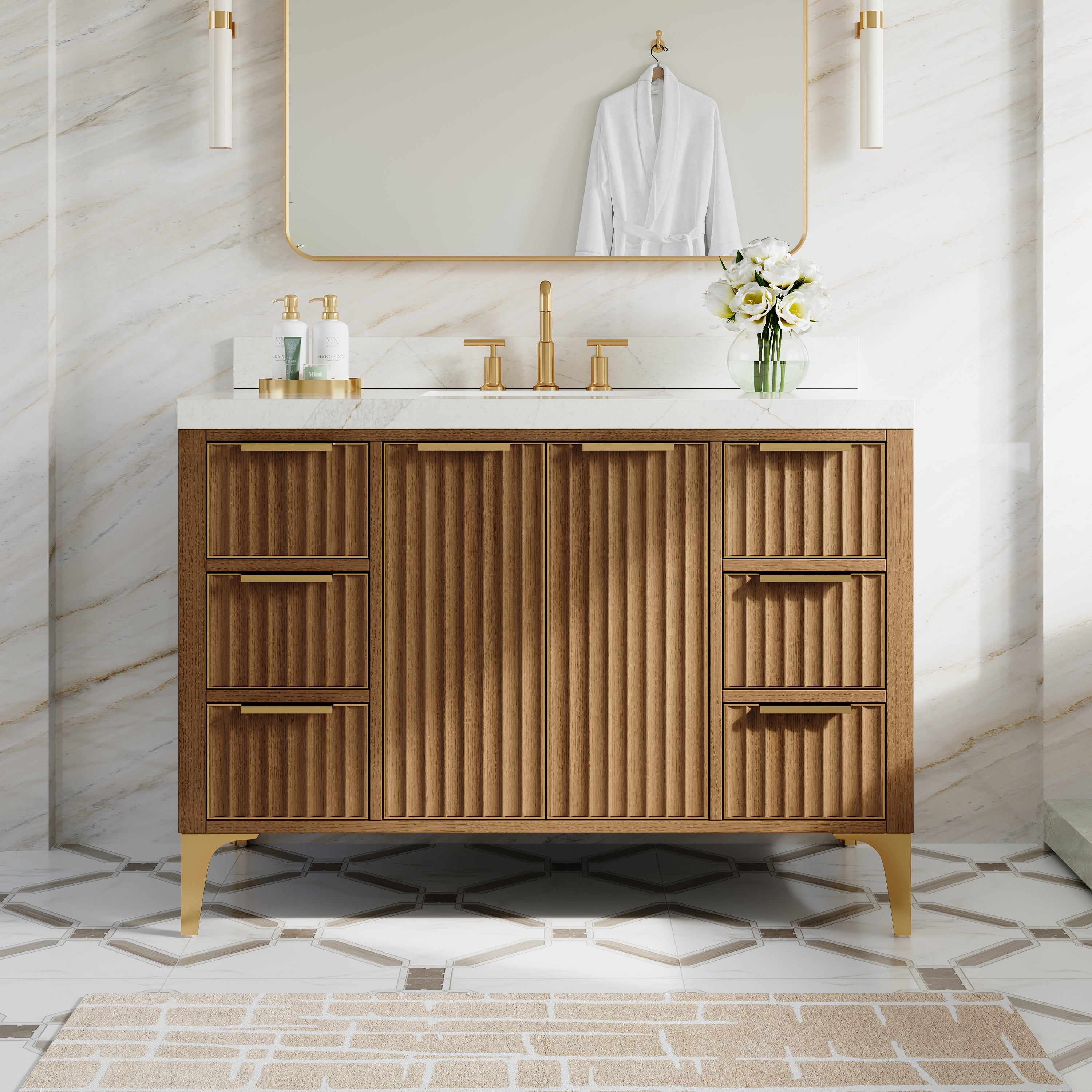
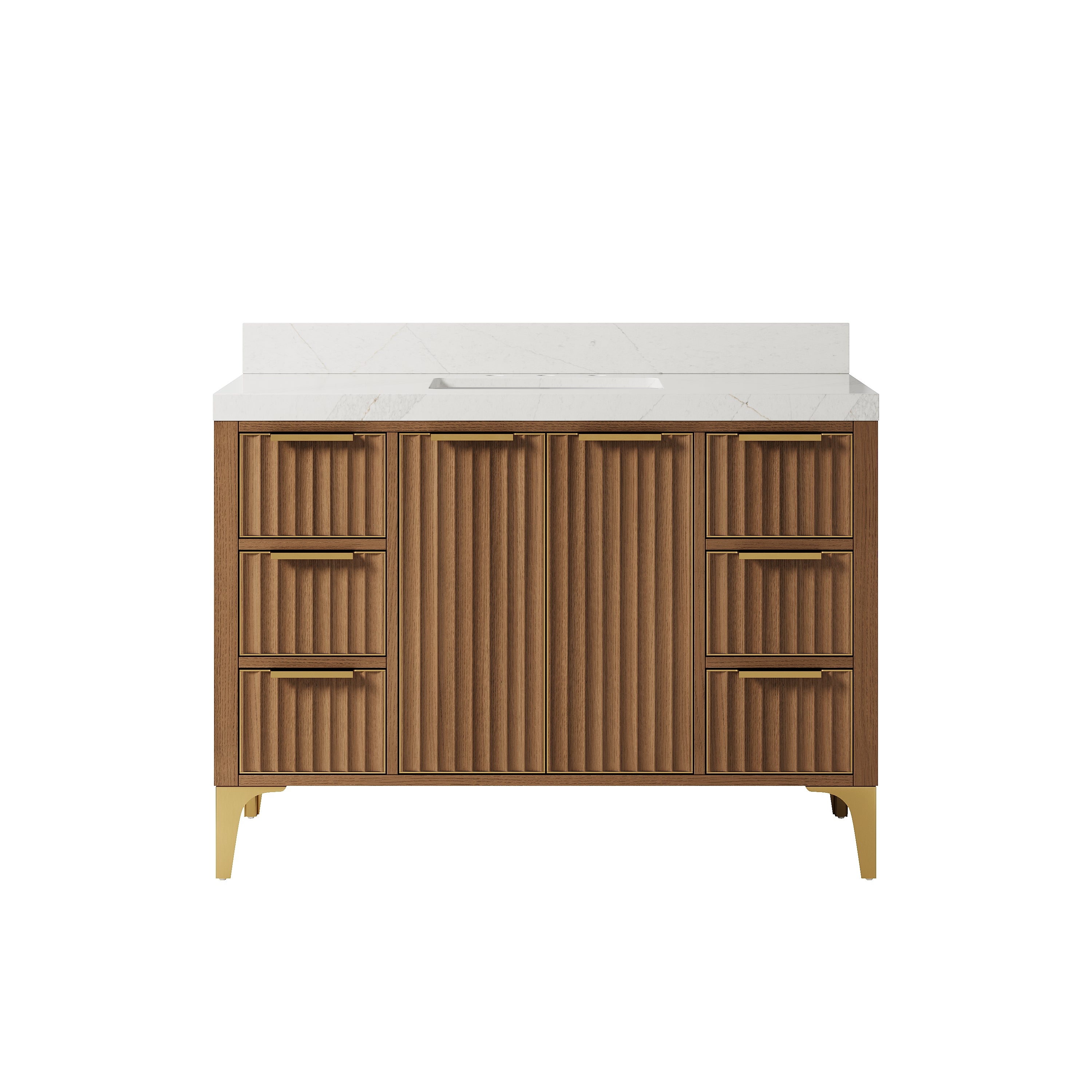


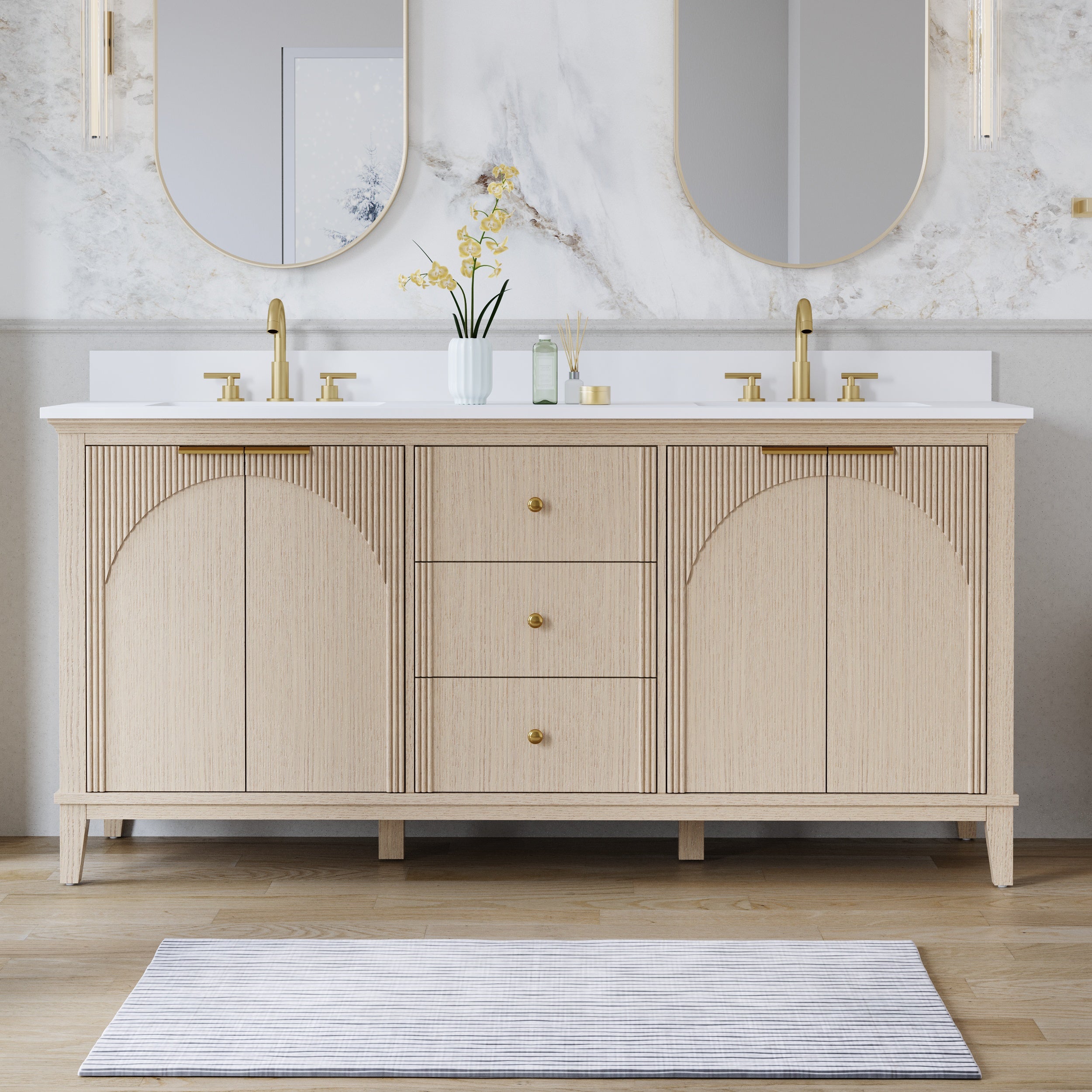
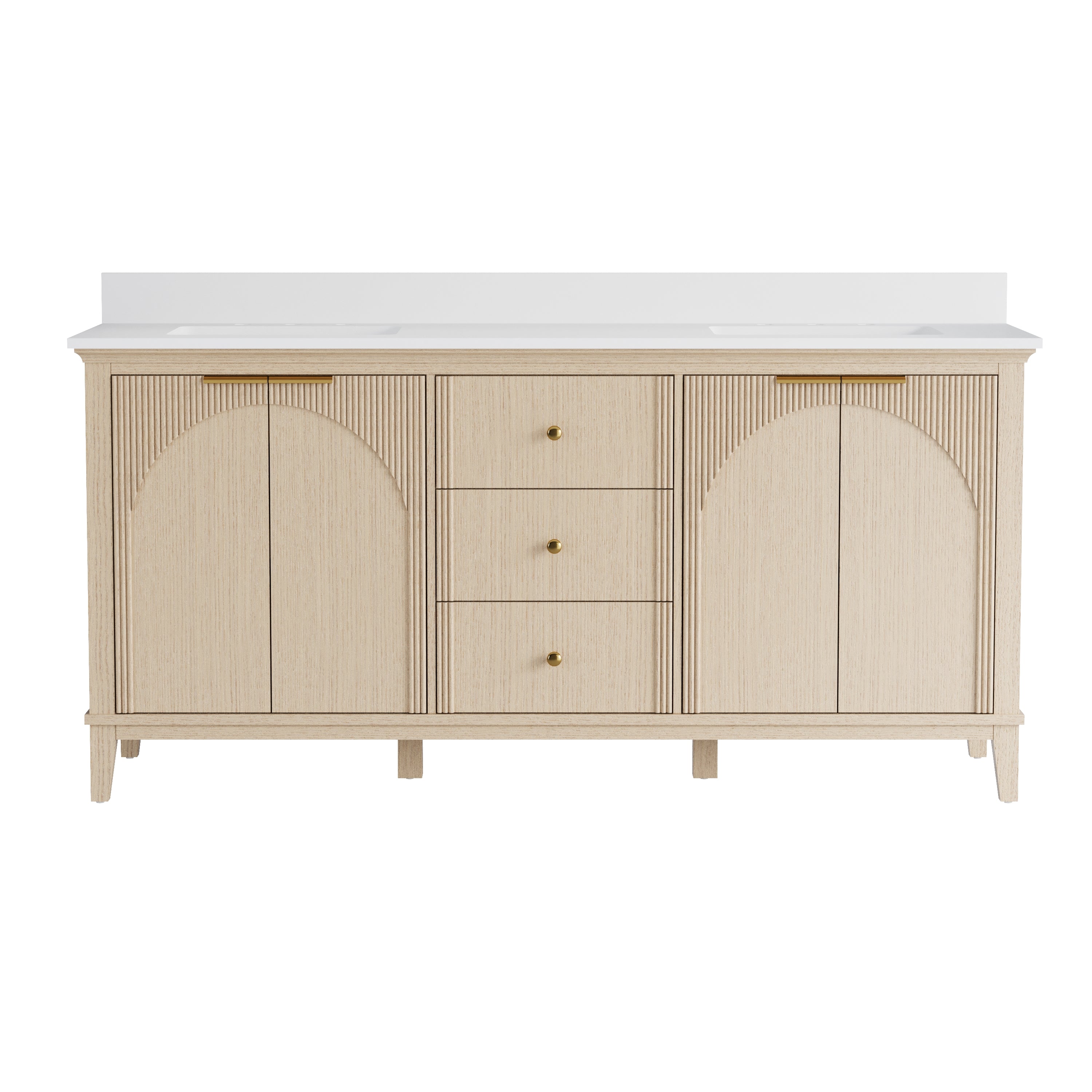
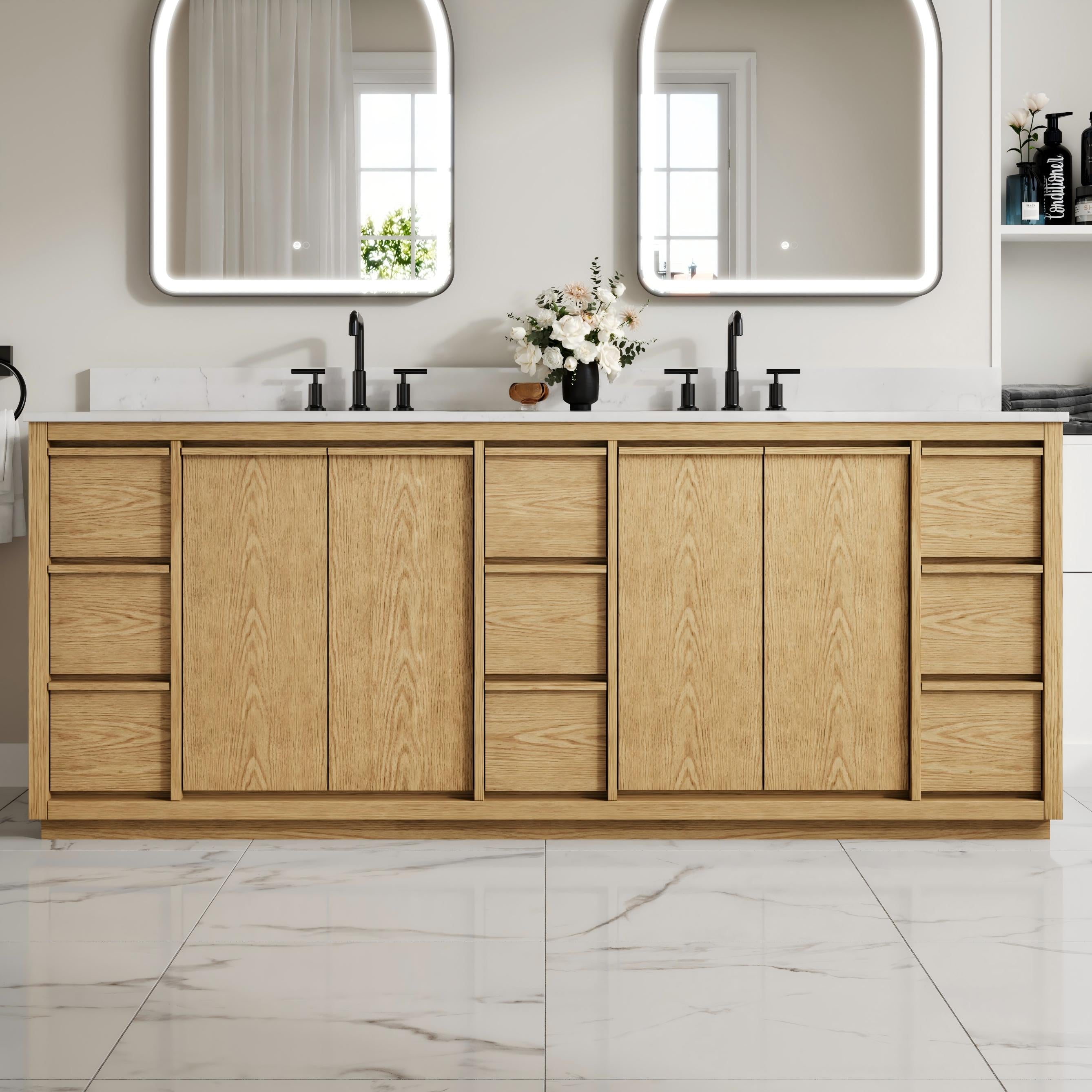
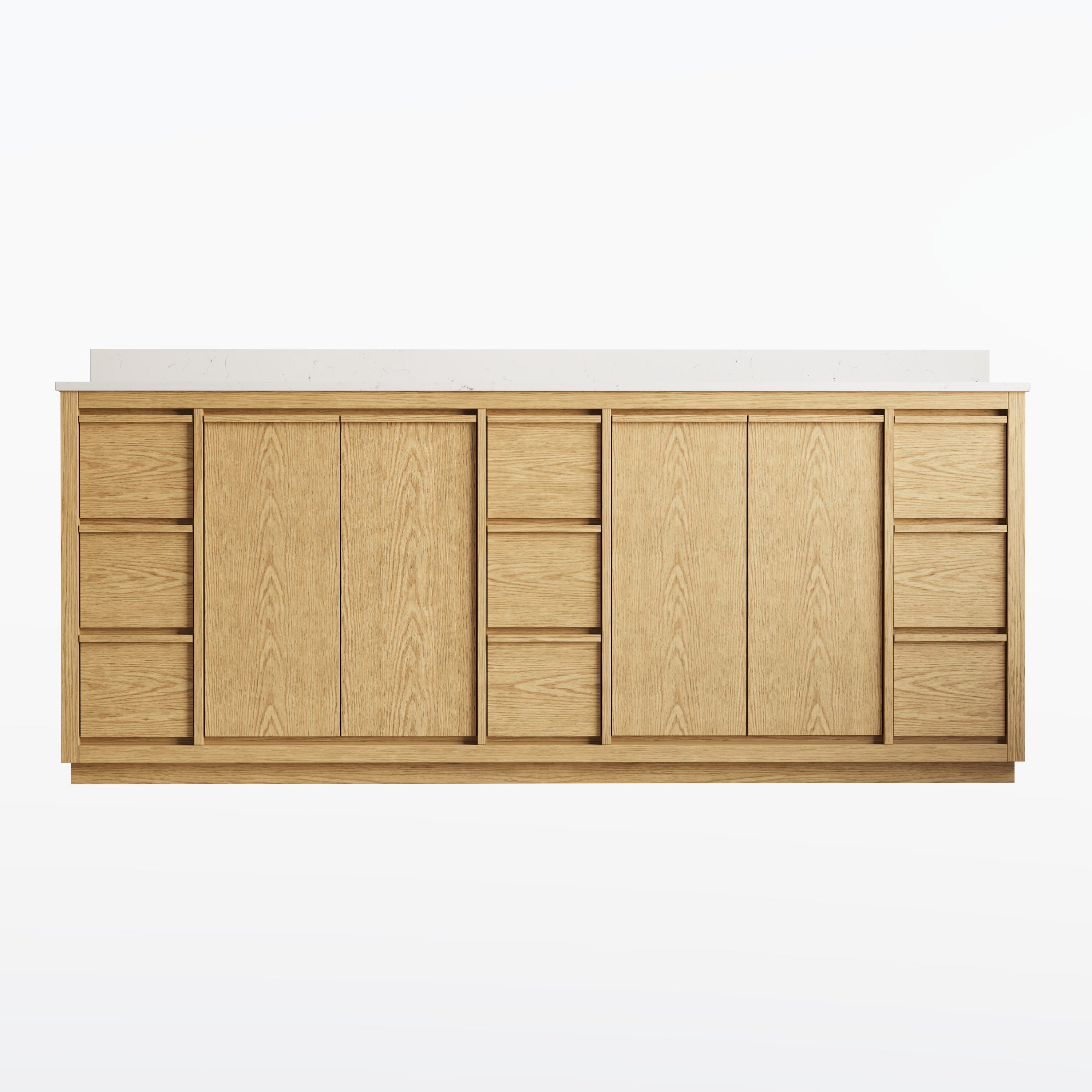

A wooden bathroom vanity brings something to a bathroom that painted cabinetry often cannot: natural warmth, visible texture, and a sense of permanence. After more than 20 years of working with bathroom cabinetry and renovation projects, I have seen wood vanities remain appealing even as tile colors, hardware finishes, and decorating trends change around them. They can be durable and highly adaptable, but wood is not maintenance-free. Construction quality, moisture protection, storage design, and the bathroom environment should all influence the buying decision.
1. A Wooden Bathroom Vanity Adds Natural Warmth
Bathrooms contain many hard surfaces—porcelain, stone, glass, mirrors, and metal. Without contrast, those materials can make the room feel cold.
Wood softens that effect immediately.
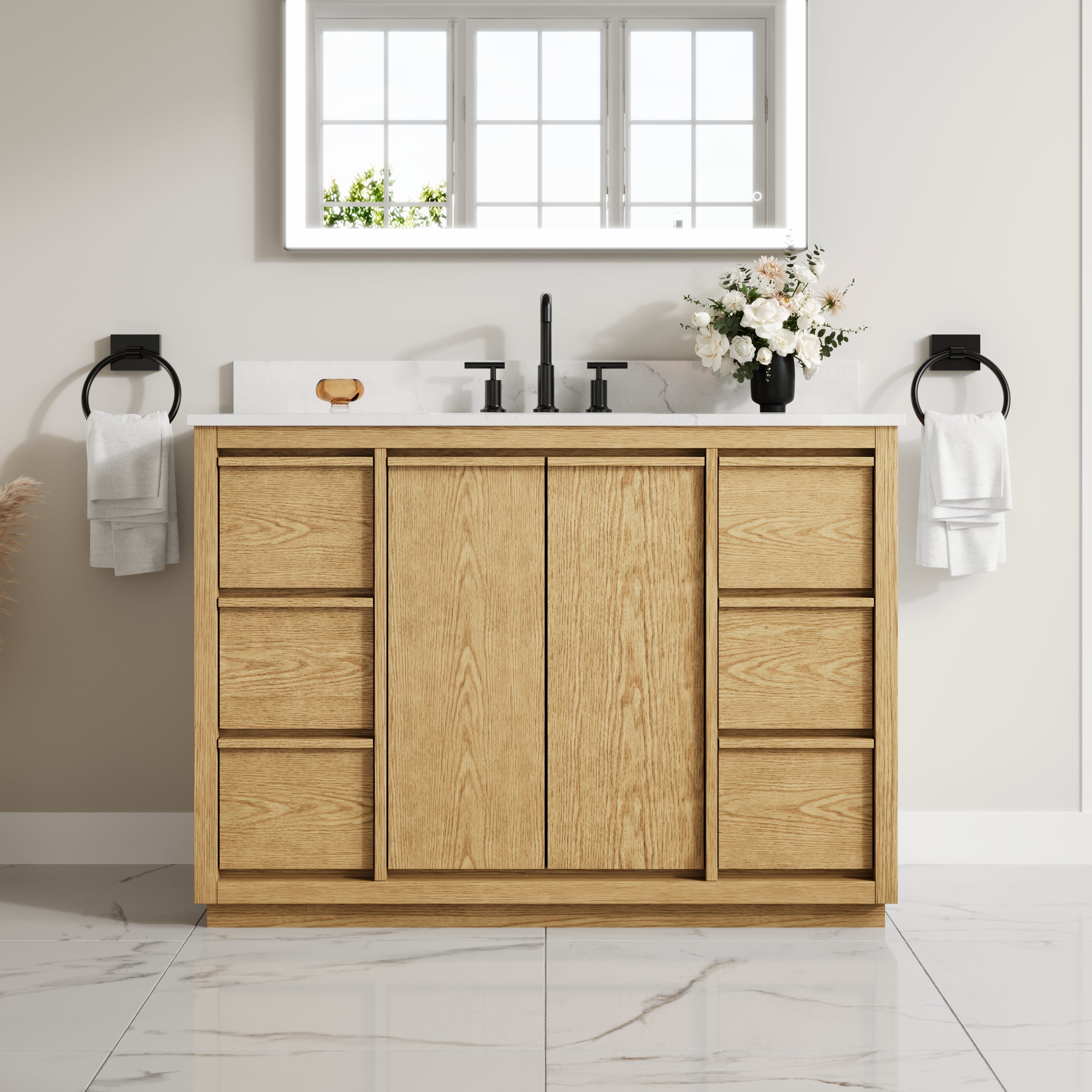
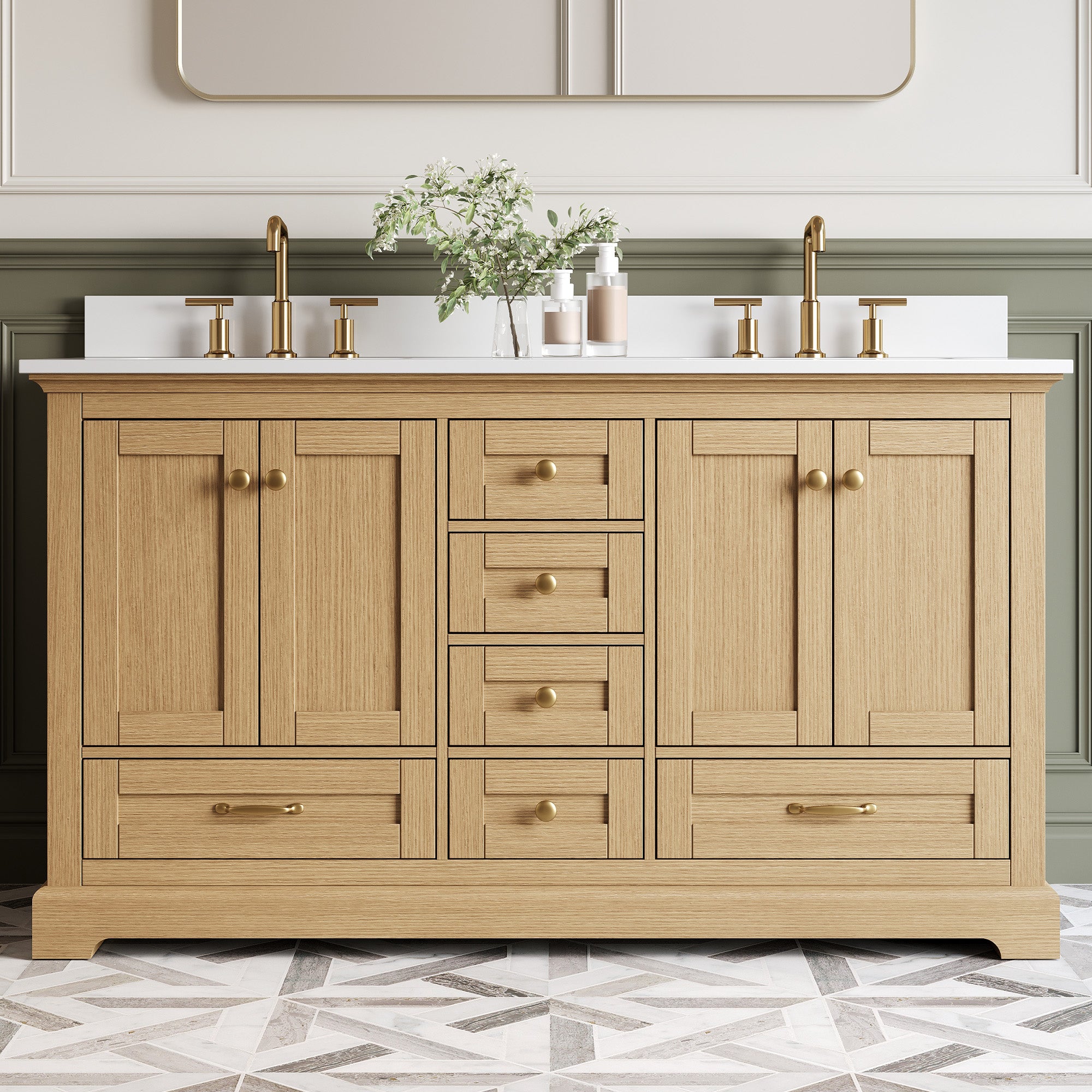
Light oak works particularly well with white or beige tile, while walnut brings depth to larger primary bathrooms. Medium wood tones are easy to combine with both warm and cool materials.
Natural grain also creates subtle variation. Instead of a completely uniform cabinet surface, you get texture that changes slightly as light moves through the room.
That is one reason wood often feels less temporary than a fashionable painted color.
2. Wood Works With More Bathroom Styles Than Expected
Some homeowners still associate wooden vanities with rustic interiors.
That is a narrow view of the material.
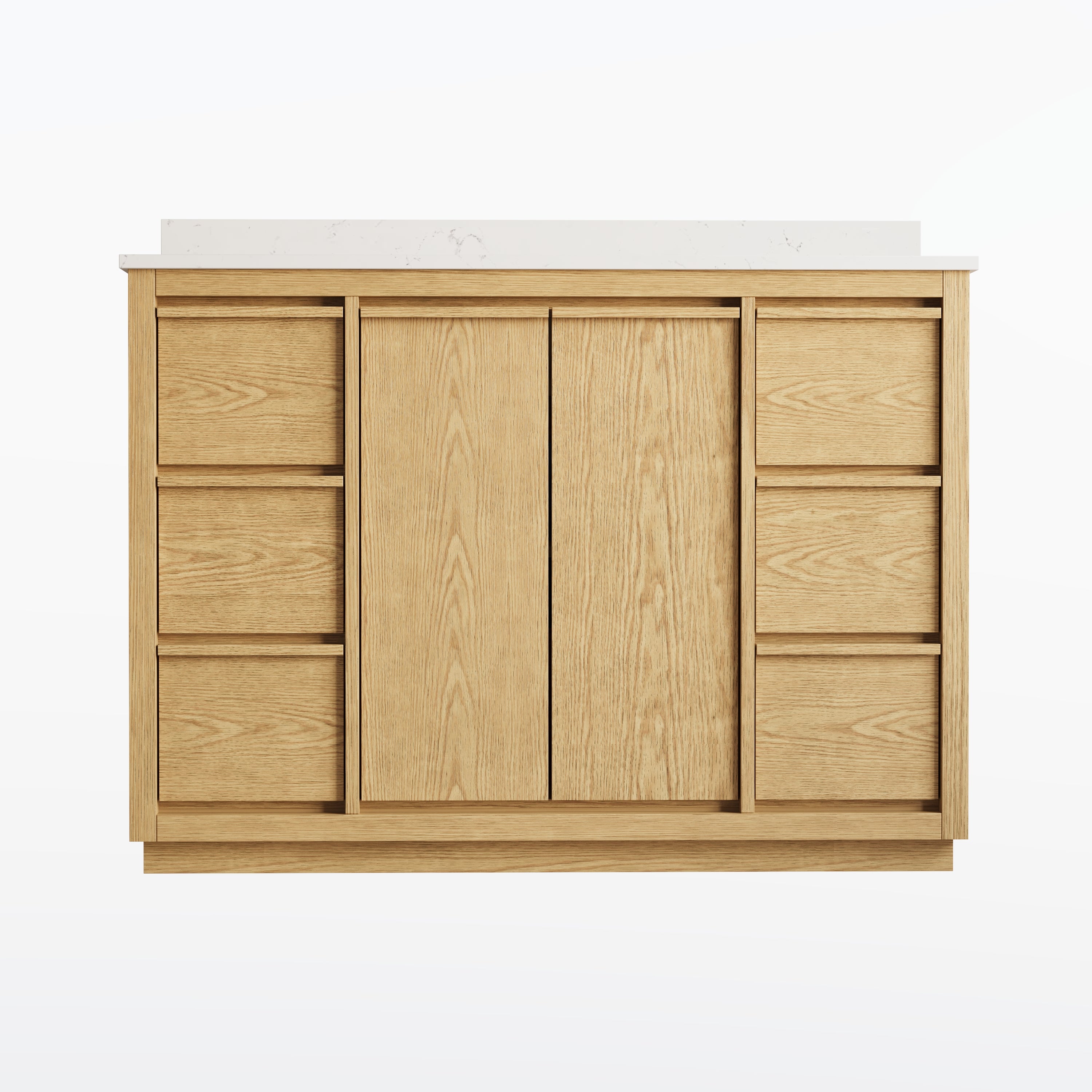
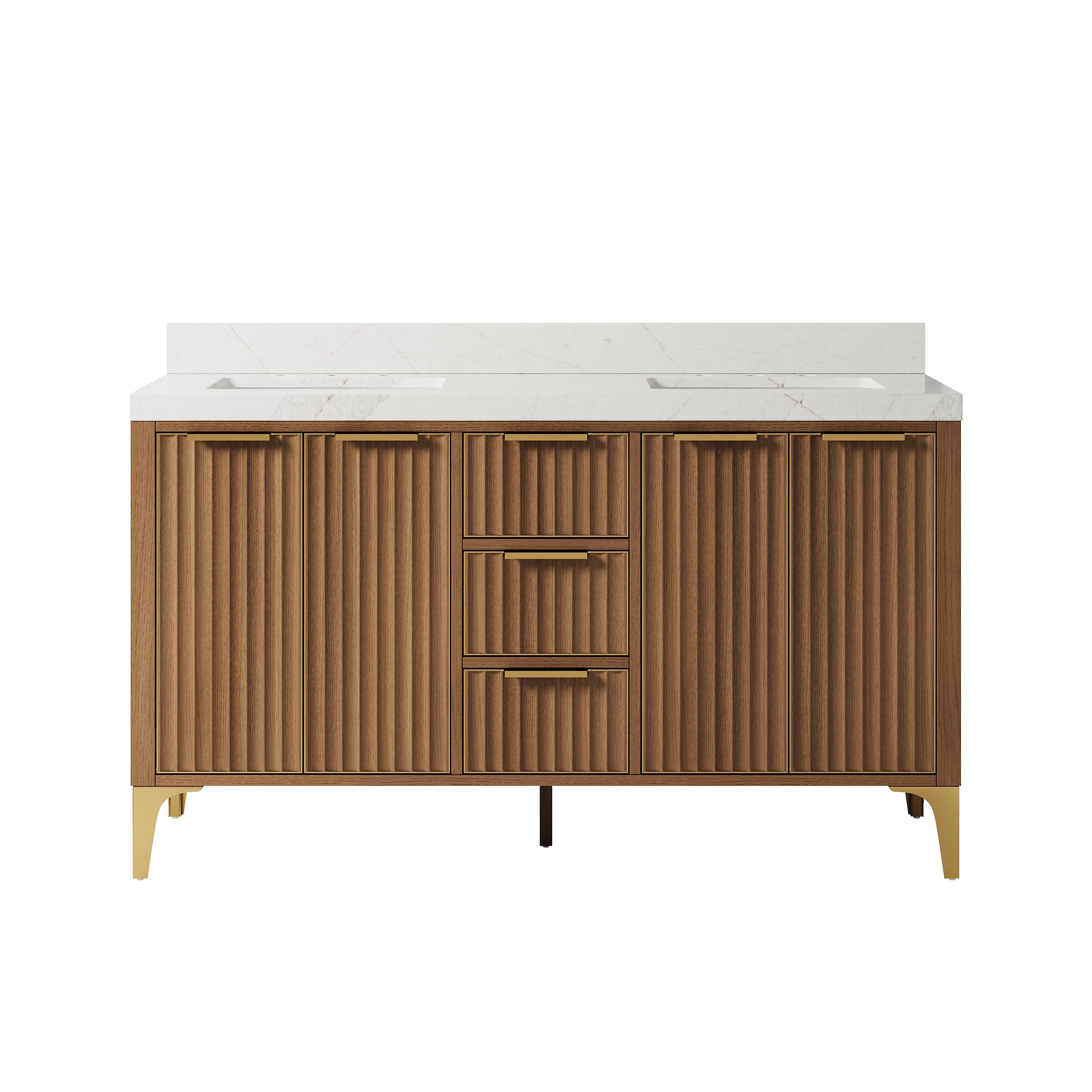
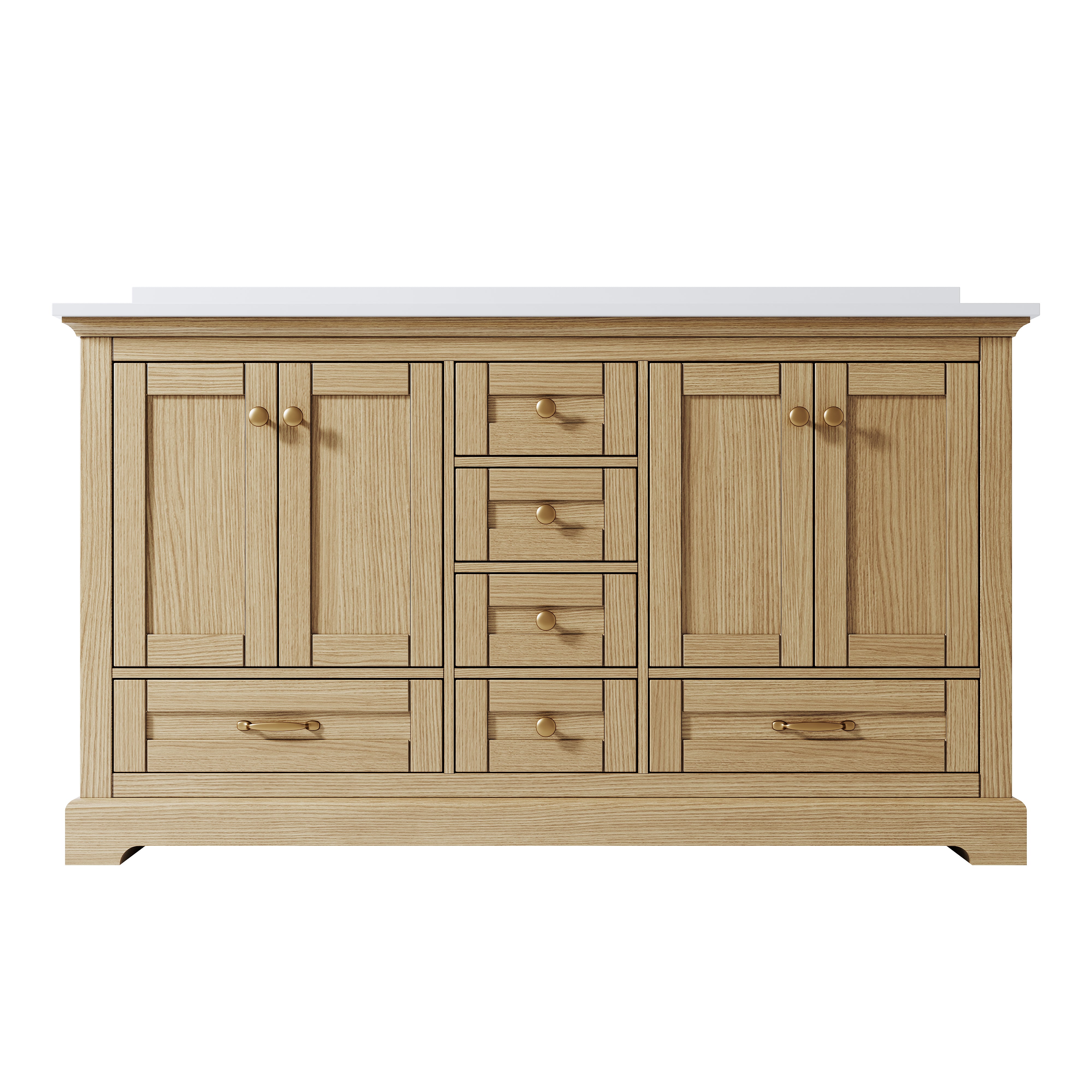
A flat-front oak vanity can look distinctly modern. Shaker-style wood doors fit transitional bathrooms. Richer stains and furniture-style details suit more traditional homes.
The Cabinet Shape Changes the Character
Mounting style matters too.
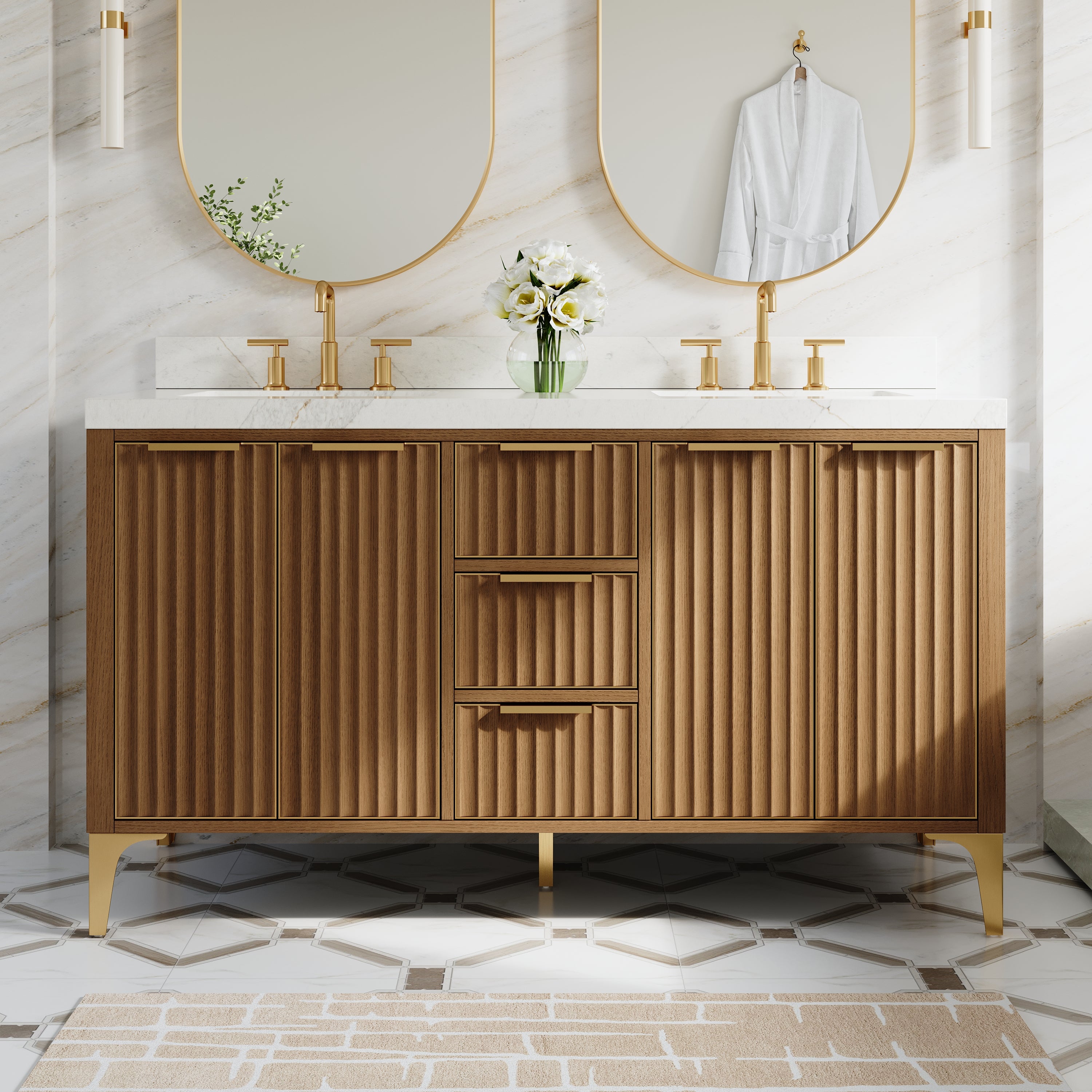
A floating wood vanity creates a lighter, architectural appearance because the floor remains visible underneath. A freestanding design feels more substantial and typically provides greater storage.
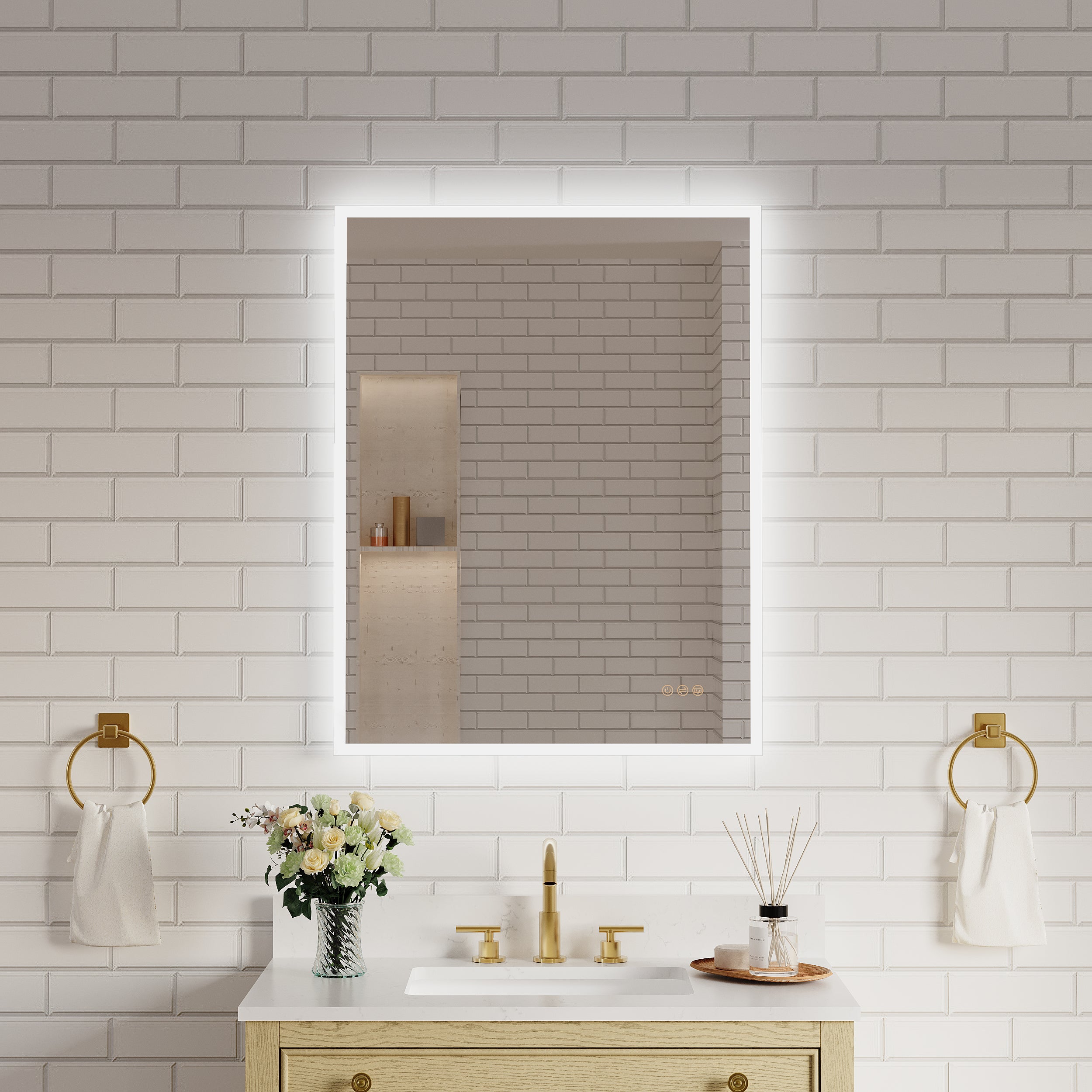
Hardware changes the mood again. Matte black creates contrast, brushed brass adds warmth, and polished nickel can make natural wood feel more refined.
Wood is flexible because it responds well to the materials placed around it.
3. Good Wood Cabinetry Can Age Gracefully
One advantage of wood is that minor signs of use do not always look out of place.
Small scratches can sometimes be repaired or touched up. Certain finishes may be refreshed after years of service, and quality doors can remain structurally sound even after hardware is replaced.
That repair potential matters in a frequently used bathroom.
A vanity does not stay untouched. Wet hands reach for drawers. Bottles are moved across the countertop. Children bump cabinet corners.
Wood can handle daily life well when the finish and construction are appropriate.
Still, “solid wood” should not be treated as a guarantee of quality. Poor joinery or inadequate sealing can undermine an expensive material.
4. Construction Matters More Than the Label
I advise buyers to inspect the cabinet beyond the visible door fronts.
Solid wood frames and doors can provide strength, while quality plywood is often an excellent choice for cabinet boxes because its layered structure remains comparatively stable as humidity changes.
Well-made combinations of materials can outperform poorly constructed all-solid-wood cabinets.
Check the Areas You Cannot See Easily
Look at drawer bottoms, cabinet edges, plumbing cutouts, backs, and joints.
Are exposed edges properly finished? Do the drawers feel rigid when fully opened? Are hinges and slides mounted securely?
The area below the sink deserves particular attention because this is where a slow leak is most likely to cause damage.
Construction quality should come before wood species on your shopping list.
5. Storage Should Match Real Bathroom Habits
A beautiful vanity becomes frustrating quickly if it cannot organize everyday products.
Deep drawers are excellent for skincare, cosmetics, grooming tools, brushes, and smaller toiletries. Items remain visible instead of disappearing behind bottles in a large cabinet.
Under-sink storage is better suited to taller containers, cleaning products, and spare paper goods.
Do not count storage by looking at drawer fronts. Some upper fronts are fixed because the sink occupies the space behind them, and plumbing cutouts can reduce usable capacity.
For a family bathroom, I would prioritize full-extension drawers and practical compartments over decorative cabinetry.
6. Moisture Is Wood's Biggest Limitation
Wood performs well in bathrooms when moisture is controlled, but it is not waterproof.
Repeated standing water can damage finishes and eventually reach the material underneath. Persistent humidity may also cause natural wood components to expand or contract slightly.
That does not make wood a poor bathroom material.
It means ventilation matters.
Run the exhaust fan during and after showers. Wipe water around the sink instead of letting it sit. Avoid leaving damp towels against cabinet doors.
Most serious cabinet damage I have encountered comes from water that stays unnoticed rather than an occasional splash.
7. Some Bathrooms Are Better Suited to Wood Than Others
A ventilated guest bath, family bathroom, or primary suite is usually a good environment for wood cabinetry.
An open wet room where shower spray regularly reaches the vanity is a different situation.
If water frequently pools on the floor or the bathroom remains humid for hours, I would address those issues before installing a premium wooden cabinet.
Floating models can keep the cabinet base away from floor moisture, but they require secure wall reinforcement.
Freestanding models offer more storage and simpler installation, yet their lower edges are closer to floor-level water.
8. Choose the Wood Tone With the Whole Room in Mind
Do not select the vanity from an isolated product photo.
Compare the wood tone with flooring, wall tile, countertop material, and lighting. Warm oak can clash with strongly blue-gray tile, while dark walnut may make a poorly lit bathroom feel heavier.
If the countertop has dramatic veining, quieter wood grain usually creates better balance.
Conversely, a simple white or cream countertop gives expressive natural grain more room to stand out.
The materials should support one another rather than compete.
9. Installation Protects Your Investment
Measure the wall, cabinet depth, countertop overhang, and nearby fixture clearance before ordering.
Check drain and supply-line positions against the interior layout. Plumbing running through a drawer bank may require relocation or reduce storage.
Install the cabinet level and seal the sink, faucet openings, countertop seams, and backsplash carefully.
Then test every plumbing connection before storing anything inside.
A slow leak beneath the sink can damage a high-quality cabinet long before ordinary bathroom humidity becomes a problem.

10. Maintain Wood Without Overcomplicating It
Routine care should be simple.
Use a soft cloth and mild, non-abrasive cleaner. Wipe standing water promptly and inspect beneath the sink periodically for leaks or discoloration.
Repair finish chips before moisture reaches exposed material. Keep the room ventilated and avoid storing wet cleaning cloths inside the cabinet.
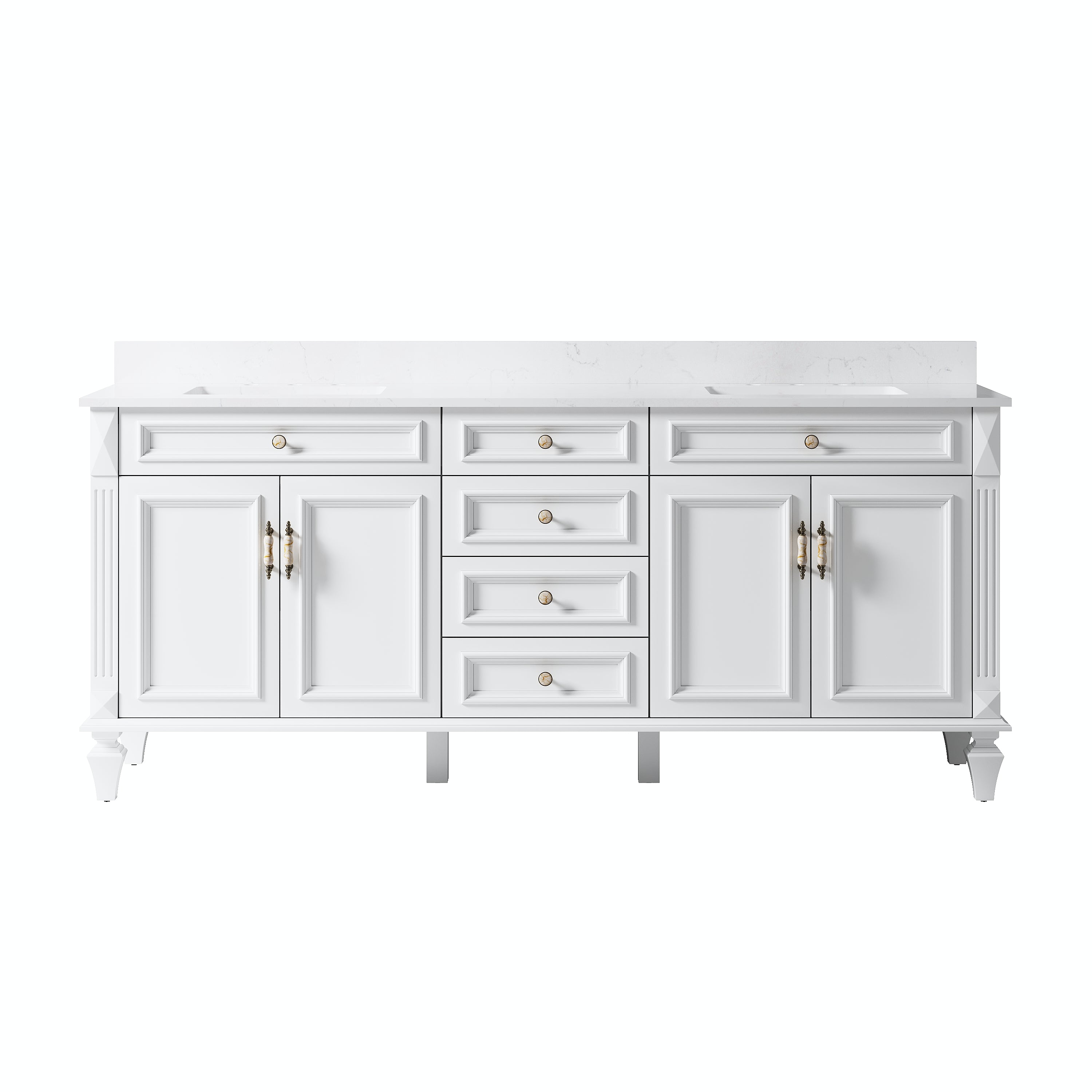
When comparing Wellfor options, focus first on construction, storage layout, finish quality, plumbing compatibility, and the conditions in your bathroom. Choose the grain and color after those practical questions are settled. A wooden bathroom vanity is worth considering when you want a cabinet that adds warmth and character while remaining adaptable enough to work through future changes in tile, lighting, hardware, and décor.















Leave a comment
This site is protected by hCaptcha and the hCaptcha Privacy Policy and Terms of Service apply.