






















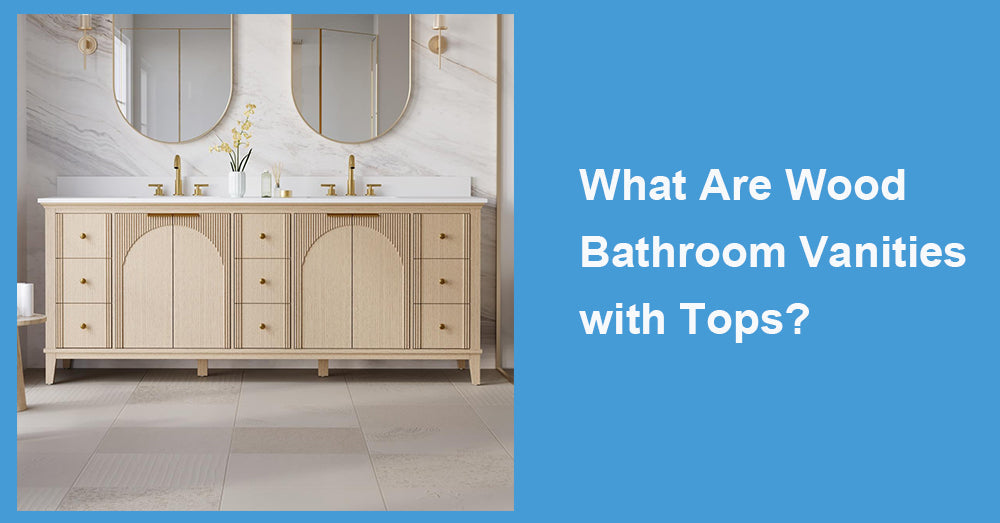
Wood bathroom vanities with tops are coordinated bathroom fixtures that combine a wood or wood-based storage cabinet with a countertop, and often a sink, in one product package. They sit beneath the bathroom mirror, conceal plumbing, support the basin, and organize daily essentials. The phrase sounds straightforward, but online listings vary widely. “Wood” may describe several cabinet materials, while “with top” does not always mean the sink, backsplash, faucet, or drain is included.
What Does the Package Usually Include?
At minimum, the product includes a vanity cabinet and fitted countertop. Many packages also include an undermount or integrated sink. Backsplashes may be included, while side splashes are often separate. Faucets, drains, P-traps, and supply lines may appear in photos but be excluded.
Read the package-contents section rather than relying on lifestyle images. Confirm the quantity of sinks, faucet-hole pattern, backsplash dimensions, hardware finish, and whether the top arrives attached. A separately packed top can reduce the weight of the cabinet during moving, but it requires on-site positioning and sealing.
What Does “Wood” Actually Mean?
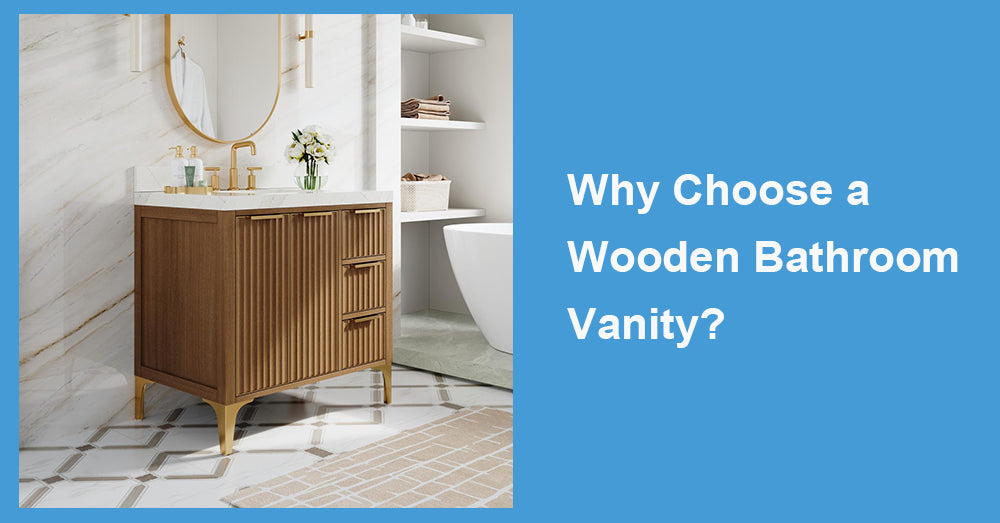
A bathroom vanity can use several materials at once. The face frame and legs may be solid wood, the side panels may be plywood, and the painted doors may be MDF. Drawer bottoms or backs may use thinner engineered panels. This mixed approach is common and is not automatically a sign of low quality.
Solid wood can hold fasteners well and display natural grain, but it responds to humidity. Plywood’s bonded layers can provide stable panels. MDF creates a smooth painted surface but needs effective edge sealing. Particleboard may lower cost, although exposed edges require evaluation.
The USDA Forest Products Laboratory explains that wood is hygroscopic, meaning it exchanges moisture with the surrounding environment; changes in moisture influence wood properties and performance. (Source: USDA Forest Service, Forest Products Laboratory, “Moisture Relations and Physical Properties of Wood,” 2021.) That is why cabinet design, coating quality, ventilation, and prompt leak repair matter as much as the species name.
How Are These Vanities Different From Cabinet-Only Models?
A cabinet-only vanity lets the buyer select a custom countertop, basin, and faucet layout. That flexibility suits unusual rooms or highly personalized projects, but it requires additional measurements, fabrication decisions, and coordination.
A vanity with a top included simplifies matching. The factory-selected top should correspond to the cabinet width and sink support, which can reduce ordering mistakes. The tradeoff is less freedom over material, sink position, edge profile, and color. Buyers should still verify actual dimensions because a 36-in. cabinet, for example, may carry a slightly wider top with an overhang.
Which Countertop Materials Are Common?
Engineered quartz, natural stone, cultured marble, solid surface, and ceramic are common choices. Each behaves differently, so the material should be named in the specifications.
Engineered quartz offers consistent color and straightforward care, although heat and chemical guidance varies. Natural stone has unique veining; some stones may benefit from sealing. Cultured marble can combine basin and top, while solid surface may permit some repairs. Ceramic cleans easily but can chip under impact.
The Natural Stone Institute recommends neutral cleaners or stone soap for natural stone and notes that sealing can improve stain resistance without making a surface stain-proof. (Source: Natural Stone Institute, “Learn About Cleaning Products for Natural Stone.”) Never transfer those instructions to an unnamed material. Follow the specific top manufacturer’s care guide.

Are Engineered-Wood Cabinets Safe to Buy?
Engineered wood is a broad category, not a warning label. Quality depends on the panel, thickness, finish, joinery, and intended use. For products containing regulated hardwood plywood, MDF, or particleboard, look for applicable TSCA Title VI compliance information.
The U.S. Environmental Protection Agency’s composite-wood rule establishes formaldehyde-emission, certification, and labeling requirements for covered panels and finished goods sold in the United States. (Source: U.S. EPA, “Formaldehyde Emission Standards for Composite Wood Products.”) This compliance is important, but it does not grade moisture resistance, drawer strength, or finish durability. Those features require separate review.
What Sizes and Configurations Are Available?
Packages range from narrow powder-room vanities to wide double-sink units. Common residential widths include 24 in., 30 in., 36 in., 48 in., 60 in., and 72 in., although actual top dimensions may differ. Depth and height vary as well.
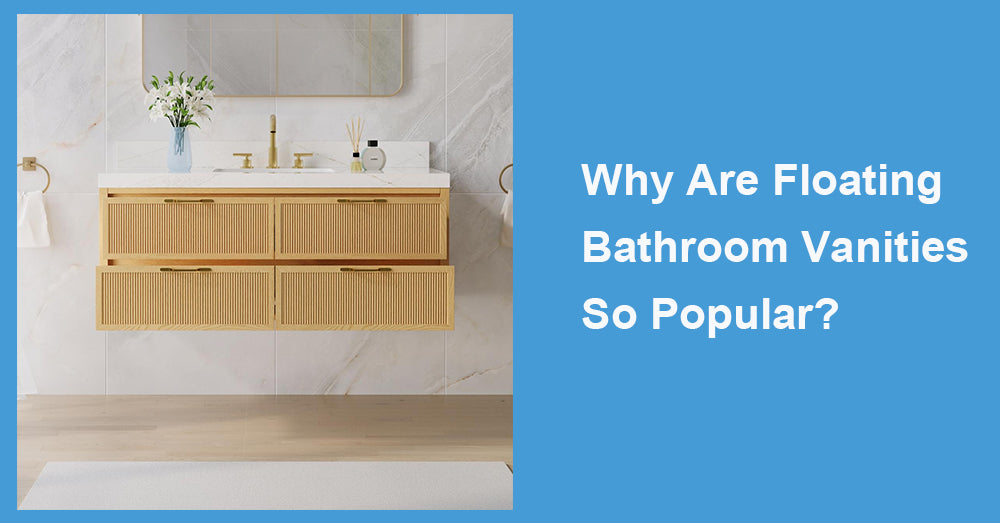
Styles include freestanding cabinets with legs or toe kicks and wall-mounted models that leave visible floor space. Storage may combine doors, drawers, open shelves, or plumbing-shaped pullouts. Sink positions can be centered or offset. Choose based on the finished room, plumbing location, door swing, storage habits, and delivery path rather than width alone.
What Should You Check Before Ordering?
Use a dimensioned drawing to confirm cabinet width, top width, depth, height, overhang, sink size, faucet holes, backsplash height, rear openings, and interior drawer clearances. Measure the bathroom at floor and counter height. Mark baseboards, outlets, vents, supply valves, and drain locations.
Examine close-up images of the finish, edges, sink cutout, drawers, hinges, and slides. Specifications should identify cabinet components, top and sink materials, and included parts. Reviews matter most when several owners report the same issue, such as inaccurate dimensions or shipping damage.
Finally, read the warranty and return policy. Determine whether coverage differs for the cabinet, finish, top, sink, and hardware. Note damage-reporting deadlines, return-freight responsibility, and whether installed items can be returned. Heavy vanity packages can make preventable ordering mistakes expensive.
Are They a Good Choice?
Wood vanities with coordinated tops are a practical choice for buyers who want storage, a finished countertop, and fewer sourcing decisions in one purchase. The best package is not simply the one with the most solid wood or the most expensive stone. It is the one with transparent materials, compatible dimensions, protected edges, usable storage, clear care guidance, and dependable warranty support. Verify those details, and the package can offer both design consistency and a smoother installation process.







































Leave a comment
This site is protected by hCaptcha and the hCaptcha Privacy Policy and Terms of Service apply.