






















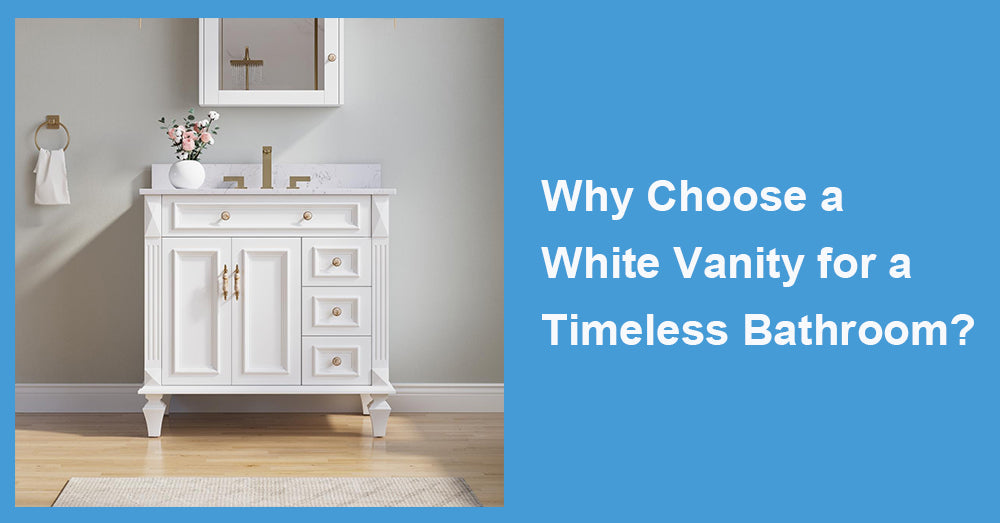
A white vanity is one of the few bathroom choices that can look appropriate across several design eras without feeling tied to a single trend. After more than 20 years of working with bathroom cabinetry, I have seen white vanities remain relevant while homeowners changed mirrors, lighting, countertops, wall colors, and hardware around them. Their strength is not simply that white looks clean. A well-proportioned cabinet creates a flexible foundation that can support modern, traditional, transitional, and even warmer natural interiors.
Timeless, however, does not mean automatic. The cabinet still needs good construction, practical storage, the right shade of white, and proportions that make sense for the room.
1. Why a White Vanity Adapts So Easily
Bathrooms are expensive spaces to renovate because so many finishes are permanent or difficult to replace. Tile, plumbing fixtures, countertops, shower glass, and flooring may remain for years.
White cabinetry works with most of these materials. Pair it with marble-look quartz and brushed nickel for a clean contemporary bathroom. Add warm brass and beige stone for a softer atmosphere. Matte black hardware creates sharper contrast, while wood accents can prevent the room from feeling too cool.
This flexibility is valuable when tastes change. Replacing cabinet pulls or repainting a wall is relatively simple. Replacing the entire vanity is not.
2. White Helps the Bathroom Feel Lighter
A dark floor-mounted cabinet can create visual weight, especially in a small or windowless room. White reflects more available light and tends to blend more naturally with pale walls and tile.
I have seen this work particularly well in guest bathrooms and compact hall baths. A white cabinet beneath a large mirror can make the sink area appear less crowded, even when the room’s physical dimensions have not changed.
Color Cannot Fix Poor Proportions
One common mistake is believing that white will make an oversized cabinet disappear.
It will not. A vanity that projects too far into the walkway still creates an uncomfortable room. A cabinet that sits too close to the toilet or blocks a shower door remains a layout problem regardless of color.
Measure width, depth, countertop overhang, and nearby clearances before choosing the finish.
3. Choose the Right White for the Room
White is not a single color. Some finishes have cool blue or gray undertones. Others lean cream, beige, or warm ivory.
A bright white cabinet may look crisp beside cool gray tile but slightly harsh next to warm stone. A creamy white can work beautifully in a traditional bathroom, yet it may appear yellow under cool LED lighting.
Always compare the cabinet finish with the countertop, flooring, wall paint, and lighting when possible.
Exact Matching Is Usually Unnecessary
Trying to make every white surface identical often creates more problems than it solves.
Slight variation adds depth. A soft white vanity paired with a warmer quartz top and pale tile can feel layered rather than mismatched. What matters is that the undertones relate to one another.
4. A Timeless Bathroom Still Needs Texture
An all-white room can become flat if every surface is smooth and visually similar. This is one reason some white bathrooms feel inviting while others resemble a showroom.
Texture makes the difference.
Consider subtle stone veining, handmade-look tile, a wood-framed mirror, ribbed glass, woven baskets, or brushed metal hardware. These elements introduce character without reducing the clean effect of the cabinetry.
The vanity should often serve as a quiet background rather than compete with every other design feature.
5. Storage Matters More Than the Door Color
A vanity can look timeless and still become frustrating if the interior is poorly planned.
Deep drawers are useful for skincare, brushes, cosmetics, and grooming tools. They allow smaller items to stay visible rather than disappearing behind pipes. Cabinet space beneath the sink works better for taller bottles, cleaning supplies, and spare paper products.
Check whether all visible drawer fronts actually open. Some are decorative because the sink occupies the space behind them. Plumbing cutouts may also reduce usable storage.
In a family bathroom, I would prioritize full-extension drawers, durable slides, and adjustable shelving over decorative details. In a lightly used powder room, storage may matter less.
6. White Has Some Practical Drawbacks
White cabinets reveal toothpaste, makeup, dust, fingerprints, and hair dye more easily than many medium wood finishes. For a busy children’s bathroom, this can mean more frequent spot cleaning.
Finish quality matters too. Cheap coatings can chip at corners or around handles. High-gloss surfaces tend to show fine scratches, while heavily detailed doors collect dust in grooves.
A durable satin or matte finish is usually easier to maintain.
White may also be the wrong choice for a bathroom intentionally designed to feel dark, dramatic, or strongly rustic. In those spaces, natural wood or a deeper painted finish may support the design better.
7. Consider the Mounting Style
A floating white vanity can make a compact bathroom feel more open because more flooring remains visible. It also makes floor cleaning easier and works well in contemporary spaces.
The drawback is installation. Wall-mounted cabinets require secure framing and careful leveling, and some models offer less storage height.
Freestanding vanities are generally easier to install around existing plumbing and often provide more storage. Their fuller base can feel heavier in a narrow bathroom, so depth becomes especially important.

8. Install and Maintain It Carefully
Set the cabinet level so doors and drawers remain aligned. White finishes make crooked hardware, uneven gaps, and poor caulk lines easier to notice.
Seal the sink, faucet openings, countertop, and backsplash joints carefully. Test the plumbing before storing anything inside the cabinet. Even a slow leak can damage the base over time.
For routine care, use a soft cloth and mild, non-abrasive cleaner. Wipe standing water around the sink, remove colored spills promptly, and run the exhaust fan after showers. Check beneath the cabinet periodically for moisture.
When comparing Wellfor options, start with dimensions, construction quality, usable storage, and the finish undertone before choosing hardware or decorative details. A white vanity earns its timeless reputation when it fits the room properly, handles daily use, and gives future design changes enough freedom to happen around it.









































Leave a comment
This site is protected by hCaptcha and the hCaptcha Privacy Policy and Terms of Service apply.