














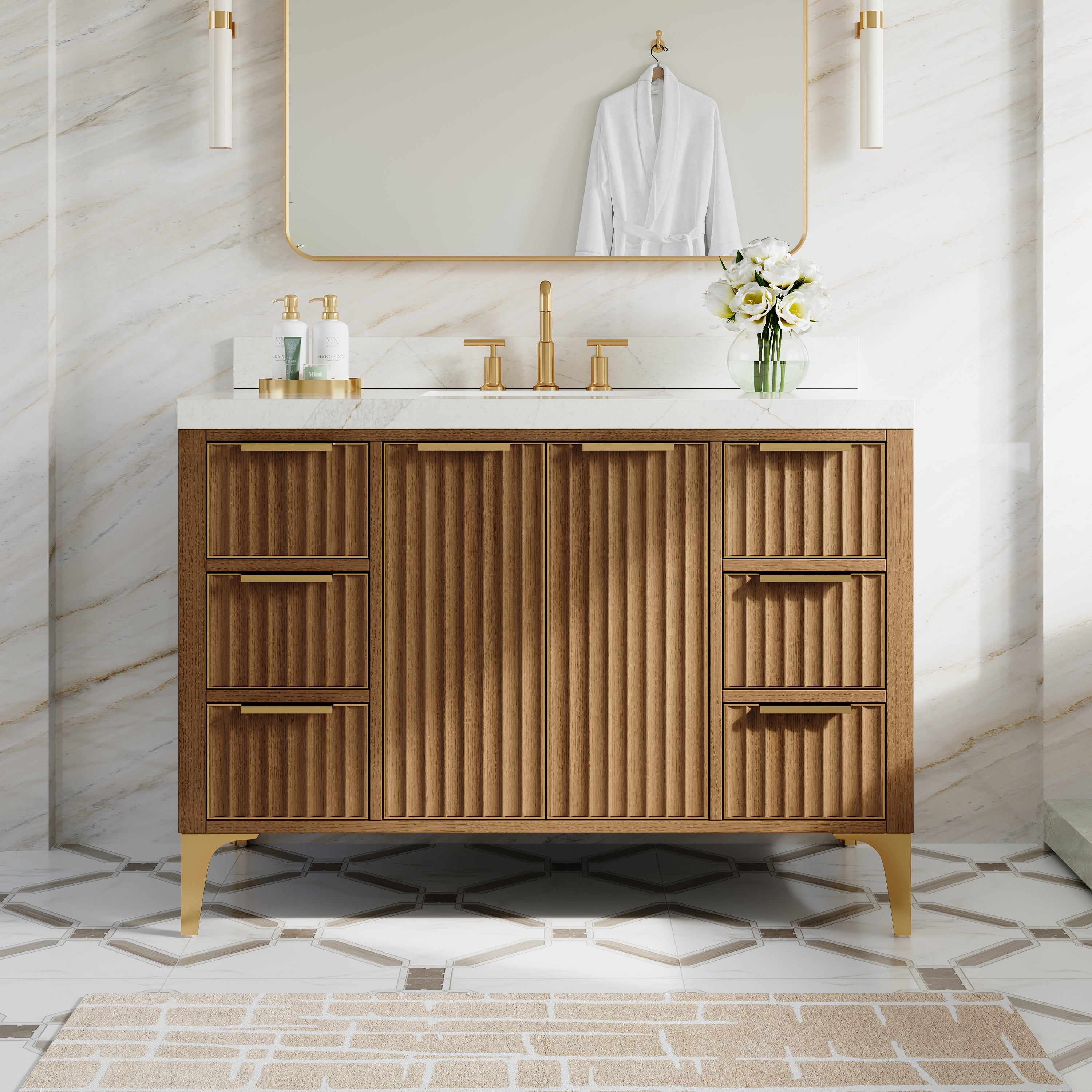
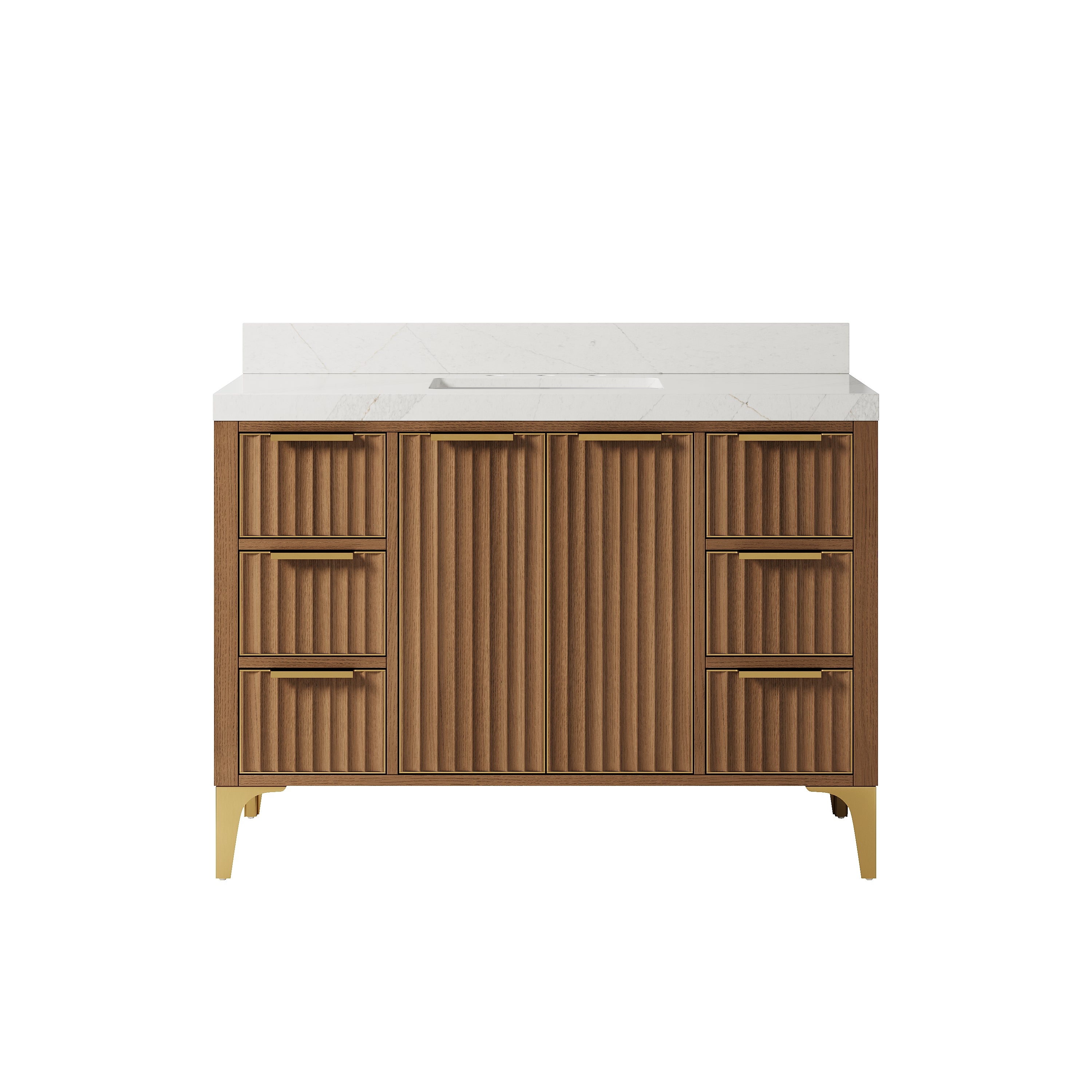


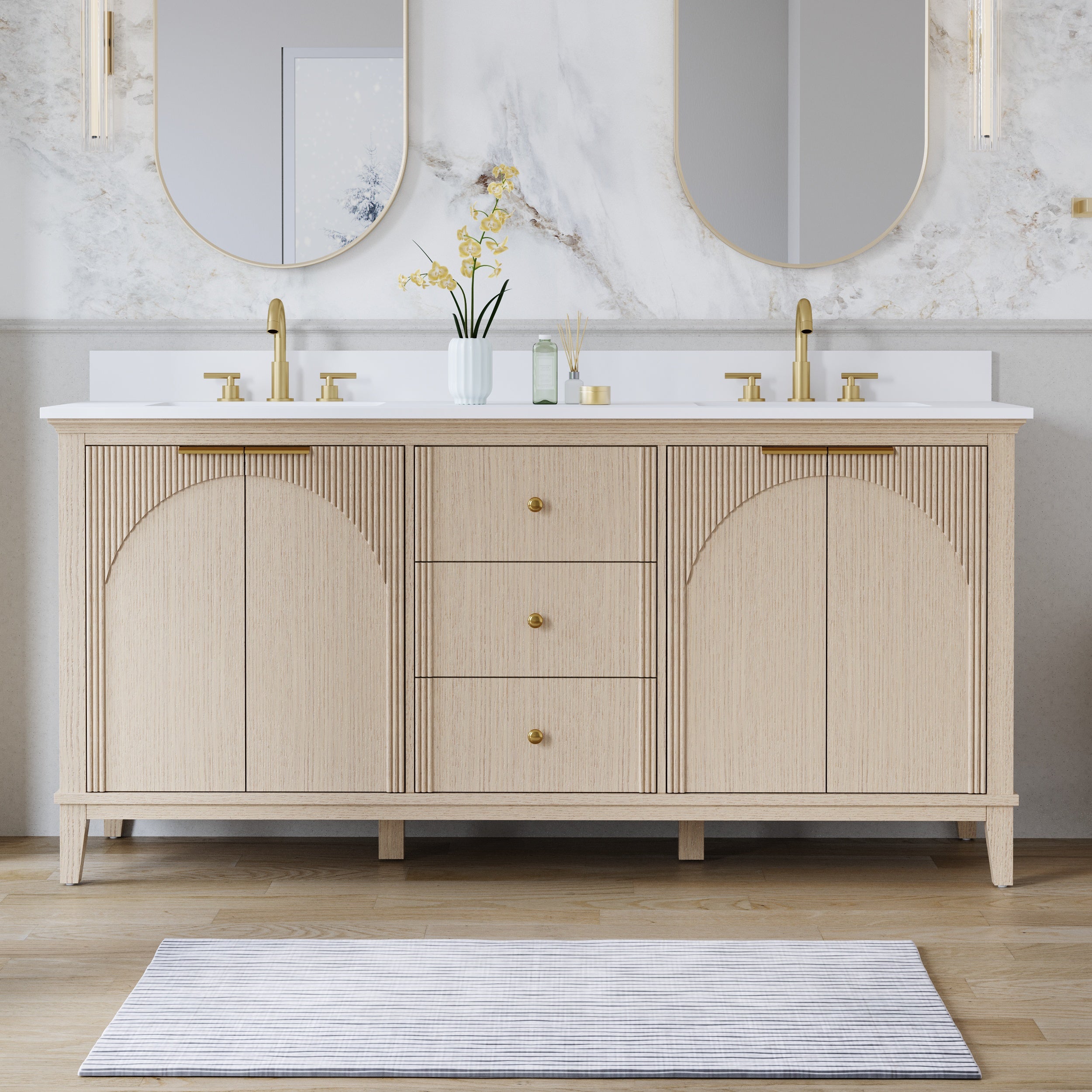
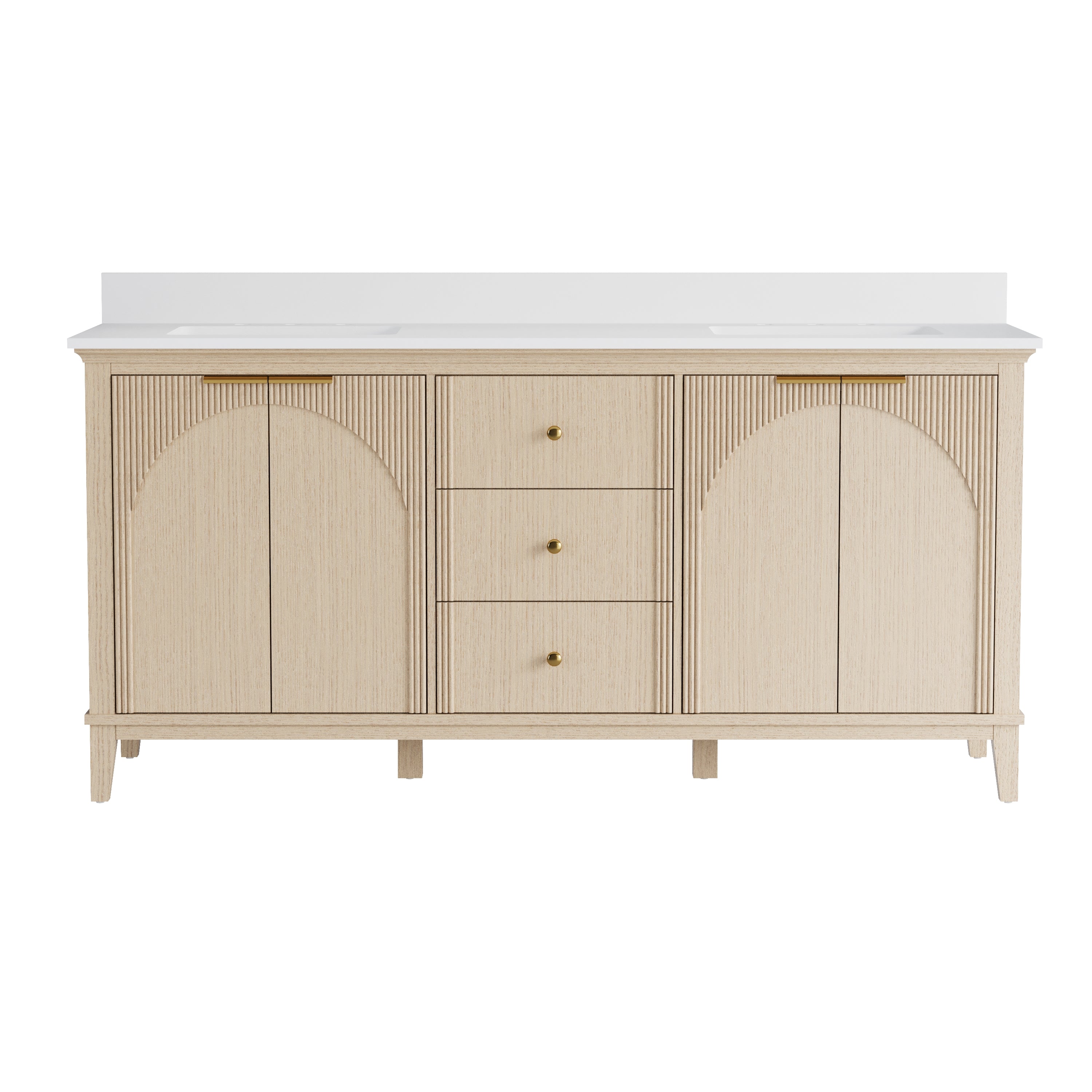
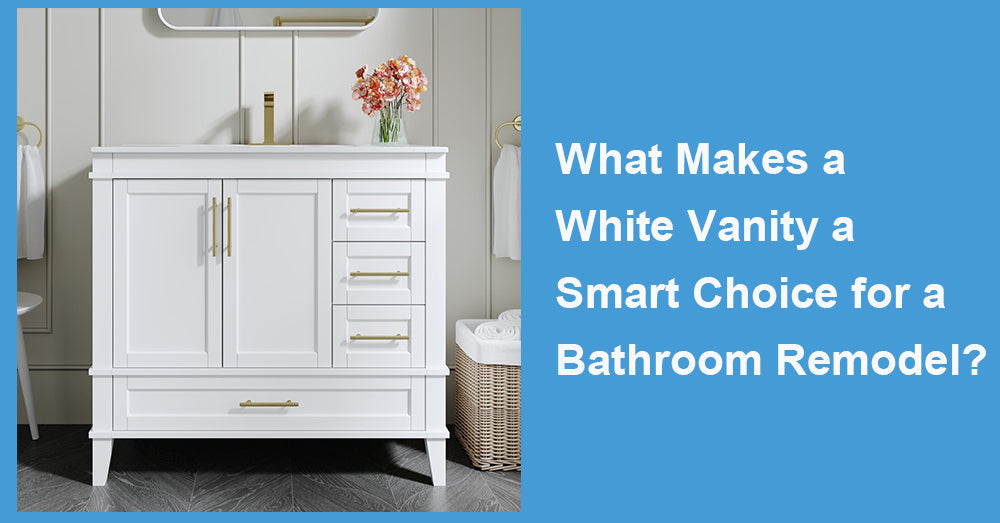
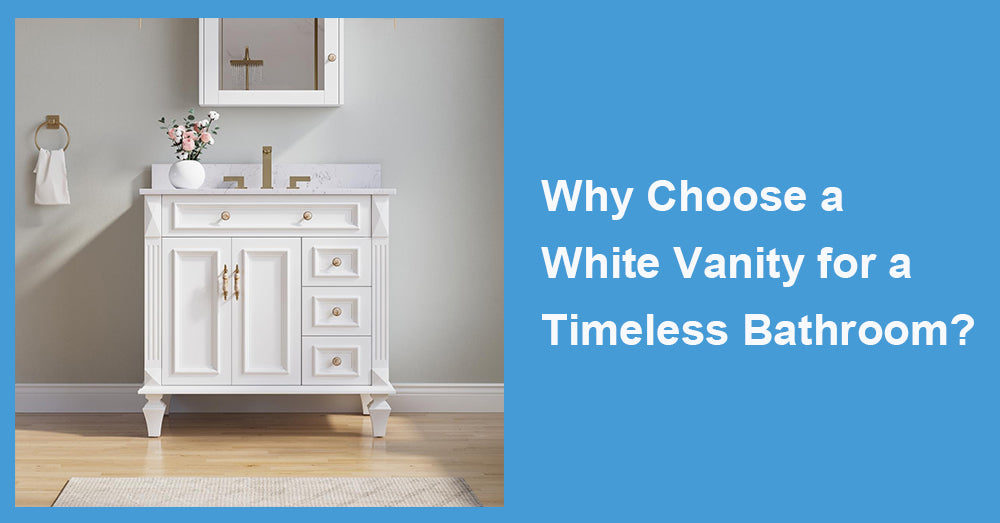
A white vanity is one of the most adaptable choices for a bathroom remodel because it can brighten the room, support several design styles, and remain visually relevant as surrounding finishes change. After more than 20 years of working with bathroom cabinetry, I have seen white vanities succeed in narrow guest baths, busy family bathrooms, and spacious primary suites. Their strength is not that they demand attention. It is that they create a calm foundation for the rest of the room.
The color still needs to be paired with sound construction, useful storage, and proportions that suit the layout. A white finish cannot rescue a poorly planned cabinet.
1. Why a White Vanity Makes Remodeling Easier
A bathroom renovation involves several materials that are costly or inconvenient to replace, including tile, countertops, flooring, plumbing fixtures, and shower glass. White cabinetry works with most of them.
It can sit comfortably beside gray-veined quartz, warm beige stone, patterned ceramic tile, or wood-look flooring. Hardware choices are equally flexible. Brushed nickel keeps the room quiet, matte black creates definition, and soft brass adds warmth.
This adaptability reduces the risk of building the entire bathroom around a finish that may feel dated within a few years. Homeowners can change the mirror, paint color, lighting, or cabinet pulls later without replacing the vanity.
In resale-focused remodels, that flexibility is useful. A highly specific color may appeal strongly to one buyer and discourage another. White usually creates fewer objections.
2. A White Vanity Can Make the Bathroom Feel Brighter
White reflects more light than dark wood or deep painted finishes. In compact bathrooms and windowless spaces, that can make the cabinet feel less heavy.
The difference is especially noticeable along the lower half of the room. A dark floor-standing vanity can appear like a solid block, while a white cabinet blends more easily with pale walls and countertops. The bathroom does not become physically larger, but it often feels more open.
White cannot correct poor scale
One common misunderstanding is that color alone can solve a cramped layout.
A cabinet that is too deep will still interfere with the walkway. An oversized vanity can still crowd the toilet or block a shower door. Measure width, depth, countertop overhang, and drawer clearance before assuming white will make the cabinet disappear.
Painter’s tape is useful here. Mark the full vanity footprint on the floor, then walk through the bathroom and open every nearby door.
3. The Finish Works Across Several Interior Styles
A white vanity is not limited to one design direction.
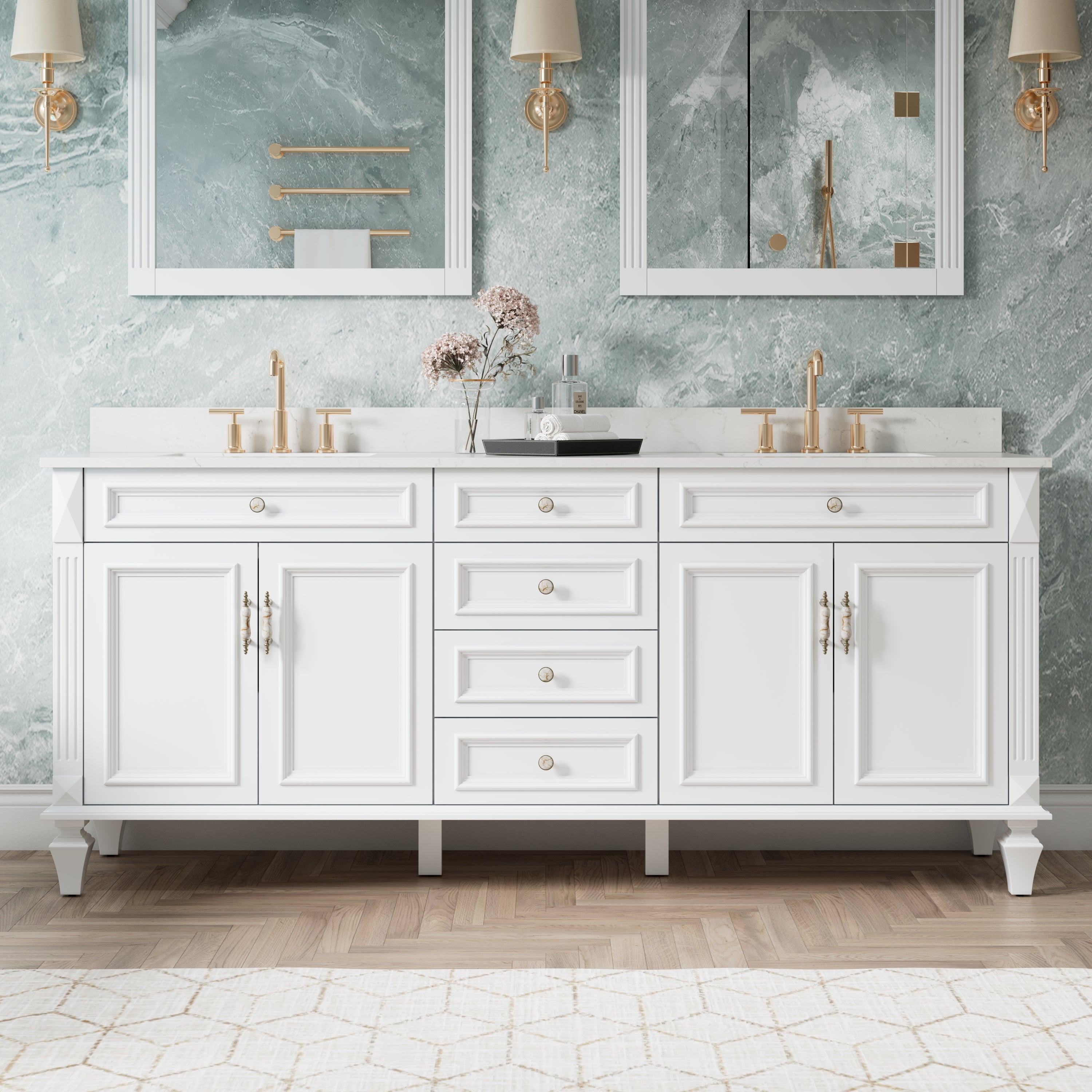
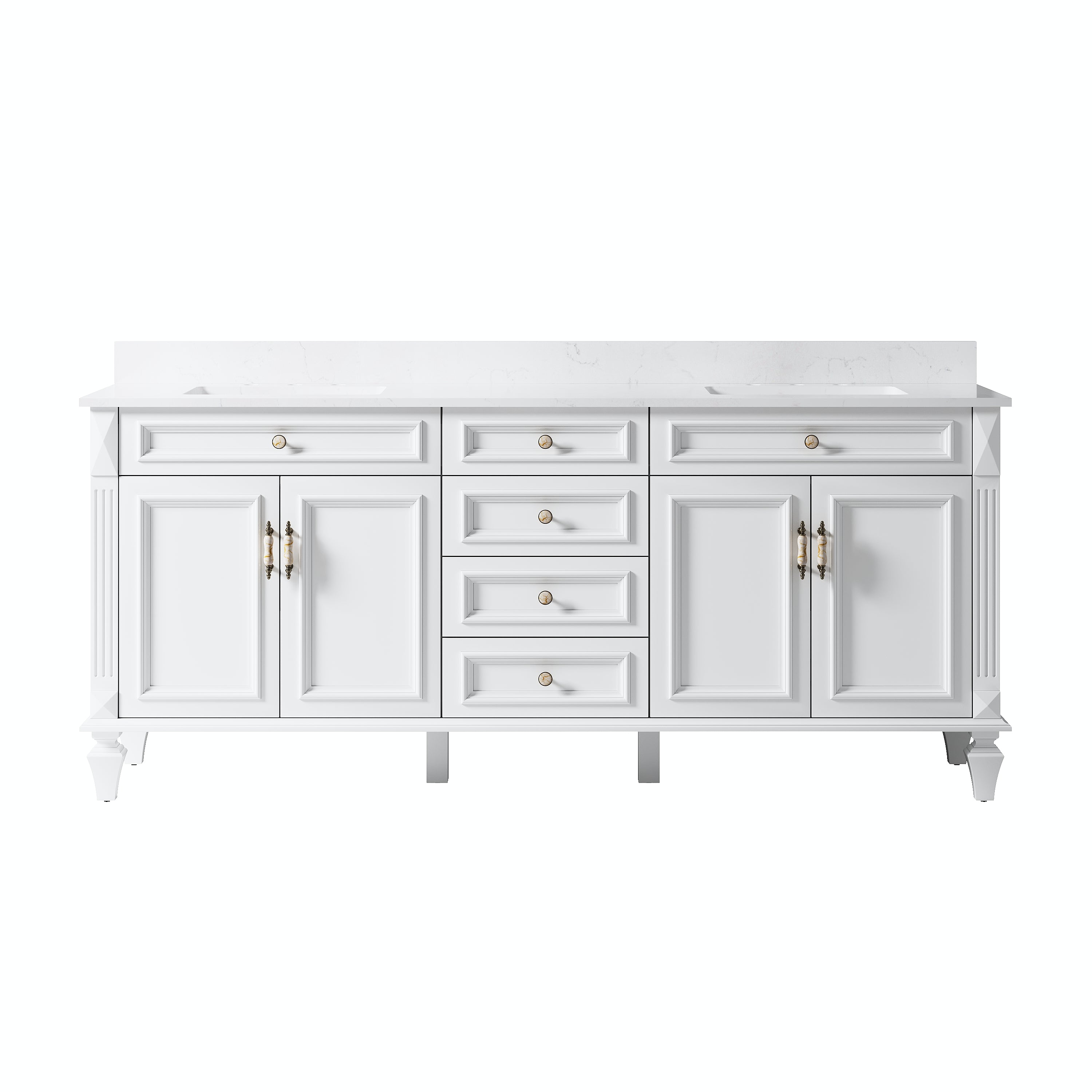
Flat-front drawers and simple pulls create a modern or minimalist appearance. A floating installation exposes more flooring and works well in spa-inspired bathrooms. Narrow shaker doors suit transitional homes, while subtle molding and furniture-style legs can support a traditional room.
The countertop changes the mood too. White quartz with restrained veining feels clean and contemporary. Warmer stone softens the cabinet. A darker top introduces contrast, though it may show dust and water marks more readily.
Choose the correct shade of white
Not every white finish looks the same. Some are crisp and cool. Others have warm cream, gray, or beige undertones.
A bright white cabinet beside ivory tile may look harsher than expected. A warmer finish can appear yellow beneath cool LED lighting. Compare the vanity with the floor, countertop, wall color, and light temperature before ordering.
The materials do not need to match exactly. They should simply feel as though they belong in the same room.
4. Practical Storage Matters More Than the Color
A remodeling decision should improve the way the bathroom functions. The cabinet interior deserves as much attention as the finish.
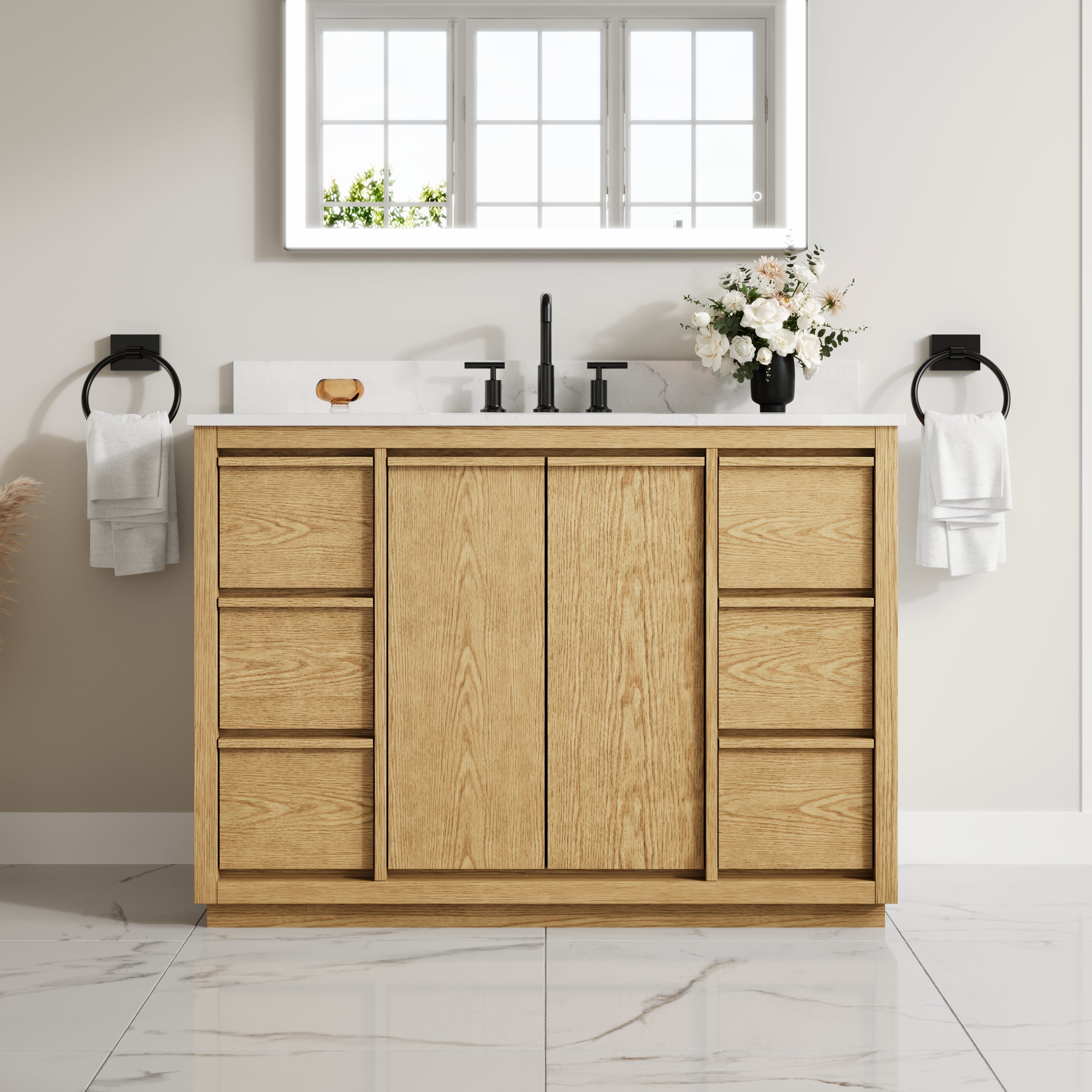
Deep drawers are useful for skincare, cosmetics, grooming tools, and small toiletries. They keep items visible and prevent products from disappearing behind plumbing. Enclosed cabinet space beneath the sink is better for tall bottles, extra paper goods, and cleaning supplies.
Do not count drawer fronts without checking whether they open. Some are decorative because the basin occupies the space behind them. Plumbing cutouts can also reduce usable storage.
For a family bathroom, I would choose functional drawers and durable hardware over decorative legs. A guest bath may need less daily storage, allowing a lighter, more furniture-like design.
5. The Advantages Come With Honest Limitations
White surfaces show toothpaste, makeup, hair dye, and fingerprints more easily than many wood finishes. This can be inconvenient in a heavily used children’s bathroom.
Poor-quality paint may chip around corners and handles. Glossy finishes can reveal fine scratches, while detailed door profiles collect dust in grooves. A durable satin or matte coating is often easier to maintain.
An all-white bathroom can also feel flat or clinical. The solution is not necessarily a different cabinet color. Natural wood accessories, warmer metal finishes, textured towels, or subtle stone veining can add enough depth.
White works best when it acts as the background rather than the only design idea.
6. Know Where White Is—and Is Not—the Best Fit
A white vanity is particularly effective in small bathrooms, narrow guest baths, windowless rooms, and remodels where long-term flexibility matters. It also works well when the floor, shower wall, or countertop already has a strong pattern.
It may be less suitable when the goal is a dark, dramatic bathroom or a strongly rustic interior built around visible natural grain. Homeowners who dislike frequent spot cleaning may also prefer a medium wood finish that conceals ordinary marks more easily.
The room’s actual use should guide the choice. A lightly used powder room and a family bathroom have very different demands.

7. Installation and Maintenance Protect the Remodel
The vanity should be installed level so doors and drawers remain aligned. Seal the sink, countertop, faucet openings, and backsplash joints carefully. Test the plumbing before filling the cabinet.
White finishes reveal crooked hardware and uneven gaps quickly, so precise installation matters.
For routine care, use a soft cloth and a mild, non-abrasive cleaner. Remove colored spills promptly and wipe standing water around the sink. Run the exhaust fan after showers, and inspect the plumbing several times a year for slow leaks.
When comparing Wellfor options, choose a white vanity based on the room’s dimensions, storage needs, lighting, and existing undertones. Prioritize dependable construction and a practical interior before selecting hardware or countertop details. A carefully chosen white vanity gives a bathroom remodel room to evolve while keeping the space bright, organized, and easy to live with.
















Leave a comment
This site is protected by hCaptcha and the hCaptcha Privacy Policy and Terms of Service apply.