














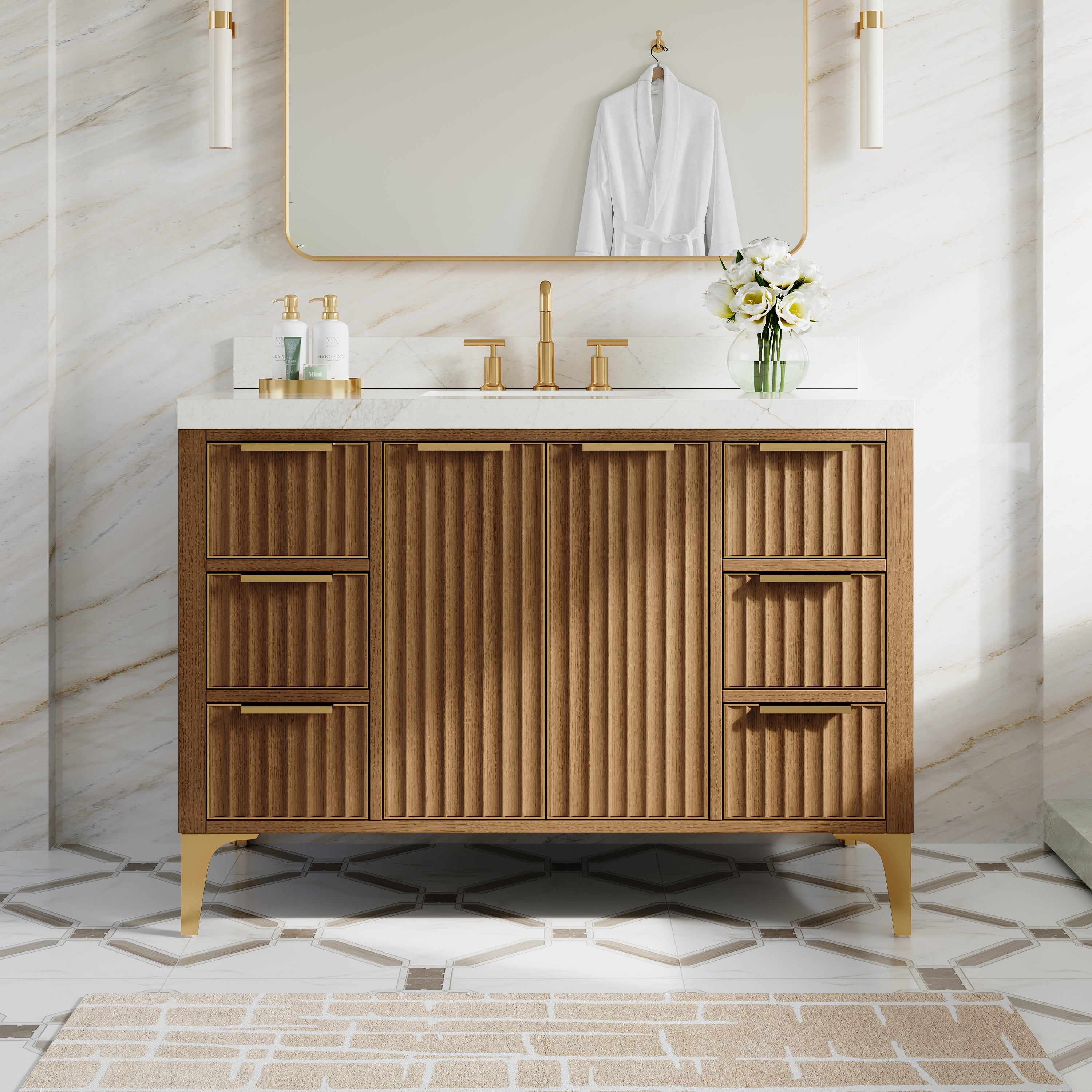
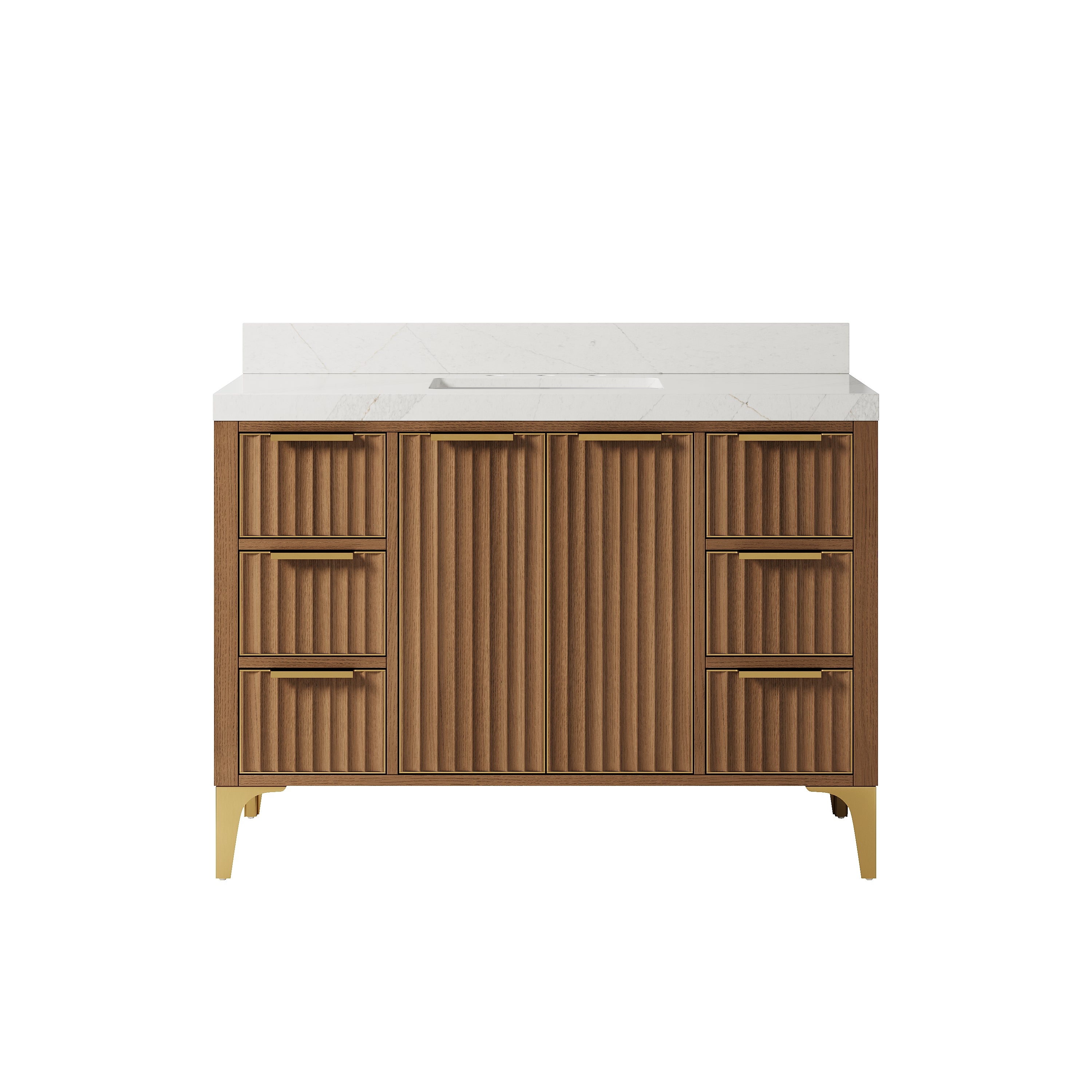


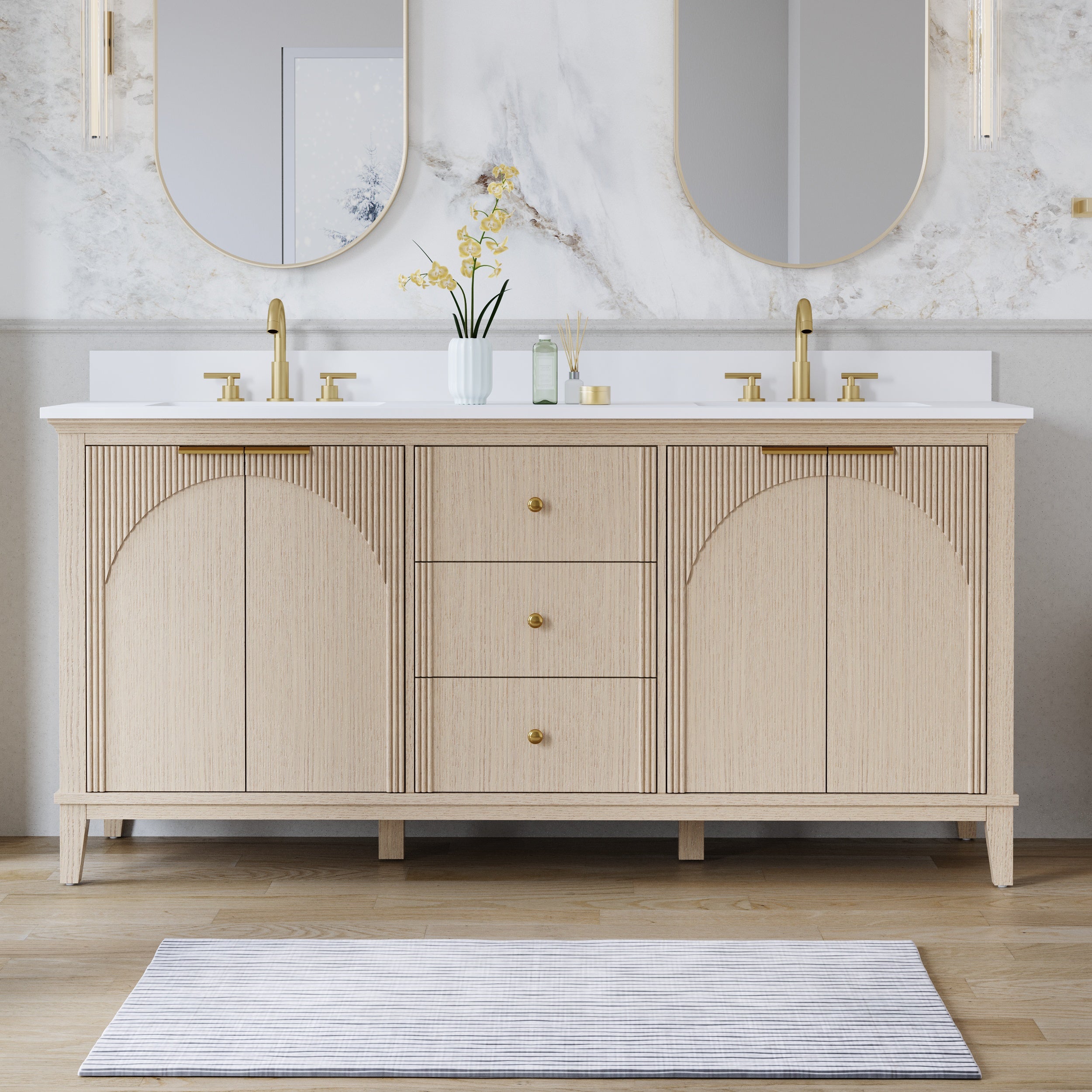
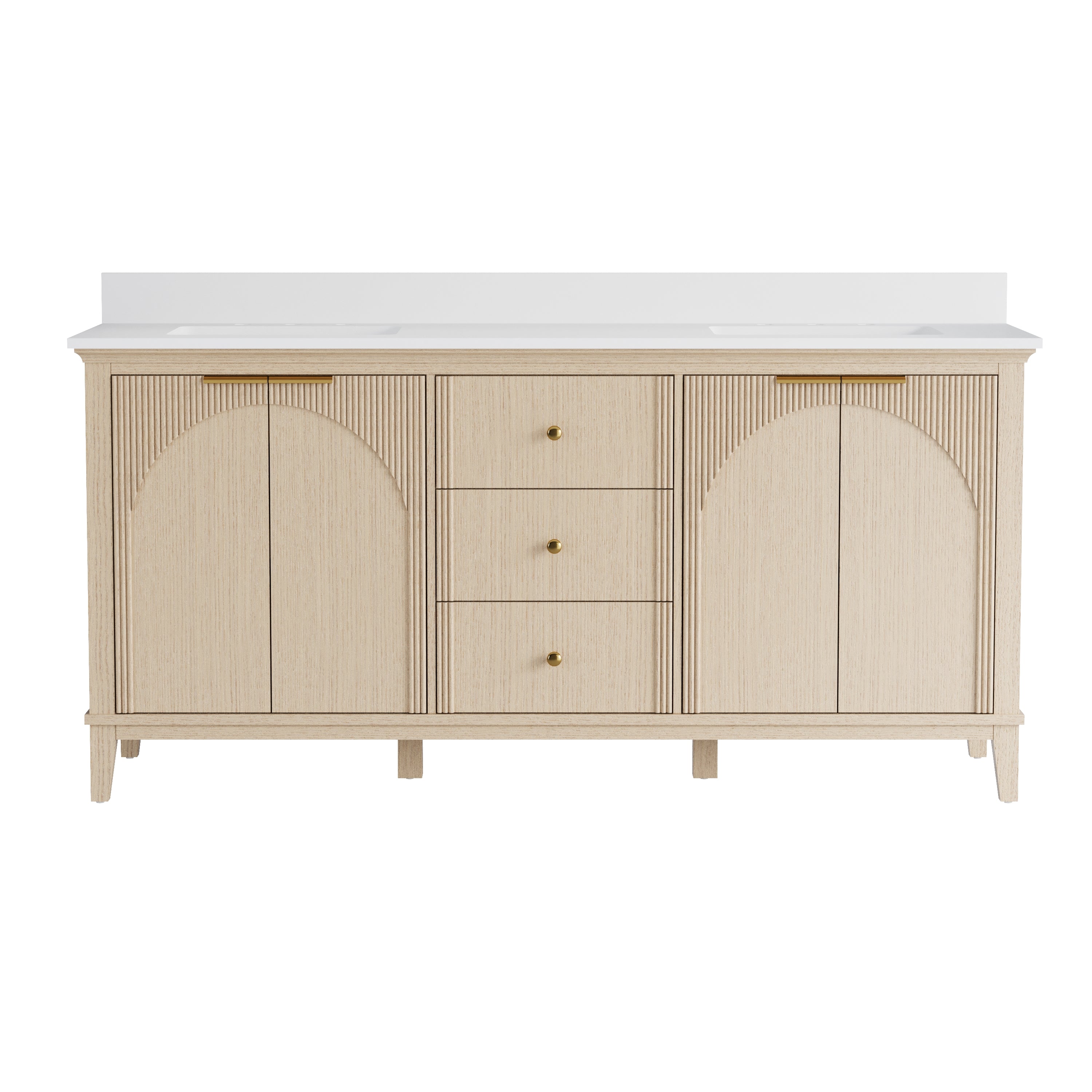
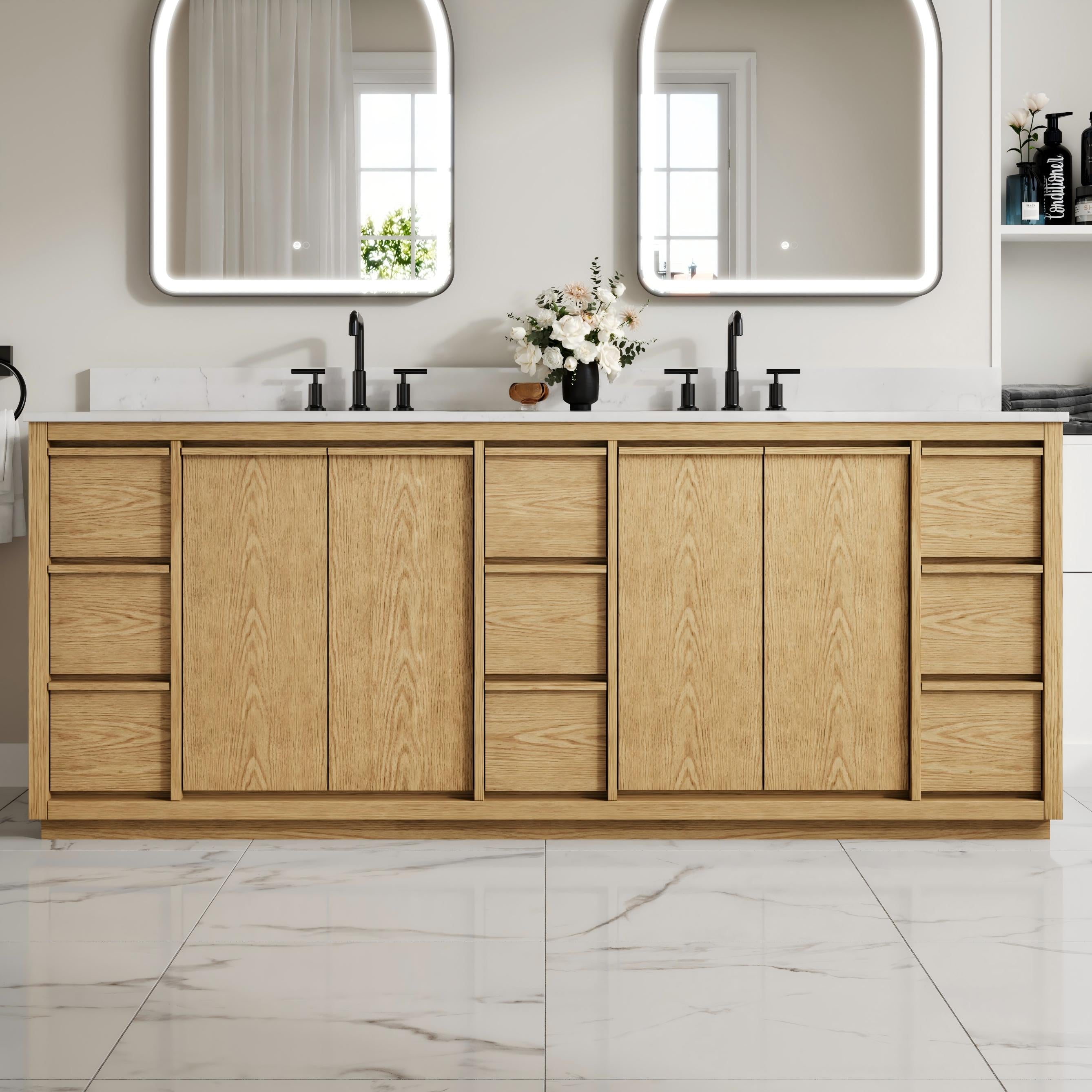
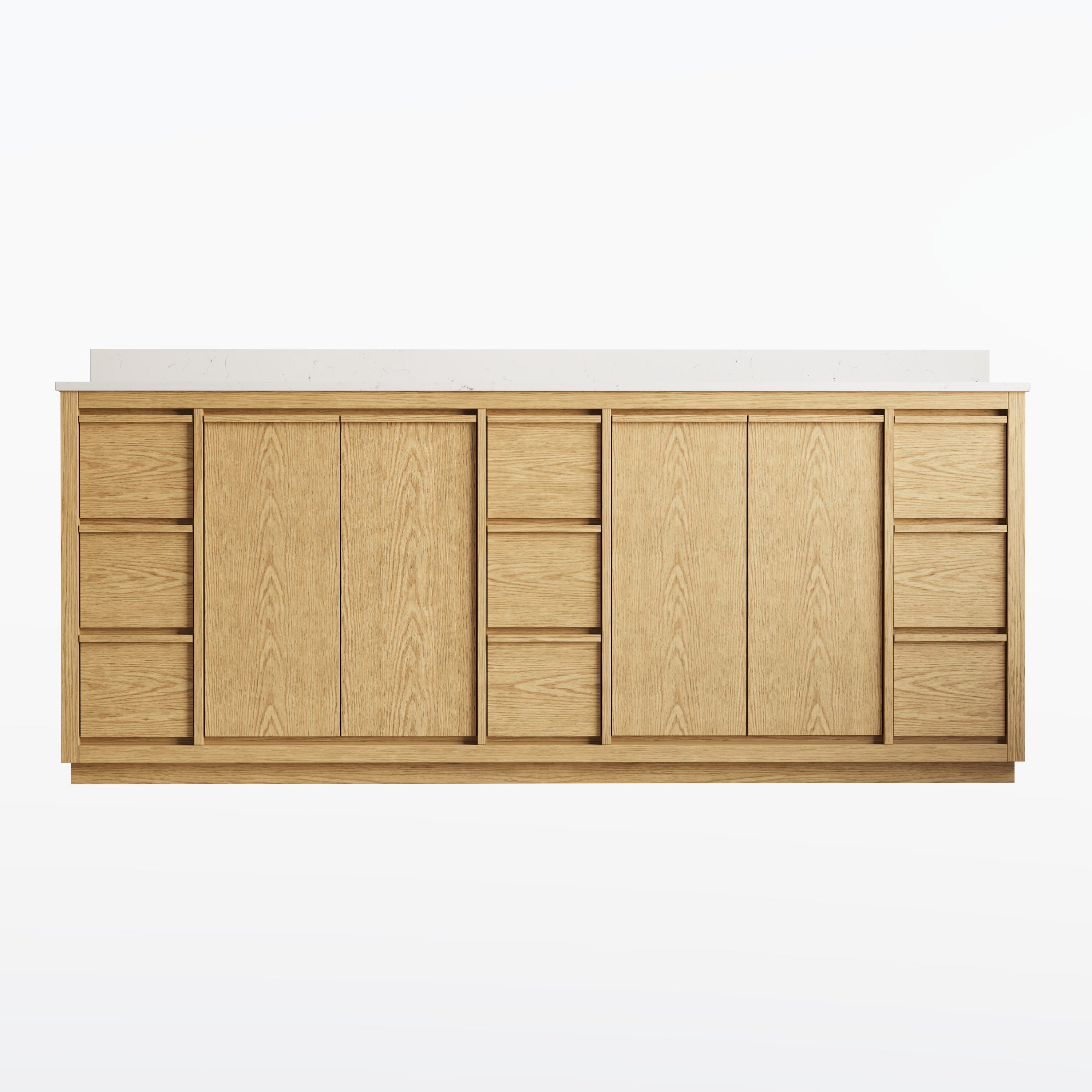
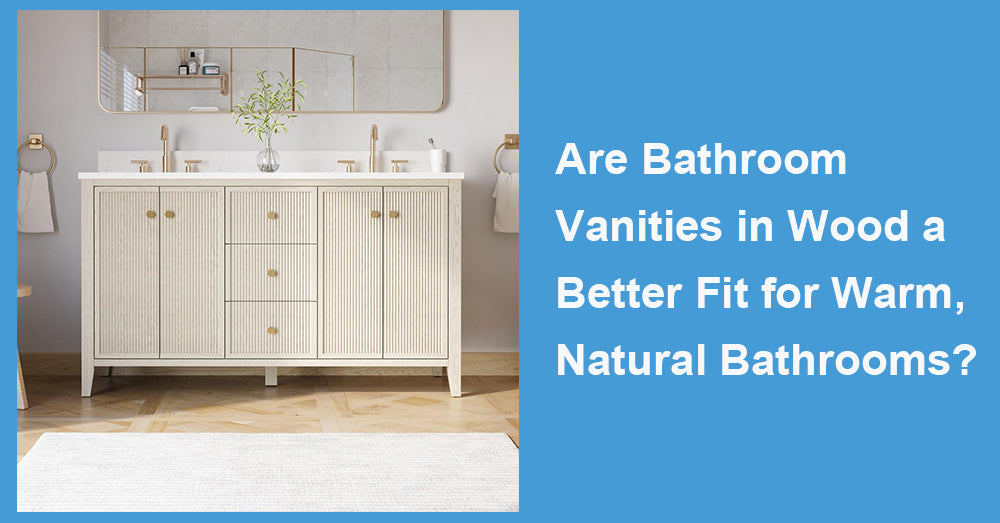
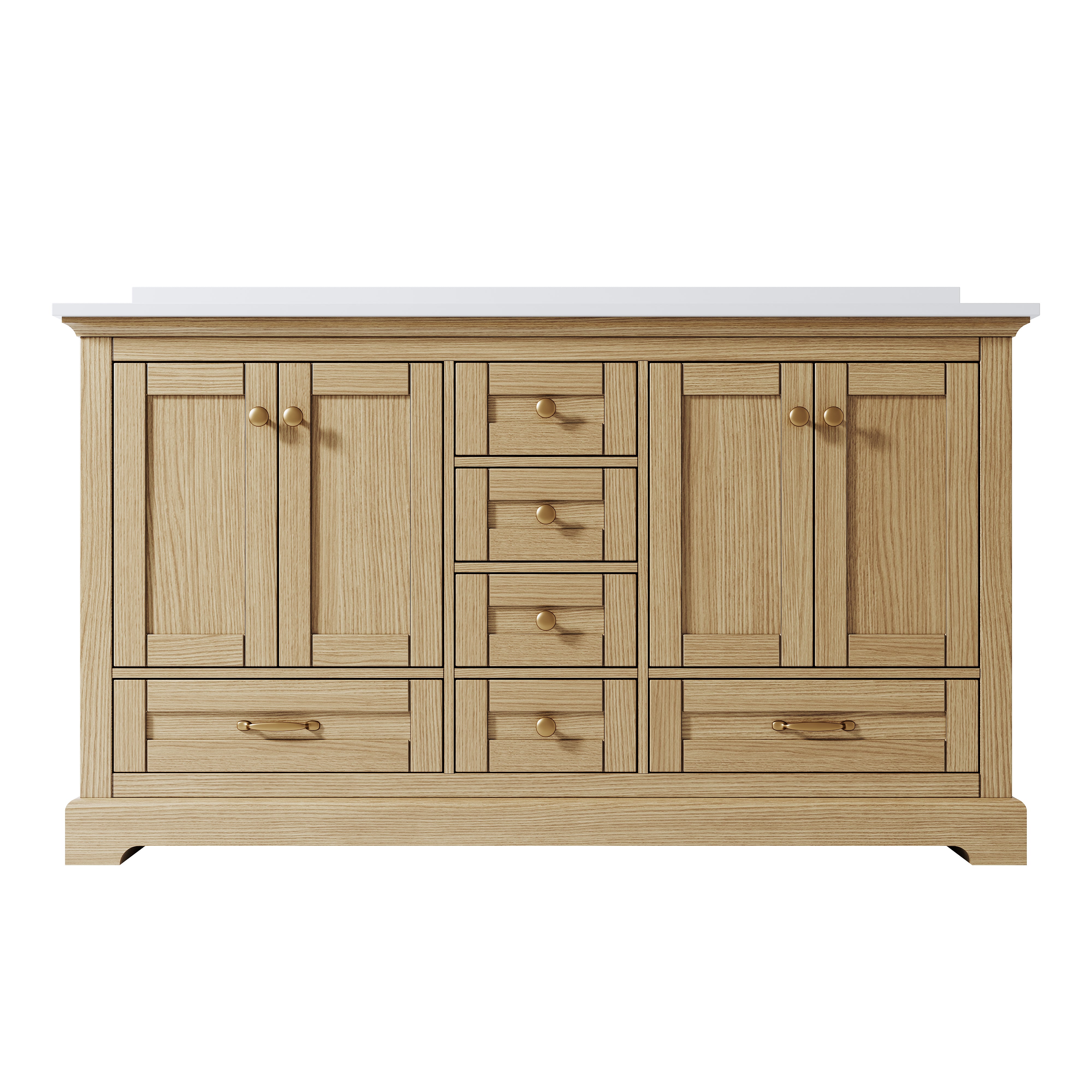
Bathroom vanities in wood are often the most effective choice when a bathroom is meant to feel warm, calm, and connected to natural materials. After more than 20 years of working with bathroom cabinetry, I have seen wood transform rooms that felt overly hard or clinical. Tile, glass, metal, and stone provide durability, but wood brings visual softness. Its grain, color variation, and tactile character can make an ordinary sink area feel more settled and inviting.
That does not mean every wood vanity automatically creates a successful natural bathroom. The finish, construction, proportions, lighting, and surrounding surfaces must work together.
1. Why Bathroom Vanities in Wood Create Natural Warmth
Bathrooms contain more hard surfaces than most rooms in the home. Porcelain tile, mirrors, quartz counters, glass shower panels, and metal fixtures are practical, yet they can produce a cold atmosphere when used without balance.
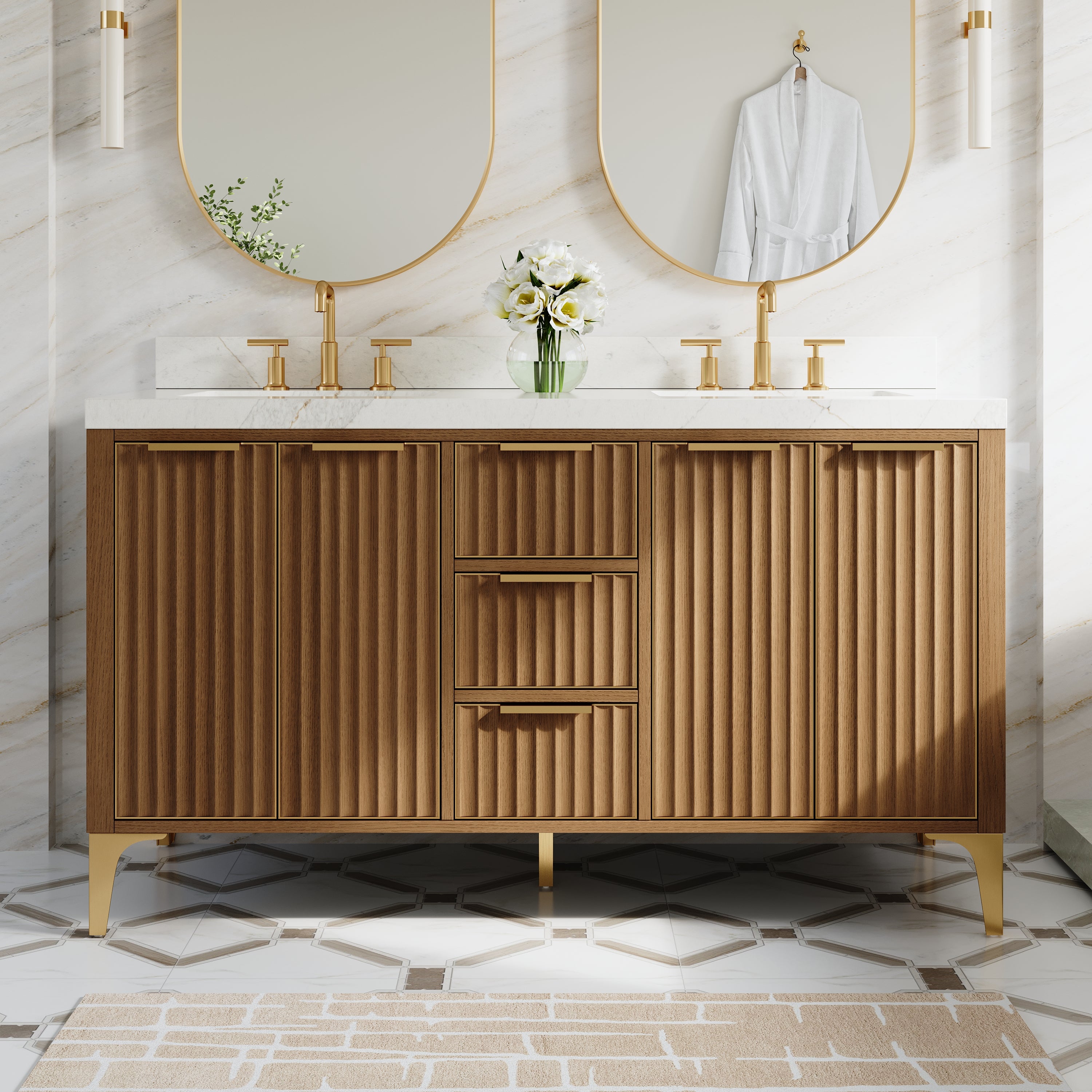
Wood changes that immediately. A pale oak vanity can soften white tile without making a compact room feel heavy. Medium walnut adds depth to a primary bathroom with beige stone. Even a simple slab-front cabinet becomes visually richer when the natural grain remains visible.
I often recommend wood when homeowners want a spa-like bathroom but do not want the space to feel like a hotel showroom. Natural texture makes the room feel more personal. It also gives the eye a place to rest among reflective surfaces.
2. Match the Wood Tone to the Bathroom’s Materials
The right wood tone depends on the room rather than the trend of the moment.
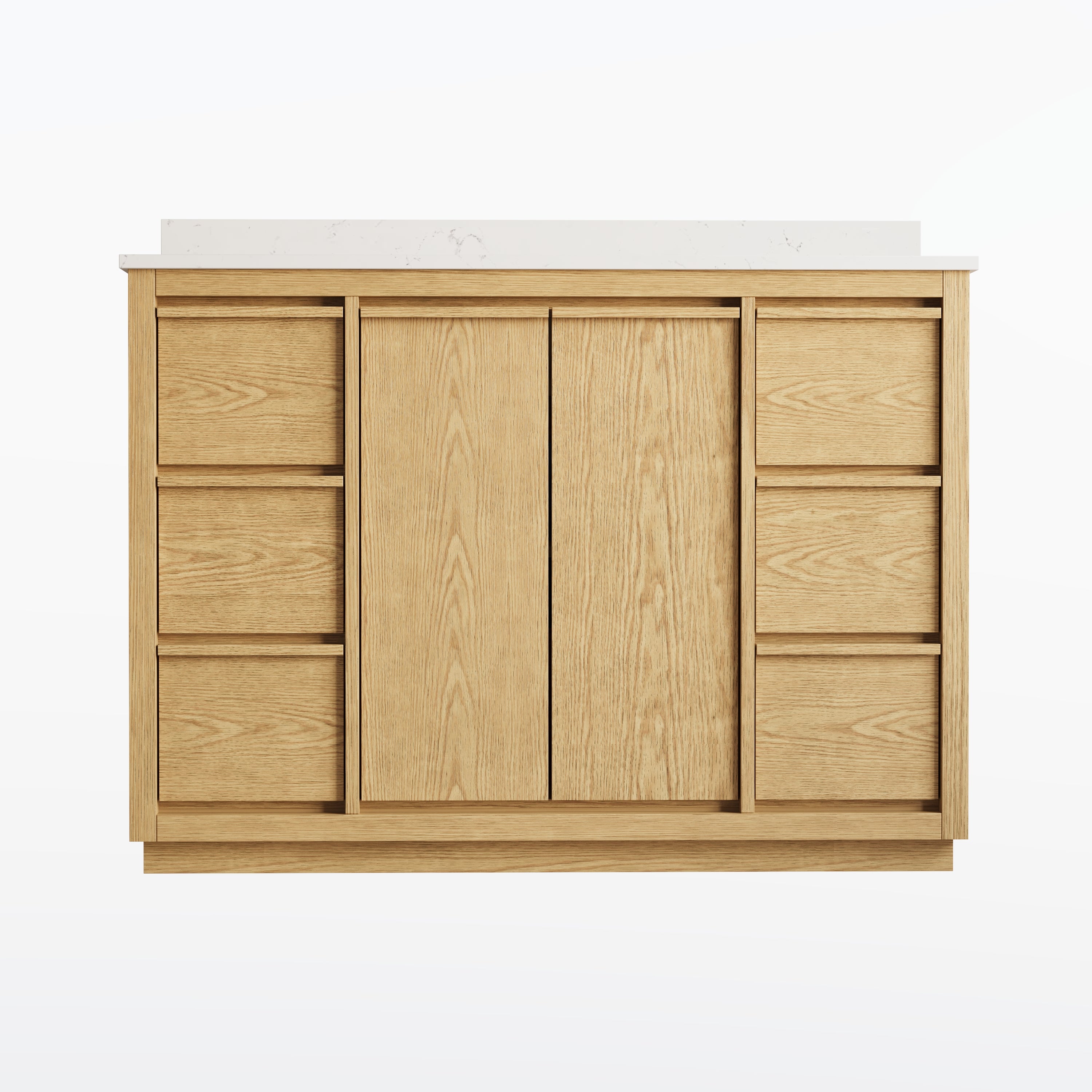
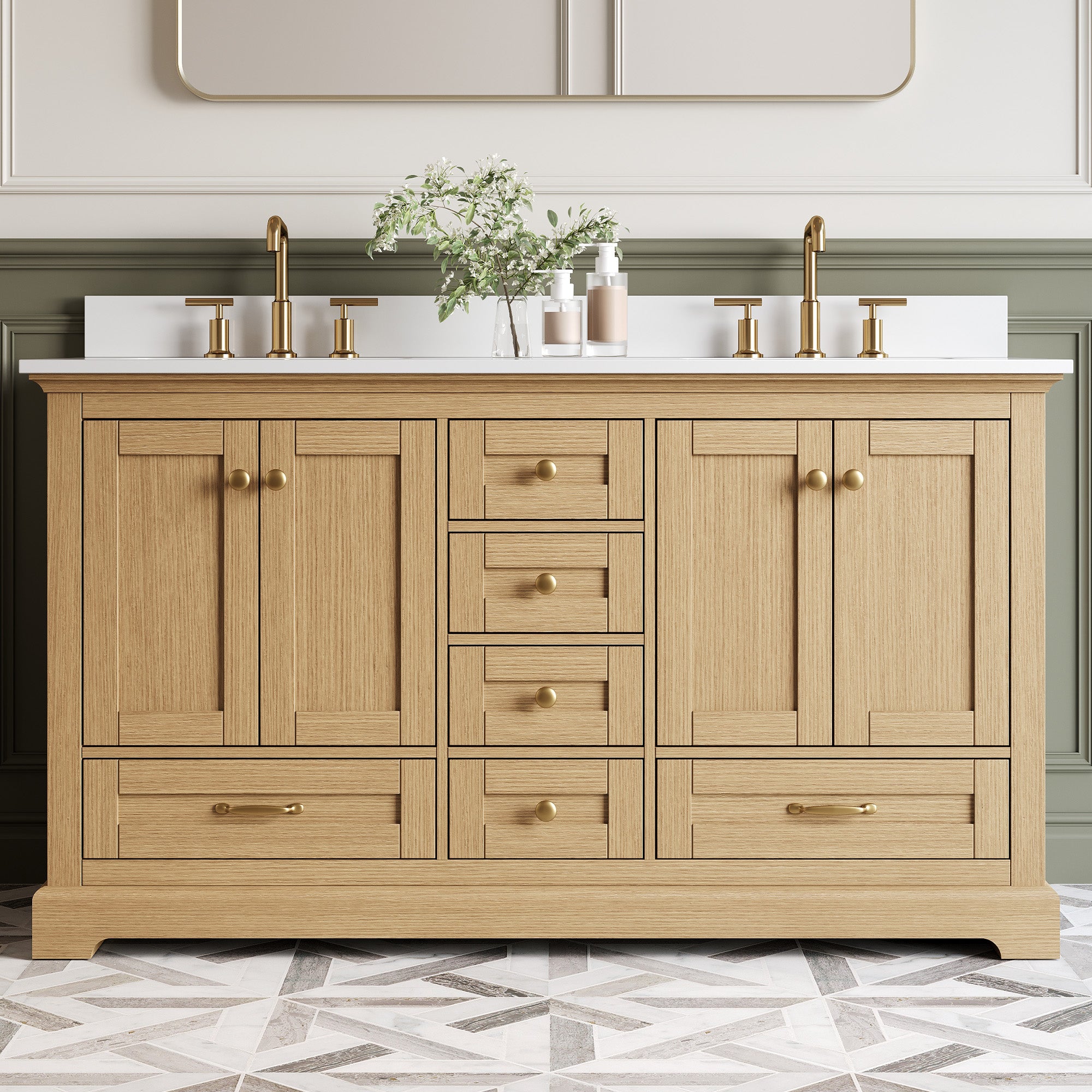
Light oak, ash, and maple finishes work well in small bathrooms, Scandinavian interiors, and spaces with limited daylight. They add warmth while keeping the lower half of the room visually open. Medium wood tones are more grounded and often suit transitional or organic-modern designs.
Dark walnut and deep brown finishes can look refined in spacious primary suites. They pair especially well with light countertops and warm lighting. In a narrow room, however, they may create too much visual weight.
Pay attention to undertones
A common mistake is choosing a vanity based on a color name such as “natural oak” or “warm walnut.” Those descriptions are not precise.
Some oak finishes lean yellow. Others look gray, beige, or slightly pink. Compare the vanity with the flooring, countertop, wall paint, and metal finishes before ordering. Materials do not have to match, but their undertones should feel intentional.
Cool gray tile beside strongly golden wood can work when the contrast is planned. When it is accidental, the room often feels unsettled.
3. Wood Works Across More Styles Than Buyers Expect
Many homeowners still associate wood cabinetry with rustic or farmhouse bathrooms. That is too limiting.
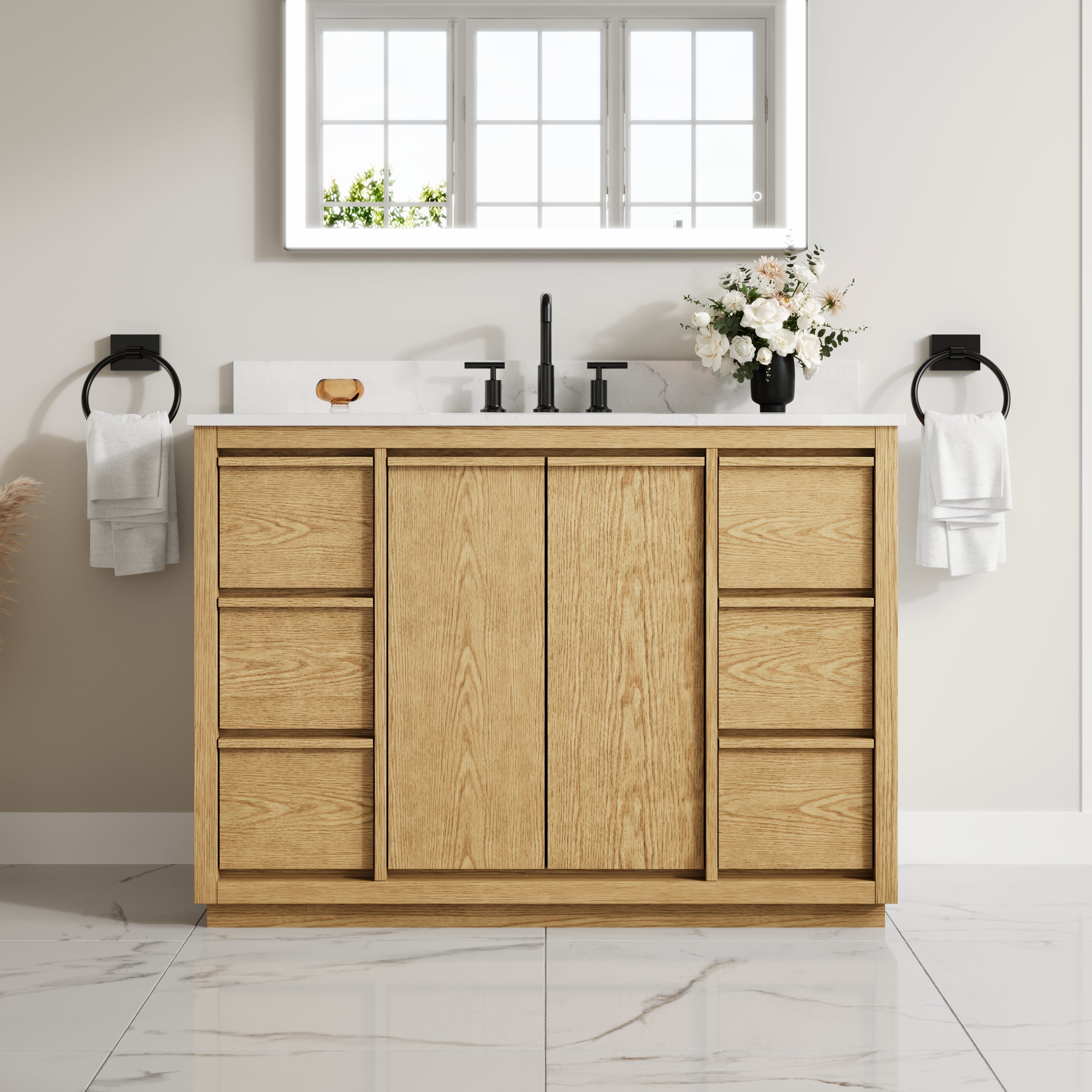
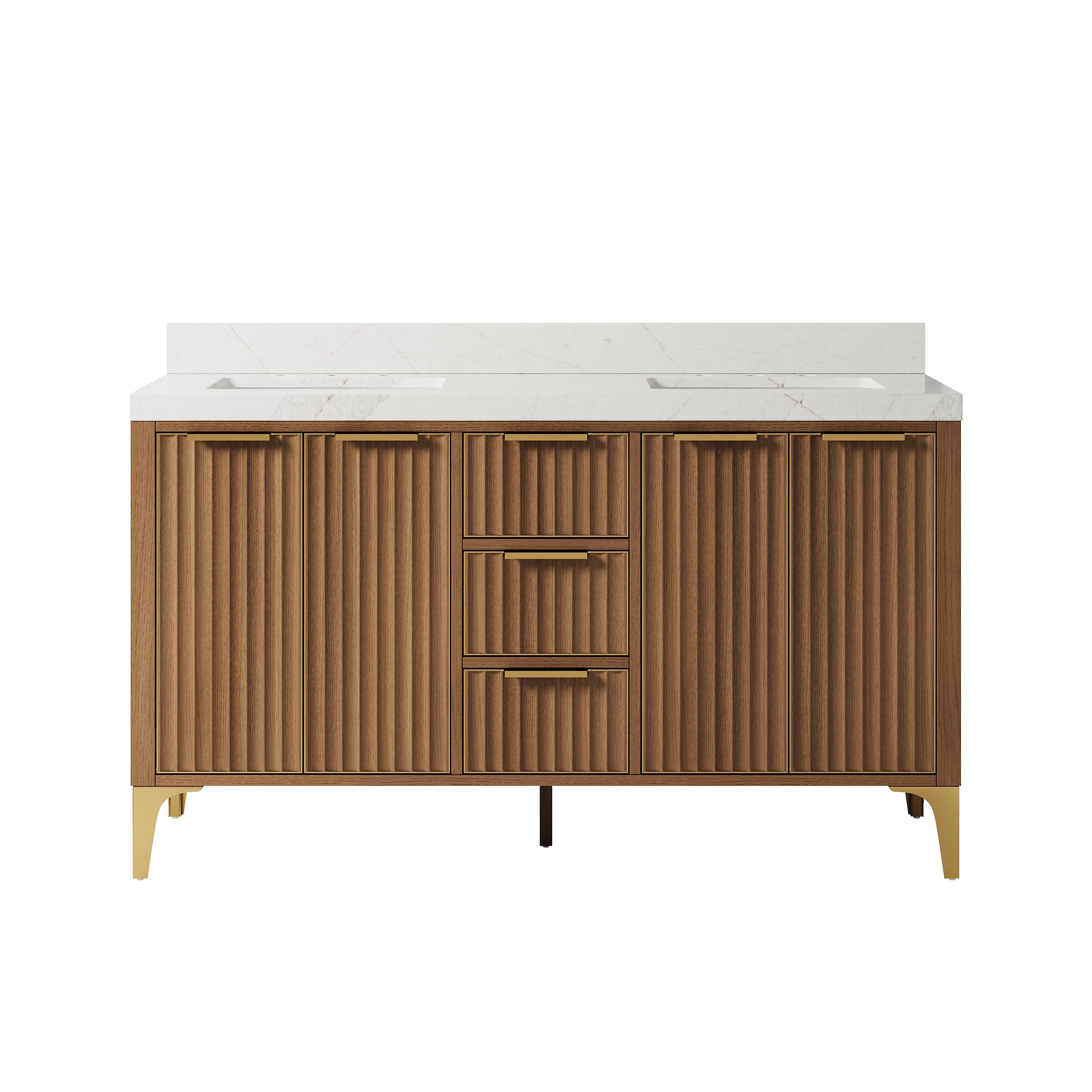
Flat-front drawers, recessed pulls, and a floating installation can make a wood vanity look distinctly modern. Shaker doors with simple hardware suit transitional homes. A freestanding cabinet with visible grain can add character to a traditional room without becoming overly decorative.
The advantage of wood is its flexibility. Hardware, mirrors, lighting, and wall colors can change later while the vanity remains relevant. A natural finish is usually less dependent on a specific design period than a fashionable painted color.
Strong grain is not always better
A dramatic grain pattern can become distracting beside heavily veined stone or patterned tile. In rooms with a statement floor or shower wall, I prefer a quieter wood finish.
The vanity should support the room, not compete with every other surface.
4. The Practical Benefits Go Beyond Appearance
Quality wood cabinetry can offer strength, repairability, and long-term value. Solid wood frames and drawer fronts hold hardware well. Quality plywood is often a practical material for cabinet boxes because it remains relatively stable as humidity changes.
Minor scratches may be touched up. Hinges can be adjusted. Certain finishes can be renewed rather than requiring complete replacement.
Storage design matters just as much. Deep drawers are useful for skincare, grooming tools, and cosmetics. Cabinet space beneath the sink works better for taller cleaning products, spare paper goods, and folded towels.
Do not count drawer fronts without checking the interior. Some are decorative because the sink occupies the space behind them. Plumbing cutouts can also reduce capacity.
5. Understand the Limitations of Wood in Bathrooms
Wood is not waterproof. Even a premium vanity can be damaged by standing water, a slow plumbing leak, or poor ventilation.
Natural expansion and contraction may cause slight movement in doors and drawers. This is usually manageable, but it means the cabinet may need occasional adjustment. Buyers who want a completely maintenance-free surface may be happier with another material.
Wood is a strong fit for ventilated primary bathrooms, guest baths, and family spaces where ordinary splashes are wiped promptly. It is less suitable for open wet rooms, frequently flooded bathrooms, or rentals where maintenance is inconsistent.
Fix the environment first. A new vanity cannot compensate for an exhaust fan that does not clear steam or a drain that leaks beneath the sink.
6. Choose the Right Mounting Style and Size
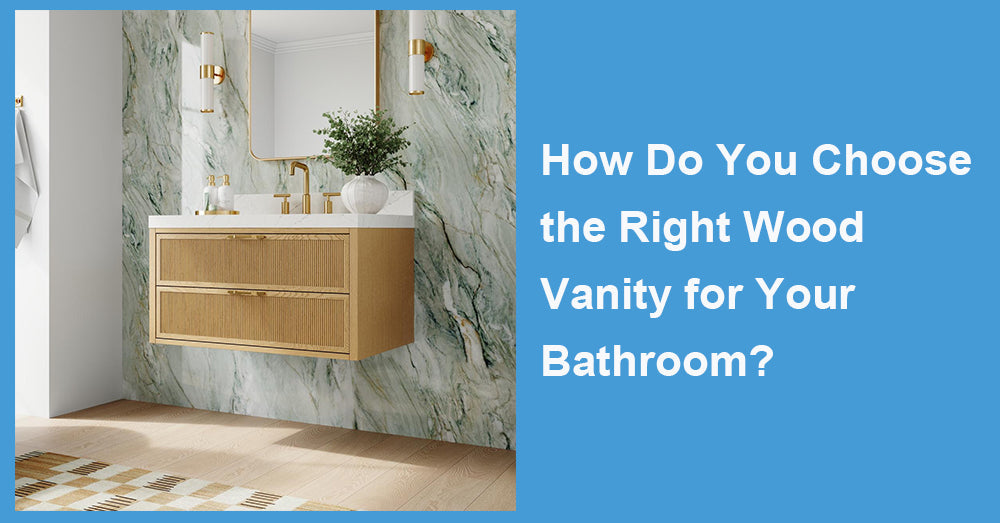
Floating wood vanities create a lighter, more contemporary appearance. They expose more flooring, make cleaning easier, and work well in spa-inspired bathrooms. Their drawback is reduced storage height and more demanding installation.
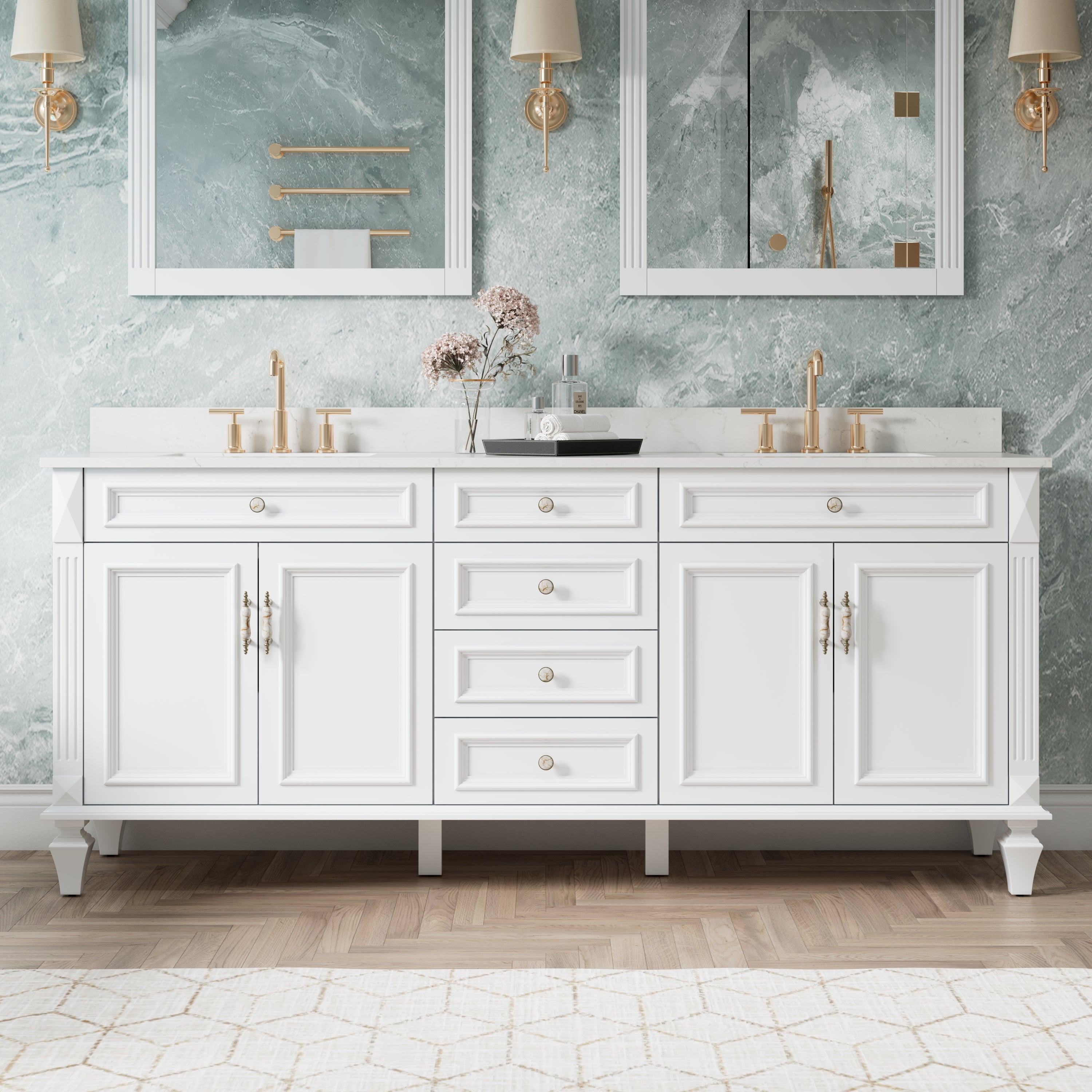
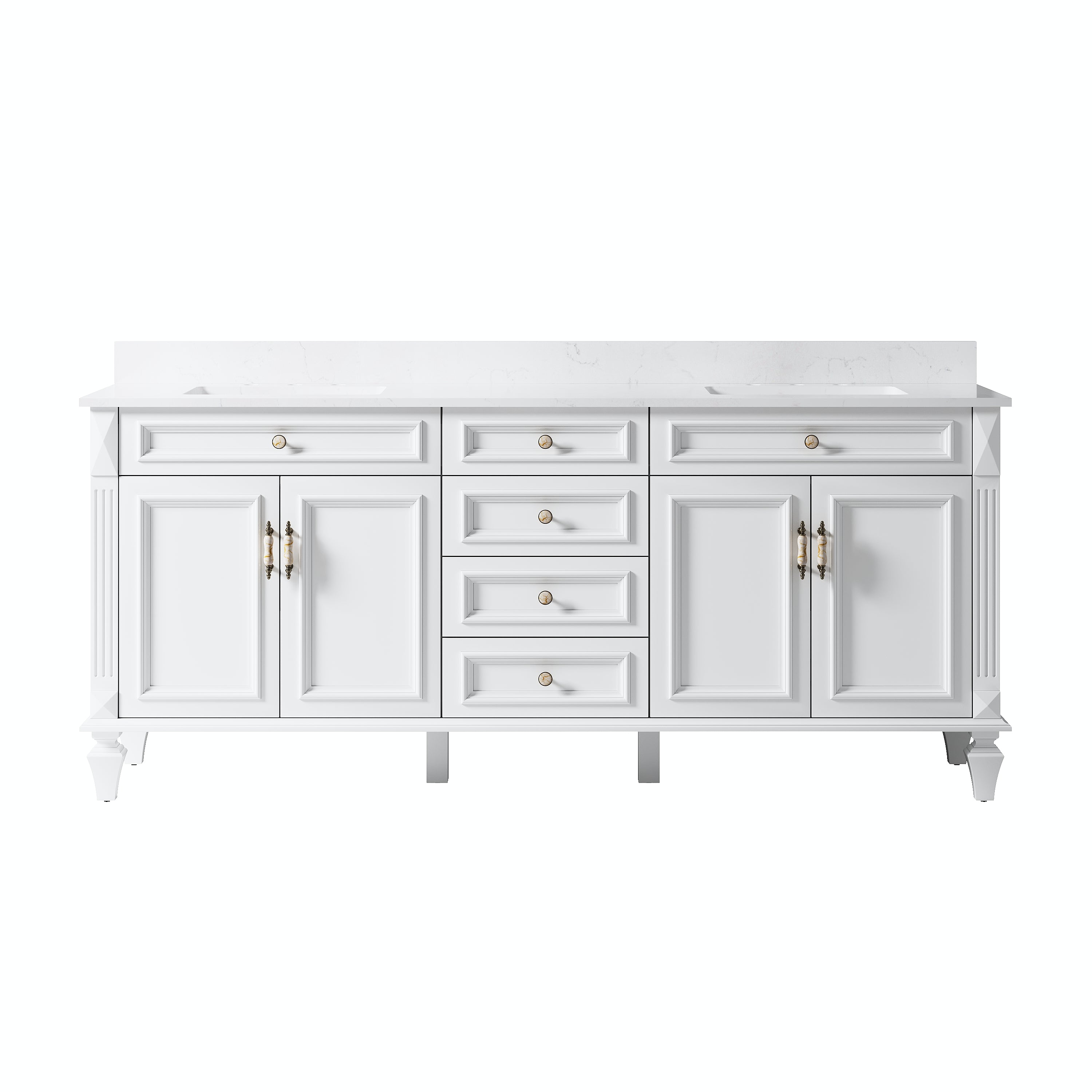
Freestanding models usually provide greater capacity and are easier to fit around existing plumbing. They can feel bulky in narrow rooms, especially when the cabinet is deep or has heavy decorative legs.
Measure width, depth, countertop overhang, doorway clearance, and the distance to nearby fixtures. A vanity that fits the wall may still interfere with the shower door or make the walkway uncomfortable.
Use painter’s tape to mark the footprint before buying. It is a simple step, but it catches many layout problems.

7. Installation and Maintenance Protect the Natural Finish
Install the vanity level so doors and drawers remain aligned. Floating models need secure wall framing or an approved mounting system. Seal the sink, countertop, faucet openings, and backsplash joints carefully.
Test all plumbing connections before filling the cabinet. Leave enough open space beneath the sink to inspect the drain and supply lines later.
For maintenance, run the exhaust fan after showers, wipe standing water, and use a mild, non-abrasive cleaner. Avoid leaving wet towels against the cabinet face. Check corners, lower edges, hardware, and plumbing several times a year.
When comparing Wellfor options, choose bathroom vanities in wood by looking first at construction, room proportions, storage, and moisture protection. Then select a finish that relates naturally to the tile, countertop, and lighting. In the right bathroom, bathroom vanities in wood do more than add warmth; they make the entire space feel calmer, more balanced, and easier to live with.














Leave a comment
This site is protected by hCaptcha and the hCaptcha Privacy Policy and Terms of Service apply.