






















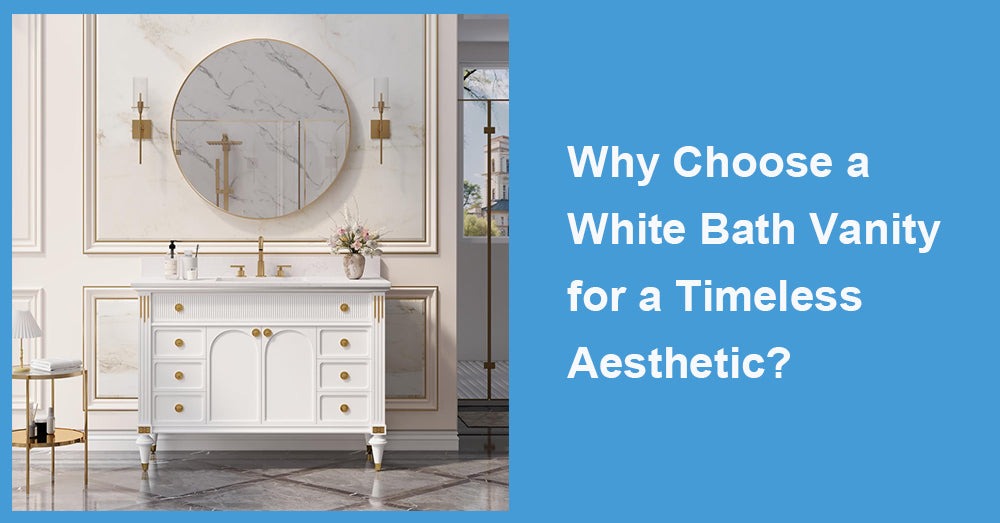
A white bath vanity remains one of the most dependable choices in bathroom design because it adapts rather than competes. After more than 20 years of working with bathroom cabinetry, I have seen white vanities succeed in compact guest baths, busy family bathrooms, and large primary suites. They brighten the room, create a clean visual base, and allow tile, mirrors, hardware, and lighting to change over time without forcing a complete remodel.
Timeless does not mean characterless. The cabinet profile, shade of white, countertop, storage layout, and surrounding materials determine whether the result feels refined or merely basic.
1. A White Bath Vanity Works Across Design Styles
Few vanity finishes move between interior styles as easily as white. Flat-front cabinetry can look distinctly modern, especially when paired with slim hardware and a simple quartz top. Shaker doors suit transitional bathrooms, while furniture-style legs and subtle molding can support a more traditional home.
White also works with a wide range of materials. It can sit beside marble-look tile, warm stone, terrazzo, wood-look flooring, or patterned ceramic without creating an obvious color conflict.
This flexibility matters during a long-term renovation. Homeowners may replace the mirror, faucet, wall color, or lighting several years later. A neutral vanity usually remains compatible, reducing the temptation to replace a perfectly functional cabinet simply because the room’s style has evolved.
2. Why a White Bath Vanity Makes Bathrooms Feel Brighter
White reflects light and carries less visual weight than most dark finishes. In a small bathroom, this can make the sink area feel less bulky and help the room appear more open.
The effect is particularly useful in windowless guest baths and narrow hallway bathrooms. A dark cabinet may look sophisticated in a showroom but become heavy once installed in limited natural light. White tends to behave more predictably.
It also gives the eye a quiet surface. When a bathroom includes dramatic stone veining, decorative floor tile, or black-framed shower glass, the vanity does not need to become another competing feature.
White cannot correct poor proportions
A common misconception is that white automatically makes any vanity suitable for a small room. It does not.
A cabinet that is too deep can still block the walkway. An oversized vanity can still crowd the toilet or interfere with a shower door. Color influences perception, but accurate measurements and comfortable clearances remain more important.
3. The Right Shade of White Matters
White is not one universal color. Some finishes are crisp and slightly blue. Others lean cream, gray, or warm beige.
I have seen bathrooms feel unsettled because a bright white vanity was installed beside ivory tile. Neither material was unattractive, but their undertones worked against each other. The same problem can happen when a warm white cabinet sits beneath cool LED lighting and begins to look yellow.
Compare the finish with the countertop, flooring, wall paint, and lighting before ordering. A physical sample is best. When that is not available, review several product images rather than relying on one heavily edited photograph.
Consider the room’s temperature
Cool whites usually pair well with gray stone, chrome, and matte black. Warmer whites tend to work better with beige tile, brass hardware, and natural wood accents.
The goal is not a perfect match. Slight variation creates depth. The materials should simply feel related.
4. White Creates a Flexible Background for Hardware and Stone
A white vanity allows other details to define the mood.
Brushed nickel creates a quiet, practical look. Matte black adds sharper contrast. Soft brass introduces warmth and can keep an all-white bathroom from feeling clinical. The cabinet can support each direction without requiring a new finish.
Countertop choice has the same effect. White quartz with subtle veining feels clean and modern. Warmer stone adds softness. A dark surface creates a stronger architectural statement, though it may show dust and water marks more clearly.
This adaptability is one of the white vanity’s strongest advantages. It can be updated through relatively small changes rather than complete replacement.
5. Practical Benefits Come With Real Limitations
White surfaces make toothpaste, makeup, hair dye, and dirty fingerprints easy to see. Some homeowners consider that a drawback. In practice, it often encourages faster cleanup before stains have time to set.
There are still disadvantages. Weak paint may chip around corners or handles. High-gloss finishes can show scratches, while detailed door profiles collect dust in grooves. A busy children’s bathroom needs a durable coating, not simply an attractive color.
An entirely white bathroom can also feel flat. Texture solves this better than adding more decoration. Consider a veined countertop, woven storage basket, wood-framed mirror, or warmer metal finish. One or two natural elements are usually enough.
6. Choose Construction and Storage Before Style Details
A timeless appearance has little value if the cabinet fails after a few years. Check the cabinet box, drawer construction, edge sealing, hinges, and slides before focusing on hardware color.
Solid wood framing and quality plywood can provide dependable durability. Well-sealed engineered materials may also perform effectively in bathroom conditions. Thin particleboard, weak drawer bottoms, and exposed edges are more concerning.
Storage should reflect daily routines. Deep drawers work well for skincare, cosmetics, and grooming tools. Cabinet space beneath the sink is better for tall cleaning bottles and spare paper goods.
Do not assume every drawer front opens. Interior photographs and usable dimensions are more valuable than exterior styling.

7. Installation and Maintenance Protect the Finish
Install the vanity level so doors and drawers remain aligned. Seal the sink, countertop, and backsplash joints carefully, and test the plumbing before filling the cabinet.
White finishes reveal uneven gaps and crooked hardware quickly, so installation precision matters.
For routine care, use a soft cloth and mild, non-abrasive cleaner. Wipe colored spills promptly. Remove standing water around the faucet, and run the exhaust fan after showers. Check beneath the sink several times a year for slow leaks.
When comparing Wellfor options, choose a white bath vanity with the right proportions, a durable finish, practical storage, and an undertone that belongs with the room. Keep the cabinet style simple if long-term flexibility is the goal, then add personality through lighting, hardware, stone, and accessories. A carefully selected white bath vanity can remain useful and visually convincing through years of changing tastes.











































Leave a comment
This site is protected by hCaptcha and the hCaptcha Privacy Policy and Terms of Service apply.