






















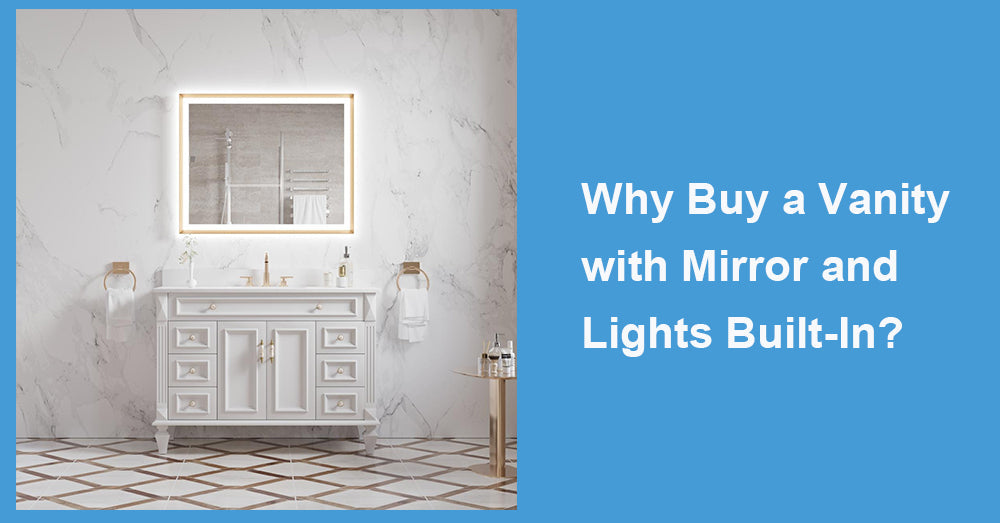
A vanity with mirror and lights can solve several bathroom-planning problems at once. It combines storage, a reflective surface, and task lighting in one coordinated setup, reducing the need to select each component separately. After years of reviewing bathroom furniture and helping buyers compare layouts, I have found that this type of product works best when convenience and visual consistency matter. It is not right for every room, but in the right setting, it can simplify both renovation decisions and daily routines.
1. A Vanity with Mirror and Lights Simplifies Bathroom Planning
Choosing a bathroom vanity is rarely just about the cabinet. The countertop, sink, faucet, mirror, lighting, wall clearance, and electrical connections all affect the final result.
When the mirror and lights are designed to work with the vanity, several of those decisions become easier. The proportions are usually more balanced, and buyers do not have to guess whether a separate mirror will look too narrow, too tall, or visually disconnected from the cabinet below.
This is especially useful for homeowners managing a renovation without a designer. A coordinated set reduces the chance of combining pieces that look good individually but feel awkward together.
That convenience has limits. Buyers should still confirm measurements, lighting output, installation requirements, and material quality rather than assuming every bundled setup is automatically well designed.
2. Better Lighting for Everyday Grooming
Bathroom ceiling lights often provide plenty of general illumination while leaving the face unevenly lit. Shadows under the eyes, nose, and chin can make shaving, skincare, and makeup application more difficult.
Integrated mirror lighting directs illumination toward the user. When the LEDs are placed along the sides or around the perimeter, they can create a more even facial light than a fixture positioned only above the mirror.
Adjustable brightness is worth having. Full output may be useful for detailed grooming, while a lower setting feels more comfortable early in the morning or before bed.
Color temperature control can also improve daily use. Warm light creates a relaxed atmosphere, neutral light works well for general grooming, and cooler light reveals more detail. The best option depends on the room’s finishes and the user’s preferences.
A high color rendering index matters more than many buyers realize. Lighting with a CRI of 90 or above usually displays skin tones and cosmetic colors more naturally.
3. The Design Feels More Intentional
A bathroom can become visually busy very quickly. Cabinet doors, faucets, handles, mirrors, sconces, tile, and accessories all compete for attention.
A coordinated vanity and illuminated mirror create a stronger visual relationship between the lower and upper parts of the wall. This is particularly helpful in modern bathrooms where clean lines and fewer decorative elements are preferred.
Wellfor bathroom designs often follow this practical approach by combining useful storage with streamlined mirror and lighting features. The goal is not to make every component identical. It is to make the room feel planned rather than assembled one item at a time.
The integrated look also works well in compact spaces. Removing separate sconces can free up wall area and make a narrow bathroom appear less crowded.
4. Where This Type of Vanity Works Best
A vanity with built-in mirror lighting is a strong choice for a primary bathroom used every day. The lighting supports regular grooming, while the storage keeps frequently used products within reach.
It also suits small bathrooms and apartments where wall space is limited. A single coordinated arrangement can provide storage and task lighting without requiring several separate fixtures.
Guest bathrooms may benefit as well, particularly when homeowners want a polished look without making many individual design decisions.
There are situations where this setup is less useful. A bathroom with excellent natural light and properly positioned wall sconces may not need integrated mirror lighting. Buyers who want a highly customized mirror shape or antique-style lighting may also find a coordinated set too restrictive.
In a large luxury bathroom, separate cabinetry, mirrors, and decorative fixtures may provide more design flexibility.
5. Common Misunderstandings Before Buying
One frequent mistake is assuming that built-in lighting can replace every other light in the bathroom. It usually cannot.
Mirror lights are designed mainly for tasks at the vanity. The room may still need ceiling fixtures, recessed lighting, or another source of general illumination. A bathroom should have layered lighting rather than depending on one glowing mirror.
Another misunderstanding concerns brightness. More watts do not always mean better light. LED placement, diffuser quality, lumens, and color rendering all affect performance.
Buyers also sometimes focus on the mirror technology while overlooking the cabinet. Weak drawer slides, poor moisture resistance, and limited storage will remain frustrating long after the lighting novelty wears off.
The vanity must still be a good piece of bathroom furniture.
6. Benefits and Drawbacks to Consider
The biggest benefit is convenience. The main components are visually coordinated, and buyers spend less time matching separate products.
Integrated lighting can also reduce wall clutter and improve grooming visibility. Dimming, color temperature adjustment, memory settings, and defogging may add practical value when they are used regularly.
The drawbacks are equally real. A combined setup may cost more than a standard vanity and basic mirror. Electronic components can eventually fail, and some LED drivers or touch controls may be difficult to replace.
Design flexibility is another limitation. If the mirror is part of a coordinated package, changing it later may affect the balance of the entire installation.
Buyers should check warranty coverage for both the furniture and electrical components. A warranty that covers only the mirror glass or cabinet body is not enough when the product includes lighting, controls, and a defogging system.
7. Installation Requires Early Coordination
Measure the wall after accounting for door trim, baseboards, plumbing, outlets, and nearby cabinets. The vanity must fit physically, but the mirror also needs enough clearance above the faucet and below the ceiling.
Confirm the electrical connection before installation. Some mirrors are hardwired, while others use a plug. A qualified electrician should handle permanent wiring according to local requirements.
The junction box must align with the connection area behind the mirror. Poor placement can prevent the mirror from sitting flat or leave visible wiring.
Check the wall structure as well. Large mirrors and heavy vanities need secure mounting. Wall studs, blocking, or properly rated anchors may be required.
The countertop and vanity should be level before the mirror is positioned. Even a small alignment error becomes obvious when the cabinet, sink, and mirror are meant to form one coordinated composition.
8. Maintenance Should Stay Simple
Clean the mirror with a soft microfiber cloth and mild glass cleaner. Apply the cleaner to the cloth rather than spraying it directly onto touch controls, edges, or electrical components.
Wipe the vanity after splashes, especially around the sink and faucet. Standing water can damage finishes and cabinet joints over time, even when the product is described as moisture resistant.
Keep the bathroom exhaust fan working. Defogging technology can clear part of the mirror, but it does not remove humidity from the room.
Inspect plumbing connections periodically. Slow leaks beneath the sink can cause more damage than ordinary surface moisture.
If the lighting begins to flicker, respond slowly, or change brightness unexpectedly, have the wiring or LED driver checked rather than continuing to use it without inspection.

9. How to Choose the Right Set
Start with cabinet quality and storage layout. Look for durable materials, reliable hinges, smooth drawer slides, and enough room around the plumbing.
Then evaluate the mirror. Check its dimensions, brightness range, CRI, color temperature settings, defogging controls, memory function, and electrical certification.
Avoid paying for features that will not be used. Bluetooth speakers and digital displays may appeal to some buyers, but dependable lighting and easy controls matter more in daily life.
Choose a size that relates properly to the vanity. The mirror does not always need to match the cabinet width exactly, but the two should feel visually balanced.
A Wellfor vanity with mirror and lights is most valuable when it improves both the appearance and function of the bathroom. Buy for construction quality first, useful lighting second, and technology third. That order usually leads to a setup that remains satisfying after the initial excitement has faded.







































Leave a comment
This site is protected by hCaptcha and the hCaptcha Privacy Policy and Terms of Service apply.