














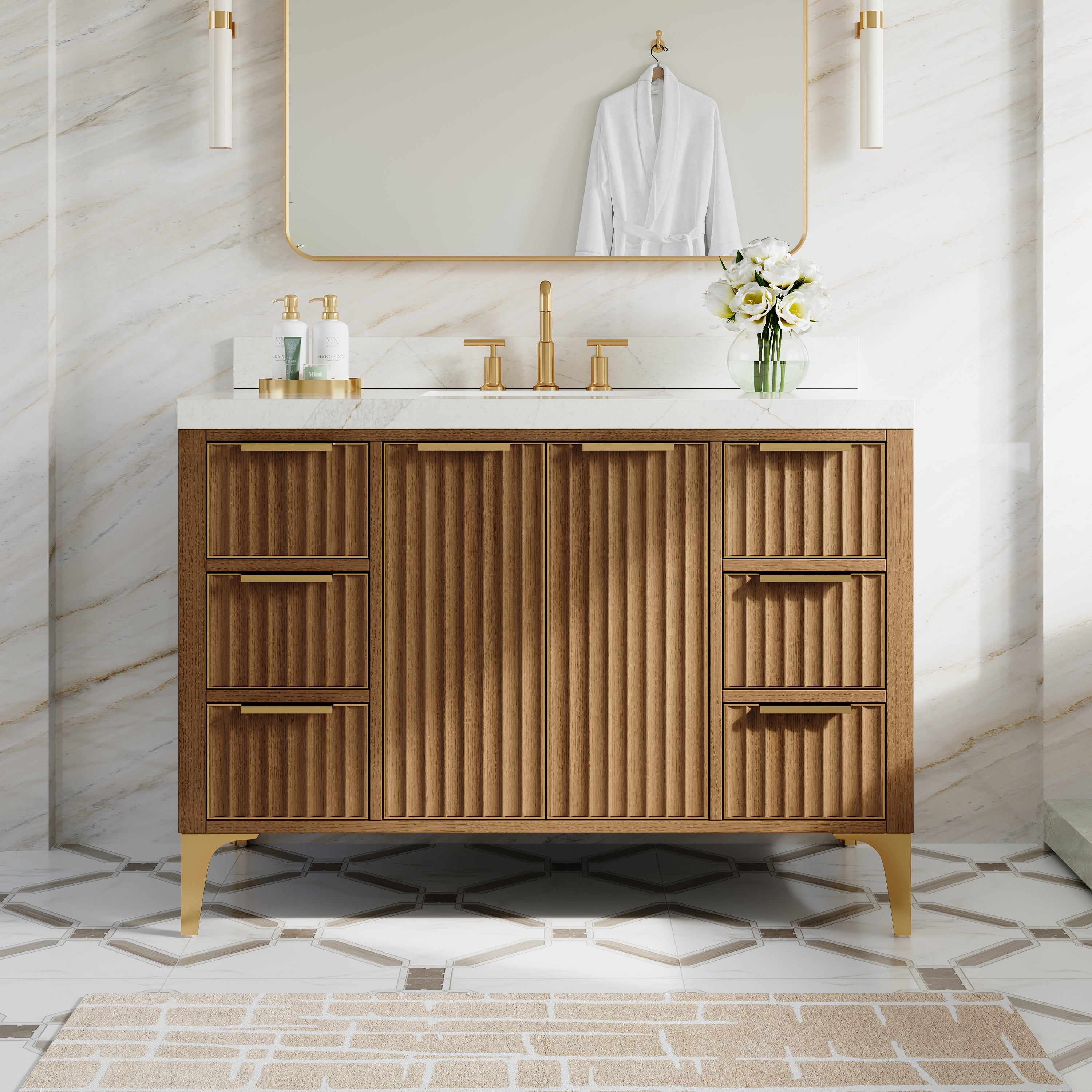
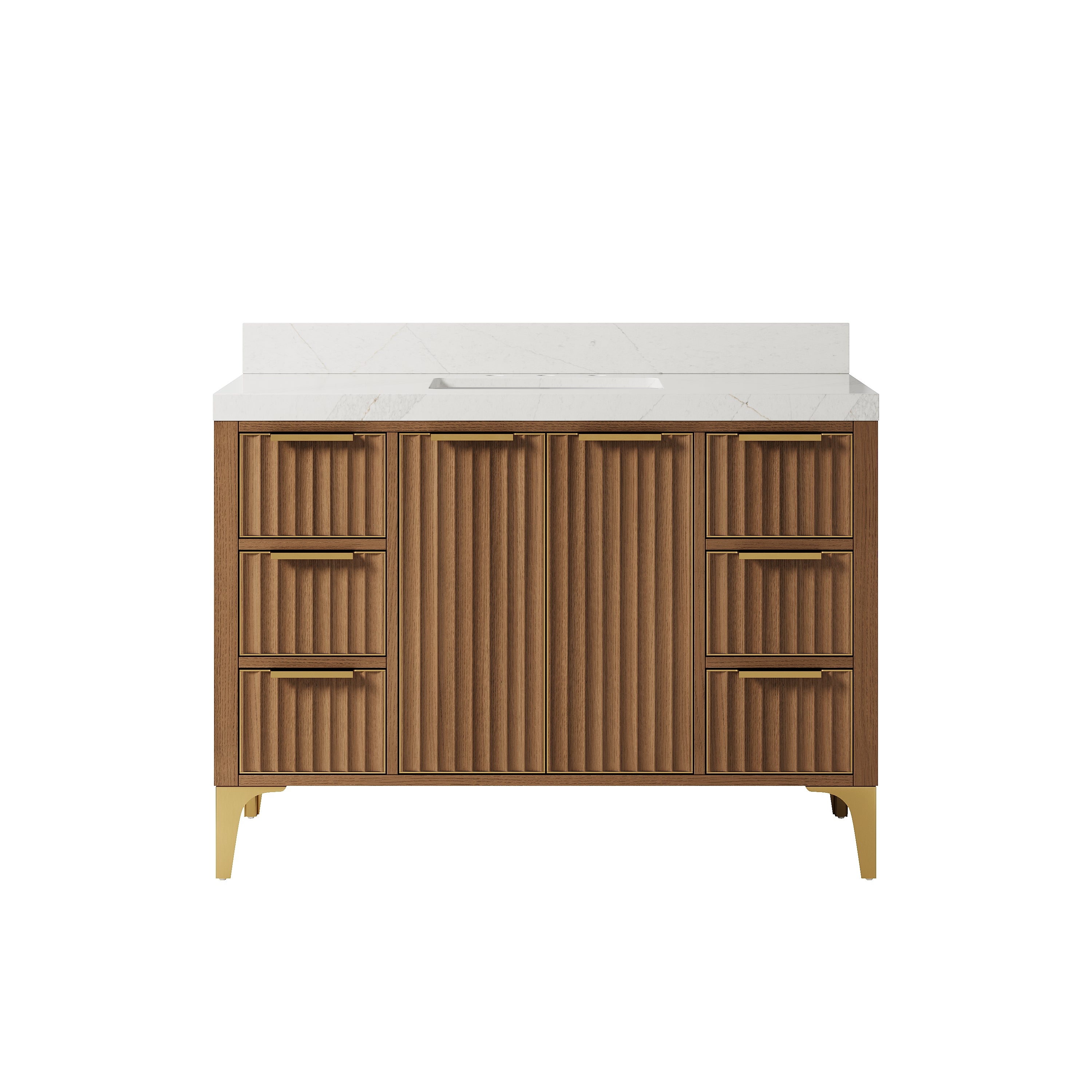


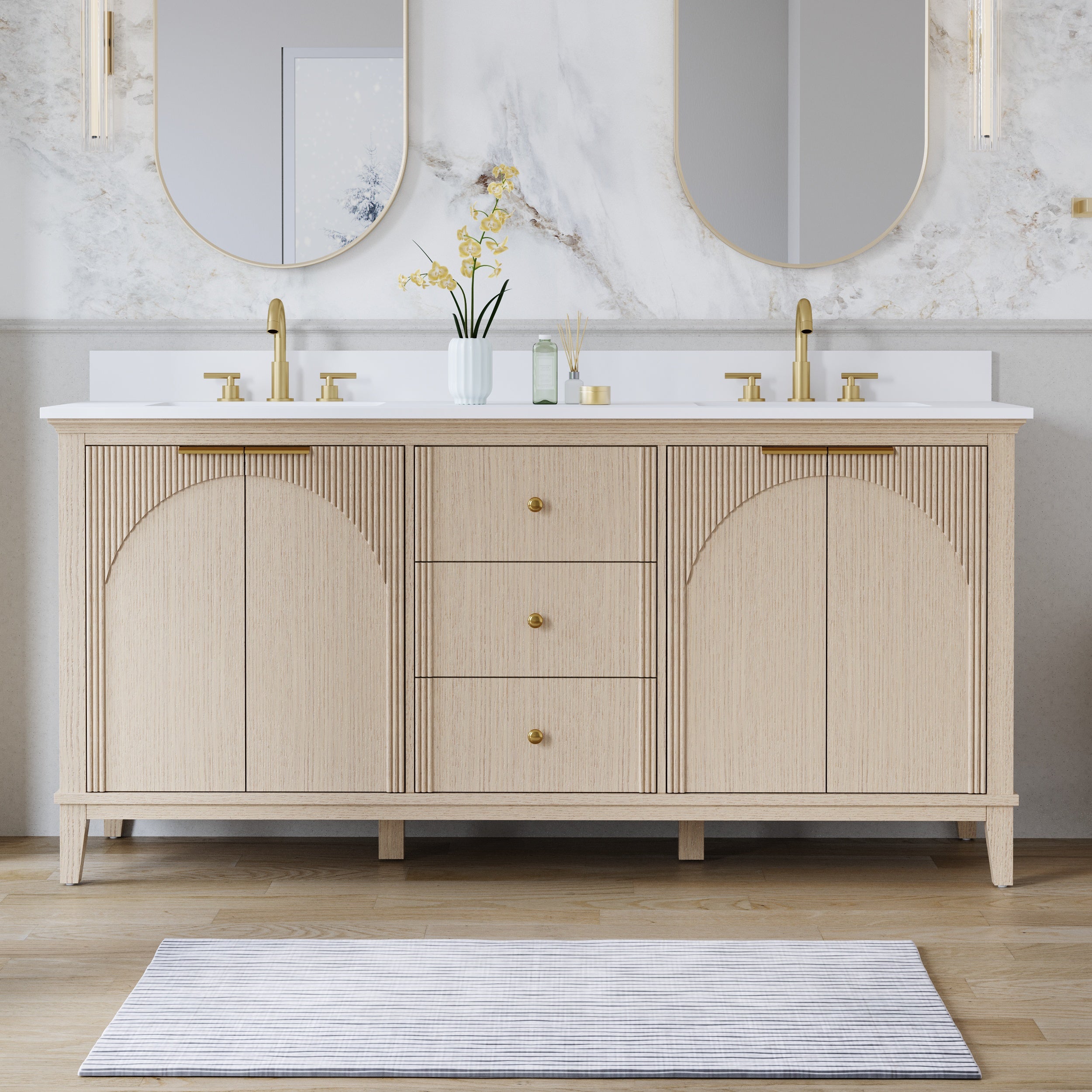
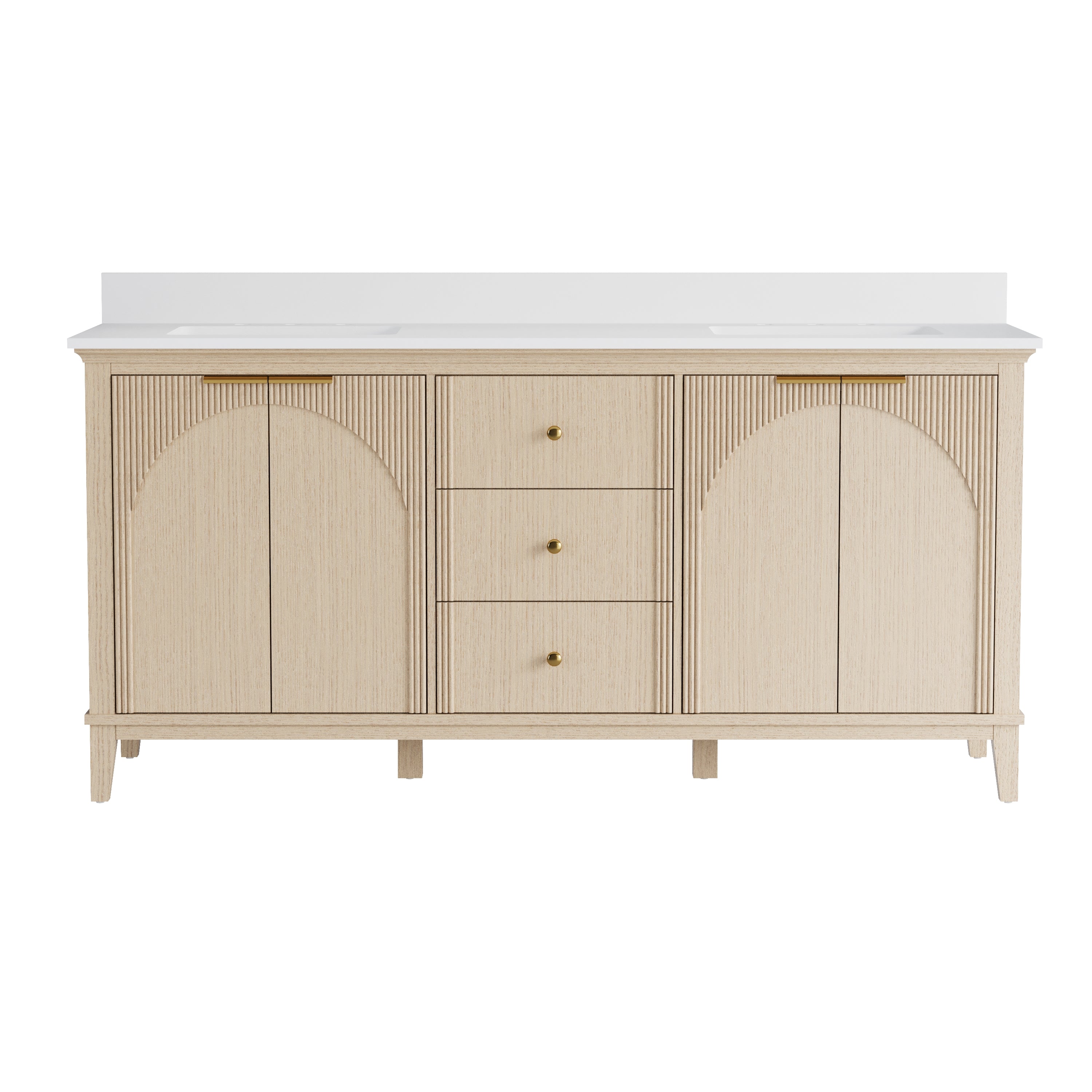
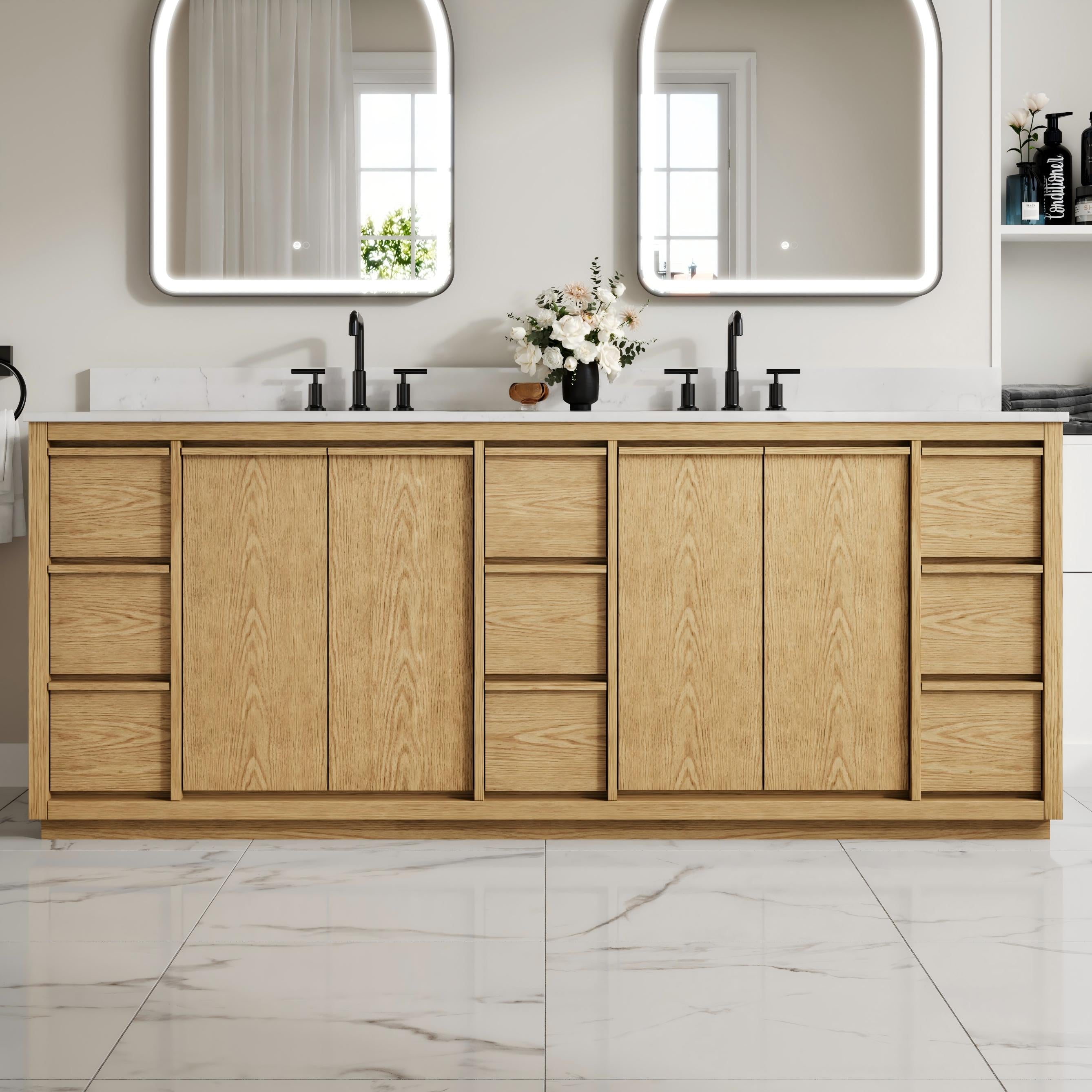
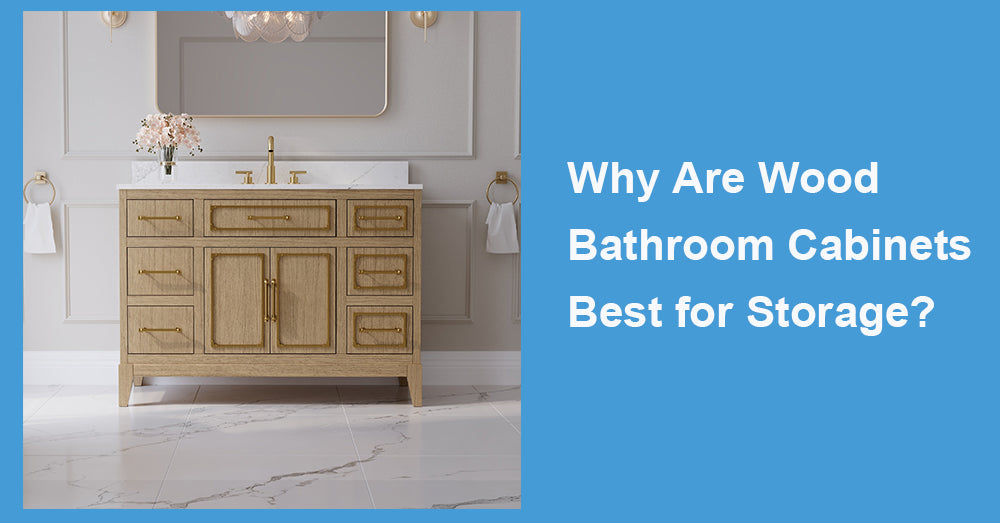
Wood bathroom cabinets remain one of the strongest storage choices for a well-planned bathroom because they combine useful capacity, flexible drawer layouts, durable construction, and a furniture-quality appearance. The growing preference for wood also reflects a broader shift toward bathrooms that feel warmer and more residential. Current Houzz data shows that solid wood is selected for 74% of upgraded vanities, while wood tones lead vanity colors at 28%. At the same time, the National Kitchen & Bath Association identifies ample, elegant storage within easy reach as a major direction in bath design. (Houzz)
1. Wood Cabinets Support More Flexible Storage Layouts
The strongest advantage of wood cabinetry is not simply the material itself. It is the range of cabinet configurations that can be built around sinks, drains, outlets, and daily-use products.
A 24-inch cabinet may combine one door section with a drawer, while a 36-inch vanity can support deeper drawers, adjustable shelving, or divided compartments. At 48 inches, designers have even more room to separate grooming products from towels and cleaning supplies.
Custom and semicustom vanities remain especially relevant to this flexibility. Houzz reports that 55% of upgraded vanities are custom or semicustom, including 33% fully custom and 22% semicustom. (Houzz)
Industry judgment: storage performance increasingly depends on internal configuration rather than simply adding cabinet width.
2. Drawers Make Everyday Items Easier to Reach
Traditional vanity doors often create one deep cavity beneath the sink. That space may technically offer substantial capacity, but small products can quickly disappear behind taller bottles or plumbing.
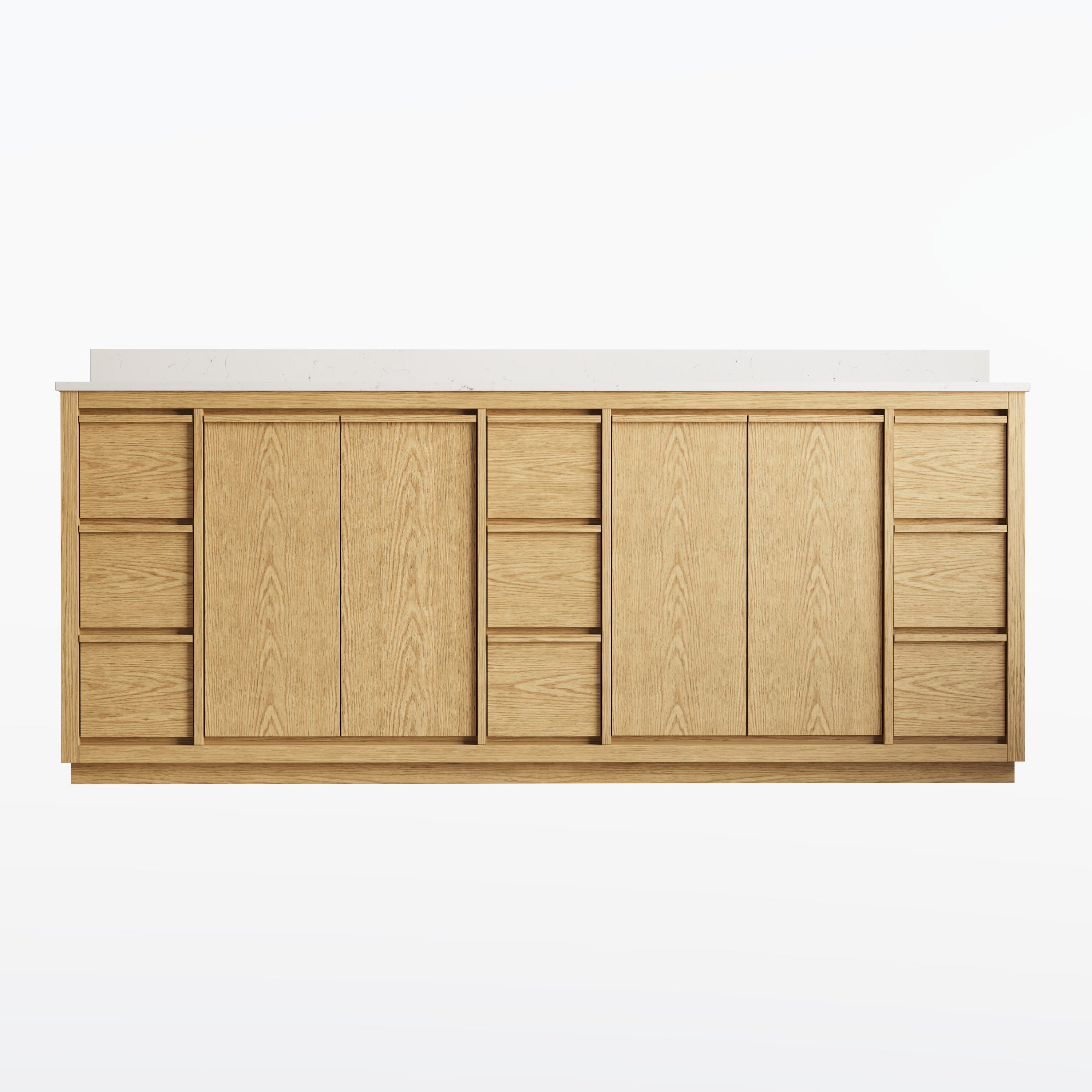
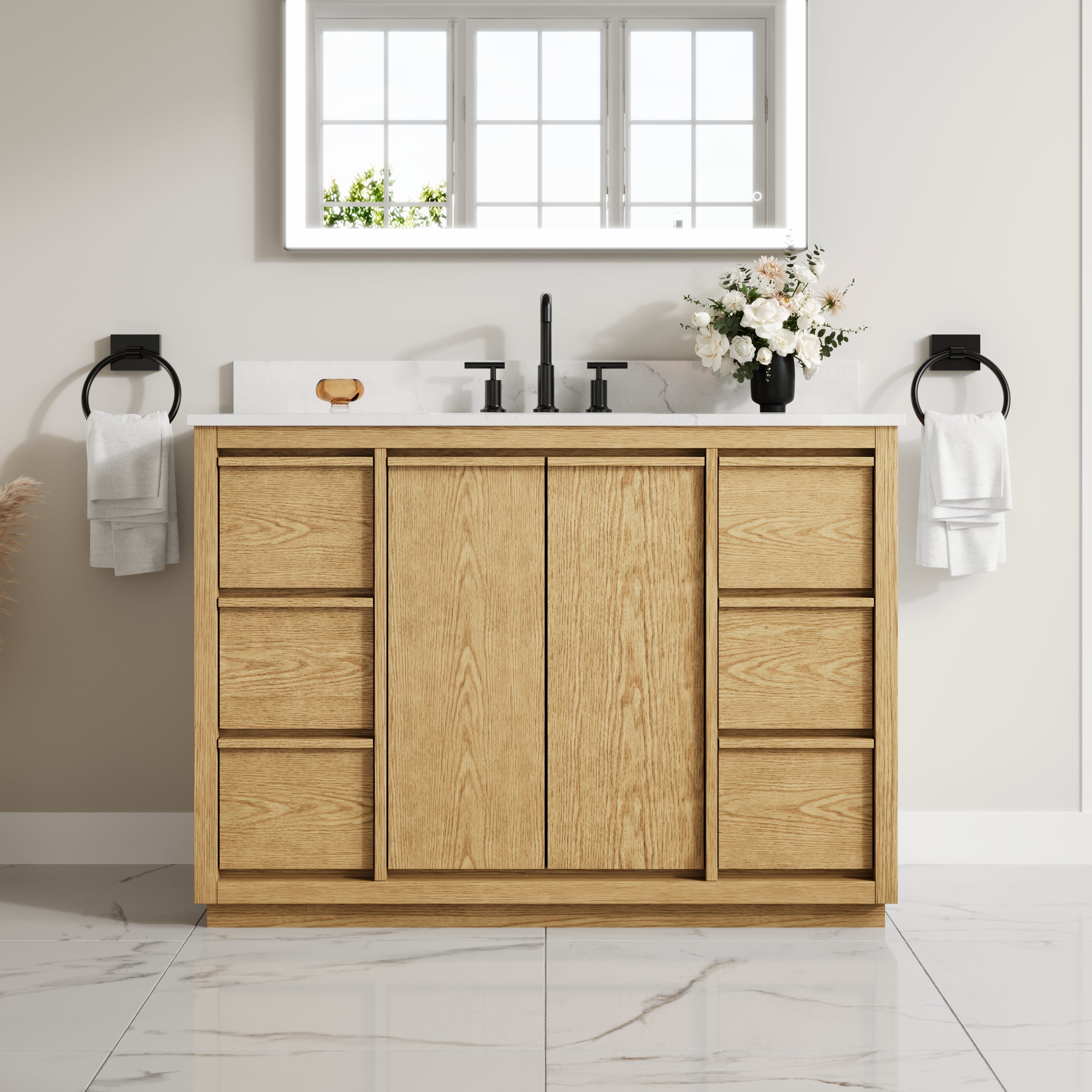
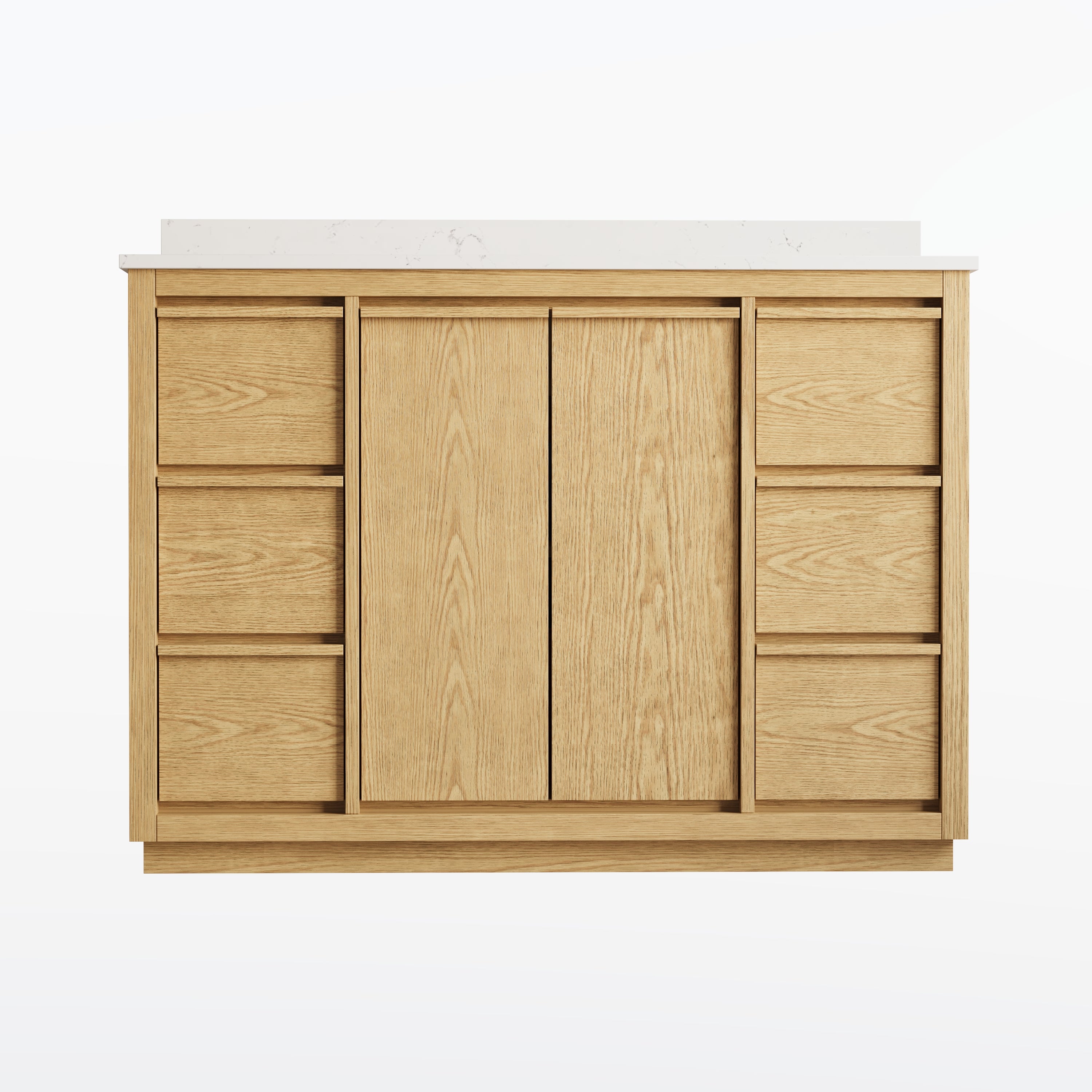
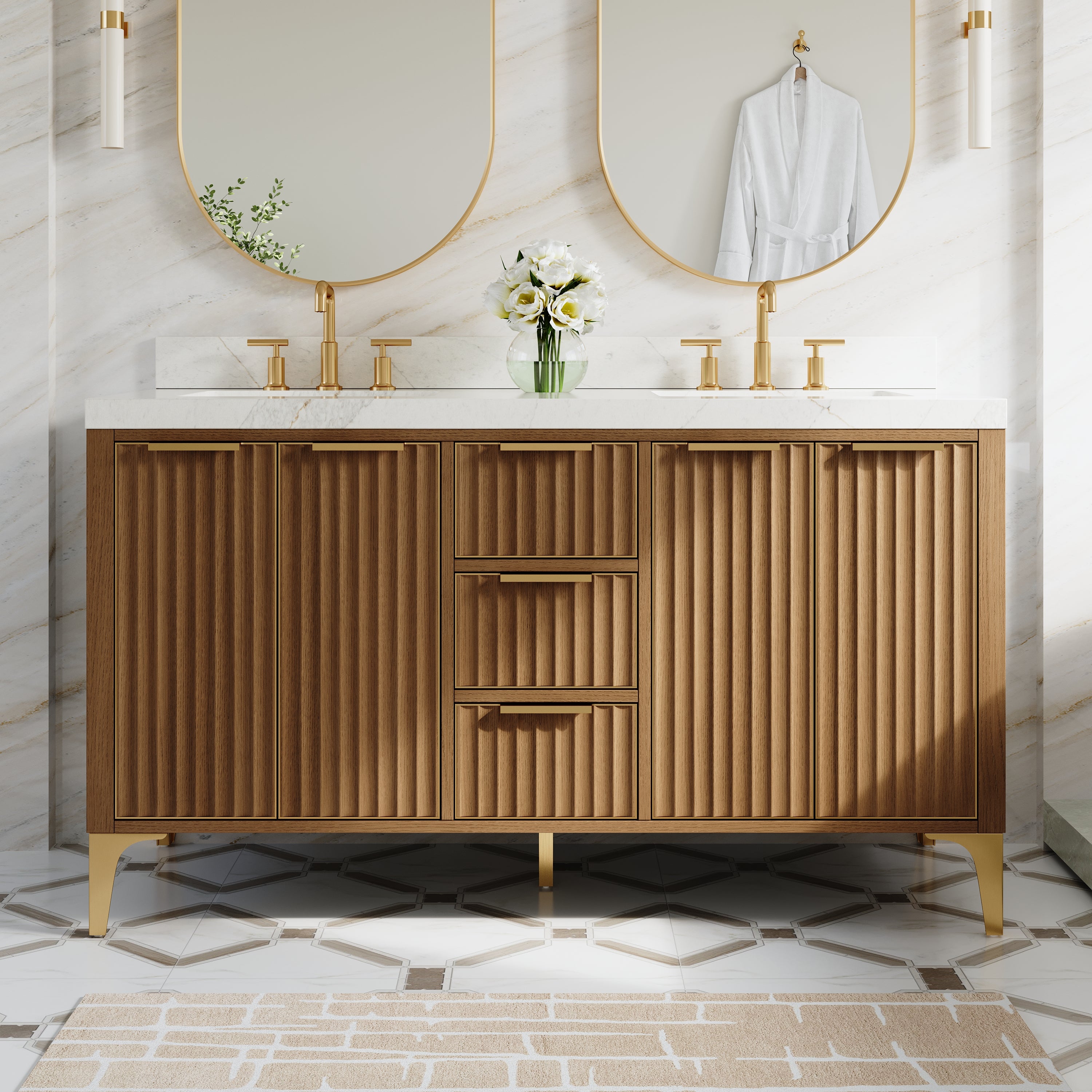
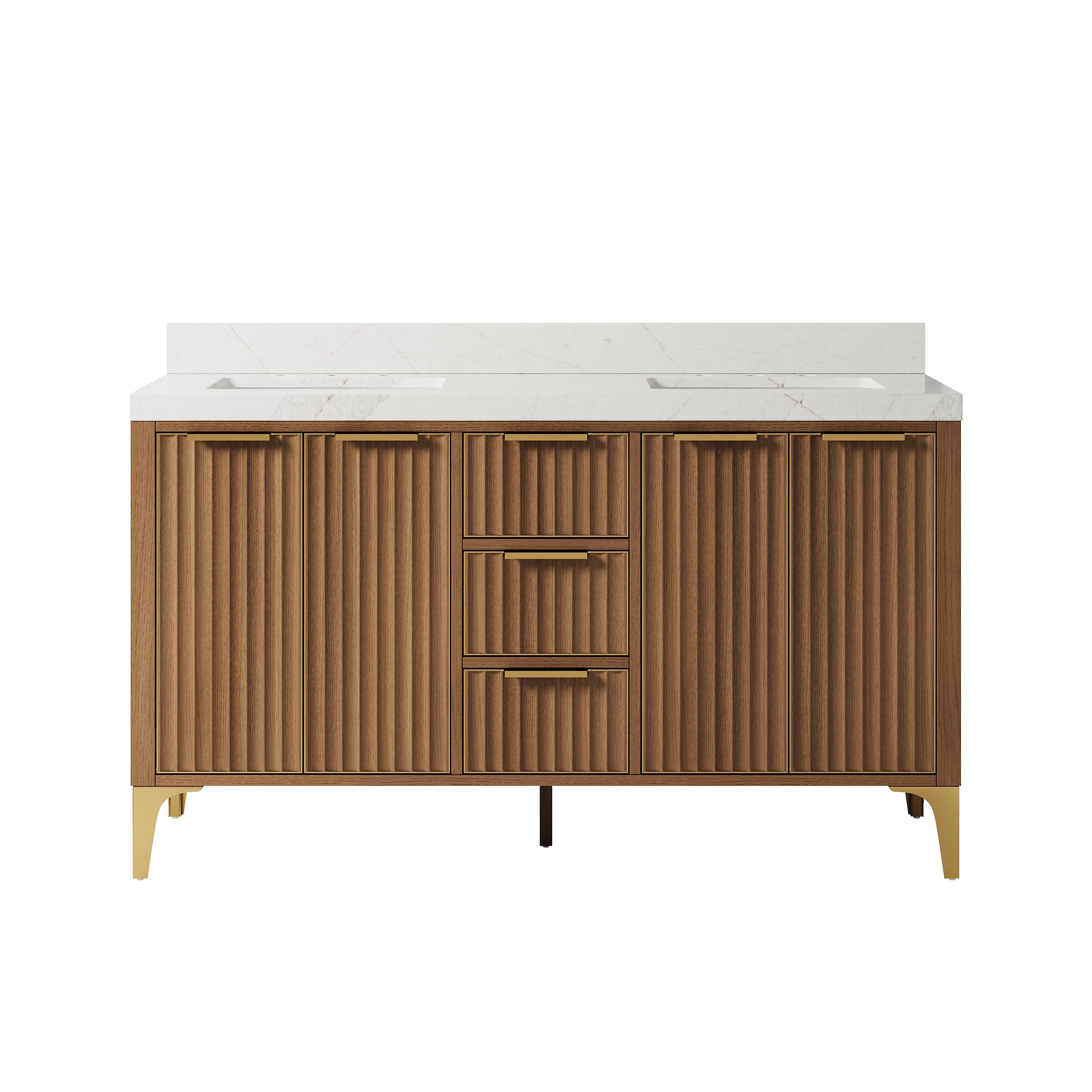
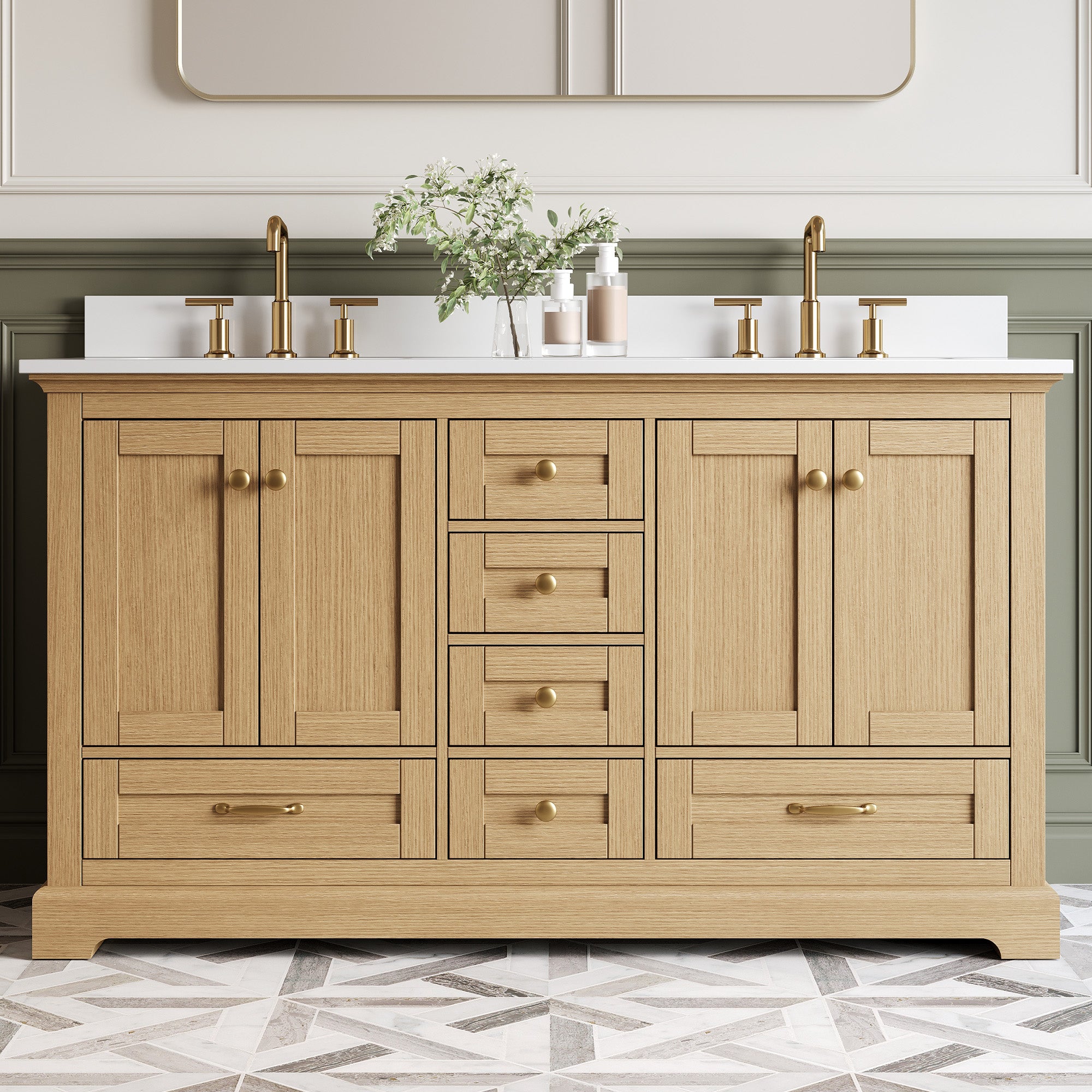
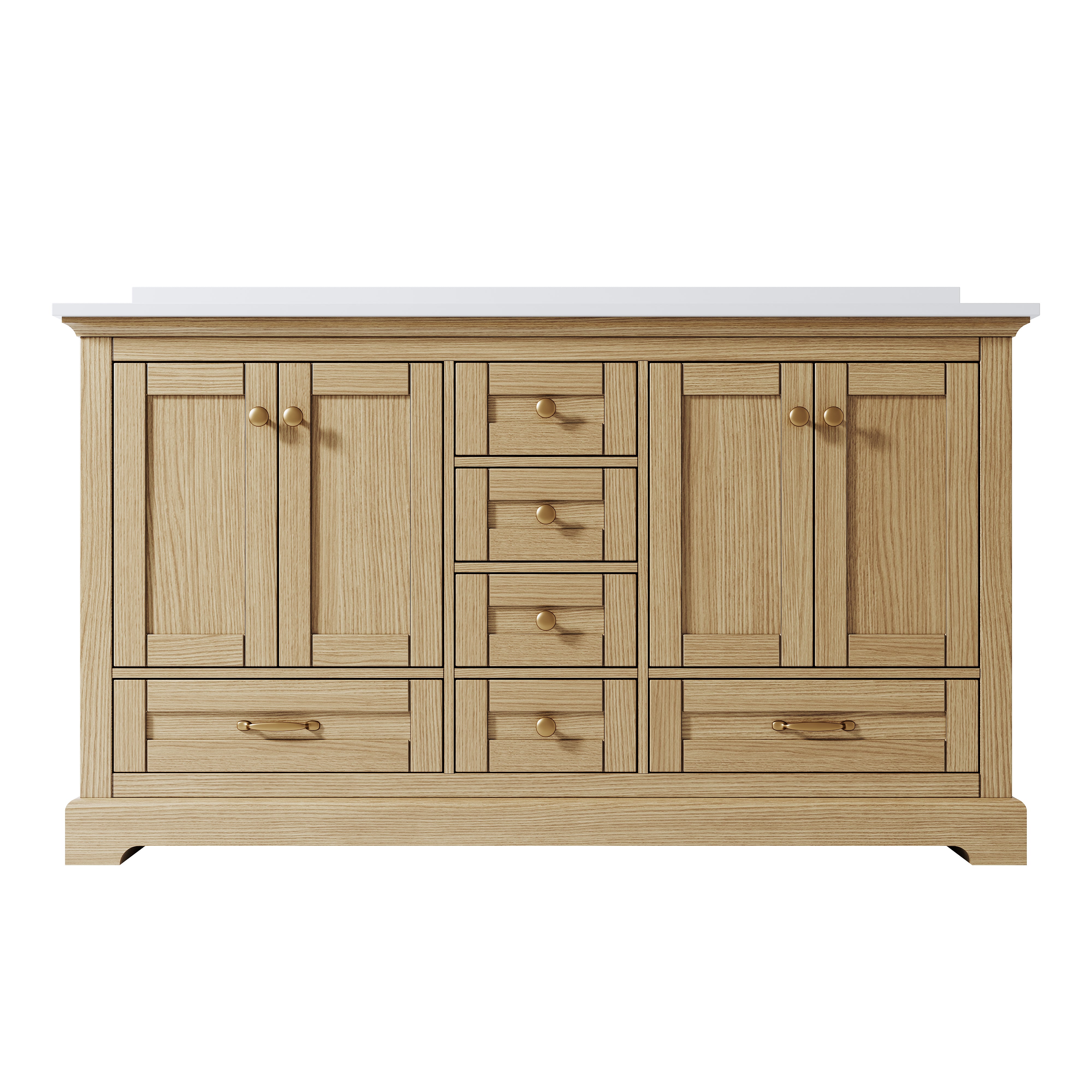
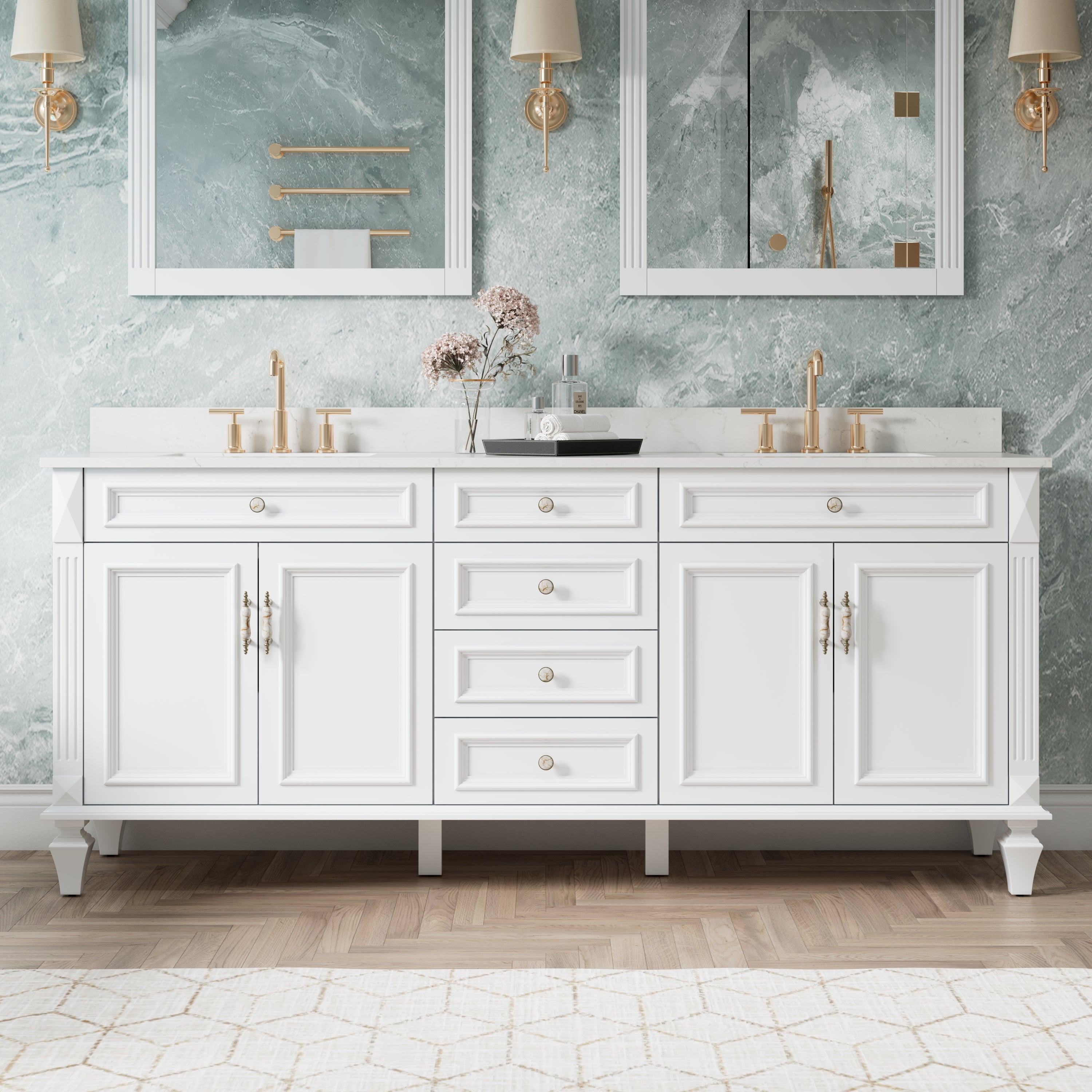
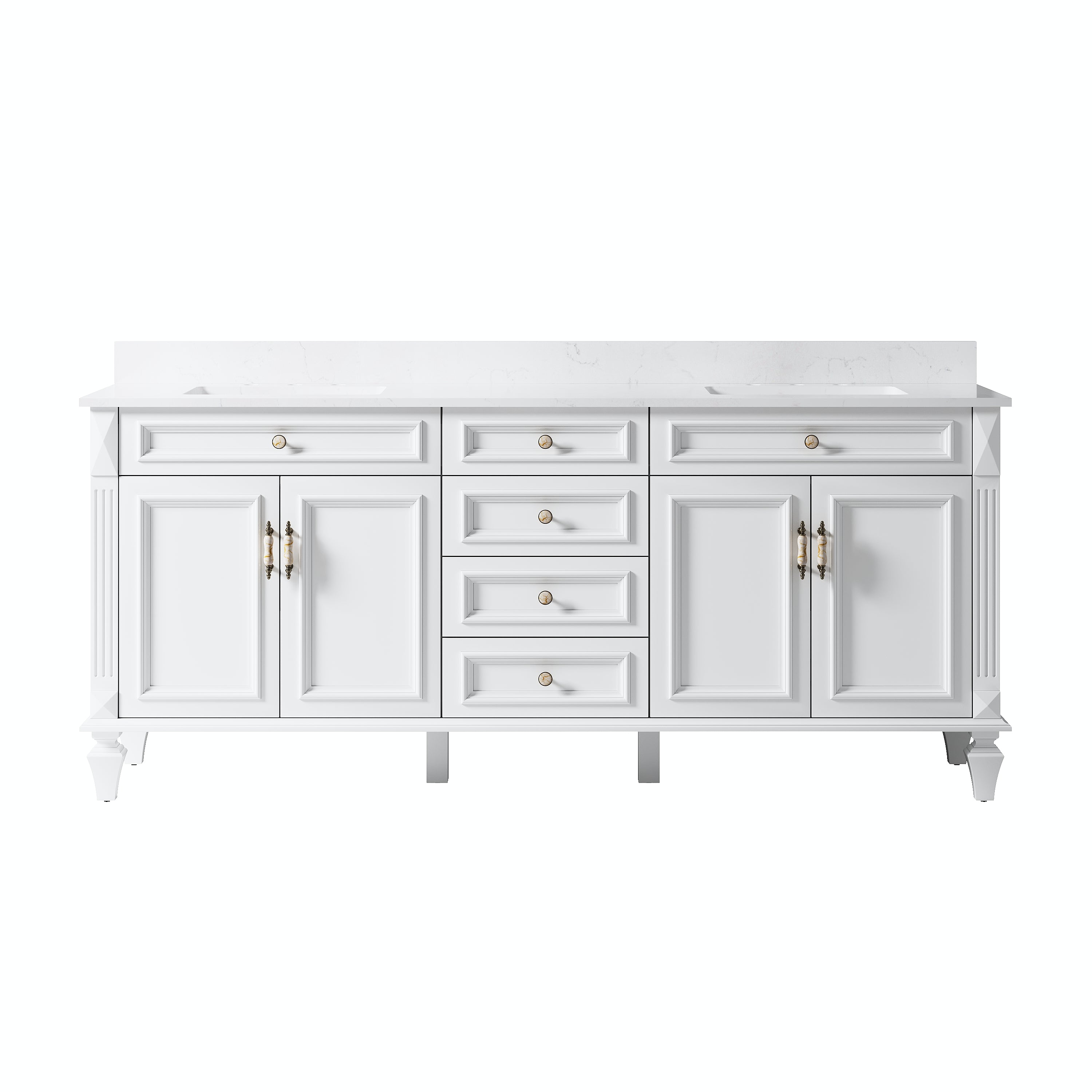
Drawer-based wood bathroom cabinets solve much of that problem. Different drawer heights can separate cosmetics, razors, towels, hair tools, medications, and replacement toiletries.
Recent Houzz design coverage notes that vanity drawers have grown in popularity, with designers increasingly using drawers of different sizes for specific items. Earlier Houzz renovation research also found soft-close drawers in 78% of upgraded vanities and built-in drawer organizers in 22%. (Houzz)
Industry judgment: accessible storage is becoming more valuable than raw storage volume. A well-organized 36-inch cabinet can outperform a poorly planned 48-inch cabinet in daily use.
3. Wood Construction Works Well With Custom Organizers
Wood cabinetry can accommodate dividers, pullouts, electrical components, and compartment systems without requiring the exterior design to become complicated.
A top drawer might include narrow sections for toothbrushes and grooming products. A deeper drawer below can hold bottles or folded towels. Pullout bins can handle trash or laundry, while interior outlets can create a dedicated location for electric toothbrushes or styling tools.
NKBA’s 2026 Bath Trends research points toward configurable vanity modules, customized organization, charging solutions, and more efficient storage as part of the industry’s move toward highly functional bathrooms. The same research says 72% of professionals expect bathroom footprints to evolve partly to accommodate efficient storage solutions. (NKBA)
Industry judgment: the next generation of bathroom cabinetry will be judged less by the number of doors and more by how precisely the interior supports daily routines.
4. Standard Widths Can Deliver High Storage Efficiency
More storage does not automatically require a huge vanity. Current Houzz findings show that 47% of upgraded vanities are 48 inches wide or smaller. Nineteen percent are 60 inches wide, 14% measure 72 inches, and only 13% go larger. (Houzz)
A 30- or 36-inch wood bathroom cabinet can provide enough room for a single sink plus multiple drawers. A 48-inch unit creates greater countertop and storage capacity while remaining suitable for many midsize bathrooms.
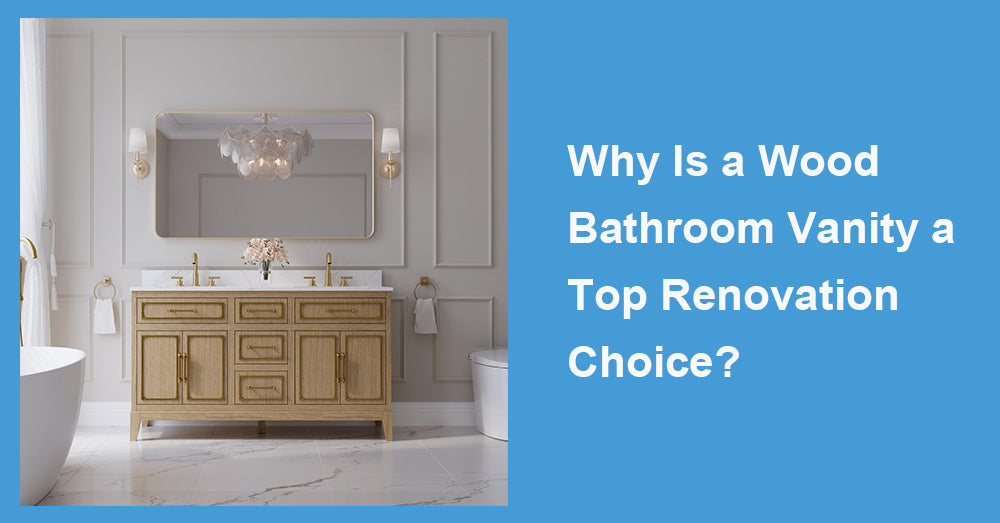
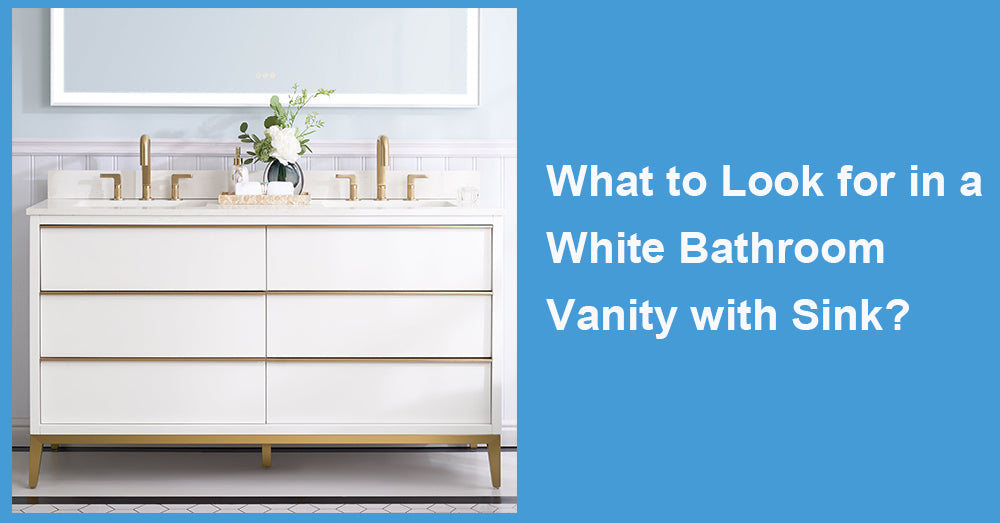
For shared primary bathrooms, 60- and 72-inch vanities can provide separate drawer banks for each user. Standard vanity depth commonly falls around 21 to 22 inches, which creates useful storage without projecting excessively into the walkway.
Industry judgment: efficient storage planning is moving toward smarter use of standard cabinet dimensions rather than simply increasing the bathroom footprint.
5. Wood Vanities Can Work Around Plumbing More Effectively
Plumbing is one of the biggest obstacles to bathroom storage. Drain pipes and supply lines occupy the center of many sink cabinets, leaving awkward areas that are difficult to use.
Well-designed wood cabinetry can work around these restrictions with U-shaped drawers, offset compartments, shortened drawers, or removable shelves. A drawer may wrap around the drain while still providing storage at the front and sides.
Before ordering, buyers should compare the vanity’s internal dimensions with the actual drain location. A drawer-heavy 36-inch vanity may require more precise plumbing placement than a cabinet with two full-height doors.
This becomes particularly important in replacement projects where moving pipes could increase labor costs.
Industry judgment: the best storage design works with existing building conditions instead of forcing expensive plumbing changes to accommodate the cabinet.

6. Wood Can Provide Storage Without Looking Utilitarian
Bathrooms have historically relied on storage that looks functional first and decorative second. Wood cabinetry changes that balance because the storage itself can become part of the room’s visual character.
Current Houzz data shows that wood tones are the leading vanity color category at 28%, with light wood at 11% and medium-to-dark wood at 17%. Maple leads solid-wood vanity selections at 29%, followed by white oak at 23%, birch at 12%, and walnut at 9%. (Houzz)
Light oak can make a 36- or 48-inch vanity feel visually lighter, while walnut can give a 60-inch cabinet a more architectural presence.
NKBA also reports that wood-faced vanities, supported by 62% of surveyed professionals, have moved ahead of painted cabinetry at 53%. (NKBA)
Industry judgment: storage furniture no longer needs to disappear into the bathroom. Natural grain allows cabinetry to function as both organization and design.
7. Different Door Styles Change Storage Performance
The cabinet front should support the interior rather than determine it. Shaker-style doors remain the leading vanity choice at 49%, while flat-panel fronts account for 26%. Raised-panel designs follow at 15%. (Houzz)
Flat-panel wood cabinetry works particularly well with wide drawers because uninterrupted grain can run horizontally across several fronts. Shaker cabinetry can provide a more transitional appearance while still supporting modern drawer systems.
For storage-focused bathrooms, buyers should avoid selecting a cabinet based entirely on symmetry. A perfectly balanced row of decorative fronts may conceal false drawers or inefficient compartments.
Instead, open product diagrams and examine which fronts actually function.
Industry judgment: visual symmetry sells the first impression, but usable drawers create long-term satisfaction.
8. Vertical Wood Cabinets Can Use Empty Wall Space
Vanity storage is only one part of the bathroom. Tall linen cabinets and countertop towers can use vertical space that might otherwise remain empty.
A narrow cabinet approximately 15 to 24 inches wide can provide substantial room for towels, toiletries, toilet paper, and cleaning products without requiring a larger vanity.
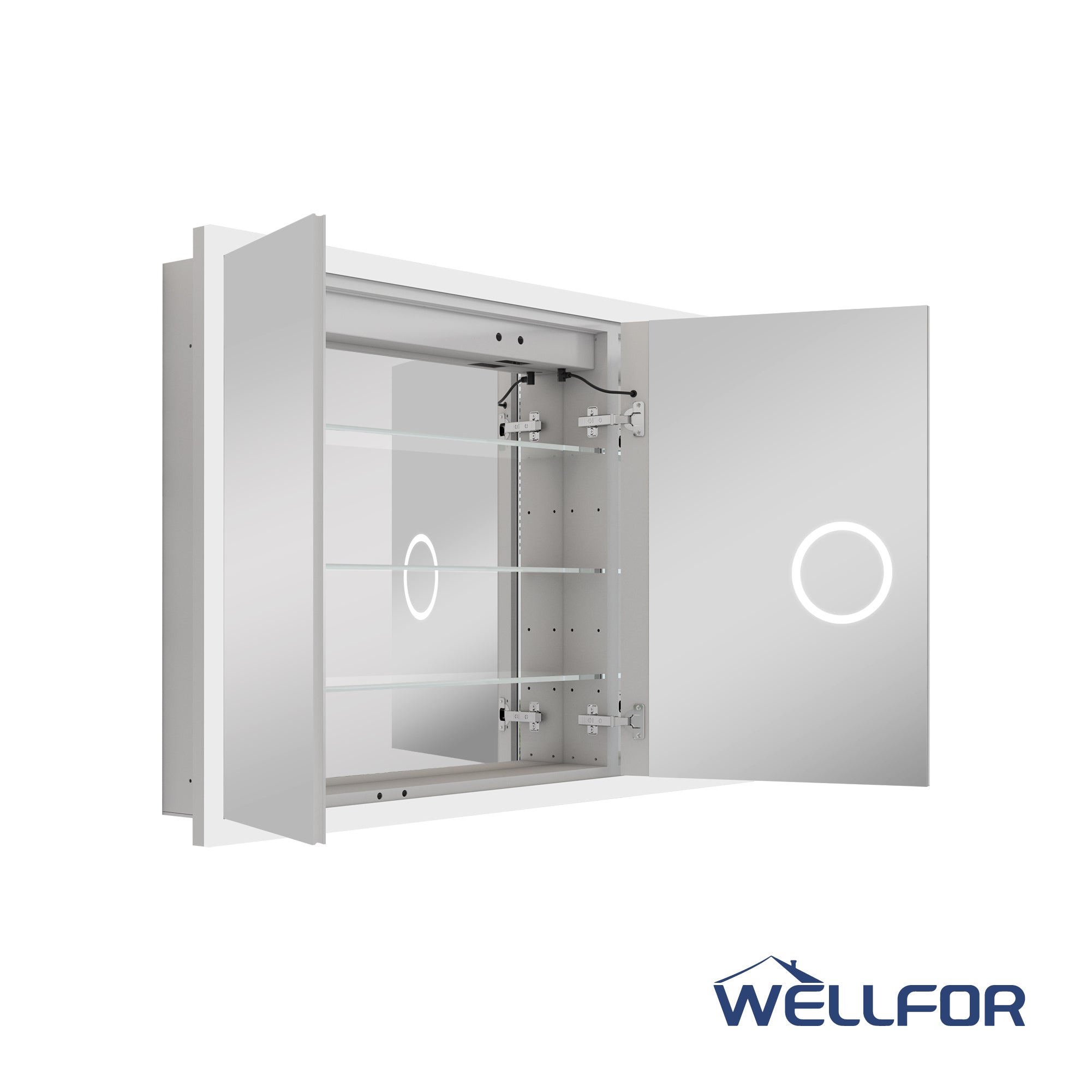
Above-counter storage towers can also separate frequently used items from plumbing-related storage below. Houzz’s recent professional storage examples highlight linen cabinets, vanity towers, medicine cabinets, integrated hampers, and pullout bins as useful ways to take advantage of limited bathroom space. (Houzz)
Matching these elements in the same wood finish creates a built-in appearance without relying on one oversized cabinet.
Industry judgment: future bathroom storage will increasingly expand upward rather than outward, especially where floor space is valuable.
9. Durable Hardware Makes Storage Feel Better
Cabinet capacity means little if drawers stick, doors become misaligned, or hardware loosens after frequent use.
Soft-close hinges and drawer slides can improve both durability and daily experience by reducing impact. Full-extension slides also make products stored near the back easier to reach.
Houzz’s renovation research found soft-close drawers in 78% of upgraded vanities and soft-close doors in 75%, making both among the most frequently selected vanity features. (Houzz)
Buyers should also examine drawer-box construction, adjustable hinges, shelf thickness, and moisture protection around sink openings.
Industry judgment: premium storage is increasingly defined by movement and accessibility. A drawer that opens fully and closes smoothly creates more perceived quality than an extra decorative panel.
10. Better Storage Supports Long-Term Bathroom Planning
Storage needs rarely decrease over time. Towels, medications, grooming equipment, cleaning supplies, and personal-care products all compete for limited space.
That is why planning storage early can improve the entire remodel. The 2025 Houzz Bathroom Trends Study found that 68% of renovating homeowners consider special needs in their projects, with many planning for requirements that may emerge years later. (Houzz)
Accessible drawers, reachable shelves, and clearly organized cabinets can therefore support both today’s routines and changing needs.
NKBA’s 2025 research similarly identifies ample storage within arm’s reach as a central functional priority in upcoming bathroom design. (NKBA)
Industry judgment: storage should be treated as long-term bathroom infrastructure rather than an accessory added after the layout is complete.
11. Conclusion
Wood bathroom cabinets are a strong storage solution because they combine capacity, customization, accessible drawers, flexible sizing, and an appearance that contributes to the overall bathroom design. Current remodeling data also shows that solid wood, natural tones, customized vanities, and practical storage features remain highly relevant choices. (Houzz)
A 30- or 36-inch cabinet can serve a compact bathroom efficiently, while 48-inch models offer more counter and drawer space. In larger rooms, 60- and 72-inch vanities can divide storage between users, while matching linen cabinets can add vertical capacity.
Before buying, look beyond the exterior finish. Check drawer depth, plumbing clearance, shelf adjustment, soft-close hardware, interior organizers, and whether the cabinet can accommodate electrical accessories.
The most successful bathroom storage does not simply hide more products. It keeps daily essentials organized, easy to reach, and visually contained. When thoughtful interior planning is paired with the warmth and flexibility of wood, bathroom cabinetry becomes more than storage. It becomes one of the hardest-working elements of the entire remodel.















Leave a comment
This site is protected by hCaptcha and the hCaptcha Privacy Policy and Terms of Service apply.