














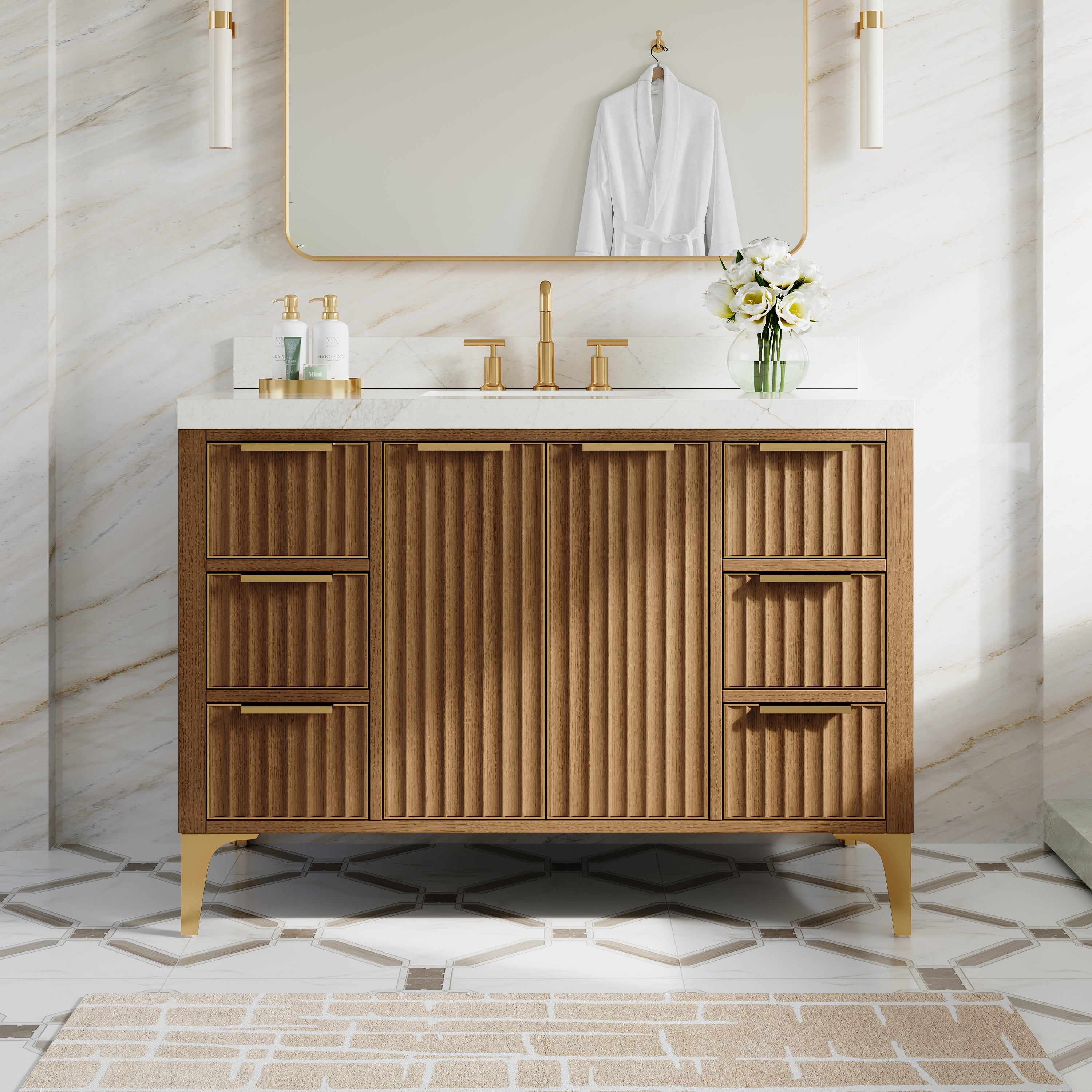
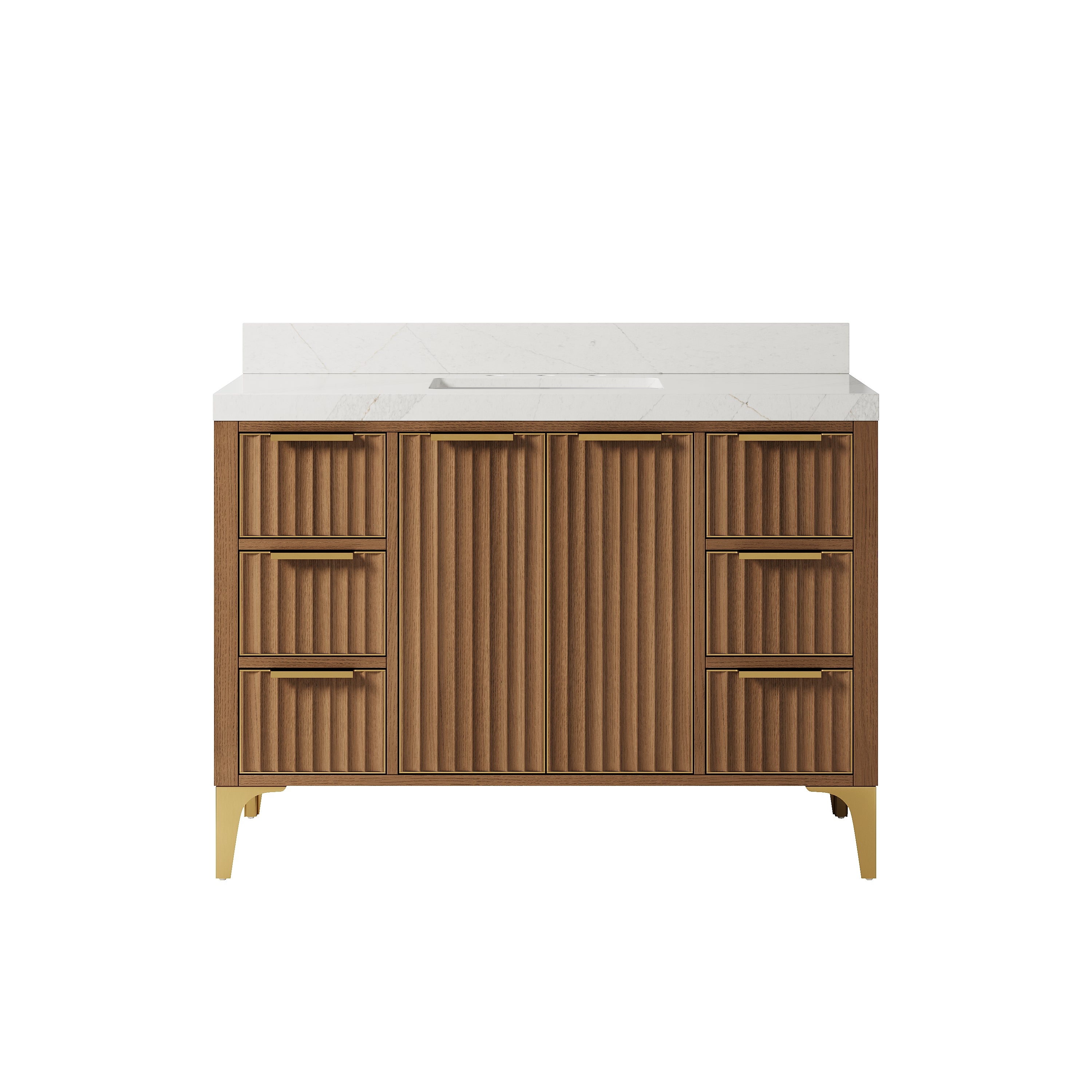


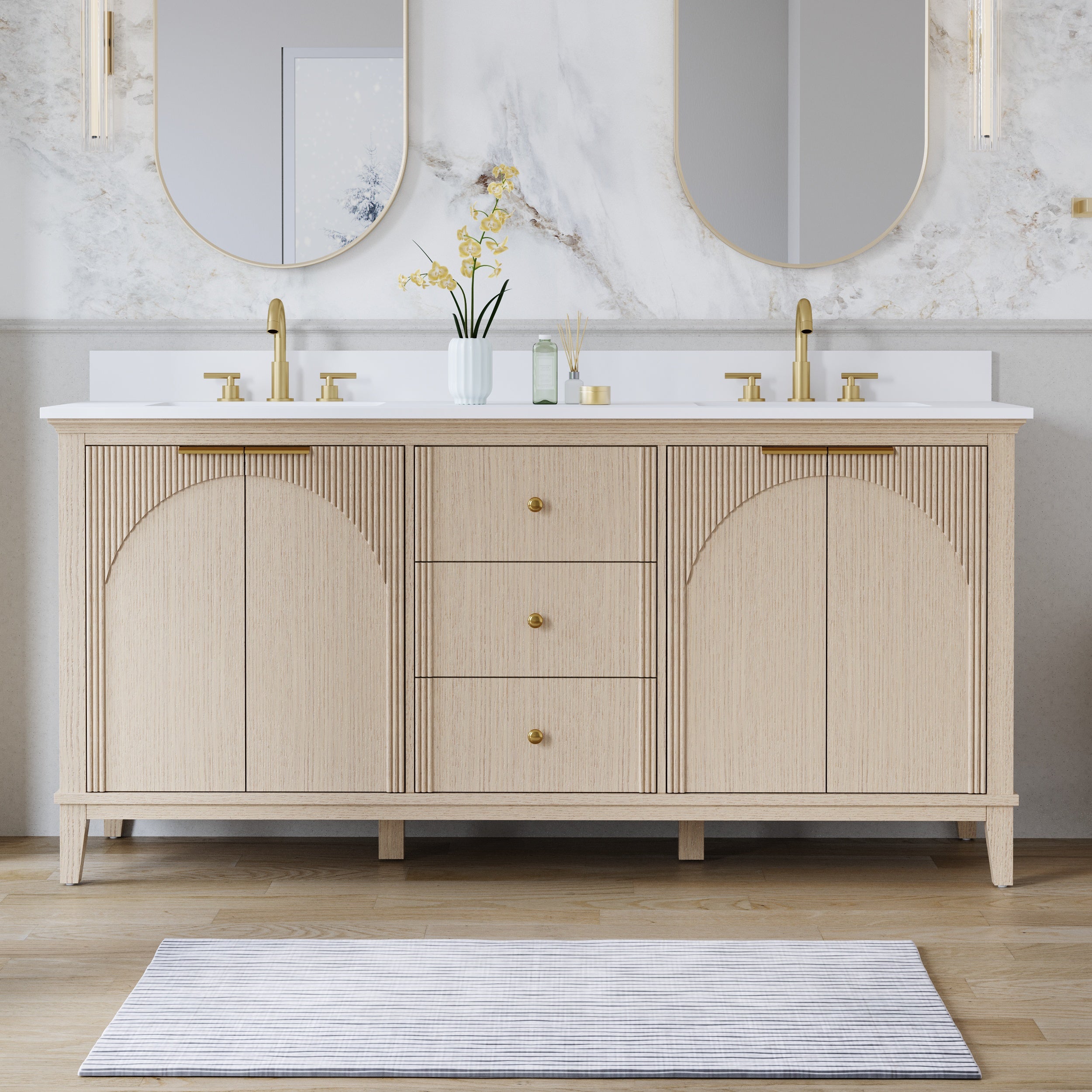
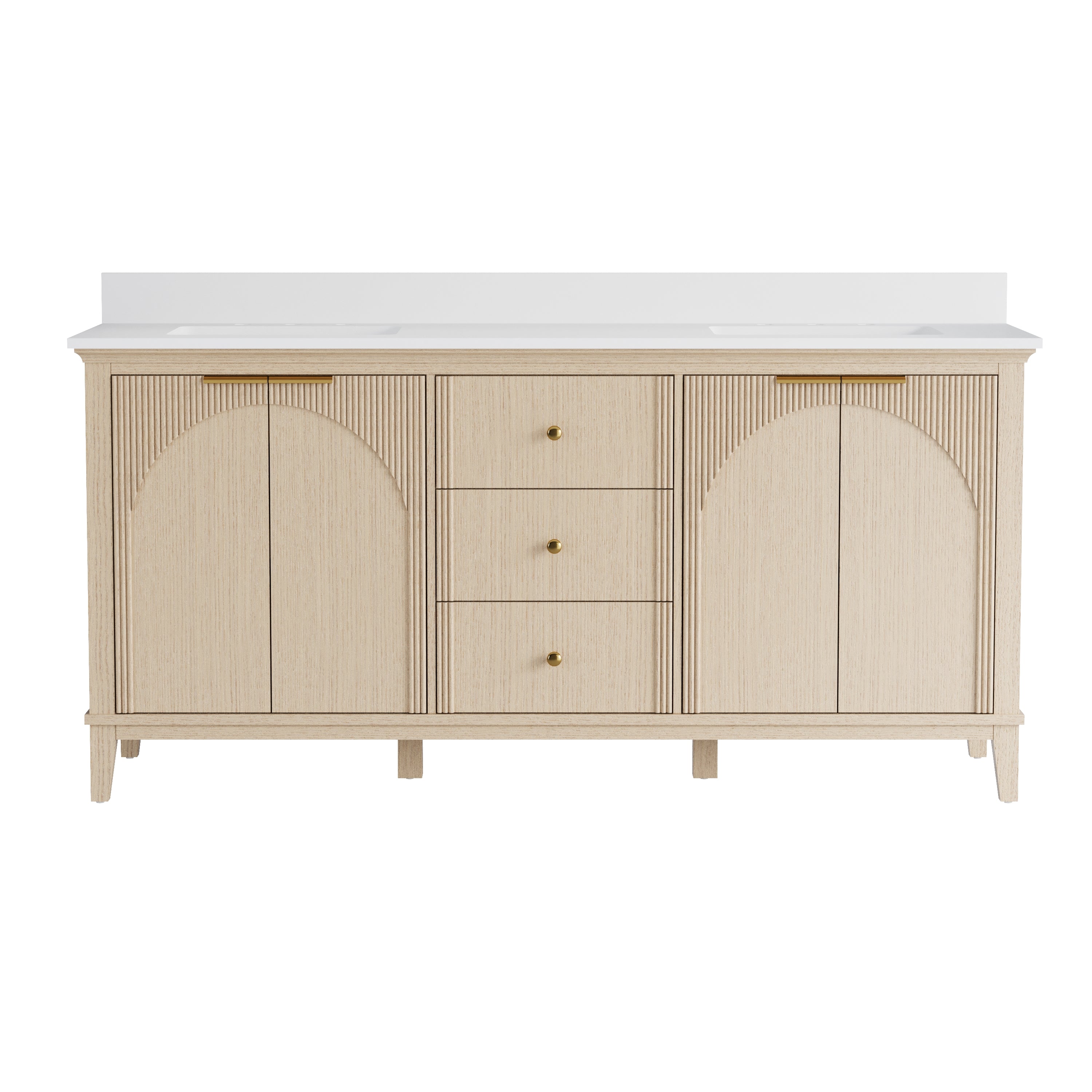
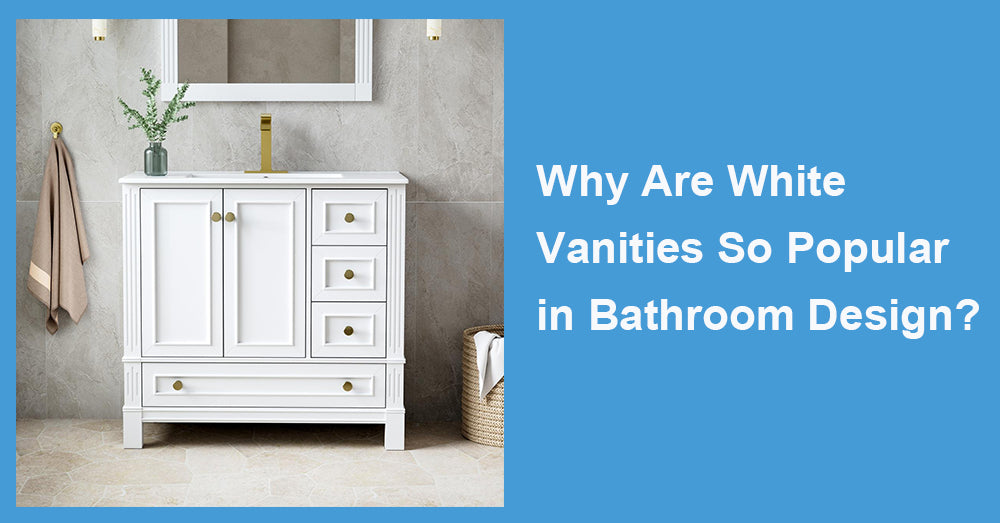
White vanities remain popular because they solve several practical and visual problems at once. After more than 20 years of working with bathroom cabinetry, I have seen them succeed in narrow guest baths, family bathrooms, and large primary suites. They brighten the sink area, pair easily with changing finishes, and give homeowners room to update the space later. Proportion, construction, storage, and finish quality still determine whether the cabinet works well.
1. White Vanities Make Bathrooms Feel Lighter
Bathrooms contain large areas of tile, glass, stone, and metal. These surfaces are durable, but they can make the room feel visually heavy, especially when the vanity is dark and floor-mounted.
A white cabinet reflects more light and blends easily with pale walls. In a small hall bathroom or windowless guest bath, that can make the lower half of the room feel less crowded. The dimensions do not change, but the visual weight does.
Color Cannot Correct a Bad Layout
A common misconception is that a white finish can make any vanity suitable for a small bathroom.
It cannot. A cabinet that is too deep will still narrow the walkway. An oversized vanity may interfere with the toilet, bathroom door, or shower enclosure. Before ordering, mark the full footprint with painter’s tape, then open every nearby door.
2. White Works With Many Design Styles
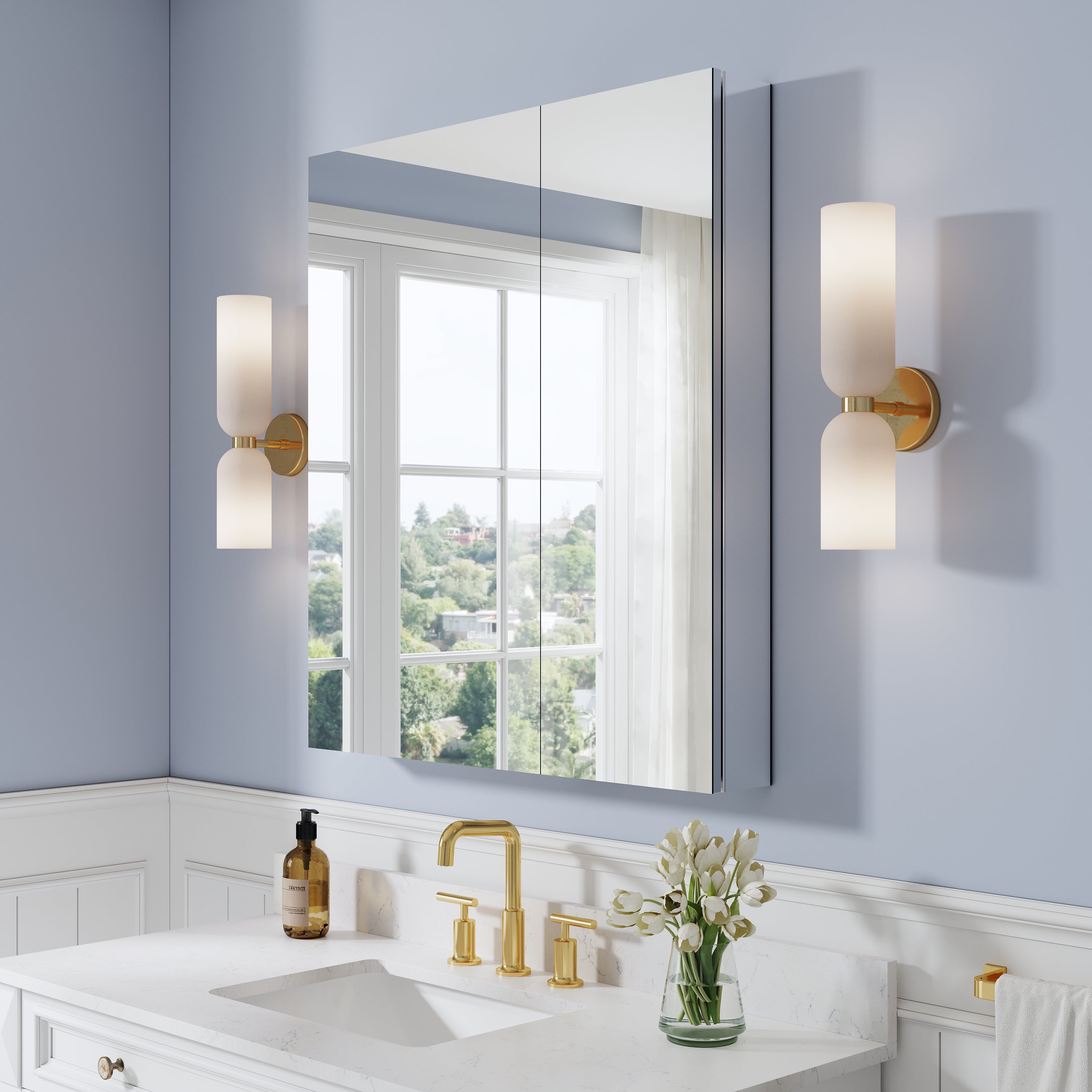
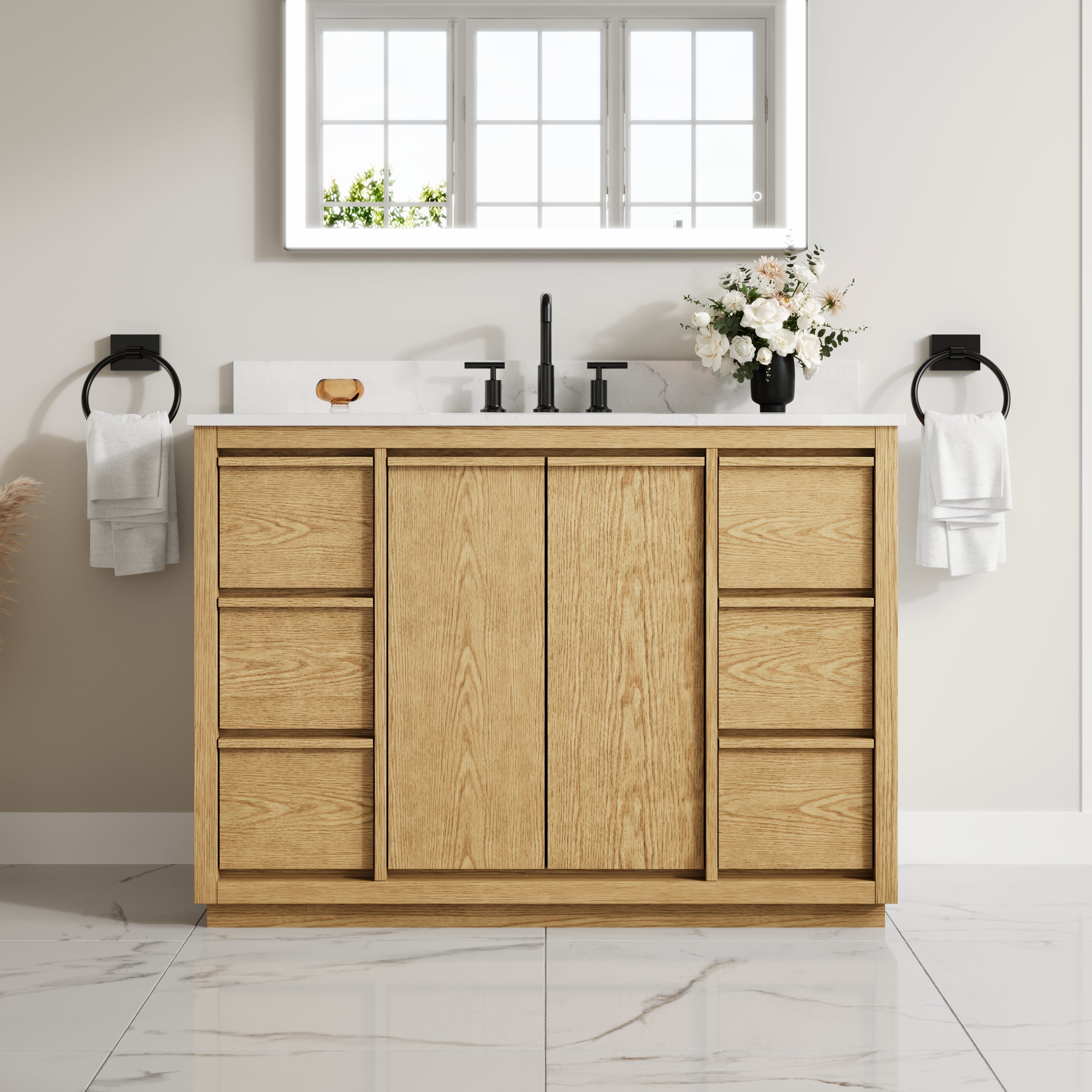
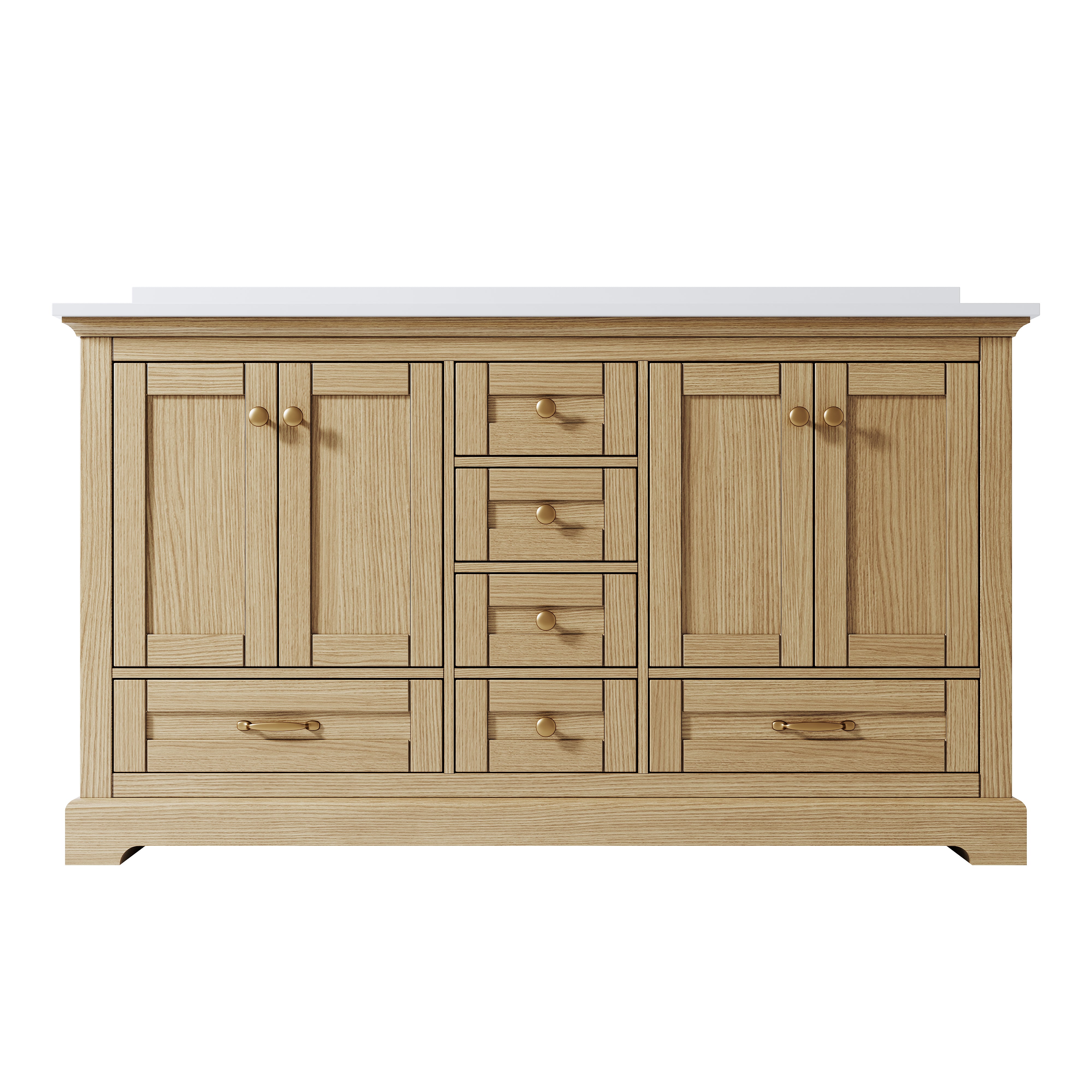
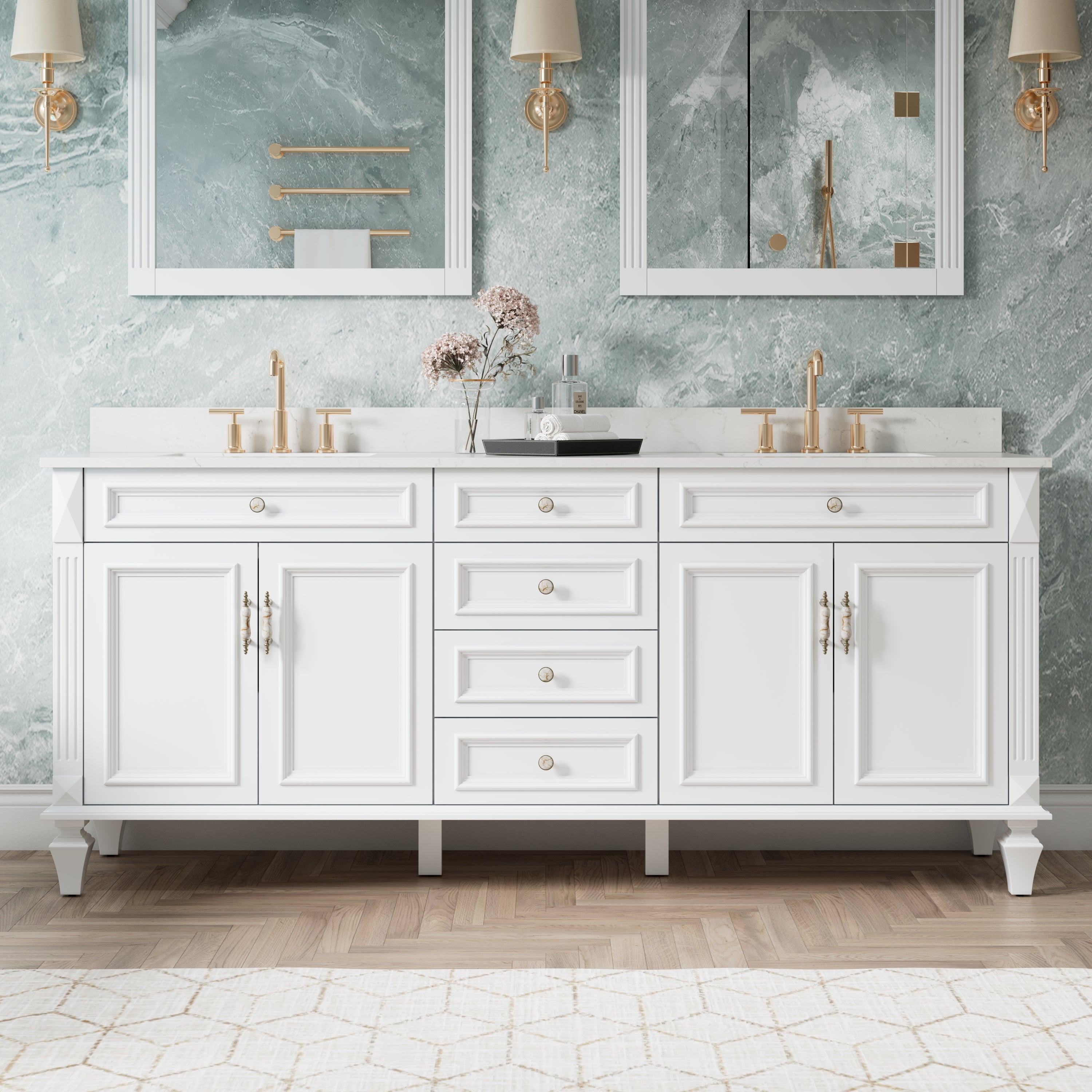
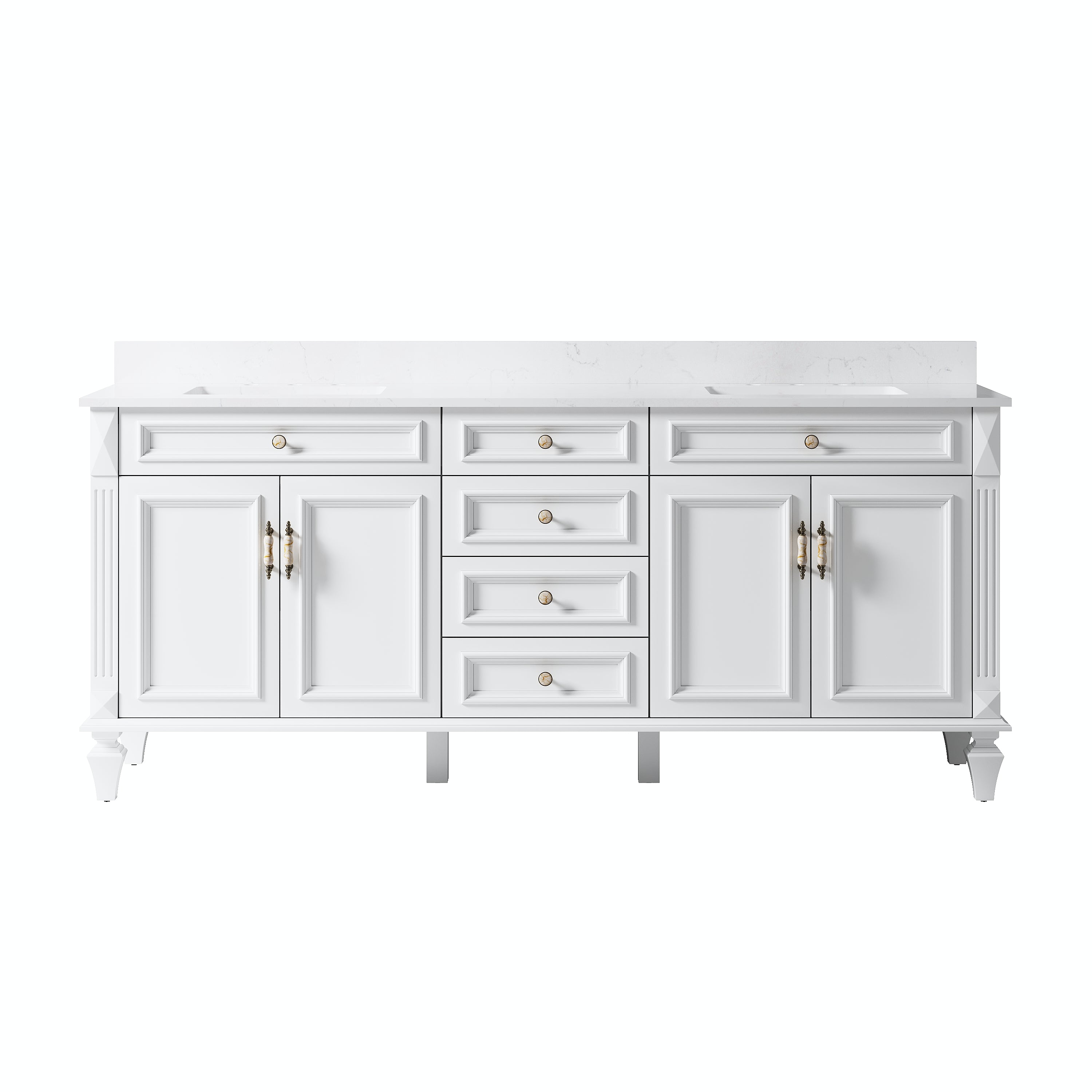
White cabinetry is unusually flexible. Flat-front drawers suit modern interiors. Shaker doors work well in transitional homes, while framed panels and furniture-style legs can support a traditional bathroom.
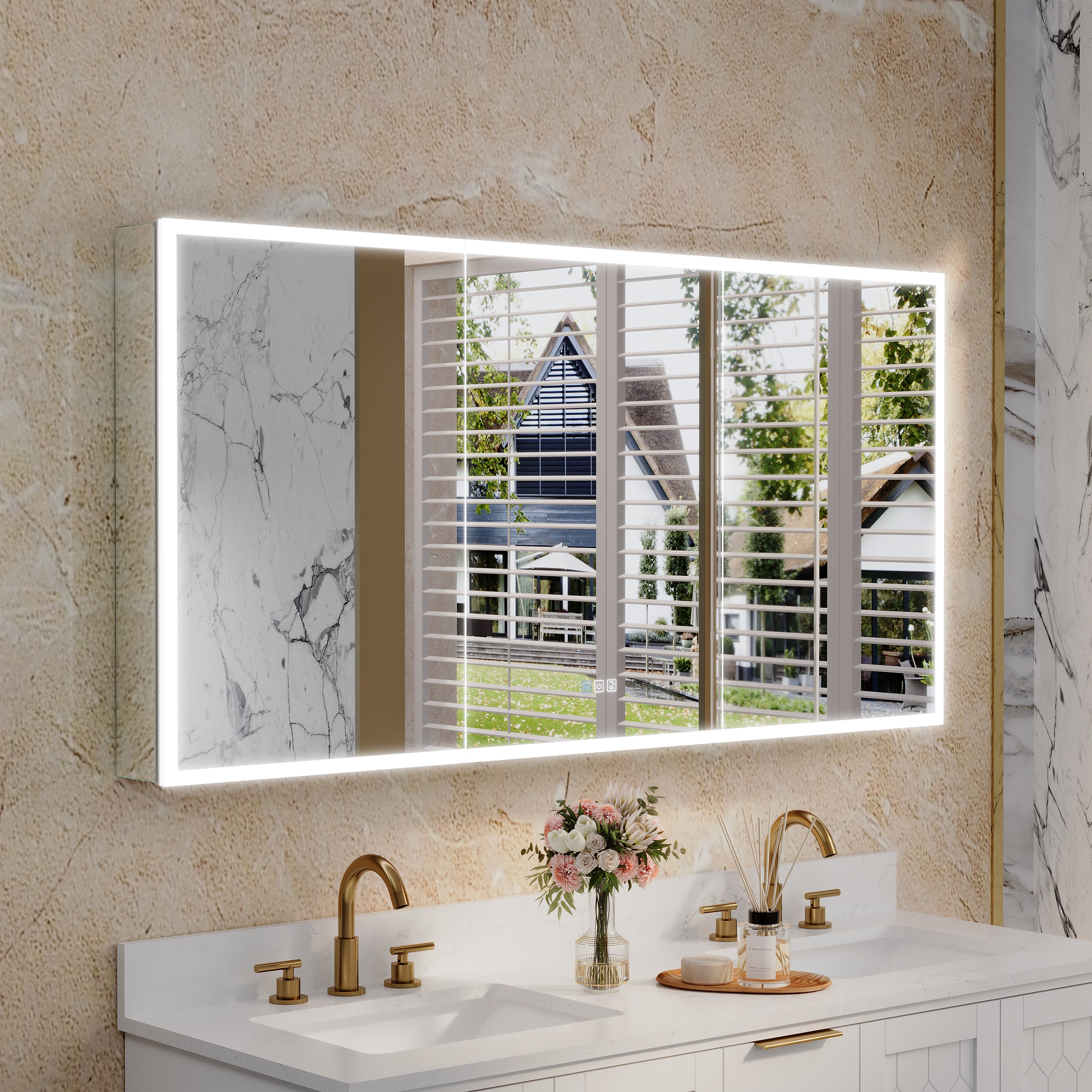
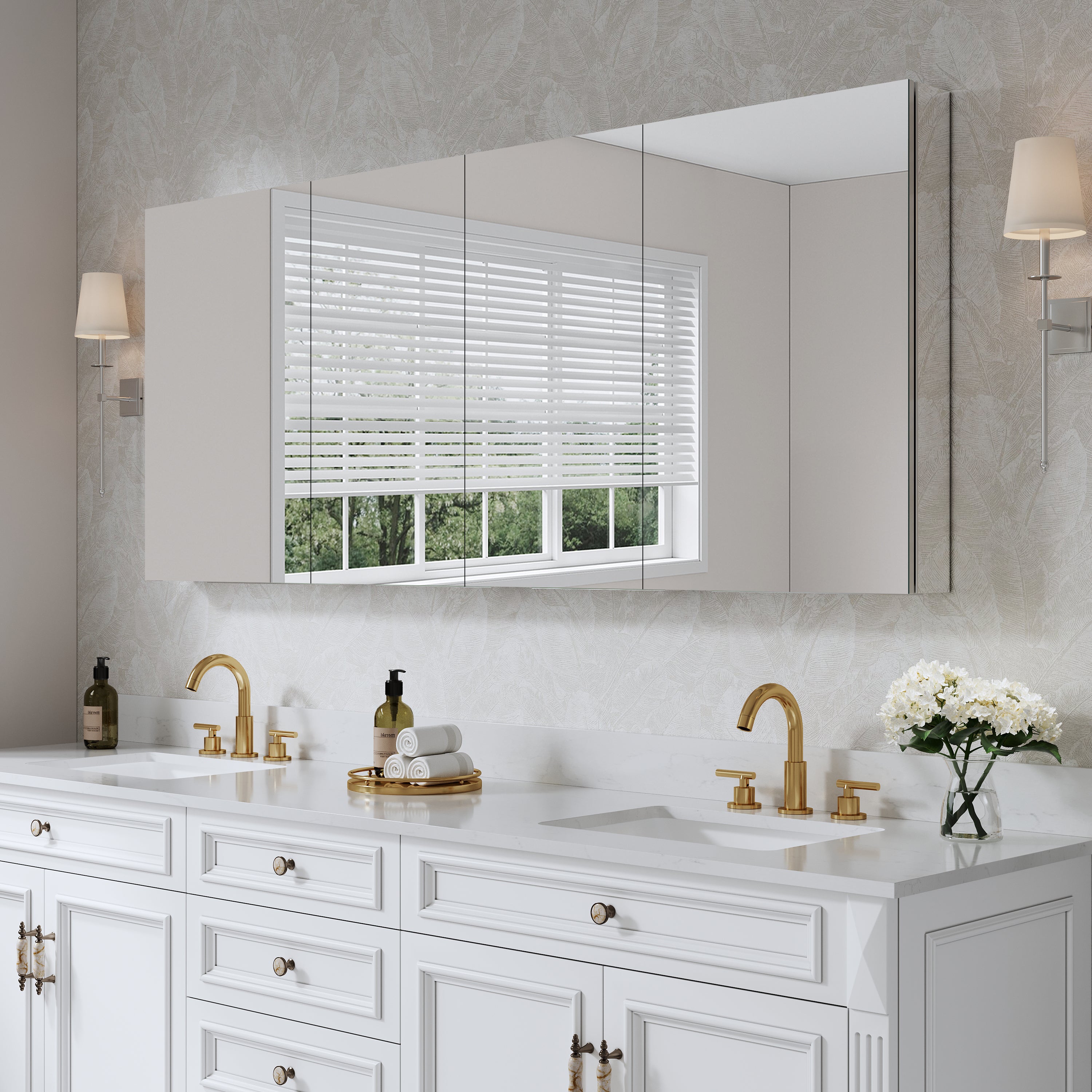
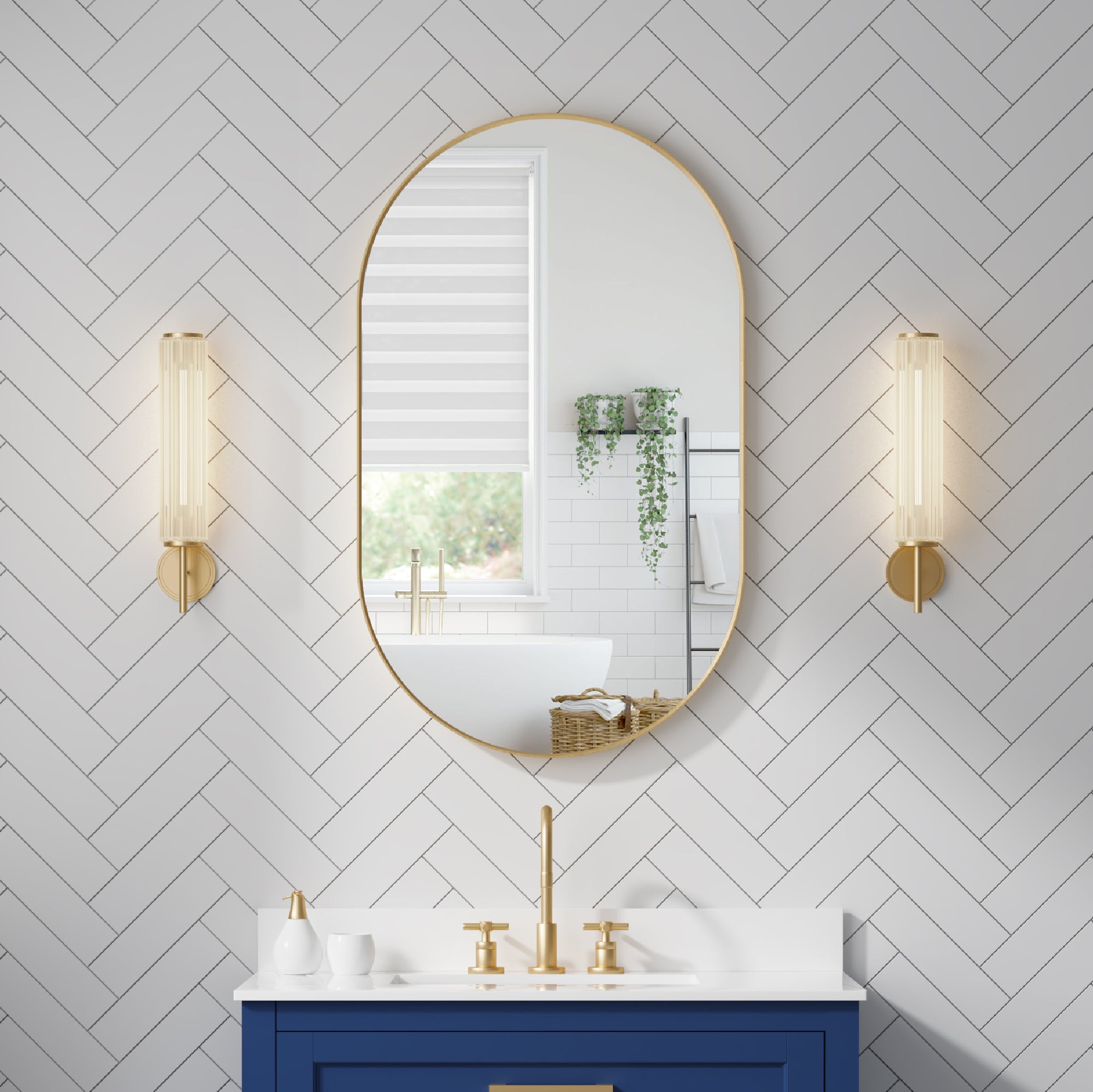
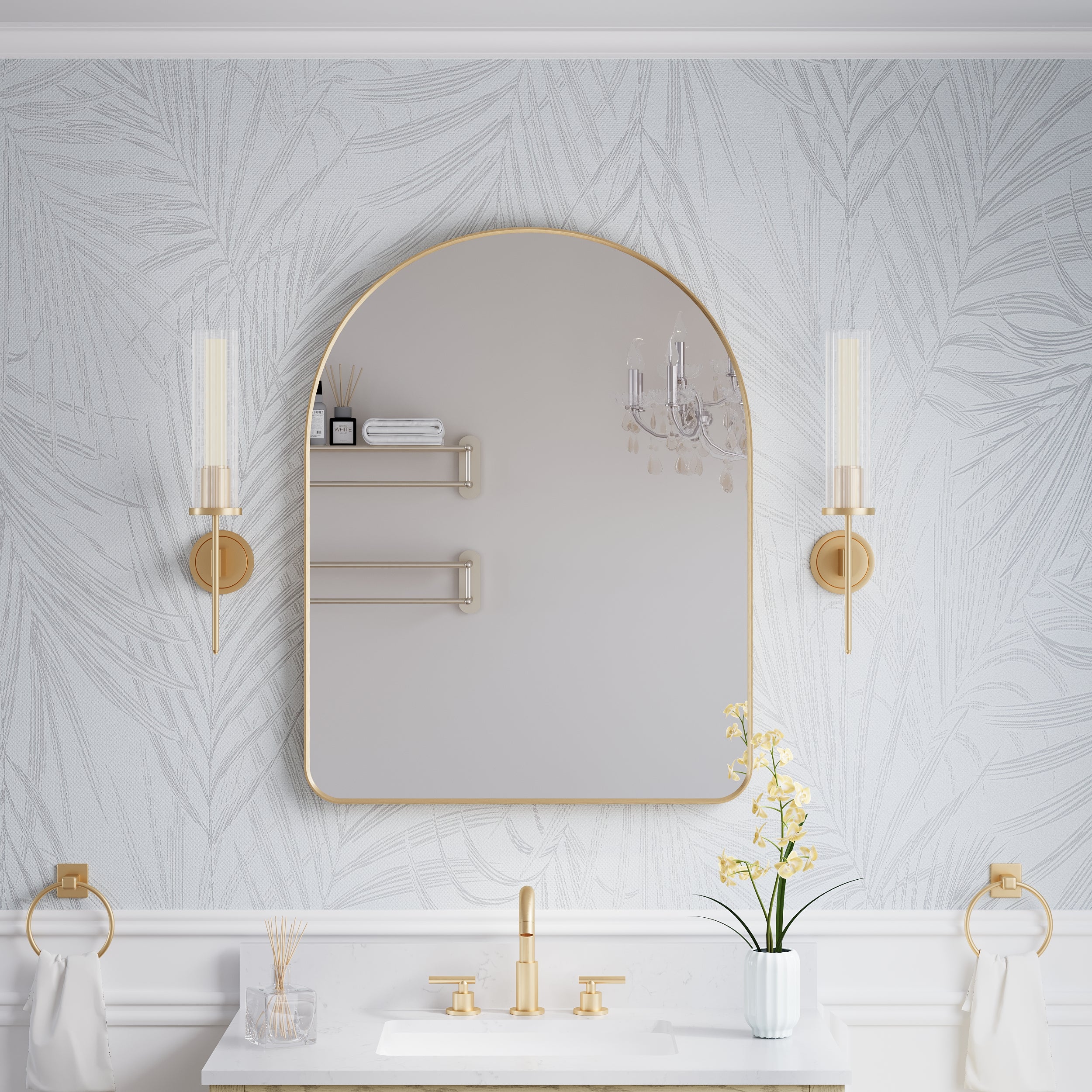
The surrounding materials determine the mood. White quartz and matte black hardware create crisp contrast. Warm stone and brushed brass produce a softer look. A wood-framed mirror can introduce natural texture.
This flexibility matters because a vanity is expensive to replace. Mirrors, lights, hardware, towels, and wall colors can change later while the cabinet remains convincing.
3. The Right Shade of White Matters
White is not one universal color. Some finishes are bright and cool. Others lean cream, gray, or warm beige.
A cool white vanity can look sharp beside blue-gray tile but harsh against ivory flooring. A warmer white may suit beige stone beautifully, yet appear yellow beneath cool LED lighting. Product photographs can also distort color.
Compare Undertones in the Actual Room
Whenever possible, place a sample near the floor, countertop, wall paint, and lighting. Look at it in daylight and after dark.
The whites do not need to match exactly. Slight variation often adds depth. Problems arise when unrelated undertones compete in a small space.
4. White Supports Stronger Design Features
Many successful bathrooms have one clear focal point: a dramatic stone top, patterned floor, fluted shower glass, sculptural mirror, or distinctive light fixture.
A white vanity can support that feature without competing with it. This is why designers return to white cabinetry when a room already contains visual movement.
The danger is creating an all-white room with no texture. White walls, a white cabinet, and a plain white top may feel sterile. Subtle veining, handmade-look tile, woven storage, warm metal, or natural wood accents can prevent flatness.
5. Storage Makes the Vanity Livable
The color attracts attention, but storage determines whether the bathroom remains orderly.
Deep drawers are useful for skincare, brushes, grooming tools, and cosmetics. Cabinet space beneath the sink works better for tall bottles, cleaning supplies, and spare paper goods.
Do not judge capacity by the number of drawer fronts. Some top fronts are fixed because the sink occupies the space behind them. Plumbing cutouts may also reduce usable room.
In a family bathroom, I would prioritize full-extension drawers and durable hardware over decorative legs.
6. White Finishes Have Real Drawbacks
White shows toothpaste, makeup, dust, fingerprints, and hair dye more readily than medium-toned wood. In a children’s bathroom or shared family space, frequent spot cleaning may be necessary.
Poor-quality paint can chip at corners and around handles. High-gloss surfaces reveal fine scratches, while detailed doors collect dust in grooves. A durable satin or matte finish is usually easier to maintain.
White may also be the wrong choice for a moody or strongly rustic bathroom where visible wood grain is central to the design.
7. Installation Quality Is Easy to See
White cabinetry makes uneven gaps, crooked hardware, chipped edges, and untidy caulk lines more noticeable.
Set the cabinet level so doors and drawers stay aligned. Check that the countertop overhang is even, then seal the sink, faucet openings, backsplash, and wall joints carefully. Test every plumbing connection before loading the cabinet.
Floating models can make a small bathroom feel more open, but they require secure wall support. Freestanding vanities are easier to fit around existing plumbing and often provide more storage.

8. Simple Maintenance Preserves the Finish
Use a soft cloth and mild, non-abrasive cleaner. Wipe standing water promptly, especially around the faucet and sink rim. Remove tinted cosmetics and hair products before they stain.
Run the exhaust fan during showers and until the room begins to dry. Check beneath the sink several times a year for slow leaks or swollen edges.
When comparing Wellfor options, start with room measurements, cabinet construction, usable storage, and the shade of white. Then choose the countertop, hardware, and mounting style that suit the bathroom’s actual use. White vanities remain popular because they offer brightness and design freedom, but the best model is the one that fits comfortably and continues to function after the first clean impression wears off.














Leave a comment
This site is protected by hCaptcha and the hCaptcha Privacy Policy and Terms of Service apply.