






















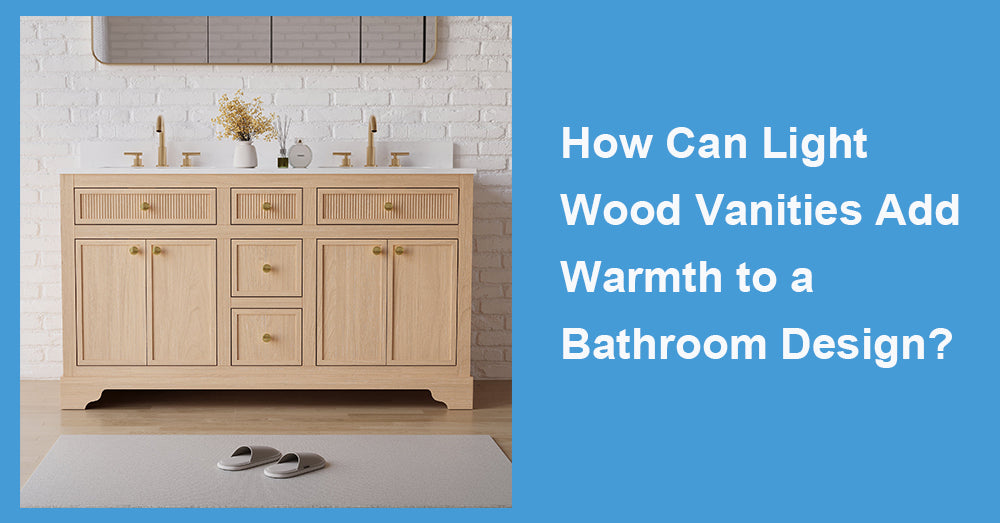
Light wood vanities bring warmth into bathrooms without making the room feel dark, visually heavy, or overly traditional. Their pale grain softens white tile, cool stone, glass shower panels, and polished plumbing fixtures while preserving the brightness expected from a modern bathroom. This balance is increasingly relevant: Houzz’s 2025 bathroom research found that wood tones were the leading vanity color category at 28%, with light wood accounting for 11%. NKBA’s 2026 trend report also found that wood-faced vanities reached 62% in popularity, moving ahead of painted cabinetry at 53%.
Natural Grain Softens Hard Bathroom Surfaces
Bathrooms contain many reflective or hard materials, including porcelain, quartz, glass, mirrors, metal, and ceramic tile. A light wood cabinet introduces grain, tonal variation, and a less uniform surface.
This contrast can make the room feel more comfortable because:
· Wood breaks up large areas of plain white.
· Natural grain adds detail without requiring a bold pattern.
· Pale tones retain visual openness.
· The cabinet resembles furniture rather than purely functional storage.
A light oak vanity below a white quartz top, for example, creates a warmer transition between the countertop and floor. The effect is noticeable even on a compact 30-inch or 36-inch cabinet.
Industry judgment: Light wood succeeds because it adds visual temperature without reducing perceived space.
White Oak Creates a Calm, Architectural Look
White oak is frequently used for contemporary light wood vanities because its grain tends to appear structured rather than highly decorative. It works well with flat-panel doors, recessed pulls, floating installation, and simple stone tops.
White oak can support several design directions:
· Organic modern with warm white walls.
· Scandinavian-inspired interiors with pale flooring.
· Transitional rooms with Shaker doors.
· Spa-style bathrooms with textured stone.
· Minimalist designs with concealed hardware.
The final appearance depends heavily on the stain. A clear or natural finish keeps the cabinet pale, while honey, beige, or slightly gray stains change its relationship with the tile and countertop.
Avoid judging the finish from a digital image alone. Wood samples should be viewed beside the actual floor, wall tile, and countertop under the planned bathroom lighting.
Maple and Ash Offer Quieter Alternatives
Not every bathroom needs pronounced oak grain. Maple and ash can create different versions of warmth.
· Maple usually offers a finer and more uniform appearance. It works well in bathrooms where the countertop or wall tile already carries a strong pattern.
· Ash provides a more visible grain while remaining relatively light. It can make a simple cabinet feel more tactile and furniture-like.
· Birch may provide a gentle, approachable look when finished in a pale natural tone.
The wood species should complement rather than compete with surrounding materials. A heavily veined countertop often benefits from calmer cabinet grain, while a plain white top can support a more expressive wood pattern.
White and Off-White Countertops Keep the Palette Bright
Light wood and pale countertops form one of the most adaptable bathroom combinations. Houzz found that 48% of upgraded bathroom countertops were white, while another 20% were off-white.
A white top creates sharper contrast against oak or maple. Off-white, cream, or softly veined stone produces a gentler transition and may feel warmer under neutral lighting.
For a balanced combination:
· Use bright white quartz for a cleaner modern look.
· Choose cream-toned stone for a softer interior.
· Select subtle beige veining to connect the top with the wood.
· Avoid strong gray veining when the cabinet has golden undertones.
· Repeat the countertop tone in the backsplash or wall paint.
On a 48-inch or 60-inch vanity, a quiet countertop also allows the natural cabinet grain to remain the main visual feature.
Warm Neutrals Strengthen the Natural Effect
NKBA’s 2026 Bath Trends Report found that 96% of surveyed professionals identified neutrals as the leading bathroom color group. Off-white reached 58%, light brown or tan reached 54%, and white reached 40%. Organic or natural design was identified as a popular style by 65% of respondents.
These colors pair naturally with light wood cabinetry.
Good wall and floor companions include:
· Warm white.
· Soft beige.
· Sand.
· Mushroom.
· Pale greige.
· Muted sage.
· Light limestone tones.
Cool gray can still work, but it should be compared carefully with the wood stain. A strongly blue-gray wall may make a warm oak vanity appear unexpectedly yellow.

Hardware Can Make the Wood Feel Warmer or More Modern
Hardware provides a small but influential layer of contrast.
· Brushed gold emphasizes honey and beige undertones.
· Brushed nickel keeps the design light and understated.
· Matte black creates definition around pale doors and drawers.
· Bronze supports a warmer transitional style.
· Chrome introduces a brighter, more reflective finish.
NKBA found that matte, brushed, and satin faucet finishes were all more popular than polished finishes in its latest bath study, reflecting the broader move toward softer and more natural visual combinations.
The faucet, drawer pulls, mirror frame, and shower hardware do not need to match perfectly. Two coordinated finishes can make the room feel more layered, provided one remains dominant.
Floating Designs Increase the Sense of Openness
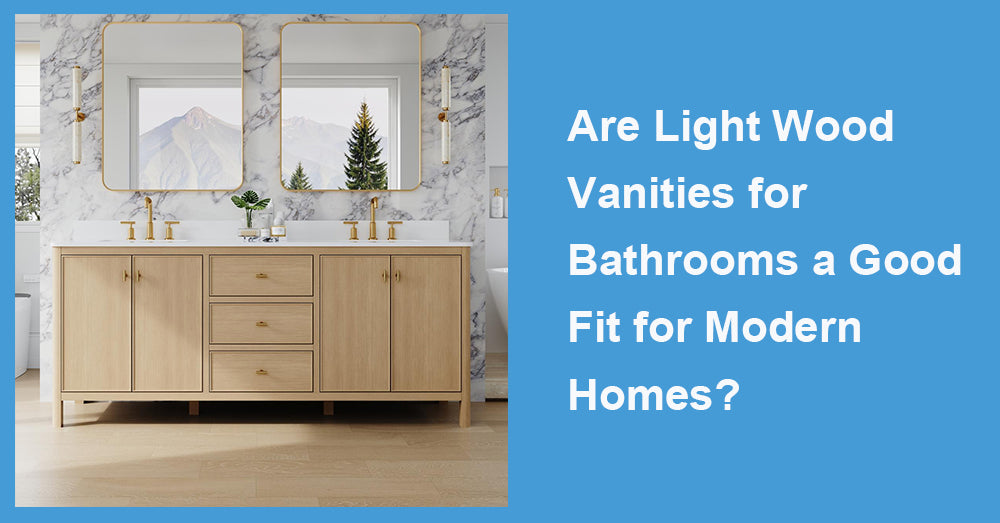
A light wood floating vanity offers two space-enhancing features at once: a pale cabinet finish and visible flooring beneath the unit.
This makes it particularly effective in:
· Narrow guest bathrooms.
· Windowless layouts.
· Smaller primary bathrooms.
· Rooms with patterned floors.
· Renovations seeking a cleaner visual line.
A 36-inch floating vanity can provide useful drawers while appearing less bulky than a floor-standing cabinet of the same width. Wider 60-inch and 72-inch models benefit from the same effect, especially when their fronts use continuous horizontal grain.
Freestanding light wood vanities remain useful when maximum storage matters. Legs, toe kicks, and furniture-style bases can add warmth in a more traditional or transitional setting.
Lighting Determines the True Wood Tone
Lighting can make the same vanity look golden, neutral, gray, or slightly orange. NKBA reports that 91% of its respondents consider lighting quality a top bathroom design priority, while 88% identify natural lighting as important. Houzz also found that natural light helps create relaxation for 43% of renovating homeowners.
To show light wood accurately:
· Use high-quality lighting with consistent color rendering.
· Place task lighting near the mirror rather than relying only on one ceiling fixture.
· Test wood samples during both daytime and evening.
· Avoid mixing several noticeably different light temperatures.
· Consider under-cabinet lighting for a floating vanity.
Light directed across the cabinet face can reveal grain and texture. Harsh downlighting may instead create shadows beneath the countertop and exaggerate color differences.









































Leave a comment
This site is protected by hCaptcha and the hCaptcha Privacy Policy and Terms of Service apply.