














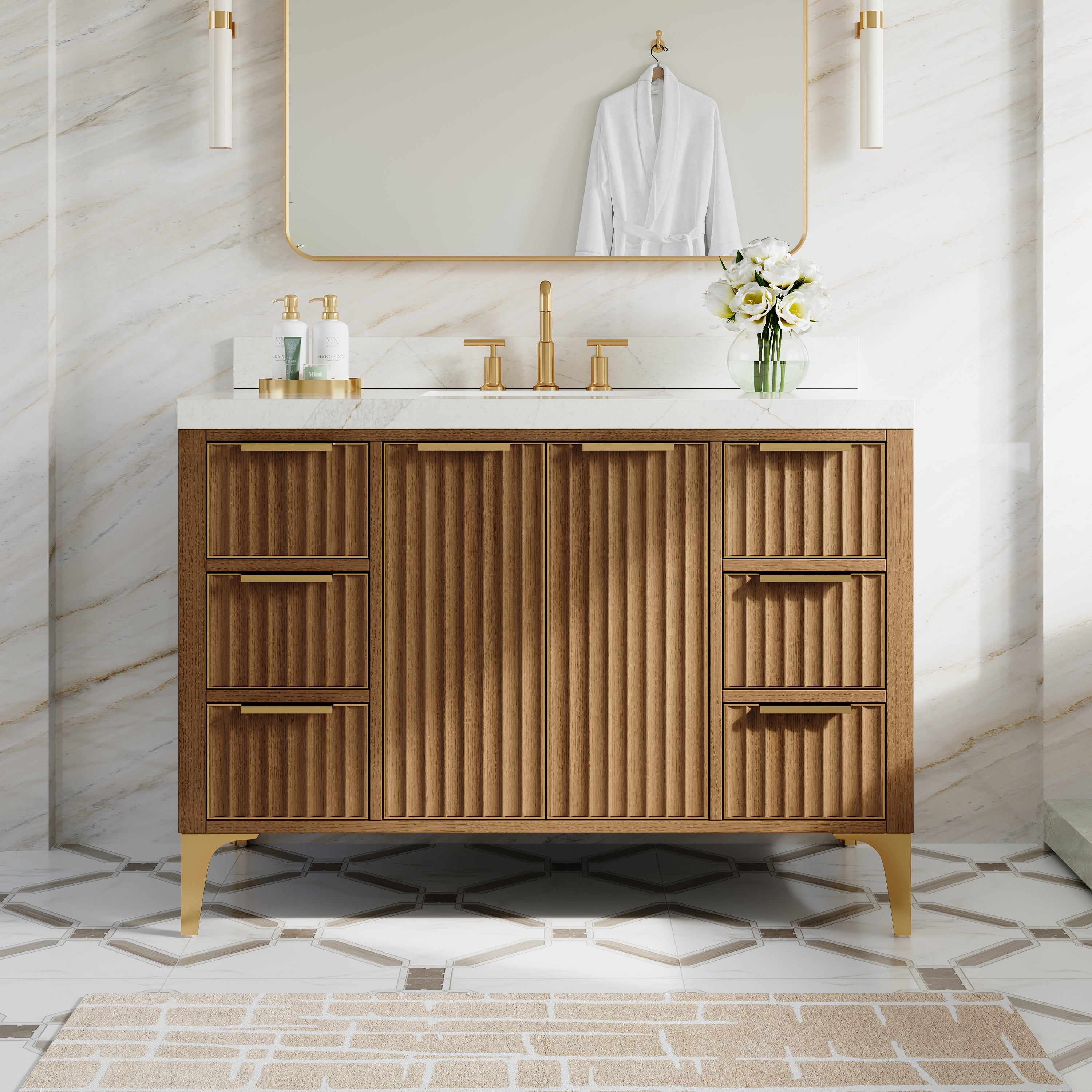
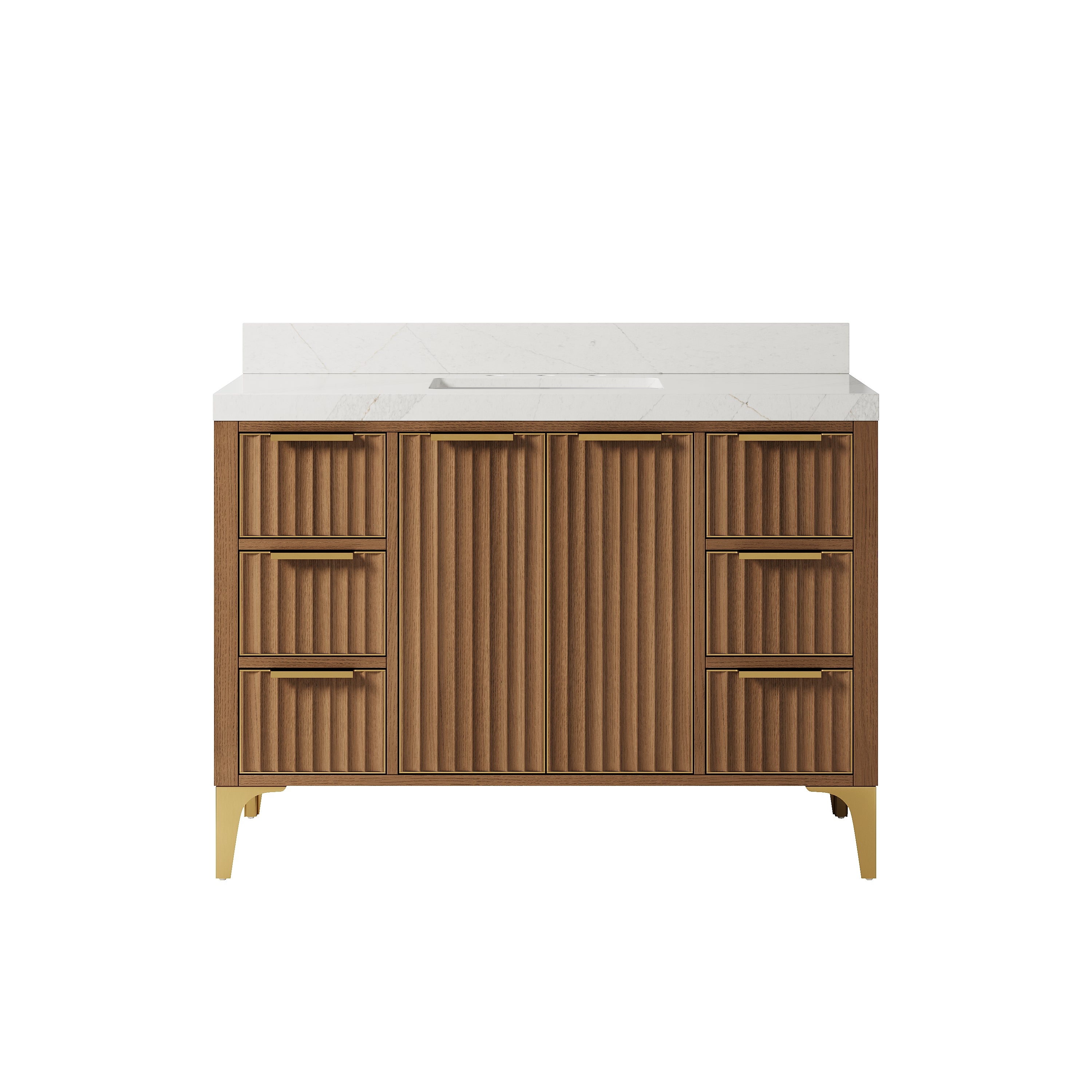


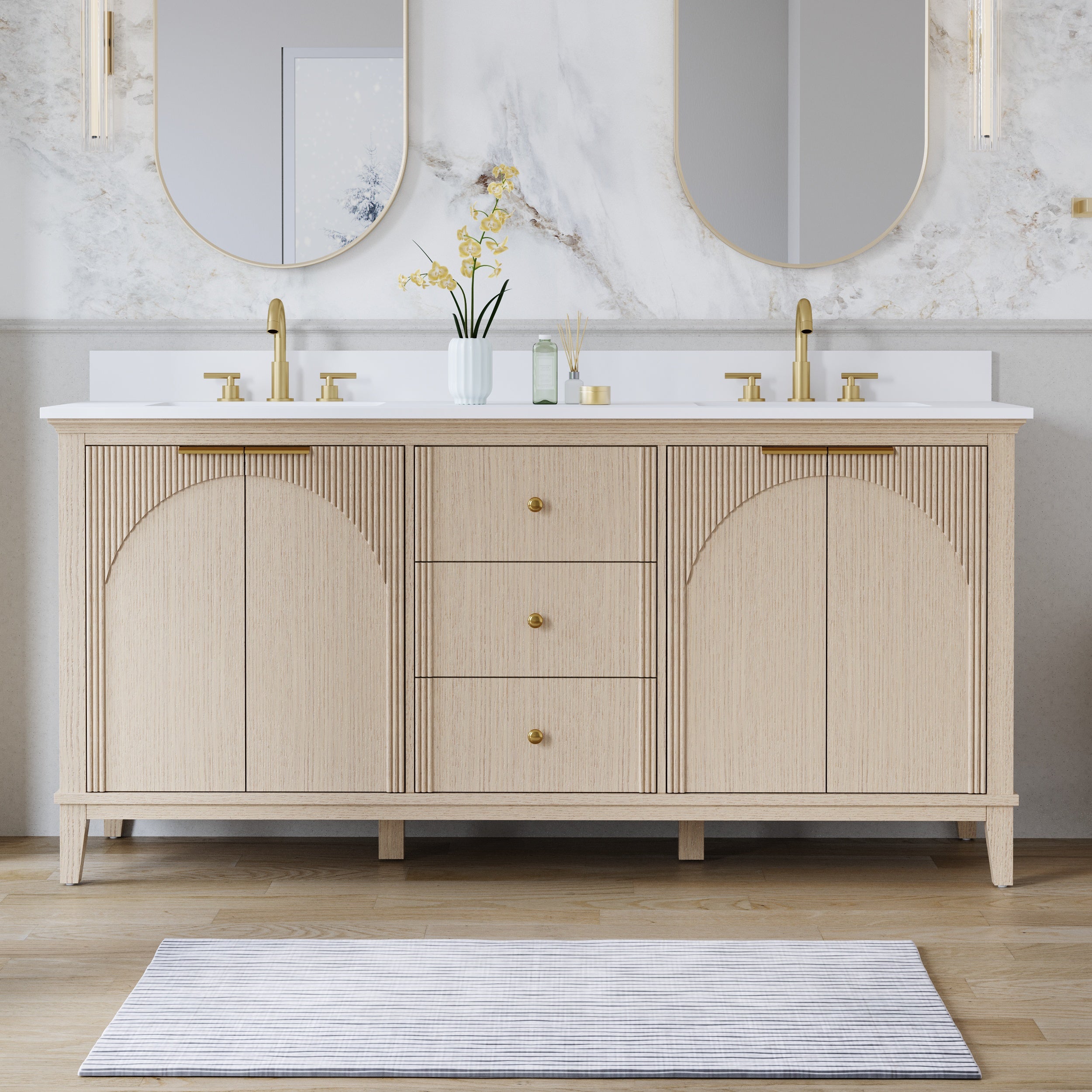
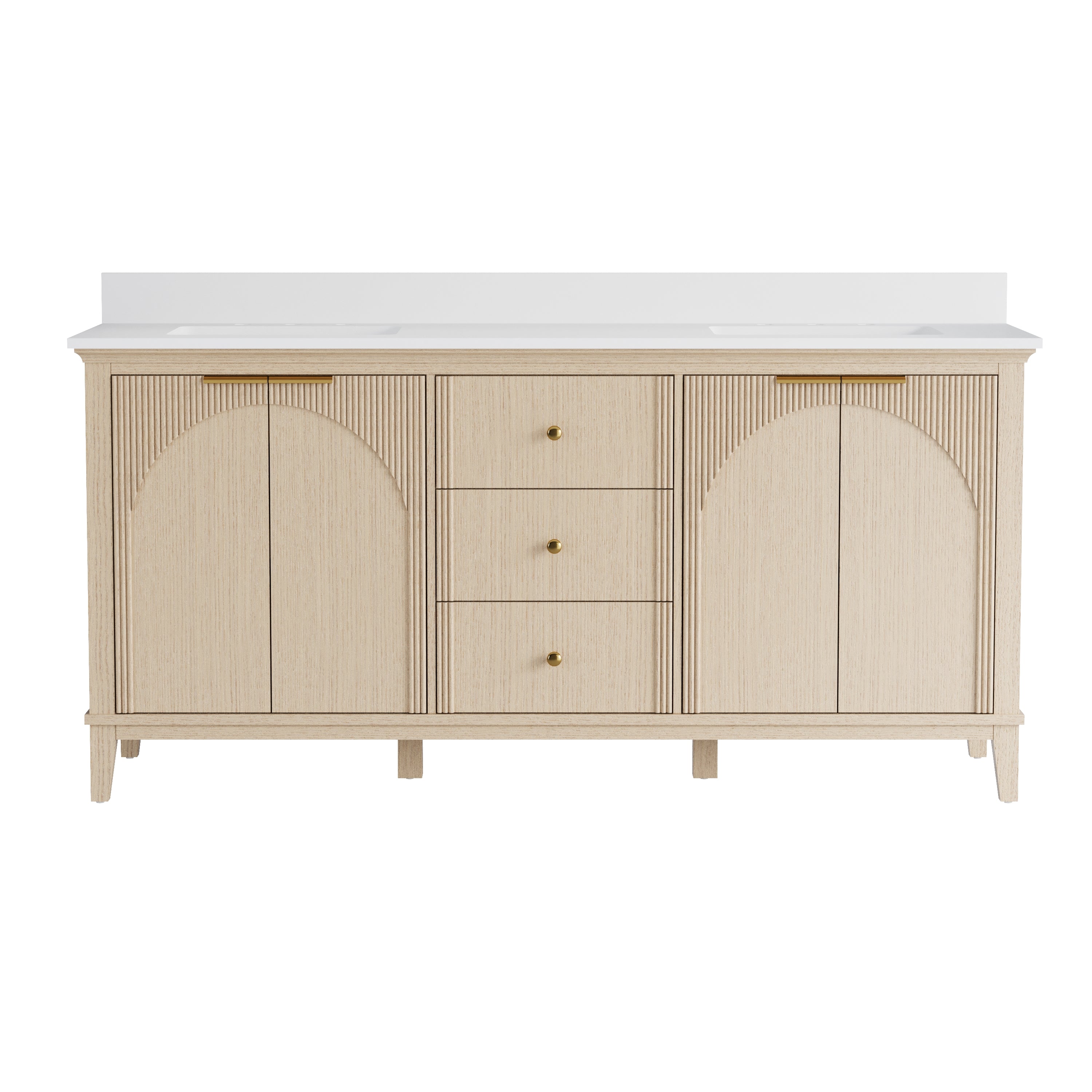
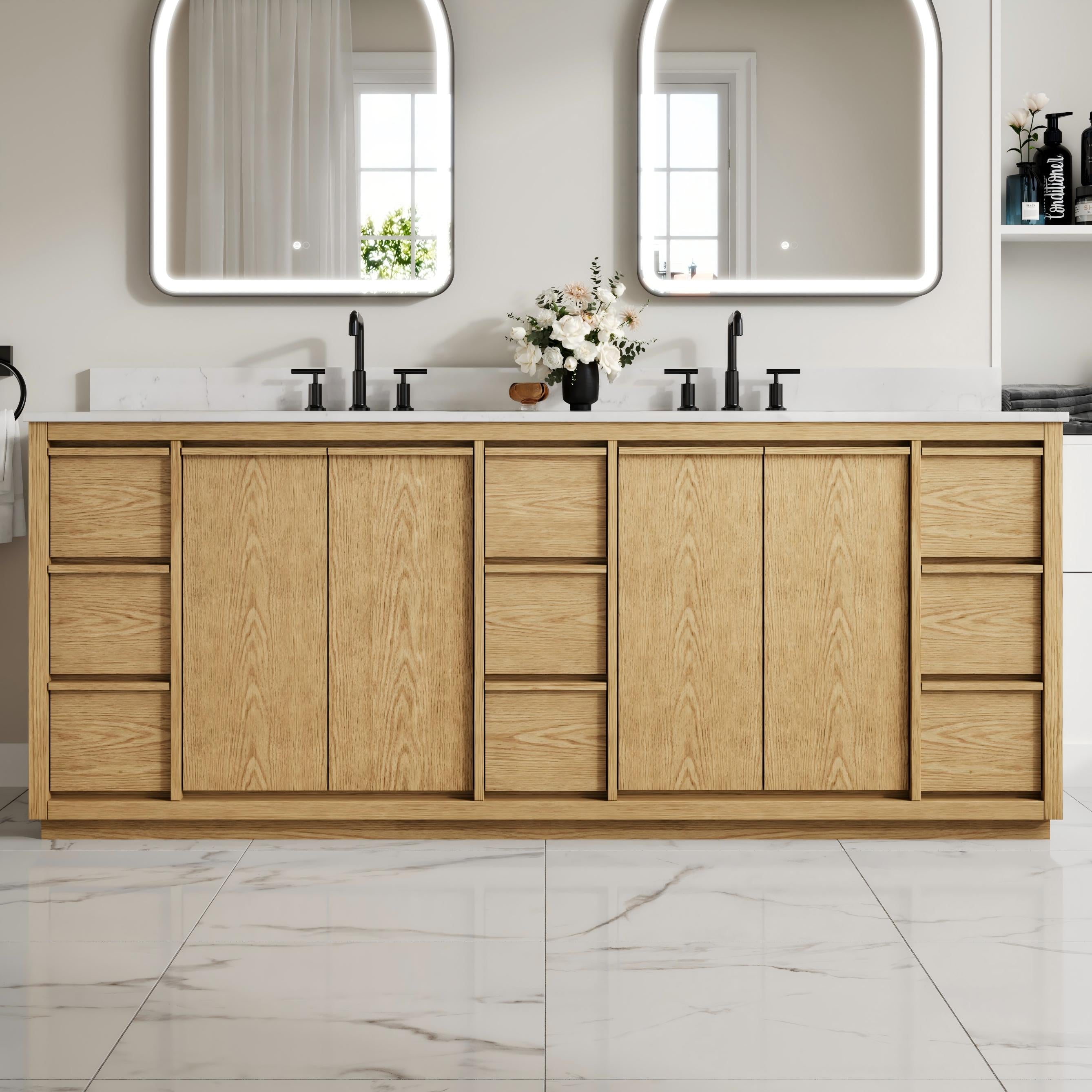
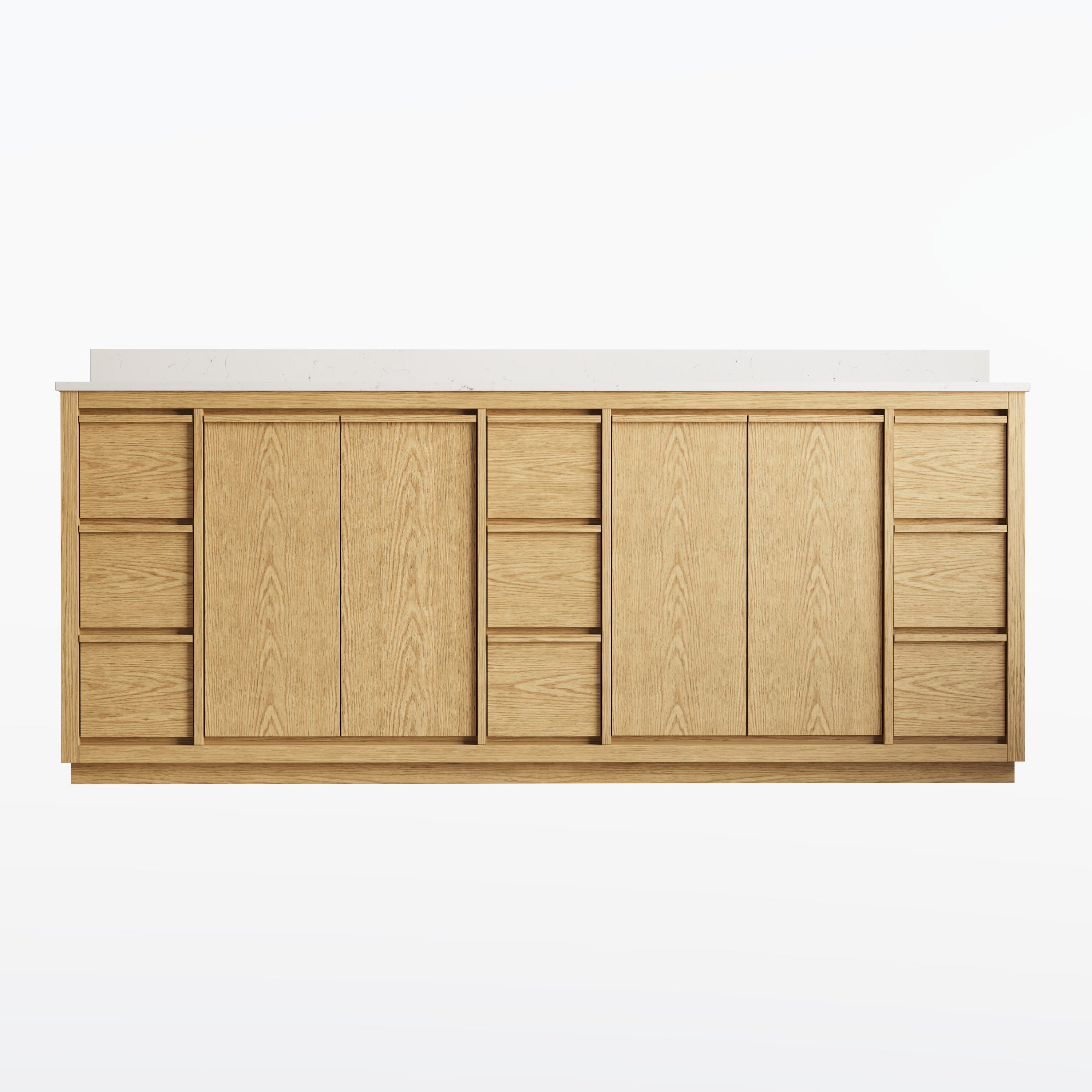
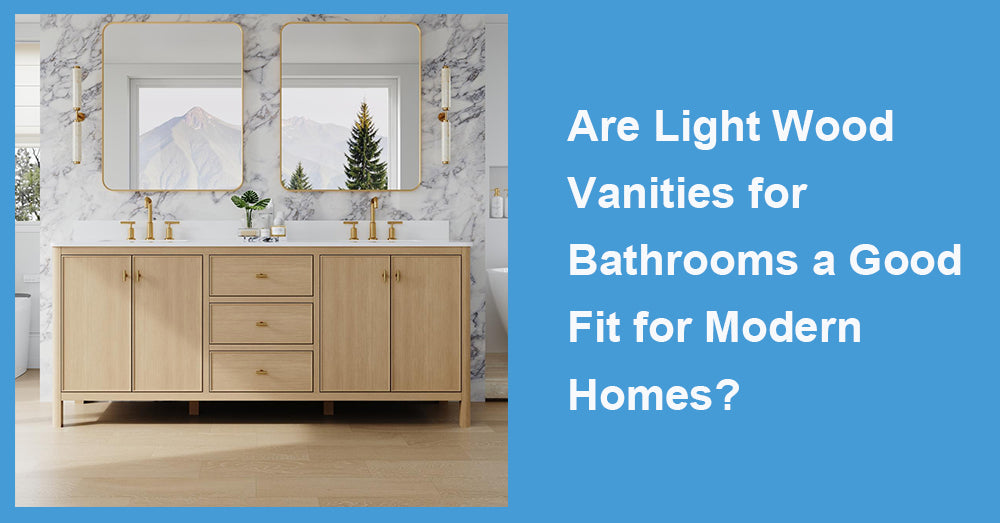
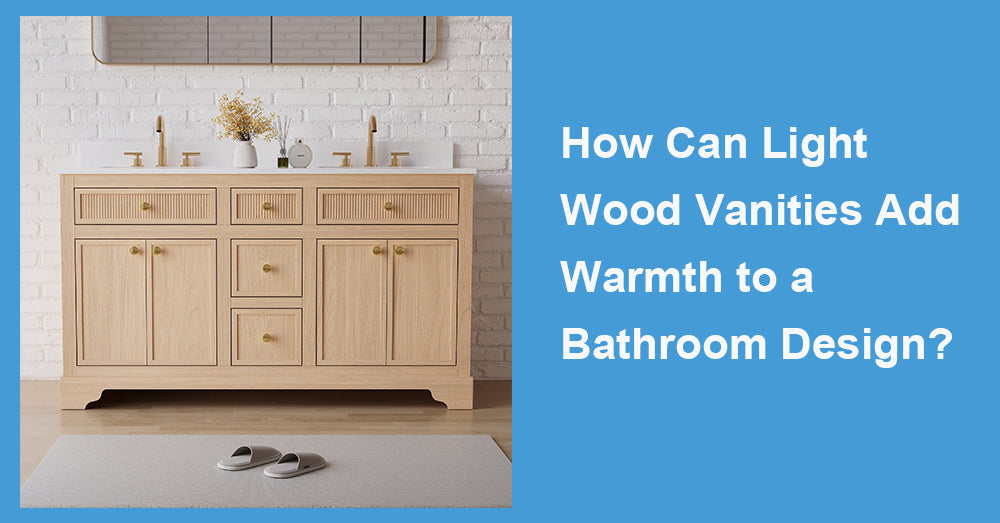
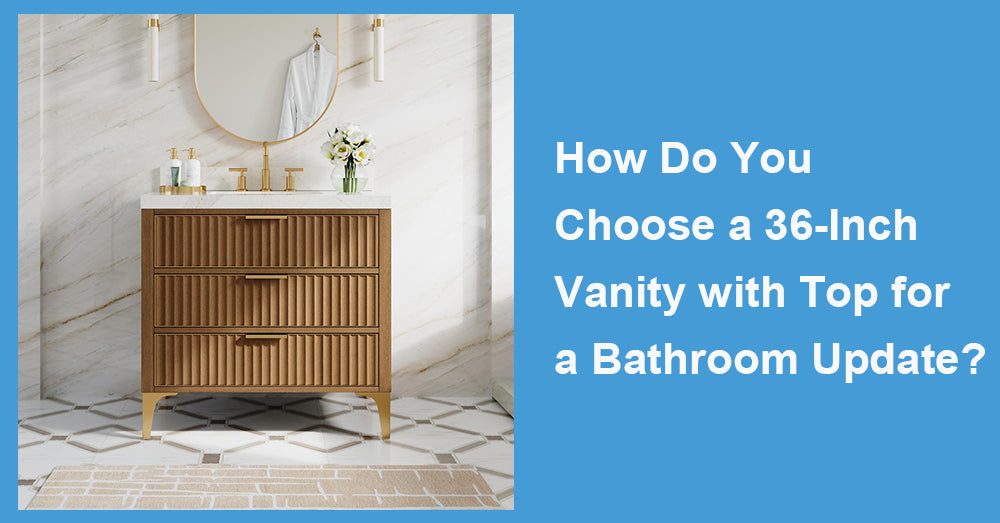
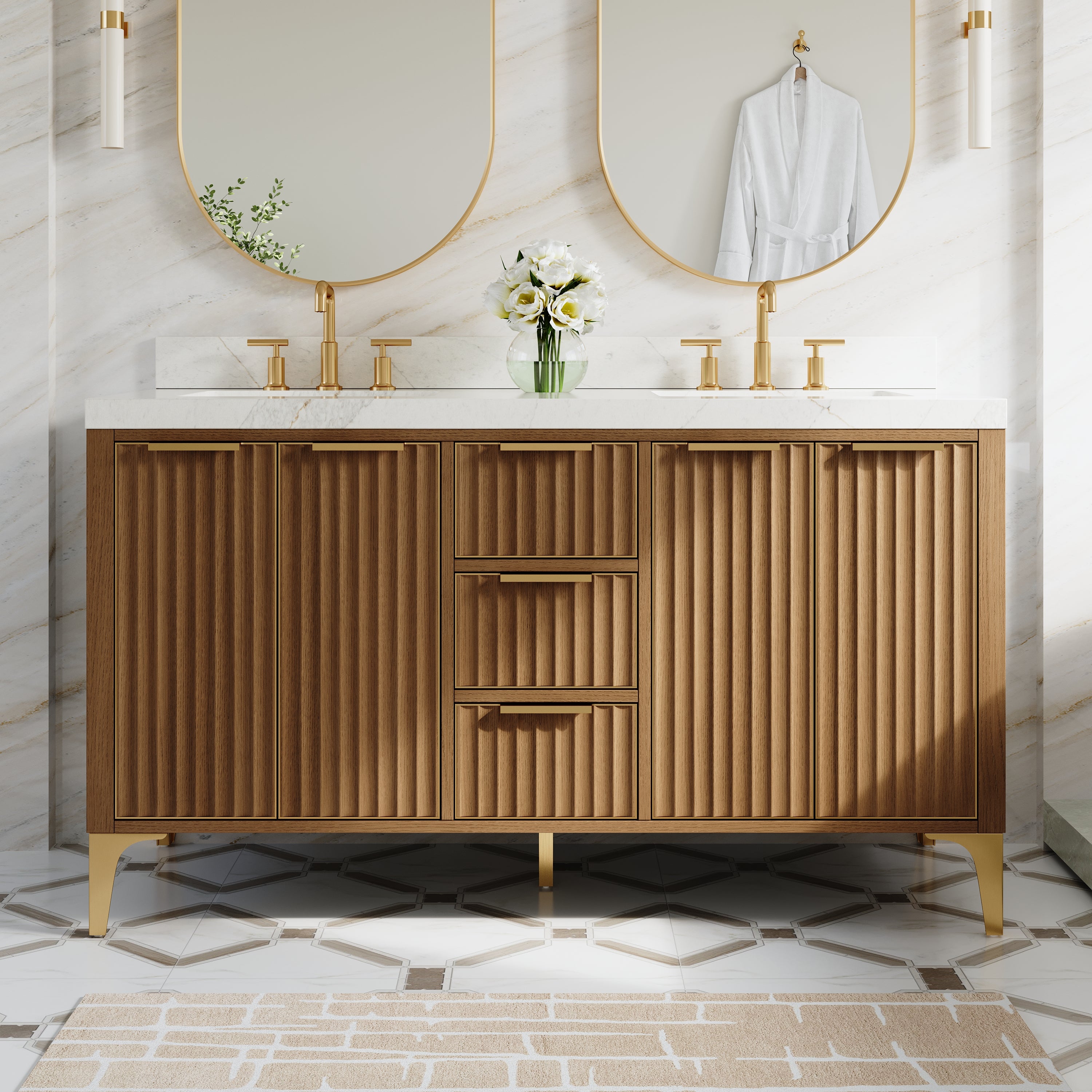
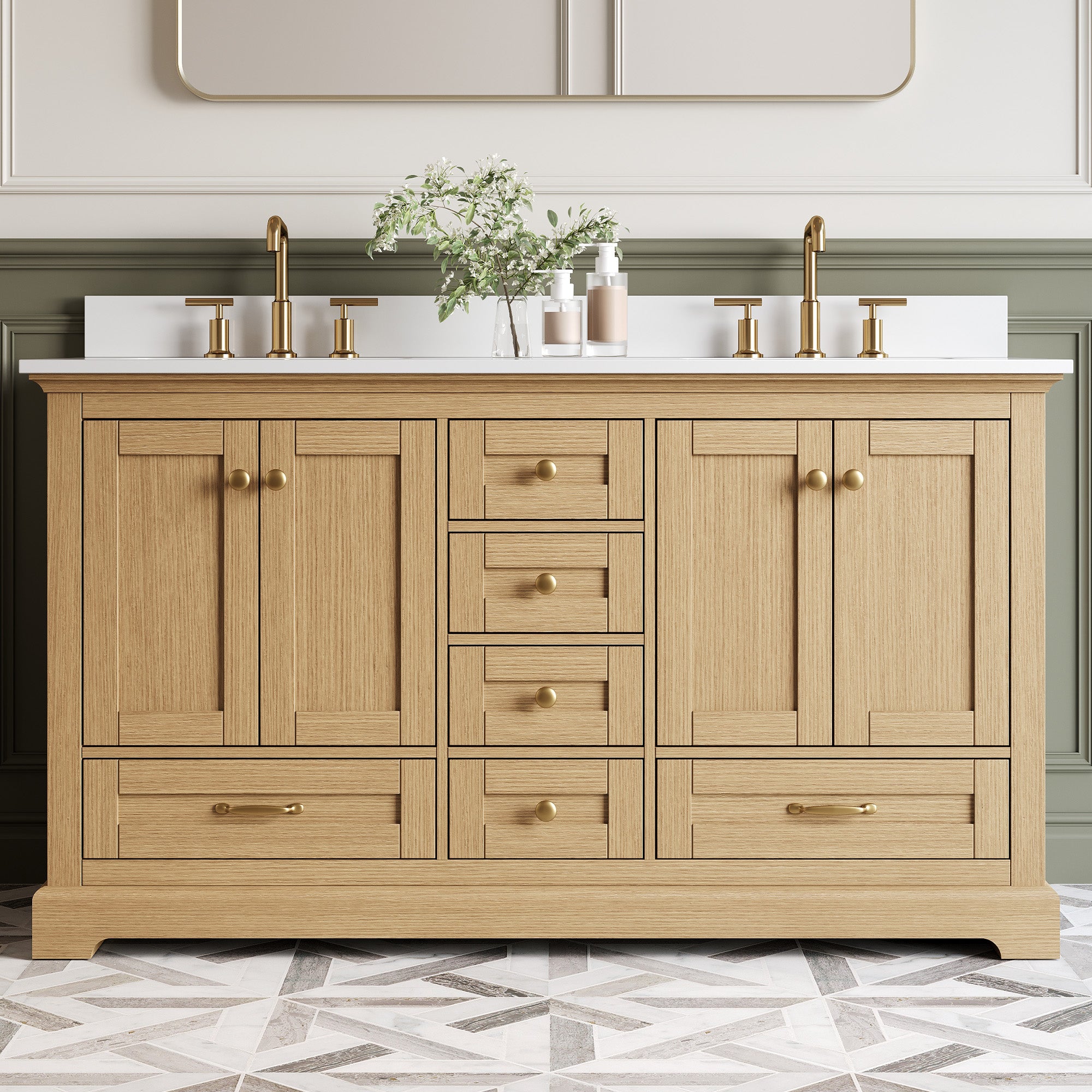
Light wood vanities for bathrooms are a strong fit for modern homes because they soften clean architectural lines without making the room look traditional or visually heavy. Pale oak, maple, ash, and birch introduce natural grain into spaces often dominated by tile, glass, quartz, and metal. Current remodeling data supports that direction. Houzz reports that wood tones lead upgraded vanity colors at 28%, with light wood accounting for 11%. Searches for white oak bathroom vanities also increased by 20%, pointing to continued interest in this lighter, more natural look.
1. Light Wood Makes Minimalist Bathrooms Feel More Comfortable
Modern bathrooms often rely on simple geometry, frameless shower glass, plain wall tile, and uncluttered countertops. Those elements create order, but an entirely white or gray scheme can feel cold.
A light wood vanity changes the atmosphere without interrupting the clean design. Its grain adds movement, while its pale color keeps the room bright. This is especially useful in bathrooms with limited daylight, where dark walnut or black cabinetry may appear heavier than expected.
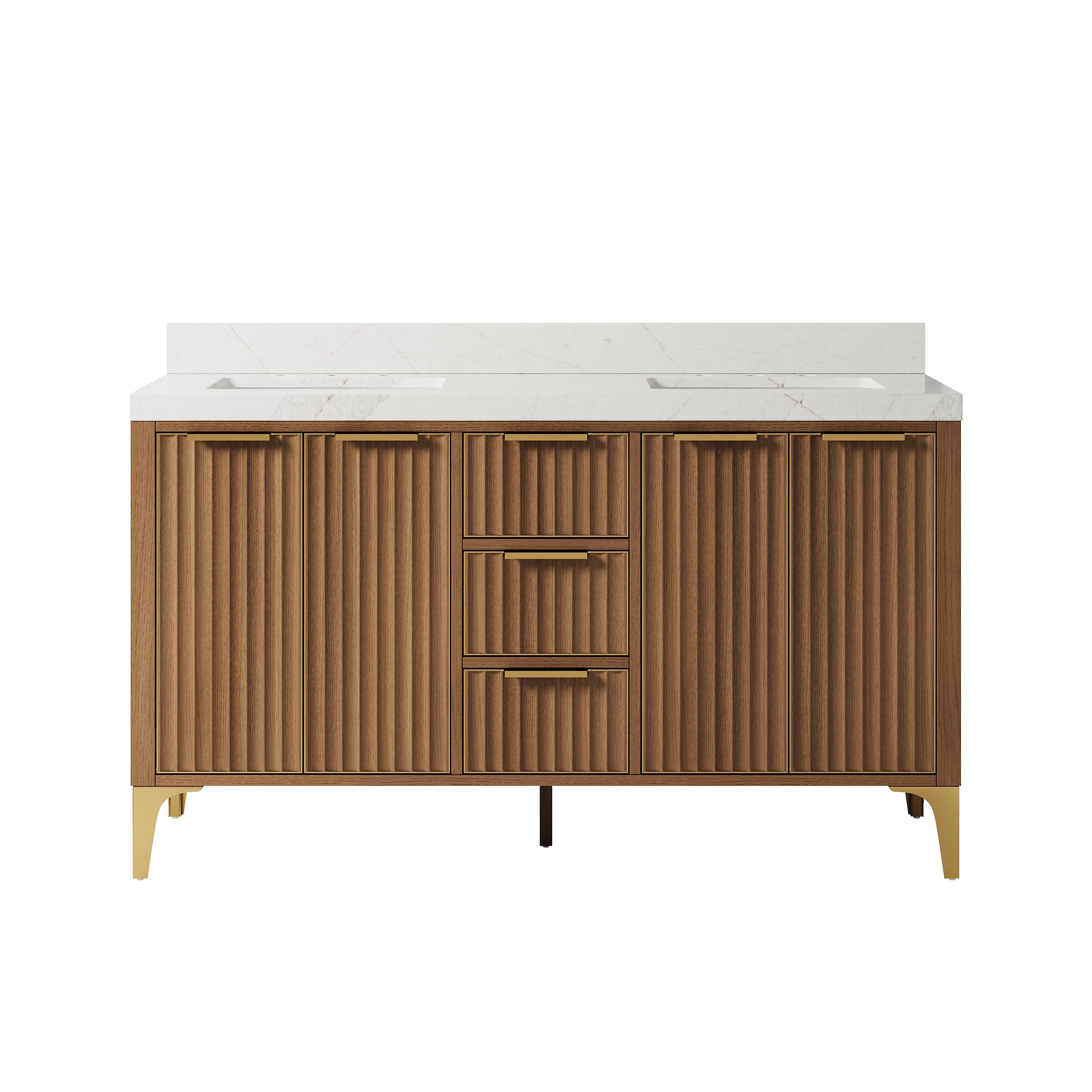
The effect works at several sizes. A 24-inch floating vanity can warm a powder room, while a 60-inch double vanity can introduce a long horizontal band of natural texture. NKBA’s latest research describes warm neutrals, soft greens, and natural wood tones as part of a broader shift toward calmer, more grounded interiors.
2. White Oak Is the Most Recognizable Modern Choice
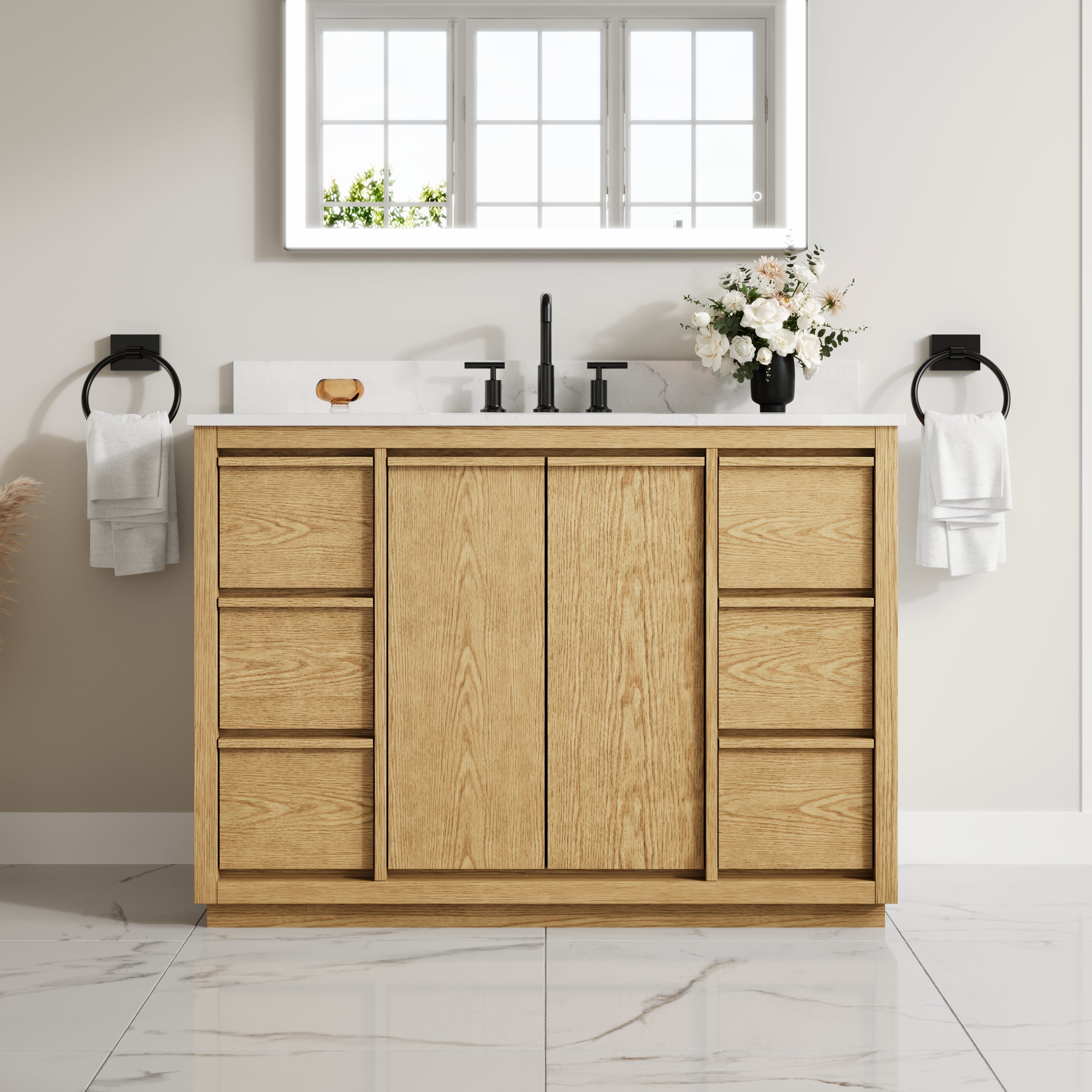
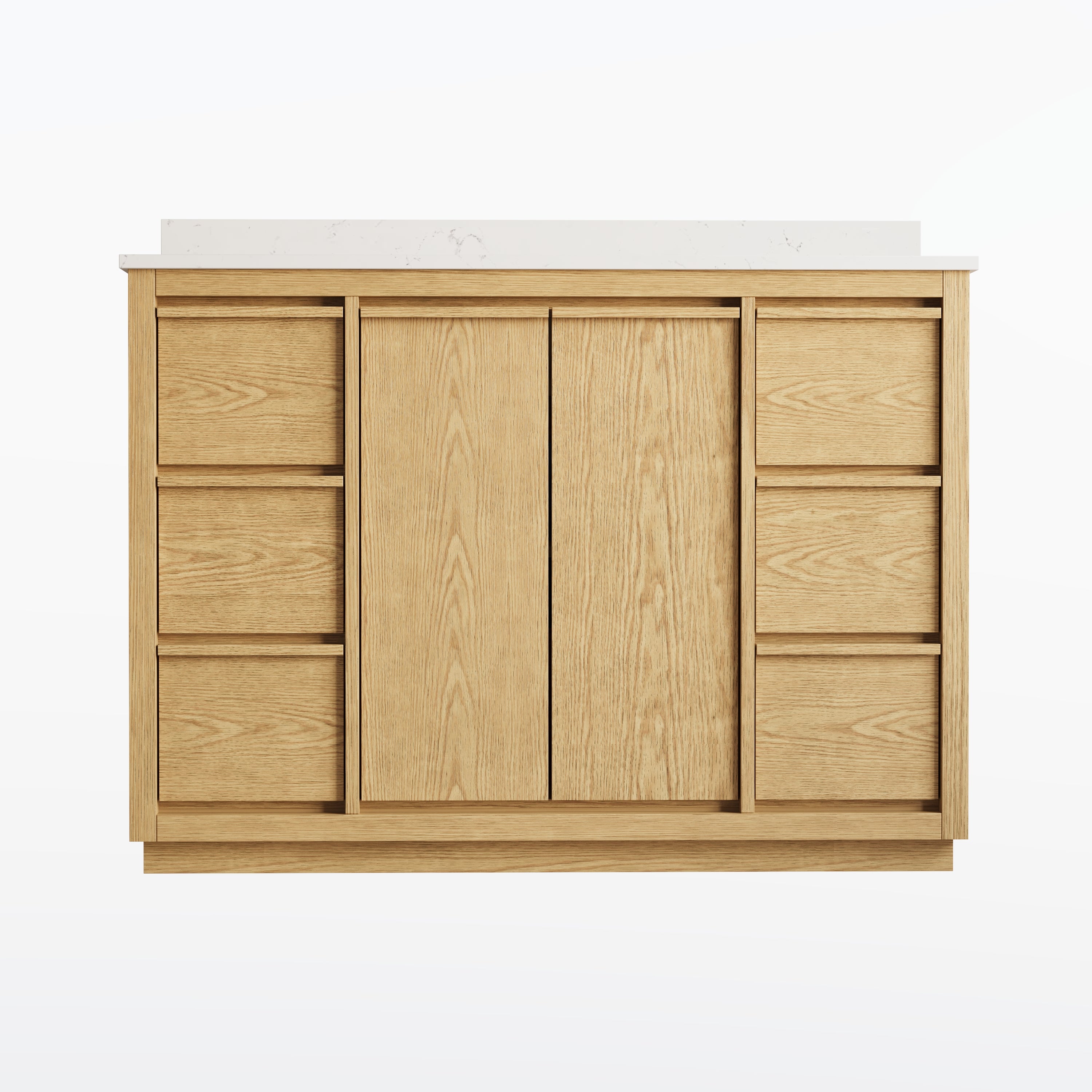
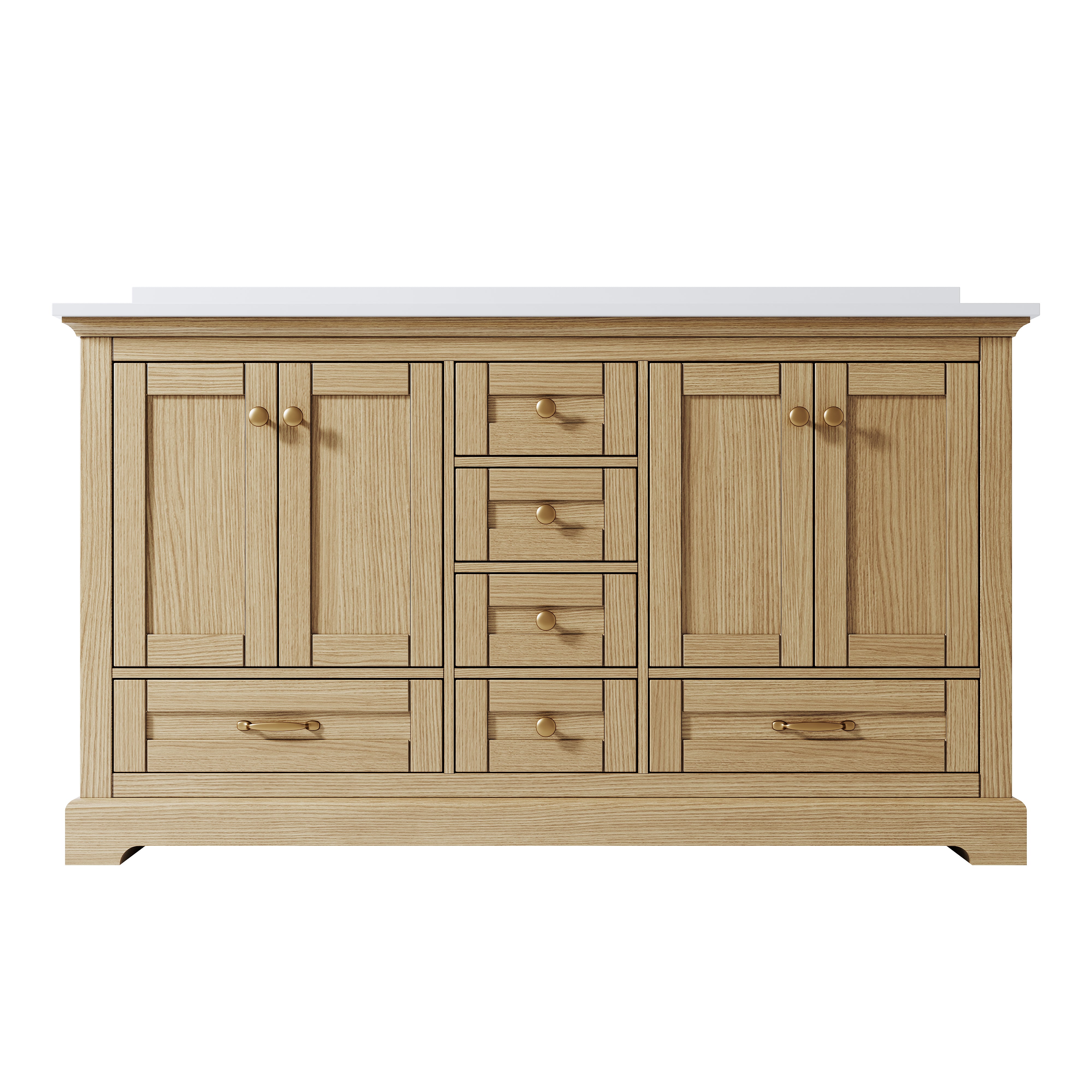
White oak has become closely associated with contemporary bathroom cabinetry. Its relatively straight grain works well on flat-panel doors, slab drawer fronts, floating cabinets, and handle-free designs.
It can be finished in several ways:
· Clear coatings preserve a pale, natural appearance.
· Beige stains create a warmer transitional tone.
· Light gray washes reduce yellow undertones.
· Cerused finishes emphasize the grain.
· Matte topcoats keep reflections controlled.
The finish should be tested under the bathroom’s actual lighting. Warm bulbs can make pale oak look golden, while cooler lighting may emphasize gray or beige notes.
It is also worth noting that the wood-tone conversation is widening. Houzz’s 2026 design outlook reports renewed interest in warm and medium woods alongside light oak. That does not make pale cabinetry outdated. Instead, it suggests that modern interiors are becoming less dependent on one uniform wood shade.
3. Pale Cabinets Pair Easily with Popular Countertops
One reason light wood works so well in remodels is its compatibility with common vanity-top colors. Houzz found that white represented 48% of upgraded bathroom countertops, followed by off-white at 20%. Both choices coordinate naturally with pale cabinetry.
A crisp white quartz top creates a cleaner, more graphic contrast. Cream, ivory, or softly veined stone produces a gentler transition. Beige veining can visually connect the countertop to the cabinet grain.
Black tops also work, particularly when the room needs stronger definition. On a 36-inch or 48-inch vanity, the dark horizontal surface can sharpen the design without overwhelming the light cabinet beneath it.
The most convincing combinations repeat one undertone. Warm oak looks settled beside cream stone, while neutralized oak handles cooler white quartz more comfortably.
4. Floating Designs Reinforce the Modern Effect
Light wood is particularly effective on wall-mounted vanities. A floating cabinet exposes more flooring, reduces visual mass, and creates a cleaner line across the wall.
This approach suits:
· Compact guest bathrooms.
· Narrow layouts.
· Walk-in shower renovations.
· Rooms with patterned flooring.
· Interiors using large-format wall tile.
Drawers are often more practical than doors in a floating model because they bring stored items forward. Full-extension slides also make better use of the cabinet’s reduced height.
A freestanding design can still feel modern when it uses slim legs, flat fronts, and restrained hardware. Floating installation is not mandatory; proportion and detailing matter just as much.
5. Light Wood Works with Several Hardware Finishes
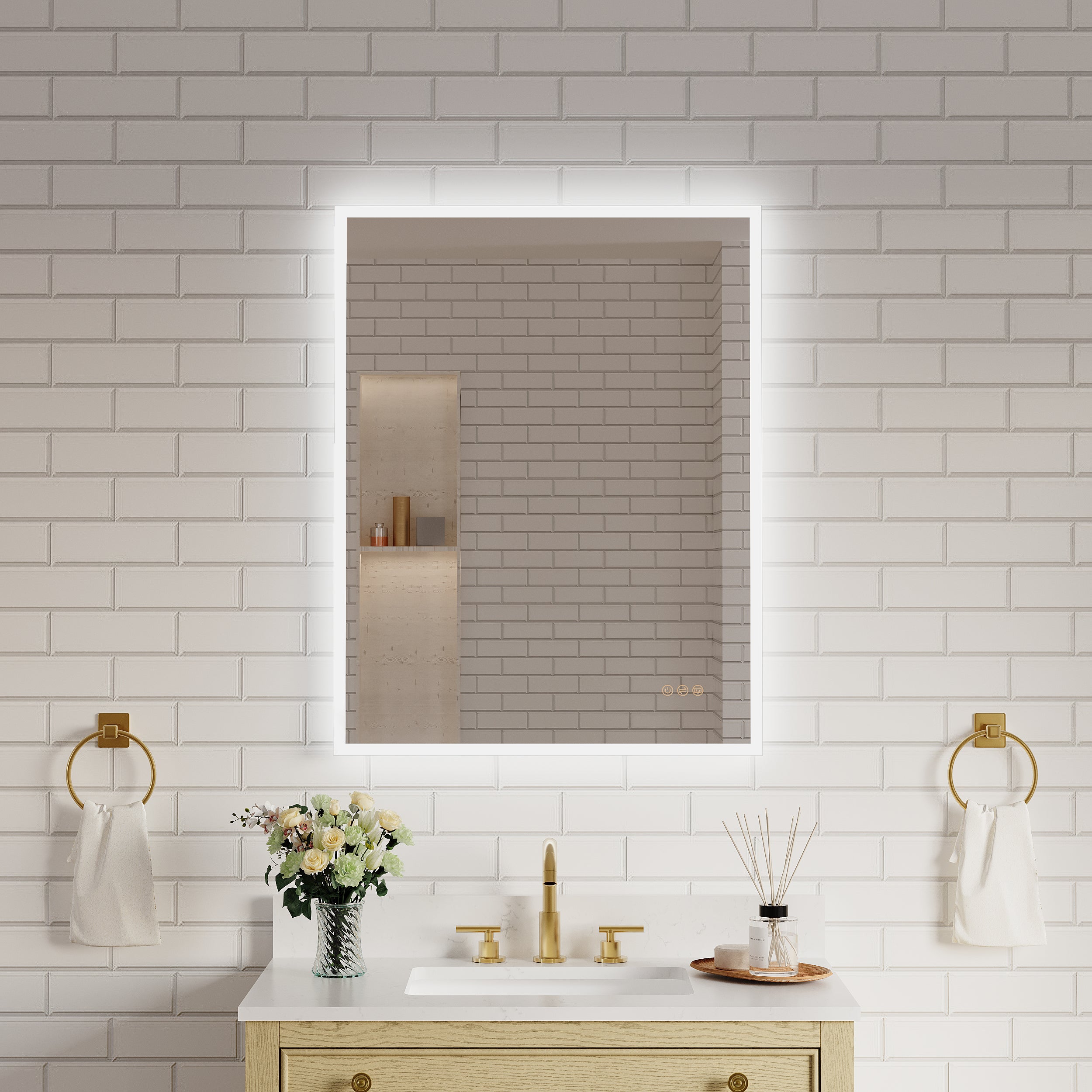
Pale cabinetry provides a neutral background for metal accents. Brushed nickel keeps the room quiet and understated. Matte black creates visible definition, while brushed gold emphasizes warmer grain.
Recent NKBA findings show that matte, brushed, and satin faucet finishes are more popular than polished options, which fits the softer, low-reflection character of natural wood cabinetry.
A modern bathroom does not require every metal element to match. Brushed nickel plumbing fixtures can coexist with black cabinet pulls when the contrast appears intentional. Limiting the room to two main finishes usually keeps the result controlled.
6. The Material Must Be Suitable for Bathroom Conditions
The appearance of natural wood should not distract from construction quality. A vanity must tolerate water droplets, steam, cleaning products, and occasional plumbing leaks.
Check whether the product includes:
· Sealed door and drawer edges.
· A moisture-resistant topcoat.
· Finished cabinet interiors.
· Protected sink and plumbing cutouts.
· Adjustable hinges and drawer slides.
· A sealed or removable cabinet floor beneath the drain.
The EPA recommends keeping indoor humidity below 60%, ideally between 30% and 50%. It also advises using bathroom exhaust fans that vent outdoors and drying wet surfaces promptly. These habits help protect wood finishes, wall materials, and surrounding cabinetry.

7. Light Wood Needs Contrast to Avoid Looking Washed Out
A pale vanity can disappear when every nearby surface has the same beige tone. Modern warmth still needs definition.
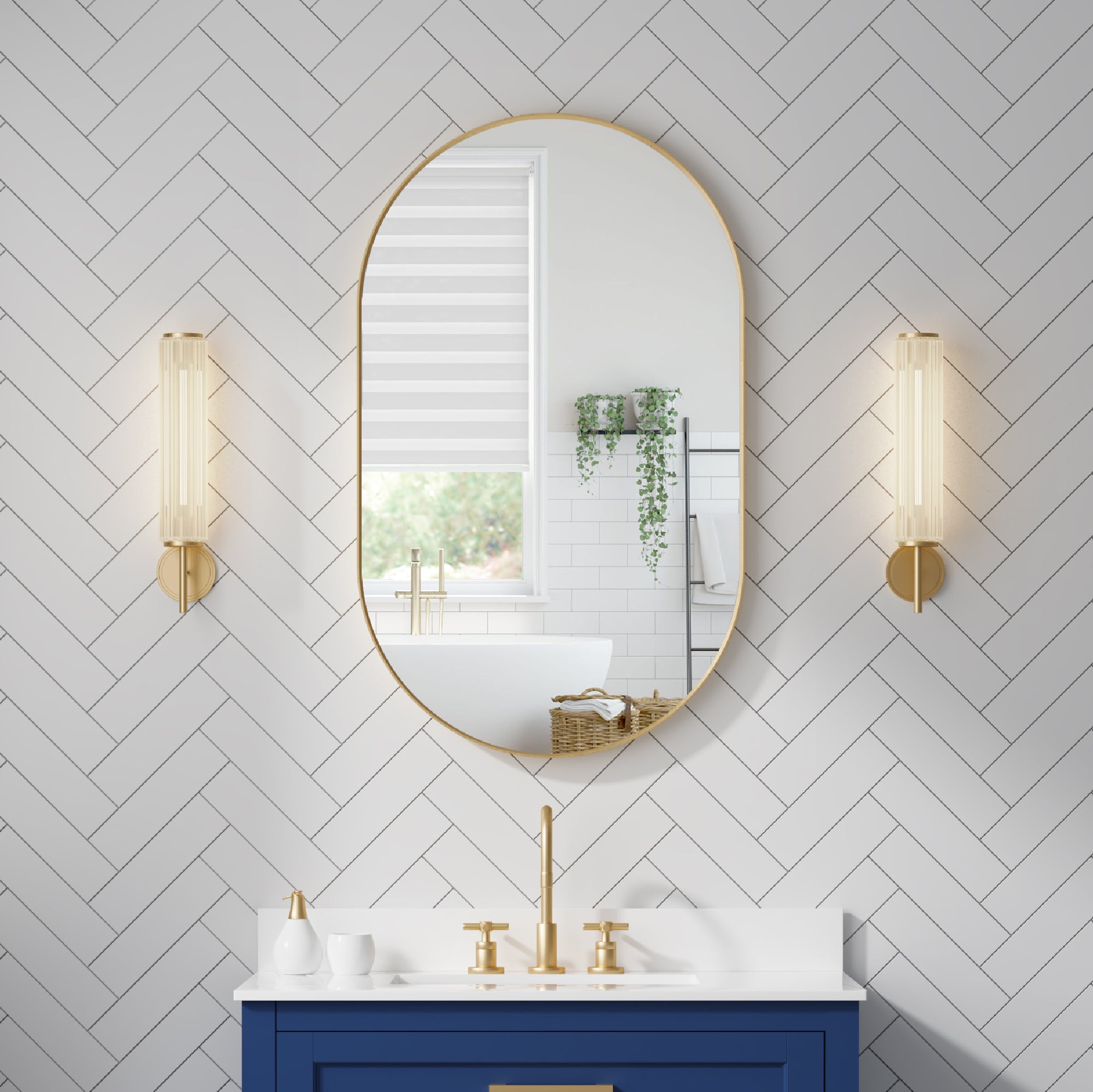
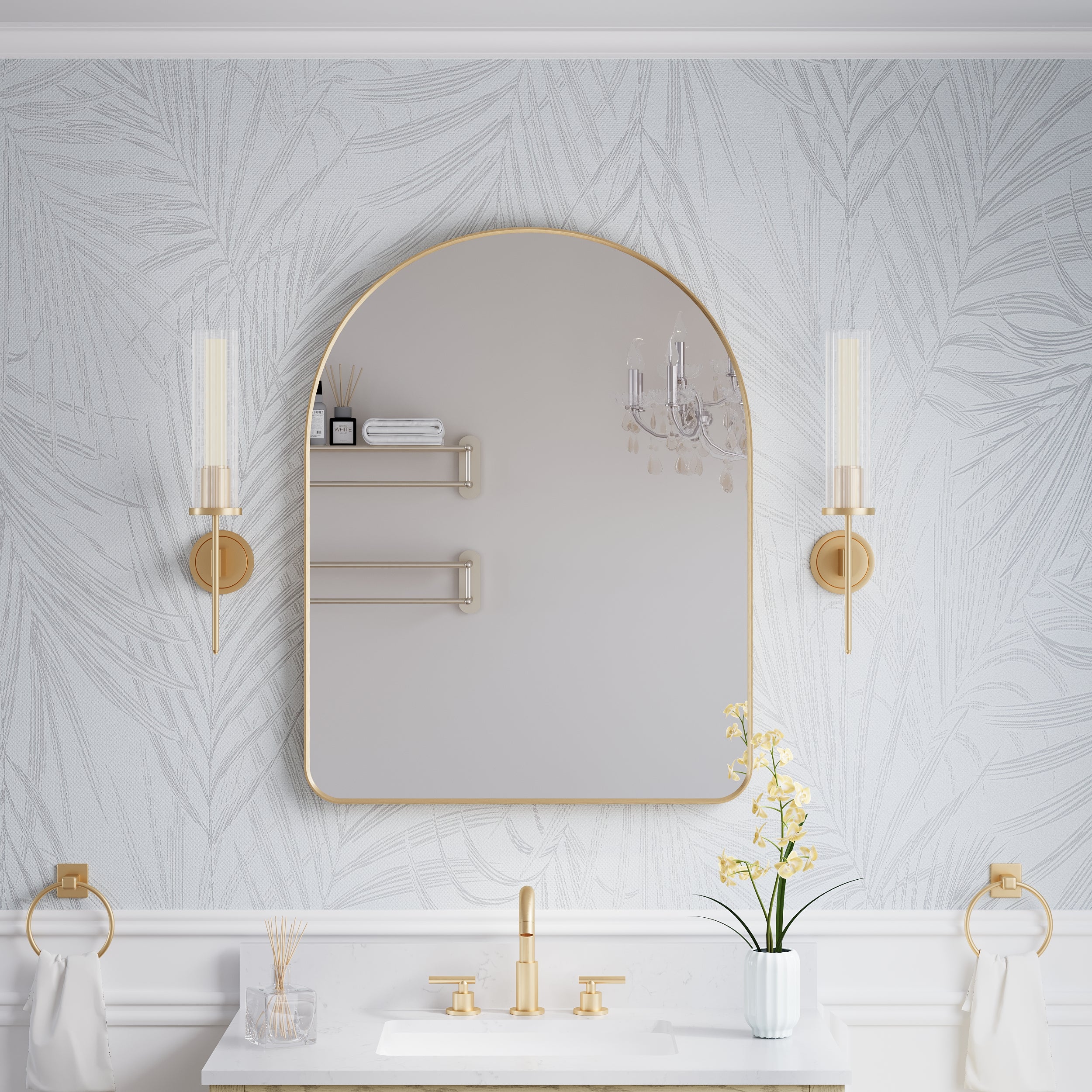
Contrast can come from a black faucet, darker floor tile, framed mirror, textured backsplash, or more pronounced countertop veining. Even a muted green wall can help the cabinet stand out without turning the bathroom into a high-contrast scheme.
Texture is equally important. Reeded drawer fronts, handmade-look tile, honed stone, and woven accessories can add depth, but they should not all compete at once. One primary texture and one supporting detail usually feel more deliberate.
8. A Good Modern Vanity Should Outlast the Trend Cycle
Light wood vanities fit modern homes because they are adaptable rather than tied to a single decorative theme. Changing the pulls, mirror, wall color, or lighting can move the same cabinet from Scandinavian minimalism to organic modern or transitional design.
The strongest choice combines a restrained wood tone with practical storage, moisture-conscious construction, and a countertop that suits daily maintenance. It should also fit the room physically. A 36-inch vanity may be ideal for a guest bathroom, while a 48-inch or 60-inch cabinet can provide more drawer space in a primary suite.
Light wood is not simply a softer alternative to white paint. It brings natural variation to the room while preserving the openness associated with contemporary design. That balance makes it one of the more flexible vanity directions for a modern bathroom update.











Leave a comment
This site is protected by hCaptcha and the hCaptcha Privacy Policy and Terms of Service apply.