






















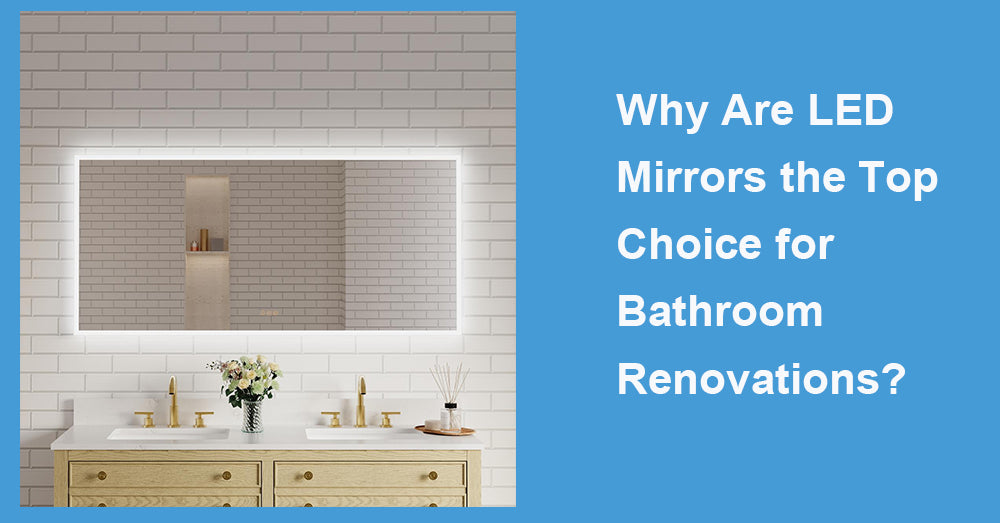
A quiet shift is happening in bathroom remodeling: the mirror is no longer treated as a finishing accessory. It’s being specified earlier—sometimes before tile and vanity lighting—because it now carries real performance responsibilities. That’s the core reason mirrors keep showing up in renovation plans: they solve multiple problems at once, and the data says homeowners are prioritizing exactly those kinds of upgrades.
Renovations are still a big spend, so “multi-job” products get picked first.
In the latest Houzz Bathroom Trends Study (a survey of 1,737 homeowners), the median spend for bathroom renovations landed at $13,000 in 2024, while major remodels rose to $22,000. When costs are that meaningful, products that combine functions tend to win the value debate. LED mirrors consolidate the mirror and task lighting into a single decision, which can also reduce layout conflicts and electrical rework that show up when lighting and mirror choices are made separately.
“Wellness” isn’t a buzzword anymore—it’s guiding purchase behavior.
Bathrooms are increasingly treated as daily recovery spaces, not just utility rooms. In that same Houzz study, 36% of renovated bathrooms included at least one “wellness-oriented” feature, and upgraded lighting was the leading choice at 30%. This matters for mirrors because a mirror is where lighting quality is judged most harshly—by your face, at close range, every morning. LED mirrors fit directly into that wellness-driven lighting upgrade: even illumination for grooming, softer modes for nighttime, and a calmer visual profile compared with adding more fixtures.
Lighting preferences are expanding—and lighted mirrors are gaining share.
Ceiling lights, sconces, shower lights, fans—people are mixing layers rather than relying on one bright overhead source. The Houzz study shows “lighted mirrors” are moving upward as a chosen lighting type: they rose by three percentage points year over year to reach 22% among upgraded light fixtures. That’s not a niche number. It signals that the mirror is becoming part of the lighting plan, not something you tack on afterward.
Specialty mirrors are now mainstream, and LED is the top feature.
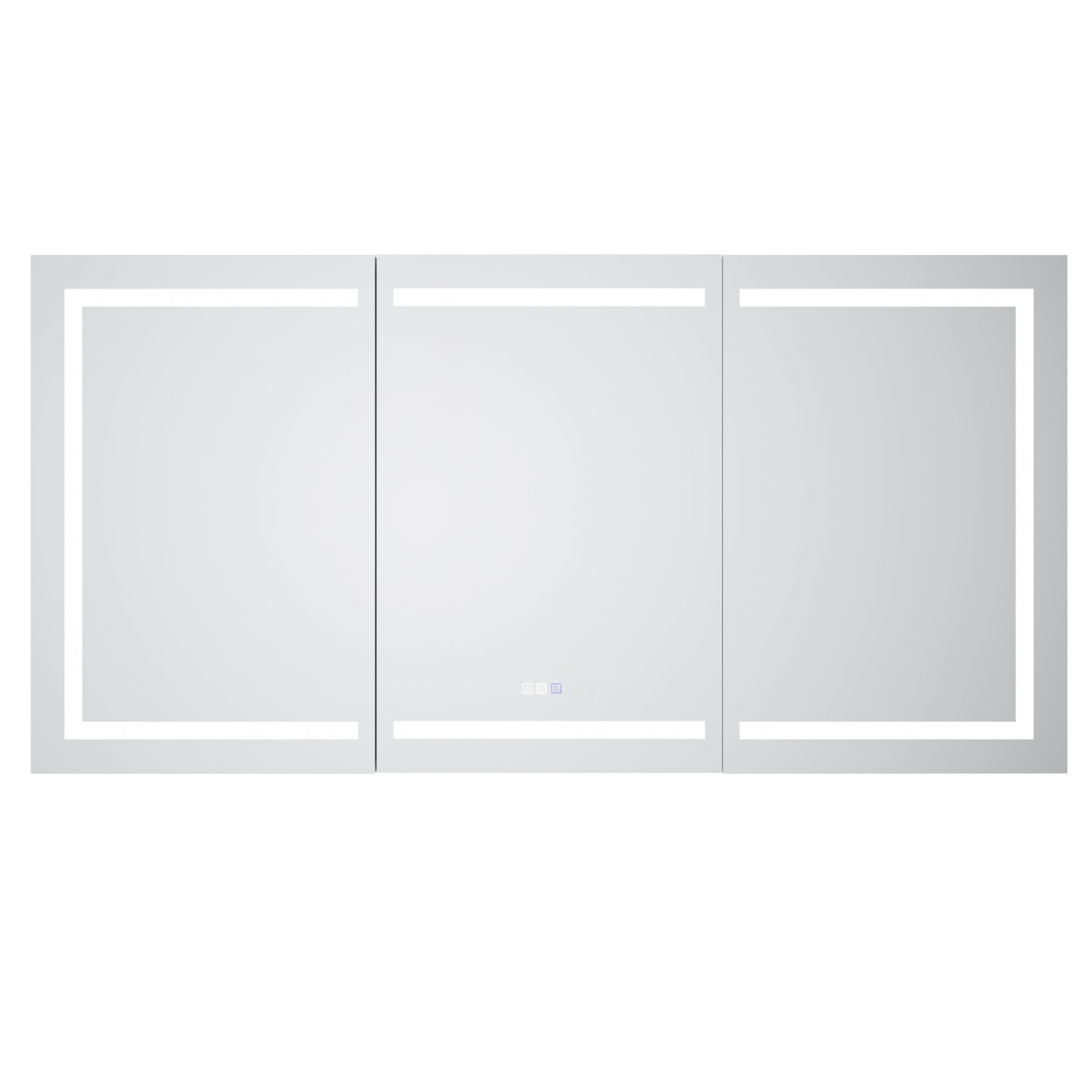
A particularly telling metric: Houzz reports that 34% of renovators chose mirrors with specialty features. Within that group, LED lighting and anti-fog systems (22%) were the leading add-ons. This frame led mirrors as an “ease and efficiency” purchase—not merely an aesthetic one. In practical terms, it’s a response to two repeated pain points: poor visibility at the vanity and a mirror that fogs after every hot shower.
Sustainability choices are widespread—and lighting is the easiest win.
Another data point helps explain why LED keeps showing up as a default: 83% of renovators selected at least one sustainable option, and the most common choice was LED lightbulbs (55%). While LED mirrors aren’t “a bulb purchase,” they align with the same logic—lower energy use and long service life—without needing the homeowner to think about compatibility, bulb replacement cycles, or fixture styling.
Efficiency isn’t just about ideals; it’s about predictable performance.
On the technical side, energy guidance from the Department of Energy highlights the scale of LED efficiency: residential LEDs (especially ENERGY STAR–rated products) use at least 75% less energy and can last up to 25 times longer than incandescent lighting. Separate DOE guidance also notes LEDs can use up to 90% less energy and last up to 25 times longer than traditional incandescent bulbs. Put simply, the value proposition of LED mirrors isn’t only “built-in light.” It’s the fact that the light source is efficient, stable, and low-maintenance—important in a room where lights are used daily and frequently.

The investment angle: homeowners still care about resale and satisfaction
Renovation decisions often have two scorecards: daily happiness and potential resale value. A 2025 Remodeling Impact Report notes homeowners spent an estimated $603 billion in 2024 on remodeling projects overall. In the same report’s cost-recovery estimates, bathroom renovation is listed at 74% recovered project cost. That context helps explain why “high-visibility, high-utility” upgrades—like LED mirrors—are attractive: they’re instantly noticeable in a listing photo, but they also provide everyday function that owners actually feel.
Why designers like them: fewer parts, cleaner walls, easier coordination
Design trends aren’t only about style; they’re also about coordination. A lighted mirror reduces the number of separate objects that need to align (mirror + sconces + switch locations + junction boxes + shade size + mounting heights). In tighter bathrooms, that coordination is exactly where remodels stumble. Led mirrors simplify the wall composition, and the cleaner layout is consistent with the broader move toward minimal visual clutter—floating vanities, larger tile fields, frameless glass, and fewer interruptions in the sightline.
What this means for product development and merchandising
For manufacturers and retailers, the data points toward a clear roadmap: mirrors are increasingly being chosen for features, not only shape and frame. Anti-fog remains a strong companion feature to lighting, and the rise of lighted mirrors as a fixture type suggests that “mirror” and “lighting” categories are blurring. The winning LED mirrors tend to be the ones that are easy to specify: dependable brightness, straightforward controls, durable build, and installation flexibility that doesn’t punish imperfect wall conditions.
Practical buying notes
If you’re selecting LED mirrors for a renovation, the product that looks best in a catalog isn’t always the one that performs best on a real vanity. Prioritize: consistent brightness, comfortable color temperature options, dimming that doesn’t flicker, a reliable anti-fog system if the bathroom sees frequent hot showers, and clear installation requirements (hardwire vs plug-in, switch compatibility, and mounting hardware). These details are what turn a “cool feature” into a daily staple.
LED mirrors are rising because they match where renovations are headed: fewer decisions that do only one job, more upgrades that improve routine, and more attention to lighting quality as a wellness and performance feature—not just décor.







































Leave a comment
This site is protected by hCaptcha and the hCaptcha Privacy Policy and Terms of Service apply.