






















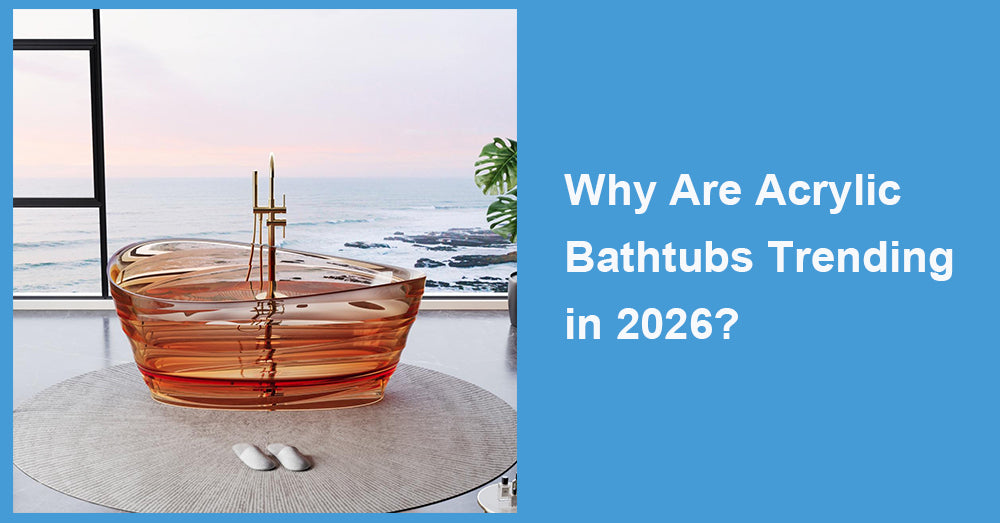
Acrylic bathtubs are appearing in more renovation plans, spec sheets, and showroom layouts than almost any other bathtub category heading into 2026. In practical terms, it is not just a style shift. It is a material choice driven by installation speed, weight constraints, and long-term maintenance expectations in modern bathroom design.
Acrylic bathtubs are increasingly paired with frameless mirrors and lighter bathroom layouts because the whole space is moving toward easier installation and lower structural load. That combination is quietly reshaping how tubs are selected in both new builds and remodels.
1. Weight is quietly changing bathtub decisions
One of the strongest drivers behind acrylic growth is simple: weight.
Acrylic tubs typically weigh significantly less than cast iron or stone resin alternatives. In real job-site conditions, this matters more than aesthetics. Contractors working on upper-floor bathrooms often prefer lighter fixtures to reduce the need for floor reinforcement and installation risk.
Industry observations are consistent: lighter bath systems reduce both installation time and structural preparation costs, especially in remodels where existing framing is not being rebuilt.
Cast iron tubs can exceed 300 lb before water is added. Acrylic models often remain within a fraction of that range, making them easier to position and secure without specialized equipment.
2. Heat retention is better than most people expect
Acrylic is not just about weight. It performs well in everyday comfort use.
Acrylic has lower thermal conductivity than metal-based materials, so water stays warm longer. In real bathing conditions, this translates into longer soak time without frequent reheating.
Department of Energy efficiency discussions around home fixtures consistently highlight how material choice affects heat retention and energy behavior in residential systems. While bathtubs are not primary energy devices, the same principle applies: less heat loss equals better user comfort over time.
This is one reason acrylic tubs are increasingly positioned as “daily-use comfort” products rather than entry-level alternatives.
3. Repairability is becoming a buying factor
One shift in 2026 bathroom planning is that people are evaluating long-term maintenance before purchase.
Acrylic surfaces can often be buffed, polished, or spot-repaired when minor scratches occur. That is very different from stone or enamel systems, where surface damage is harder to reverse.
Industry judgment here is simple: repairability is becoming part of product value, not an afterthought.
In rental properties and hospitality bathrooms, this matters even more. A surface that can be restored without full replacement reduces downtime and long-term operating costs.
4. Design flexibility is driving premium adoption
Acrylic is also winning because it is easier to shape.
Freestanding soaking tubs, curved silhouettes, thin-rim profiles, and compact alcove designs are all easier to manufacture in acrylic than in heavier materials. That design freedom aligns with current bathroom layouts where visual lightness is preferred.
Typical modern soaking tubs range from 55 in to 72 in in length, with ergonomic interior depths designed for seated immersion rather than upright bathing. Acrylic supports these proportions without adding structural bulk.
Design teams often treat acrylic as a “form-friendly” material, especially when matching curved vanities, soft-edge counters, and minimal wall treatments.
5. Installation speed is a hidden cost advantage
Acrylic tubs reduce installation friction in ways that are not always visible in product listings.
Lower weight means faster handling, less risk during positioning, and fewer reinforcement requirements in many standard bathroom floors. That translates into shorter installation windows and fewer labor complications.
Houzz renovation trend reporting has consistently shown that project timelines and ease of installation are major factors in bathroom fixture selection, especially in full-remodel workflows where multiple trades overlap. Source: Houzz
Industry takeaway: When installation becomes simpler, product adoption increases even without dramatic design changes.

6. Surface comfort and everyday usability matter more now
Acrylic has a warmer touch compared to stone or metal surfaces, which affects first-contact comfort before water is even added.
This is a small detail, but in real usage, it matters. People interact with the tub surface daily during cleaning, filling, or stepping in and out. A non-cold surface improves perceived comfort without any mechanical system involved.
Industry trends indicate a steady move toward a “touch experience” in bathroom fixtures, not just visual design.
7. Durability depends more on thickness than on the material name
One misconception is that acrylic automatically means “soft” or “fragile.” In reality, performance depends heavily on acrylic thickness, reinforcement layers, and the design of the base support.
Reinforced acrylic tubs with fiberglass backing and proper leveling systems can maintain structural stability for long-term residential use. Poorly supported units, regardless of material, are more likely to flex or develop stress points.
So the industry view is not “acrylic is good or bad,” but “acrylic done properly vs acrylic done cheaply.”
8. Market direction: lighter, simpler, faster
The broader trend is not limited to bathtubs. It reflects a shift across bathroom categories.
Vanities are moving toward modular storage. Mirrors are moving toward integrated LED systems. Showers are moving toward prefabricated panels. Acrylic bathtubs fit into the same direction: fewer installation barriers and more standardized performance.
Industry judgment is straightforward: products that reduce complexity without sacrificing comfort are gaining share faster than traditional heavy materials.
Final takeaway
Acrylic bathtubs are trending in 2026 because they sit at a practical intersection of design flexibility, installation efficiency, and everyday comfort.
They are not replacing premium materials in every case, but they are becoming the default choice for many remodels where speed, weight, and usability matter more than tradition.
The real shift is not just material preference. It is how bathrooms are being built: faster to install, easier to maintain, and more focused on daily comfort than structural permanence alone.









































Leave a comment
This site is protected by hCaptcha and the hCaptcha Privacy Policy and Terms of Service apply.