














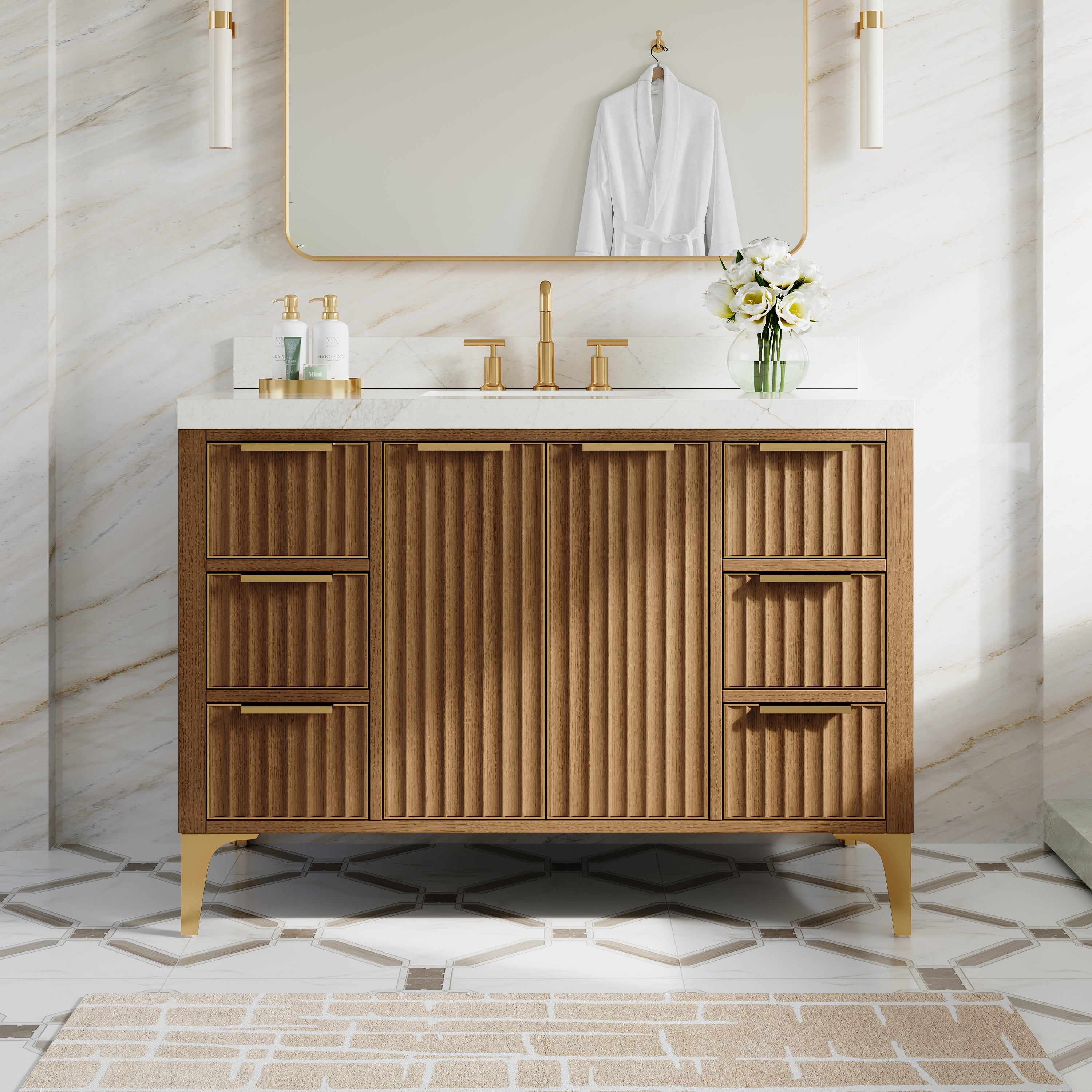
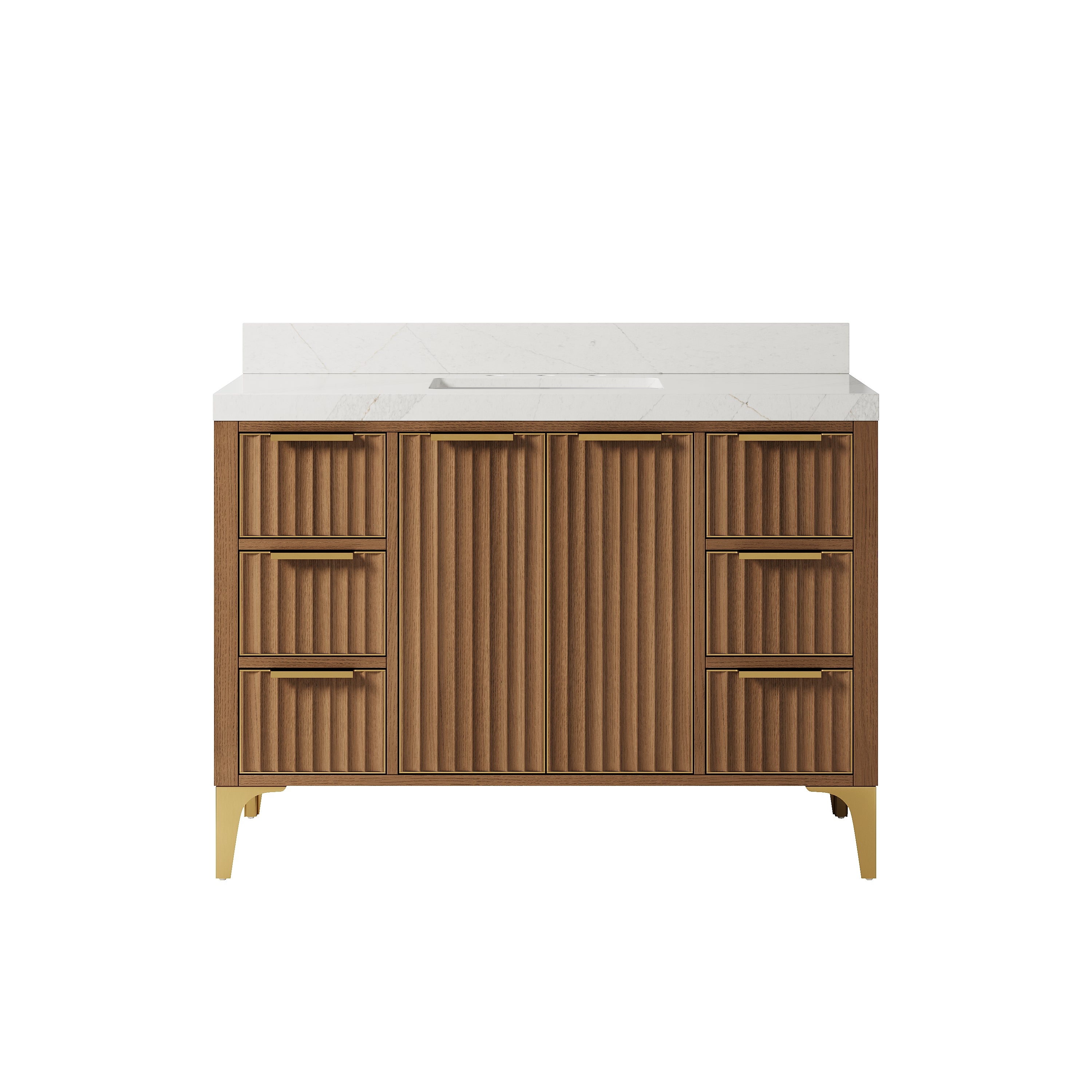


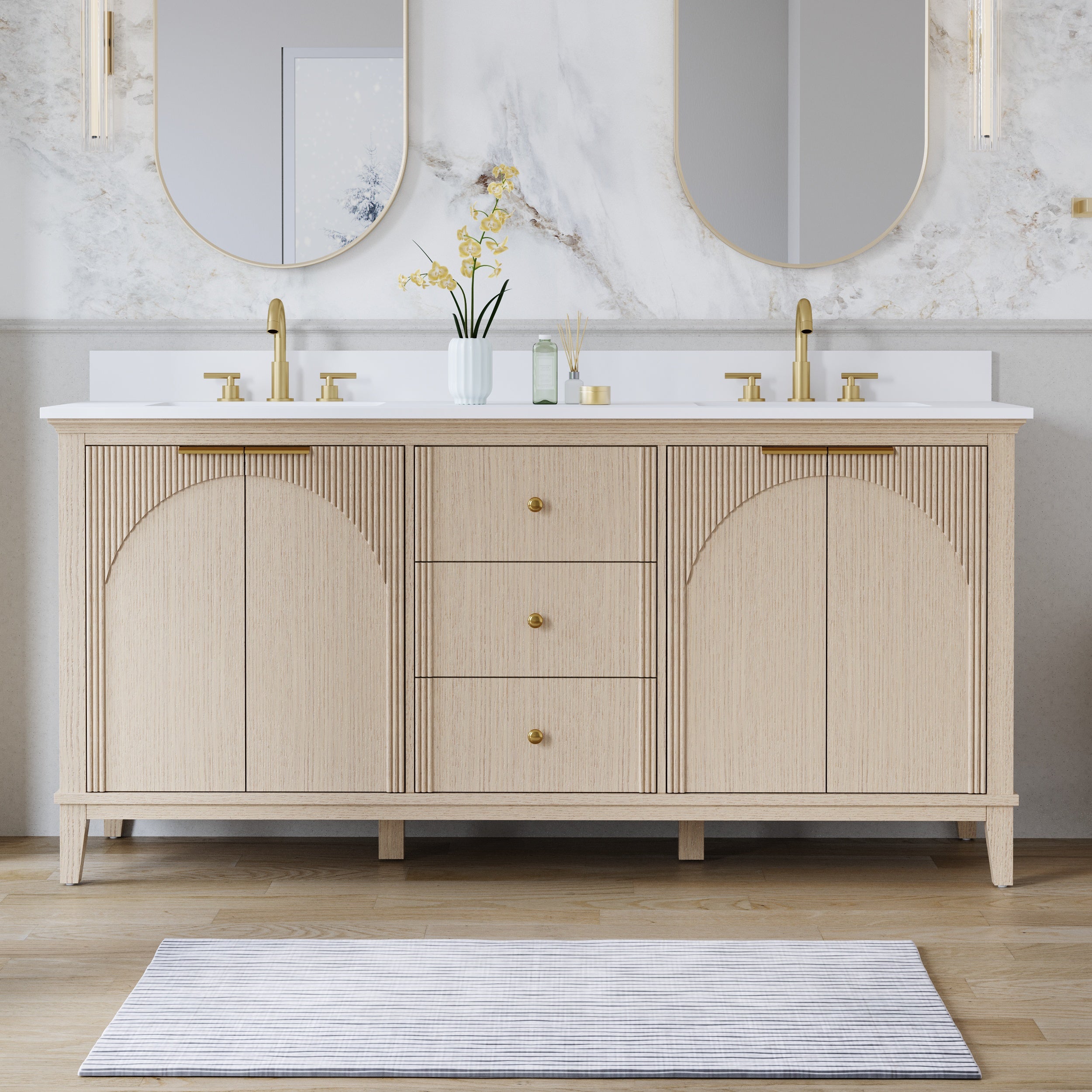
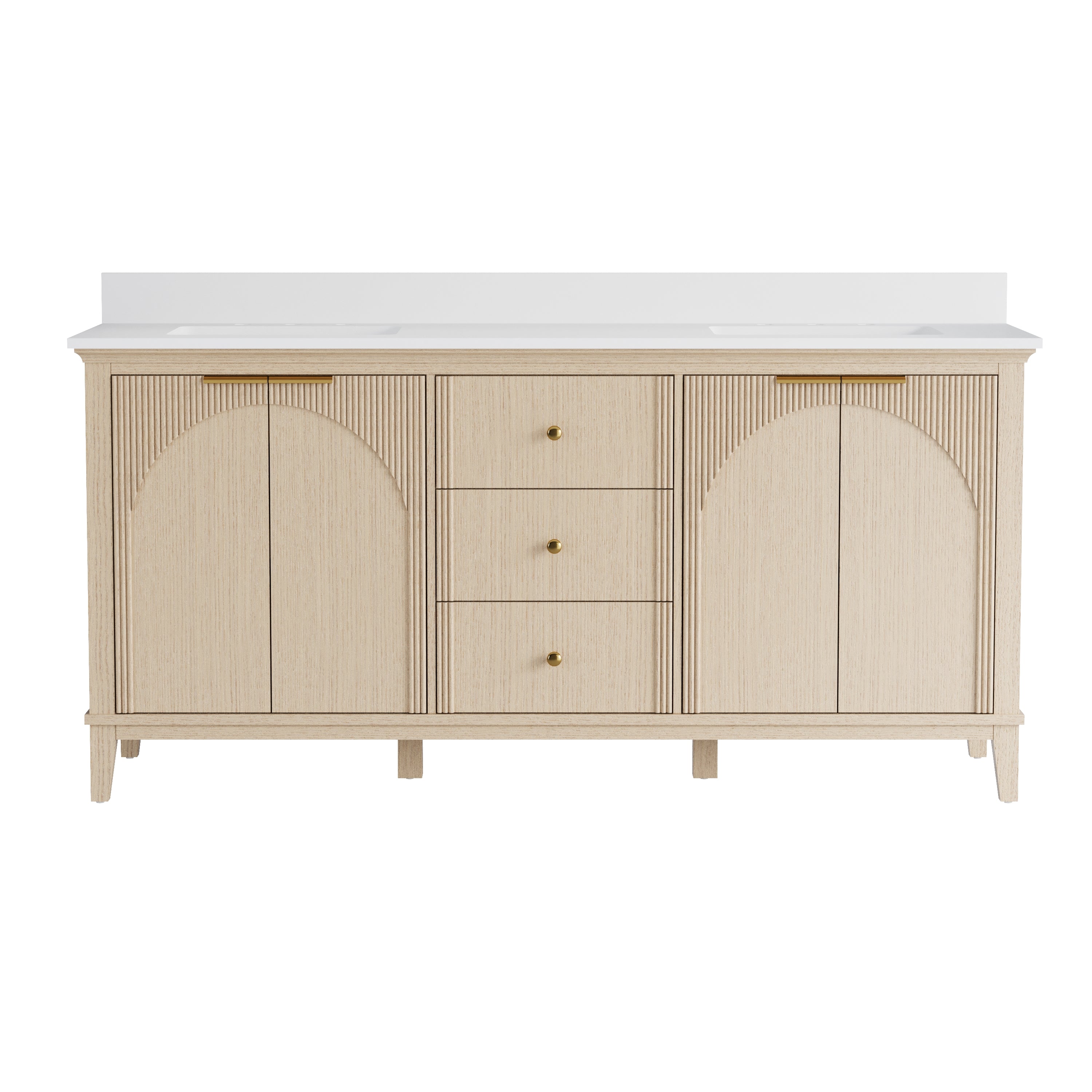
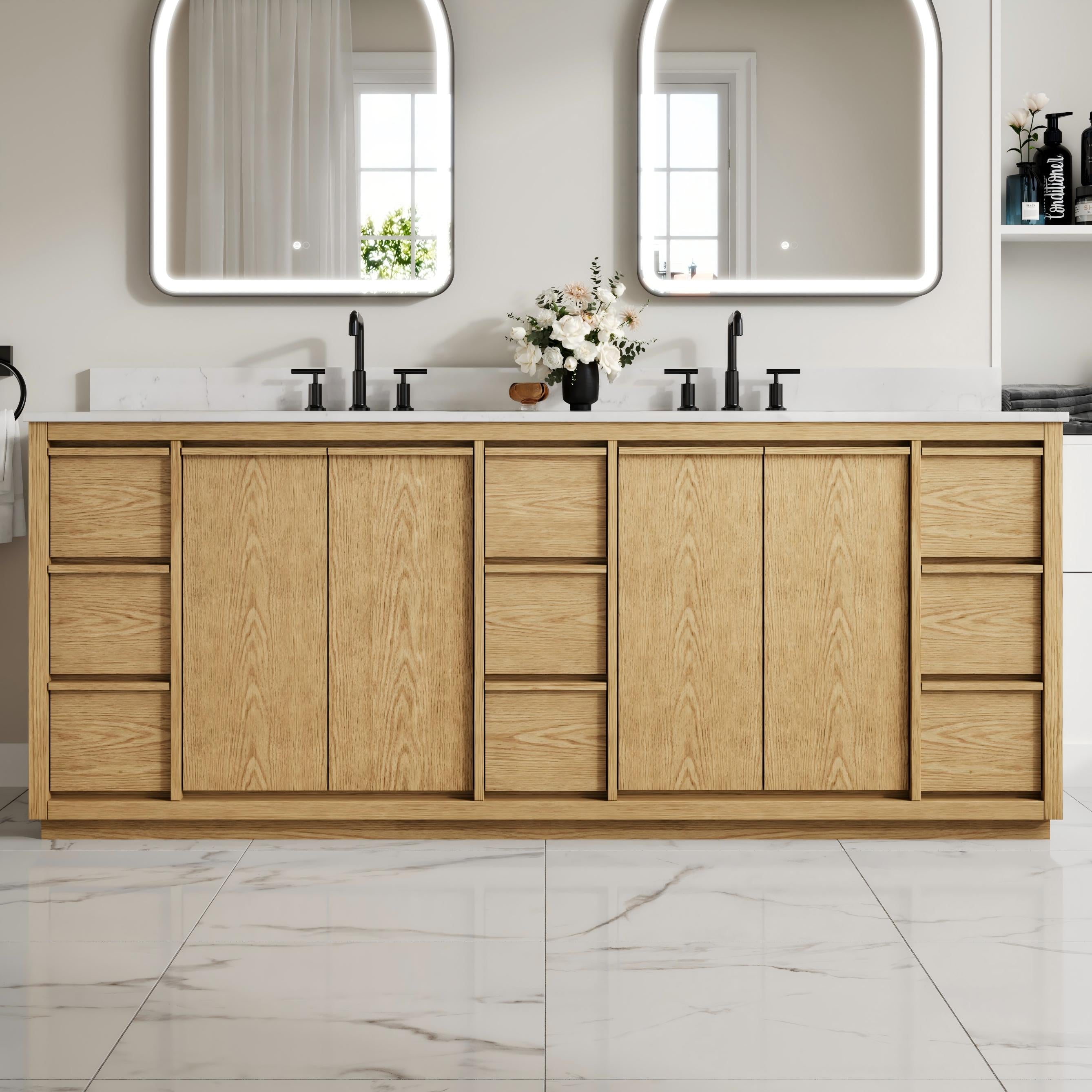
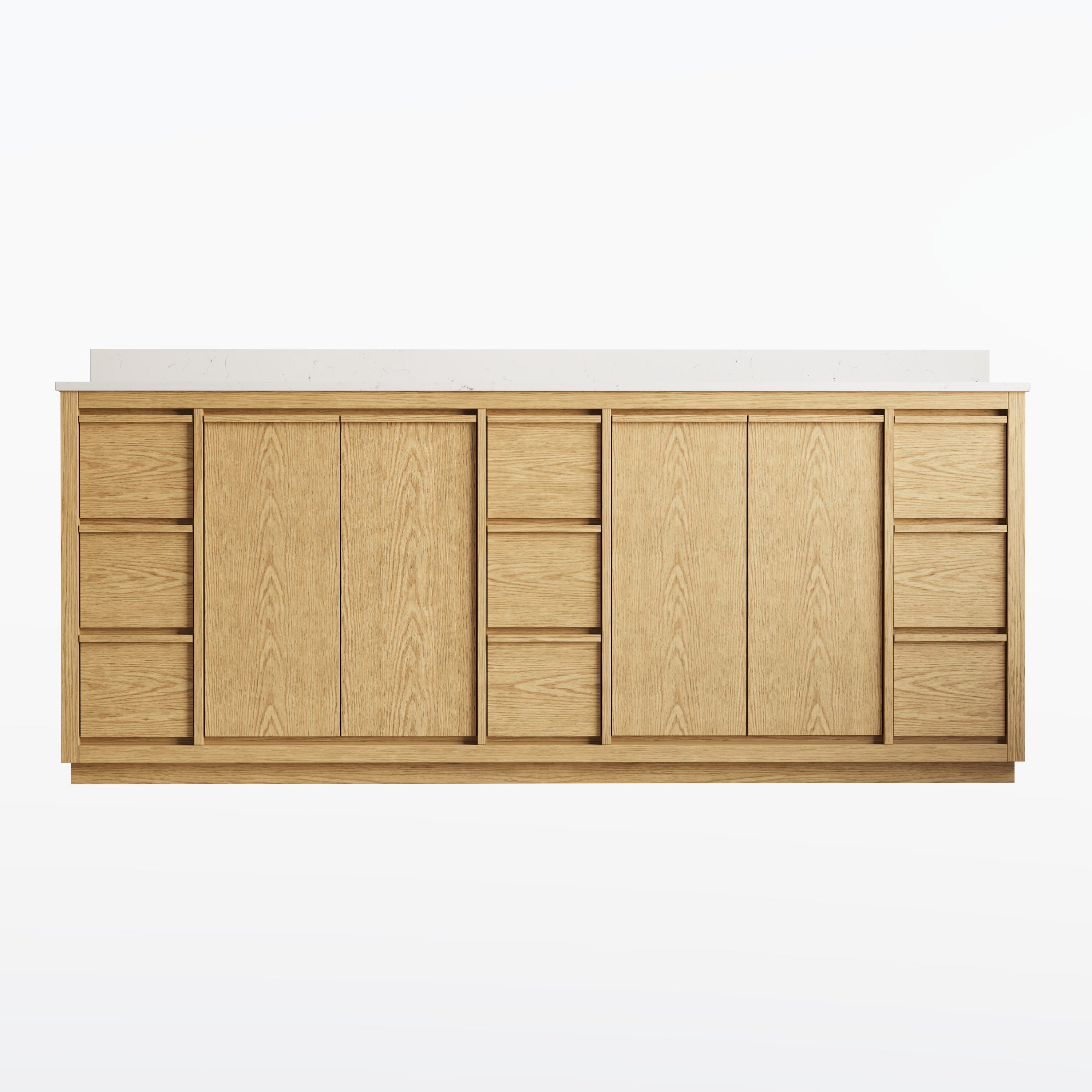
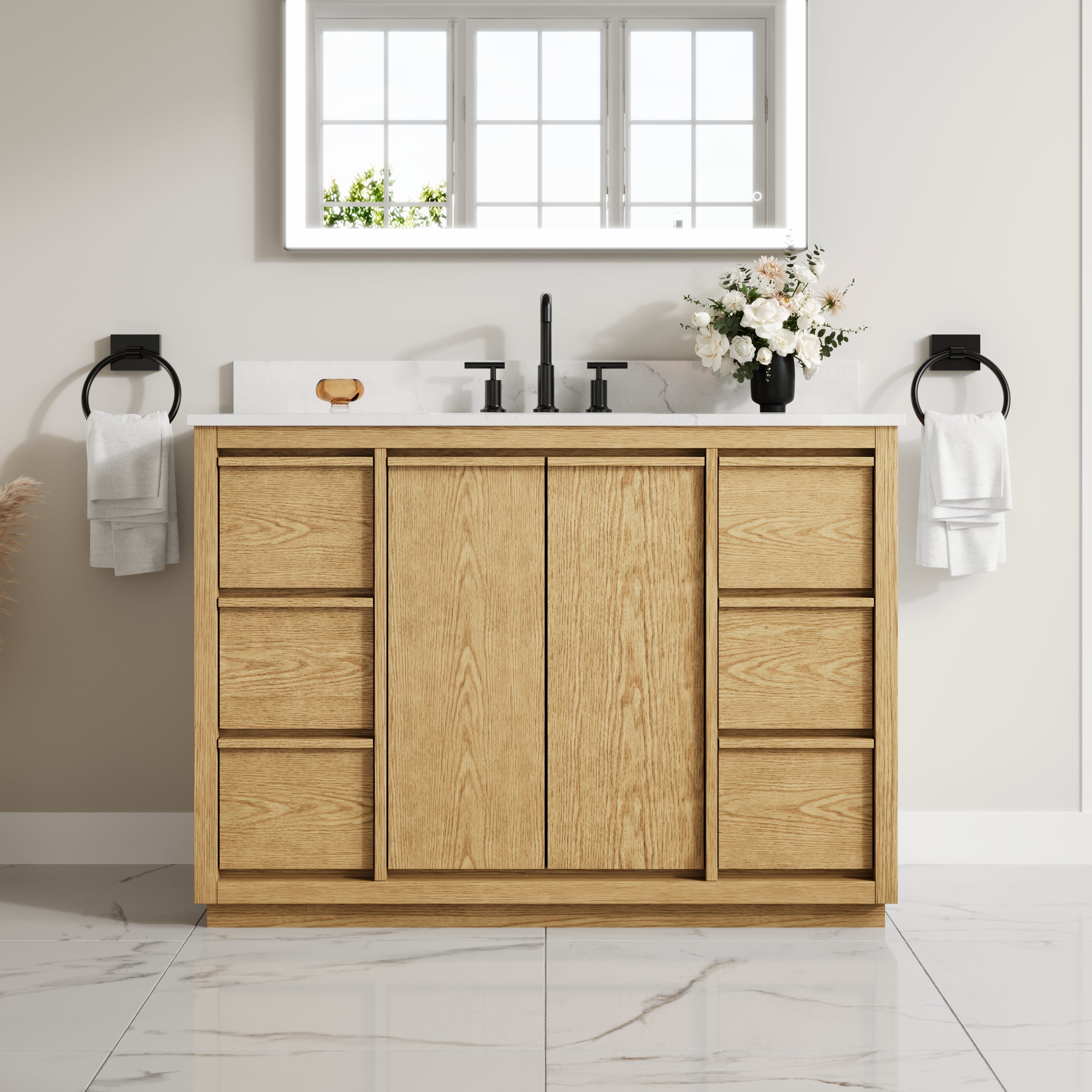
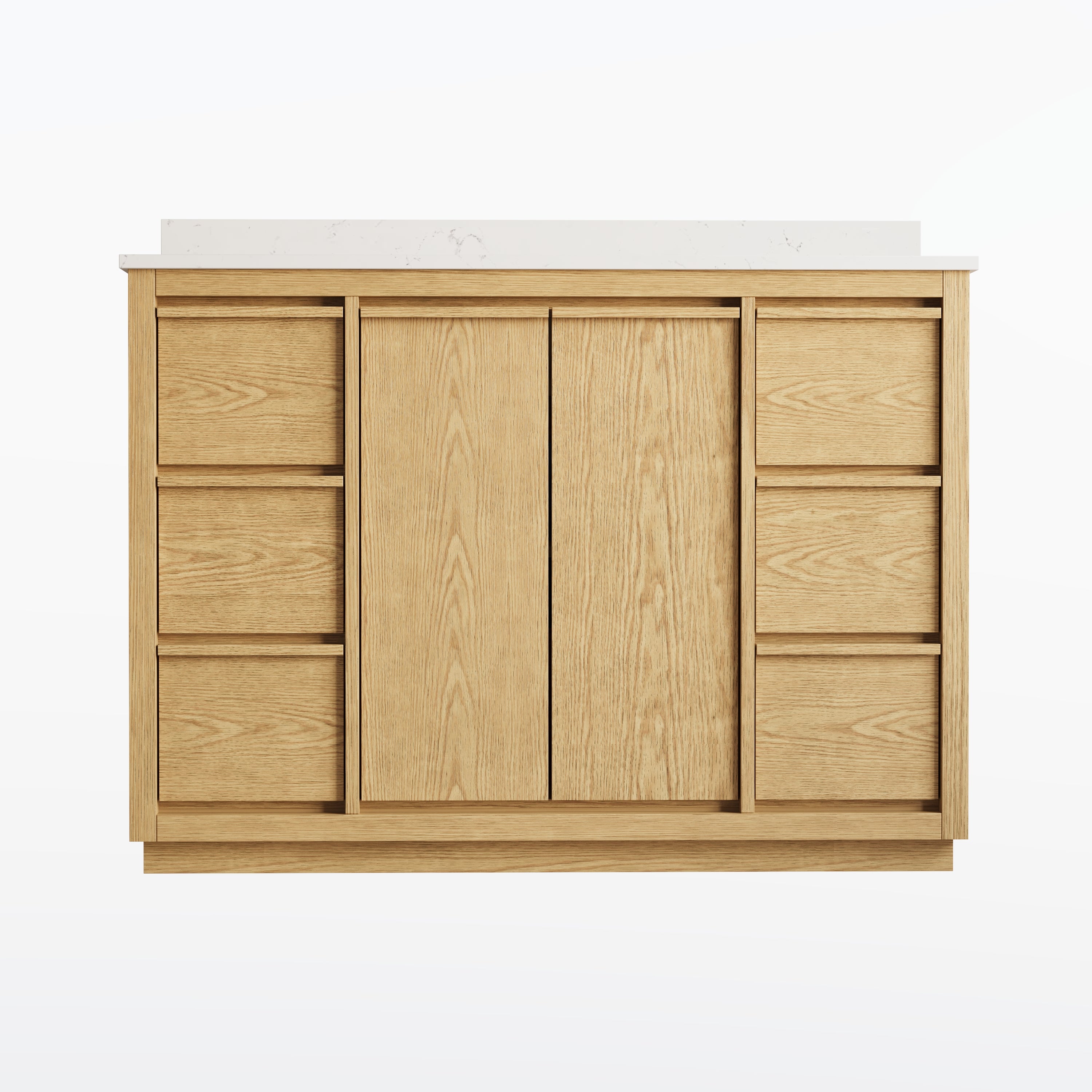
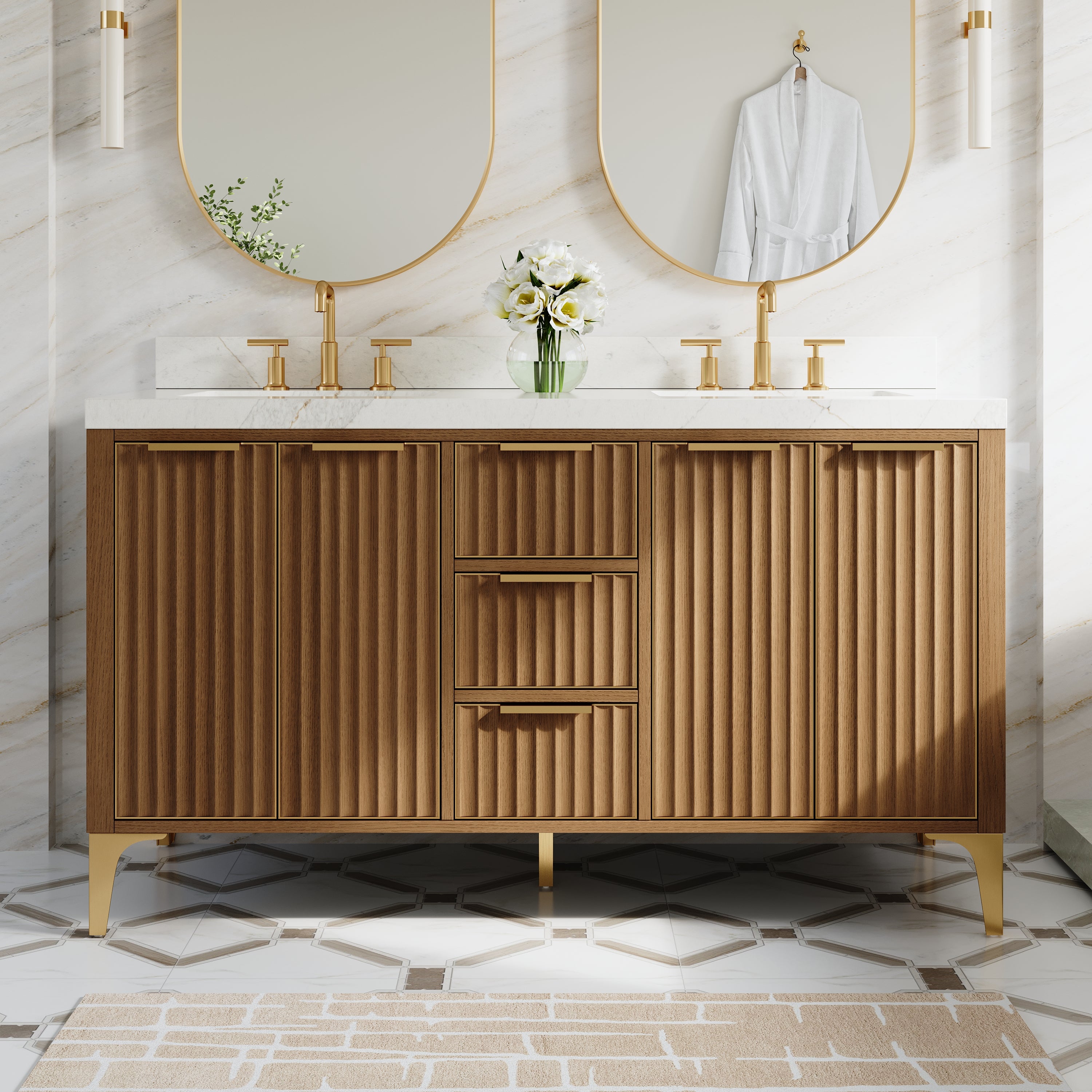
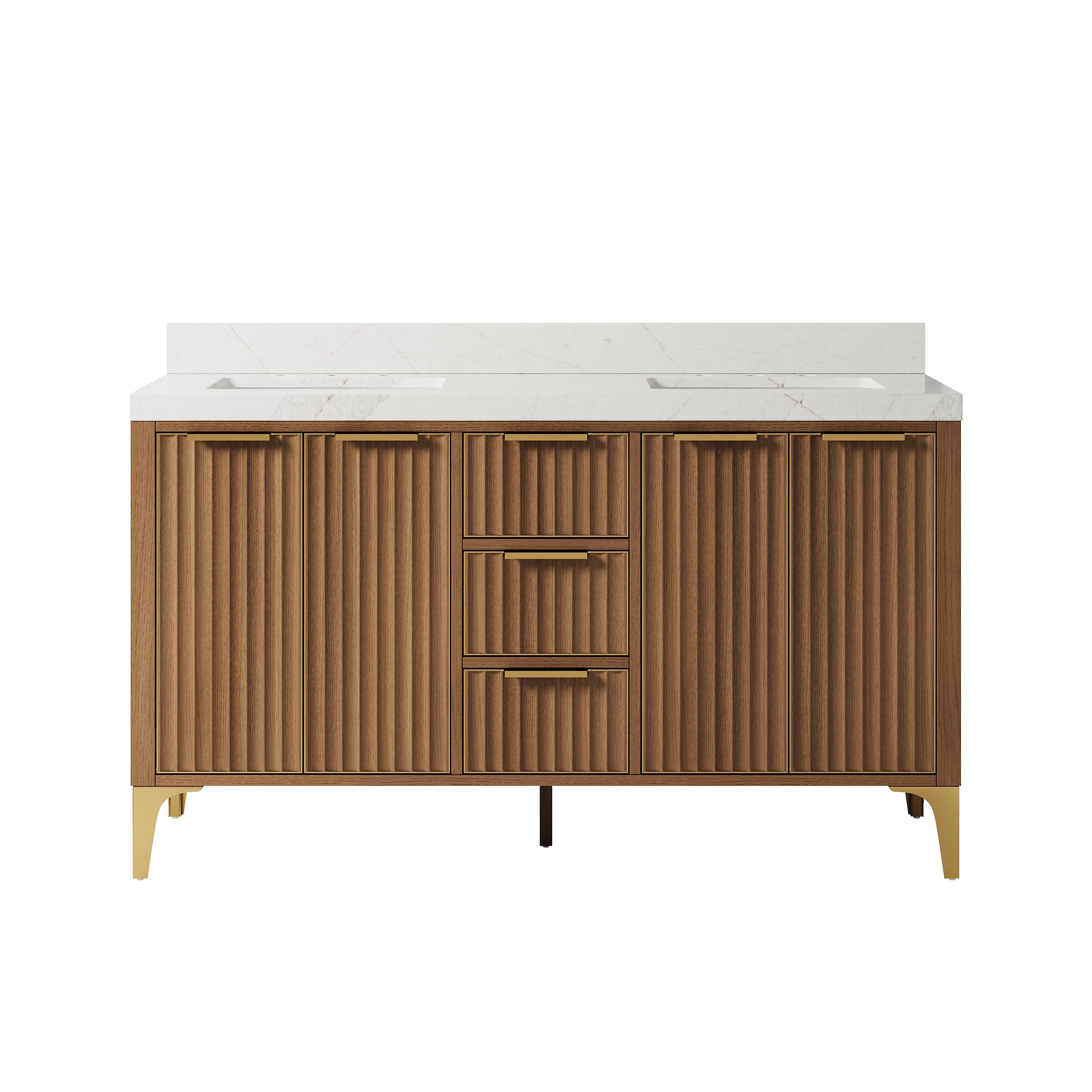
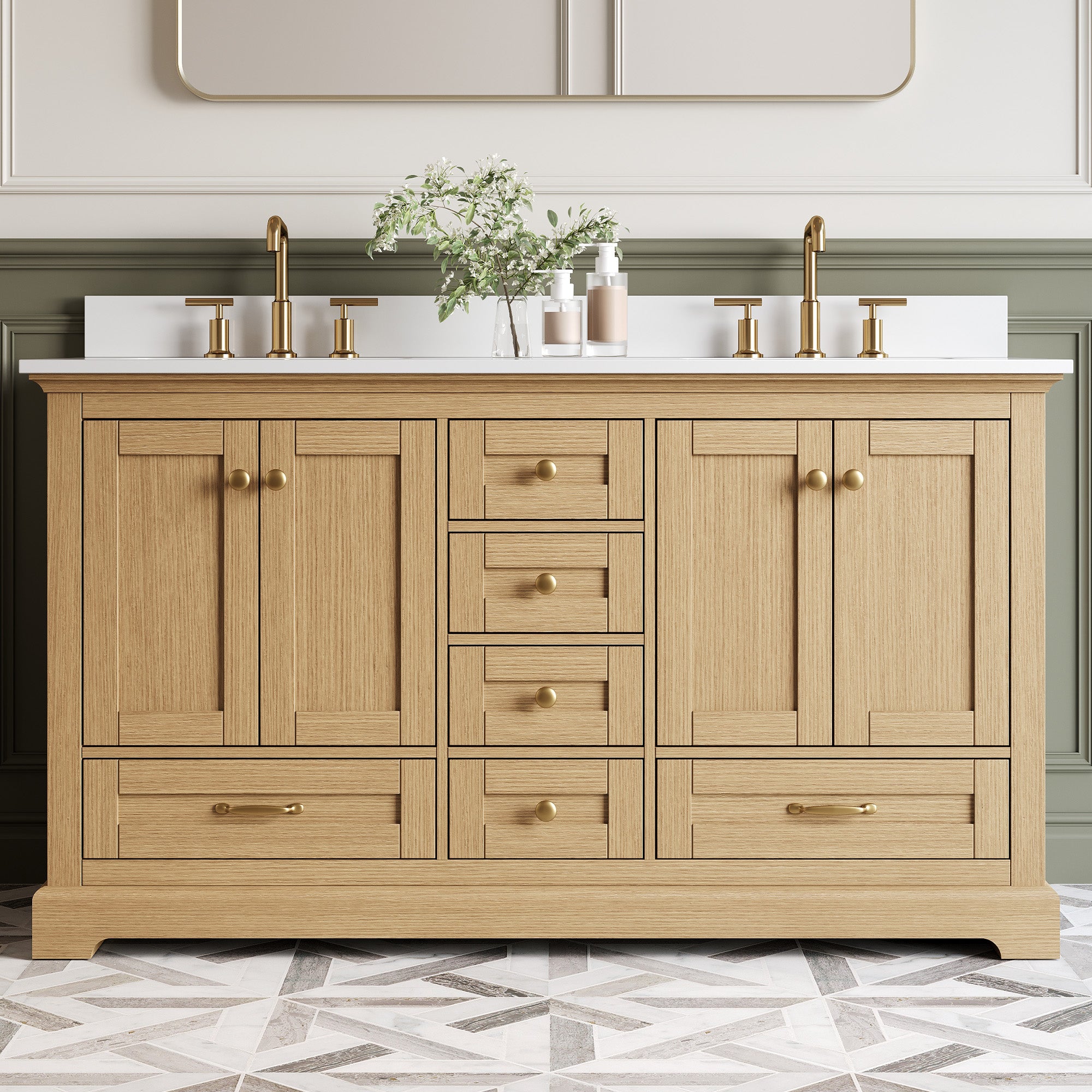
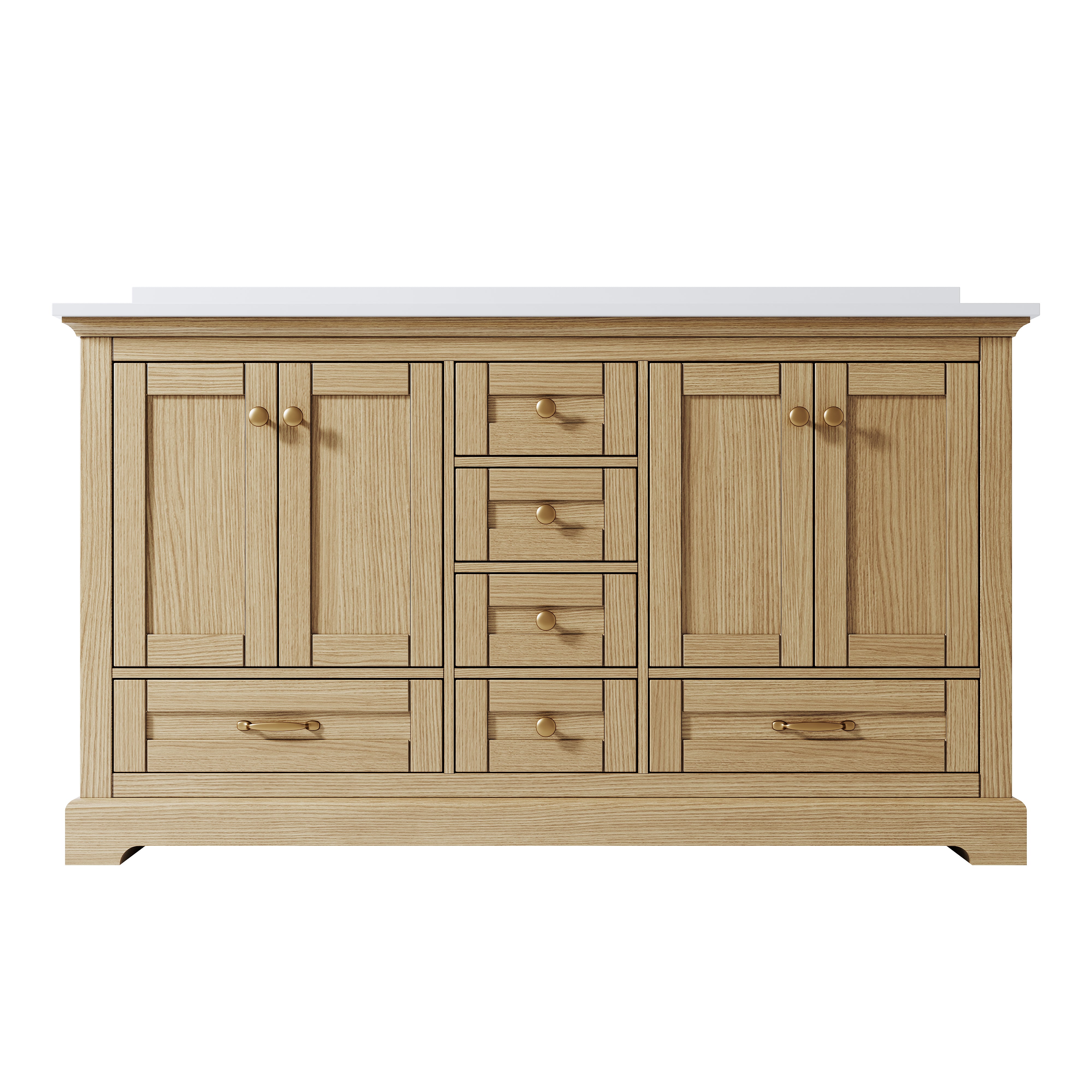
A wooden vanity can bring warmth and natural character into a bathroom, but its long-term appearance depends heavily on the finish protecting it. Water resistance does not come from the wood species alone. The coating system, surface preparation, edge sealing, application quality, and bathroom ventilation all influence how well a 24-inch, 36-inch, or 60-inch vanity handles daily splashes. Interest in wood cabinetry continues to grow: NKBA’s 2026 Bath Trends Report found that wood-faced vanities reached 62% in popularity, ahead of painted finishes at 53%.
No Wood Finish Is Completely Waterproof
The term “waterproof wood vanity” should be treated cautiously. Even a durable factory coating can be damaged by standing water, failed caulk, plumbing leaks, or moisture entering through an unfinished cut edge.
The Forest Products Laboratory explains that finishes can slow moisture movement, but no coating completely prevents wood from absorbing moisture during prolonged exposure to high relative humidity. A protective film works as a moisture barrier rather than an absolute seal.
For buyers, the more useful questions are:
· How long can the finish resist ordinary splashes?
· Are all exposed edges protected?
· Can the surface tolerate bathroom cleaners?
· Is the finish repairable if it becomes scratched?
· Was the coating factory applied or finished on site?
Industry judgment: The best bathroom finish is not the one with the strongest waterproof claim. It is the system that protects every surface consistently.
Two-Component Polyurethane Offers Strong Overall Protection
Factory-applied two-component polyurethane is among the most dependable choices for a premium wood bathroom vanity. The coating cures through a chemical reaction, producing a hard protective film that resists moisture, household products, and surface wear.
Its advantages usually include:
· Strong resistance to water splashes
· Good protection against cosmetics and cleaners
· A smooth, furniture-grade appearance
· Availability in matte, satin, and higher-sheen finishes
· Better durability than simple oil or wax treatments
Polyurethane can be transparent, allowing white oak, walnut, or maple grain to remain visible. It may also be used as a clear protective layer over stain or paint.
Forest Service guidance identifies polyurethane and spar varnish as clear film-forming finishes that can protect interior wood while keeping it easier to clean.
The weak point is repairability. A deep scratch may require localized refinishing, and an incorrect touch-up can leave a visible difference in sheen.
Catalyzed Conversion Varnish Performs Well on Factory Cabinetry
Conversion varnish is another high-performance factory finish commonly associated with premium cabinetry. It creates a hard film after the coating and catalyst react during curing.
Compared with basic lacquer, a well-applied conversion varnish generally provides stronger resistance to water, chemicals, heat, and repeated cleaning. It is particularly suitable for bathroom cabinets with flat door panels, detailed profiles, or visible natural grain.
Look for evidence that the manufacturer controls the complete finishing process:
· Wood is properly sanded and prepared.
· Stain is applied evenly.
· Sealer covers the faces, edges, and profiles.
· The protective topcoat reaches hidden surfaces.
· The coating is allowed to cure before packaging.
KCMA’s cabinet standard evaluates finishes through heat, humidity, chemical, detergent, and water-resistance testing. Its water-holdout test requires interior surfaces to show no swelling, delamination, discoloration, blistering, checking, or whitening after exposure.
A manufacturer that references recognized cabinet-performance testing provides more useful information than one relying only on broad “moisture-resistant” language.
Painted Enamel Can Be Highly Water-Resistant
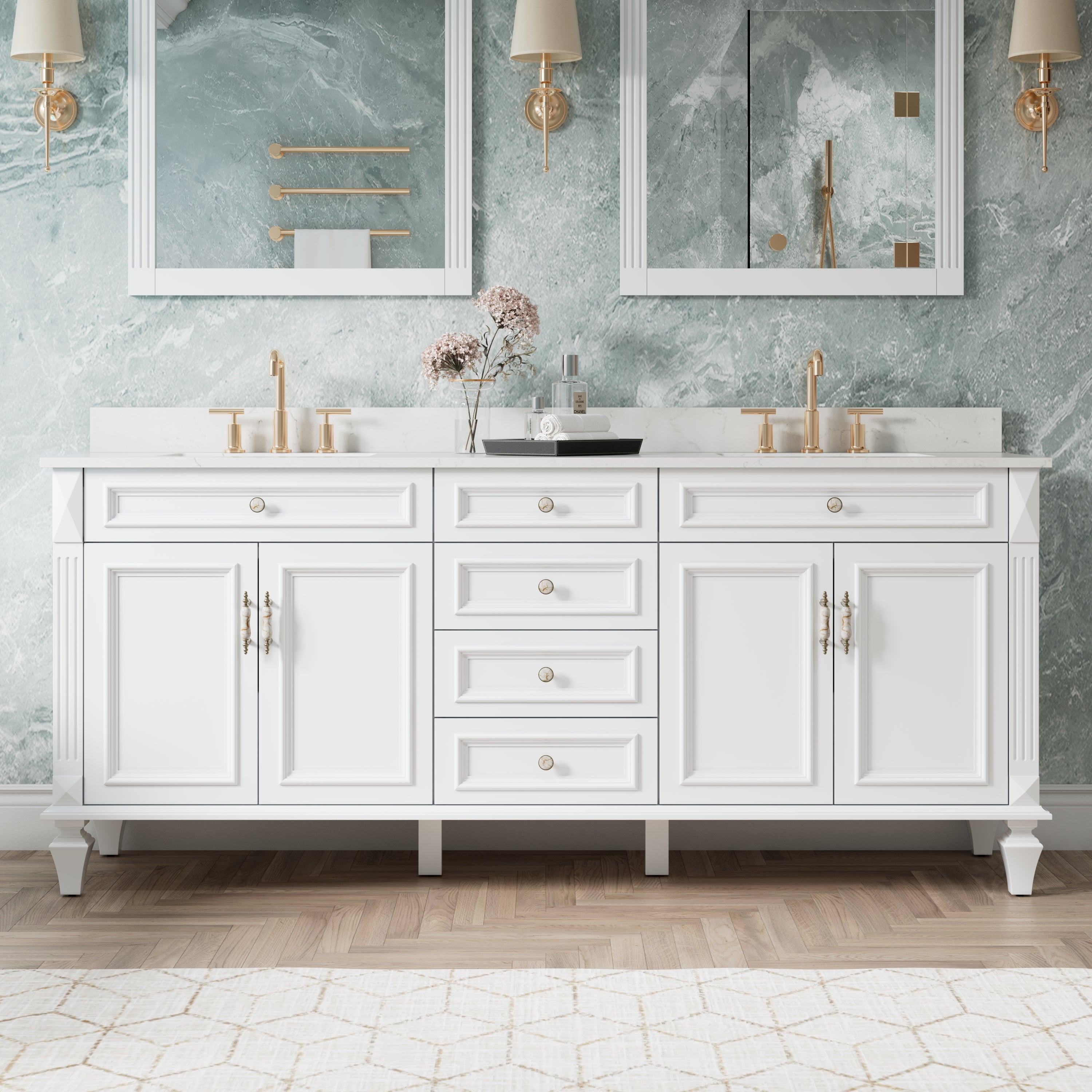
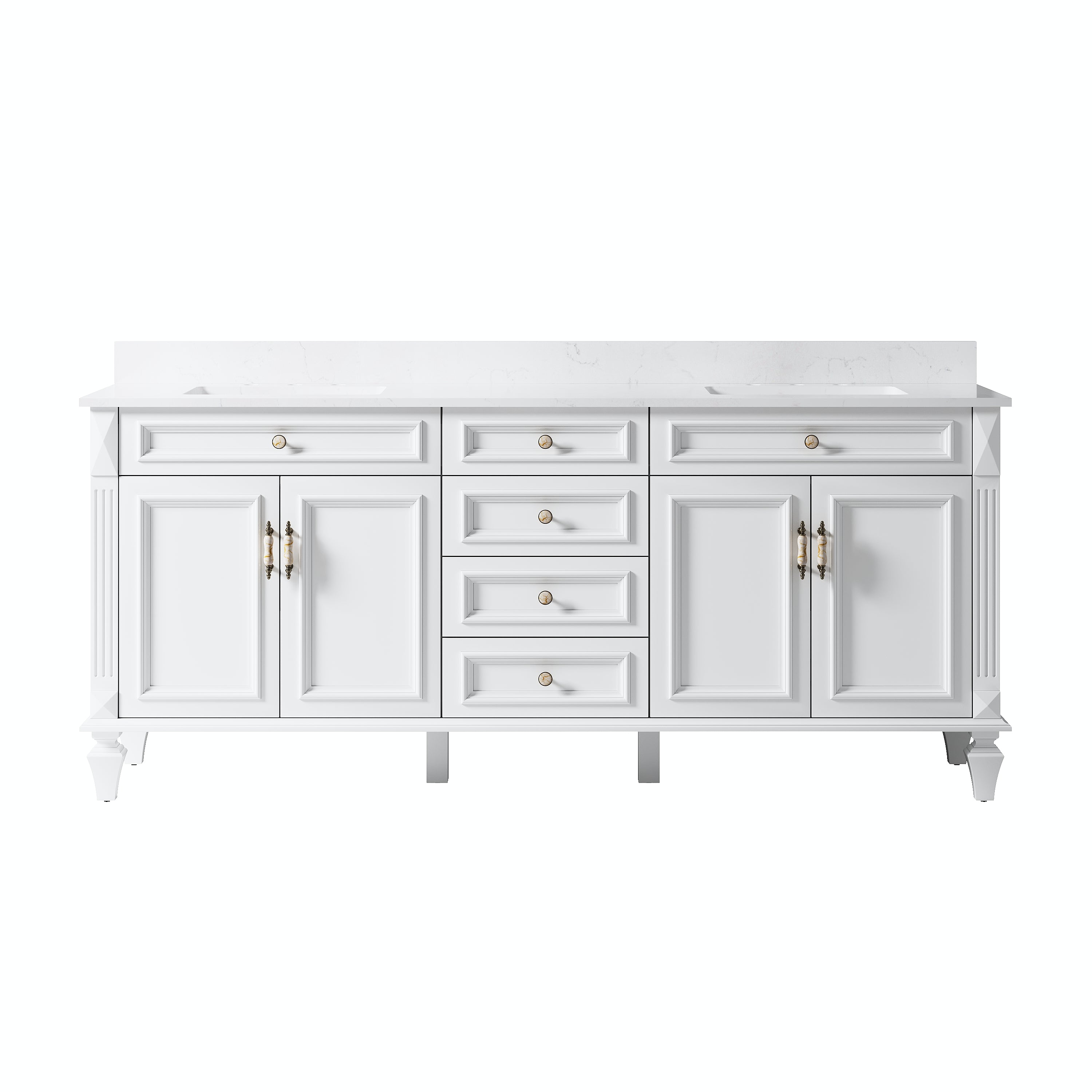
A painted vanity can perform extremely well when the finish uses a compatible primer, multiple color coats, and a durable topcoat. Film-forming finishes provide a continuous barrier over the underlying wood or wood-based panel.
The Forest Products Laboratory notes that paints and solid-color coatings provide strong protection for reconstituted wood products. It also emphasizes that panel edges are particularly sensitive to moisture and require thorough coating.
For painted vanities, inspect:
· Door and drawer edges
· The bottom of the cabinet
· Areas around hardware holes
· The back of drawer fronts
· Plumbing cutouts inside the cabinet
· The section directly below the sink
A smooth white, navy, or sage-green finish may look complete from the front while leaving vulnerable edges exposed behind the doors.
Paint also makes repairs possible, but color matching can be difficult. A generic white touch-up product may differ noticeably from the original coating under LED mirror lighting.

Standard Polyurethane Varnish Is a Practical Alternative
Single-component polyurethane varnish is widely available and can provide reliable protection for a vanity refinished on site. It forms a clear film over stained or natural wood and is usually more water-resistant than wax or penetrating oil alone.
For effective coverage:
· The wood should be clean, dry, and properly sanded.
· Multiple thin coats generally perform better than one heavy coat.
· Each coat needs sufficient curing time.
· Edges, corners, and end grain require careful attention.
· The underside should not be left unfinished.
Film thickness and the absence of pinholes or voids strongly affect moisture protection. Forest Service research notes that coating performance depends on film thickness, resin composition, and whether the protective layer contains defects.
A surface that feels dry is not necessarily fully cured. Placing the sink, faucet, or toiletries on it too early can damage the coating.
Lacquer Looks Refined but Needs More Caution
Lacquer is valued for its smooth appearance, fast application, and ability to build a polished furniture finish. It can work well in a powder room or a well-ventilated bathroom where water exposure is limited.
However, not all lacquer systems provide the same level of moisture and chemical resistance. Basic lacquer may be more vulnerable than polyurethane or catalyzed coatings when exposed to standing water, alcohol-based products, or aggressive cleaners.
When considering a lacquered vanity:
· Ask whether the lacquer is pre-catalyzed or post-catalyzed.
· Confirm whether the finish has been tested for bathroom use.
· Check that the sink area and cabinet edges are fully sealed.
· Avoid leaving wet towels against the cabinet.
· Use only manufacturer-approved cleaners.
A 30-inch powder-room vanity and a 72-inch primary-bath vanity may face very different exposure levels. The finish should match the room’s actual use rather than the appearance alone.
Hardwax Oil Prioritizes Natural Texture and Repairability
Hardwax oil penetrates the wood and leaves a low-build protective surface. It produces a natural, tactile appearance that works particularly well with oak and walnut.
Its strongest advantages are visual character and easier localized repair. Scratches or worn spots can often be sanded and recoated without refinishing the entire cabinet.
Its limitations include:
· Lower resistance to standing water
· Greater need for periodic maintenance
· More sensitivity to harsh cleaners
· Faster wear around handles and sink edges
· Less protection at exposed end grain
Hardwax oil may suit a furniture-style vanity in a lightly used bathroom, but it requires more attentive care than a catalyzed factory finish.













Leave a comment
This site is protected by hCaptcha and the hCaptcha Privacy Policy and Terms of Service apply.