














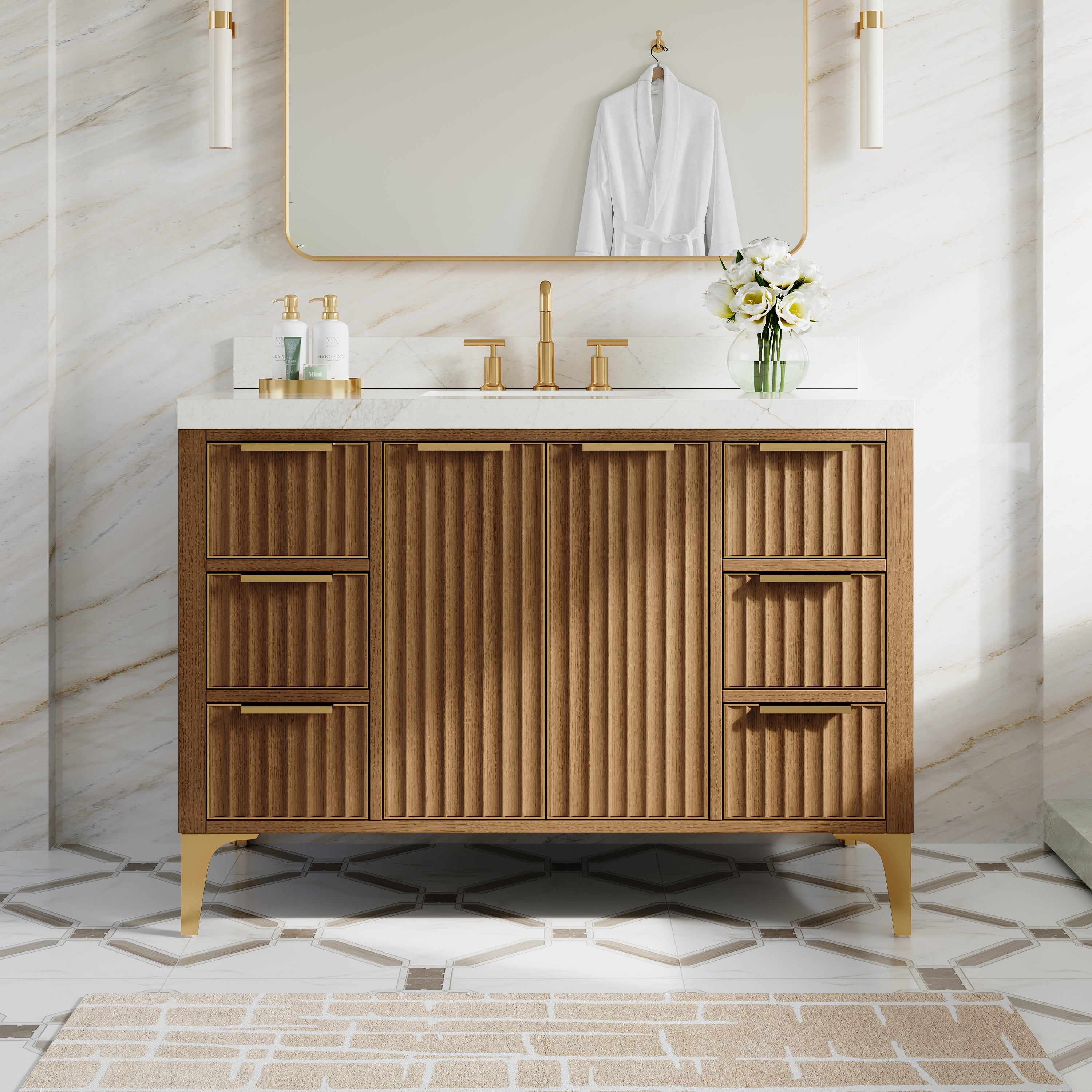
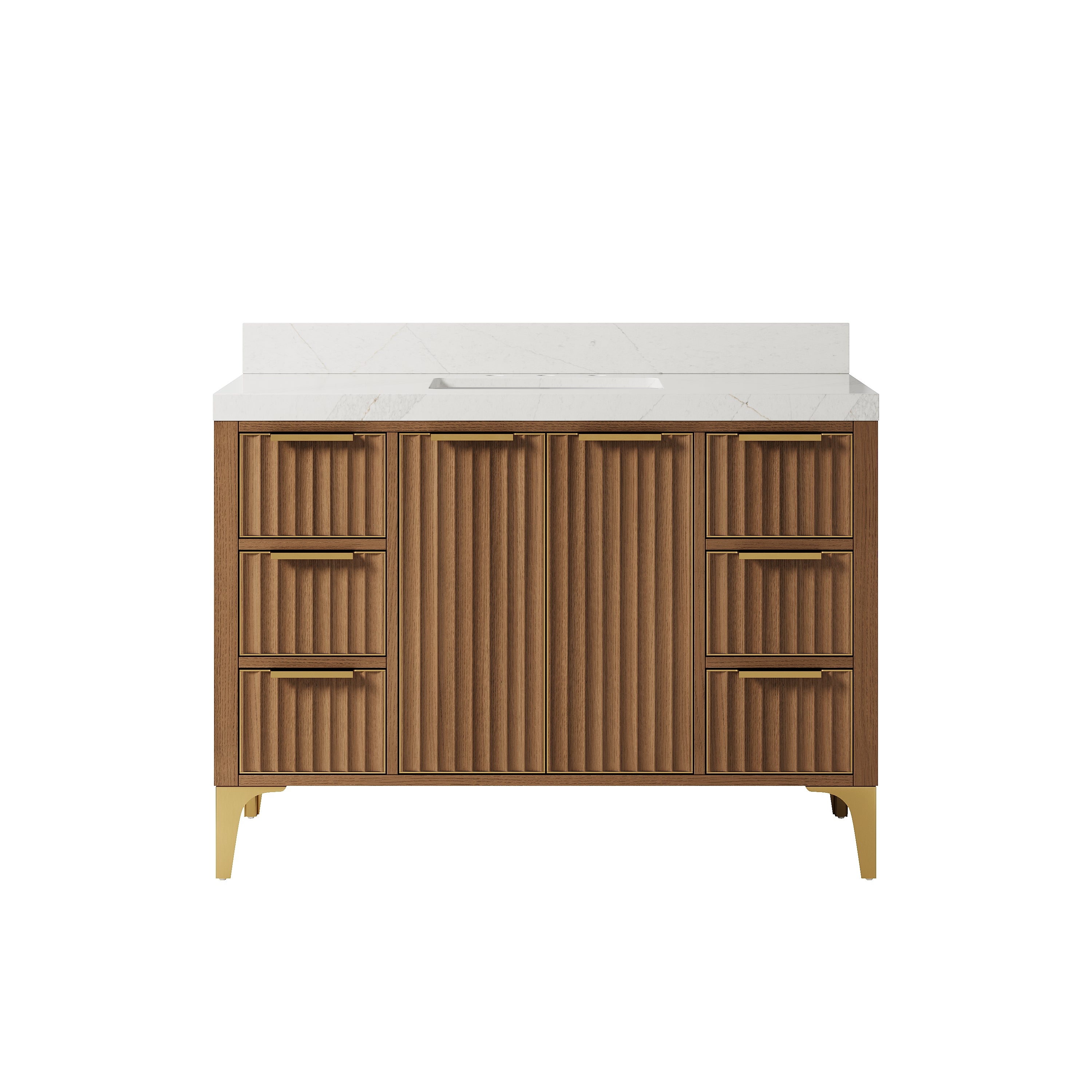


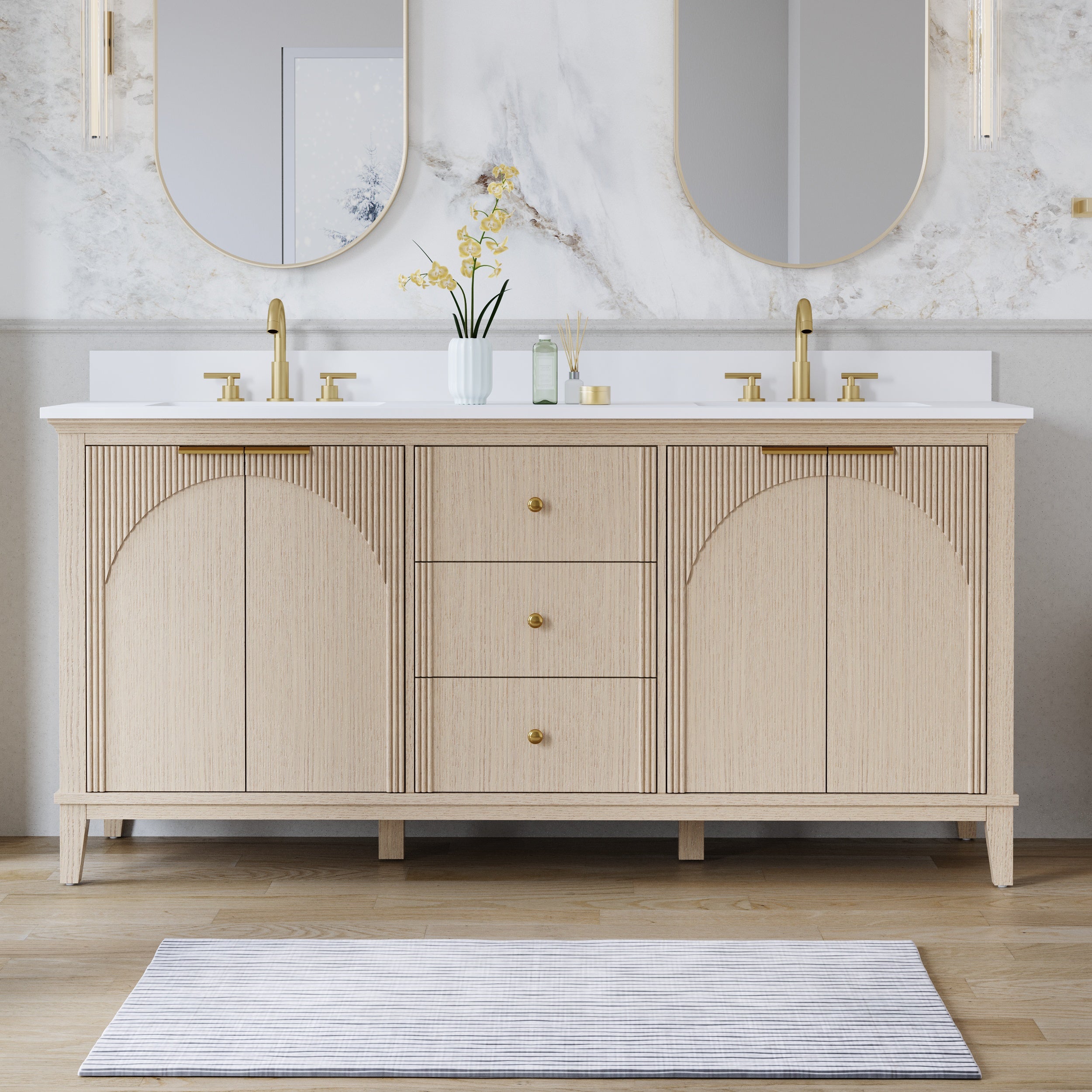
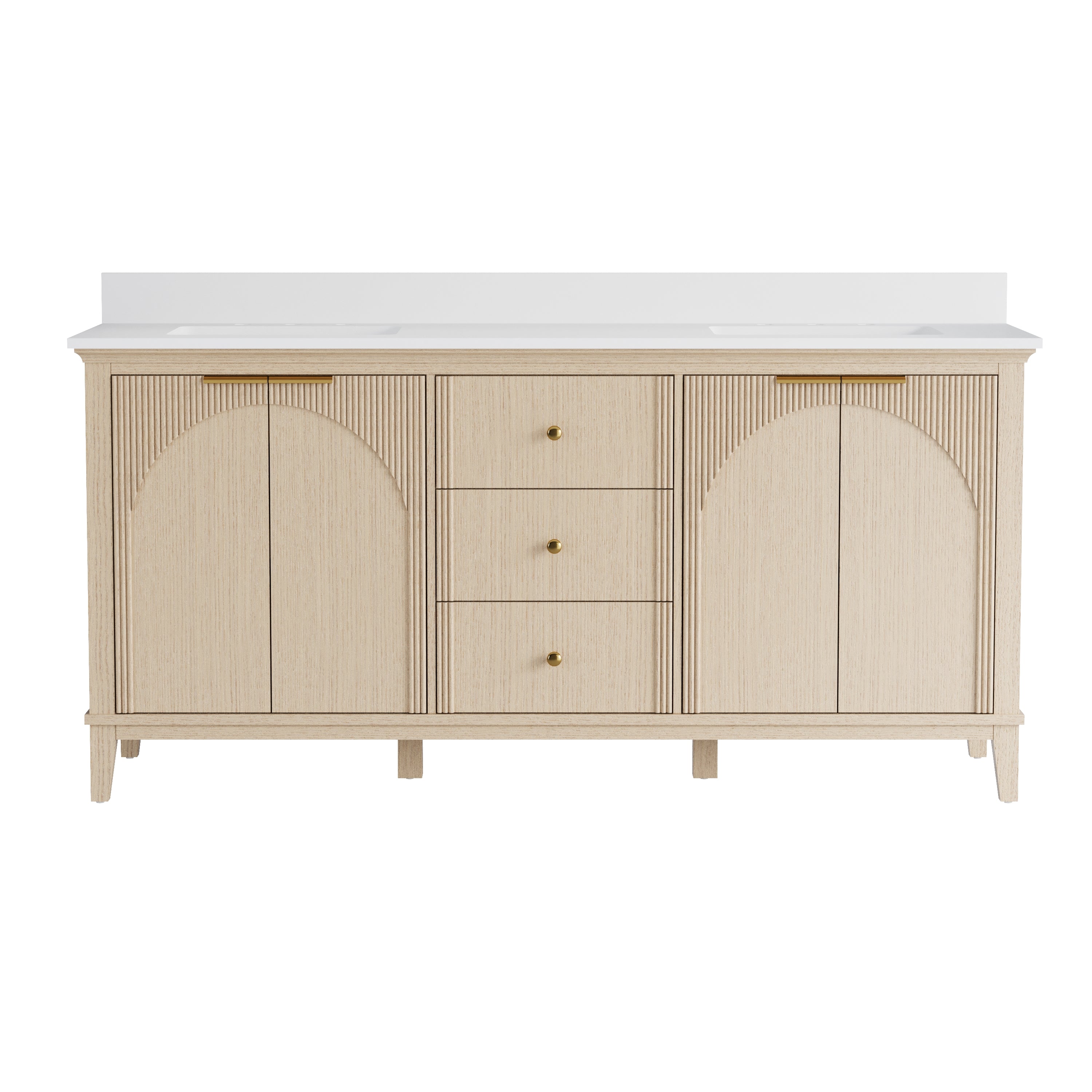
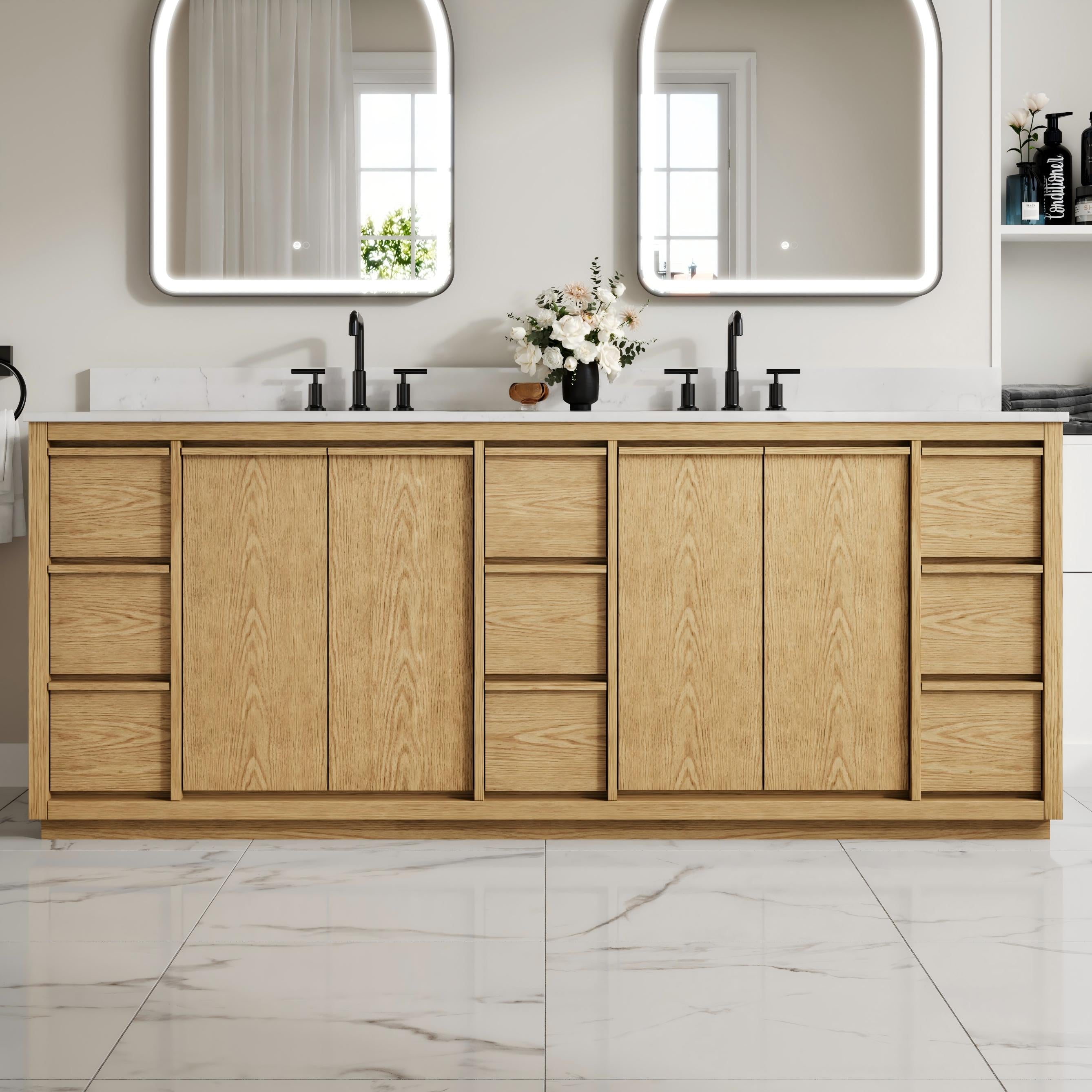
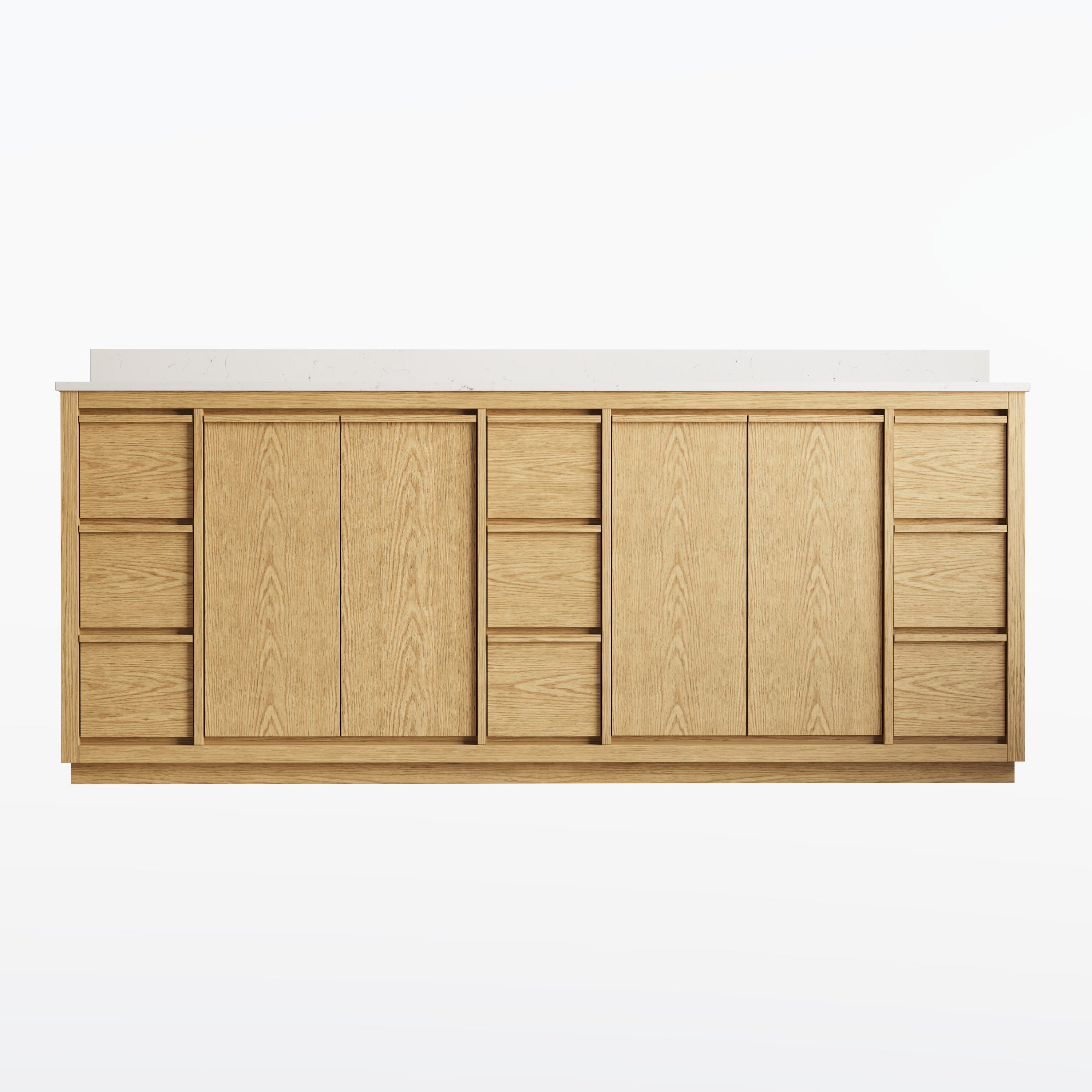

A solid wood vanity is one of the few bathroom purchases that can improve with age rather than simply survive it. After years of evaluating bathroom cabinetry in family homes, guest baths, rental properties, and primary suites, I have found that material quality usually reveals itself within the first few years. Weak cabinets begin to swell, sag, or loosen. A well-built solid wood piece tends to remain stable, useful, and worth maintaining long after cheaper alternatives start showing their limits.
The initial price is usually higher. That is the obvious drawback. Yet long-term value is not determined by the lowest receipt on installation day. It depends on durability, repairability, daily function, and whether the vanity still suits the room when other finishes are updated later.
1. Why a Solid Wood Vanity Handles Daily Use Better
Bathrooms are demanding environments. Cabinet doors are opened repeatedly, drawers carry heavy products, and surfaces are exposed to humidity, splashes, cleaning solutions, and changing temperatures. Materials that look similar in a showroom often behave very differently once they enter that routine.
Solid wood has natural structural strength. Properly constructed doors and drawer fronts are less likely to feel hollow or flimsy, and fasteners generally hold more securely than they do in weak particleboard. When good joinery and reliable hardware are added, the cabinet can tolerate years of repeated use without feeling loose.
I see the difference most clearly in family bathrooms. Children pull drawers from awkward angles. Heavy hair tools are dropped into storage. Wet hands touch the doors. A vanity in this setting needs more than a decorative finish.
Wood is not indestructible, but it gives the cabinet a stronger foundation before protective coatings are even considered.
2. How Solid Wood Creates Better Long-Term Value
A lower-priced vanity may be reasonable for a lightly used powder room, but frequent replacement quickly erases the original savings. Removing an old cabinet, repairing surrounding finishes, paying for installation again, and disposing of damaged materials all add cost and disruption.
A solid wood vanity often avoids that cycle. Small scratches can sometimes be touched up. Worn finishes may be refreshed. Hardware can be replaced without discarding the entire cabinet. This repair potential is one of its biggest advantages, though buyers rarely consider it while comparing new products.
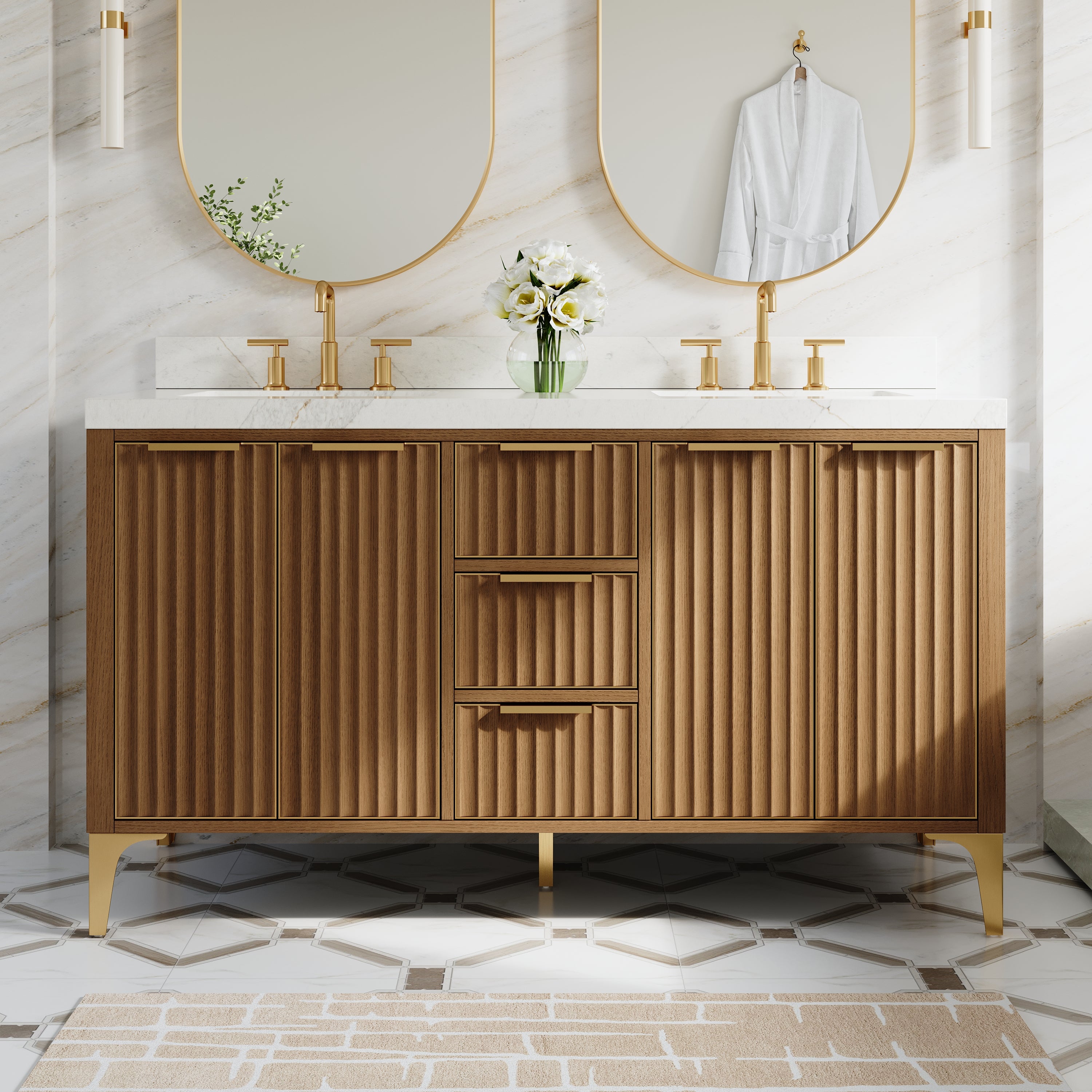
The material also tends to age more gracefully. Slight variations in grain and color give the surface visual depth, so minor signs of use may feel less severe than chips on a flat painted or laminated finish.
A common misconception about solid wood
Many shoppers assume the words “solid wood” guarantee a superior product. They do not.
Construction still matters. Poor joinery, weak drawer slides, uneven sealing, or careless assembly can undermine good material. Some vanities use solid wood only on visible frames while relying on different materials inside. That arrangement is not necessarily bad, but buyers should understand what they are purchasing.
Ask which components are solid wood, how the cabinet box is built, and how vulnerable edges are protected. The label is a starting point, not the entire quality test.
3. The Advantages and Limitations in Real Bathrooms
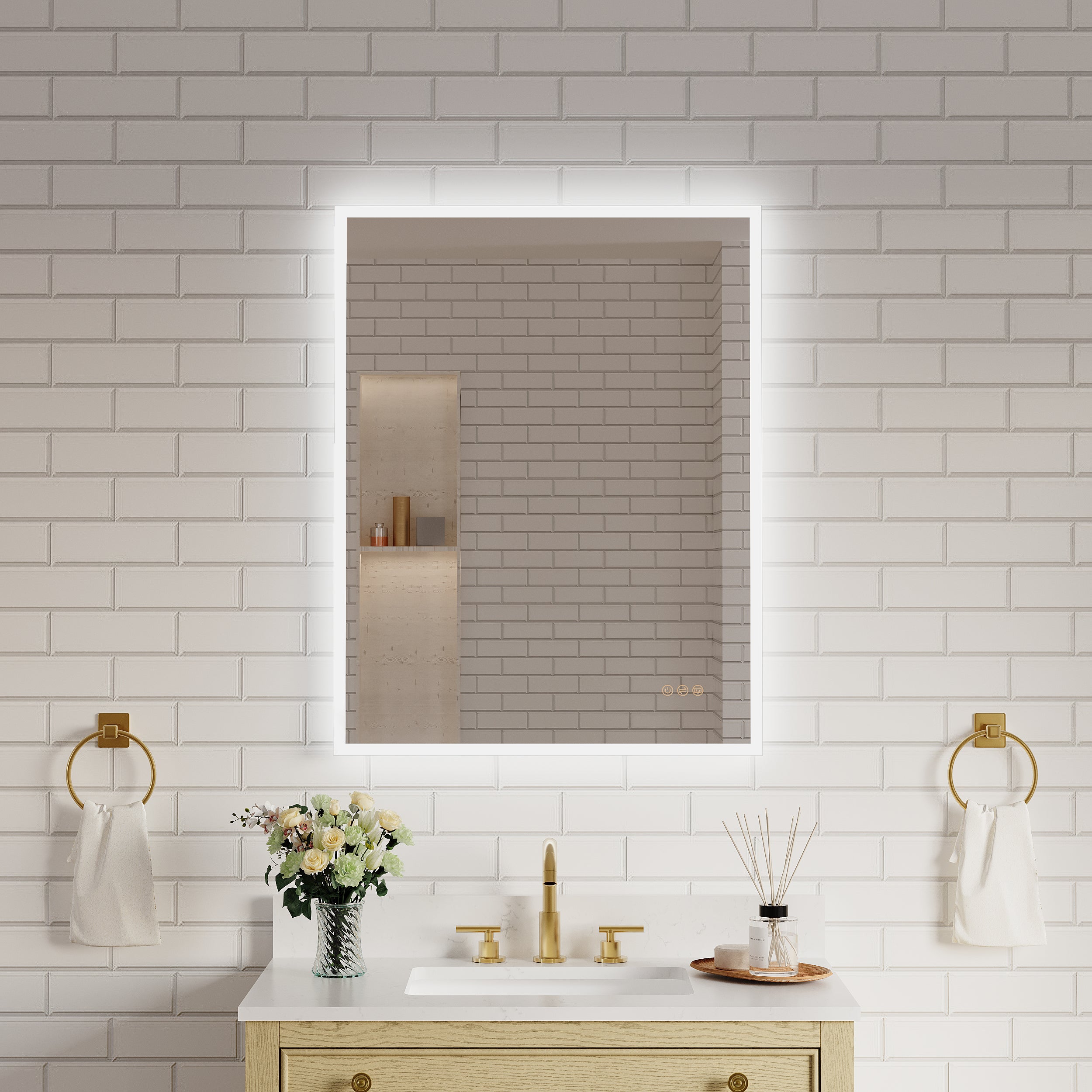
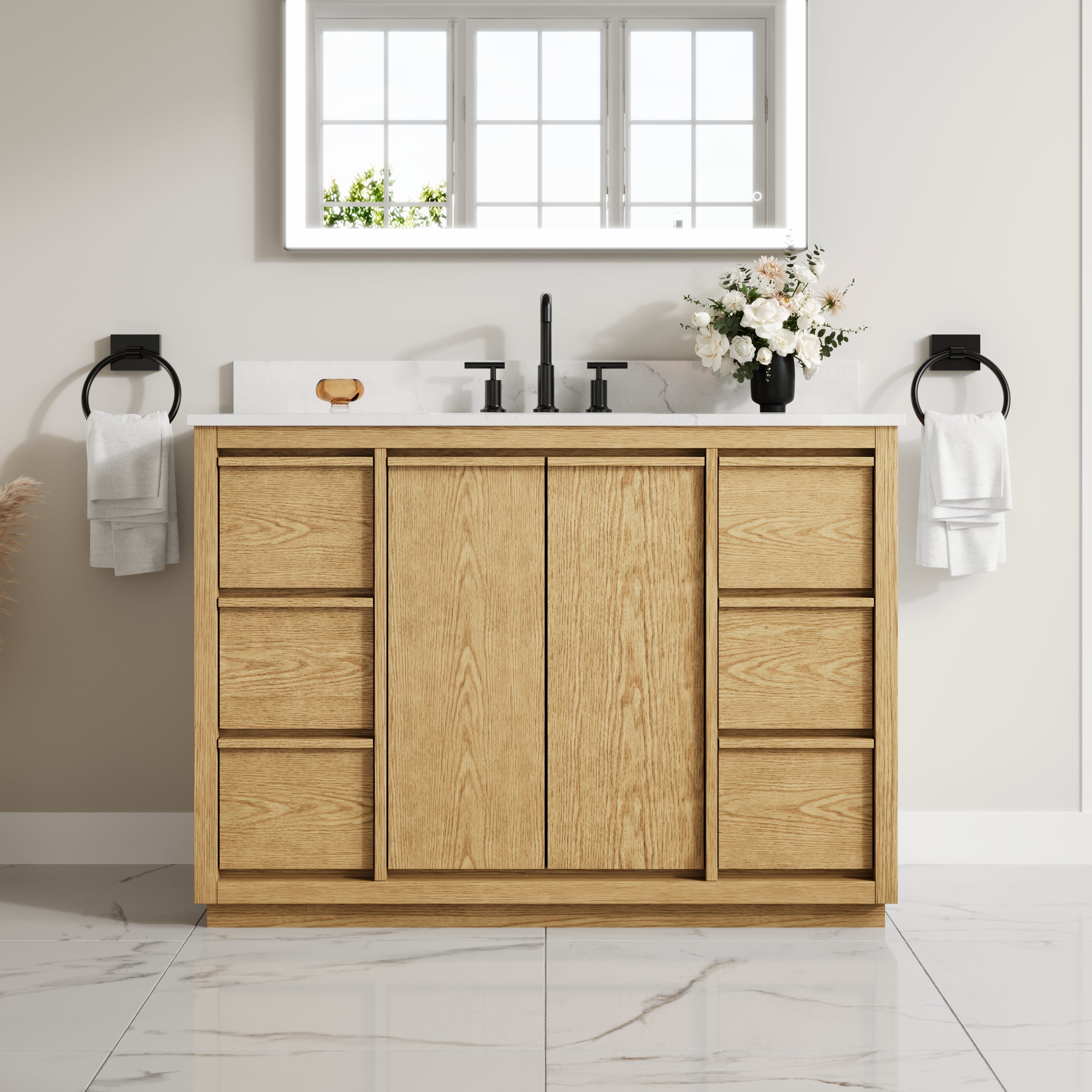
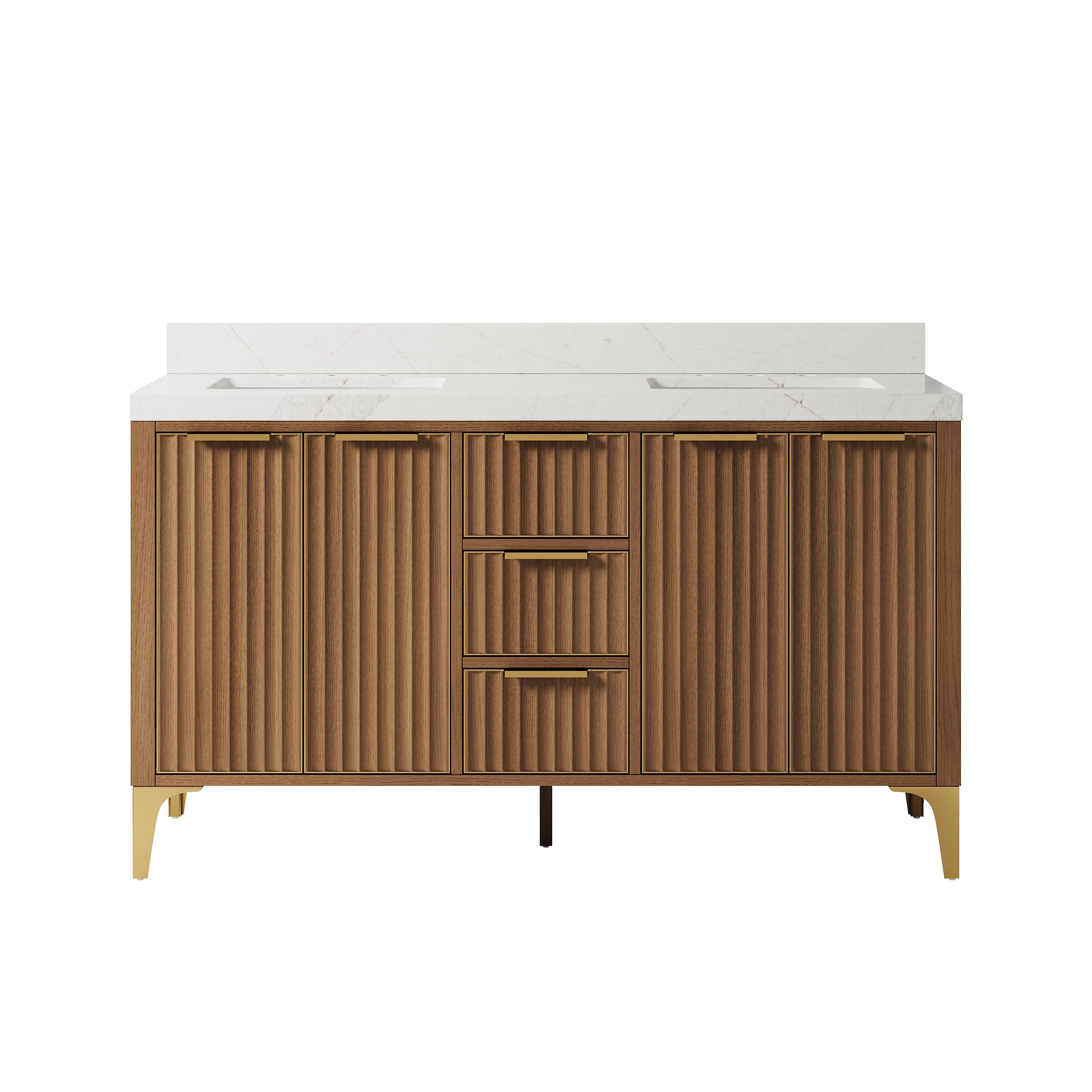
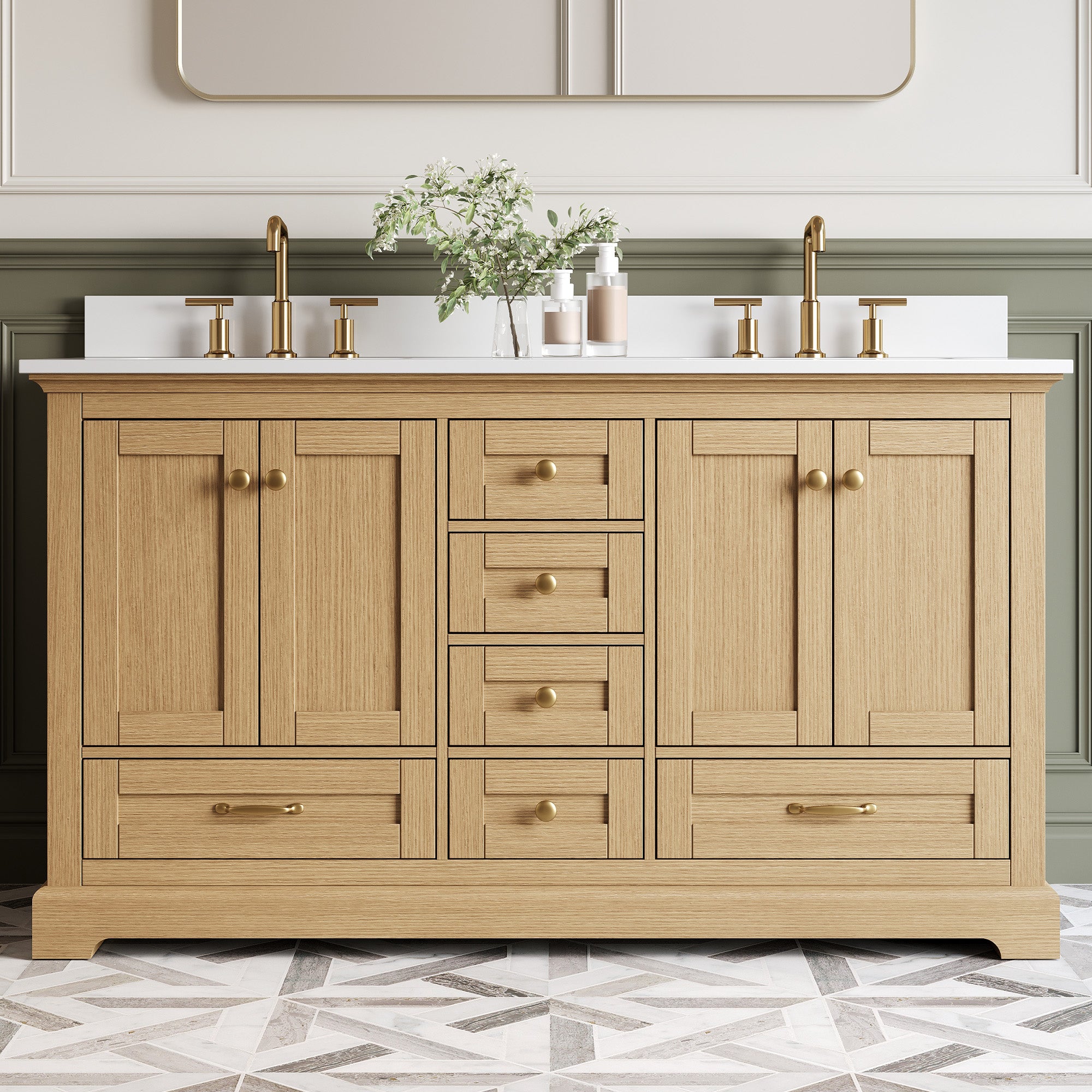
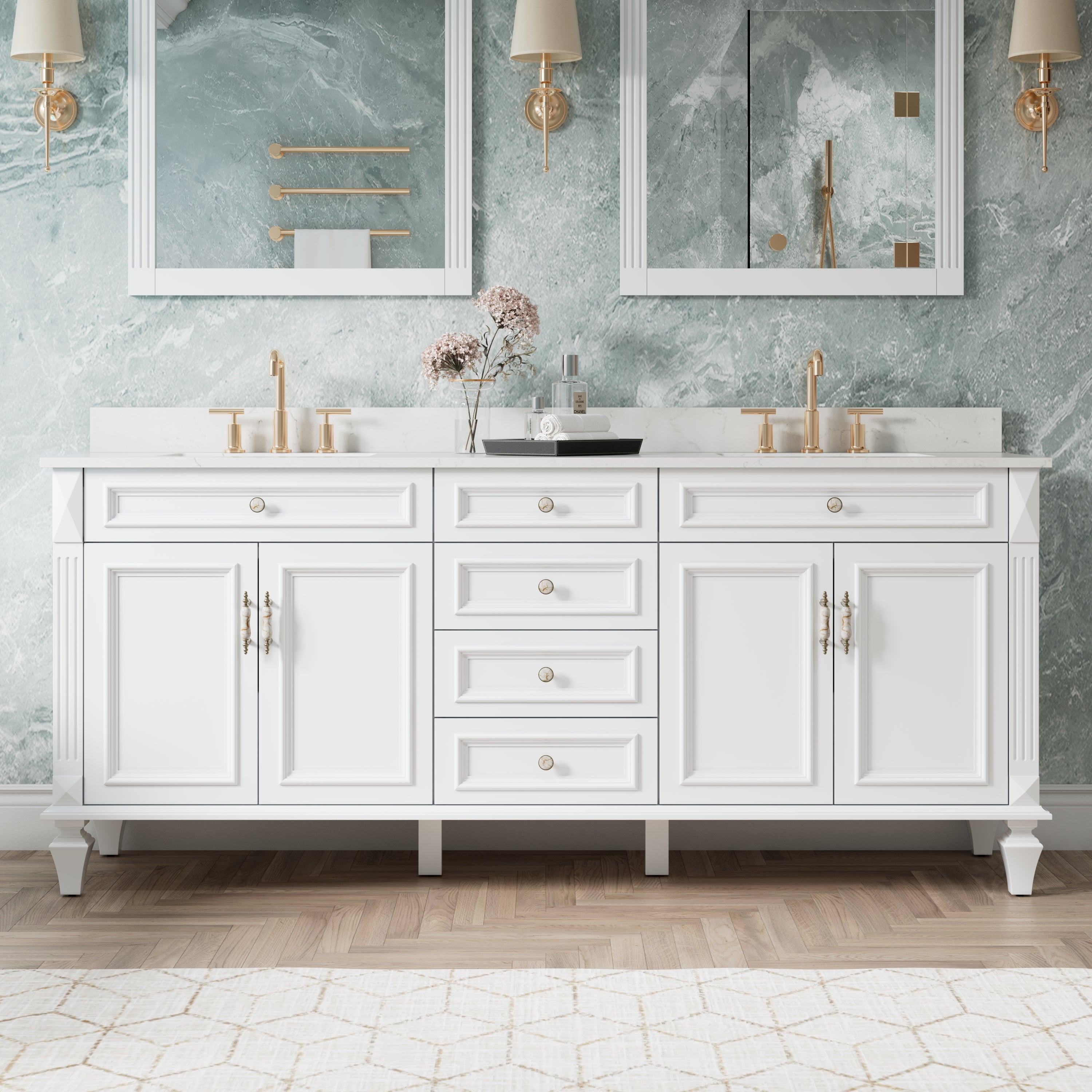
The main advantages are durability, repairability, visual warmth, and long-term style flexibility. Solid wood works with quartz, marble-look countertops, ceramic sinks, and a wide range of hardware finishes. Natural tones suit organic modern bathrooms, while painted solid wood can work in transitional or classic spaces.
It is also an excellent choice for primary bathrooms and busy family baths where the cabinet must handle daily pressure. In a guest bathroom, it can raise the perceived quality of the room without requiring elaborate tile or expensive decorative features.
There are limitations.
Solid wood can expand and contract as humidity changes. If the bathroom has weak ventilation, repeated standing water, or hidden plumbing leaks, the vanity may warp or develop finish damage. Heavier construction can also make installation more difficult. The cabinet may require additional help to move, level, or secure.
When another material may be more practical
A solid wood vanity may not be necessary in a rarely used powder room where storage demands are low. It may also be a poor investment if buying it forces the homeowner to compromise on proper ventilation, plumbing repairs, or countertop quality.
In a bathroom with chronic moisture problems, fix the room first. No premium cabinet should be expected to compensate for a leaking supply line or an exhaust fan that does not clear steam.
4. What to Check Before Buying
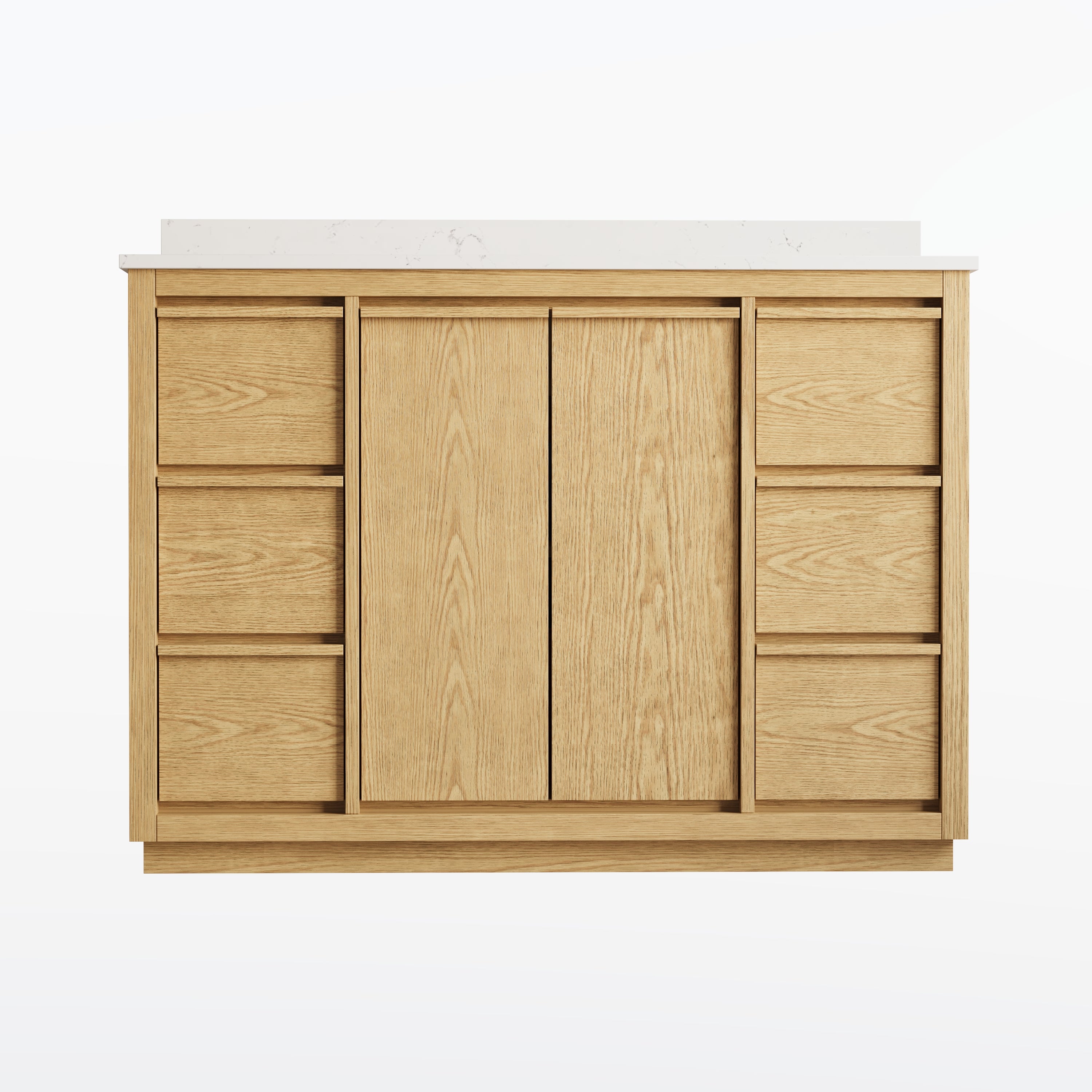
Begin with the cabinet structure. Look for clean joints, sturdy drawer boxes, strong hinges, and full-extension slides. Open and close every moving part when shopping in person. A well-built vanity should feel controlled, not shaky or unusually light.
Inspect the finish around corners, door edges, sink openings, and the base. These areas receive the most moisture and contact. A smooth, complete coating is more valuable than an attractive stain applied unevenly.
Storage layout matters just as much as the wood species. Deep drawers are useful for grooming tools and daily products. Cabinet space under the sink works better for taller bottles and cleaning supplies. Decorative drawer fronts should not be mistaken for usable storage.
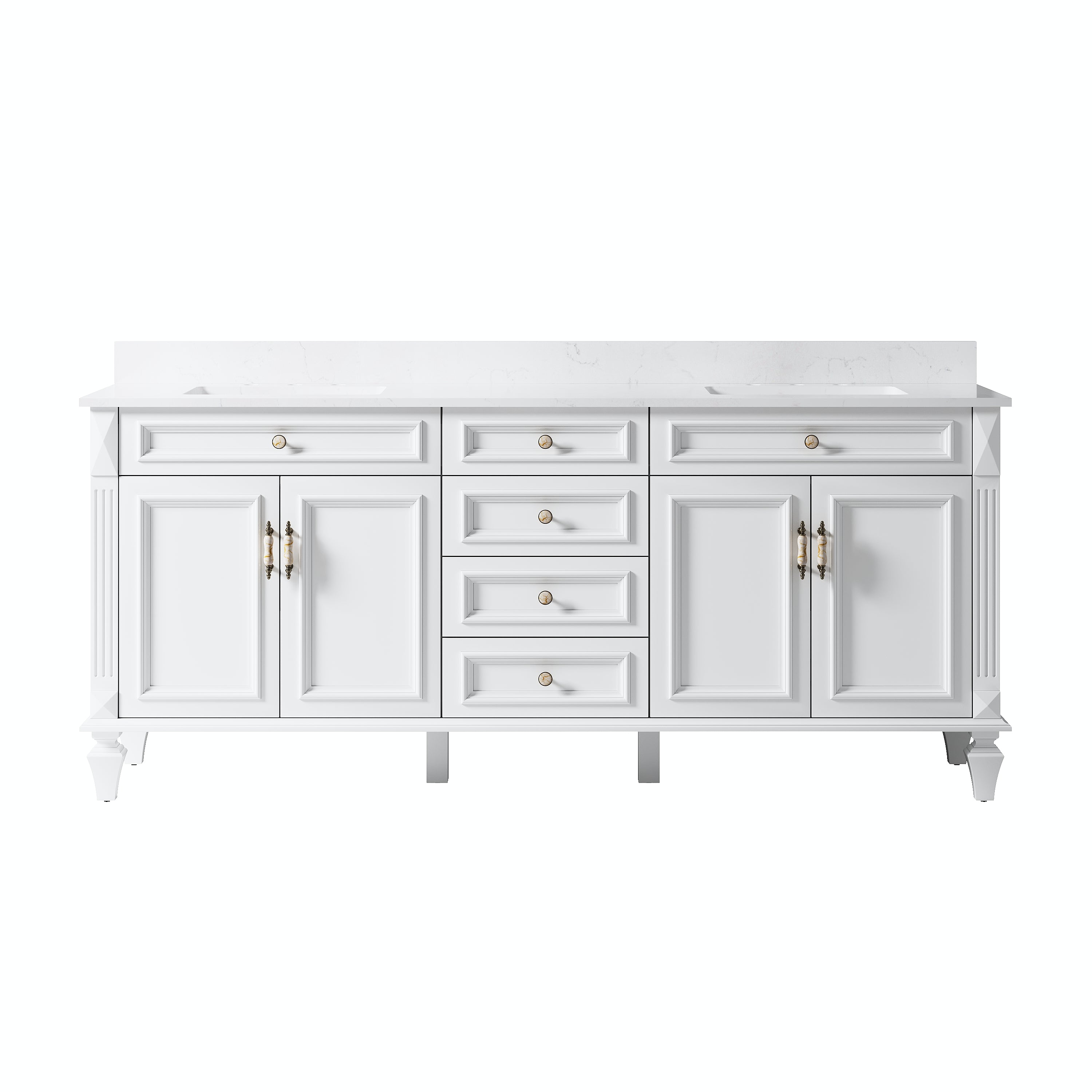
For homeowners comparing Wellfor vanities, I recommend reviewing interior dimensions, countertop compatibility, hardware, and moisture protection before choosing a finish. The most beautiful cabinet is not always the most practical one.

5. Installation and Maintenance Protect the Investment
Installation determines how well the vanity performs. The cabinet must sit level so doors and drawers remain aligned. It should be secured correctly, and the countertop, sink, and backsplash need clean seals that prevent water from reaching exposed wood.
Plumbing connections deserve a careful inspection before the cabinet is filled. Slow leaks often cause more damage than visible splashes because they remain hidden for months.
Maintenance should remain simple. Wipe standing water near the faucet and sink rim. Use a soft cloth with a mild, non-abrasive cleaner. Avoid leaving wet towels against drawer fronts, and run the exhaust fan after showers until the room clears.
Check the cabinet interior occasionally for dampness, staining, or plumbing problems. Early attention is inexpensive. Delayed repairs are not.
A solid wood vanity is the best long-term investment when it is purchased for the bathroom’s real demands rather than for the material label alone. Choose strong construction, useful storage, a durable finish, and proportions that fit the room comfortably. Install it carefully and control moisture from the beginning. With those decisions in place, a solid wood vanity can remain functional, repairable, and visually relevant through years of daily use.















Leave a comment
This site is protected by hCaptcha and the hCaptcha Privacy Policy and Terms of Service apply.