






















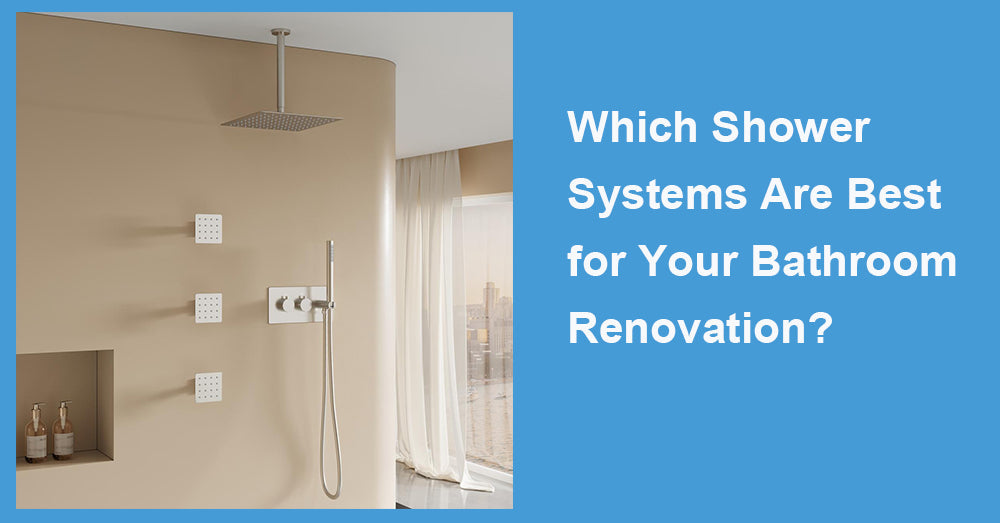
The best shower systems for a renovation are not the ones with the longest feature list. They are the ones that match your plumbing reality, deliver stable temperature, provide the outlet options you will actually use, and stay reliable for years. A smart selection starts with the “behind the wall” decisions first, then the visible trims, showerheads, and accessories. If you choose the right valve strategy and outlet layout upfront, the shower will feel consistently comfortable instead of unpredictable or underpowered.
1. Start With the Non-Negotiable Rule: Flow Limits Shape Every “Best” Choice
Before comparing rain heads and body sprays, understand the baseline limit that most showers must work within. Federal standards state that the maximum water use allowed for showerheads is 2.5 gallons per minute at 80 psi (Source: eCFR, 10 CFR 430.32). That means most performance improvements come from better spray engineering, better distribution, and better temperature control, not unlimited flow.
If you want higher efficiency without sacrificing comfort, WaterSense-labeled showerheads must use no more than 2.0 gpm, and the EPA notes they are designed to provide a satisfactory shower that is equal to or better than conventional showerheads (Source: US EPA WaterSense, Showerheads).
A practical savings reference: an ICC technical article explains that WaterSense’s 2.0 gpm maximum is a 20 percent reduction versus the 2.5 gpm federal standard, and cites potential savings of more than 1,200 gallons per showerhead per year, plus about 370 kWh annually in associated energy terms (Source: ICC Building Safety Journal).
2. The Most Important “System” Choice Is the Valve Type
If your renovation budget only allows one performance upgrade, make it the valve. Temperature swings are one of the biggest shower frustrations, especially when other fixtures run. ASSE 1016 covers automatic compensating shower valves that, when supply pressure or temperature changes, are designed to reduce the risk of scalding and thermal shock (Source: ASSE 1016-2017 PDF). ASSE also explains that automatic compensating valves are used to reduce scalding and thermal shock risk, and describes pressure-balancing, thermostatic, and combination types (Source: ASSE guidance PDF).
Practical selection guidance:
· Choose pressure balancing when you want stable, reliable temperature control with straightforward installation and cost.
· Choose thermostatic when you want a more “set it and forget it” feel, especially for multi-outlet showers or long soaks where temperature stability matters more.
· Choose combination types when you want both pressure and temperature compensation for higher comfort in busier households (Source: ASSE guidance PDF).
3. The “Best” Shower System Depends on Your Renovation Scenario
Instead of one universal answer, use these three renovation-driven categories.
A. Best for a compact bathroom renovation: single outlet valve plus high-quality showerhead
If the shower is small and you want reliability, a single-outlet system with a strong pressure-balancing valve and a well-designed fixed showerhead is often the best choice. It minimizes plumbing complexity, reduces failure points, and still delivers a noticeable comfort upgrade.
To maintain high efficiency, choose a WaterSense-labeled 2.0 gpm showerhead that still meets performance criteria (Source: US EPA WaterSense, Showerheads). This is the best fit when you want predictable performance, minimal wall clutter, and the simplest long-term maintenance.
B. Best for everyday flexibility: dual outlet system with a diverter, showerhead, plus hand shower
For most renovations, the best “value per daily use” system is a standard showerhead and a hand shower, controlled by either a diverter or a two-outlet valve. The hand shower improves rinsing, cleaning the enclosure, bathing kids or pets, and accessibility routines, while keeping the wall layout relatively clean.
Key success factors:
· Confirm whether your system allows one outlet at a time or simultaneous flow.
· Choose a diverter and trim that are serviceable with replaceable cartridges.
· Prioritize smooth operation and durable seals, because the diverter is a high-cycle component.
This setup often feels more useful than adding body sprays, because it solves more real routines while keeping plumbing demands reasonable.
C. Best for a “spa” renovation: thermostatic control plus multi-outlet distribution
If you are designing a premium shower, multi-outlet systems can be excellent, but only when plumbing and controls are planned correctly. A thermostatic or compensating valve strategy is especially important here because users notice instability more when multiple outlets are involved (Source: ASSE 1016-2017 PDF).
A practical layout that often performs well:
· Rain head or large overhead head for coverage.
· Hand shower for targeting and cleaning.
· Optional body sprays only if your supply pressure and pipe sizing can support them without the shower feeling weak.
Remember the federal 2.5 gpm showerhead limit at 80 psi (Source: eCFR, 10 CFR 430.32). Multi-outlet comfort usually comes from distribution and control logic, not breaking flow limits.
4. When Digital Shower Systems Are “Best.”
Digital controls are a strong option when you want cleaner walls, presets, and better outlet management. They can be especially useful in larger showers where the control location is far from the entry, or when multiple users want repeatable settings.
Kohler’s Anthem digital control lists nine user-definable presets and notes that it can control up to six shower outlets (Source: Kohler Anthem Digital Control product page). Kohler’s Anthem Plus page describes controlling temperature and flow on up to 12 water and steam outlets (Source: Kohler Anthem Plus product page).
Digital is “best” when:
· You want multi-outlet complexity without multiple trim handles.
· You value presets for consistent daily routines.
· You want a more minimalist wall aesthetic.
Digital is not ideal when:
· You want the simplest possible long-term servicing.
· You do not have easy power planning in the wall.
· Your renovation timeline does not allow careful rough-in coordination.
5. A Renovation Decision Framework That Prevents Regret
Use this sequence to pick the right system.
1. Decide your outlet goals. Single-outlet, dual-outlet, or multi-outlet spa.
2. Choose the valve strategy first. Pressure balancing or thermostatic compensating behavior aligned with scald and thermal shock reduction principles (Source: ASSE 1016-2017 PDF).
3. Respect flow rules. 2.5 gpm at 80 psi maximum for showerheads, with WaterSense at 2.0 gpm for high efficiency (Sources: eCFR, EPA WaterSense).
4. Check your water pressure and plumbing capacity. Multiple outlets require more careful planning to avoid weak performance.
5. Choose the visible components last. Showerhead style, trim finish, hand shower, and accessories.
If efficiency is a goal, use the ICC savings reference as a practical benchmark for what high efficiency can mean over time, and remember that performance criteria exist, not just flow restriction (Source: ICC; EPA WaterSense).
6. Quick Recommendations by Renovation Type
· Hall bath refresh. Pressure balancing valve plus a high-quality WaterSense showerhead. Add a hand shower only if you will use it weekly. (Source: EPA WaterSense).
· Primary bath renovation. Thermostatic or advanced compensating valve strategy, overhead plus hand shower, optional body sprays only with confirmed supply capacity. (Source: ASSE 1016).
· High-end spa build. Digital controls for cleaner walls and presets; multi-outlet configuration only when the rough-in is carefully planned. Kohler Anthem systems are an example of this approach with presets and multi-outlet control. (Source: Kohler).

Conclusion
The best shower system for your renovation is the one that delivers stable temperature, matches your outlet needs, and performs well within real flow limits. Start with the fundamentals of valves and safety, because compensating valves are designed to reduce scalding and thermal shock risk when supply conditions change (Source: ASSE 1016-2017). Then choose your showerhead and outlet layout with realistic expectations, remembering the 2.5 gpm at 80 psi limit and the WaterSense 2.0 gpm efficiency benchmark with performance criteria (Sources: eCFR; EPA WaterSense). If you want advanced control and a cleaner wall aesthetic, digital systems like Kohler Anthem offer preset options and multi-outlet capability (Source: Kohler).









































Leave a comment
This site is protected by hCaptcha and the hCaptcha Privacy Policy and Terms of Service apply.