


















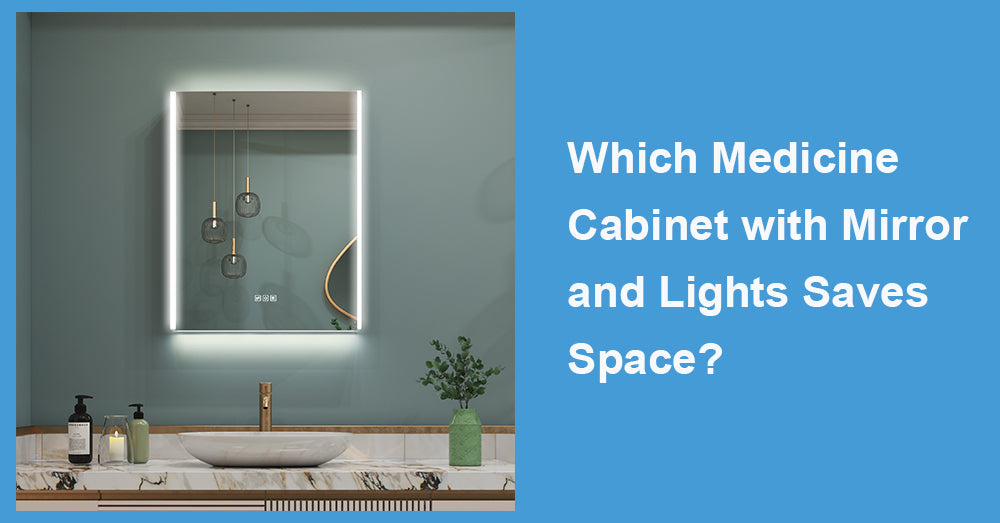
In the trend of increasingly refined bathroom space planning, medicine cabinet with mirror and lights functions have become a key category for improving storage efficiency and visual experience. Compared to the traditional combination of mirrors and shelves, this type of product integrates the mirror surface, storage, and lighting into a single structure, making more efficient use of limited wall space. Given the numerous products with continually refined sizes, structures, door-opening methods, and lighting systems, which designs use the least space? Data from industry supply chains and home decoration platforms are providing increasingly clear direction.
1. Cabinets with wall-mounted depth reduced to less than 5 inches have more advantages
For most bathrooms, the wall-mounted structure is not always suitable for embedded installation. Hence, the depth of the wall-mounted medicine cabinet becomes an essential factor affecting the occupied space. Industry statistics show that the products with the highest consumer attention in recent times have mainly concentrated in the 4-5 inch range for cabinet external depth. In contrast, the bounce rate for cabinets exceeding 6 inches has significantly increased (source: Houzz.com).
The reduction in depth does not necessarily mean a decrease in storage capacity. Some brands have adjusted the thickness of internal shelves, added adjustable brackets, and optimized hinge positions to ensure that the 4.5-inch-deep cabinet still meets the vertical placement needs of commonly used care products. This design is more evident in enhancing the bathroom activity space, especially in narrow layouts or when installed near bathroom doors.
2. Embedded structure remains the 'ceiling' for space saving
If the bathroom wall allows for a slot or has originally reserved space, an embedded medicine cabinet with lights is considered the most effective space-saving solution. Industry data shows that products with a width of 20-30 inches and an embedding depth of approximately 3.5-4 inches have the highest overall space utilization efficiency (source: Build.com).
The advantages of embedded design are:
Almost no external space is occupied, allowing the washing area to have a larger range of activities.
The visual effect is more concise, making the mirror almost flush with the wall.
More suitable for combination with dual washbasins and narrow basins to avoid obstruction caused by protruding cabinets.
However, these products have high requirements for wall structure, and some old-fashioned buildings or concrete walls cannot be adapted. Therefore, feasibility needs to be confirmed in advance when purchasing.
3. Side flip doors are more suitable for small spaces than swing doors
The opening method is a detail often overlooked in medicine cabinets, but it is closely related to space utilization.
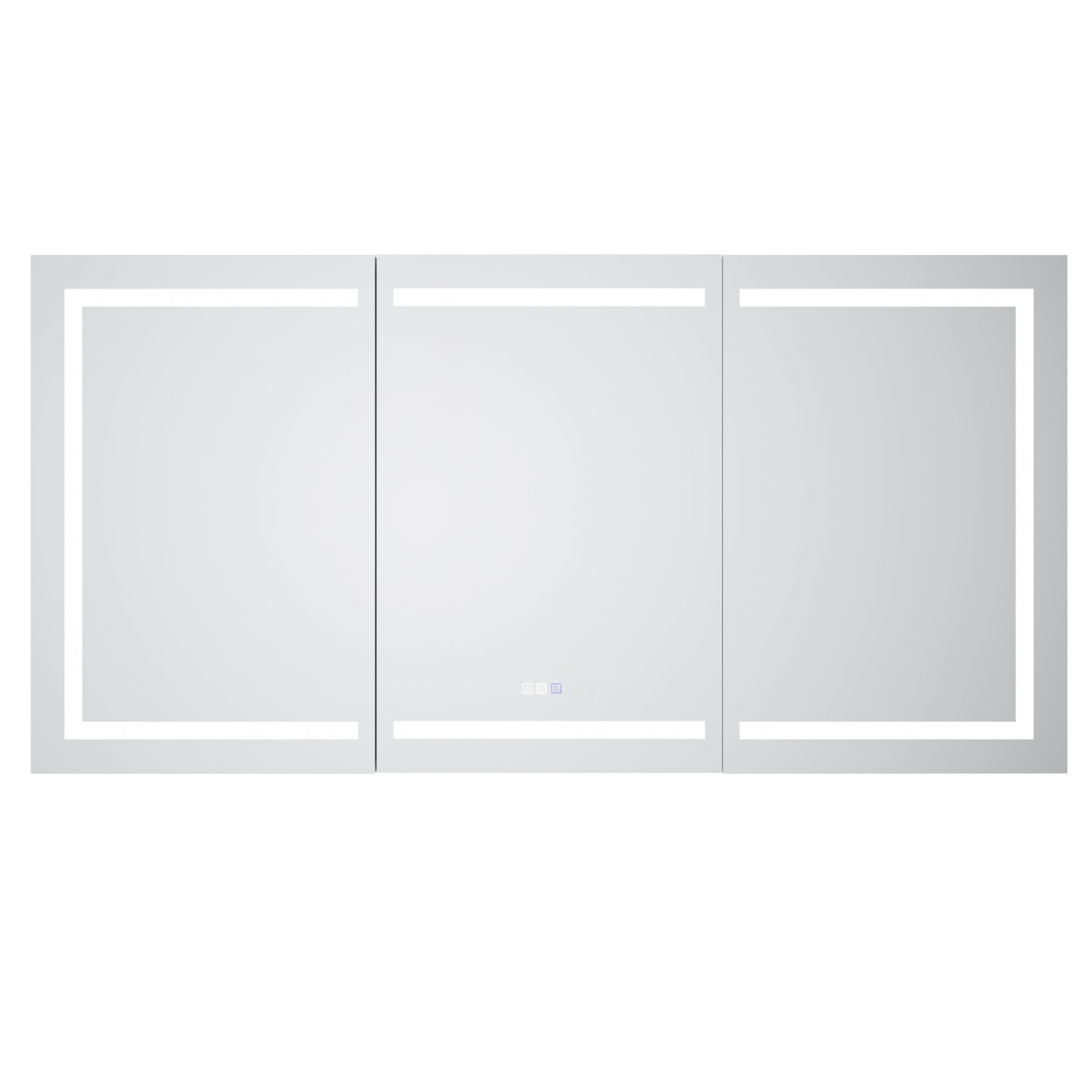
At present, there are three mainstream types: flip doors (single doors), double doors, and triple folding mirror doors.
According to user feedback on the comprehensive home decoration platform, flip doors offer greater spatial advantages in small units (source: Wayfair.com). The reasons include:
The single door opening and closing requires less space for movement and is more suitable for pairing with wall-mounted washbasins.
The single door can be designed with a width of 20-24 inches to meet the viewing requirements of daily dressing areas.
In narrow aisle bathrooms, avoid opening the door and colliding with the shower or toilet.
Although the three-fold mirror design has obvious advantages in multi-angle photography, it is more suitable for broad washbasin areas above 48 inches; otherwise, it will appear visually crowded.
4. The integration method of lighting affects the appearance, thickness, and user experience
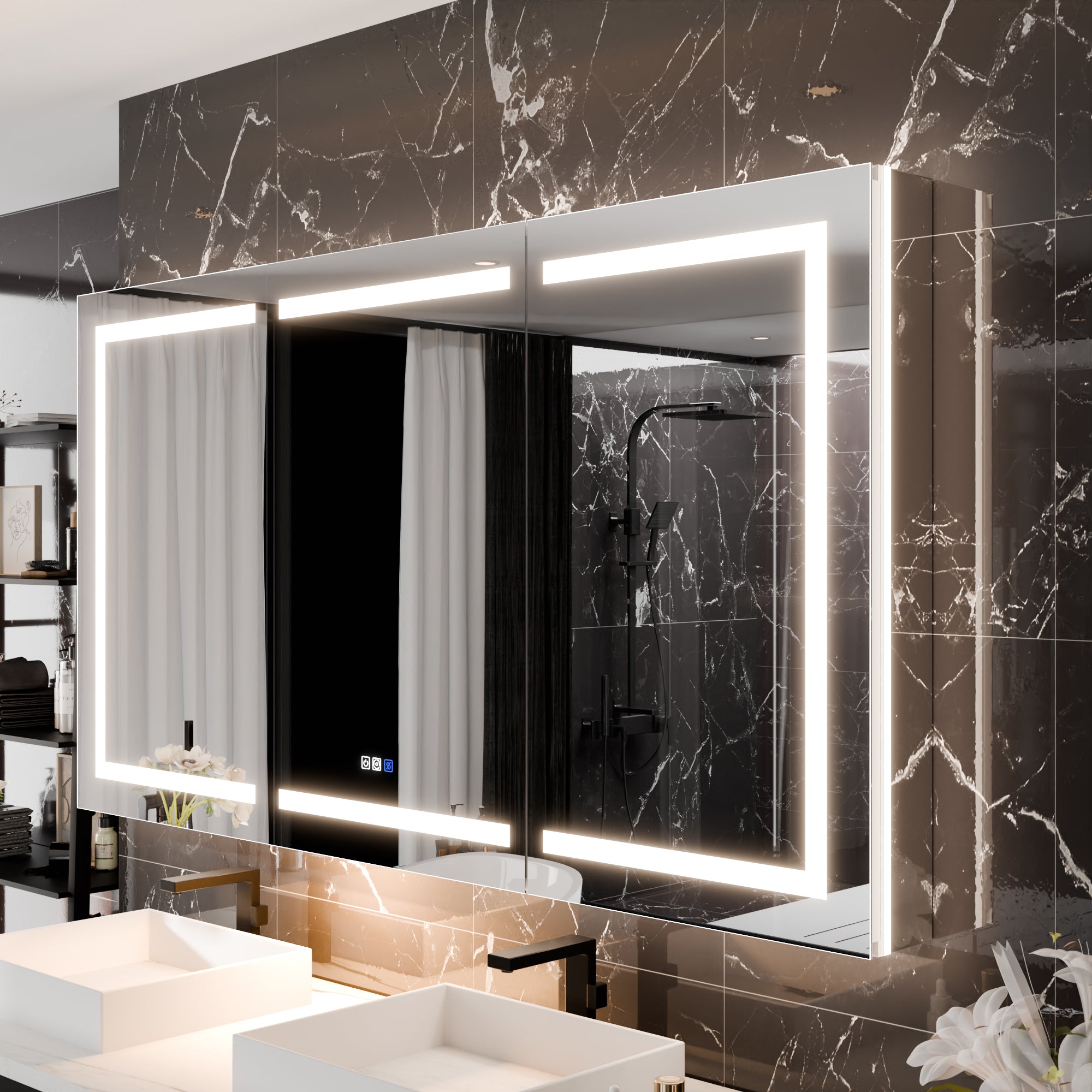
Mirror cabinets with lights typically use three lighting methods: a mirror-front light source, side illumination of the mirror frame, and a cabinet-top light strip.
If space-saving is the guiding principle, a thin front light source is preferred. The latest products generally use built-in LED technology to control the thickness of the mirror body to around 1.5 inches. With the cabinet depth, the overall thickness remains within a reasonable range.
Some models place the light strip in the inner layer of the mirror to soften and diffuse the light, without adding additional protruding lampshade structures, further reducing visual occupation. According to data from lighting-related platforms, the usage rate of ultra-thin LED front lights has increased by approximately 38% in the past three years (source: Lightingfacts.com).
5. The most space-saving typical size combination: 24 × 30 inch and 30 × 36 inch
From the perspective of market heat and practicality, the dimensions with the highest space utilization are concentrated in two ranges:
24 × 30 inch
Suitable for most single washbasin configurations
Can be embedded or ultra-thin wall-mounted
Low demand for the door panel opening and closing space
The storage capacity can accommodate basic care items for each person's daily use
30 × 36 inch
More suitable for a layout with a slightly wider basin
Combining double-layer adjustable shelves can significantly enhance vertical storage capacity
A larger mirror surface enhances visual magnification and weakens the presence of the cabinet
These two sizes rank among the top in terms of sales and views across numerous platforms (source: HomeDepot.com), indicating they have achieved a good balance of functionality, appearance, and space utilization.
6. The design of buffer hinges and hidden side lights has become a new trend
With improvements in product technology, some structural details are also making medicine cabinets even more "space-saving" and user-friendly. For example:
Buffer hinges make the opening angle of single- or double-doors more controllable, reducing the risk of sudden collisions in small spaces.
Hidden side lights embed the light strip inside the frame, keeping the side of the mirror cabinet simple without adding extra thickness.
Multi-layer adjustable shelves help optimize vertical space and reduce wasted height.
These designs do not directly reduce the size, but effectively reduce the spatial burden during use, allowing the product to operate smoothly in small bathrooms.

7. Summary: Which one saves the most space? It depends on three points
Overall, the most space-saving medicine cabinet with a mirror and lights typically has the following characteristics:
Prioritize embedded systems, followed by ultra-thin wall-mounted designs with a depth of ≤ 5 inches.
A single-door flip structure is more suitable for narrow spaces than a multi-door one.
Thin lighting systems with front-facing light sources save more volume than externally protruding lamps.
In terms of size, 24 × 30 inches and 30 × 36 inches are the two most balanced options, suitable for different-sized washing areas.
In the future product trends, optimizing materials and lighting technology to make cabinets thinner, lighter, and easier to install will further enhance the spatial advantages of such products.


































Leave a comment
This site is protected by hCaptcha and the hCaptcha Privacy Policy and Terms of Service apply.