




















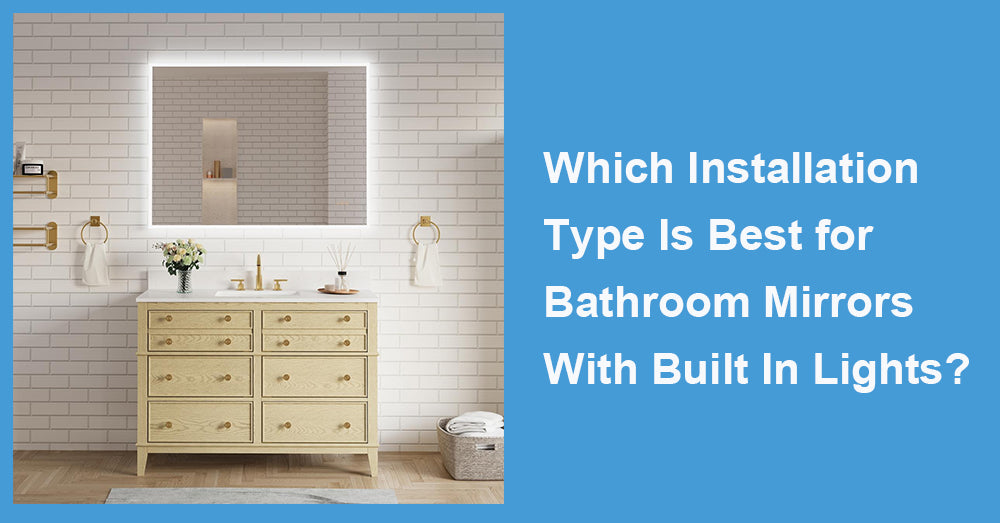
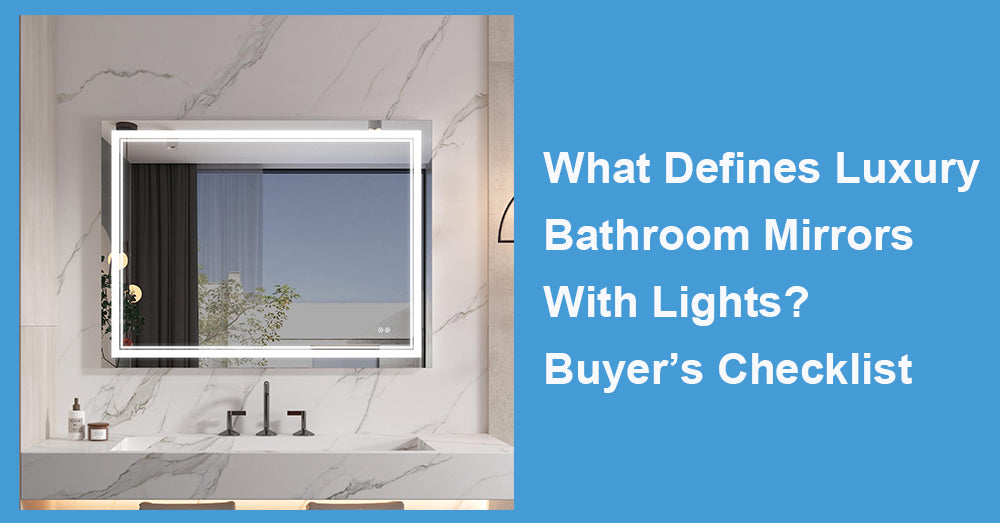
Bathroom remodelers across the U.S. are seeing bathroom mirrors with built in lights move from “nice upgrade” to a common request, especially as homeowners chase cleaner walls and better task lighting. In the 2024 U.S. Houzz Bathroom Trends Study, LED lighting was the most popular upgraded mirror feature (21%), followed by anti-fog.With demand rising, the big decision is no longer whether to buy a lighted mirror, but which installation type makes sense for the room, the timeline, and the wiring you actually have.
There isn’t one “best” install for everyone. The right choice depends on how much wall work you’re willing to do, how clean you want the final look, and whether you’re renovating the whole bathroom or just swapping a mirror. Here’s what the industry typically breaks down into four main installation types—and how to choose in plain English.
1) Plug-in (corded) wall-mount: fastest, simplest, most retrofit-friendly
What it is: The mirror mounts on the wall and plugs into a nearby receptacle, usually with a cord that can be hidden with a cover or routed behind the mirror when possible.
Why pros like it: It’s the quickest upgrade when the homeowner doesn’t want to open the wall or hire an electrician for hardwiring. It’s also easier to replace later.
Common drawbacks: You need an outlet in the right place, and cord management can ruin the “luxury” look if it’s visible. Also, bathrooms are wet locations compared with other rooms, so the outlet and circuit protection matter. Many electrical safety summaries note that GFCI protection is required in bathrooms, and newer NEC editions expand GFCI requirements in multiple areas.
Best for: Quick upgrades, rentals, light remodels, situations where opening the wall is a no-go.
2) Hardwired surface-mount: clean look, everyday in full remodels
What it is: The mirror mounts on the wall, but power is fed through a junction box behind the unit—no visible cord.
Why pros like it: This is often the “sweet spot” for a premium look without significant framing changes. If you’re already doing electrical work in a remodel, hardwiring a mirror is straightforward planning.
Common drawbacks: It usually requires an electrician and a correctly placed junction box. If the box is off-center, it can force awkward mirror placement—or extra wall repair.
What to check: Look for a recognized safety certification mark (UL/ETL/CSA). OSHA explains that NRTLs are organizations recognized to test and certify products to safety standards and apply certification marks. For bathrooms, you also want the mirror/fixture to be rated appropriately for moisture exposure (often “damp location” for vanity areas).
Best for: Full or mid-level remodels where you want a sleek finish and can plan wiring.
3) “Flush” or recessed backbox installs: thinnest profile, most wall coordination
What it is: The mirror (or its power supply/backbox) is partially recessed into the wall so it sits closer to flush, reducing how far it projects into the room.
Why pros like it: This delivers the most built-in look, especially in small bathrooms where every inch matters.
Common drawbacks: This is where projects can get messy. Recessing anything into a bathroom wall means dealing with studs, blocking, wiring paths, and sometimes plumbing surprises. It’s also harder to service later if the driver or controls fail and access is tight.
Best for: High-end remodels where walls are already open, or where a slimmer profile is worth the added labor.
4) Integrated lighted medicine cabinet (recessed or surface): mirror + storage + lighting
What it is: The mirror is part of a cabinet, often with perimeter lighting, anti-fog, and sometimes outlets inside.
Why pros like it: You get lighting and storage in one product, and many homeowners love the clean countertop payoff. Houzz also reports that many homeowners upgrade mirrors during bathroom renovations, which helps explain why these combination products continue to grow.
Common drawbacks: Recessed medicine cabinets can require framing changes, and larger units often cross studs. Even when it fits, the door swing has to clear faucets and light fixtures. NKBA planning guidance warns that vanity bar fixtures shouldn’t interfere with the safe operation of a medicine cabinet below.
Best for: People who want more storage and are willing to treat the install like a real wall project (not a simple mirror swap).
The safety layer: damp ratings, certifications, and bathroom rules
Lighted mirrors live in humidity. So, beyond “will it look good,” contractors typically check two safety basics:
Moisture suitability (damp vs wet): Many lighting guides describe “damp” areas as places exposed to moisture and condensation (typical vanity zones), while “wet” areas are those with direct water exposure. Most vanities call for damp-location rated equipment, while shower-adjacent zones can require wet-location rated fixtures depending on exposure and local interpretation.
Third-party safety marks: An NRTL certification mark matters because it signals the product has been evaluated to recognized safety standards. OSHA’s NRTL program overview explains how certification marks indicate conformance.
And if your mirror has an outlet, defogger, or hardwired driver, electrical planning becomes part of the installation choice—not an afterthought.
Commercial jobs and accessibility: installation height can determine the product
If you’re working on commercial restrooms (or any ADA-covered project), the “best install type” must also fit the required mounting heights. The U.S. Access Board notes that mirrors above lavatories/countertops must have the bottom of the reflecting surface 40 inches max above the finished floor; mirrors not above lavatories/countertops must be 35 inches max.
This often pushes pros toward installs that allow precise placement (hardwired surface-mount is common) and away from solutions that force the mirror too high due to backsplashes, outlets, or cabinetry conflicts.

Buyer-friendly decision guide: which install type is “best” for you?
Choose plug-in if:
· You want the fastest upgrade with minimal wall work
· You already have a properly located outlet
· You’re okay with planning how the cord will be hidden
Choose hardwired surface-mount if:
· You want a clean look with no cord
· You’re remodeling (or can add a junction box cleanly)
· You want easier servicing than recessed options
Choose a flush/recessed backbox if:
· You care about the slimmest profile
· You’re opening walls anyway
· You’re okay with more coordination and potentially higher labor costs
Choose an integrated lighted medicine cabinet if:
· You want lighting and storage in one product
· You’ve confirmed door clearance and fixture conflicts
· You’re prepared for framing considerations, especially for wider units
Where the market is landing
As more homeowners ask for better lighting and cleaner walls, installers are standardizing around two “safe bets”: plug-in for quick retrofits and hardwired surface-mount for remodels. Recessed/flush installs and large recessed lighted cabinets remain the “premium tier,” but they succeed most often when the project is already set up for wall access and careful planning.
And one last practical tip from the field: whichever method you pick, make sure the mirror’s rating and certification match bathroom use, and plan the wiring path before the mirror arrives. That’s the difference between a one-day upgrade and a week of patching—especially with bathroom mirrors with built-in lights.



































Leave a comment
This site is protected by hCaptcha and the hCaptcha Privacy Policy and Terms of Service apply.