
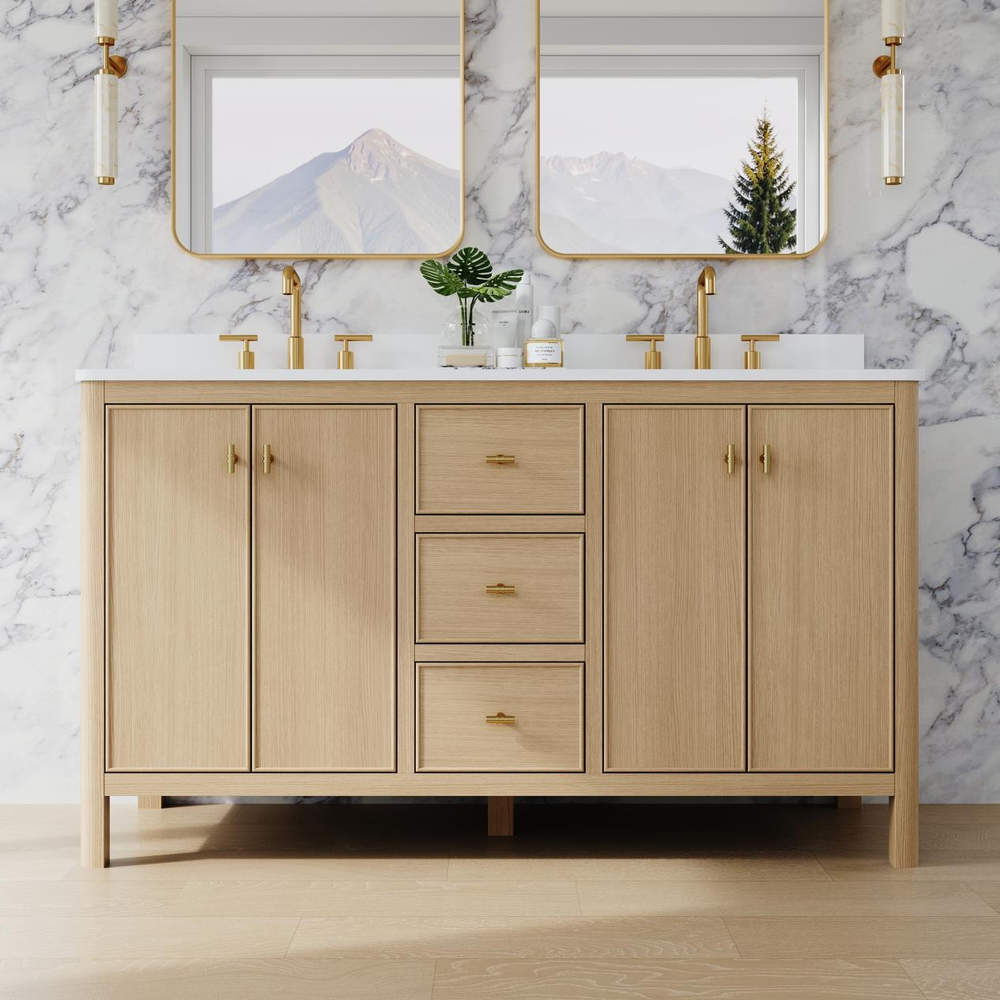
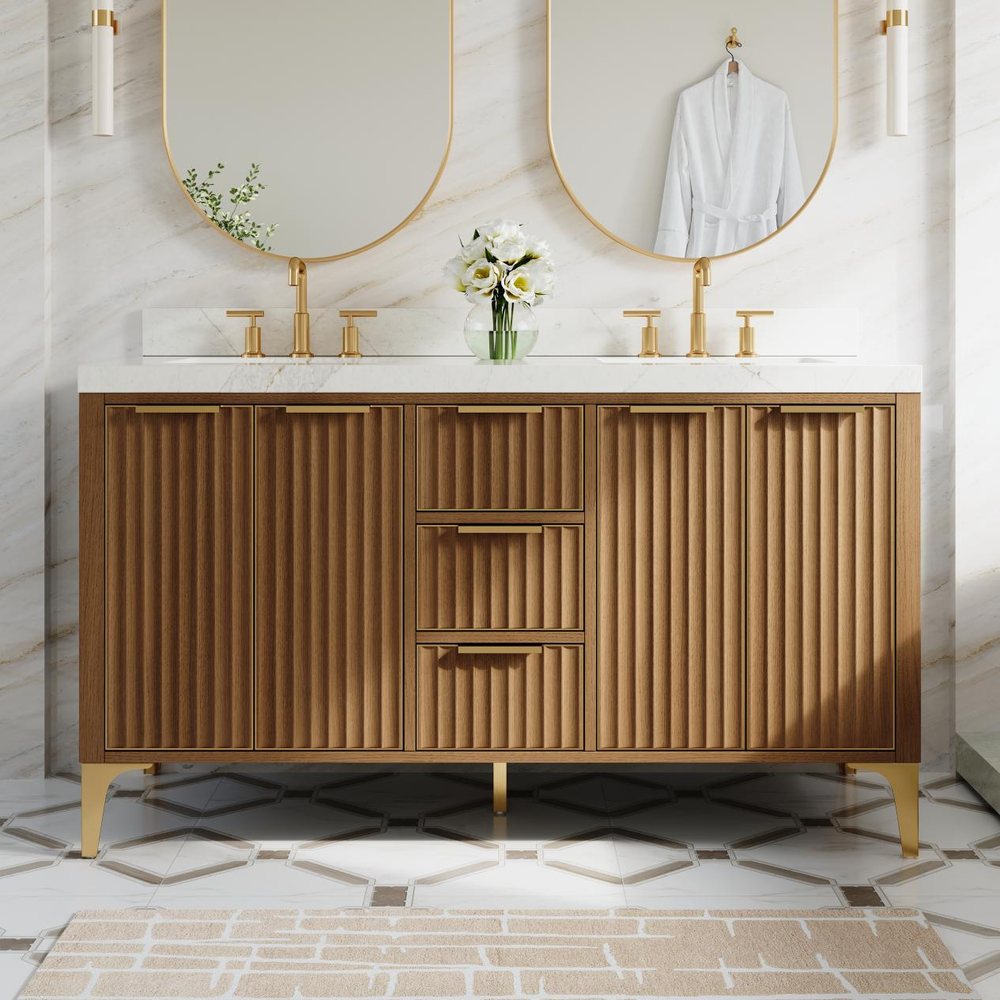
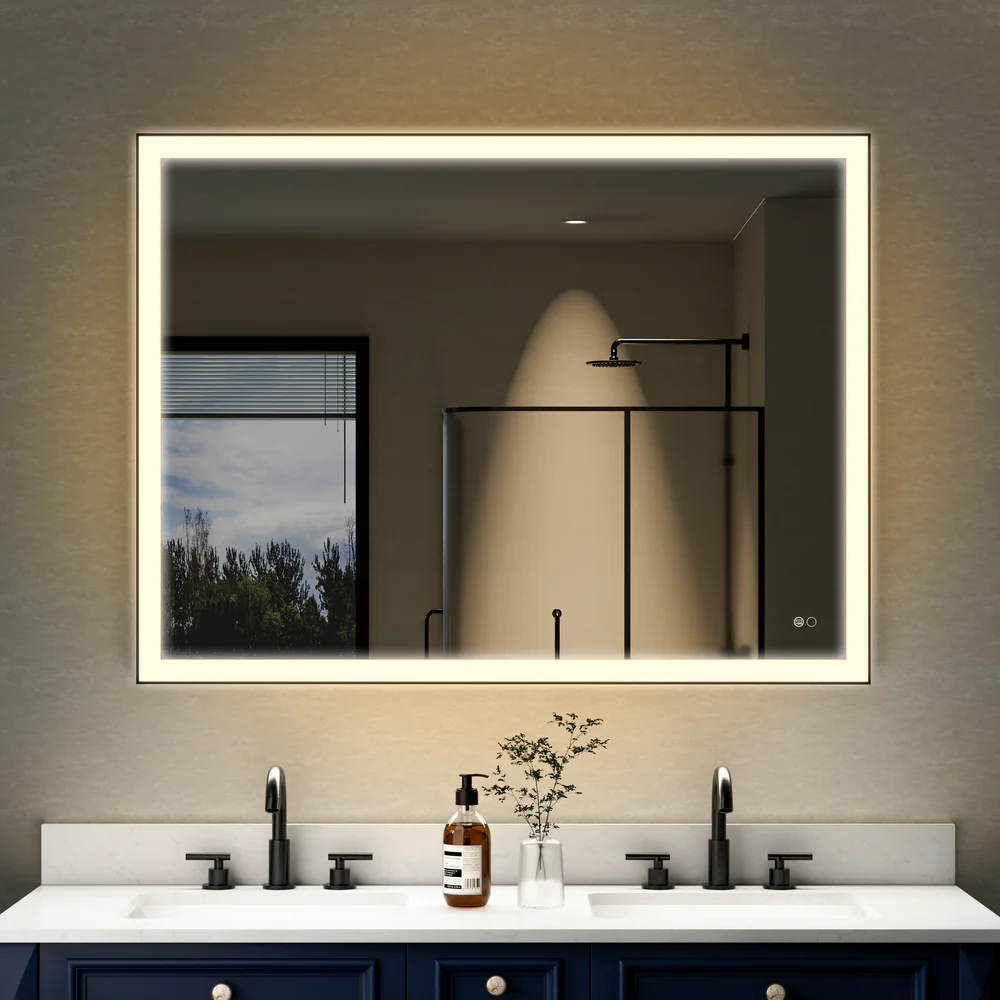
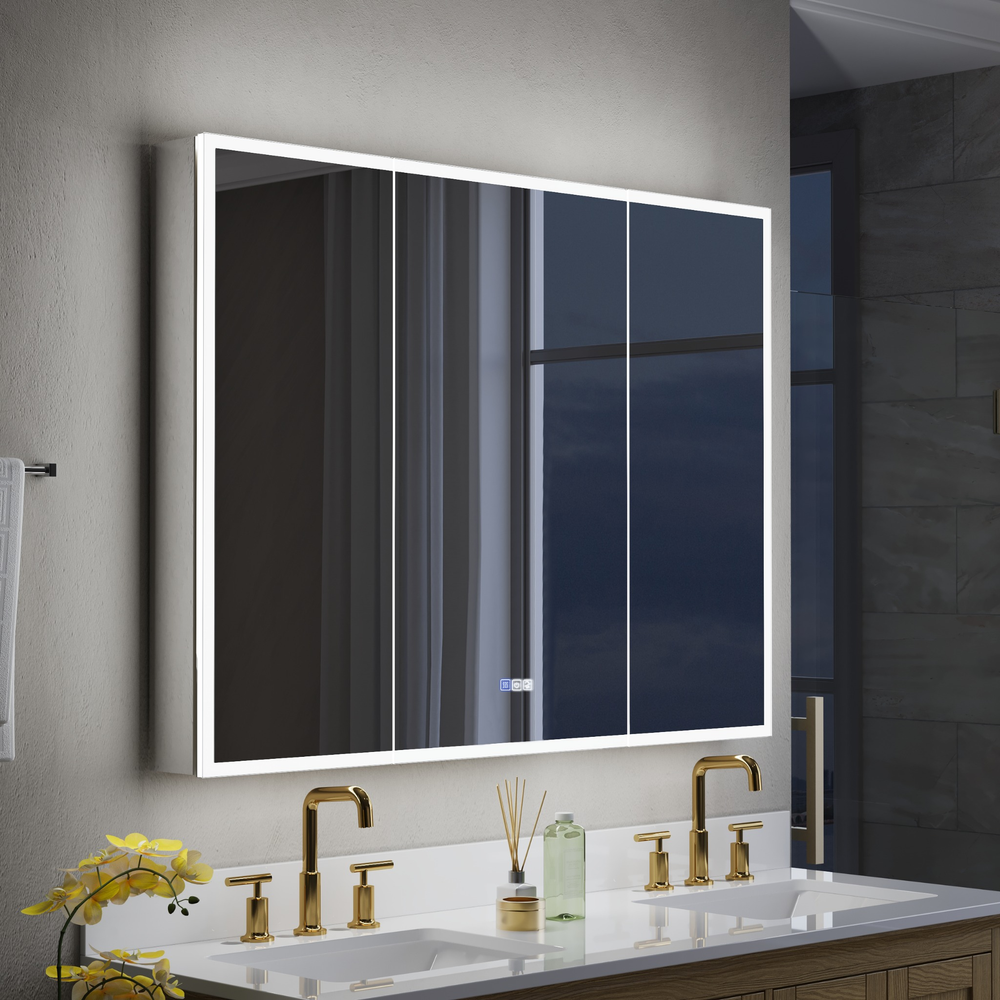
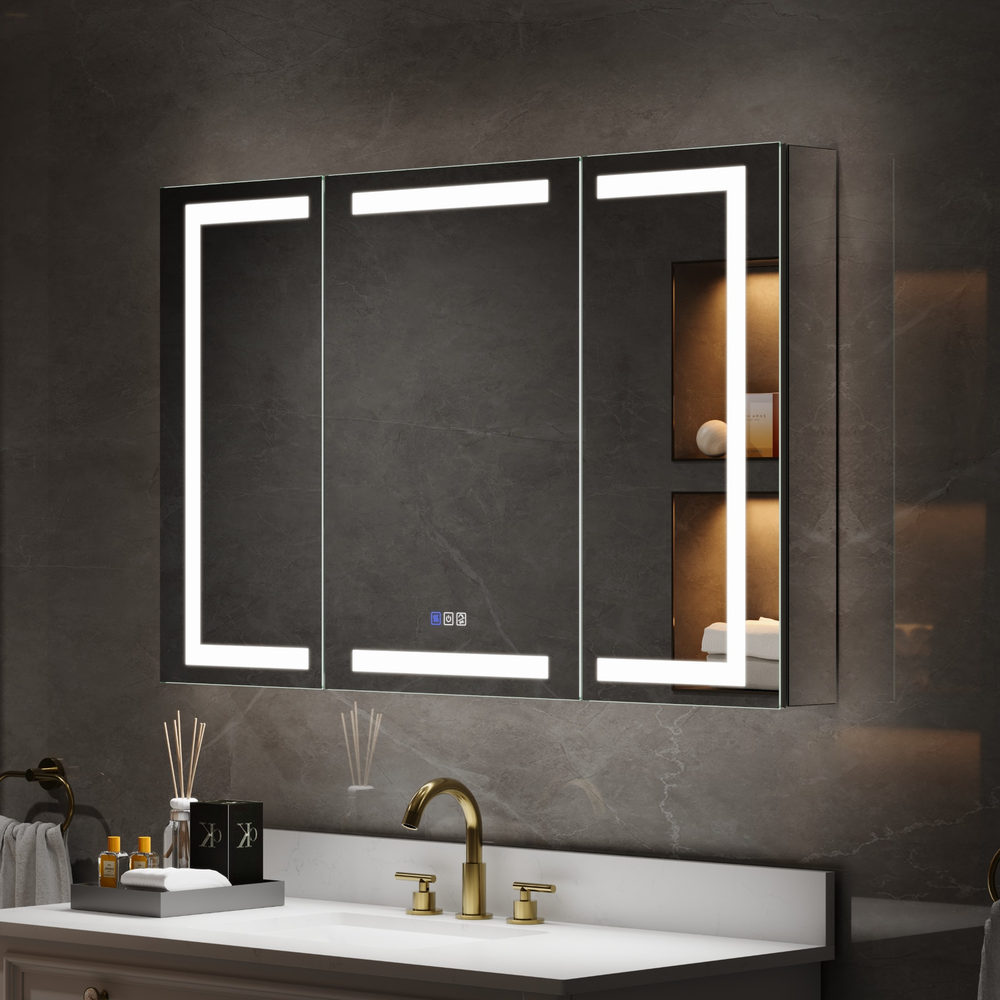

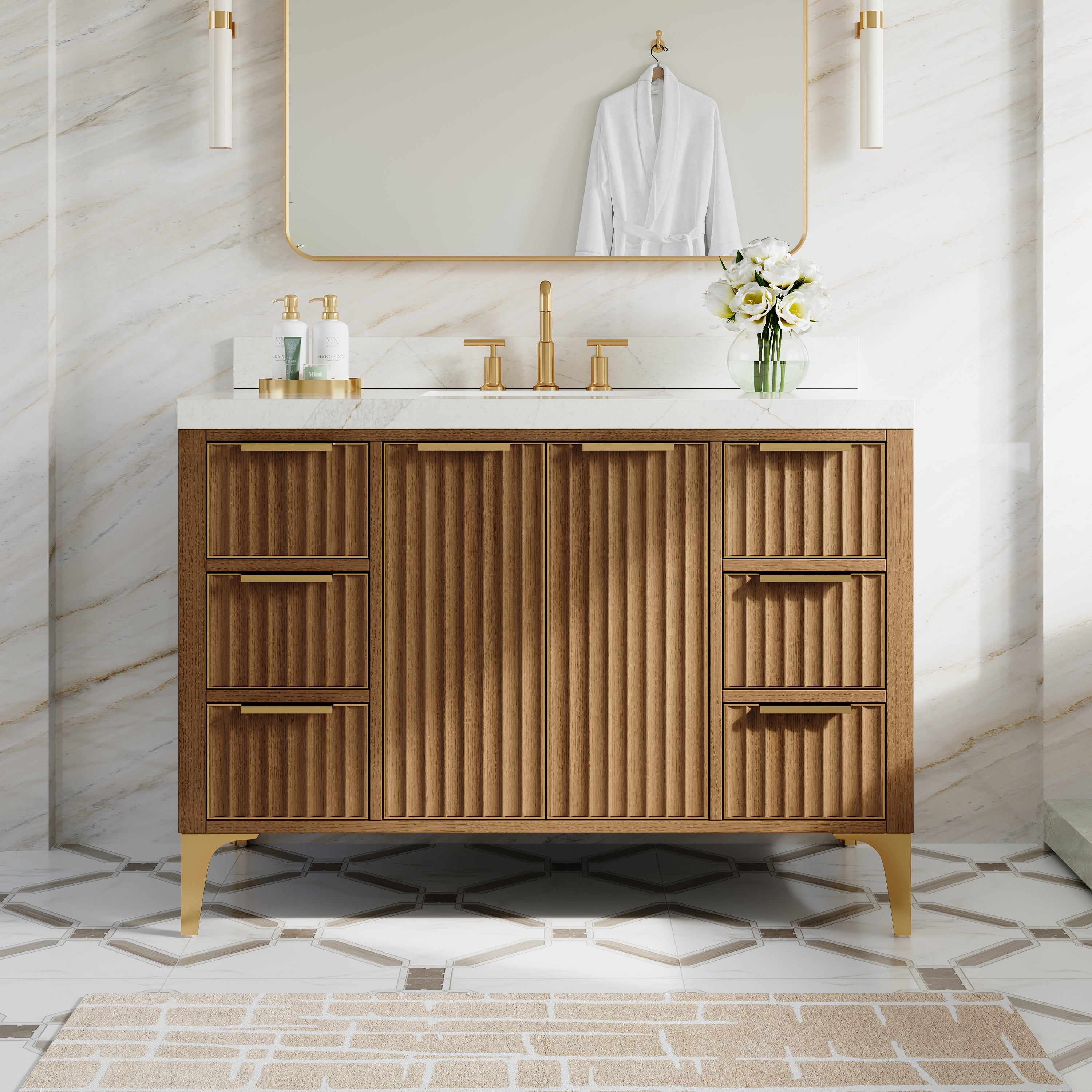
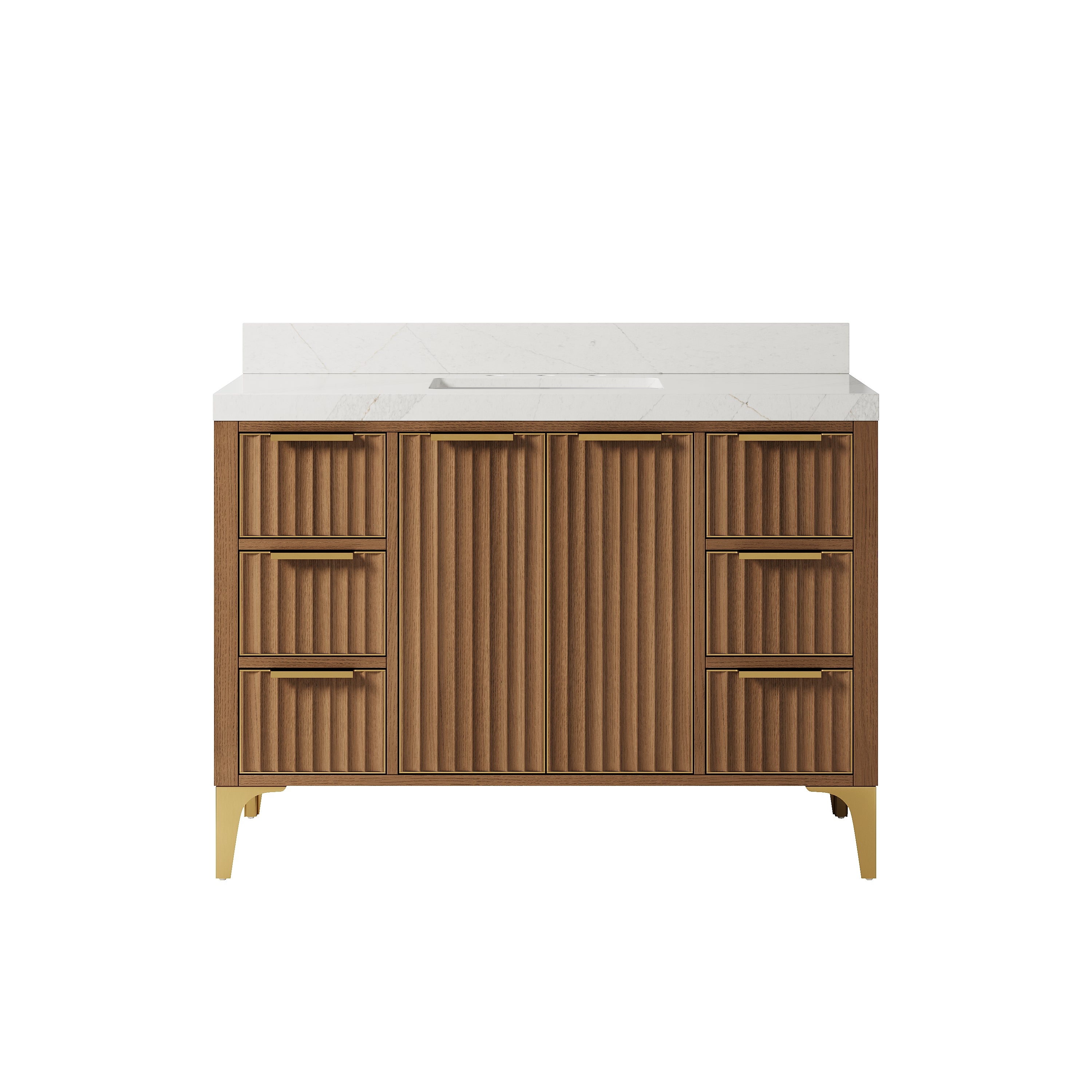
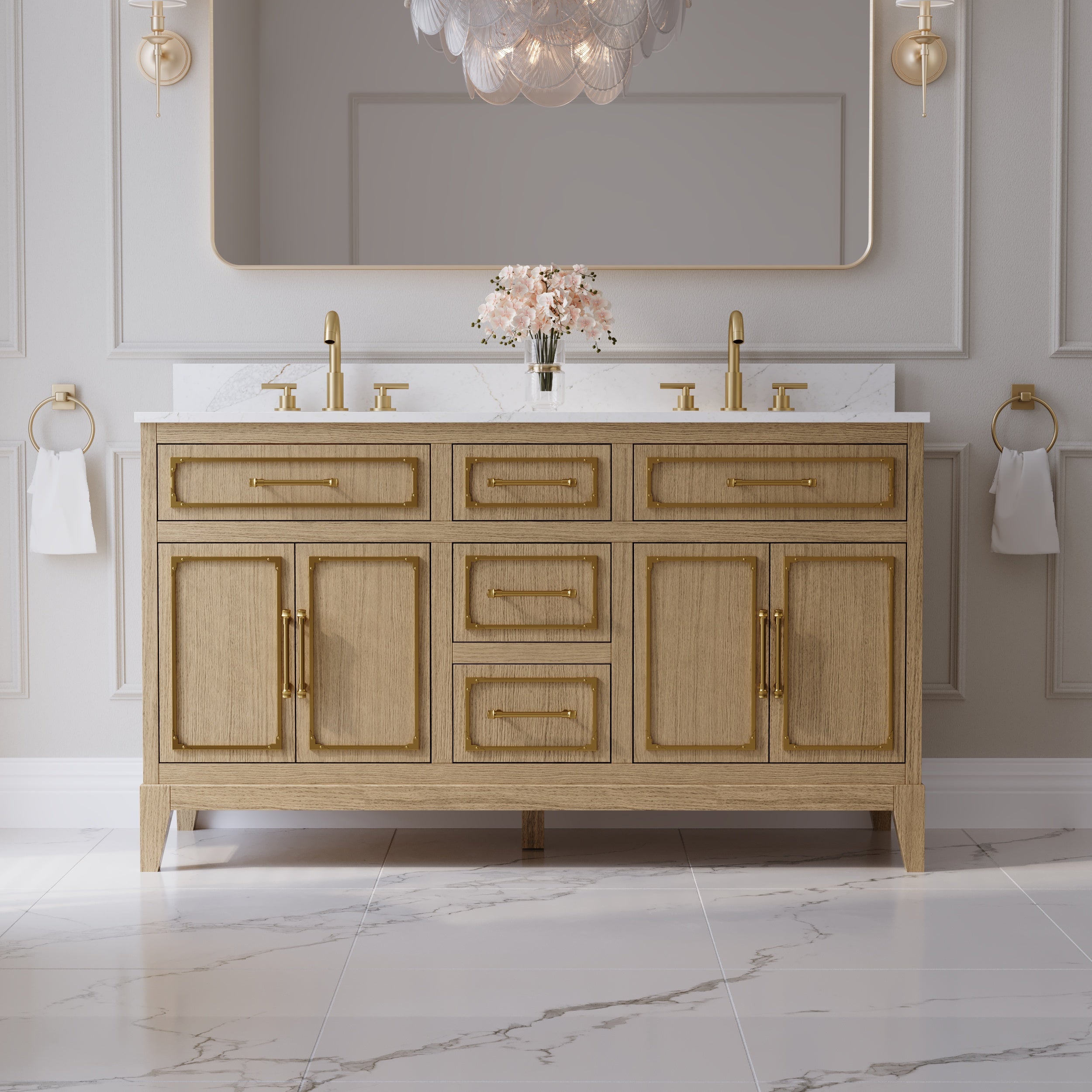
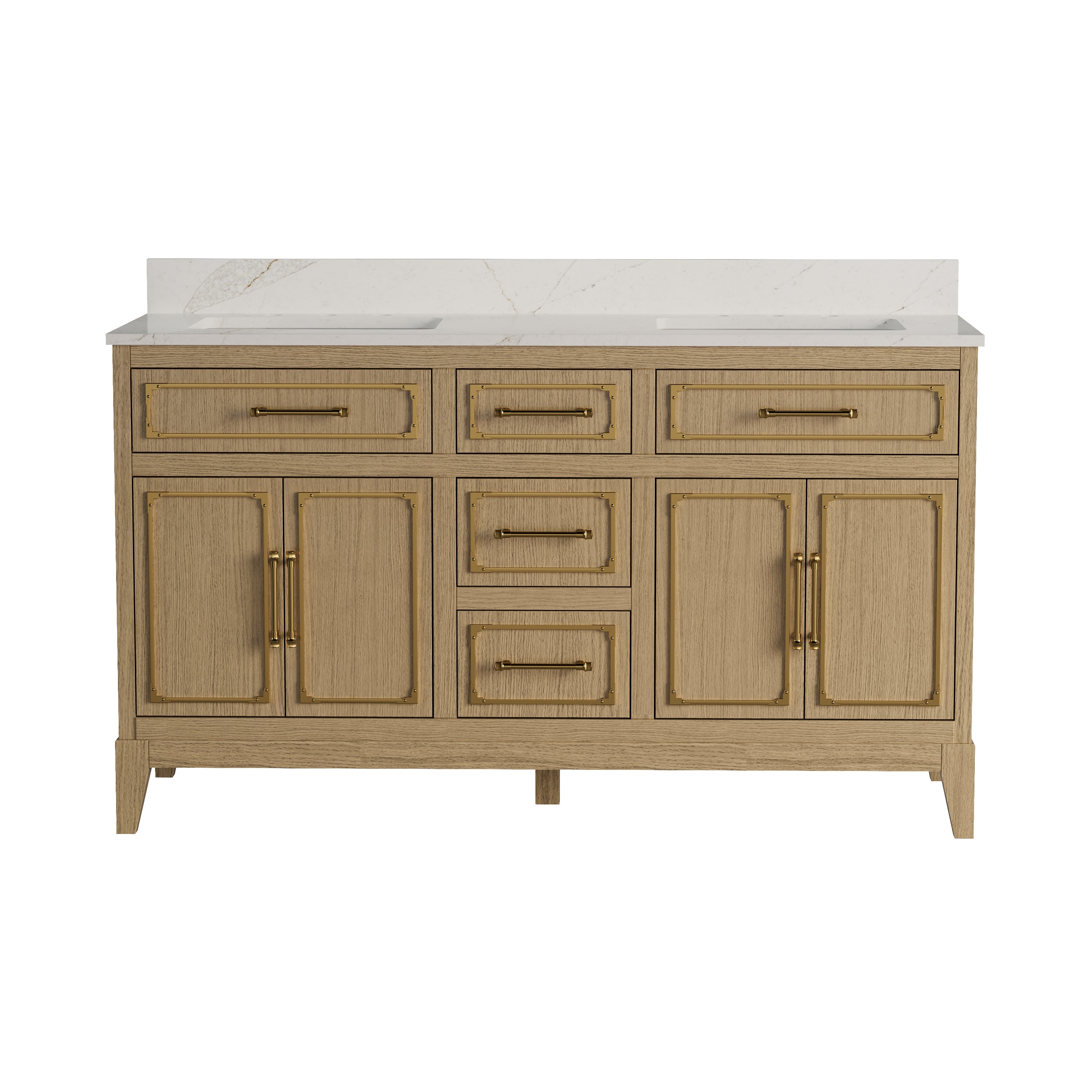
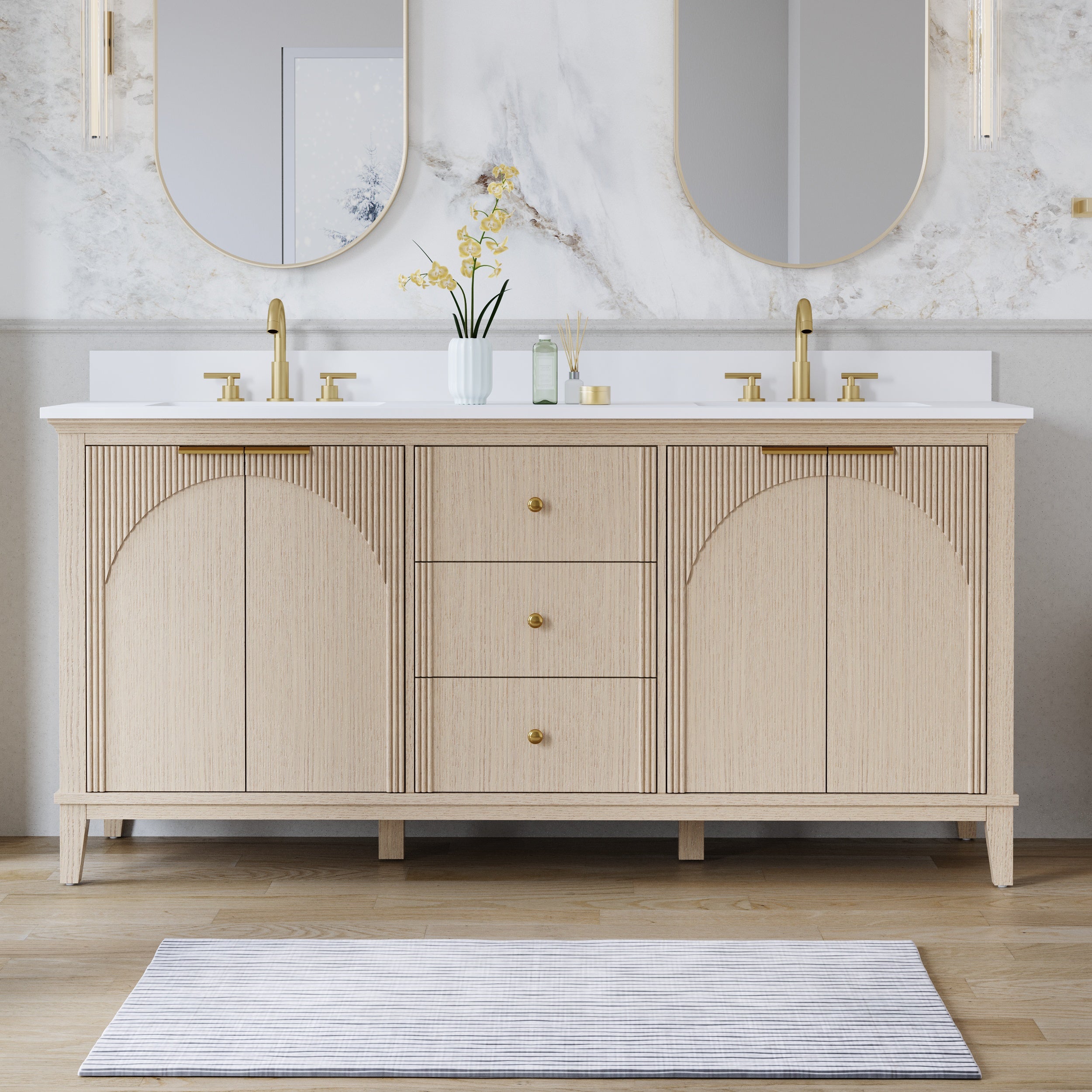
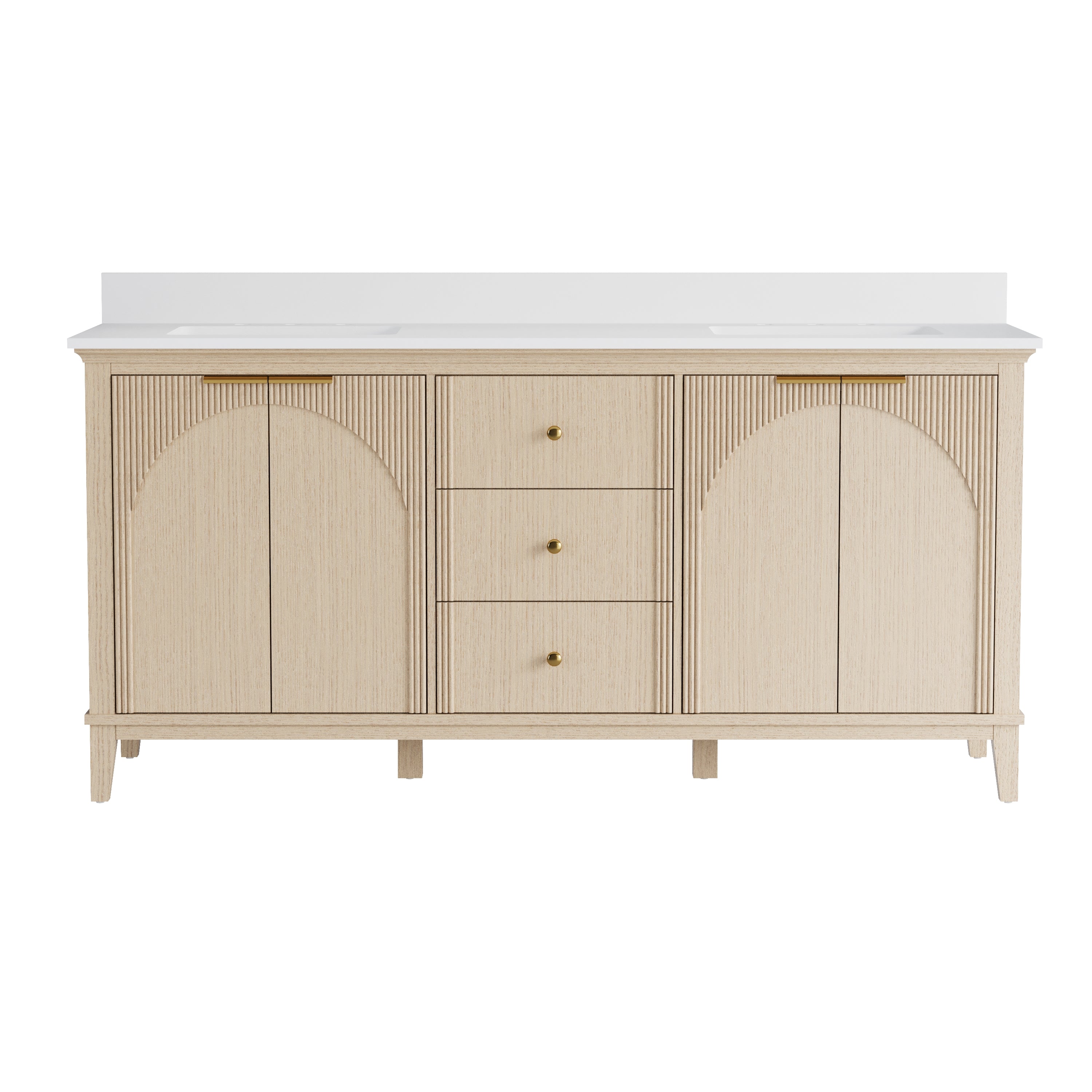
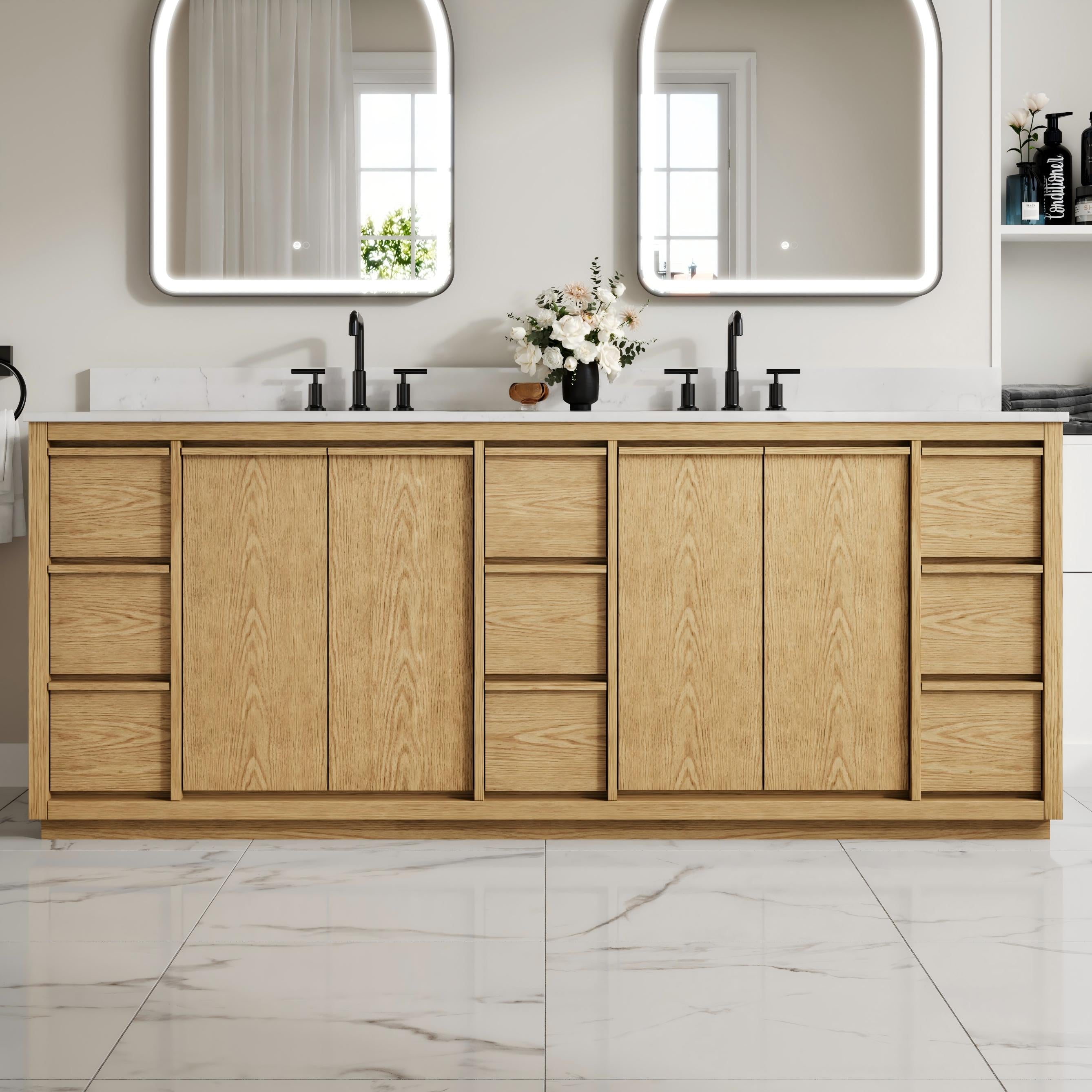
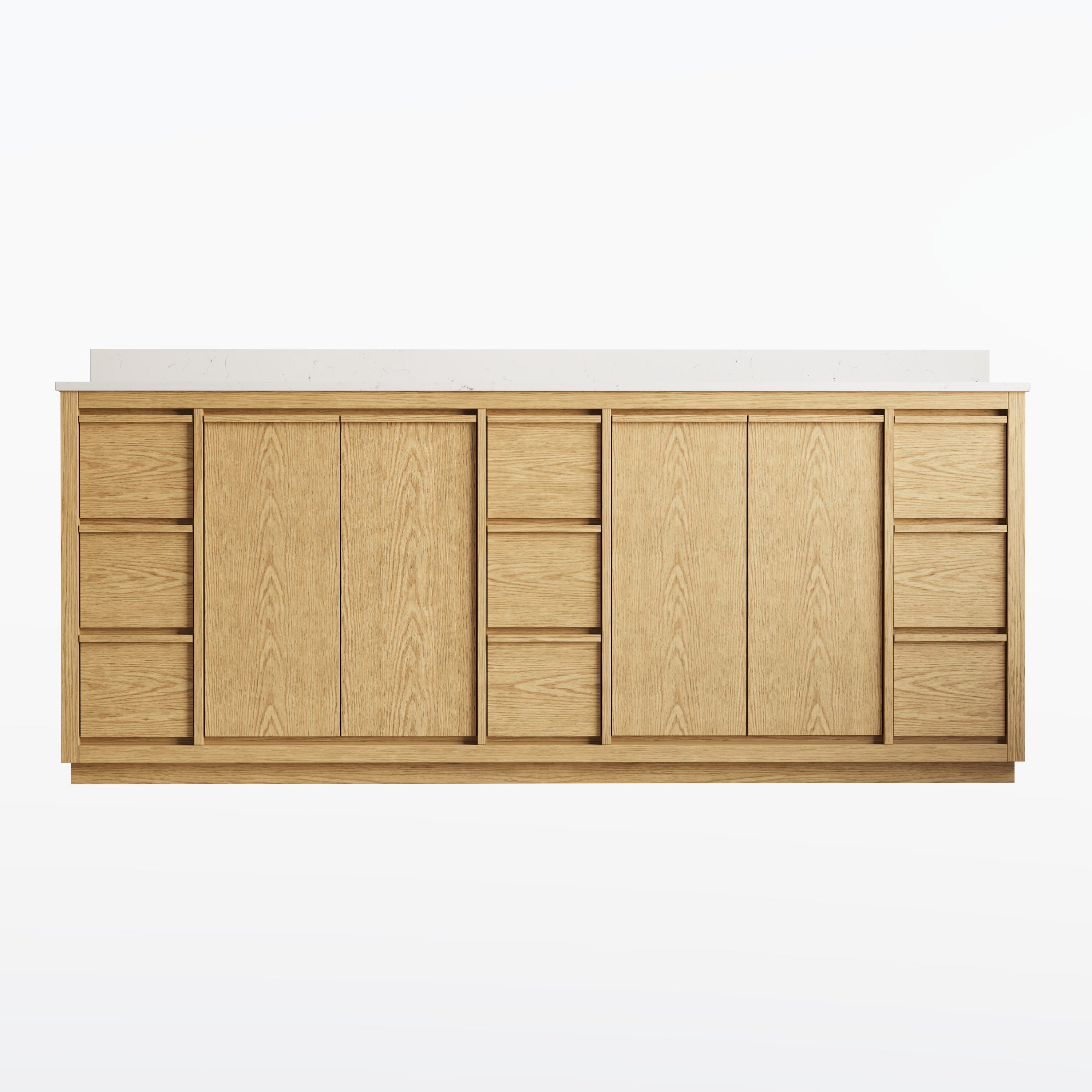

If you are shopping for wooden bathroom cabinets, long-term durability is less about one “magic material” and more about smart construction details that control moisture, protect vulnerable edges, and prevent uneven wood movement. Steam from showers and repeated splashes around sinks create fast humidity swings, and wood responds by expanding and shrinking as it approaches equilibrium moisture content. (Source: USDA Forest Products Laboratory, Wood Handbook, “Moisture Relations and Physical Properties of Wood.”)
1. Design for moisture swings, not perfect dryness
Bathrooms are high-variation rooms. A widely cited indoor guidance target is keeping relative humidity in habitable spaces roughly between 30% and 60%. (Source: ASHRAE guidance on indoor relative humidity.)
Those swings matter because wood is hygroscopic and continually moves toward equilibrium moisture content based on relative humidity and temperature. (Source: USDA Forest Products Laboratory, Wood Handbook, EMC relationship figure and discussion.)
Construction goal: reduce how quickly liquid water enters the cabinet, and keep moisture exposure as balanced as possible across faces, edges, and joints.
2. Prioritize a “protected sink base” build
The sink base is the hardest-working zone. Look for these details:
· Fully finished interior surfaces, not raw panels. Interiors that are sealed and coated resist water absorption and are easier to wipe dry.
· Sealed seams and corners. Small gaps become capillary pathways. A better cabinet uses tight joinery plus finish coverage in corners.
· Raised bottom or protective bottom panel strategy. Any design that reduces direct contact with puddles (even minor elevation or an integrated water-resistant liner) increases survival time in real bathrooms.
A practical benchmark: performance standards for kitchen and vanity cabinets emphasize durability and finish resistance. KCMA describes cabinet testing that includes chemical and stain exposure on finished surfaces and durability cycling for moving parts. (Source: KCMA “Cabinets Certified to Last.”)
3. Choose a box construction that resists racking and keeps panels stable
Steam exposure is not only a finishing problem. Repeated humidity cycles can loosen weak boxes over time.
Stronger box details to look for:
· Dado and rabbet joinery or robust dowel/screw-and-glue construction instead of minimal stapling. These joints increase the glue surface area and reduce the rack.
· Thicker backs or properly captured backs. A back that is fully seated in grooves (instead of lightly pinned) helps the cabinet stay square.
· Stiff corner structure. Corner blocks, solid stretchers, or well-designed web frames add torsional rigidity.
Why it matters: when a cabinet racks out of square, doors stop aligning, drawers bind, and small finish cracks grow at stressed joints.
4. Use frame-and-panel logic where it belongs
For doors and larger faces, the best long-term detail is often frame-and-panel construction rather than a single wide solid-wood slab. The reason is simple: wood moves more across the grain, and wide panels amplify that movement.
What to check:
· The center panel should float in the frame (room to expand/contract) rather than being rigidly glued all around.
· The panel edges should be sealed before assembly or finished evenly so moisture does not enter from hidden edges.
This construction approach does not eliminate movement, but it gives movement somewhere to go without splitting.
5. Demand “edge protection” everywhere water can linger
Most water damage starts at the edges, holes, and end grain.
Best construction details include:
· Sealed end grain on door bottoms, panel ends, and any exposed solid-wood edges near the sink. End grain exchanges moisture faster than face grain, so it needs extra protection. (Source: USDA Forest Products Laboratory, Wood Handbook moisture discussion.)
· Proper edge banding on plywood or composite components, especially on lower edges and near plumbing cutouts.
· Sealed cutouts and drilled holes (for plumbing, handles, or adjustable shelves). A great cabinet often looks “over-finished” inside holes because the maker sealed them intentionally.
6. The finish system is important, but even coverage is the hidden winner
People focus on “what finish,” but long-term performance often comes down to how consistently it is applied across all faces.
A quality reference point is that KCMA’s A161.1 standard is used as a durability benchmark for kitchen and vanity cabinets and includes finish performance testing under common household exposures. (Source: KCMA A161.1-2022 standard overview.)
Construction details that support finish longevity:
· Finished door backs and drawer-front backs, not just the visible faces. This reduces the moisture imbalance that can encourage cupping.
· Thorough coating at edges and corners where film thickness is often weakest.
· Better curing and controlled production. Factory finishes generally perform better when applied in controlled conditions versus rushed, inconsistent coatings.
7. Hardware choices that resist corrosion and binding
Steam is tough on metal. Over time, corrosion and residue buildup can make doors sag and drawers grind.
Look for:
· Corrosion-resistant hinges and slides and consistent, repeatable operation under load.
· Soft-close hardware that remains smooth after repeated cycling.
As a durability context, KCMA describes testing where doors and drawers are cycled 25,000 times to evaluate performance. (Source: KCMA “Cabinets Certified to Last.”)
You do not need the exact same hardware to benefit from that logic. You just want cabinets built and assembled with the expectation that they will be opened thousands of times in a humid room.
8. Material choices inside the cabinet should be intentional
Many “wood” cabinets combine solid wood with plywood, MDF, or particleboard in backs, drawer bottoms, or interior panels. That is not automatically bad, but moisture-prone zones should use materials and edge protection that match bathroom reality.
If composite panels are used, it is reasonable to ask about formaldehyde emissions compliance, especially for enclosed spaces. EPA lists TSCA Title VI emission standards such as 0.05 ppm for hardwood plywood (veneer or composite core), 0.11 ppm for MDF, and 0.09 ppm for particleboard. (Source: U.S. EPA, formaldehyde standards for composite wood products, TSCA Title VI.)
This does not directly prevent warping, but it is a meaningful build-quality signal: manufacturers who manage compliance and documentation often manage process control better overall.

9. The short checklist that predicts long-term success
Use this quick inspection list in a showroom or at delivery:
· Sink base interior is finished, and seams look intentionally protected.
· Cabinet box feels stiff when you gently push opposite corners (minimal racking).
· Back panel is properly captured, and the cabinet sits square.
· Door construction is frame-and-panel or otherwise designed to accommodate movement.
· Edges, holes, and cutouts are sealed (especially near plumbing).
· Hardware feels stable at full extension, and doors do not sag when opened.
· Finish coverage looks consistent on less-visible surfaces (door backs, interiors, lower edges).
Bottom line
To survive steam and splashes for years, wooden bathroom cabinets need construction details that manage moisture and movement: protected sink-base interiors, stiff cabinet boxes, movement-friendly door design, sealed edges and cutouts, consistent all-around finishing, and corrosion-resistant hardware. Humidity control still matters, but when the cabinet is built with these details, everyday steam becomes a manageable stressor instead of a slow failure mode.










Leave a comment
This site is protected by hCaptcha and the hCaptcha Privacy Policy and Terms of Service apply.