






















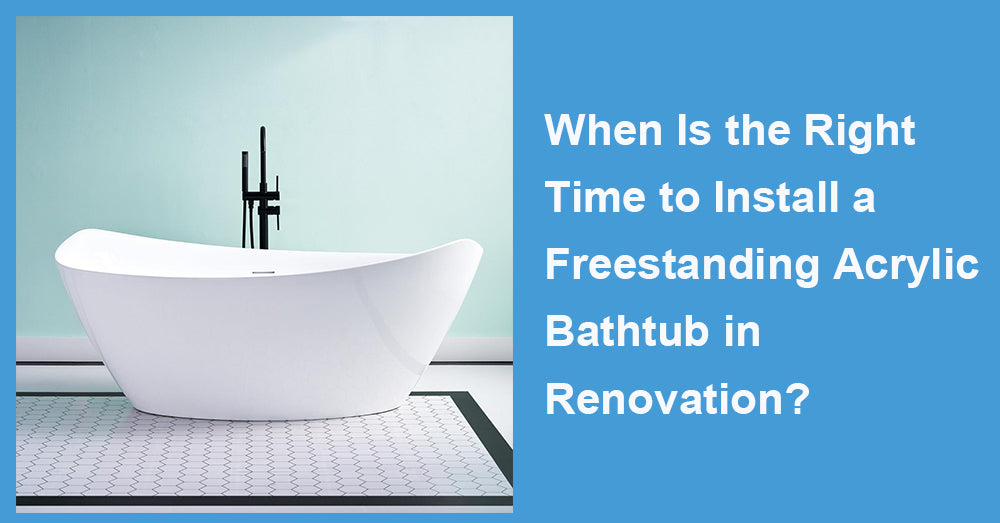
In the current trend of modern home renovations, bathtubs have evolved beyond mere functional vessels for cleansing, becoming essential elements that elevate both spatial aesthetics and quality of life.
Among these, freestanding acrylic bathtub is emerging as the focal point of next-generation bathroom design, thanks to their lightweight construction, contemporary style, and ease of installation.
However, many consumers encounter a practical question during renovations: “When is the optimal time to install a freestanding bathtub?”
Installing too early may disrupt construction schedules; installing too late risks conflicts with plumbing layouts or floor finishing. This article delves into installation timing, design essentials, and market trends from both consumer and industry expert perspectives.
The Rise of Freestanding Bathtubs: From Functionality to Style
Traditionally, built-in bathtubs dominated as the practical, space-saving choice. Today, freestanding designs are rapidly replacing them.
Industry research indicates that over the past three years, freestanding bathtubs have increased their share in mid-to-high-end home renovation projects by nearly 40%.
The reasons are straightforward:
Visual Impact: Unconstrained by walls or countertops, they can be positioned freely within a space, creating a design focal point.
Lightweight Material: Acrylic is lighter than cast iron or stone, allowing for more flexible installation.
Versatile Shapes: Oval, rectangular, egg-shaped, and other styles complement diverse design aesthetics.
Designers widely view freestanding acrylic bathtubs as embodying modern aspirations for a “slower pace of life.”
They transcend mere bathroom fixtures, becoming “private sanctuaries” for relaxation and rejuvenation.
Critical Installation Timing: Balancing Design, Plumbing, and Space
For consumers renovating their bathrooms, the timing of installation significantly impacts the final outcome.
Industry experts note that the ideal installation window should be planned between the following phases:
1. After Waterproofing and Plumbing Installation
Finalizing the bathtub placement after waterproofing and plumbing work is completed is key to avoiding future rework.
At this stage, precise measurements of the bathtub's bottom drain connection can be taken based on the location of the floor drain and outlet, ensuring smooth drainage.
2. After Floor Tile Installation
Since freestanding bathtubs are typically placed directly on the floor, tiles must be fully laid and grouted to ensure stable installation.
Premature placement may cause uneven gaps or moisture buildup beneath the tub.
3. Before Wall Finishing and Main Lighting Installation
Although the bathtub itself does not attach to walls, sufficient working space must be reserved during installation.
Confirming the bathtub's distance from walls and lighting positions before wall sealing prevents later adjustment difficulties.
Renovation supervisors recommend:
“Freestanding bathtub installation is best scheduled during the early stages of finishing work—after flooring completion but before cabinet installation. This is the optimal window, as it avoids interfering with plumbing/electrical routing while allowing for minor position adjustments.”
Advantages of Acrylic Material: Lightweight, Insulating, and Low-Maintenance
Consumers favor acrylic bathtubs primarily for their comprehensive performance benefits.
1. Lightweight and Convenient, Suitable for Various Spaces
Compared to traditional cast iron bathtubs, acrylic is significantly lighter, allowing for easy transportation and installation even in high-rise residences.
For bathrooms with limited space, it can be safely used without requiring reinforced floor structures.
2. Excellent Heat Retention
Acrylic material provides superior insulation, keeping water warm longer for a more comfortable soaking experience.
Some premium models incorporate additional insulation panels within the shell for enhanced temperature stability.
3. Easy Cleaning & Resistant to Discoloration
The smooth surface resists dirt buildup, requiring only warm water and mild detergent for maintenance.
This durability is why many consumers consistently praise them after years of use.
Space Planning: Making the Bathtub the Centerpiece
Before installing a freestanding bathtub, spatial planning is crucial for both visual appeal and functionality.
1. Placement Layout
Centered placement: Offers the strongest visual impact, ideal for spacious bathrooms;
Window or corner placement: Maximizes natural light for a relaxing ambiance;
Independent drain zone: Ensures safe drainage and prevents water seepage.
Designers recommend leaving ample clearance around the tub for movement and cleaning, with a minimum 24 inches clearance for access.
2. Lighting and Backdrop
Soft ambient lighting, accent spotlights, or warm-toned accent walls elevate the bathtub area's sophistication.
In many high-end designs, niches or artistic features behind the tub create a “private spa” ambiance.
Consumer Perspective: Dual Demands for Experience and Functionality
Based on consumer feedback, the primary reasons for choosing freestanding acrylic bathtubs revolve around two key factors:
aesthetic appeal and relaxation experience.
Many homeowners report that freestanding bathtubs not only transform bathroom layouts but also reshape their daily routines.
“What used to be a luxury has now become part of everyday life.”
However, consumers also commonly express concerns about:
Is drainage smooth?
Is the base stable?
Is cleaning convenient?
Does installation require additional reinforcement?
These questions are driving manufacturers to continuously optimize product structures—for instance, by incorporating anti-slip bases, concealed drainage designs, and modular drainage systems.
Design Trends: Minimalist Lines and Personal Expression
Globally, minimalism and natural aesthetics dominate bathroom design trends.
Freestanding acrylic bathtubs are adopting increasingly streamlined silhouettes.
Oval and egg-shaped designs: Soft and elegant, complementing most contemporary styles;
Rectangular and geometric lines: Aligning with industrial or modern minimalist aesthetics;
Colored acrylic: Breaking free from traditional white constraints to express individuality.
Designers note this trend reflects consumers' evolving preferences—moving beyond mere functionality toward spaces offering emotional value.
Installation Pitfalls and Solutions
Pitfall 1: Neglecting Floor Load-Bearing Capacity and Slip Resistance
Though lightweight, an acrylic bathtub filled with water can weigh over 300 kilograms. Ensure the installation surface is level and slip-resistant.
Pitfall 2: Improper Drain Positioning
Misaligned drains may cause water accumulation or leaks. Verify measurements multiple times before installation.
Mistake 3: Premature Installation Causing Scratches or Stains
Placing the bathtub early during construction when debris is abundant risks surface damage. Installation should follow tile laying.
Mistake 4: Neglecting Maintenance
Though acrylic surfaces resist stains, avoid harsh acidic or abrasive cleaners to prevent scratches.
Expert Advice: Timing Determines Final Experience
Bathroom specialists emphasize that freestanding bathtub installation is not merely a procedural task but directly impacts long-term usability.
“Proper installation ensures a decade of like-new performance; improper timing may lead to leaks or instability within six months.”
They highlight three critical points:
Determine placement before selecting style: Space dimensions dictate shape and proportions;
Waterproofing before drainage provision: Ensures structural integrity;
Final-stage installation to prevent damage: Crucial for achieving flawless results.
Future Trends: Lightweighting and Smart Integration
Market observations indicate freestanding bathtubs will evolve in two key directions:
Lightweight Material Advancements
Eco-friendly, durable composite acrylic and fiberglass materials will dominate, offering easier installation and superior heat retention.
Smart Function Integration
Features like thermostatic control, bubble massage, and Bluetooth audio systems will gradually integrate, personalizing and technologizing the bathing experience.
These trends also reflect consumers' pursuit of a “ritualistic lifestyle”—
The bathtub is not merely a place for bathing, but a symbol of healing and relaxation.
Conclusion: Timing of Installation Determines Quality of Life
The rise of freestanding acrylic bathtubs signifies modern society's redefinition of quality living.
They not only elevate spatial aesthetics but also embody a “self-centered” approach to life.
Throughout bathroom renovations, precise timing of installation is crucial for achieving both beauty and functionality.
The optimal window for installing a freestanding tub occurs after waterproofing is complete, floor tiles are laid, and before wall finishing begins.
For every detail-oriented, life-loving household, a freestanding bathtub transcends mere bathroom fixture—it represents an upgrade to one's lifestyle.









































Leave a comment
This site is protected by hCaptcha and the hCaptcha Privacy Policy and Terms of Service apply.