




















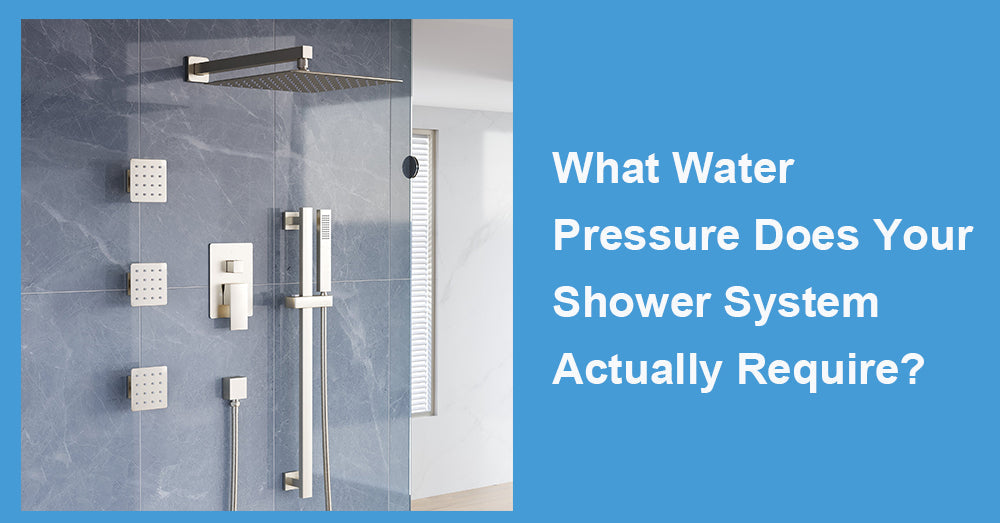
In modern bathroom design, a shower system has evolved from a single water outlet into a coordinated performance setup involving rainfall heads, handheld sprayers, thermostatic valves, and multi-jet body sprays. As bathroom upgrades increasingly focus on comfort and spa-like experience, water pressure requirements have become a critical part of planning rather than an afterthought. With home improvement spending projected to reach about $518 billion by 2026, fixture performance expectations are rising alongside design complexity, especially in water-delivery systems where consistency matters as much as volume.
1. Understanding the difference between pressure and real shower performance
One of the most common misconceptions is assuming higher water pressure automatically means a better shower experience. In reality, performance depends on a balance between pressure (PSI) and flow rate (GPM).
· Pressure determines how strongly water is pushed through the system
· Flow rate determines how much water is delivered per minute
A system can show strong PSI on a gauge but still feel weak if flow is restricted by valves, small pipes, or water-saving fixtures. Conversely, good flow with low pressure often produces a soft, inconsistent spray that struggles with multi-outlet systems.
2. Standard residential water pressure benchmarks
Most residential plumbing systems are designed around controlled pressure ranges to protect pipes while ensuring usable water delivery.
Typical benchmarks:
· Minimum functional pressure: around 40 PSI
· Recommended residential range: 45–60 PSI
· Upper safe limit with regulator: about 80 PSI
Within this range, most single-function showers operate comfortably. However, once multiple outlets are introduced, the “usable range” shifts upward because the system must divide pressure across several outputs.
3. Minimum pressure requirements by shower system type
Different shower system configurations demand different pressure levels to perform properly.
Basic fixed showerhead systems:
· Minimum workable range: 20–30 PSI
· Comfortable range: 30–40 PSI
Standard shower + handheld combos:
· Recommended range: 35–50 PSI
· Ensures stable switching between modes
Multi-function shower systems (rain + jets + handheld):
· Optimal range: 45–60 PSI
· Required for simultaneous outlet operation
High-end spa systems with body jets:
· Preferred range: 55–70 PSI
· Needed to maintain consistent jet intensity across all outlets
As system complexity increases, pressure stability becomes more important than peak pressure values.
4. Why modern shower systems demand higher pressure
Modern shower systems are designed to distribute water across multiple points. A rainfall head alone can require a large volume of water to maintain even coverage, often in the range of 10–12 inches in diameter, while body jets introduce additional parallel demand.
When multiple outlets run at the same time:
· Total system demand increases rapidly
· Individual outlet pressure drops if supply is insufficient
· Spray patterns become uneven or weak
This is why systems that feel “luxury-grade” are often paired with higher-pressure plumbing designs or pressure-optimized valves.
5. Flow rate limits and their impact on real performance
Even if PSI is sufficient, flow rate restrictions can significantly affect how a shower system performs.
Common flow standards:
· Standard showerheads: 2.5 GPM max
· Water-efficient designs: 1.8–2.0 GPM
· Ultra-low flow systems: 1.5 GPM or lower
In multi-outlet systems, this flow is divided across all active components. That means:
· Rain head receives less volume when jets are active
· Handheld spray may weaken when temperature stabilizers engage
· Overall system feels less powerful even with adequate PSI
This is why some high-end systems prioritize balanced distribution valves rather than simply increasing pressure.
6. Why pressure drops happen in real plumbing systems
Even when incoming supply is strong, pressure often decreases before reaching the shower system due to infrastructure limitations.
Common causes include:
· Long pipe runs that reduce efficiency over distance
· Narrow pipe diameters limiting peak flow delivery
· Mineral scale buildup narrowing internal pipe surfaces
· Simultaneous water use from appliances or other bathrooms
· Incorrectly set pressure-reducing valves
In multi-level structures, upper floors may experience noticeable pressure loss due to gravity and elevation differences.
7. The role of valves in stabilizing shower performance
Modern shower systems rely heavily on internal control mechanisms to manage pressure and temperature.
Pressure-balancing valves:
· Adjust automatically when supply fluctuates
· Prevent sudden cold or hot surges
· Maintain consistent outlet behavior during demand changes
Thermostatic mixing valves:
· Maintain precise temperature regardless of pressure shifts
· Improve comfort in multi-outlet usage scenarios
· Reduce performance inconsistency during system switching
Without these components, even high PSI systems can feel unstable when multiple fixtures are activated.

8. Infrastructure requirements for high-performance systems
As shower systems become more advanced, plumbing infrastructure must support higher and more stable water delivery.
Key infrastructure factors include:
· Larger diameter supply lines for improved flow capacity
· Shorter, more direct piping routes to reduce pressure loss
· Dedicated hot and cold lines for high-demand fixtures
· Properly calibrated regulators set within optimal PSI range
In some installations, booster pumps are used to stabilize pressure when baseline supply is insufficient, particularly in homes with multiple bathrooms running simultaneously.
9. Real-world performance vs theoretical ratings
A common gap in shower system expectations comes from theoretical product ratings versus real-world installation conditions.
A system rated for high performance may still underperform if:
· Pipe sizing is inadequate
· Water heater output is insufficient
· Pressure regulators are set too low
· Installation does not account for simultaneous household demand
This is why installers often evaluate the entire plumbing ecosystem rather than just the fixture specifications.
10. When higher pressure is beneficial—and when it becomes a problem
Higher water pressure improves performance up to a point, but excessive PSI can introduce issues.
Benefits of higher pressure:
· Stronger spray intensity
· Better performance for rainfall and multi-jet systems
· Faster filling and rinsing performance
Risks of excessive pressure:
· Increased wear on valves and seals
· Higher likelihood of leaks over time
· Uncomfortable spray force in handheld use
· Noise and vibration in plumbing lines
This is why the optimal balance typically sits in the 45–60 PSI range, where performance and system longevity align.
11. The bottom line: stability matters more than maximum pressure
The ideal water pressure for a modern shower system is not simply about reaching the highest possible PSI—it is about maintaining stable, consistent delivery under real usage conditions. While most systems operate well in the 45–60 PSI range, multi-function shower systems rely more on steady flow distribution and properly engineered valves than raw pressure alone.
As shower systems continue to evolve into multi-outlet, spa-like installations, the real performance benchmark is no longer just water force. It is whether the system can maintain balanced output across all functions simultaneously without fluctuation, drop-off, or inconsistency.




































Leave a comment
This site is protected by hCaptcha and the hCaptcha Privacy Policy and Terms of Service apply.