






















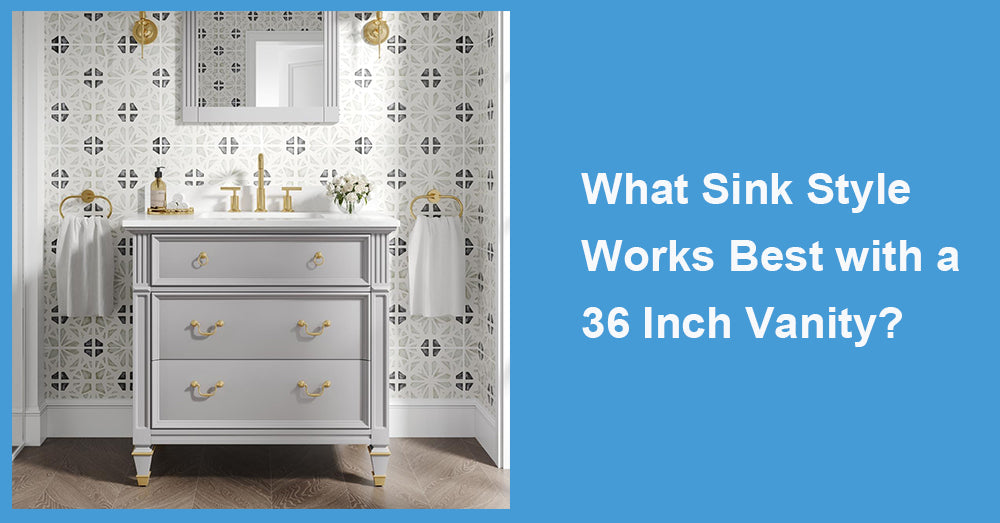
A 36 inch vanity sits in a sweet spot. It is large enough to feel substantial in a primary bath, guest bath, or upscale powder room, yet compact enough to fit spaces where every inch still matters. After working with bathroom vanities across remodels, showroom selections, and real-home installations, I can say this with confidence: the sink style you choose will shape not just the look of the vanity, but also how easy it is to use, clean, and live with day after day.
1. Why sink style matters so much on a 36 inch vanity
With larger vanities, you have room to hide a few bad decisions. A 60-inch double vanity can absorb visual mistakes. A 36-inch model cannot. The sink becomes the focal point, and the wrong choice can make the countertop feel cramped or throw off the proportions of the whole bathroom.
This is where many homeowners get tripped up. They shop by appearance first, then realize later that the faucet sits too high, the bowl splashes more than expected, or the sink cuts into usable counter space. I see this often with smaller bathrooms, where a vanity needs to work hard: a place for handwashing, daily grooming, storage, and sometimes even makeup or shaving.
A 36-inch vanity usually performs best when the sink style supports balance. Not too bulky. Not too shallow. Not too decorative unless the room can carry it.
2. Best sink style for most homes: undermount sinks with a 36 inch vanity
For most households, the best match is an undermount sink with a 36 inch vanity. It gives you a clean edge, a larger usable countertop, and a more polished look that works across modern, transitional, and classic bathrooms.
In practical terms, undermount sinks are easy to live with. Water and toothpaste can be wiped straight into the basin. There is no raised lip catching grime. If the vanity top is quartz, marble-look stone, or solid surface, the finish usually feels more seamless and high-end.
This style is especially useful in busy bathrooms. If two people share the space at different times each morning, a little extra counter room helps. If the vanity sits in a guest bath, an undermount sink also tends to photograph better and look tidier with less effort.
There are limits, though. An undermount sink needs a compatible countertop material and proper installation. I would not recommend it for someone trying to cut costs with the cheapest top available, because poor sealing around the cutout can lead to long-term trouble.
Where undermount sinks fall short
They are not always the right answer for every budget or every design direction. Installation is more exacting than with a drop-in sink, and replacing the sink later can be less straightforward.
If you are furnishing a rental, a secondary property, or a quick-turn renovation where budget and replacement ease matter more than visual refinement, an undermount may be more sink than you need.
3. Vessel sinks look striking, but they are not always the best fit
A vessel sink can look beautiful on a 36-inch vanity. In the right setting, it brings character and turns the vanity into more of a furniture piece. I tend to like vessel sinks in powder rooms, guest baths, or design-led spaces where the vanity is meant to stand out.
That said, vessel sinks are often chosen for the wrong reasons. People fall for the bowl shape in a photo and forget how it changes the height of the whole setup. Once the sink sits above the counter, the faucet placement becomes critical. The mirror height may need adjustment too. If the vanity itself is already tall, the finished sink height can feel awkward in daily use.
Splashing is another common complaint. A shallow vessel bowl paired with a strong faucet stream can be messy. Some owners do not mind it. Families with children usually do.
Common sizing mistakes with vessel sinks
The biggest mistake is choosing a bowl that is visually oversized for the vanity top. On a 36-inch vanity, the sink should not dominate the entire surface unless the room is purely decorative. You still need a little landing space for soap, skincare, or a toothbrush holder.
I also advise against vessel sinks in bathrooms used by older adults who prefer easy reach and low-maintenance cleaning. The outside of the bowl collects dust and residue. The base area needs regular attention. They are attractive, but they ask more from the homeowner.
4. Drop-in and integrated sinks are practical choices, with different trade-offs
Drop-in sinks do not get much editorial love, but they remain a practical option. They are easier to install, easier to replace, and often cost less. For a hardworking guest bath or budget-conscious remodel, that matters.
The downside is the rim. That raised edge can trap water, soap, and debris, and it interrupts the cleaner visual line that many homeowners want now. In my experience, a drop-in sink works best when the project priorities are durability, simplicity, and cost control rather than a tailored look.
Integrated sinks tell a different story. These are the tops where the basin and countertop are formed as one piece, often in ceramic or solid surface. They are simple to clean and visually neat. For minimal bathrooms, they can be a smart pairing with a 36-inch vanity.
Their weakness is character. Some integrated tops can feel a bit plain or builder-grade unless the vanity cabinet itself has warmth, texture, or stronger design detail.

5. Installation and maintenance advice before you buy
Before choosing any sink, measure more than just the vanity width. Check faucet hole spacing, backsplash clearance, mirror placement, and the depth of the sink bowl relative to the cabinet drawers below. A beautiful sink that interferes with storage is a frustrating one.
For installation, I usually recommend pairing a 36-inch vanity with a faucet and sink set that has already been thought through as a proportionate combination. This reduces surprises. Brands like Wellfor often make that process easier because the design language between vanity top and cabinet tends to be more coordinated than a fully pieced-together setup.
Maintenance should play a role in the decision too. If the bathroom gets heavy daily use, undermount and integrated sinks usually age better from a cleaning standpoint. If the bathroom is more decorative and lightly used, a vessel sink can absolutely work and look excellent for years.
If I were advising a homeowner standing in front of a few final options, I would say this: choose undermount for the best mix of function and style, choose integrated for easy upkeep and a clean modern feel, and choose vessel only when the room has the right proportions and you are happy to trade some convenience for visual impact. For most people shopping for a 36 inch vanity, the sink that works best is the one that still feels right six months after installation, not just the one that looks best on day one.











































Leave a comment
This site is protected by hCaptcha and the hCaptcha Privacy Policy and Terms of Service apply.