




















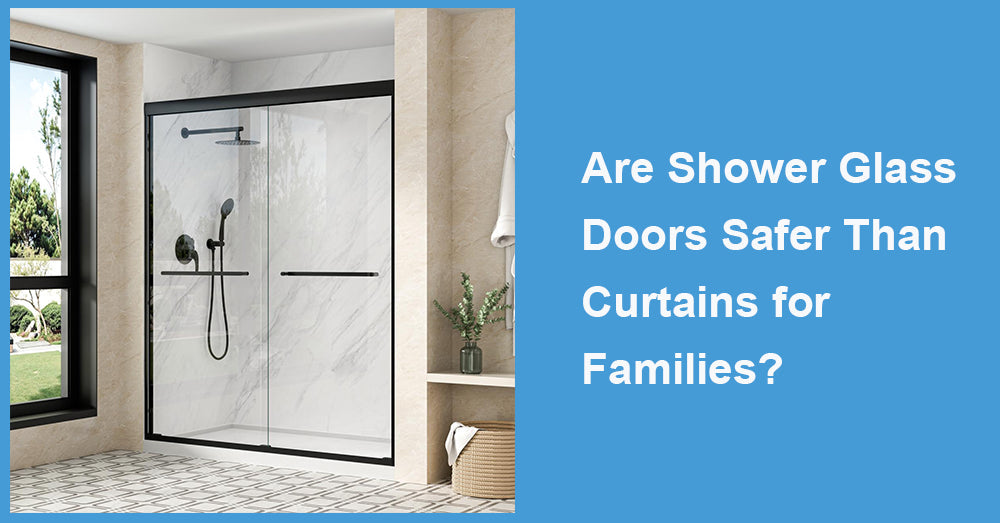
Shower glass doors can be safer than curtains for many families because they control water more effectively, reduce loose material around the bathing area, and provide a stable enclosure. That does not mean glass is automatically the safest choice for every household. The quality of the glass, installation, bathroom layout, and ages of family members all affect the decision.
After working with bathroom products and renovation projects, I have found that most safety problems come from poor installation or an unsuitable layout—not from choosing glass or a curtain by itself.
1. How Shower Glass Doors Improve Bathroom Safety
The most practical advantage of glass doors is water control. A properly installed enclosure keeps more water inside the shower, which can reduce puddles on the bathroom floor.
For families, this matters. Children may splash during baths, teenagers may leave the curtain partly open, and adults often step onto a wet floor without noticing it. A rigid glass panel creates a clearer boundary and is less likely to move away from the shower edge.
Glass doors also remove the loose folds of a curtain. Curtains may cling to the body, blow inward, or become tangled around a child’s feet. These issues are usually minor, but they can make a small shower feel awkward and distracting.
2. Safety Glass and the Risk of Breakage
Quality shower doors are made with tempered safety glass. If tempered glass breaks, it is designed to fracture into many small pieces rather than large, sharp shards.
Still, breakage is possible.
Hard impacts from metal objects, damaged edges, loose hardware, and incorrect installation can place stress on the panel. Families should never treat a shower door as a support rail. It is not designed to carry a person’s body weight.
When Glass Requires Extra Caution
Households with very young children should consider how the door opens and closes. Heavy swinging doors can pinch fingers or strike someone standing nearby. Sliding doors avoid a wide swing path, though their tracks require regular cleaning.
For older adults or anyone with limited mobility, the glass should not block access to a grab bar. A wide entry, stable handle, and low threshold are more important than choosing the most decorative enclosure.
3. Where Curtains May Be Safer
A shower curtain is soft, lightweight, and inexpensive to replace. It cannot shatter, and it does not require a heavy door to move through a tight bathroom.
Curtains may be the better option in a bathtub used for bathing babies or helping young children. Parents can push the curtain completely aside and reach across the tub without working around a fixed panel.
They are also useful in rental homes or older bathrooms where the walls cannot safely support a glass enclosure.
The weakness is water containment. A curtain that is too short, poorly positioned, or frequently left open can allow water to reach the floor. Plastic liners can also become slippery underfoot if they fall into the tub.
4. Compare Daily Use for Different Family Members
For adults and teenagers, shower glass doors are often easier to manage. They open in a predictable way, stay in position, and make it obvious whether the shower is fully closed.
Children may need instruction. They should know not to slam the door, hang from the handle, or push against the panel.
In a busy family bathroom, sliding doors can help save space because they do not open into the room. The drawback is that the opening may be narrower than a hinged-door entrance.
Families with Seniors or Mobility Needs
A frameless glass door can create a wide, clean entrance, but accessibility depends on the full design. Some models have bottom tracks or thresholds that create a trip point.
For users with mobility concerns, consider a wider opening, non-slip flooring, secure grab bars, and enough space for assistance. A curtain may provide easier access in some layouts because it can be moved completely out of the way.
5. Common Misunderstandings About Glass Doors
One common assumption is that thicker glass is always safer. Glass thickness matters, but hardware quality, edge protection, and correct mounting are just as important.
Another mistake is choosing a door based only on appearance. A wide hinged panel may look elegant but collide with a toilet, vanity, or towel rack.
Some buyers also assume that frameless means maintenance-free. Frameless doors have fewer metal channels, but water spots and soap residue are more visible on clear glass. They need consistent cleaning to keep their polished look.
Glass doors also cost more than curtains. Installation errors can be expensive, and damaged hardware usually cannot be fixed with a simple replacement liner.
6. Installation Has a Major Effect on Safety
Accurate measurement is essential. Walls that appear straight may be slightly uneven, especially in older homes. A door installed out of alignment can drag, leak, or place unnecessary pressure on the glass.
The wall must support the hardware. Heavy panels should be attached to suitable framing or structural backing, not merely surface material.
Check that the door opens without hitting nearby fixtures. Handles should be easy to grip, and the opening should allow family members to enter without turning sideways.
Professional installation is a sensible choice for large or frameless enclosures. A small measurement error can affect both water control and long-term stability.
7. Keep Glass Doors Safe Through Regular Maintenance
Inspect hinges, rollers, handles, and mounting brackets periodically. Tighten loose hardware according to the manufacturer’s instructions rather than waiting for the door to shift.
Clean the bottom track and drainage openings so water can flow back into the shower. Dirt and soap buildup can cause sticking or overflow.
A squeegee reduces mineral deposits and makes it easier to notice chips or damaged edges. Use non-abrasive cleaners and soft cloths. Strong chemicals or rough pads may damage protective coatings and metal finishes.
Do not ignore a door that suddenly becomes difficult to open. Changes in movement may indicate loose hardware, roller wear, or alignment problems.
8. Decide Which Option Fits Your Family

Glass doors are a strong choice when the family wants better water containment, a permanent enclosure, and a more open-looking bathroom. They are especially practical for walk-in showers used by adults and older children.
Curtains may be better for bathing babies, assisting family members in a tub, managing a very tight layout, or completing a renovation on a limited budget.
Wellfor shower enclosures are designed for modern bathroom layouts, but safety still depends on choosing the correct opening style and installing it properly. Before buying shower glass doors, measure the entry, check the door path, consider who will use the shower, and make sure grab bars and walking space remain easy to access.
























Leave a comment
This site is protected by hCaptcha and the hCaptcha Privacy Policy and Terms of Service apply.