






















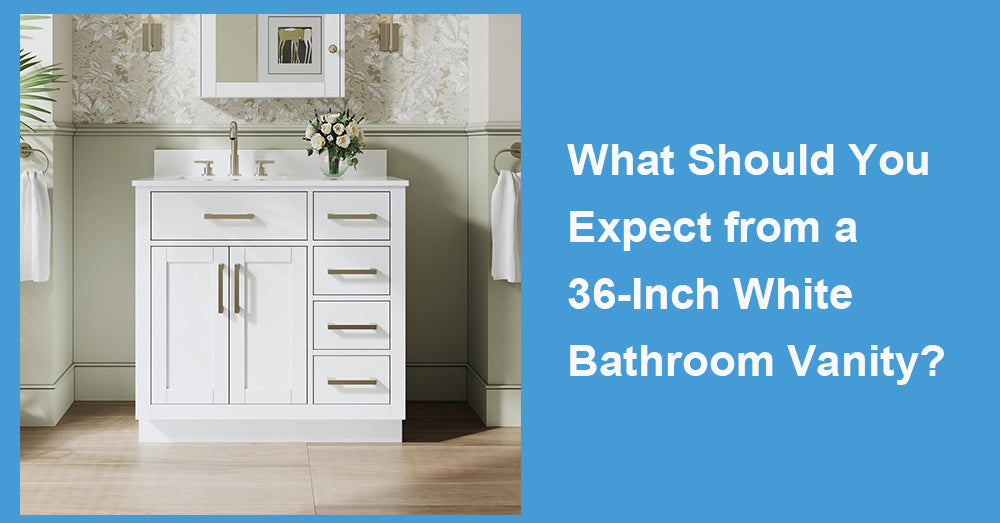
A 36-inch white bathroom vanity should deliver more than a bright cabinet and a single sink. At this width, buyers can reasonably expect useful countertop space, organized storage, comfortable daily access, and a footprint that works in many guest bathrooms, hallway baths, and smaller primary suites. The category also fits current remodeling patterns. Houzz’s 2025 Bathroom Trends Study found that 47% of upgraded vanities measured 48 inches or less, indicating continued demand for cabinets that enhance functionality without occupying an entire wall.
1. Expect a Practical Middle-Ground Size
A 36-inch vanity sits between compact 24-inch or 30-inch units and larger 48-inch cabinets. That difference is meaningful in everyday use.
A well-proportioned model should provide:
· Enough counter space for soap and several grooming products.
· More storage than a typical powder-room vanity.
· Space for a full-size single basin.
· A balanced visual relationship with a medium-size mirror.
· Easier placement beside a toilet, shower, or bathroom entrance.
The advertised 36-inch width usually refers to the cabinet category, not necessarily the complete top. Countertop overhang, side splashes, base trim, and uneven walls can increase the required installation space. Always review the exact product dimensions rather than relying on the nominal size.
Industry judgment: The 36-inch format succeeds because it improves storage without forcing the entire bathroom to adapt around the vanity.
2. White Should Brighten the Room Without Looking Flat
White remains a dependable bathroom color because it reflects light and coordinates with a wide range of materials. Houzz reported that white accounted for 20% of upgraded vanity colors in its 2025 study, while white and off-white together represented 68% of upgraded countertop colors.
The final appearance depends on the shade:
· Bright white creates sharper contrast with black or dark tile.
· Warm white works naturally with beige, oak, and brushed gold.
· Soft off-white reduces the clinical feeling of an all-white room.
· Neutral white pairs easily with gray, blue, and green accents.
Before ordering, compare the cabinet sample with the sink and countertop. A cool white cabinet beside a cream-colored top may look mismatched under bathroom lighting.
3. Storage Layout Matters More Than Door Count
A 36-inch vanity can include drawers, doors, or a combination of both. The best layout depends on where the sink and plumbing are positioned.
An offset sink often allows a full drawer stack on one side. A centered basin creates a more symmetrical appearance but may require U-shaped drawers or a larger plumbing cabinet below.
Useful storage features include:
· A shallow drawer for daily grooming products.
· A deeper drawer for towels and larger bottles.
· Full-extension slides that expose items at the back.
· Adjustable shelves beneath the sink.
· Interior dividers that can be removed or repositioned.
A cabinet with several drawer fronts is not automatically better organized. Some fronts may be decorative or connected to reduced-depth boxes around the plumbing.
4. Soft-Close Hardware Is Becoming Standard
Soft-close doors and drawers are now common expectations rather than unusual upgrades. Houzz found that 78% of upgraded vanities included soft-close drawers, while 75% included soft-close doors.
On a quality 36-inch vanity, the hardware should:
· Close smoothly without slamming.
· Remain stable when drawers are loaded.
· Allow door alignment after installation.
· Provide access to the complete drawer interior.
· Be removable when plumbing service is required.
Hardware quality affects more than convenience. Repeated impact can loosen fasteners, disturb alignment, and place extra stress on painted drawer fronts.

5. Countertop and Sink Options Will Vary
Many 36-inch white vanities are sold as complete sets with a countertop, sink, backsplash, and predrilled faucet holes. Others include only the cabinet, allowing the buyer to choose a separate top.
Engineered quartz remains the leading upgraded bathroom countertop material, accounting for 45% of selections in Houzz’s 2025 research. Quartzite followed at 20%, granite at 14%, and marble at 13%.
Common sink choices include:
· An undermount basin for an easy-to-wipe counter.
· An integrated sink for fewer visible seams.
· A vessel sink for a stronger decorative statement.
· A drop-in sink for simpler replacement projects.
Check the sink depth carefully. A large basin may reduce upper-drawer space and leave less countertop area than expected.
6. The Cabinet Material Should Be Clearly Explained
A white finish can cover several cabinet constructions, including solid wood, plywood, engineered panels, or combinations of these materials. The color alone says little about structural quality.
A stronger product specification should identify:
· The material used for the frame.
· The construction of the side panels.
· The drawer-box material.
· The type of back panel.
· The coating used on the white finish.
· Whether the interior and underside are fully finished.
Solid wood can provide strength in frames, doors, and legs, while quality plywood may offer stability across wider cabinet panels. Transparent material descriptions are more valuable than vague claims such as “wood construction.”
7. The White Finish Will Require Sensible Care
White surfaces reveal dust, makeup, water droplets, and chipped edges more quickly than many wood finishes. That visibility can be useful because maintenance problems become noticeable before they spread.
For routine care:
· Wipe standing water promptly.
· Use a soft cloth and mild cleaner.
· Avoid abrasive pads and aggressive chemicals.
· Keep hair dye and nail products off the cabinet.
· Repair small chips with a matching touch-up product.
· Inspect the sink and backsplash caulk regularly.
Bathroom humidity also affects cabinetry. The EPA recommends keeping indoor relative humidity below 60%, ideally between 30% and 50%, while improving ventilation and addressing water leaks promptly.
8. Finished Height Must Be Confirmed
The cabinet, countertop, and sink together determine the actual working height. Some product listings show the cabinet-body measurement, while others provide the complete installed height.
A taller comfort-height vanity may finish around 35 to 36 inches. This can reduce bending for many standing adults, but it may not suit children, shorter users, or accessible layouts.
For covered accessible lavatories, the U.S. Access Board specifies a maximum height of 34 inches to the higher of the counter or sink rim. It also requires a forward approach and appropriate knee and toe clearance.
A vessel sink may add several inches above the countertop, so the cabinet may need to be lower than a conventional undermount-sink vanity.
9. Expect Adaptability Rather Than One Fixed Style
A 36-inch white bathroom vanity can support modern, transitional, farmhouse, coastal, or hotel-inspired interiors. Flat-panel doors and black hardware create a sharper contemporary look. Shaker fronts and brushed nickel feel more transitional. Brushed gold and warm stone soften the white finish.
NKBA’s 2026 Bath Trends Report found that neutral colors continue to lead bathroom design, with off-white at 58% and white at 40%. The report also identified growing interest in natural materials and wood-faced vanities, suggesting that white cabinets increasingly appear beside warmer floors, stone, and decorative wood details rather than inside completely white rooms.
A good 36-inch vanity should therefore offer more than a safe color. It should provide functional drawers, dependable hardware, moisture-conscious construction, compatible plumbing space, and a countertop that suits the room’s maintenance needs. When those elements are coordinated, the result feels appropriately sized, easy to use, and flexible enough to remain attractive through future updates.







































Leave a comment
This site is protected by hCaptcha and the hCaptcha Privacy Policy and Terms of Service apply.