


















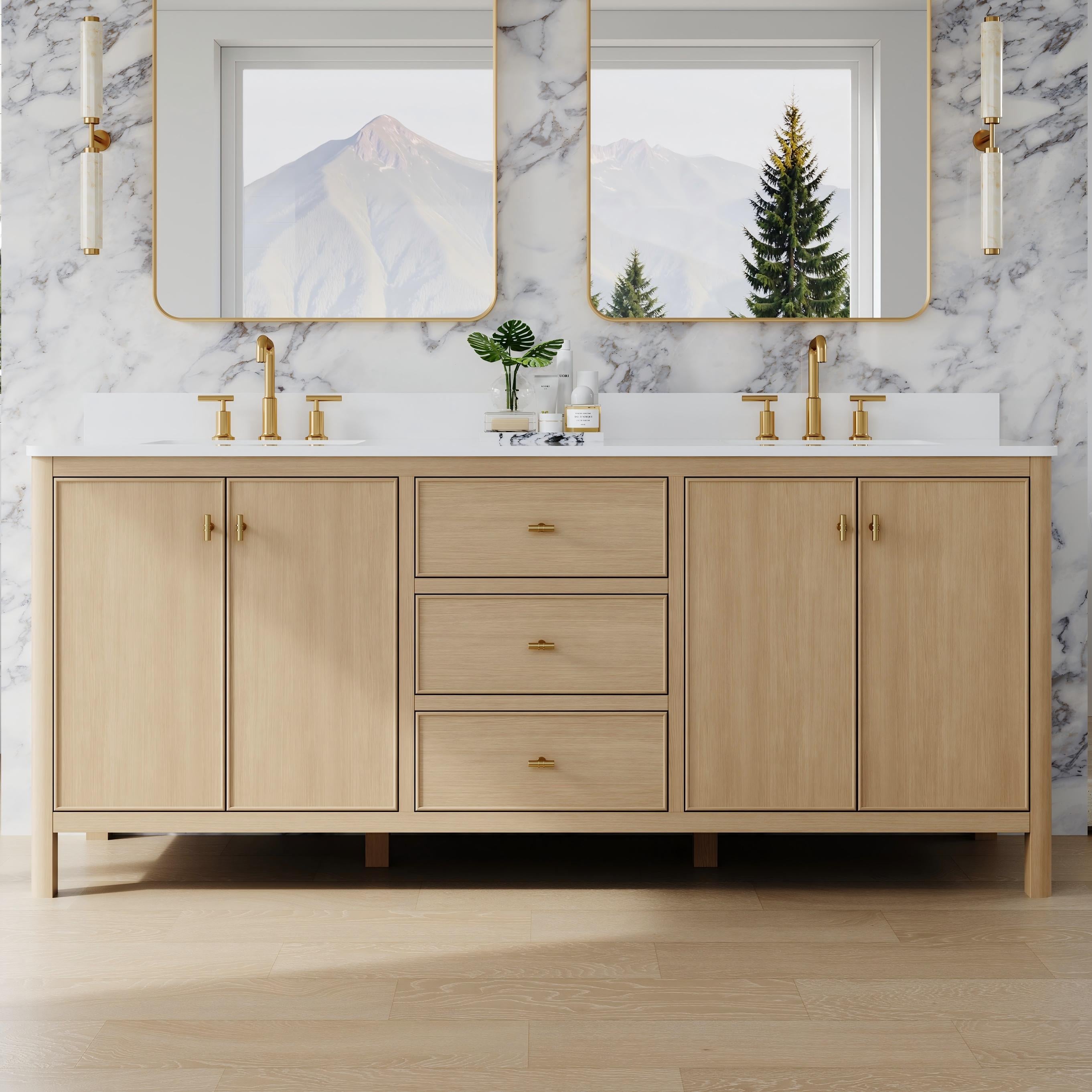
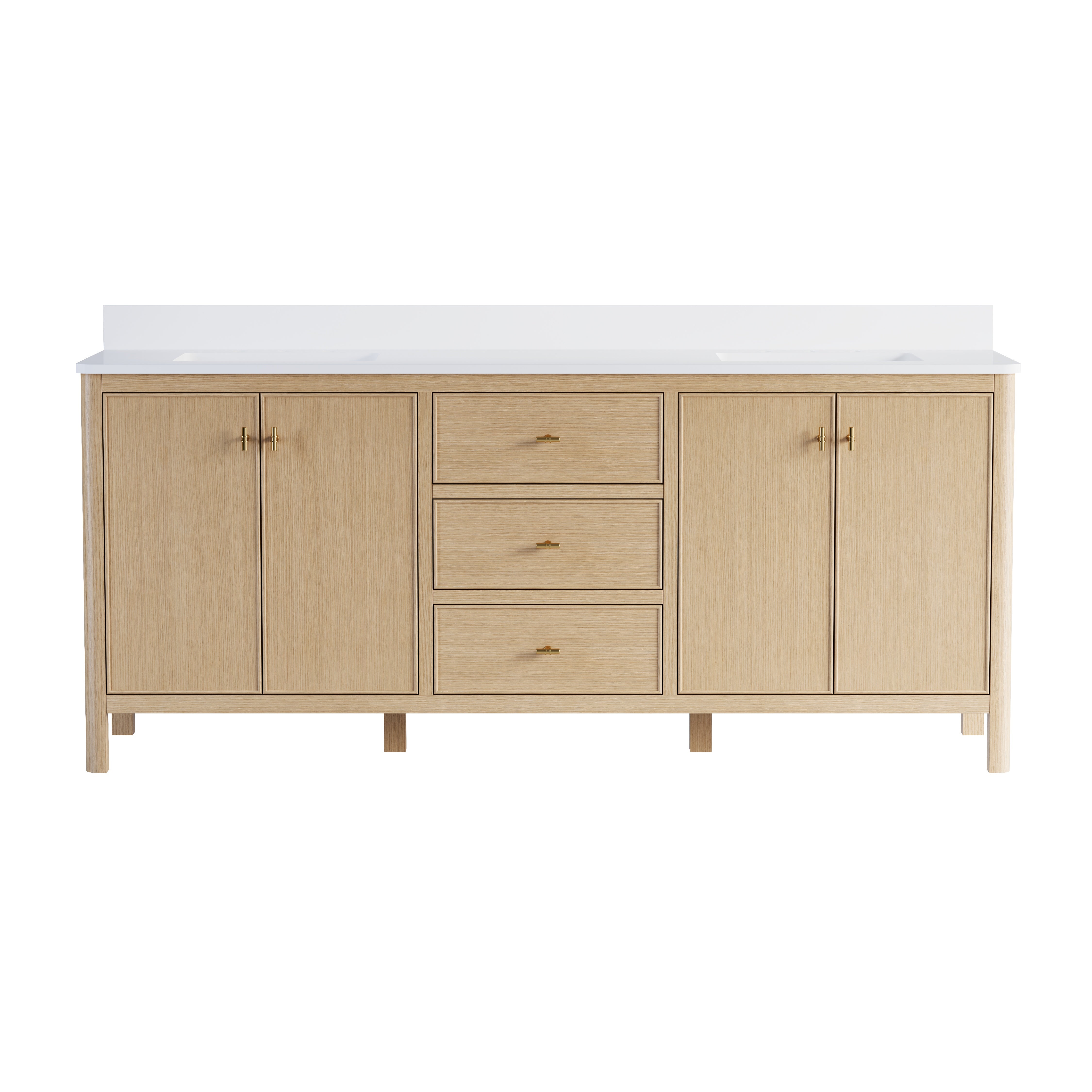


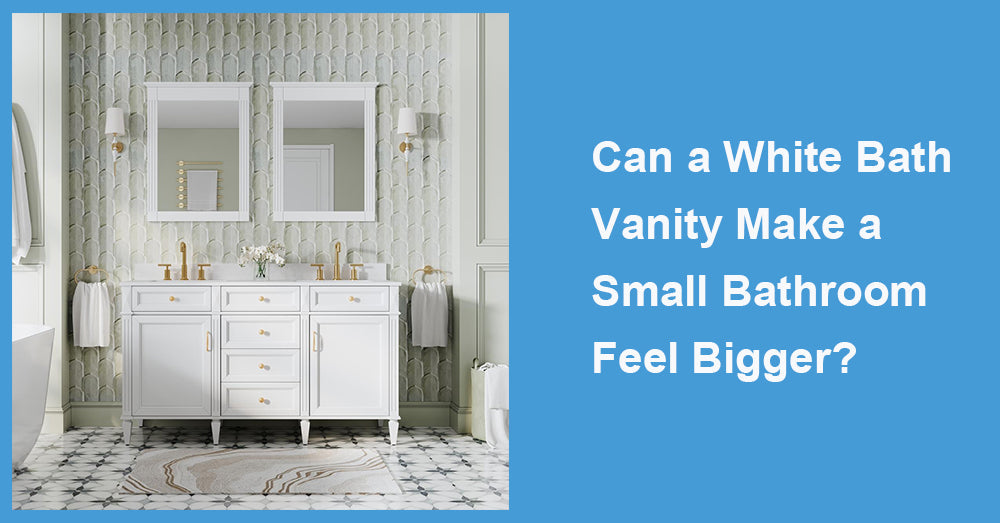
A white bath vanity can make a small bathroom feel brighter, lighter, and less crowded, but color is only part of the effect. After more than 20 years of working with bathroom cabinetry, I have seen compact rooms improve when finish, depth, storage, and placement are considered together. White reflects light and reduces visual weight. The wrong cabinet size can still make a tight bathroom uncomfortable.
1. Why a White Bath Vanity Feels Lighter
Dark cabinetry often creates a strong visual block near the floor. White blends more easily with pale walls, light tile, and reflective surfaces, helping the eye move across the room without stopping at a heavy cabinet.
This is useful in windowless hall bathrooms, narrow guest baths, and small apartments where daylight is limited.
The bathroom does not become physically larger. It simply feels more open because the lower half carries less visual weight.
2. Size and Depth Matter More Than Color
One common buying mistake is assuming that a white finish will make any vanity suitable for a small bathroom.
It will not.
A cabinet that is too deep can narrow the walkway, interfere with the toilet, or block a shower door. A vanity that is too wide may leave no comfortable circulation space.
Test the Footprint Before Ordering
Use painter’s tape to mark the cabinet and countertop dimensions on the floor, including the top overhang.
Open every nearby door. Stand at the proposed sink position and check whether another person can pass behind you. In narrow rooms, a shallow-depth vanity may work better than a standard cabinet, even with slightly less storage.
3. A Floating Design Can Increase the Sense of Space
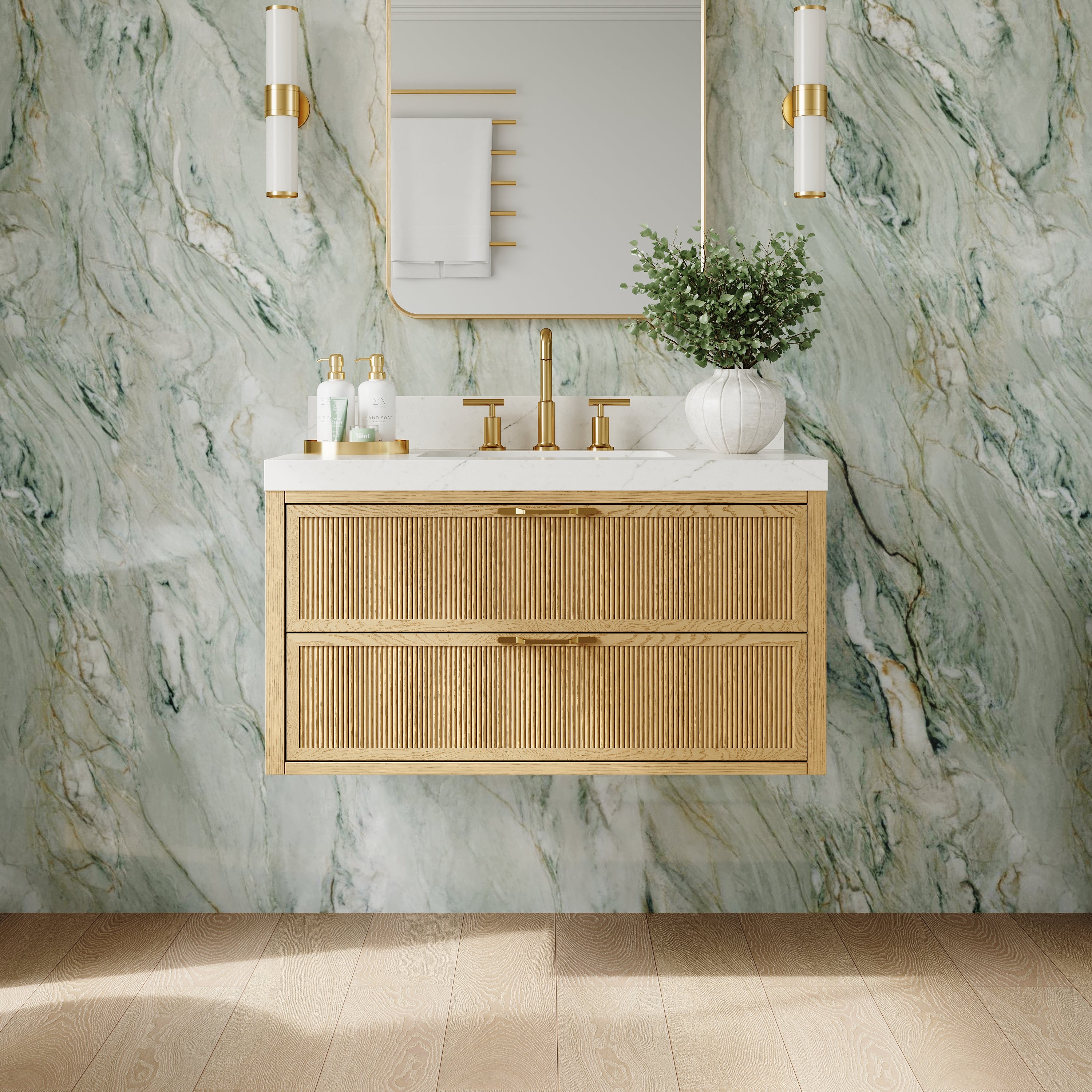
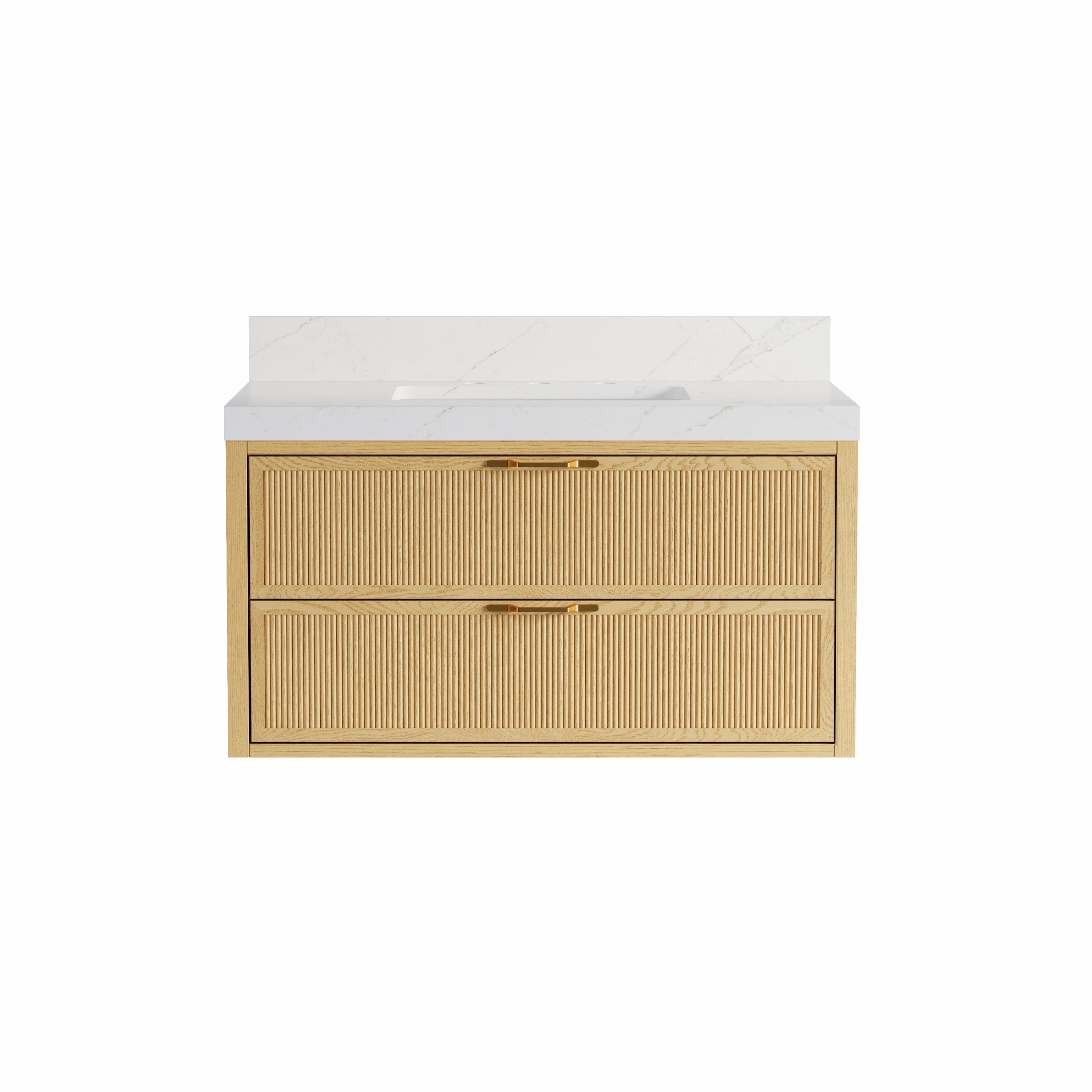
A wall-mounted vanity exposes more flooring, allowing the eye to see farther across the room. That uninterrupted floor line can make a compact bathroom feel less confined.
Floating designs also simplify cleaning and suit modern interiors. The white finish reinforces the lighter appearance.
There are tradeoffs. A floating cabinet may provide less storage height, and installation requires secure wall framing. A freestanding model may be better when storage is the priority or existing plumbing is difficult to relocate.
4. Storage Keeps a Small Bathroom Calm
A bright cabinet cannot make the room feel spacious if the countertop is covered with bottles, cords, cosmetics, and cleaning products.
Deep drawers are useful for skincare, brushes, grooming tools, and smaller toiletries. Cabinet space beneath the sink works better for taller bottles, spare paper goods, and cleaning supplies.
Do Not Count Decorative Drawer Fronts
Some vanities appear to offer several drawers, but the top fronts may be fixed because the sink occupies the space behind them. Plumbing cutouts can also reduce storage.
Study interior photographs before buying. Two well-planned drawers may be more useful than several awkward compartments.
5. The Right Shade of White Matters
White is not one color. Some finishes are bright and cool, while others lean cream, gray, or warm beige.
A cool white vanity can look crisp beside blue-gray tile but harsh against ivory flooring. A warm white cabinet usually works better with beige stone, brass hardware, and soft lighting.
Compare samples in the actual bathroom; product photographs and screens can distort color.
Slight contrast is often better than forcing every white surface to match. A soft white vanity, warm quartz top, and pale wall can create more depth than a room where every element is identical.
6. Use Contrast Without Making the Room Busy
An entirely white bathroom can feel flat or clinical. Small rooms still need texture.
A wood-framed mirror, subtle stone veining, brushed metal hardware, or textured towels can add warmth without reducing openness. Matte black pulls create sharper contrast, though they should be used sparingly in a very small room.
Let one or two surrounding materials provide character.
7. Know Where White Works Best
A white vanity is particularly effective in compact guest baths, windowless bathrooms, narrow layouts, and remodels with pale tile or limited daylight. It also works well when the shower wall or floor already has a strong pattern.
It may be less suitable for homeowners who want a dark atmosphere or a rustic interior built around visible wood grain. White also shows toothpaste, makeup, fingerprints, and hair dye more readily than medium wood finishes.
For a children’s bathroom, choose a durable satin or matte coating. High-gloss finishes reveal fine scratches.

8. Installation and Maintenance Protect the Effect
Install the cabinet level so doors and drawers remain aligned. Uneven gaps are easy to notice on white cabinetry.
Seal the sink, countertop, faucet openings, and backsplash joints carefully. Test every plumbing connection before filling the vanity. Slow leaks can damage the cabinet base.
Use a soft cloth and mild, non-abrasive cleaner. Wipe standing water promptly, remove colored spills before they stain, and run the exhaust fan after showers. Check beneath the sink several times a year for moisture.
When comparing Wellfor options, begin with the room’s measurements, storage needs, cabinet depth, and plumbing position. Then choose a finish that works with the tile and lighting. A carefully selected white bath vanity can make a small bathroom feel noticeably more open, but the best result comes from choosing the right proportions and keeping daily clutter under control.


































Leave a comment
This site is protected by hCaptcha and the hCaptcha Privacy Policy and Terms of Service apply.