














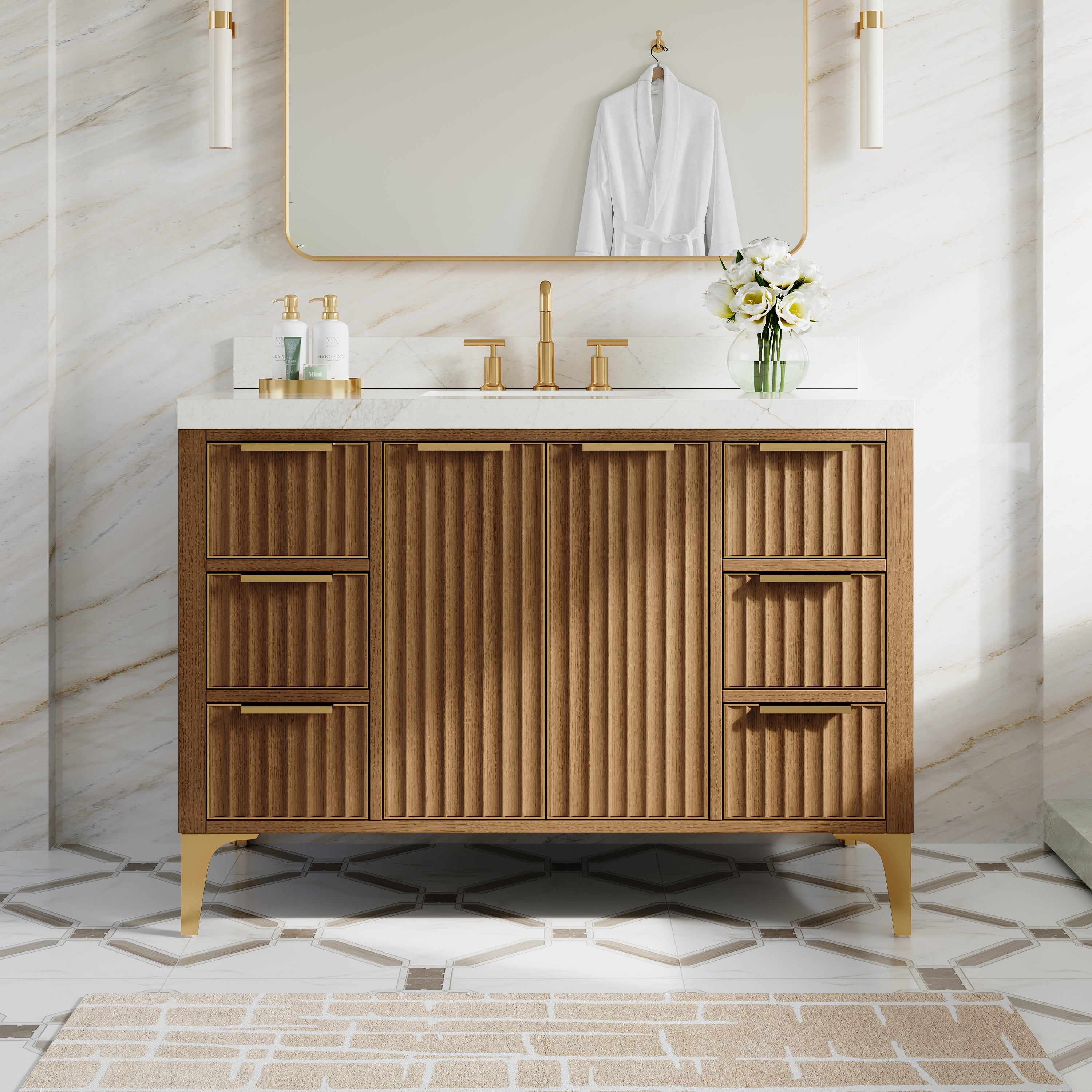
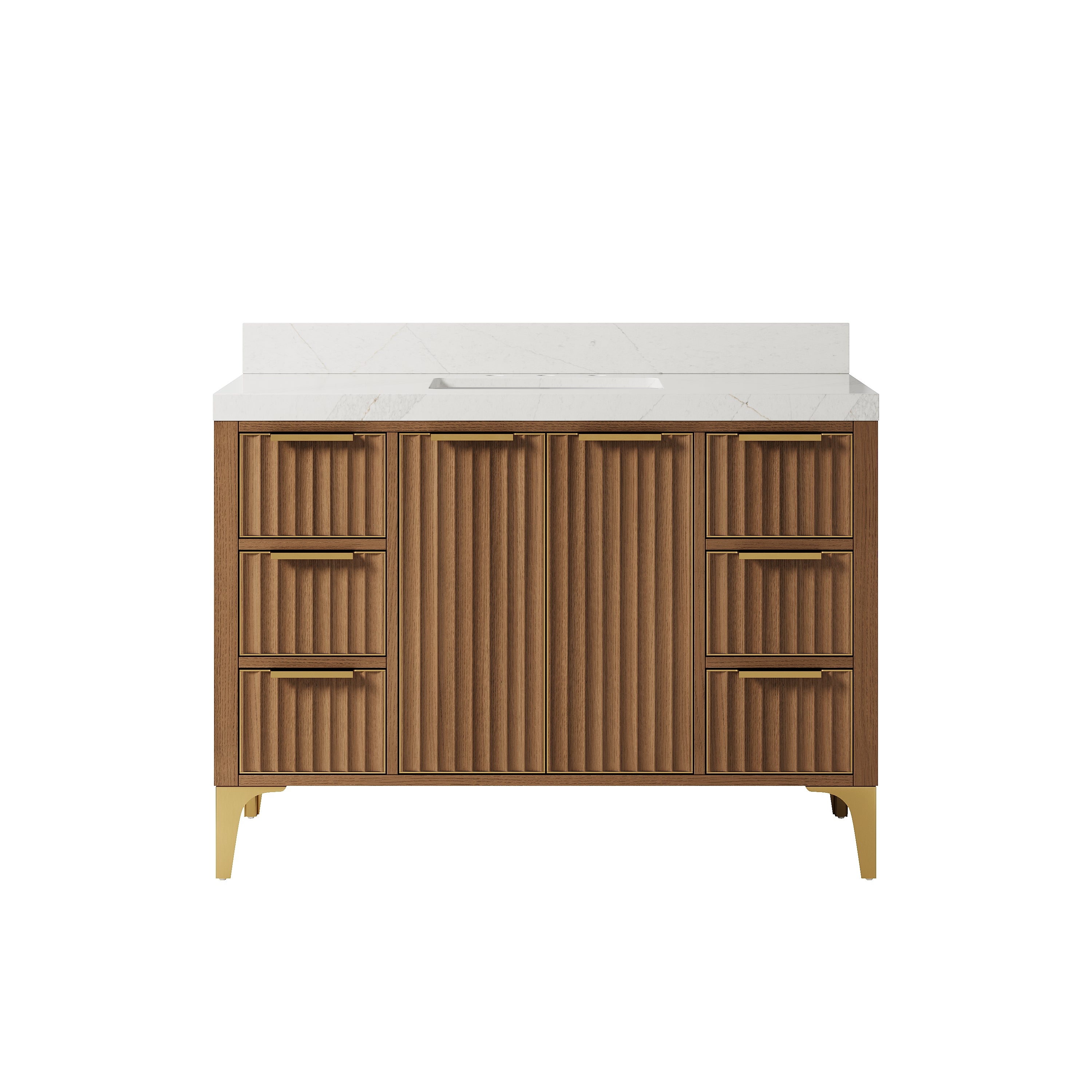


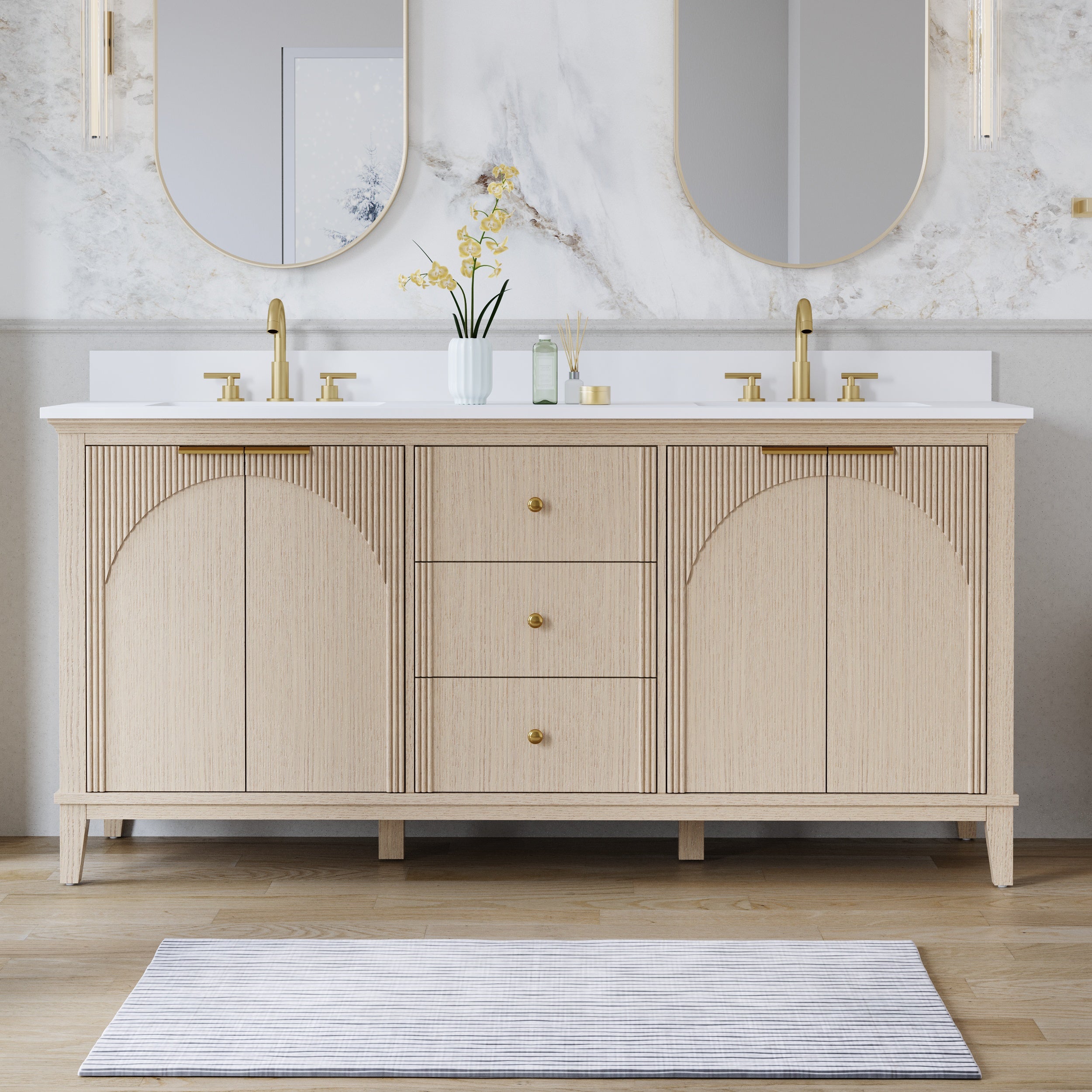
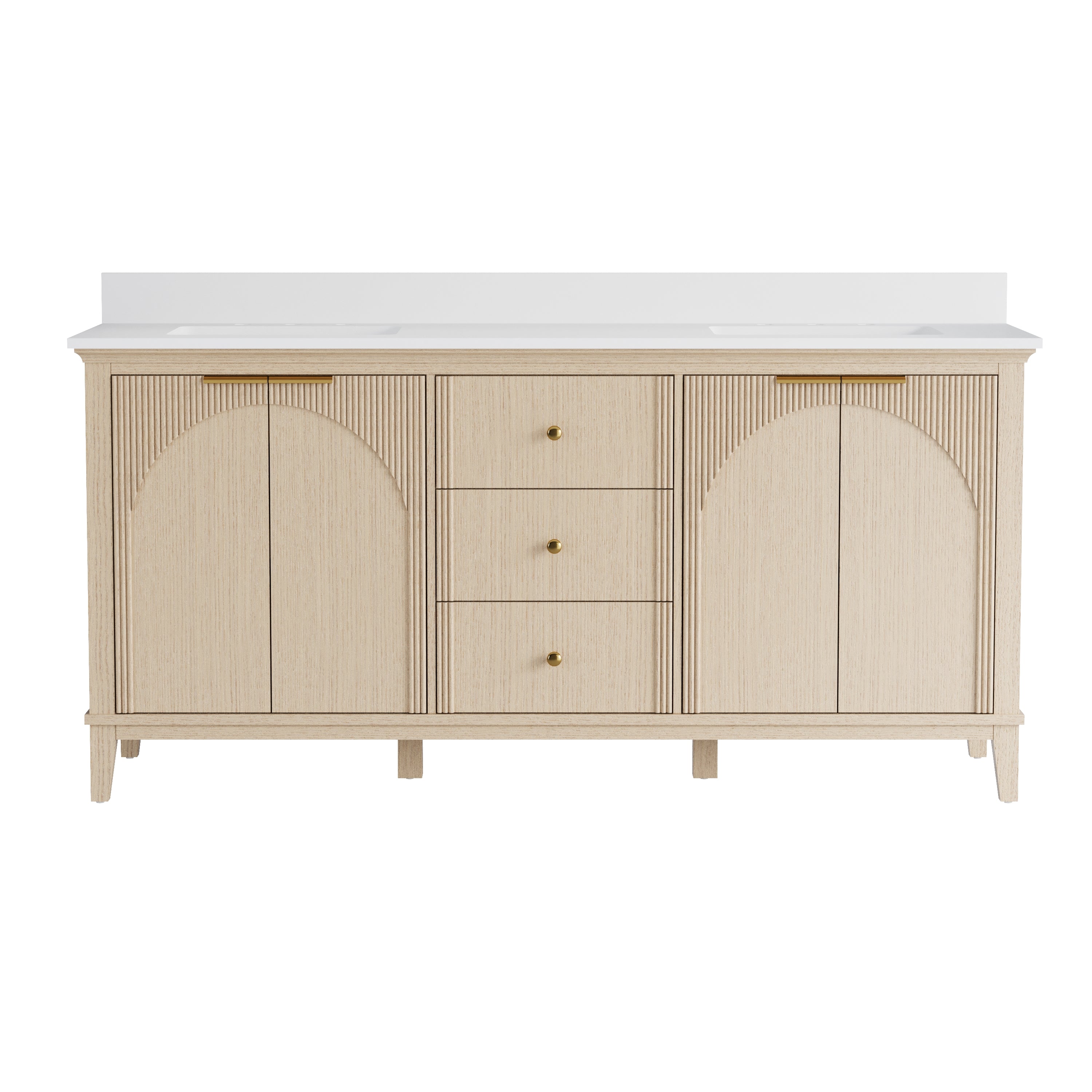
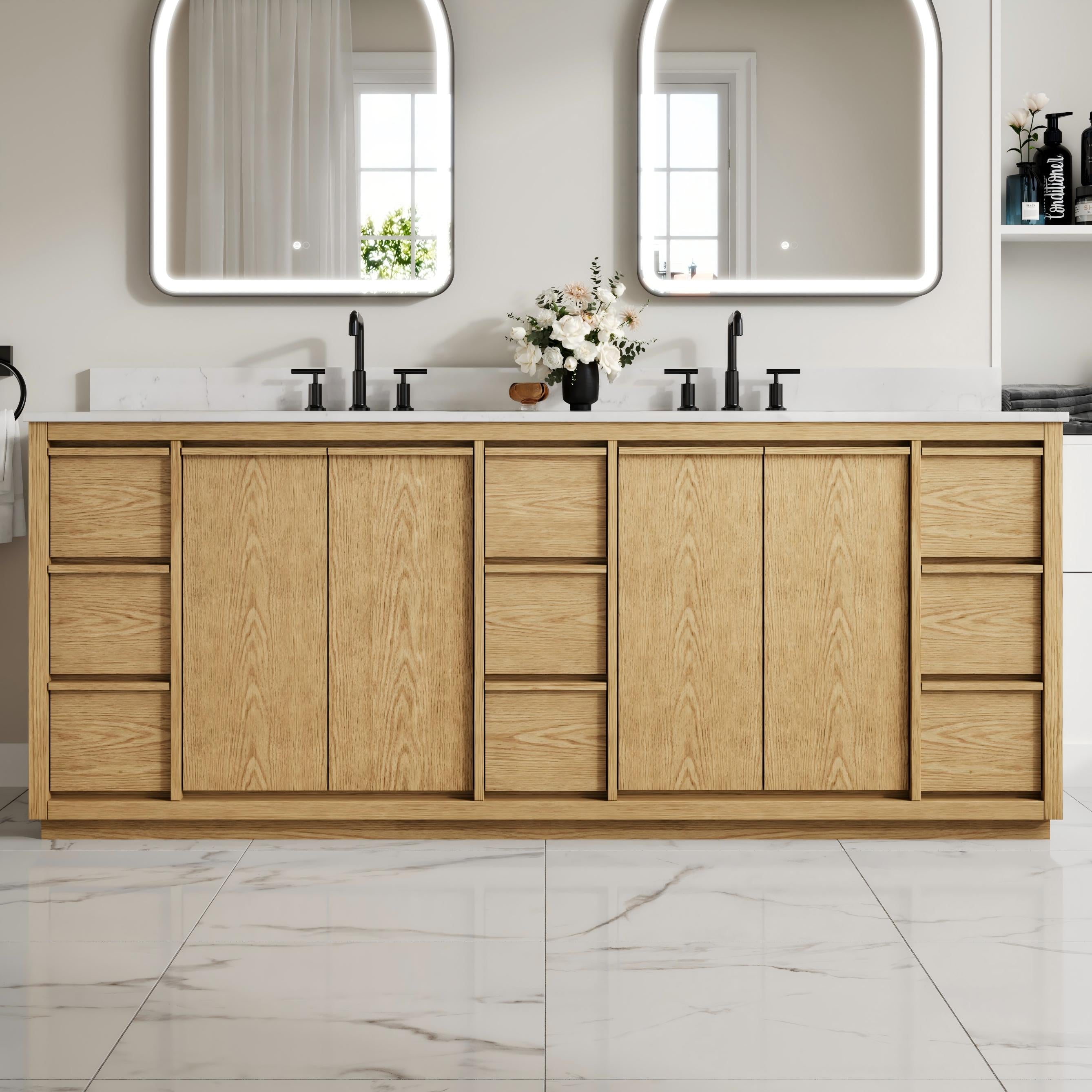
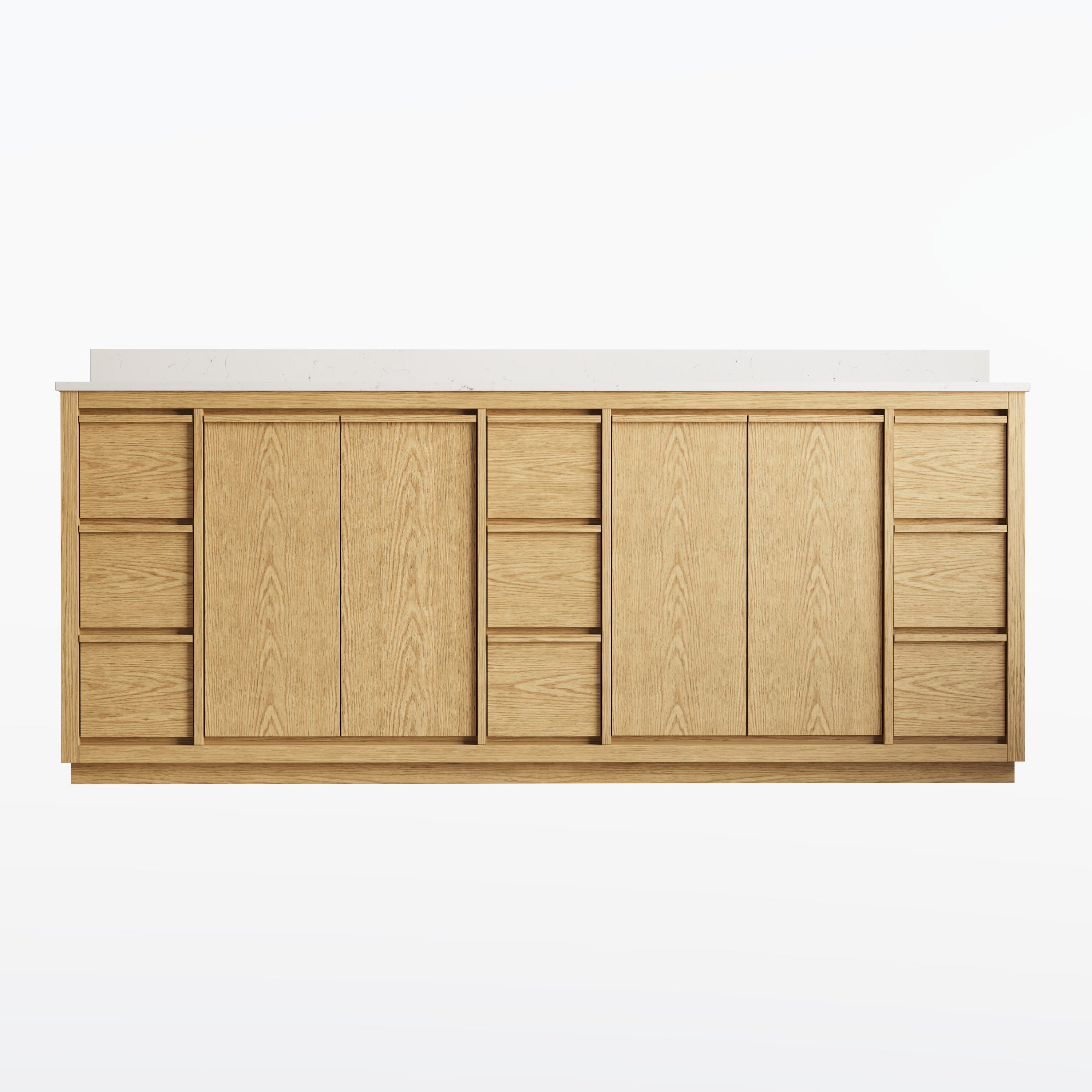
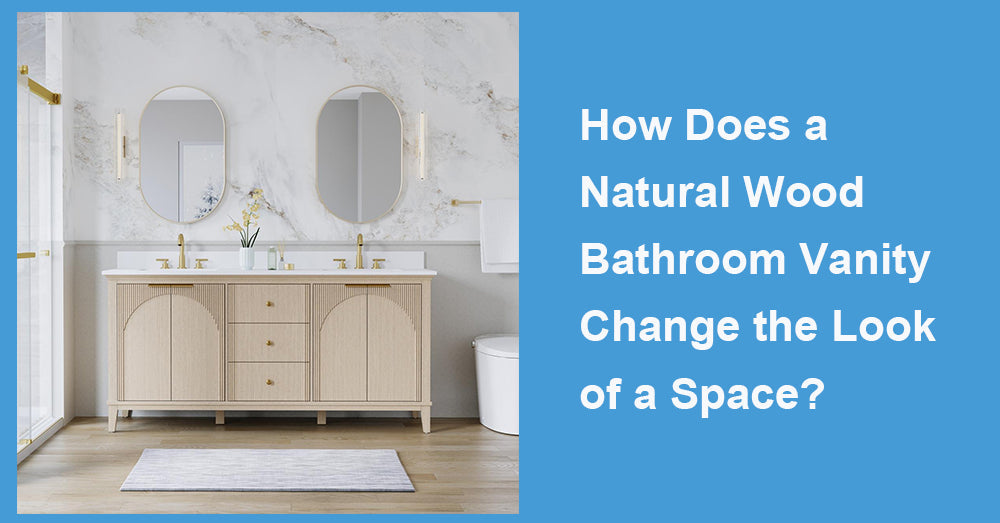
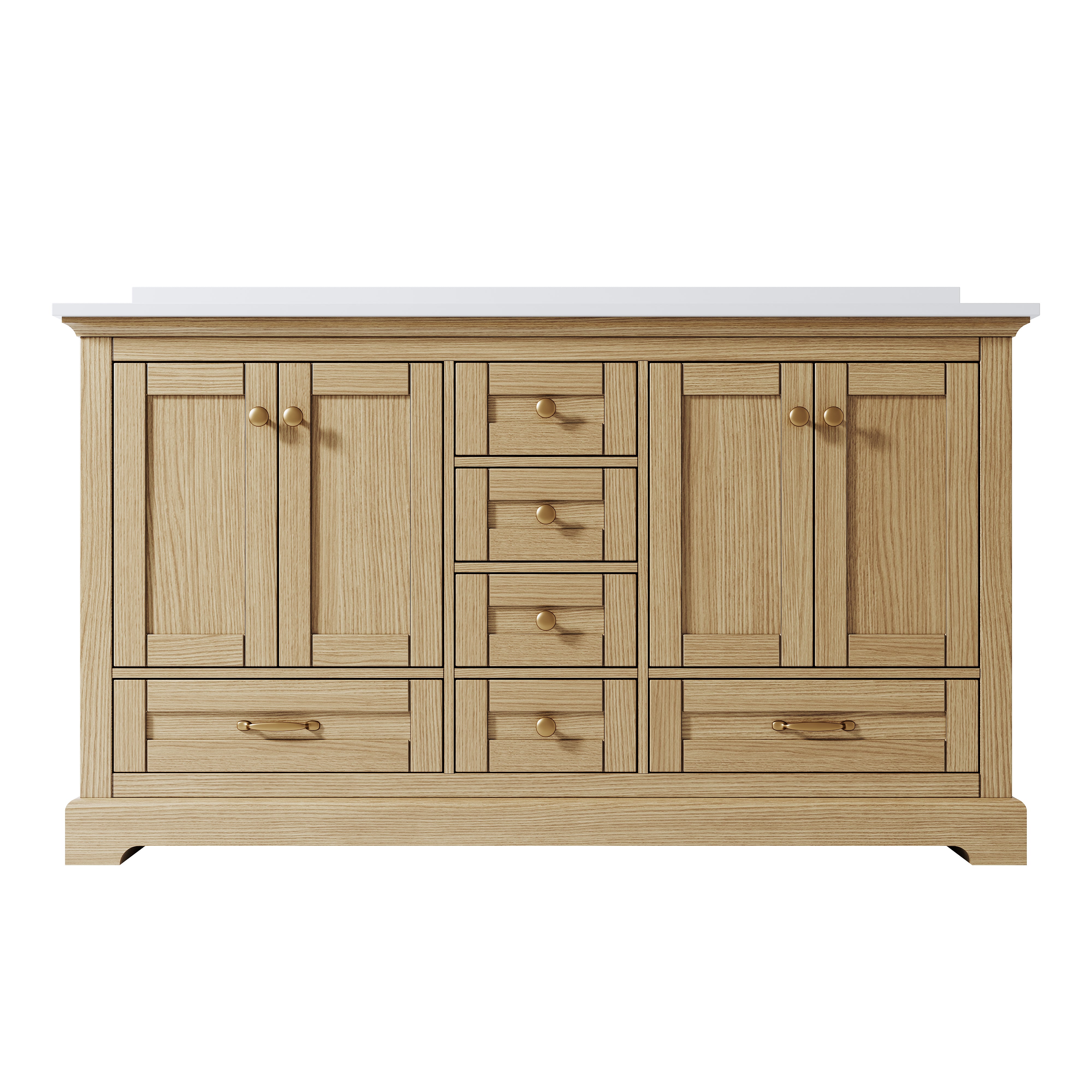
A natural wood bathroom vanity introduces warmth, visible grain, and depth into a room usually dominated by tile, glass, mirrors, and metal. After more than 20 years in bathroom cabinetry, I have seen one well-chosen vanity make a cold space feel calmer and more personal. The effect comes from material, proportion, and placement working together.
1. A Natural Wood Bathroom Vanity Softens Hard Surfaces
Bathrooms need durable finishes, but durability often creates visual hardness. Porcelain tile, quartz, chrome, and shower glass are practical, yet too many smooth surfaces can make a room feel sterile.
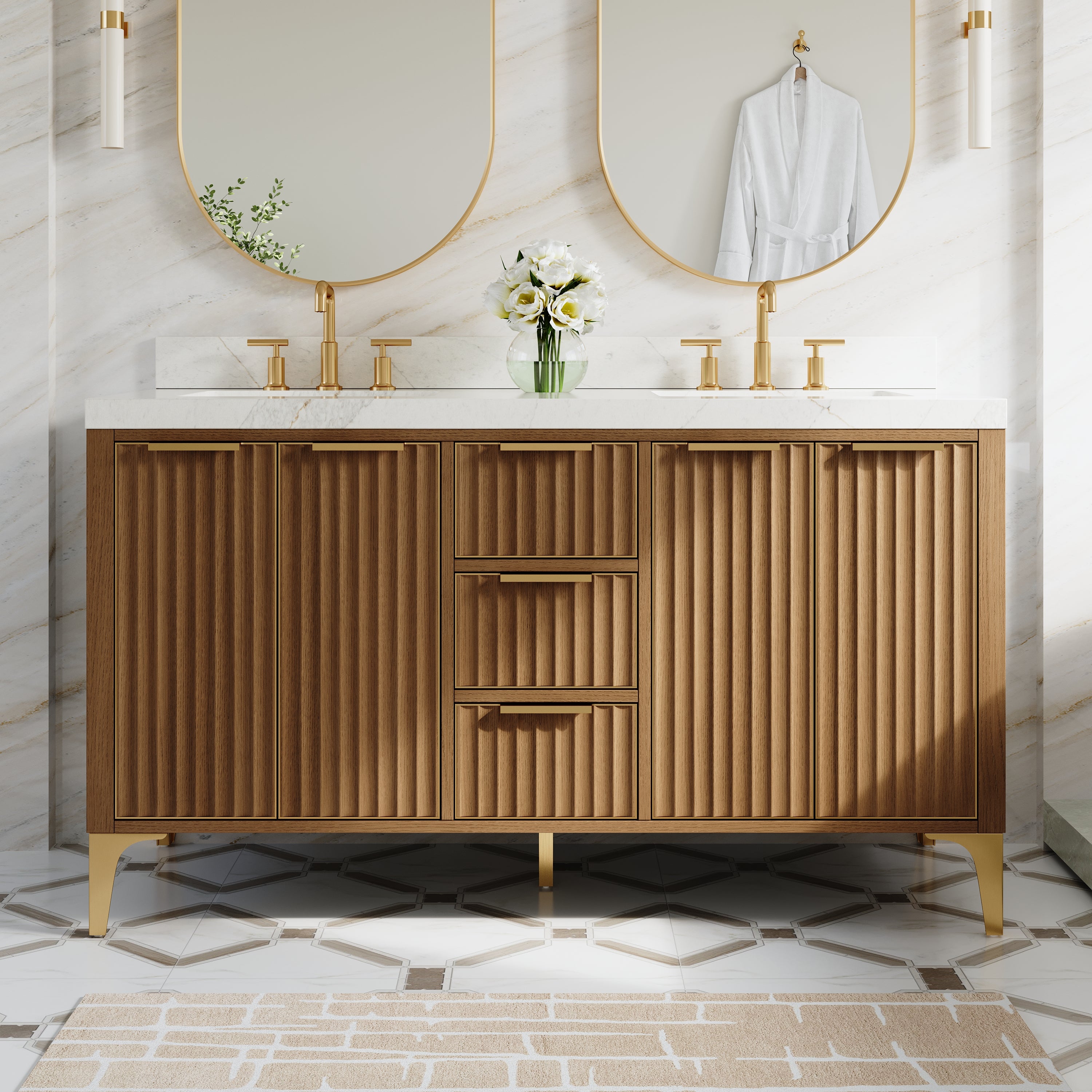
Wood interrupts that effect. Its grain adds movement, while small variations in tone keep the cabinet from looking flat. In a white bathroom, pale oak introduces warmth without reducing brightness. In a larger primary suite, walnut can anchor the sink area.
2. Wood Changes the Perceived Temperature of the Room
Cool gray tile and bright white walls may look clean, but they can feel sharp under cool LED lighting. A wood vanity adds warmer undertones, making the room feel softer even when the palette remains neutral.
The wood tone matters
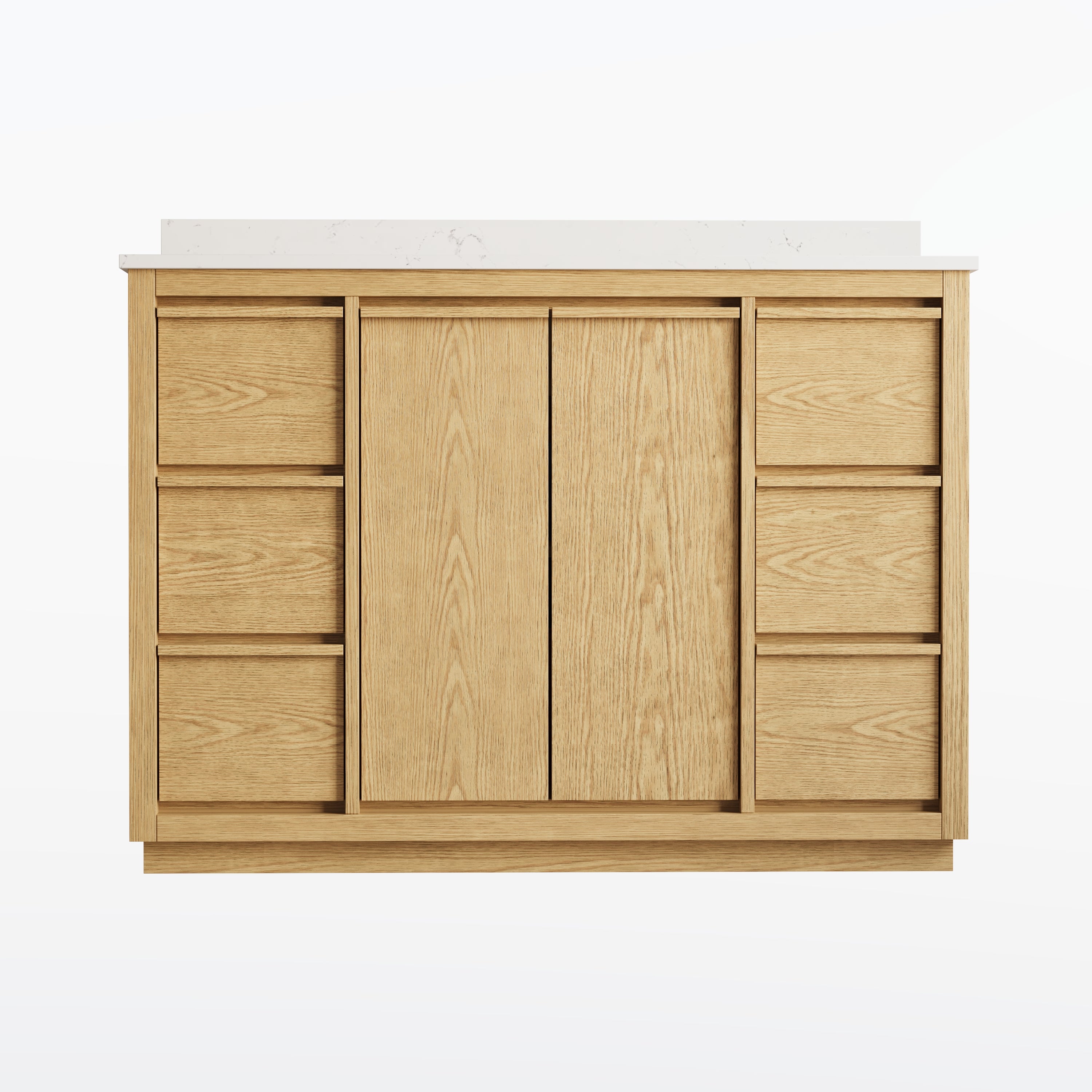
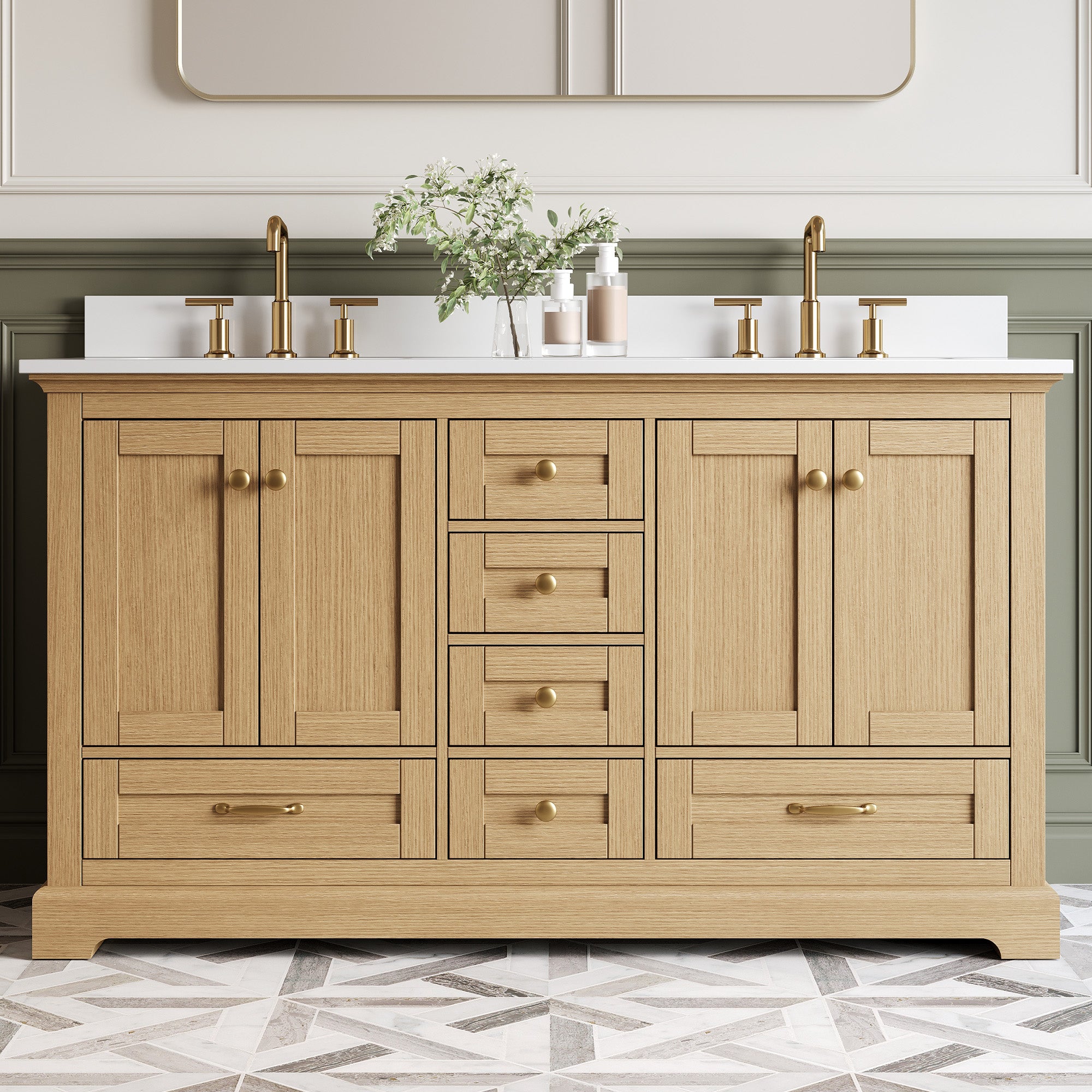
Light oak, ash, and maple finishes suit small bathrooms or rooms with limited daylight. Medium wood tones work well with beige stone, warm white walls, and brushed metal fixtures.
Dark walnut can look refined, but it needs enough space and light. In a narrow bathroom, deep brown cabinetry may feel heavy.
Do not choose by the finish name alone. “Natural oak” can lean yellow, gray, beige, or slightly pink depending on the stain and lighting.
3. Wood Can Define the Bathroom’s Style
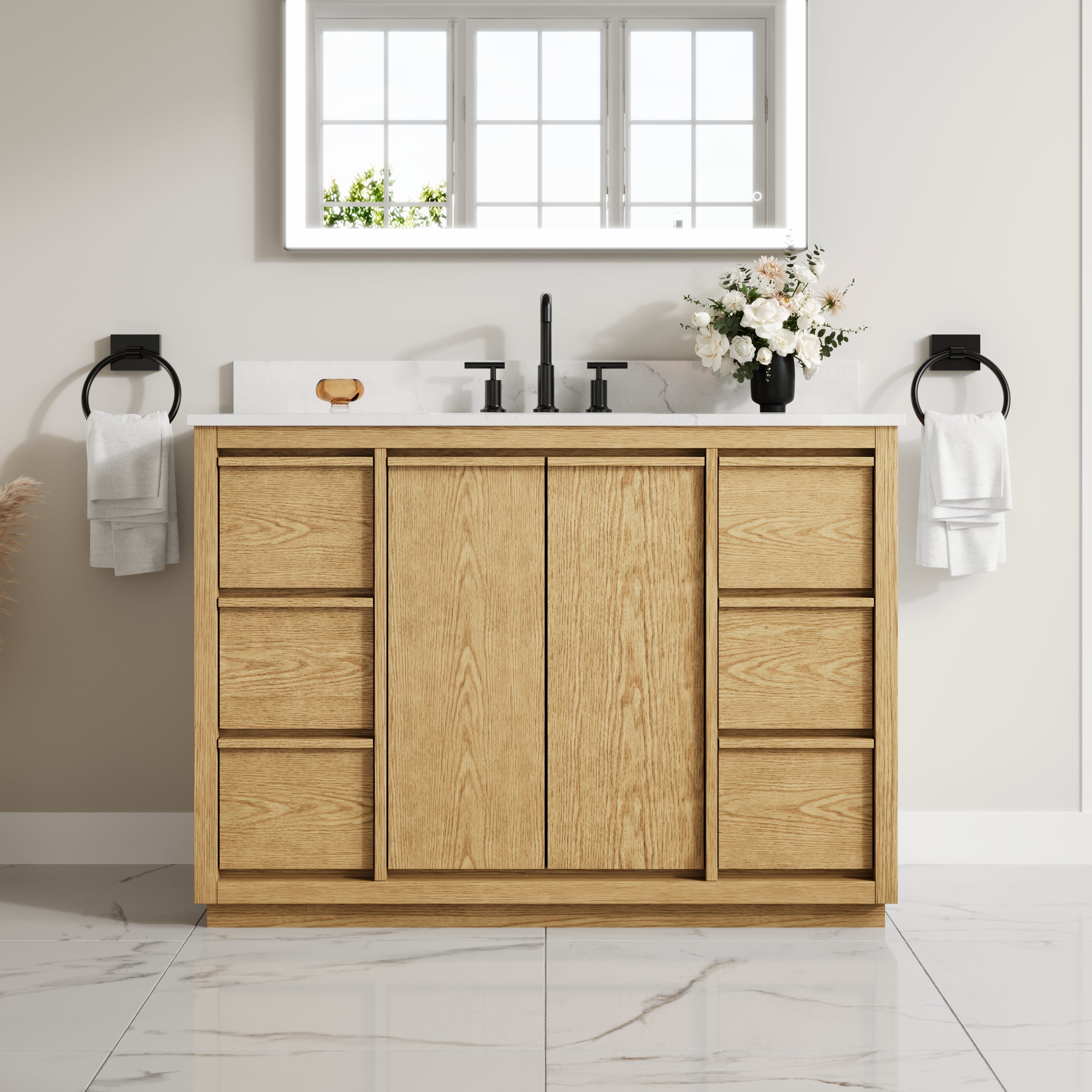
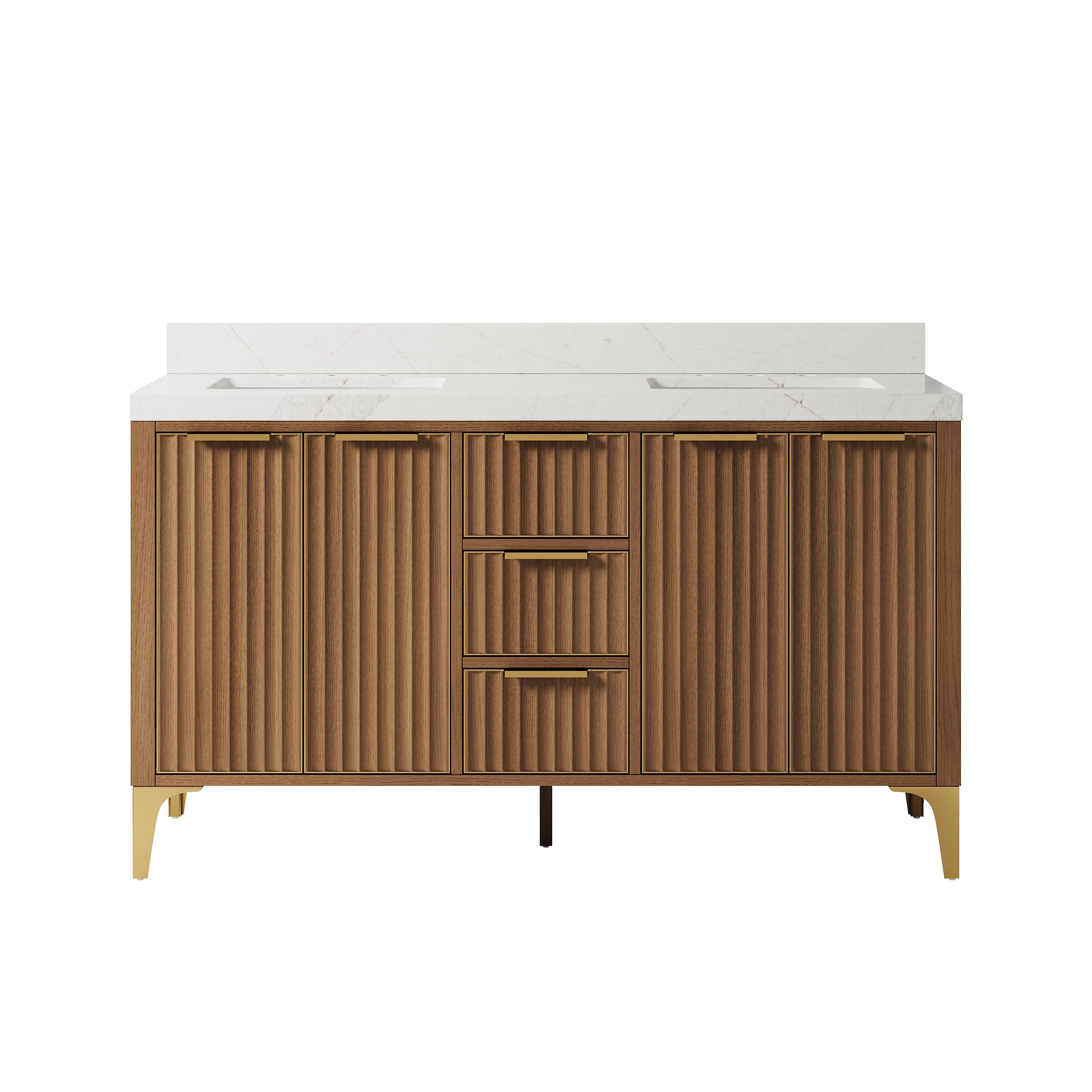
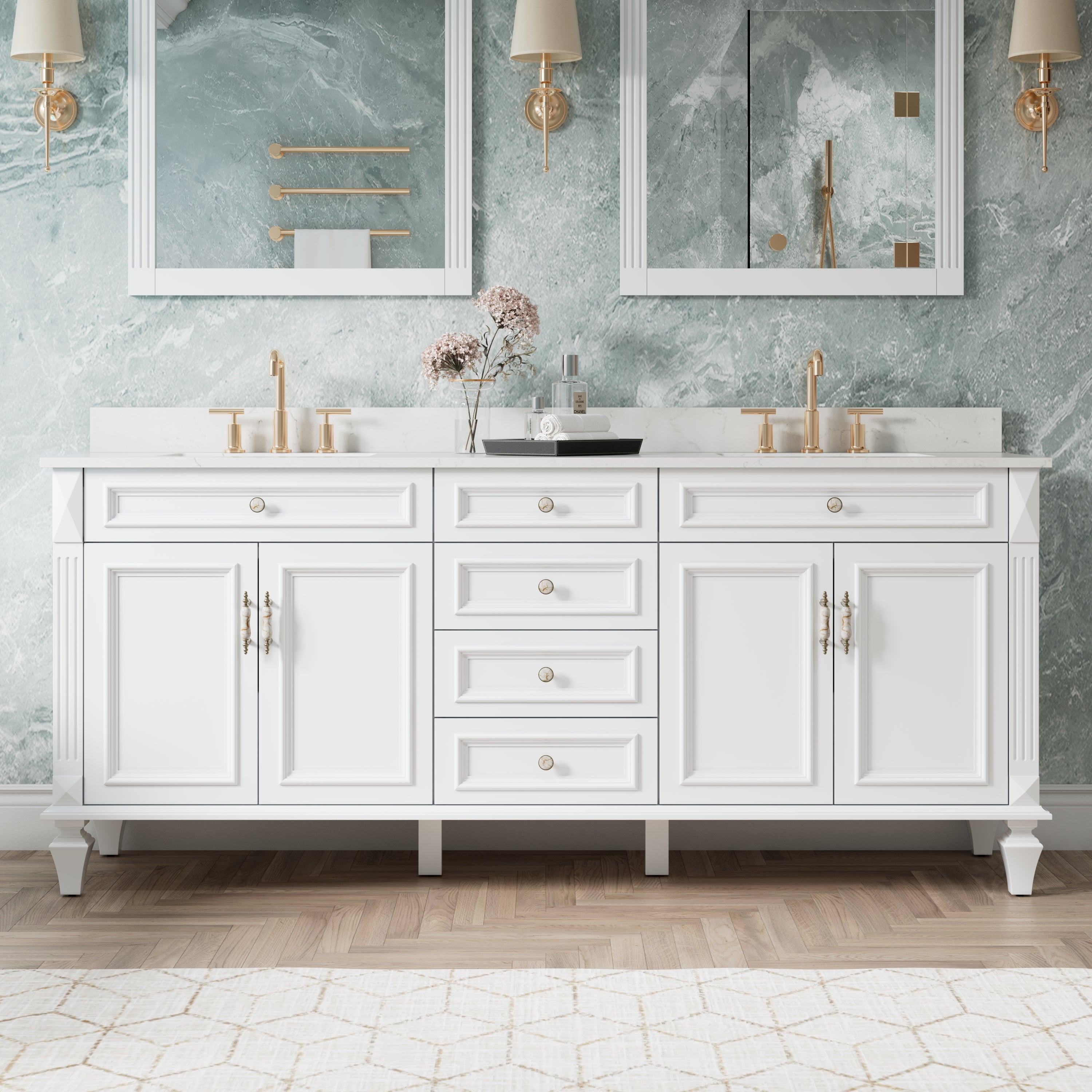
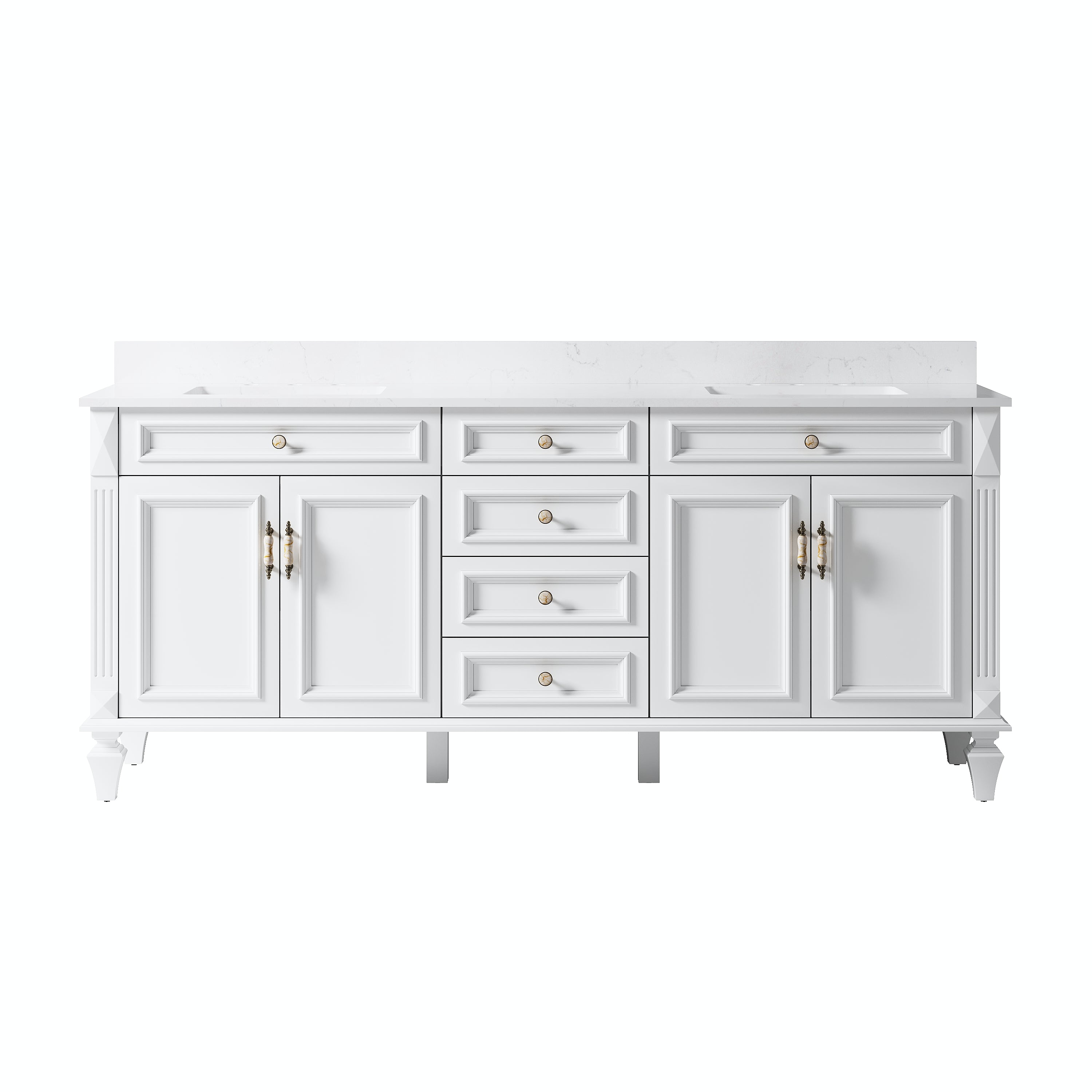
Flat-front drawers and integrated pulls create a modern appearance. A floating cabinet works naturally in Scandinavian and Japandi spaces. Shaker doors move the vanity toward transitional design, while framed panels and furniture-style legs suit traditional homes.
White quartz keeps the room crisp. Warm stone softens it. Matte black hardware adds definition, while brass brings warmth.
Natural does not have to mean rustic
A common misconception is that visible wood grain automatically creates a rustic bathroom. In practice, the door profile, hardware, and installation style matter more.
A slab-front vanity can look highly architectural. Heavy distressing, decorative molding, and pronounced knots create rustic character—not wood alone.
4. The Vanity Can Improve Visual Balance
A large shower enclosure, dark floor, or tall storage cabinet can make one side of a bathroom feel heavy. A natural wood vanity can restore balance by creating a focal point at the sink.
In a compact room, a floating model exposes more flooring and reduces visual weight. In a long bathroom, wood breaks up repeated white surfaces.
Strong grain may compete with dramatic marble or patterned tile. If the room already has an active surface, choose a quieter finish.
5. Appearance Should Not Replace Practical Planning
A beautiful vanity can still be wrong if it does not support daily routines.
Deep drawers are useful for skincare, cosmetics, brushes, and grooming tools. Cabinet space beneath the sink works better for tall bottles, cleaning supplies, and spare paper goods.
Check which drawers open. Some top fronts are fixed because the sink occupies the space behind them, and plumbing cutouts can reduce storage.
Floating vanities create a lighter look and simplify floor cleaning, but they may offer less storage height. Freestanding models usually provide more capacity, though they can feel bulky in narrow rooms.
6. Understand the Material’s Limitations
Wood is not waterproof. Standing water, poor ventilation, and slow plumbing leaks can damage even a well-built cabinet.
Solid wood may expand and contract slightly as humidity changes, so doors occasionally need adjustment. Veneer can perform well when properly sealed, but damaged edges should be repaired quickly.
Wood works best in ventilated primary bathrooms, guest baths, and family spaces where splashes are wiped promptly. It is less suitable for open wet rooms, frequently flooded bathrooms, or rentals where maintenance is inconsistent.
Construction quality, sealing, and installation often matter more than wood species alone.
7. Installation Determines How Finished the Room Feels
Measure the wall width, cabinet depth, countertop overhang, doorway clearance, and distance to nearby fixtures. Mark the footprint with painter’s tape before ordering.
Compare the drain and supply-line positions with the cabinet interior. Pipes that conflict with drawers can cause costly changes or lost storage.
Install the cabinet level so doors and drawers remain aligned. Floating models need secure framing or an approved mounting system. Seal the sink, countertop, faucet openings, and backsplash joints, then test every plumbing connection.

8. Maintain the Finish With Simple Habits
Use a soft cloth and a mild, non-abrasive cleaner. Wipe standing water around the faucet and avoid leaving wet towels against the cabinet face.
Run the exhaust fan during showers and let it continue until the room begins to dry. Check beneath the sink several times a year for slow leaks. Repair finish chips before moisture reaches the wood underneath.
When comparing Wellfor options, begin with the room’s dimensions, storage needs, ventilation, and surrounding materials. Choose quiet grain beside dramatic tile, or stronger grain when the vanity should become the focal point. A carefully selected natural wood bathroom vanity will make the space feel warmer and more balanced while remaining practical for everyday use.


















Leave a comment
This site is protected by hCaptcha and the hCaptcha Privacy Policy and Terms of Service apply.