














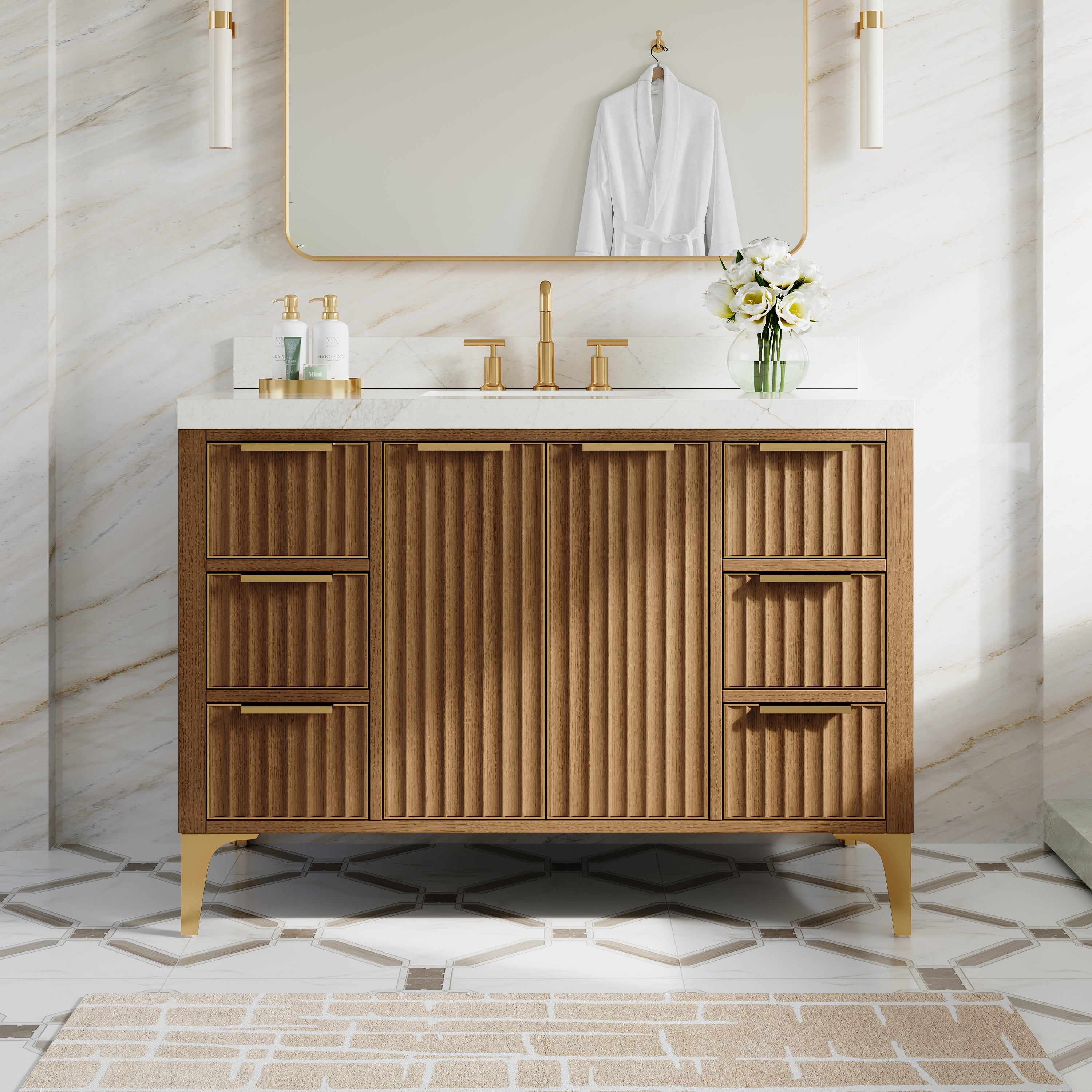
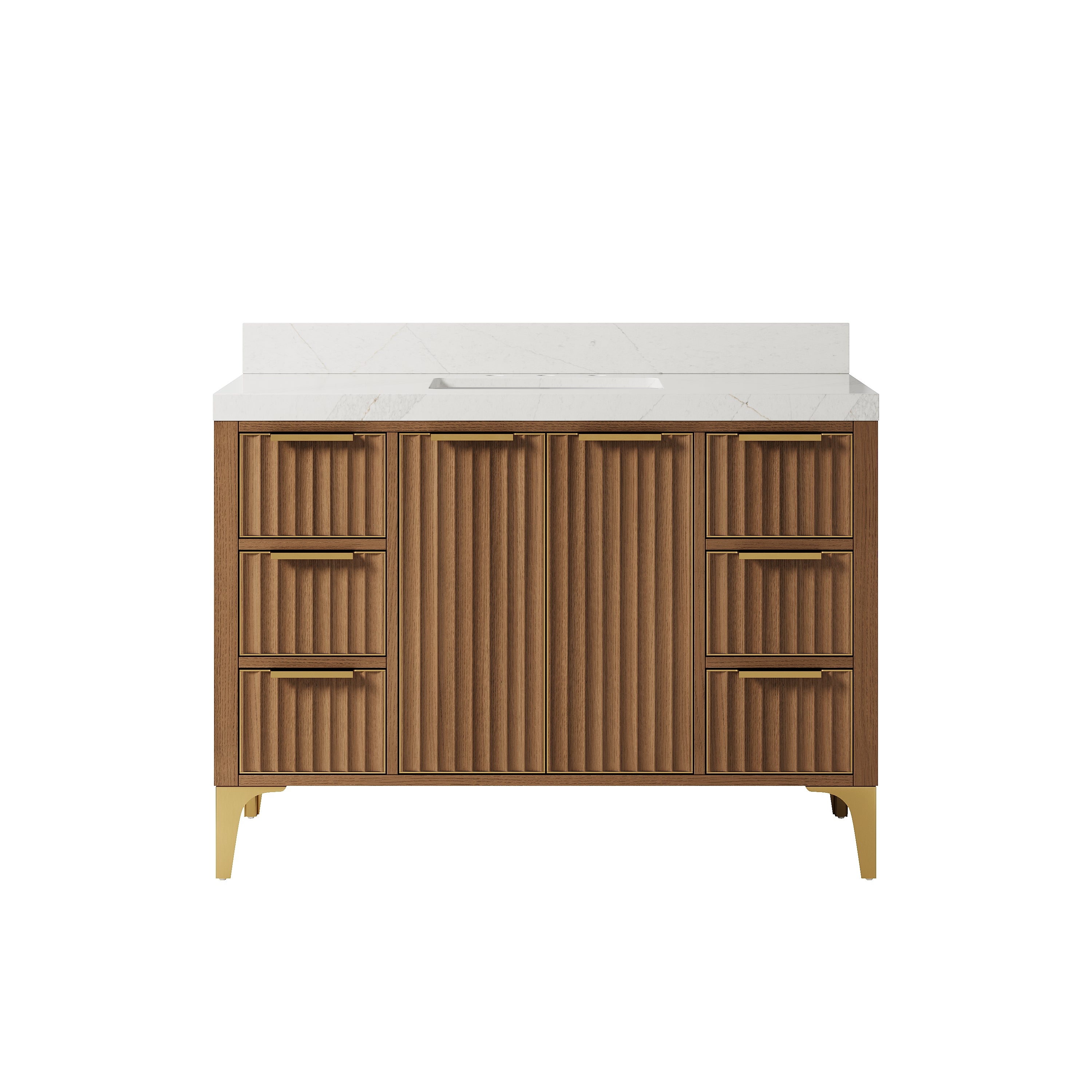


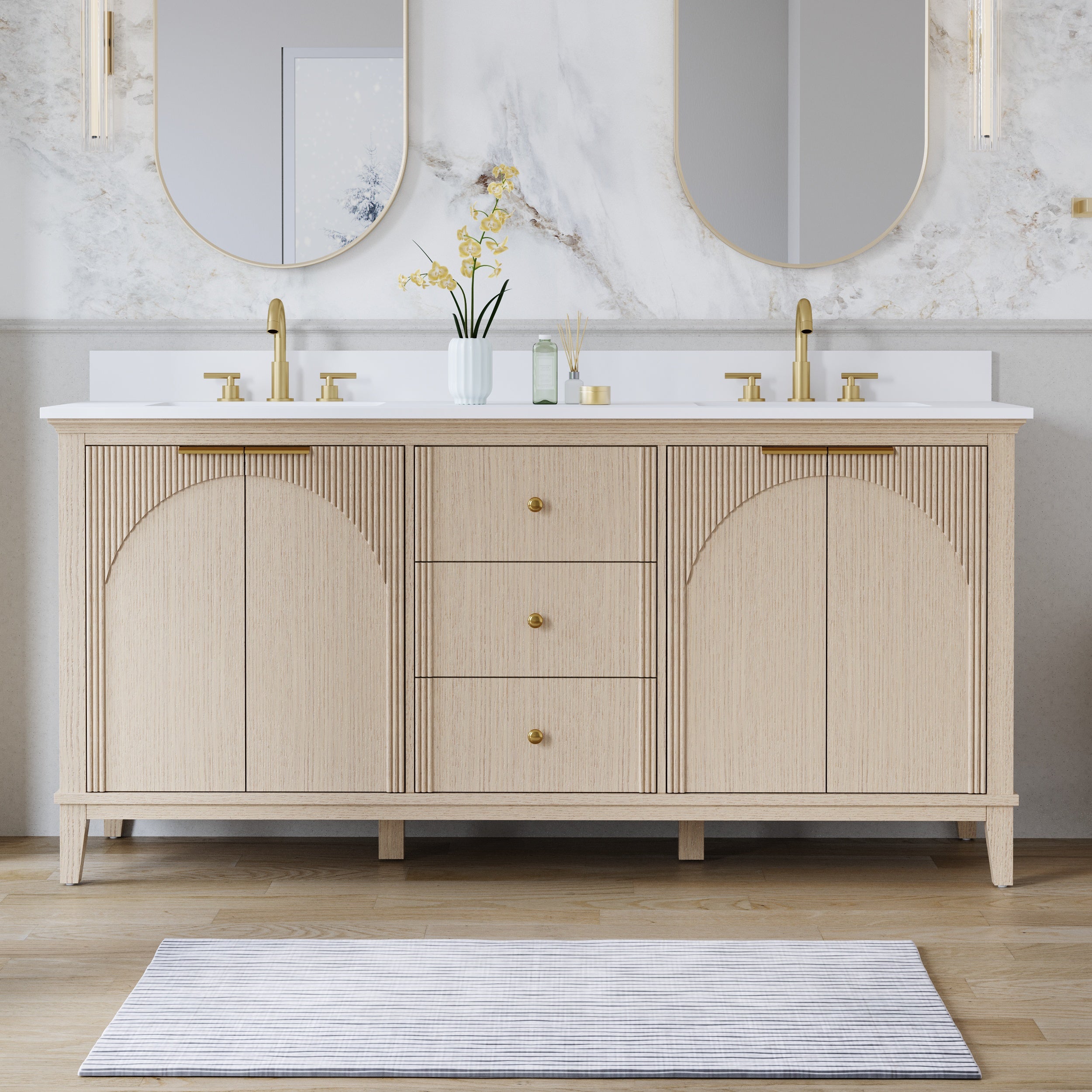
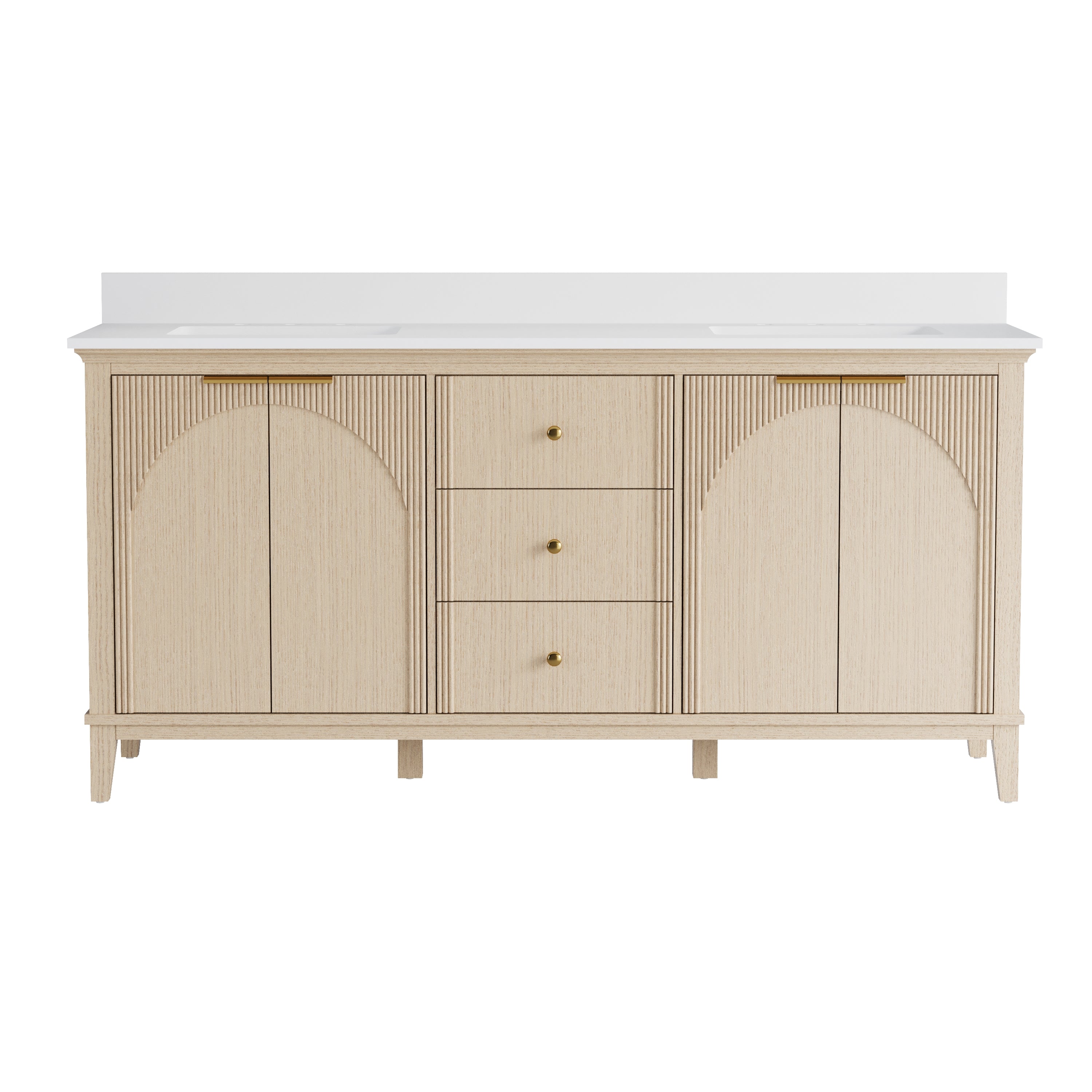
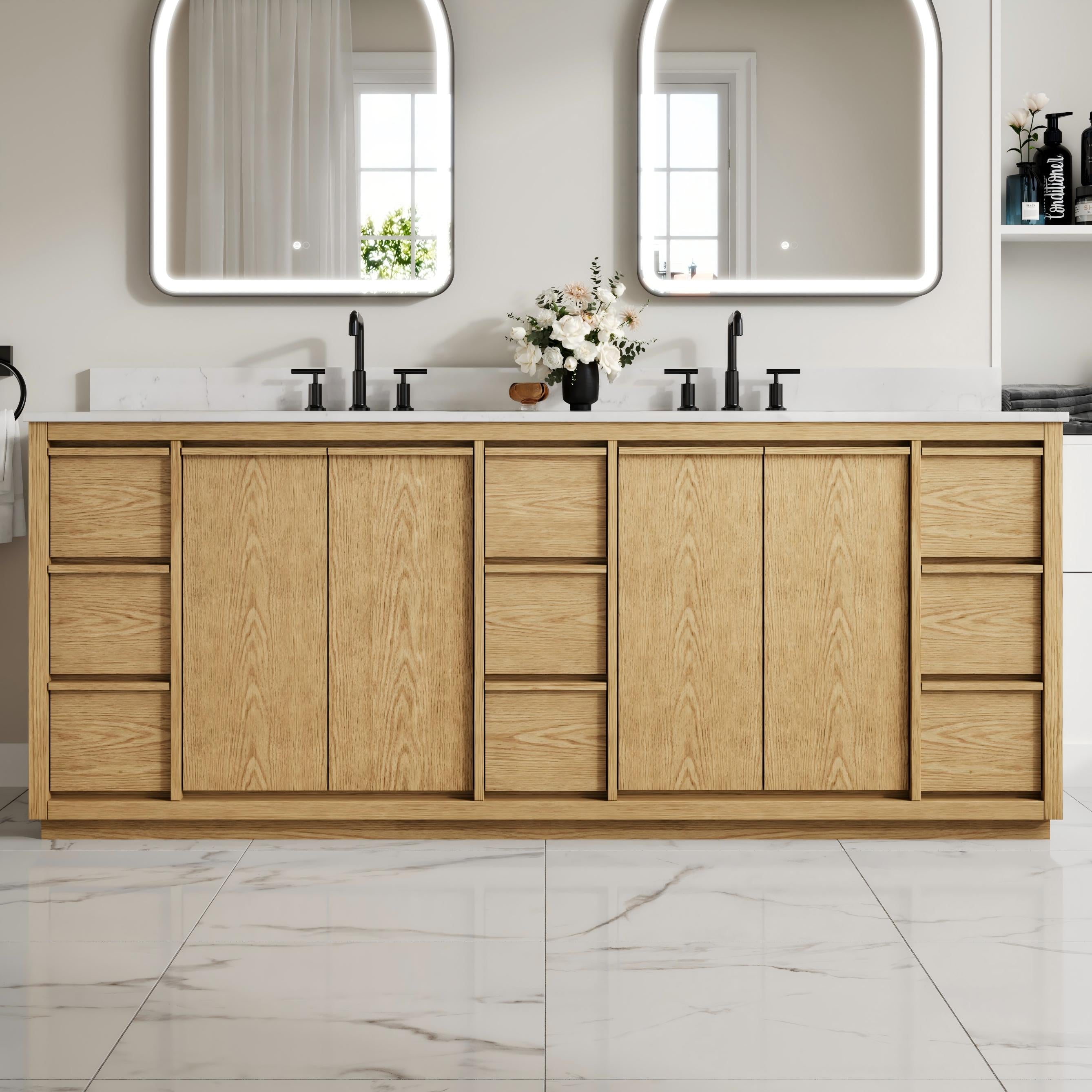
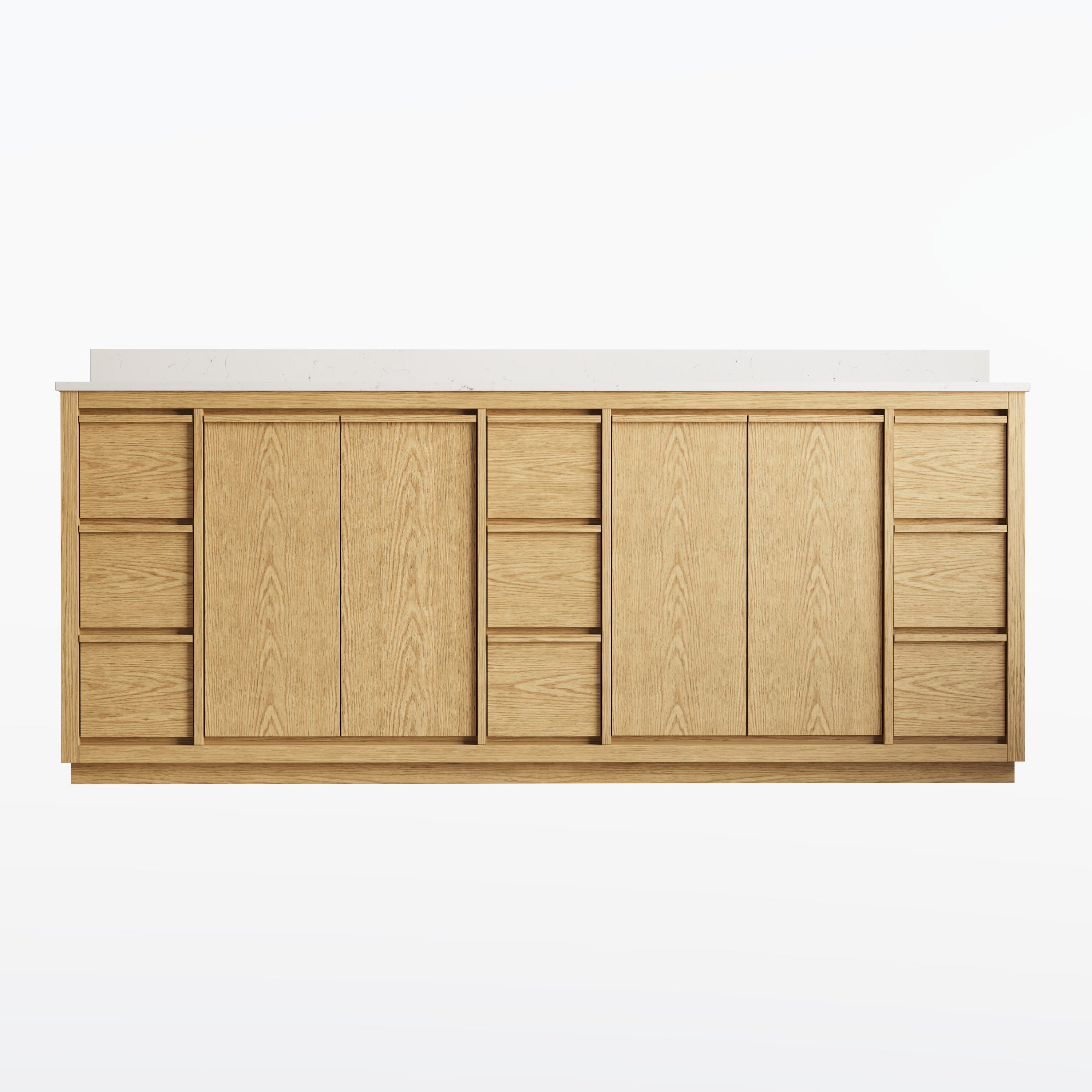
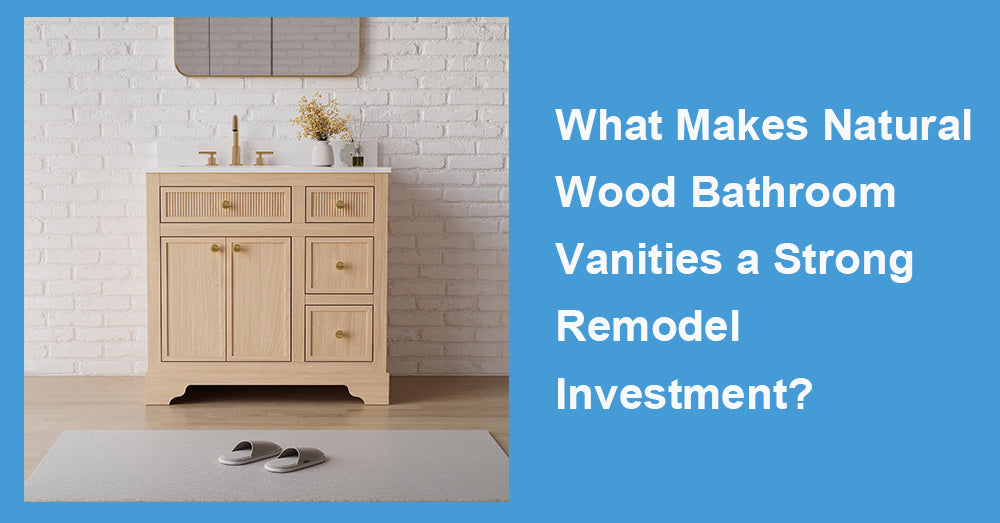
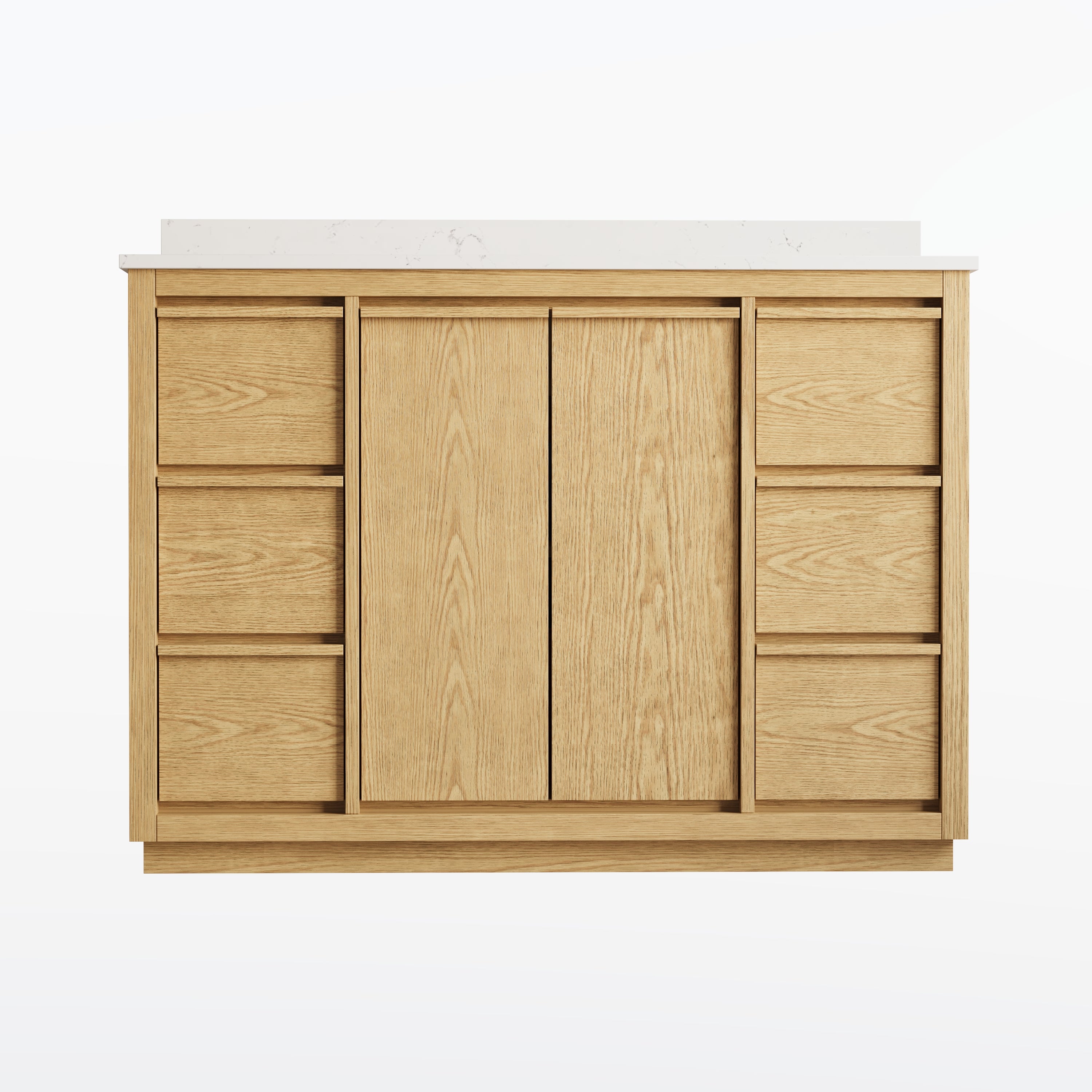
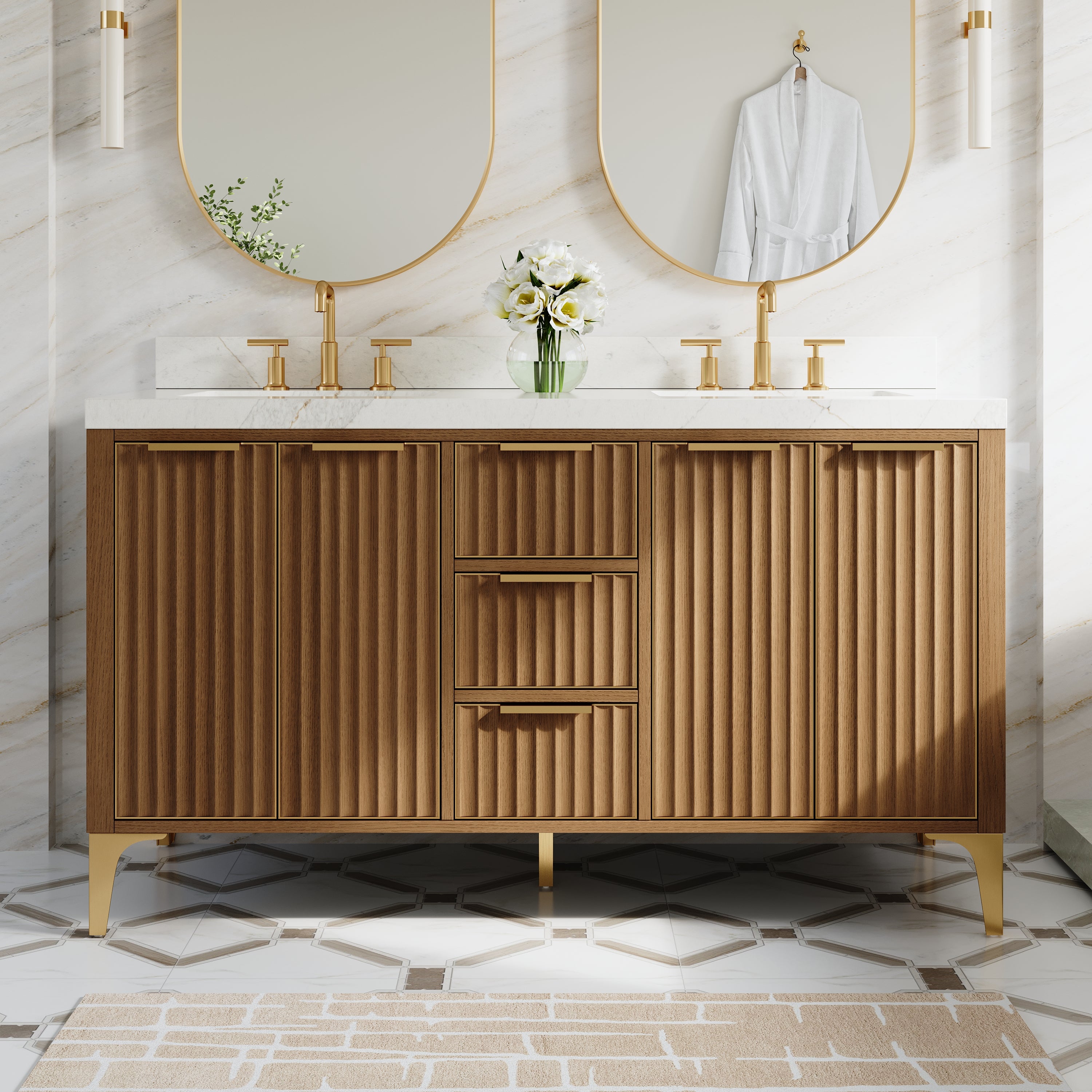
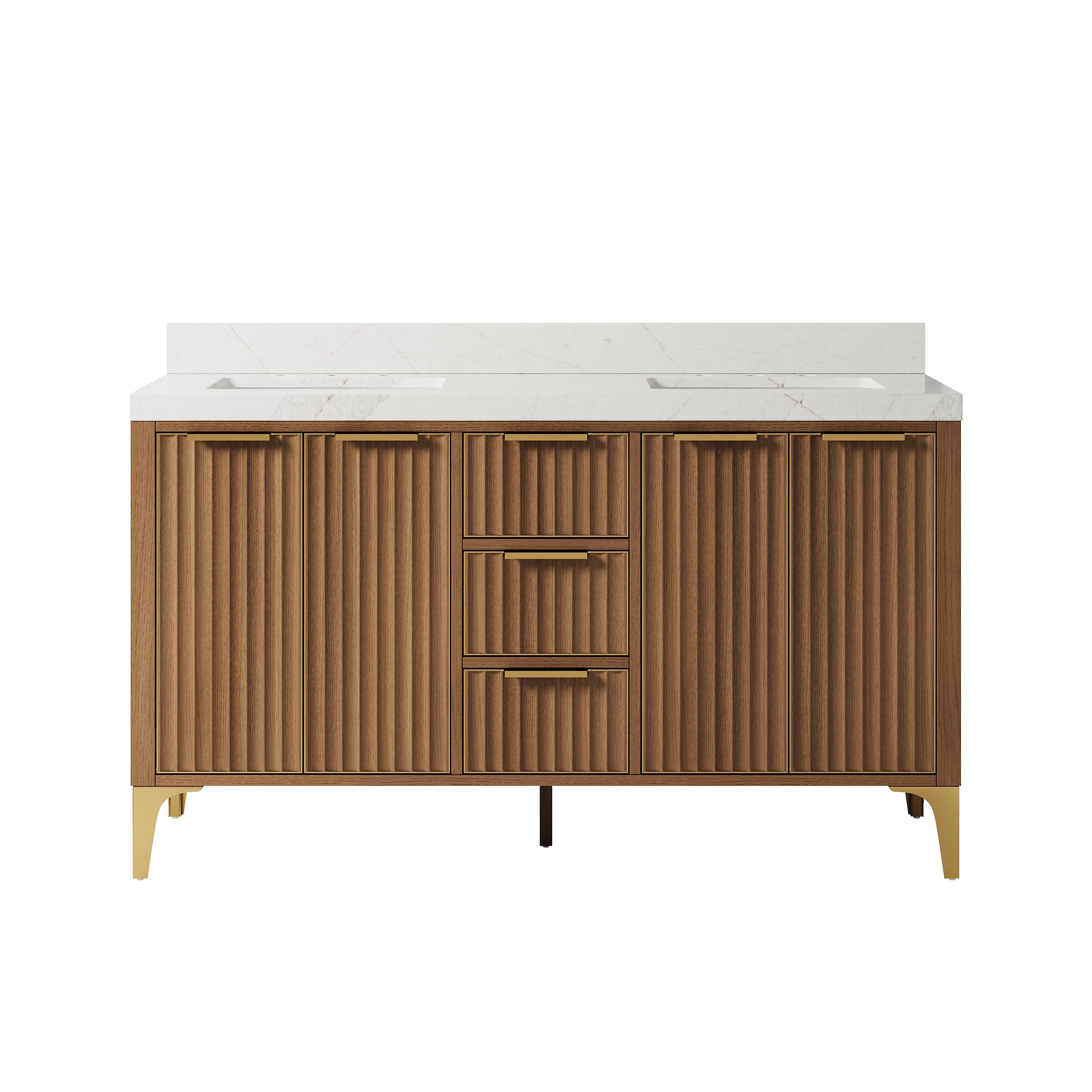
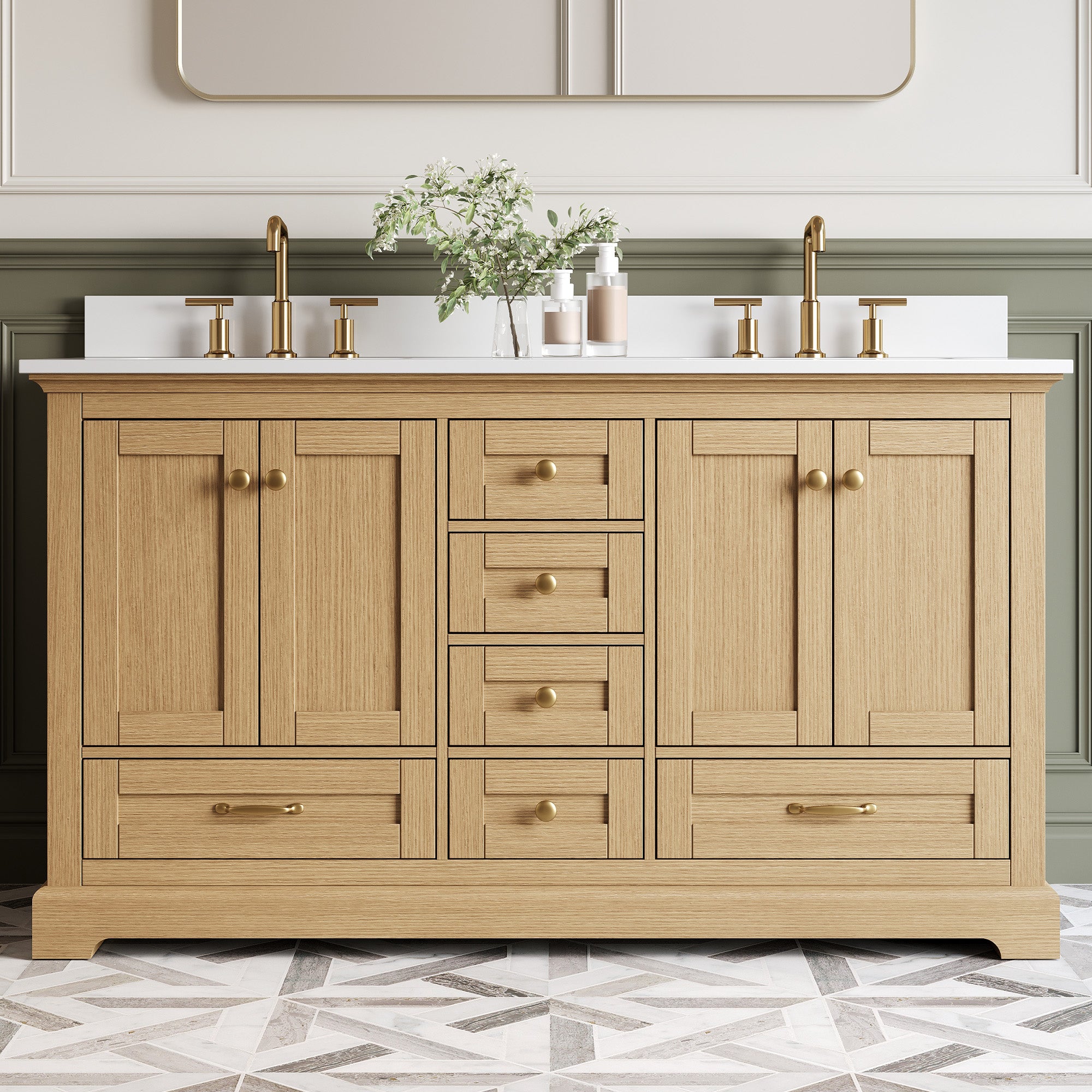
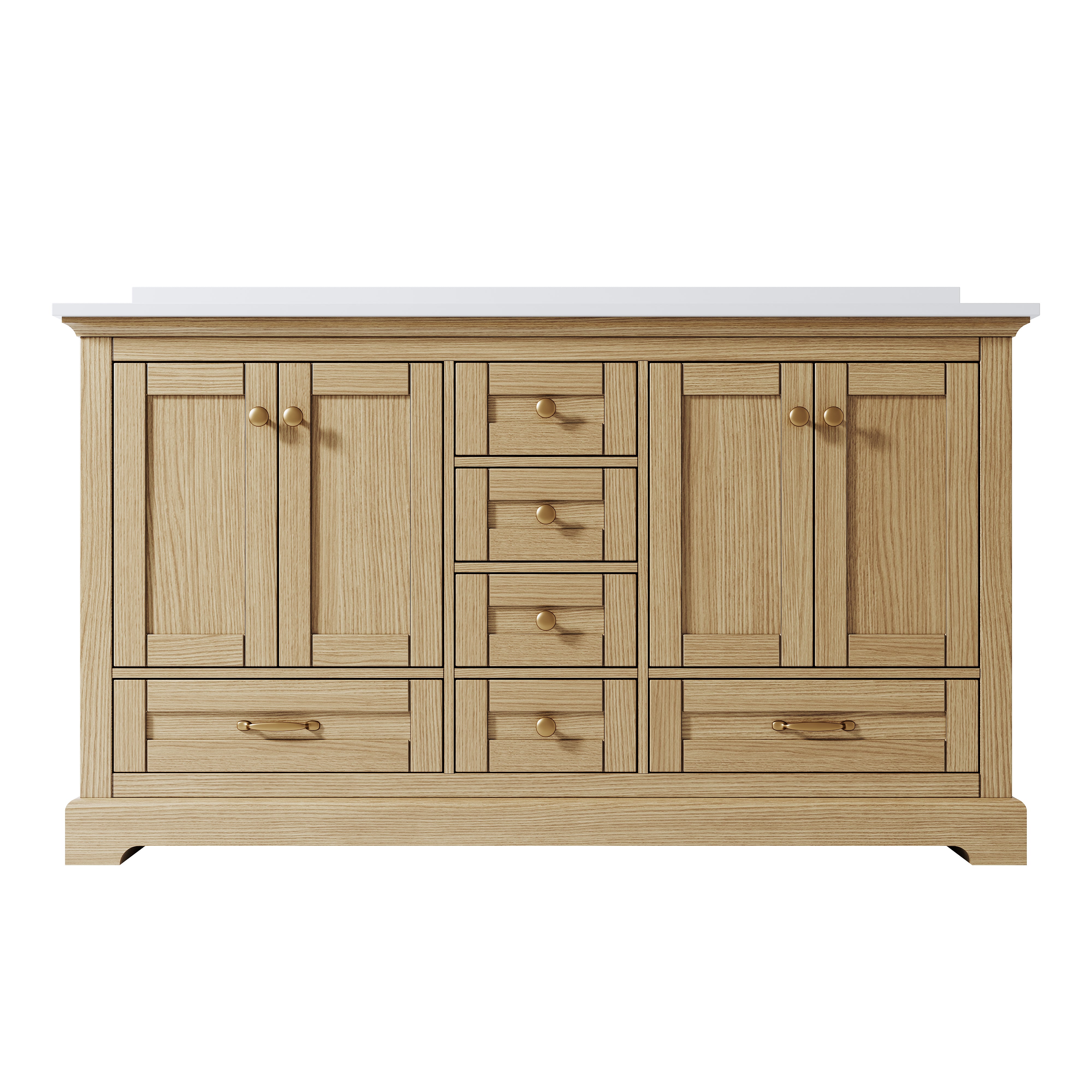
Natural wood bathroom vanities have become one of the most reliable ways to add warmth, storage, and perceived quality to a bathroom remodel. Unlike highly decorative finishes that may date quickly, visible wood grain brings character without forcing the entire room into another style. A well-proportioned oak, maple, walnut, or birch vanity can support modern, transitional, organic, and spa-inspired interiors. More importantly, it improves the part of the bathroom used most often, giving the investment value through daily functionality as well as visual appeal.
1. Natural Wood Aligns With the Direction of Bathroom Design
The movement toward warmer, more natural bathrooms is supported by current industry research. Houzz reports that wood tones are the leading vanity color family, selected in 28% of renovated bathrooms. Solid wood is chosen for 74% of upgraded vanities, with maple accounting for 29% and white oak for 23%.
The National Kitchen & Bath Association also reports that wood-faced vanities, supported by 62% of surveyed professionals, have moved ahead of painted finishes at 53%. Its 2026 Bath Trends research draws on input from nearly 700 designers, manufacturers, remodelers, architects, dealers, and showroom professionals.
These figures point to a broader shift rather than a temporary color trend. Bathrooms are becoming calmer, more residential, and less dependent on cold white surfaces.
Industry judgment: natural wood now carries enough design momentum to be considered a mainstream specification, not a niche farmhouse choice.
2. Wood Creates Perceived Value Without Excessive Decoration
A vanity occupies a large portion of the bathroom’s visible wall area. Its material, proportions, and hardware can therefore influence how the entire room is judged.
Natural grain adds depth that a flat painted finish may not provide. Light white oak can make a compact bathroom feel open and relaxed, while walnut brings a more tailored as well as architectural character. Maple offers a quiet surface for minimalist spaces, and birch can provide a lighter appearance at a more accessible price point.
The advantage is not that wood automatically makes a vanity luxurious. The value comes from a finish that looks intentional, tactile, and connected to the rest of the home. A simple flat-panel vanity in quality wood can often appear more refined than a highly ornamented cabinet made from less convincing materials.
Industry judgment: restrained construction and believable grain usually produce stronger perceived value than decorative complexity.
3. Natural Wood Works Across Multiple Design Styles
A remodel investment becomes safer when the main fixture can survive future style changes. Natural wood offers this flexibility because it pairs with a wide range of colors and materials.
White oak works with warm white quartz, limestone-look porcelain, muted green tile, brushed nickel, and soft brass. Walnut can be balanced with ivory countertops, pale floors, or satin metal. Maple suits clean white surfaces and restrained contemporary hardware.
The cabinet can also be updated without replacement. Changing the faucet, mirror, lighting, wall color, or cabinet pulls may be enough to shift the room from transitional to modern. That adaptability can extend the vanity’s useful design life and reduce pressure for another complete renovation.
Current NKBA findings reinforce the move toward natural materials, light neutrals, organic aesthetics, matte finishes, and low-maintenance surfaces.
Industry judgment: a vanity that accepts several design directions carries less style risk than one tied to a short-lived color or decorative theme.
4. The Right Size Protects Both Function and Floor Space
Natural wood may attract the first look, but accurate sizing protects the investment. Nearly half of upgraded vanities, 47%, are 48 inches wide or smaller. Nineteen percent measure 60 inches, 14% measure 72 inches, and 13% are larger.
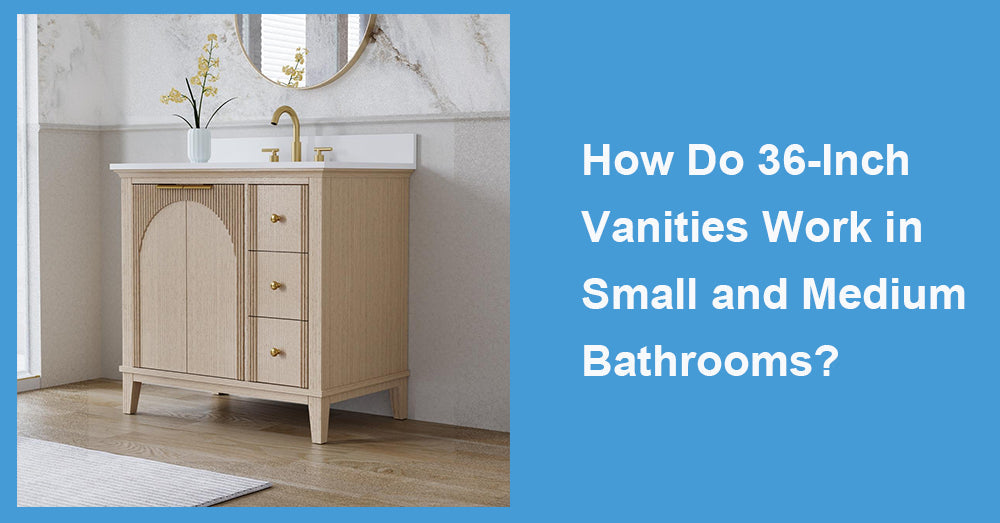
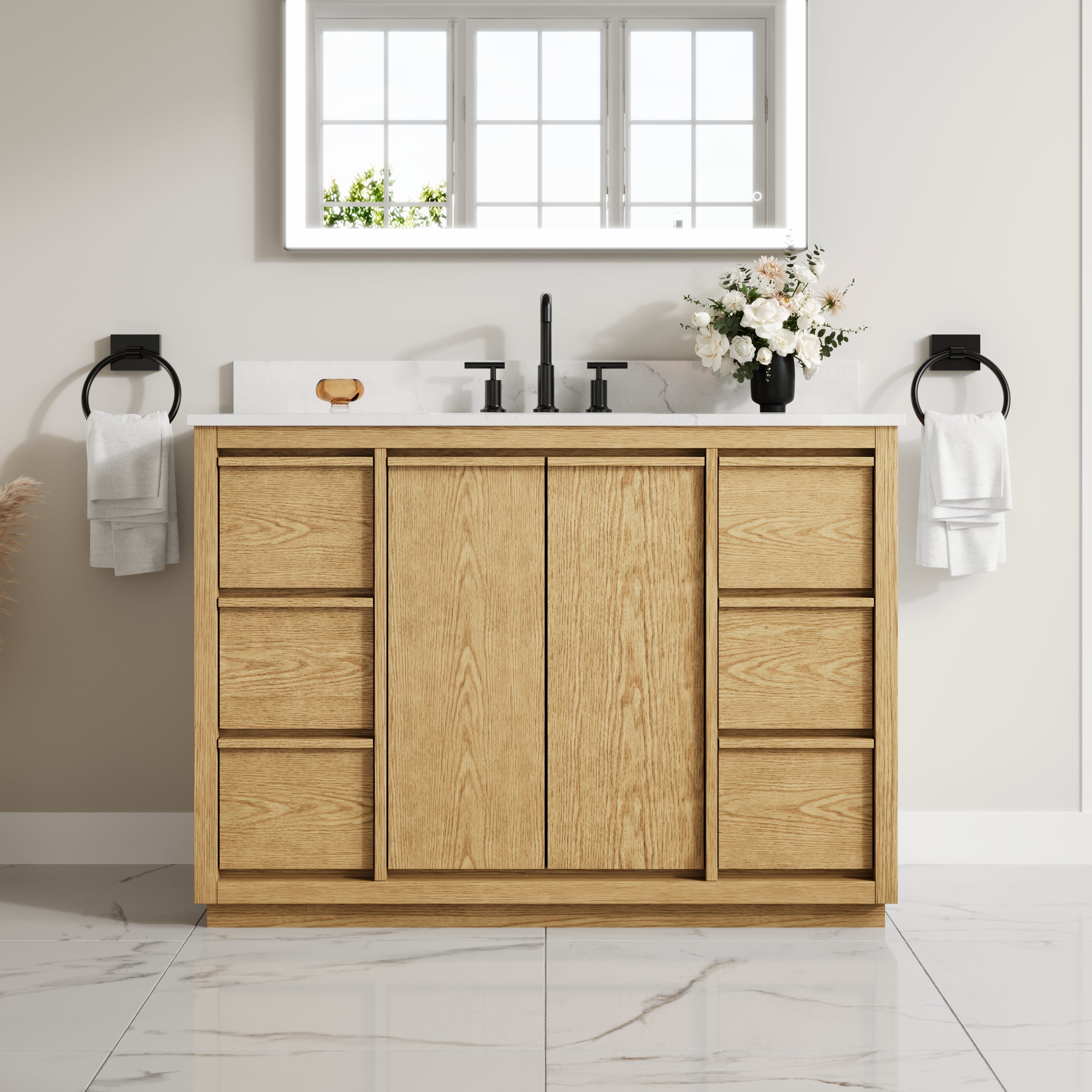
A 24-inch vanity is often suitable for a small powder room. A 30- or 36-inch model offers more practical storage for a guest bathroom, while a 48-inch vanity can provide generous single-sink counter space. Double vanities are commonly planned at 60 or 72 inches.
Depth also matters. Many standard vanities are approximately 21 to 22 inches deep. In a narrow bathroom, even a few unnecessary inches can affect circulation, door clearance, and access to the shower or toilet.
Floating vanities can expose more flooring and create a lighter appearance, while freestanding models introduce furniture-like character. Built-in vanities remain the leading mounting type at 58%, followed by freestanding designs at 30% and floating models at 11%.
Industry judgment: the most valuable vanity is not the largest model the wall can hold. It is the size that improves storage without weakening movement through the room.
5. Better Storage Delivers a Daily Return
Investment is not limited to resale value. A vanity produces a daily return when it makes the bathroom easier to use.
Wide drawers can organize grooming tools, cosmetics, medications, and smaller toiletries. Deep door cabinets can hold cleaning products, towels, and taller containers. Internal dividers, adjustable shelves, electrical outlets, and shaped drawers around plumbing can make a 36- or 48-inch cabinet perform more effectively than a larger but poorly planned model.
NKBA’s trend research highlights ample, elegant storage within easy reach, along with configurable vanity modules, organizers, charging stations, and item-specific compartments.
Buyers should examine the interior rather than counting only the exterior doors. Check whether drawers extend fully, whether plumbing will interfere with storage, and whether the cabinet includes soft-close hardware.
Industry judgment: thoughtful internal storage creates more lasting satisfaction than decorative features that are noticed only during the first few weeks after installation.

6. A Coordinated Countertop Can Strengthen the Purchase
Natural wood bathroom vanities perform best when the countertop supports rather than competes with the grain. White is used for 48% of renovated vanity countertops, while off-white accounts for another 20%. Engineered quartz leads material selection at 45%, followed by quartzite, granite, and marble.
Pale quartz is a practical partner for white oak, maple, and birch because it adds reflected light and creates clear separation around the sink. Walnut can also benefit from a lighter top that prevents the vanity zone from becoming visually heavy.
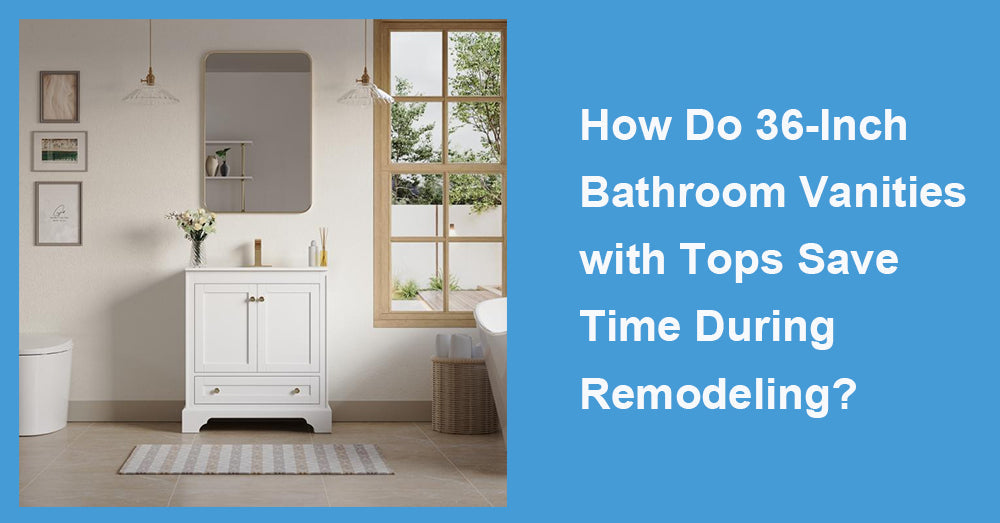
A vanity sold with a fitted top may reduce measurement errors, sink-cutout problems, and scheduling delays. A separate countertop offers greater customization but requires accurate fabrication and coordination.
Common faucet configurations include a single hole, a 4-inch centerset pattern, or an 8-inch widespread layout. These details should be confirmed before ordering because drilling errors can turn a straightforward installation into an avoidable replacement.
Industry judgment: coordinated components improve investment value by reducing uncertainty, not merely by reducing the number of products purchased.
7. Construction Quality Determines Long-Term Performance
Wood appearance alone does not guarantee durability. Bathrooms expose cabinetry to moisture, temperature changes, cosmetics, cleaning products, and frequent contact.
Look for sealed edges, a moisture-resistant finish, stable drawer boxes, adjustable hinges, and a protected cabinet interior. Areas around the sink and plumbing openings deserve particular attention. Water should not be allowed to remain on the countertop seam or cabinet surface.
Solid wood remains the leading vanity material in current renovation data, but engineered cores and quality veneers can also perform well when they are properly constructed and sealed. The important distinction is between reliable manufacturing and a finish that only imitates quality in photographs.
Matte and brushed hardware can also be practical. NKBA research indicates that matte, brushed, and satin faucet finishes are expected to outperform polished surfaces as natural design cues and easier upkeep gain importance.
Industry judgment: the investment case for natural wood depends more on finish integrity and cabinet engineering than on the prestige of the species name.
8. Efficient Fixtures Add Measurable Performance
A vanity remodel creates an opportunity to improve water efficiency without changing daily habits. WaterSense-labeled bathroom faucets use no more than 1.5 gallons per minute at 60 pounds per square inch. That represents a flow reduction of at least 30% compared with the standard 2.2-gallon-per-minute rate, while certified products must still meet performance requirements.
This type of upgrade strengthens the complete vanity package. The cabinet provides storage, the countertop improves maintenance, and the faucet reduces water use. Together, these practical benefits are more persuasive than treating the vanity as a decorative object alone.
Buyers should verify faucet-hole spacing, spout reach, sink depth, and handle clearance. A faucet that is too short may direct water toward the back of the basin, while an oversized fixture can create splashing.
Industry judgment: efficient products convert sustainability from a marketing phrase into a measurable part of bathroom performance.
9. Midrange Remodeling Can Offer Stronger Financial Discipline
The 2025 Cost vs. Value Report compares remodeling costs and retained resale value across 119 markets. Its national averages place a midrange bathroom remodel at $26,138, with an estimated resale value of $20,915, equal to an 80% cost recovery. An upscale bathroom remodel averages $81,612 and recovers about 42%.
These figures do not suggest that every natural wood vanity will produce a fixed return. They show that disciplined, broadly appealing upgrades can retain a greater share of their cost than highly customized luxury projects.
A natural wood vanity fits this strategy when its size, finish, and price remain appropriate for the property. White oak, maple, and other familiar grains can create a premium impression without requiring rare materials, unusual shapes, or difficult maintenance.
Industry judgment: investment performance generally improves when the vanity looks elevated but remains practical, recognizable, and easy for a future owner to accept.
10. Conclusion
Natural wood bathroom vanities make a strong remodel investment because they combine visual warmth, practical storage, flexible styling, and broad material appeal. Current industry data shows rising support for wood-faced cabinetry, while resale research favors controlled midrange improvements over excessive customization.
The strongest purchase is not automatically the most expensive cabinet. It is a properly sized vanity with durable construction, useful drawers, a moisture-resistant finish, a coordinated countertop, and hardware that can be updated later. Before ordering, confirm the full width, depth, plumbing position, faucet drilling, sink dimensions, and installation clearances.
When those details are handled well, a natural wood vanity can improve daily routines, raise the perceived quality of the bathroom, and remain relevant through future design changes. That combination of immediate usefulness and long-term adaptability is what turns a visually attractive fixture into a sound remodeling investment.














Leave a comment
This site is protected by hCaptcha and the hCaptcha Privacy Policy and Terms of Service apply.