






















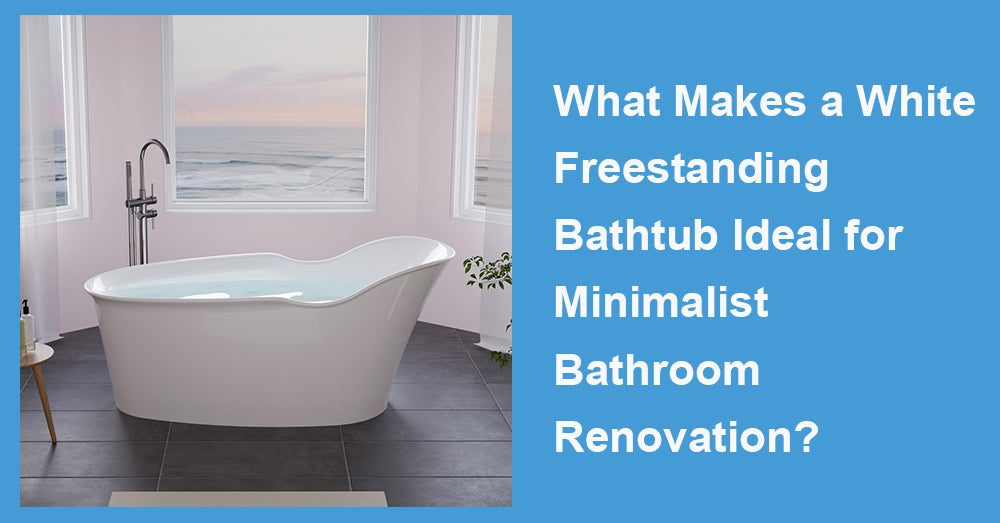
Los Angeles, October 2025 - In recent years, a wave of the "minimalist bathroom" craze has swept the residential and high-end apartment market. Simple lines, blank spaces, and pure colors have become mainstream, and in this design innovation, the "white freestanding bathtub" is becoming the core element.
1. Industry background: The continuous rise of minimalist design
In recent years, high-end customers in the residential and apartment market have increasingly preferred a simple, clean, and non-redundant spatial aesthetic. Compared to the flashy decorations of the past, the more common style nowadays is the "minimalist" style: white walls, large areas of white space, clean furniture, and concealed storage spaces. The bathroom, a highly frequently used private space in daily life, has gradually become the forefront of the minimalist design battlefield.
According to multiple bathroom trend reports, freestanding tubs continue to be popular in modern design, with their "sculptural" and "breathing" qualities considered as artistic installations in bathrooms. Meanwhile, in Houzz's bathroom gallery, the frequency of the combination of "white, minimalist, and freestanding bathtub" is on the rise.
For consumers who hope the bathroom reflects a rational and straightforward atmosphere, white independent bathtubs are increasingly becoming the preferred choice.

2. Why is the white freestanding bathtub so compatible with minimalist design
White: The soul color of minimalist style
White represents purity, light, and spatial sense, and is the core language of minimalism. A white bathtub can naturally blend with white walls, light gray floor tiles, or wooden finishes, weakening boundaries and making the space appear larger and brighter. Compared to patterned or dark bathtubs, white is both low-key and inclusive.
Independent modeling: the "sculptural feeling" of space
The freestanding bathtub does not need to be against the wall, and it can become the visual focal point of the bathroom. It breaks the fixed layout, making the space more dynamic and transparent. Minimalism emphasizes white space and a sense of order, and the freestanding bathtub achieves balance with its simple appearance.
Simple lines: Emphasizing both aesthetics and functionality
Modern independent bathtubs often adopt thin edges, streamlined or geometric design, emphasizing proportion and lightness. Brands such as Empava and Aquatica highlight that this type of design combines sculptural and functional elements, making the bathtub not only a bathroom fixture but also a work of art.
Flexible installation and hidden design
Minimalist bathrooms emphasize 'invisible beauty'. The independent bathtub drainage can achieve a "no pipeline" effect by burying pipes underground, leaving a clear space on the ground to increase visual breathing and facilitate later maintenance. This type of design satisfies the minimalist pursuit of cleanliness and order.
3. Market Trends and Brand Strategy
Bathroom brands are unveiling white, independent bathtub series one after another. Cascada, Bath Trends USA, and other manufacturers have launched products in different sizes and materials, covering the mid to high-end market. According to industry observations, an increasing number of developers are using white freestanding bathtubs as a focal point in model rooms and luxury projects to showcase modernity and cleanliness.
At the technical level, manufacturers are also optimizing their processes:
Lightweight materials: made of acrylic, quartz composite, or artificial stone, balancing durability and easy installation;
Thin-walled and matte surfaces: reduce visual burden and enhance high-end texture;
Modular transportation: reduces costs and facilitates assembly.
The industry expects that with the miniaturization of apartment layouts and the popularization of minimalist styles, the penetration rate of white freestanding bathtubs will continue to increase in the next five years.
4. Application Cases
Here are two typical cases to illustrate the application effect of white freestanding bathtubs in minimalist bathrooms:
Case A: A high-end apartment model house in Los Angeles
The design team will lay the entire main bathroom with light grey marble tiles, keep the walls white, use white matte panels for the cabinets, and hide the mirror cabinets and lighting as much as possible. The bathtub features a simple, oval, white, independent model, with edges measuring only 1.18 inches and no additional decoration at the bottom. The bathtub is slightly recessed in front of the background wall, leaving about 11.8 inches of blank wall space behind, making the bathtub seem to "float" in the center of the space.
In real-life shooting, the shadows of the bathtub under the light are softened, creating a transparent and tidy visual effect in the space. Also, because the bathtub is white and matches the color tone of the walls and floors, the entire space is highly harmonious. As soon as visitors enter the model house, the camera often captures this white freestanding bathtub, becoming a "frozen image" of minimalist design.
Case B: Master bathroom of a customized one-bedroom apartment in San Francisco
The homeowner hopes that the bathroom will present a "spa-like purity" and provide comfort without adding visual burden. The designer chose a rectangular white freestanding bathtub in a 97 ft² space, with thin edges and clean lines. The wall and floor are made of light beige and white-gray gradient tiles, with hidden niches and embedded light strips designed to conceal daily necessities as much as possible. A very narrow LED strip is installed next to the bathtub, projecting soft light at night to create a peaceful atmosphere.
After the project was put into operation, it received high attention on local home decoration media and social media platforms, and the most recognizable feature in the bathroom photos is the white and unenclosed freestanding bathtub.
5. Challenge and Response
Despite the enormous market potential, white freestanding bathtubs still face several significant challenges:
Space limitations: Small bathrooms are difficult to accommodate; designers need to plan accurately or choose short-size models.
High installation and transportation costs: Brands are addressing this issue through lightweight and modular assembly.
High cleaning and maintenance requirements: surface anti-fouling coating and waterproof treatment need to be improved.
6. Conclusion
The white freestanding bathtub, with its pure colors, free layout, and simple design, has become a representative symbol of minimalist bathrooms. It not only embodies the restraint and balance of design, but also symbolizes the modern pursuit of "spiritual emptiness". In the coming years, as the minimalist style continues to dominate the interior design market, the white freestanding bathtub will undoubtedly continue to lead the aesthetic direction of high-end bathrooms.









































Leave a comment
This site is protected by hCaptcha and the hCaptcha Privacy Policy and Terms of Service apply.