






















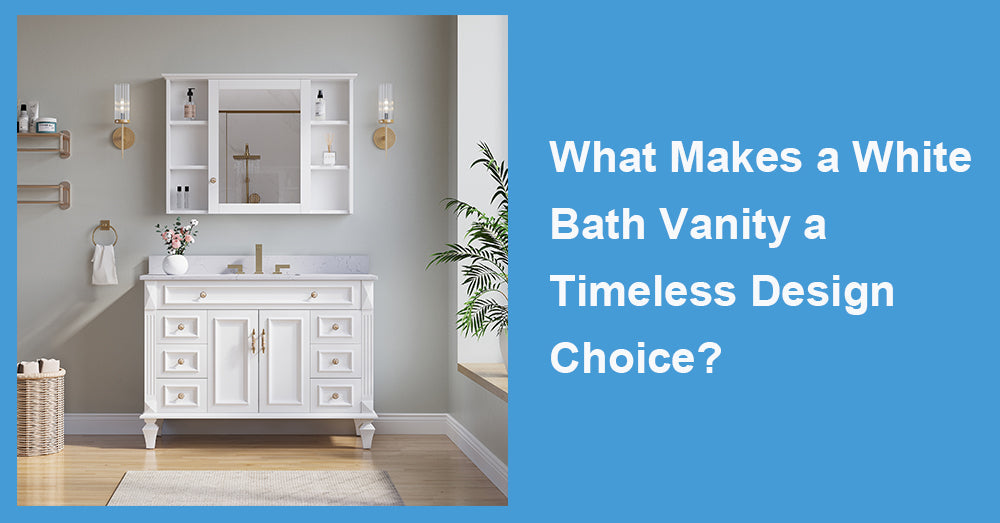
A white bath vanity has remained a reliable bathroom choice through decades of changing trends because it does something many statement pieces cannot: it adapts. I have used white cabinetry in compact guest baths, busy family bathrooms, and large primary suites, and the result rarely feels tied to one particular era. The finish brightens the room, works with almost any surface, and allows future updates without forcing homeowners to replace the main cabinet.
Timeless, however, does not mean plain. The cabinet style, white undertone, construction, countertop, and hardware all influence whether the vanity feels refined or simply generic.
1. A White Bath Vanity Creates a Flexible Foundation
Bathroom renovations involve several permanent or expensive materials, including tile, flooring, countertops, plumbing fixtures, and glass. Choosing a neutral vanity gives those elements more freedom to change over time.
White pairs naturally with marble-look quartz, warm beige stone, gray tile, terrazzo, and wood-look flooring. It also works with polished chrome, brushed nickel, matte black, and brass hardware. A homeowner can replace the mirror, repaint the walls, or update the faucet years later without creating a color conflict.
This flexibility is the real reason white remains relevant. Trend colors may be memorable, but they can also limit future choices. A white cabinet supports several design directions instead of locking the bathroom into one look.
In resale-focused renovations, that neutrality can be useful. Buyers may disagree about dark green, navy, or heavily distressed wood, while white usually gives them a familiar starting point.
2. White Makes Bathrooms Feel Brighter and More Open
A white vanity reflects more light than darker cabinetry. In a small bathroom, that can reduce the visual weight along the lower half of the room and make the space feel less crowded.
The effect is especially noticeable in windowless bathrooms or rooms with limited natural light. A dark cabinet may look sophisticated under showroom lighting but feel heavy once installed in a narrow hall bath. White usually behaves more predictably.
It also allows the floor to stand out. Patterned tile, warm wood-look porcelain, or subtle stone surfaces become easier to appreciate when the cabinet does not compete for attention.
White does not physically enlarge the room
This is a common misconception. Color can influence perception, but it cannot correct an oversized cabinet or a poor layout.
A deep white vanity can still block the walkway. A wide model can still crowd the toilet or interfere with a shower door. Proportion matters more than paint color. Measure the cabinet depth, door swing, and clearance around nearby fixtures before assuming white will make everything feel spacious.
3. The Cabinet Style Determines Whether It Feels Current
A white bath vanity can suit traditional, transitional, modern, coastal, or farmhouse interiors. The door profile and mounting style create most of that character.
Flat-front drawers give white cabinetry a clean, architectural look. Shaker doors feel more transitional and usually age well because the detailing is restrained. Furniture-style legs and decorative molding suit traditional bathrooms, though too much ornament can make the vanity feel dated sooner.
Floating white vanities work particularly well in modern bathrooms. They expose more flooring and simplify cleaning underneath. Freestanding models offer a stronger furniture presence and often provide more storage.
From an industry perspective, this adaptability is unusual. Few cabinet finishes can move between design styles as easily without appearing forced.
The wrong white can disrupt the room
Not all white finishes are the same. Some are crisp and cool, while others have cream, gray, or beige undertones.
A bright blue-white cabinet beside warm ivory tile may look harsher than expected. A creamy finish can appear yellow next to cool gray stone. Online photographs do not always reveal these differences accurately, especially when lighting has been edited.
Compare samples when possible. At minimum, review the vanity under lighting similar to what the bathroom will use. Warm bulbs and cool bulbs can change the finish considerably.
4. Practical Advantages Come With Honest Limitations
White makes dirt, water spots, toothpaste, and cosmetic residue easier to see. Some homeowners treat that as a disadvantage. In my experience, it often encourages earlier cleaning, which prevents buildup around doors, handles, and sink edges.
The finish is also easy to refresh around. New cabinet pulls can change the mood quickly. A framed mirror, warmer wall paint, or different towels can update the room without replacing the vanity.
Still, white is not maintenance-free. Hair dye, tinted skincare, makeup, and dirty hands may leave marks. Poor-quality paint can chip at corners or wear around handles. High-gloss finishes show scratches, while heavily detailed doors collect dust in grooves.
An all-white bathroom can also feel sterile. Texture is the solution. Consider veined countertops, warm metal hardware, woven accessories, wood accents, or tile with subtle variation.
5. Choose Construction Before Choosing the Shade
A timeless finish only has value when the cabinet lasts. Check the cabinet box, drawer construction, hardware, and moisture protection before focusing on color.
Solid wood framing and quality plywood can provide reliable durability. Well-sealed engineered materials may also perform effectively in bathrooms. Weak particleboard, exposed edges, and thin drawer bottoms are more concerning than the specific wood species.
Open the drawers if shopping in person. They should move smoothly and remain aligned. Full-extension slides make stored items easier to reach, while soft-close hardware reduces repeated impact.
Storage layout deserves equal attention. A family bathroom may benefit from deep drawers for grooming tools and toiletries. A guest bath may need more open cabinet space for towels and cleaning products. Decorative drawer fronts should not be mistaken for usable storage.

6. Installation and Care Protect the Timeless Look
Install the vanity level so doors and drawers remain properly aligned. Seal the sink, countertop, and backsplash joints carefully, and check plumbing connections before filling the cabinet.
White finishes make uneven gaps and crooked installation more visible, so precision matters.
For maintenance, use a soft cloth and mild, non-abrasive cleaner. Wipe colored spills quickly, remove standing water near the faucet, and run the exhaust fan after showers. Check beneath the sink occasionally for slow leaks, which can damage any cabinet regardless of finish quality.
When comparing Wellfor options, select a white bath vanity based on the room’s proportions, storage needs, lighting, and existing undertones. Choose simple detailing if long-term flexibility matters, invest in dependable construction, and add warmth through the countertop, hardware, or surrounding materials. With those decisions handled carefully, a white bath vanity can remain fresh through many design updates without ever feeling like a temporary compromise.










































Leave a comment
This site is protected by hCaptcha and the hCaptcha Privacy Policy and Terms of Service apply.