














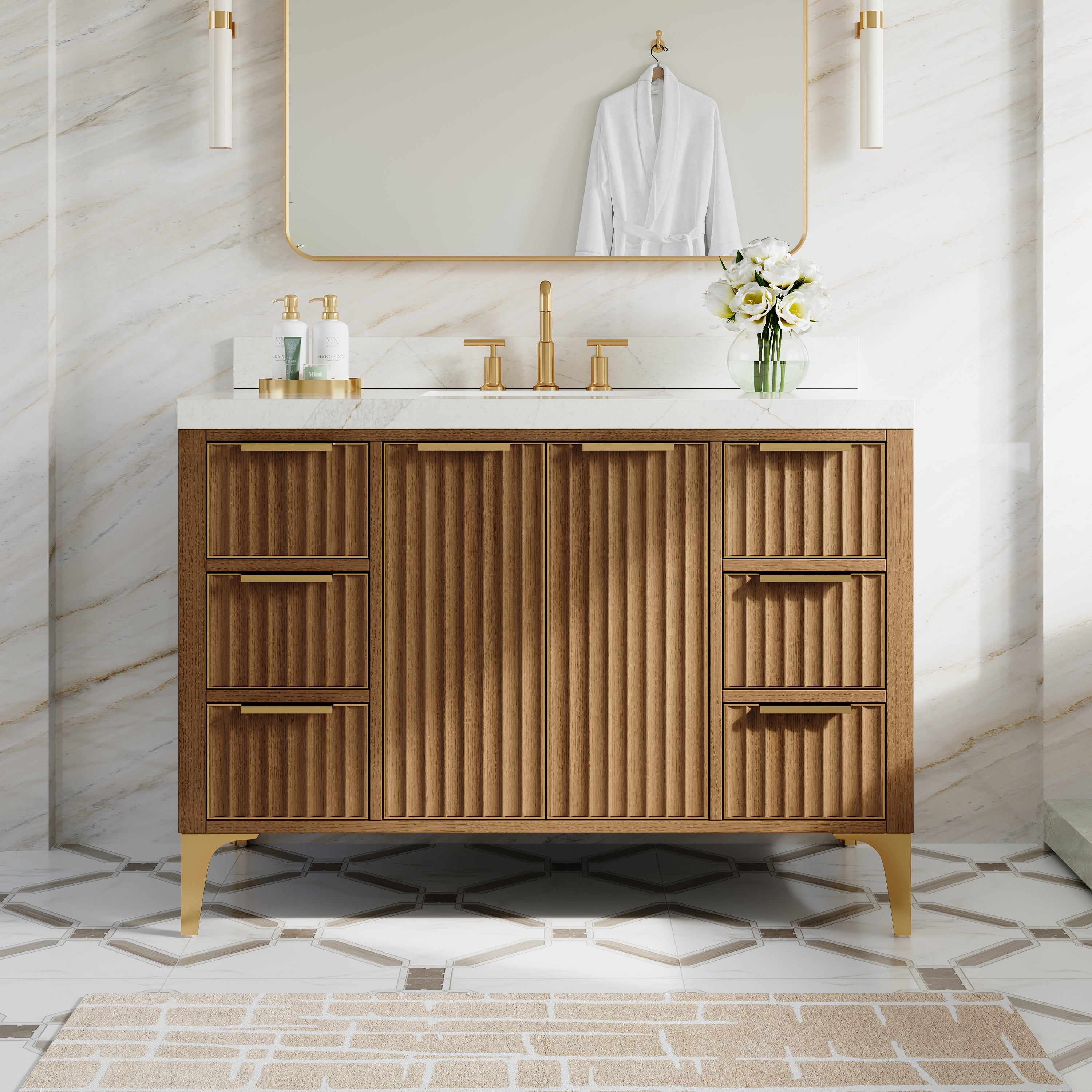
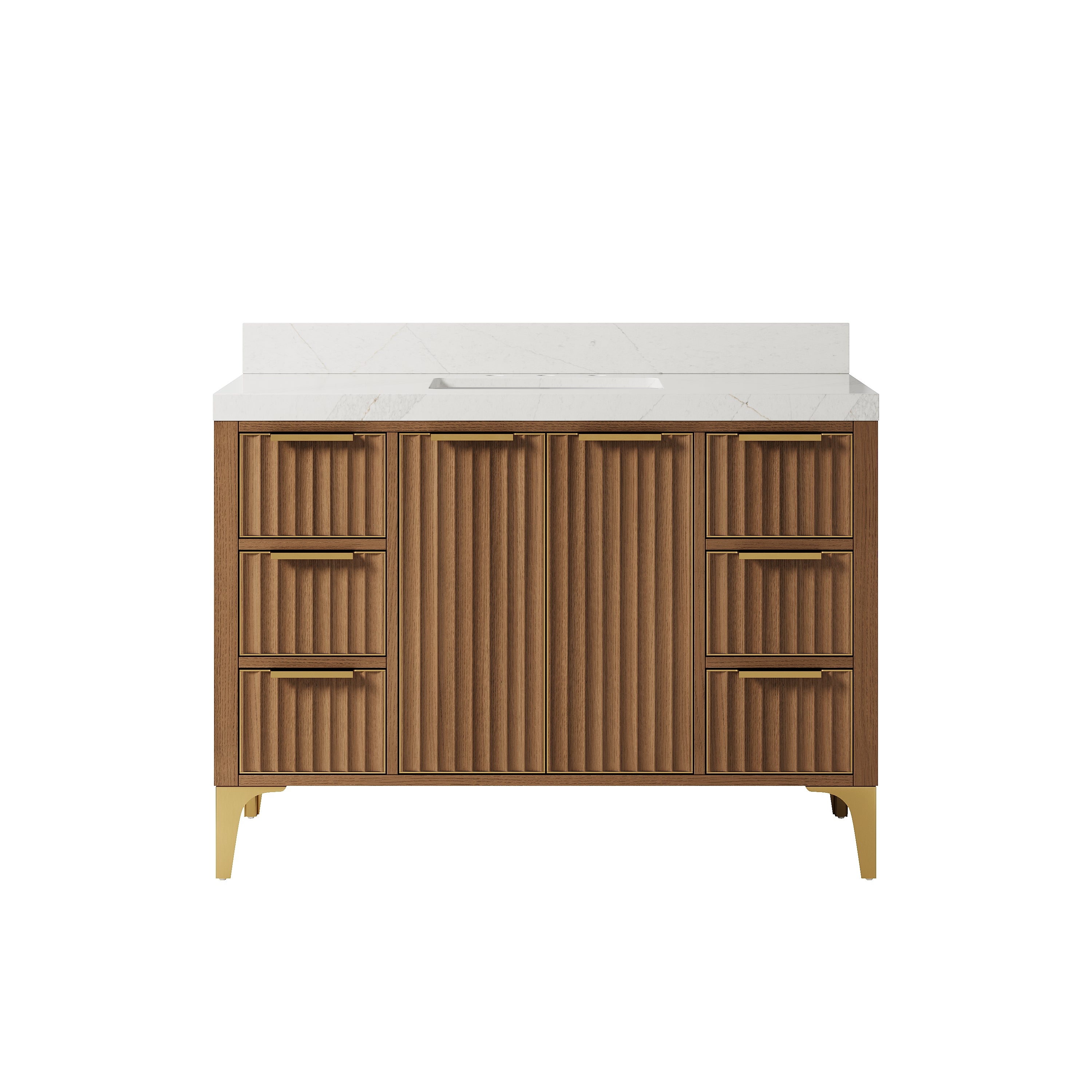


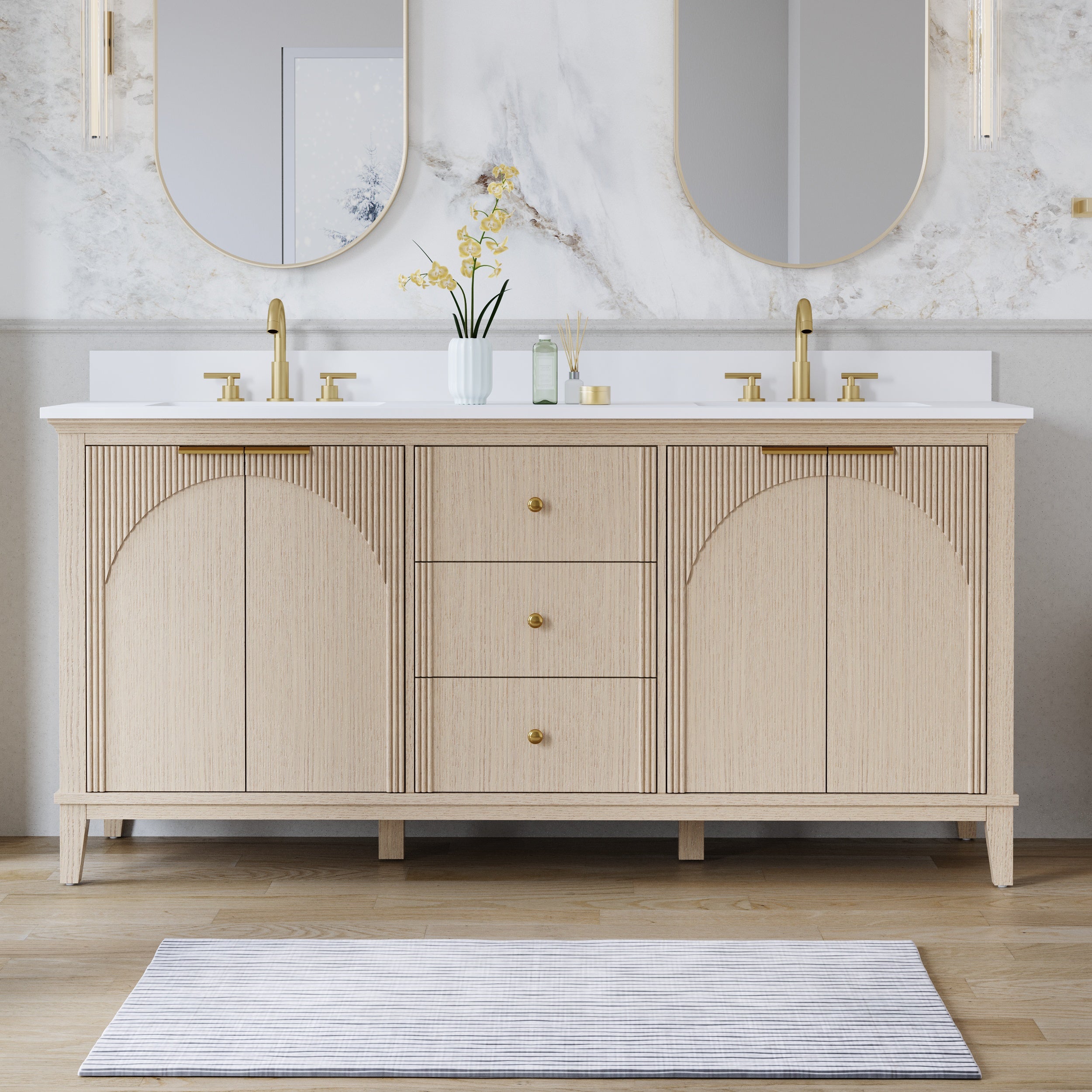
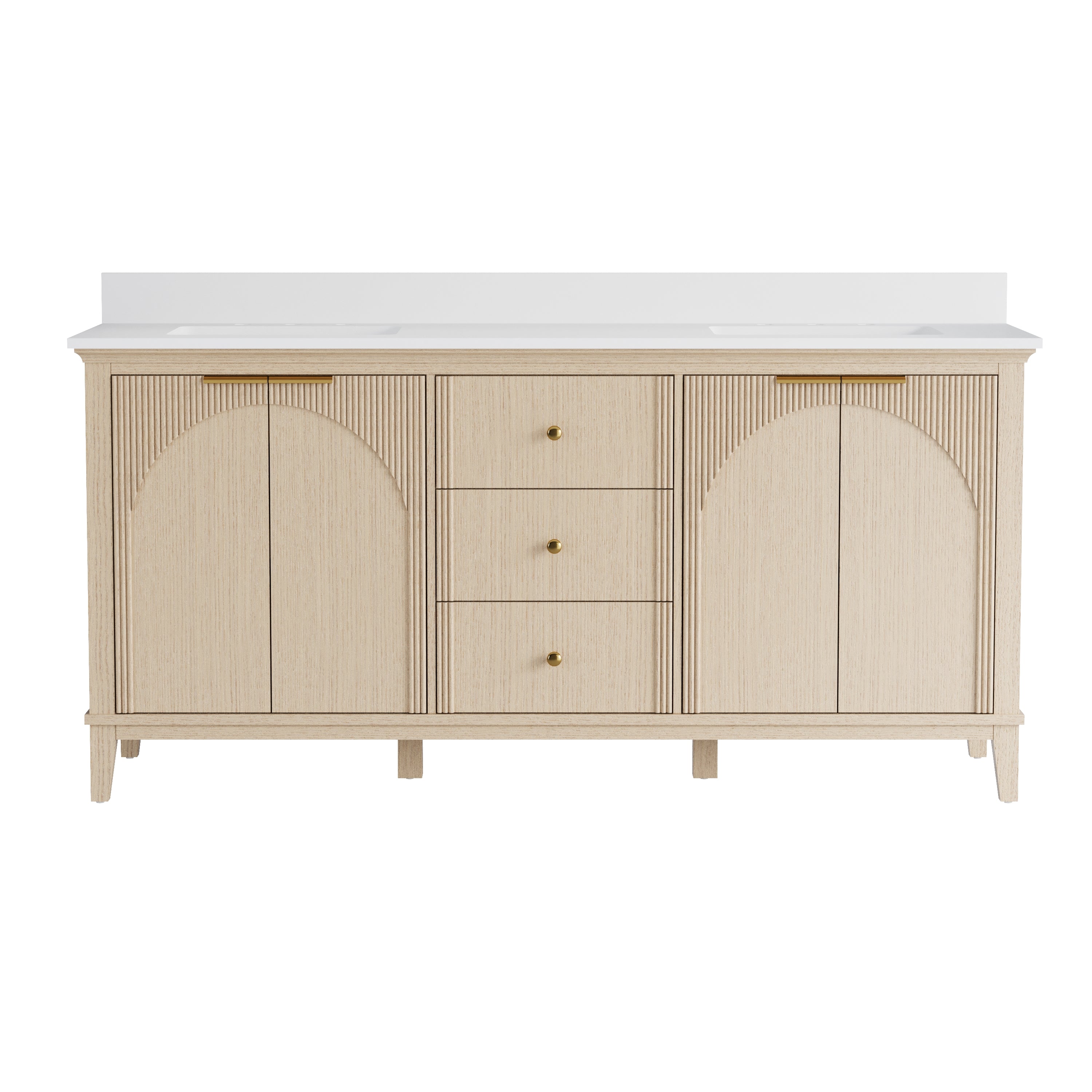
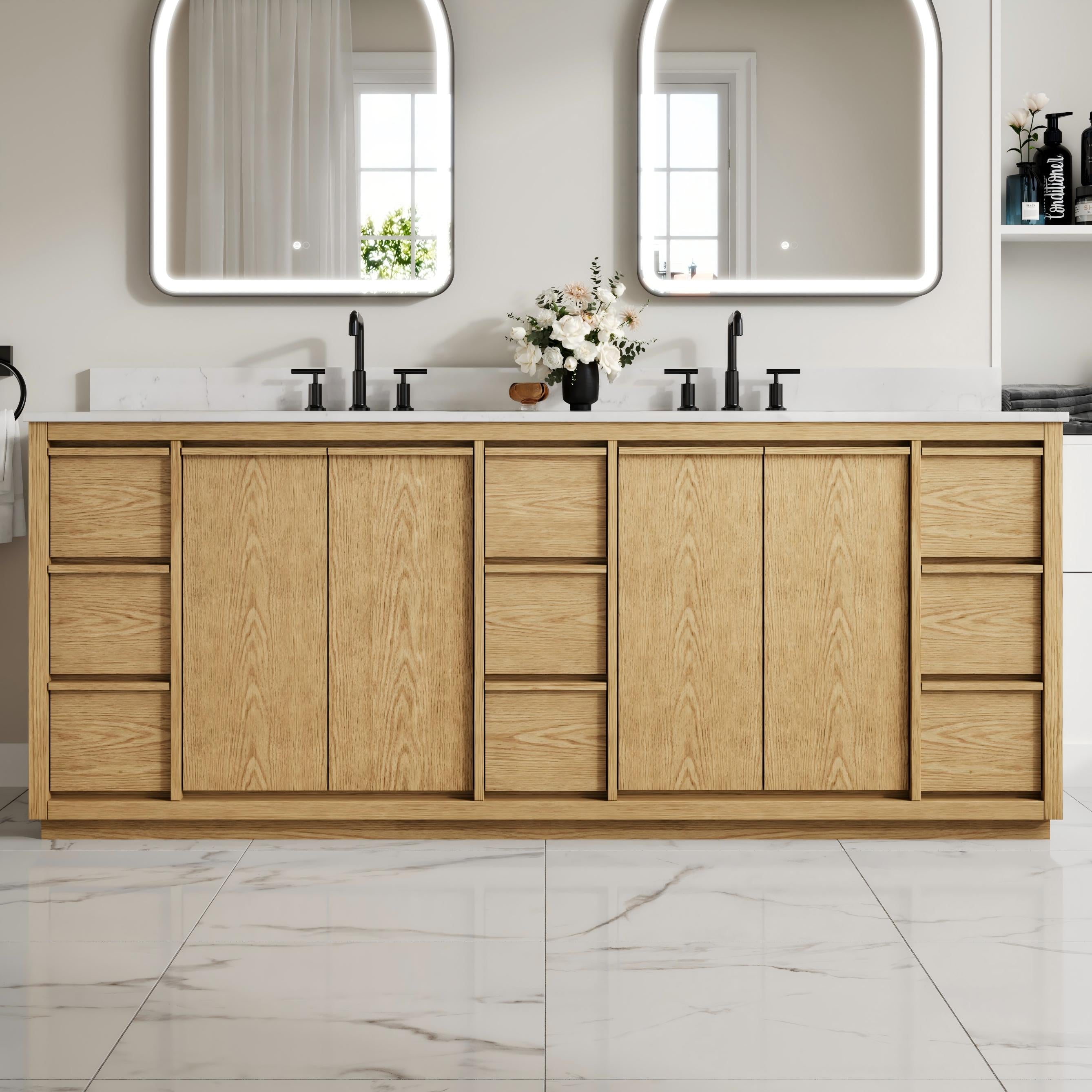
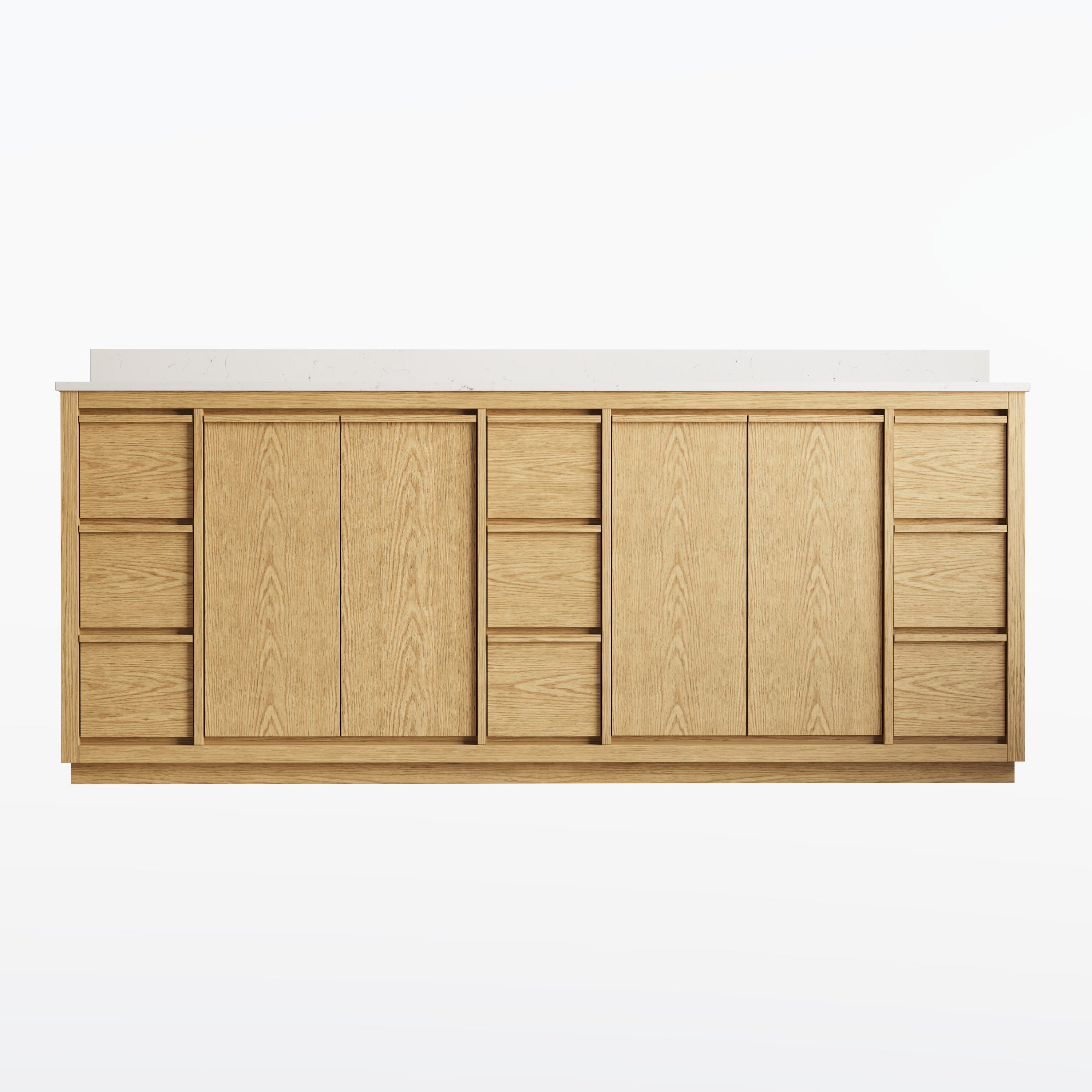
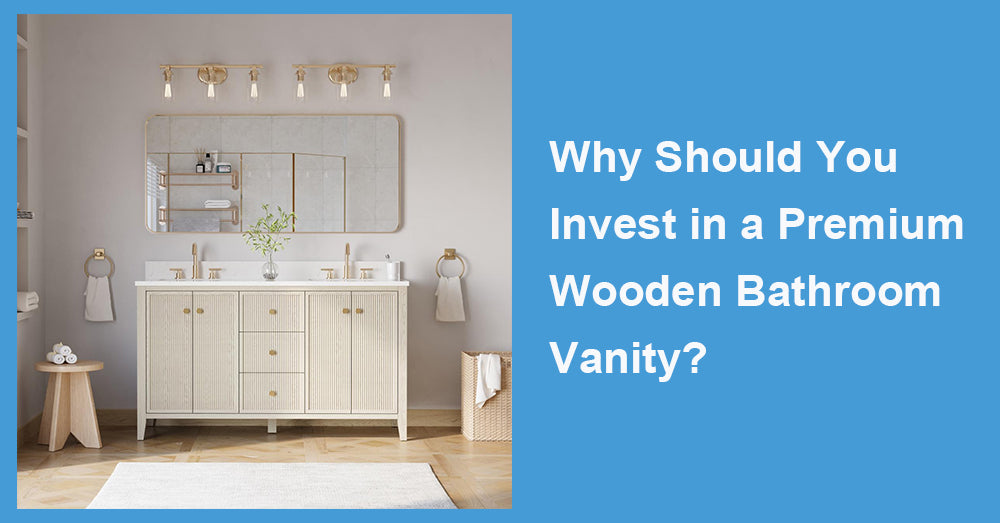
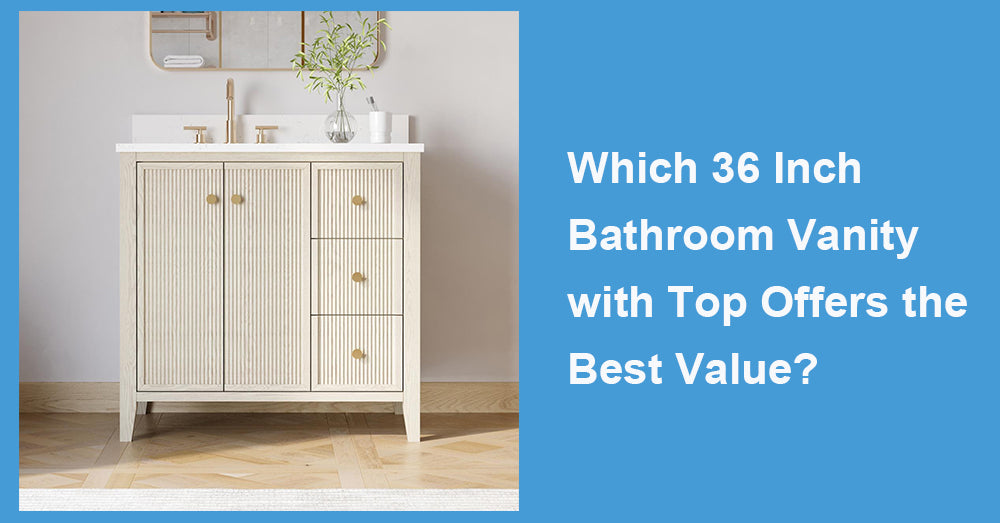
A wooden bathroom vanity is one of the few bathroom purchases that influences appearance, storage, and daily comfort at the same time. After more than two decades of reviewing cabinetry and renovation plans, I have found that premium vanities usually justify their higher price through stronger construction, better hardware, more thoughtful storage, and finishes that tolerate years of moisture and cleaning. The value is not simply visible on installation day. It becomes clearer after thousands of drawer openings, wet mornings, and changing design trends.
A premium model still needs to suit the room. Expensive materials cannot correct poor proportions, limited storage, or careless installation. The best investment combines good wood, sound engineering, and a layout that supports the household’s actual routine.
1. A Premium Wooden Bathroom Vanity Is Built for Daily Pressure
Bathroom cabinetry faces tougher conditions than furniture in most other rooms. Steam raises humidity, water collects around the sink, and drawers carry everything from heavy hair tools to large bottles. Children may pull doors from awkward angles. Guests may leave wet towels against the cabinet.
Premium construction creates a stronger foundation for that use. Solid wood framing and quality plywood generally hold fasteners more securely than weak particleboard. Properly built drawer boxes are less likely to sag, while stronger hinges help doors remain aligned.
The difference may not look dramatic in a product photograph. It is easy to feel in person. Drawers move smoothly, doors close evenly, and the cabinet feels stable rather than hollow.
For a primary bathroom or busy family bath, that reliability matters more than decorative details.
2. Better Materials Can Reduce Long-Term Replacement Costs
A budget vanity may be reasonable in a lightly used powder room, but repeated replacement is rarely economical. Removing a damaged cabinet can involve plumbing work, countertop disposal, wall repairs, new installation labor, and disruption to the household.
A well-made wooden bathroom vanity is often easier to maintain or repair. Minor scratches may be touched up. Hardware can be replaced. Some finishes can be refreshed instead of forcing the owner to discard the entire cabinet.
That repair potential is an important part of long-term value. A cabinet that remains usable for many years creates less waste and avoids the cost of repeating the renovation.
Wood also ages differently from many laminated surfaces. Natural grain and slight color variation can make ordinary wear feel less obvious. A chipped artificial layer often looks damaged immediately because the material beneath it does not match.
Premium does not always mean solid wood throughout
Buyers sometimes assume a high price guarantees that every cabinet component is solid wood. That is not always necessary or desirable.
Quality plywood may be used for the cabinet box because it remains stable as humidity changes. Solid wood may be reserved for frames, doors, or drawer fronts. A carefully applied veneer over a strong core can also perform well.
The real question is whether each material has been selected for a practical reason. Ask what the cabinet box, doors, drawer sides, back panel, and shelves are made from. Clear specifications are more useful than vague claims about luxury.
3. Thoughtful Storage Improves the Bathroom Every Day
Premium vanities often offer better interior planning, though shoppers still need to inspect the details. Wide drawers, adjustable shelves, full-extension slides, and well-designed plumbing cutouts can make a major difference in daily use.
In a shared bathroom, drawers are especially helpful for separating skincare, grooming tools, cosmetics, and personal items. A cabinet beneath the sink works better for tall cleaning bottles, spare paper goods, or larger containers.
Do not judge storage by the number of visible drawer fronts. Some may be decorative because the sink occupies the space behind them. Others may be shallow or divided by plumbing.
A simpler layout with two deep functional drawers can be more useful than a complicated cabinet with several tiny compartments.
When premium storage may still fall short
A floating vanity may look sophisticated but provide less total capacity than a floor-standing cabinet. A wide sink can reduce counter space and limit the top drawer. Furniture-style legs may also take away interior volume.
This is where daily habits should guide the purchase. A guest bath may need very little storage. A family bathroom without a linen closet needs much more.
4. Wood Brings Warmth That Is Difficult to Replicate
Bathrooms contain many hard surfaces: tile, glass, metal, ceramic, quartz, and stone. Wood softens that mix. It adds grain, depth, and a natural element that can prevent a modern bathroom from feeling clinical.
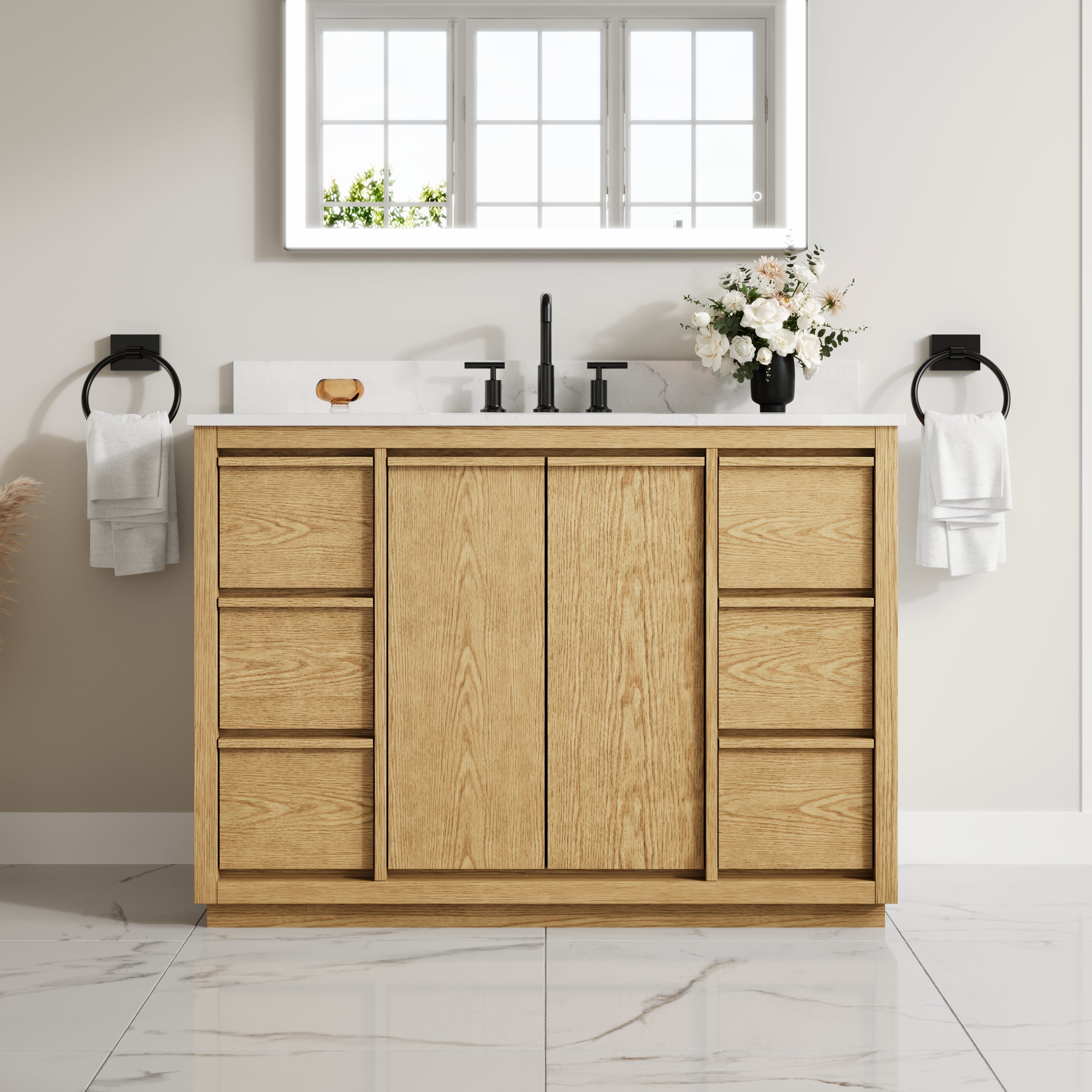
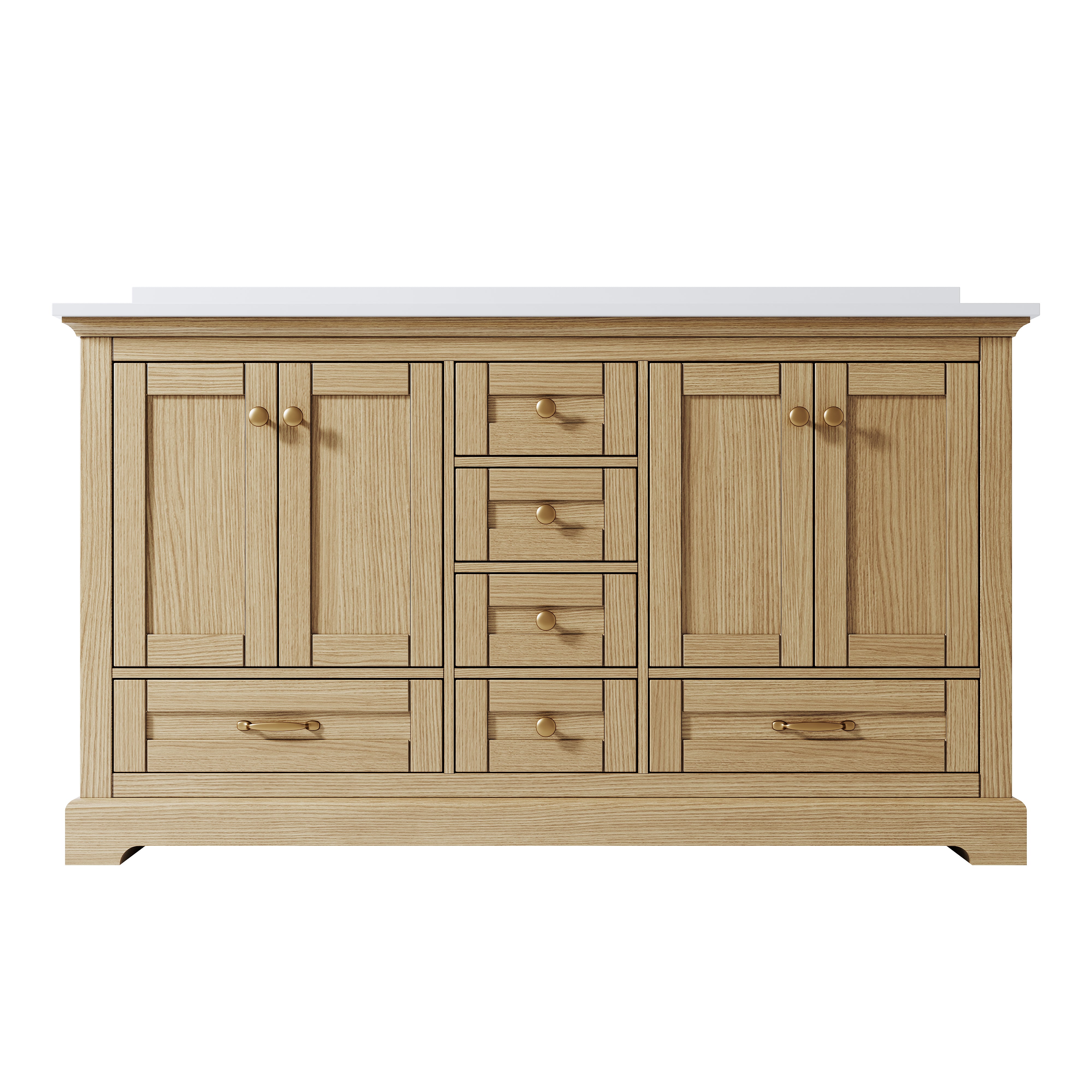
Light oak works well in Scandinavian, Japandi, and organic-modern interiors. Medium walnut tones suit transitional rooms and create more visual depth. Darker finishes can anchor a spacious primary suite, though they may feel heavy in a small bathroom with limited light.
A premium finish should look consistent while still allowing the character of the wood to show. It should also protect vulnerable areas around doors, drawer edges, corners, and the cabinet base.
The disadvantage is maintenance. Wood is not waterproof. Standing water, poor ventilation, and hidden leaks can damage even an expensive vanity. Premium construction improves resilience, but it does not eliminate the need for care.
5. Installation Determines Whether the Investment Lasts
A quality vanity can underperform when installed badly. The cabinet must be level so doors and drawers remain aligned. It should be secured correctly, especially if it is wall-mounted or paired with a heavy stone countertop.
Check plumbing locations before ordering. Drainpipes and supply lines may interfere with drawers or shelves. Cutting into a new cabinet after delivery can reduce storage and expose unsealed material.
The sink, countertop, and backsplash joints need continuous sealing. Test every plumbing connection before filling the cabinet. Slow leaks are particularly damaging because they can remain hidden beneath stored products.
For maintenance, wipe standing water around the faucet and sink rim. Use mild, non-abrasive cleaners, and run the exhaust fan after showers. Check the cabinet interior periodically for dampness, staining, or loose fittings.

6. When the Higher Price Is Worth Paying
A premium vanity makes the most sense in a primary bathroom, a frequently used family bath, or a renovation expected to remain in place for many years. It is also a sensible choice when the vanity serves as the room’s main storage piece and visual anchor.
It may be unnecessary in a rarely used powder room or a short-term rental where the budget must prioritize plumbing, ventilation, or structural repairs. Spending more on cabinetry while ignoring a moisture problem is not a sound investment.
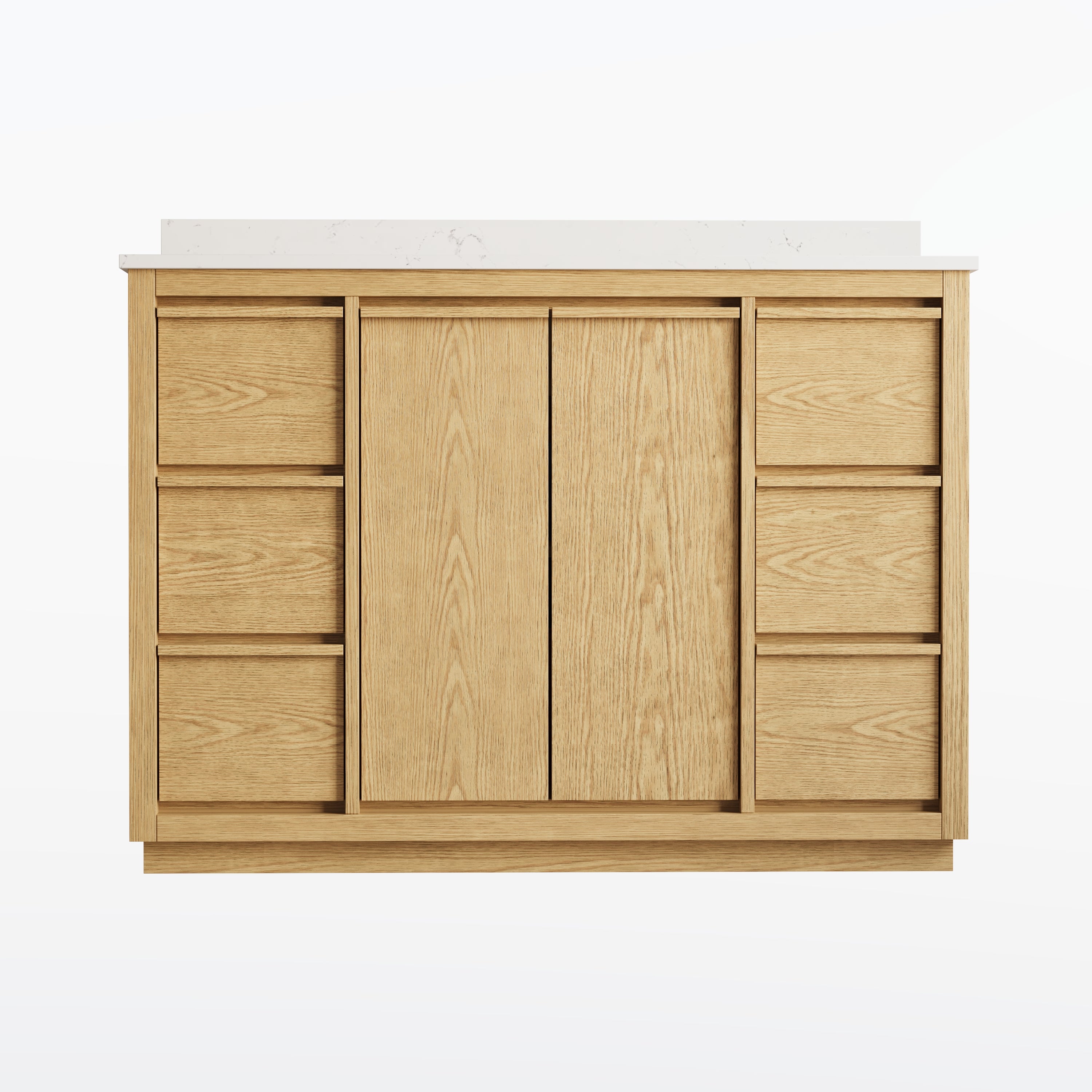
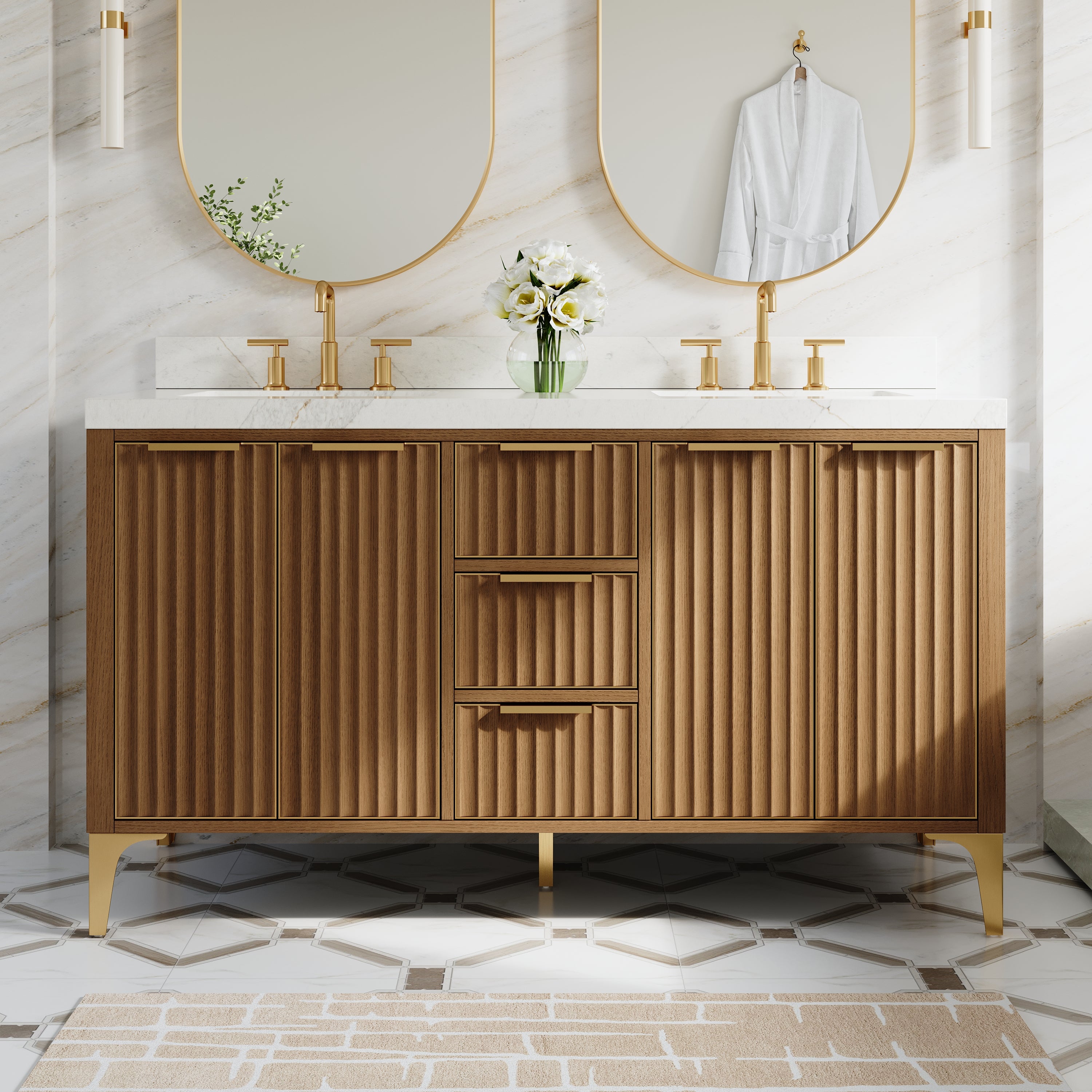
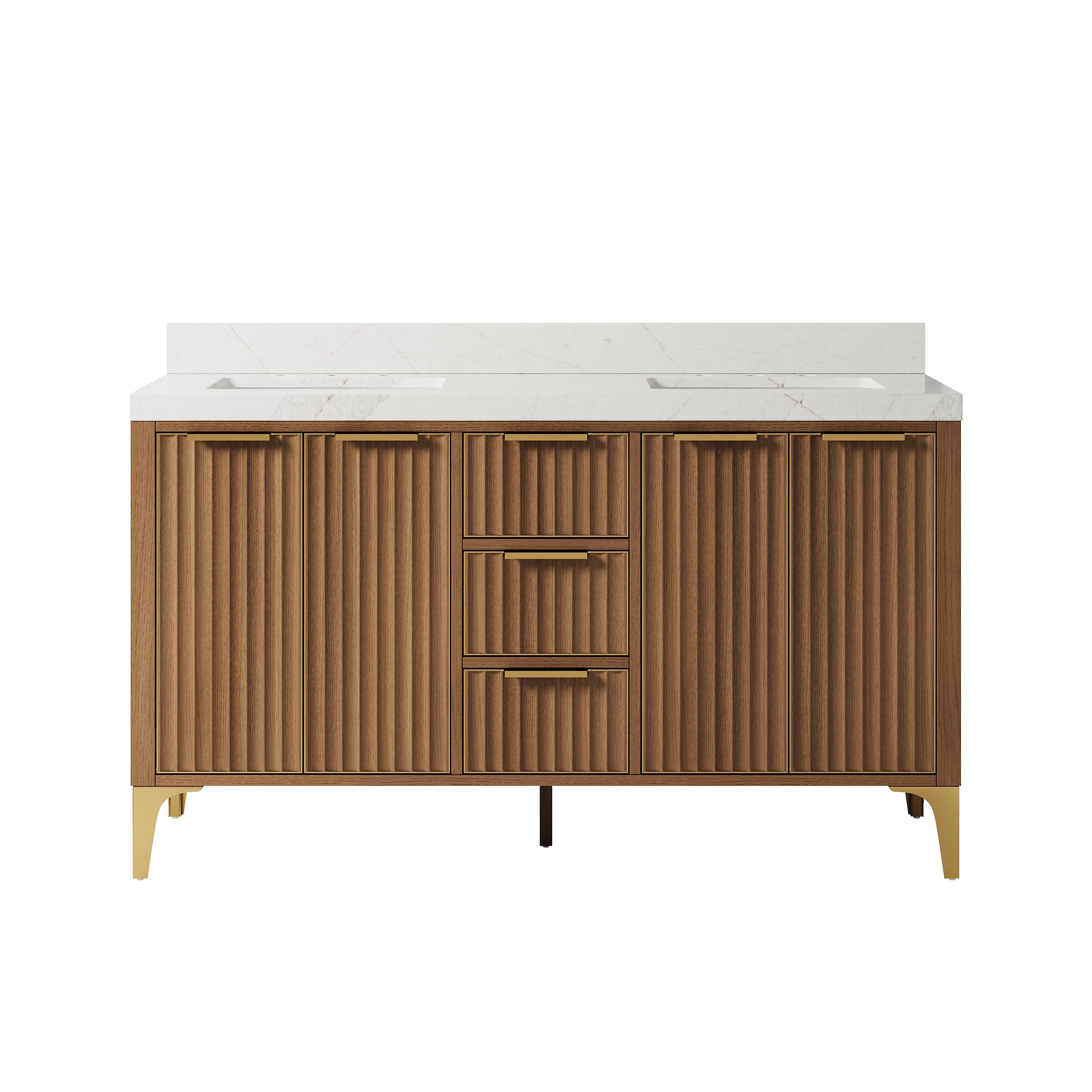
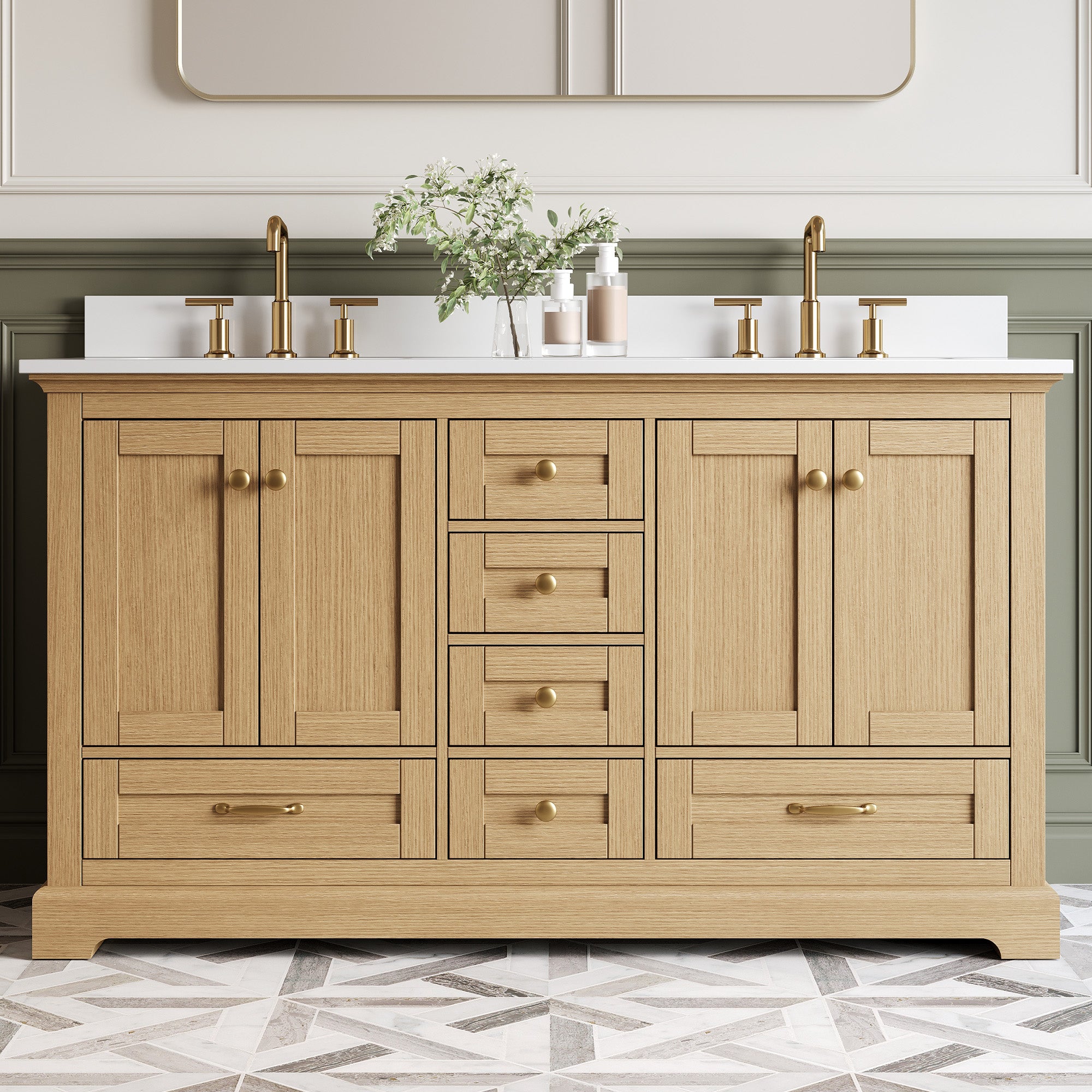
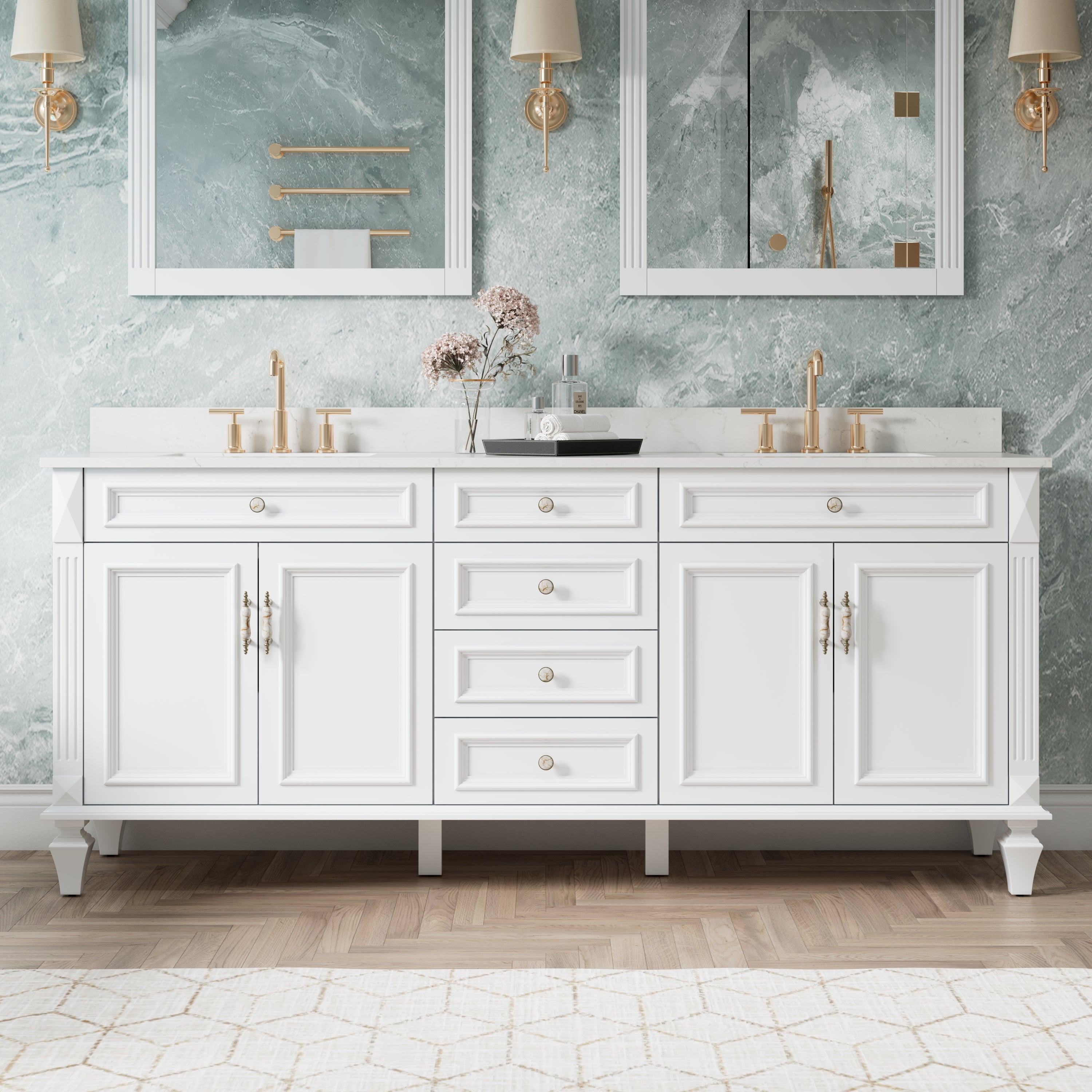
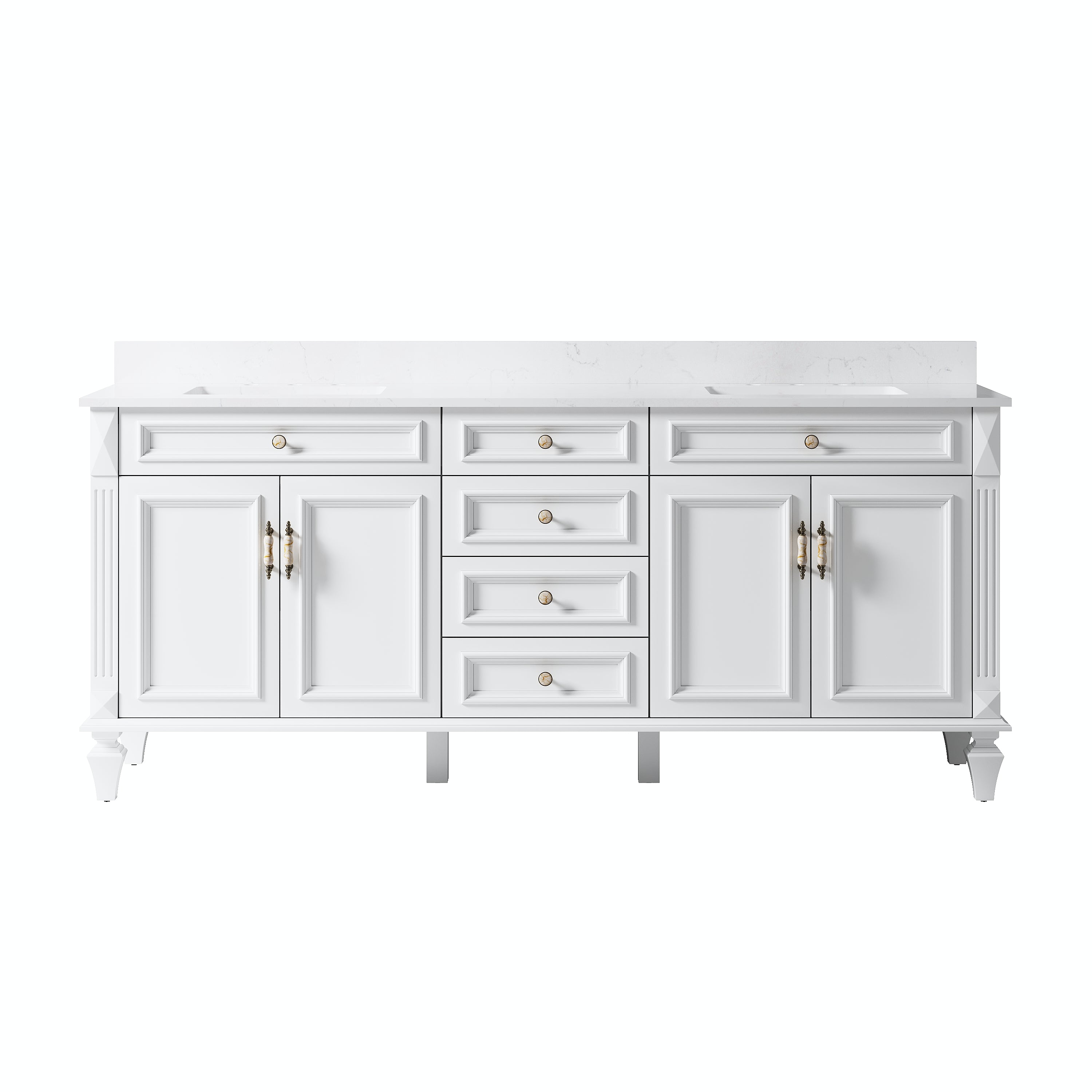
When comparing Wellfor options, start with construction, storage, hardware, and finish protection. Then consider color, door style, and countertop pairing. Buy for the room’s daily demands rather than the showroom image alone. A premium wooden bathroom vanity earns its place when it fits comfortably, stores what you genuinely use, and is installed and maintained well enough to serve the home for years.














Leave a comment
This site is protected by hCaptcha and the hCaptcha Privacy Policy and Terms of Service apply.