
















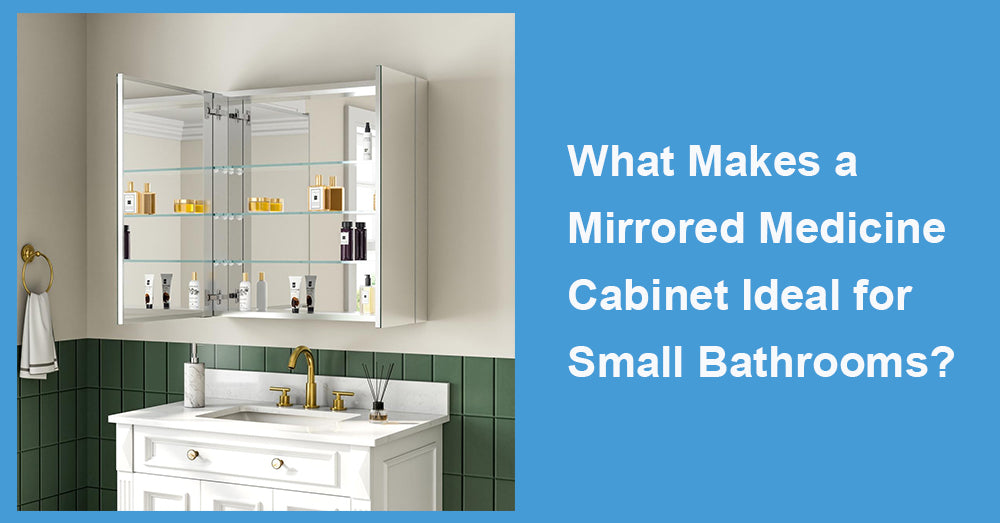
With the trend towards refined planning in residential spaces, small bathrooms have increasingly high requirements for storage, visual expansion, and ease of use. Mirrored medicine cabinet is a rapidly growing category driven by this demand. It integrates mirrors, storage cabinets, and lighting (in some models) into a single structure, allowing limited walls to achieve higher utilization efficiency. Industry data shows that such multifunctional products have continued to rise over the past three years, making them one of the most practical choices for bathroom space upgrades.
So, why is a mirrored medicine cabinet the "ideal choice" for small bathrooms? From space optimization, storage expansion, visual magnification, and installation flexibility to product trends, it is clear that these types of products will remain competitive in the future.
1. The core problem of small space: insufficient storage and visual confinement
The most common limitations of small bathrooms come from two aspects:
Insufficient storage space and intense visual crowding.
According to statistics from home renovation platforms, over 41% of users in small bathrooms still feel "insufficient storage" after renovation, especially around the washbasin (source: Houzz.com). In bathrooms where every inch of space is precious, adding an open shelf often exacerbates clutter and makes the space feel smaller.
Mirrored medicine cabinet precisely targets these two pain points by combining "mirror+hidden storage" to maximize the functional efficiency of small spaces.
2. Invisible expansion of storage space: golden range of 4-5 inches in depth
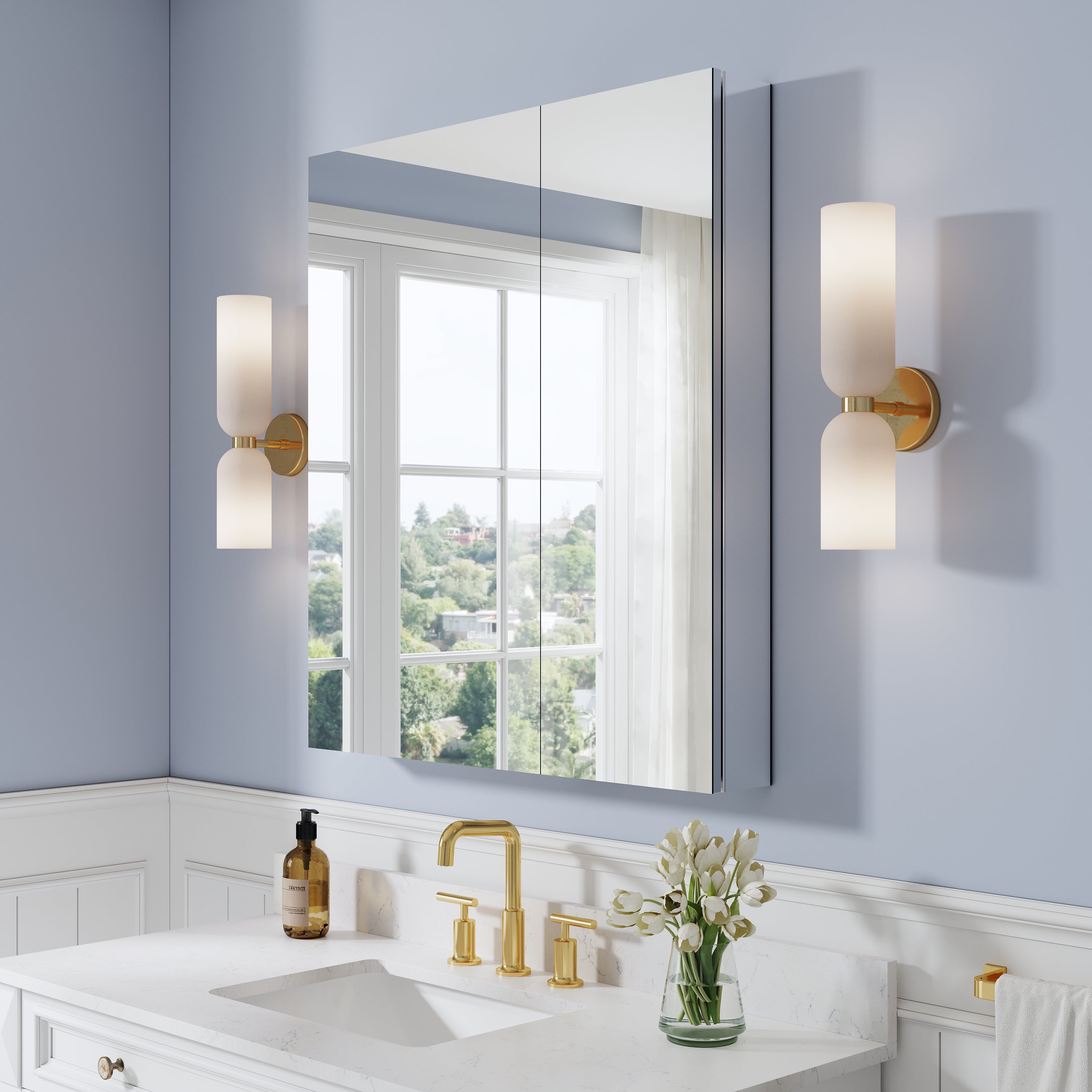
For small bathrooms, the storage depth of the medicine cabinet is crucial. Industry data shows that the most popular depth range for wall-mounted mirror cabinets is 4-5 inches (source: Build.com). This depth can accommodate daily necessities without appearing bulky or obstructing the activity space in a small washing area.
Everyday items that can be placed include:
Facial cleanser, lotion
Electric toothbrush, shaver
Small drug bottle
Cosmetics and nursing products
Compared to traditional storage methods that rely solely on countertops or open shelves, mirrored medicine cabinets "hide" the same number of items in the wall, significantly improving countertop cleanliness. For small bathrooms with only 24-30-inch washbasins, this improvement is particularly evident.
3. The magnifying effect brought by the mirror makes the small bathroom appear more spacious
Mirrors are natural amplifiers for small spaces, and mirrored medicine cabinets typically have a larger mirror surface area than ordinary single-sided mirrors. For example, popular size specifications in the market include 20 x 24 inches, 24 x 30 inches, and 30 x 36 inches (source: HomeDepot.com).
Large area mirrors can:
Enhance light reflection
Whether it's natural light or lighting, mirrors can increase bathroom brightness and weaken the sense of narrowness.
Visual Deepening of Spatial Depth
Make the space appear more spacious than it actually is.
Keep the wall simple.
Items that do not require additional shelf installation or scattered visual focus.
Therefore, the mirror of the mirror cabinet is not only a functional component, but also a visual tool for expanding the small bathroom.
4. Save external space: Embedded installation is the 'golden solution' for small bathrooms
If the wall conditions permit, a recessed mirrored medicine cabinet is the most space-saving option. According to an analysis of home decor channels, embedded mirror cabinets perform best with a width of 20-30 inches and a depth of 3.5-4 inches (source: Build.com).
The advantages of embedded architecture include:
Almost does not occupy the clean space inside the bathroom
The appearance is smoother and visually simpler
Avoid collision risks caused by protruding cabinets
For hallway-style bathrooms or small spaces with a net width of only 36-42 inches, an embedded design can maximize access and usable space.
5. Multi-door design vs single door: How to save the most authentic space?
In a mirrored medicine cabinet design, the door's structure significantly affects the experience of small spaces. According to data from home decor platforms, the preference for single-door designs is considerably higher in small bathrooms (source: Wayfair.com).
The reasons include:
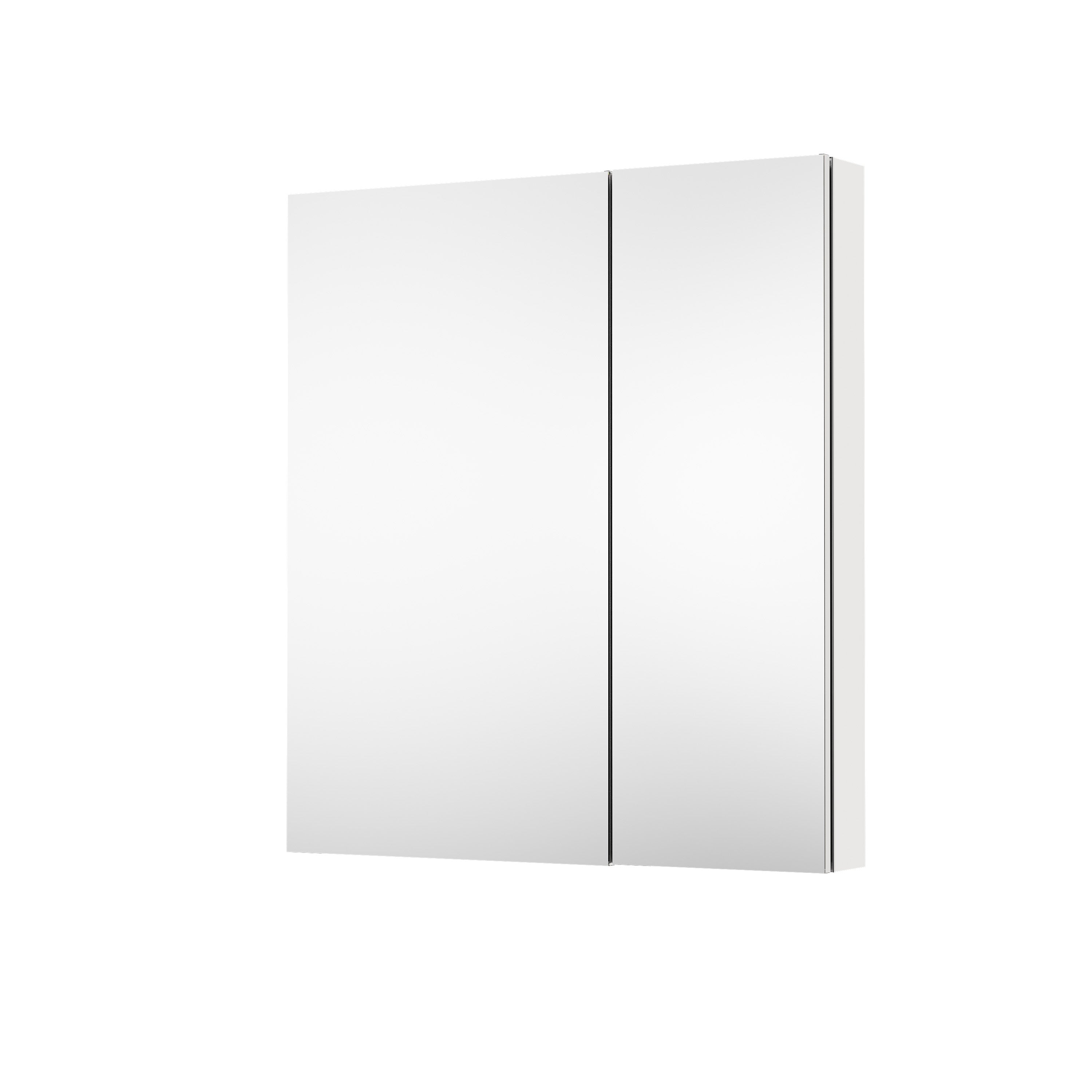
Single door opening and closing only occupies space on one side, reducing collision risk.
The door width is usually 20-24 inches, which is more suitable for small basin areas.
The door opening action does not require avoiding side walls or shower rooms.
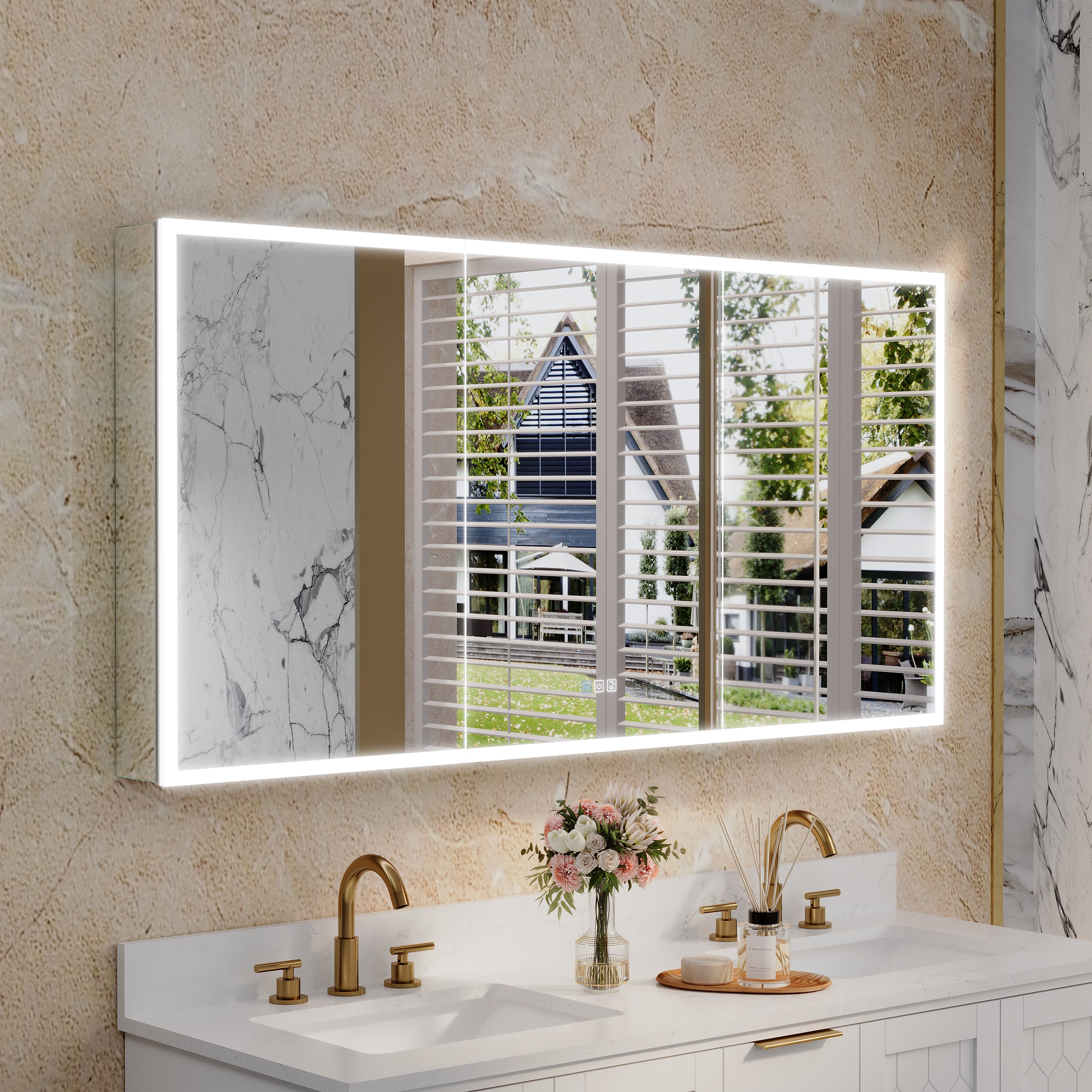
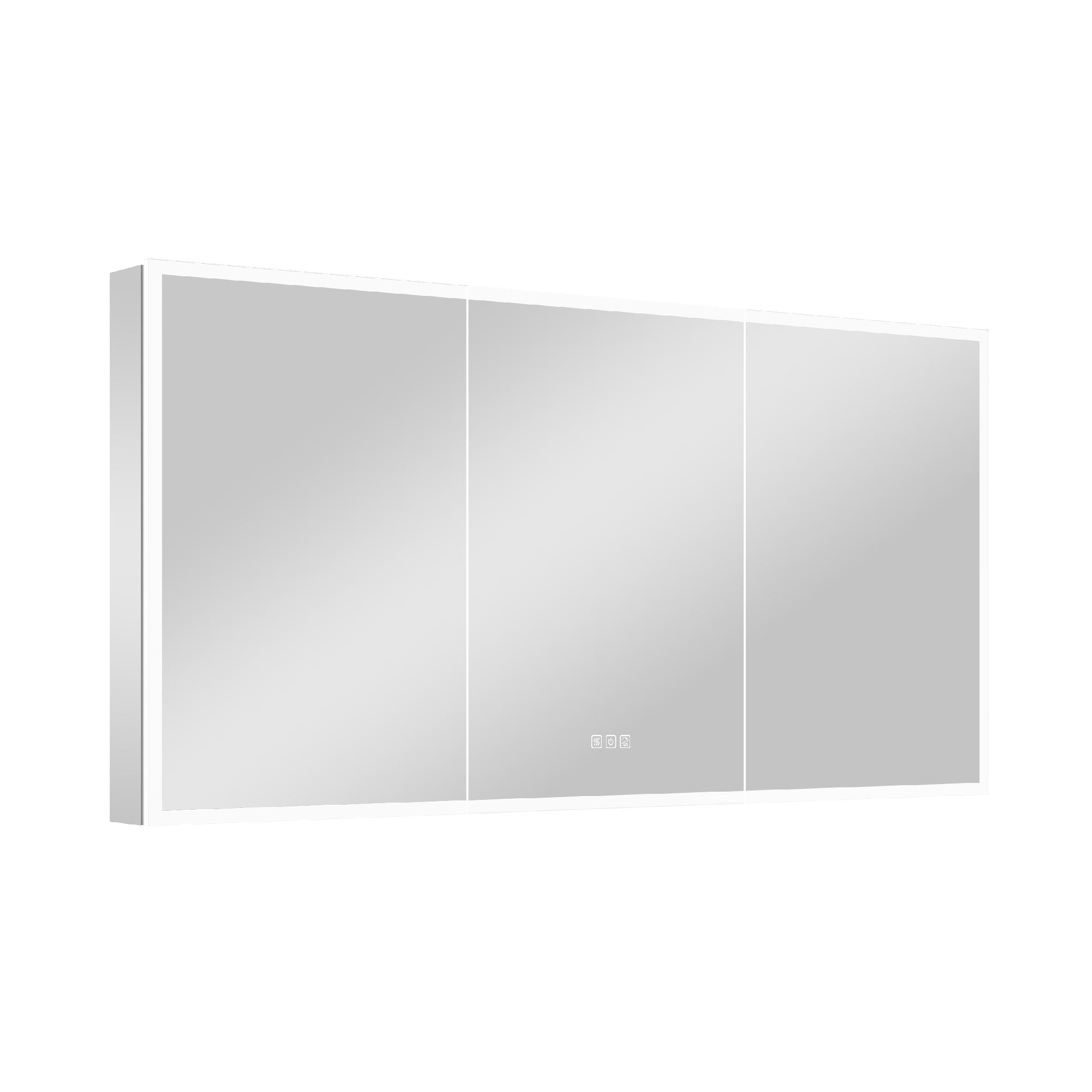
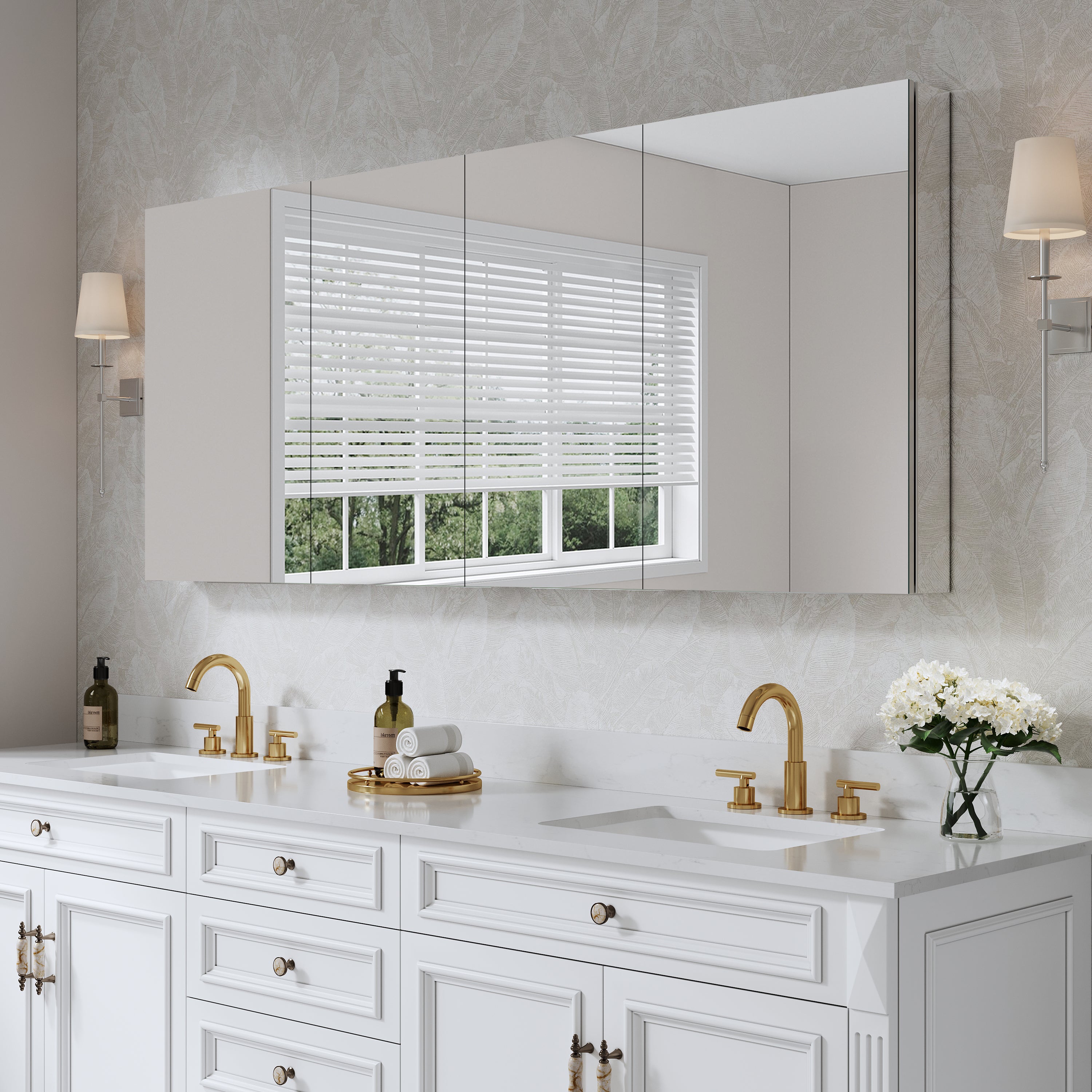
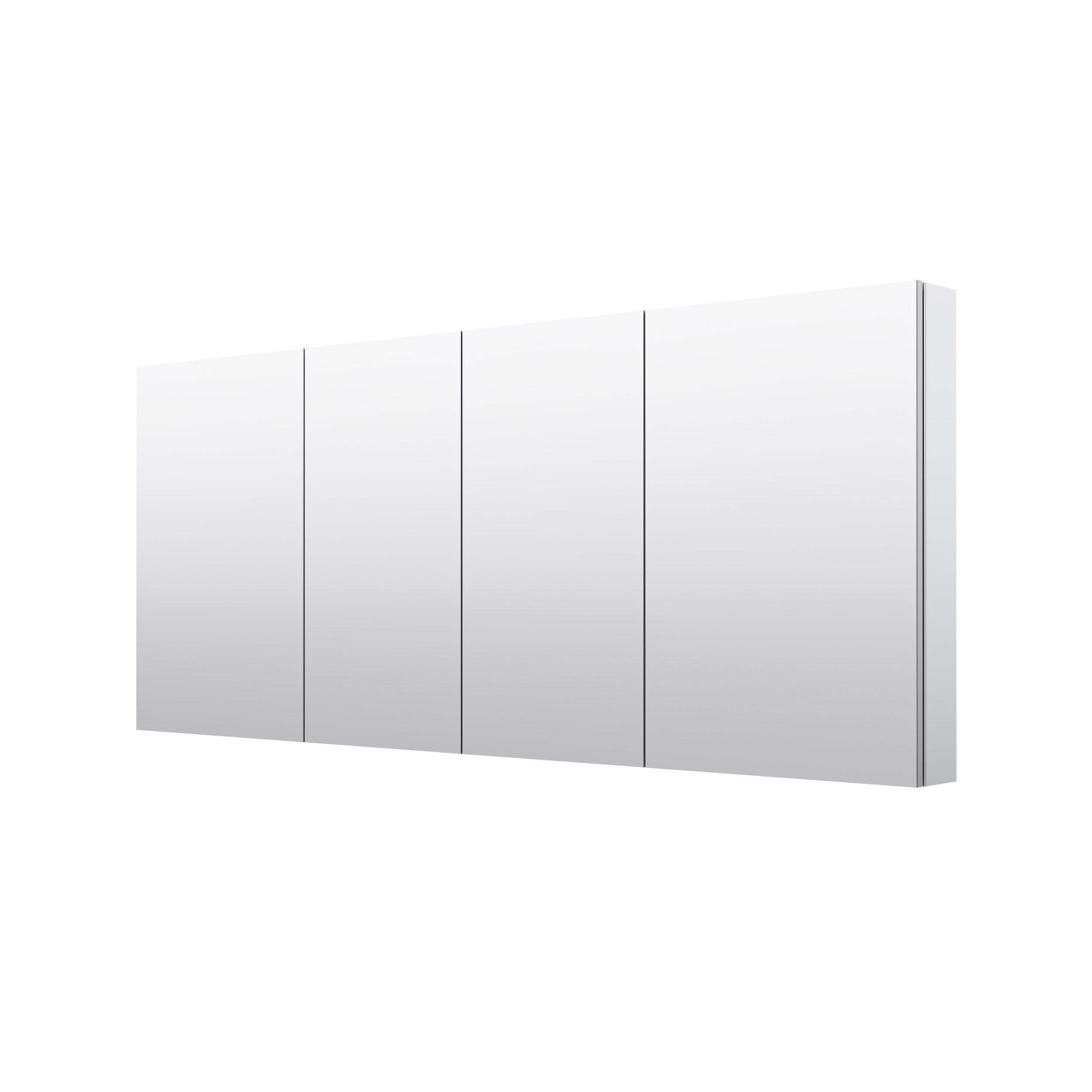
Although the three-fold mirror cabinet offers multi-angle visibility, it is more suitable for washbasin areas with a width exceeding 48 inches; otherwise, it can increase visual pressure.
6. Lighting mirror cabinets have become a trend: saving both lighting and wall space at the same time
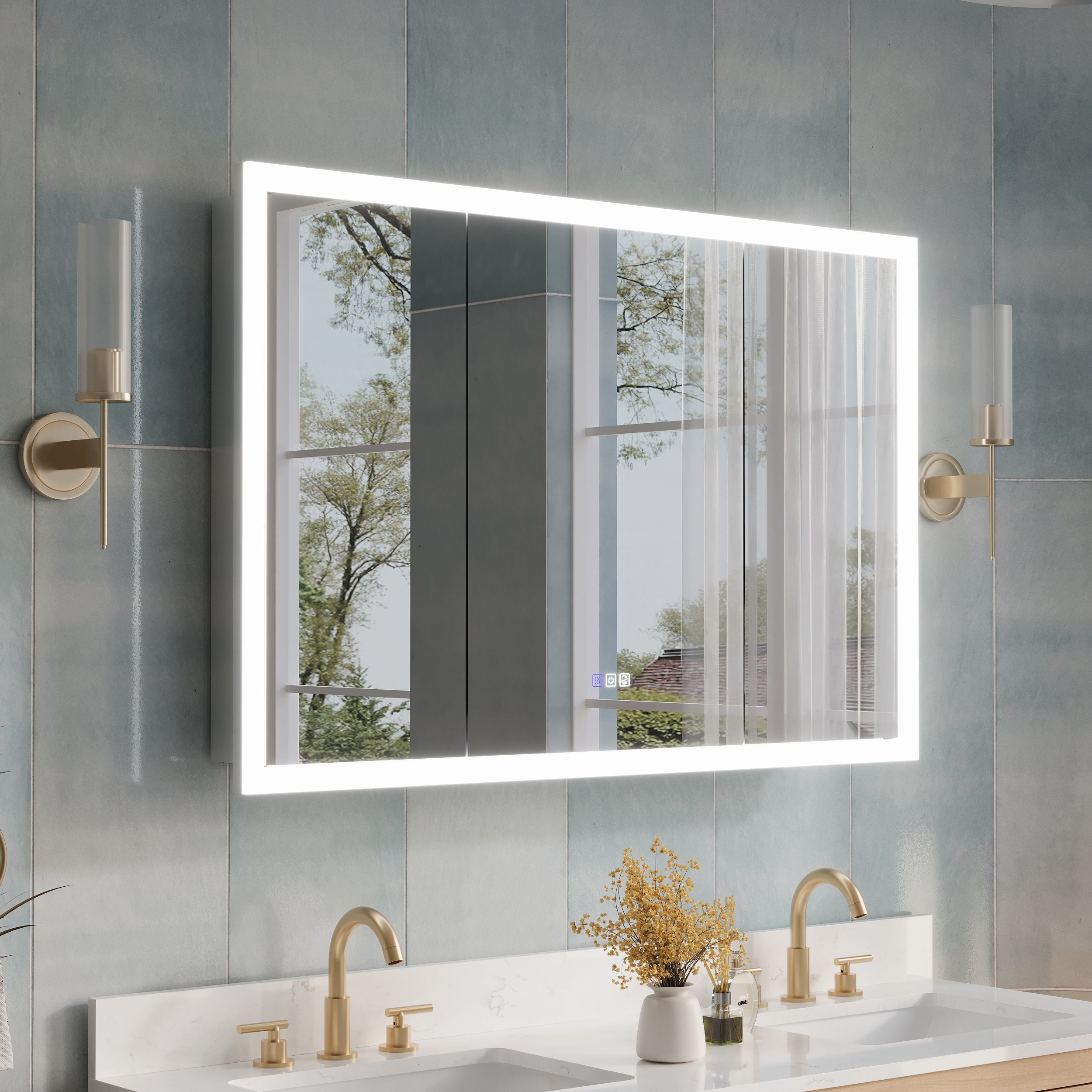
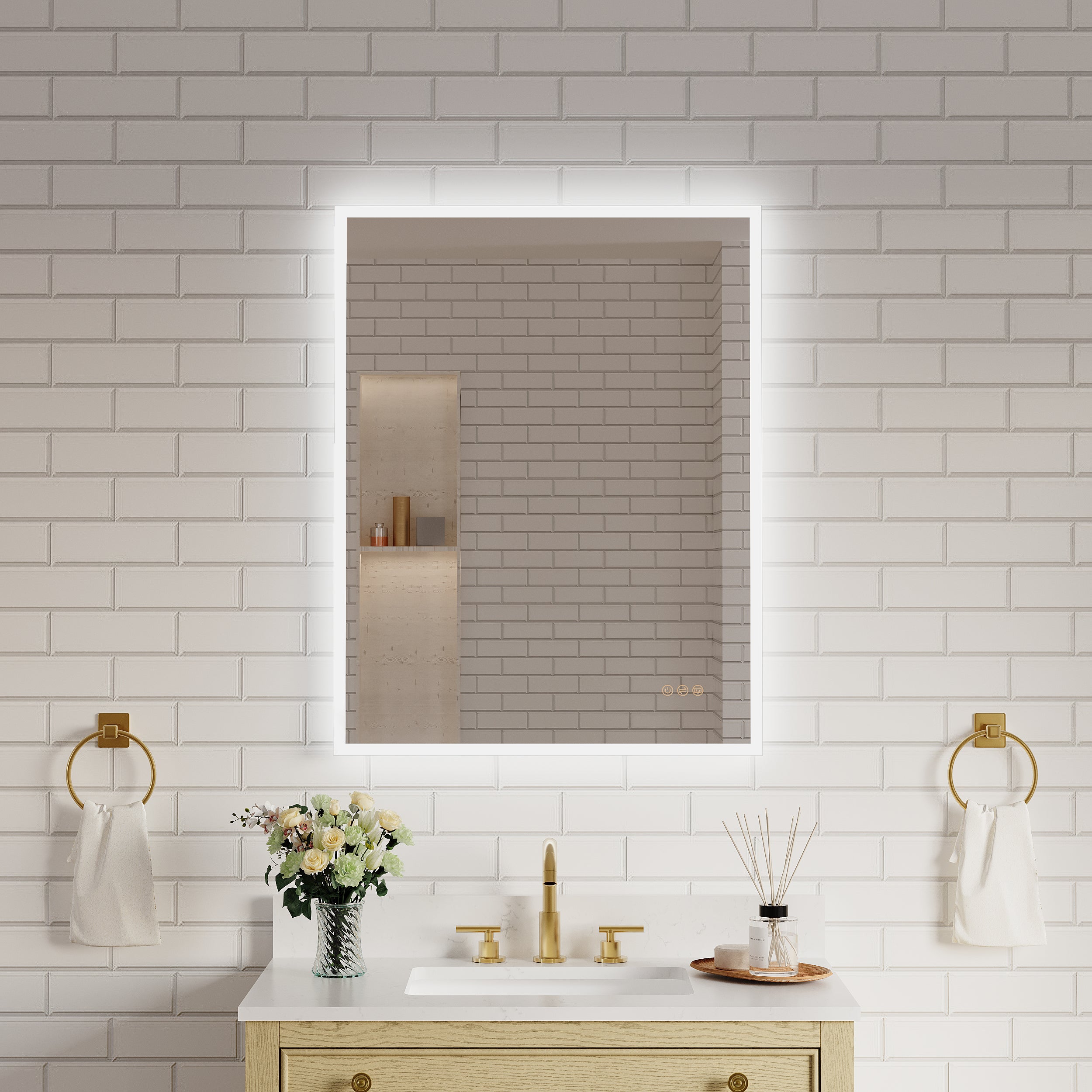
The fastest-growing category of mirror cabinets in recent years is mirrored medicine cabinets with lighting. The integration of lighting technology into the mirror interior eliminates the need for additional wall or ceiling lights to fill in the small bathroom.
LED mirror cabinets generally have the following characteristics:
The front emitting structure is thinner and takes up less space
The integrated lighting allows the cabinet thickness to be controlled at approximately 1.5 inches (mirror body)
Uniform lighting, suitable for shaving and makeup
No need for protruding lampshades, saving wall space
According to the lighting product trend report, the usage rate of front LED light sources has increased by 38% in the past three years (source: Lightingfacts.com).
For small bathrooms, reducing the number of lighting fixtures and minimizing protruding structures can effectively improve the cleanliness and smoothness of the space.
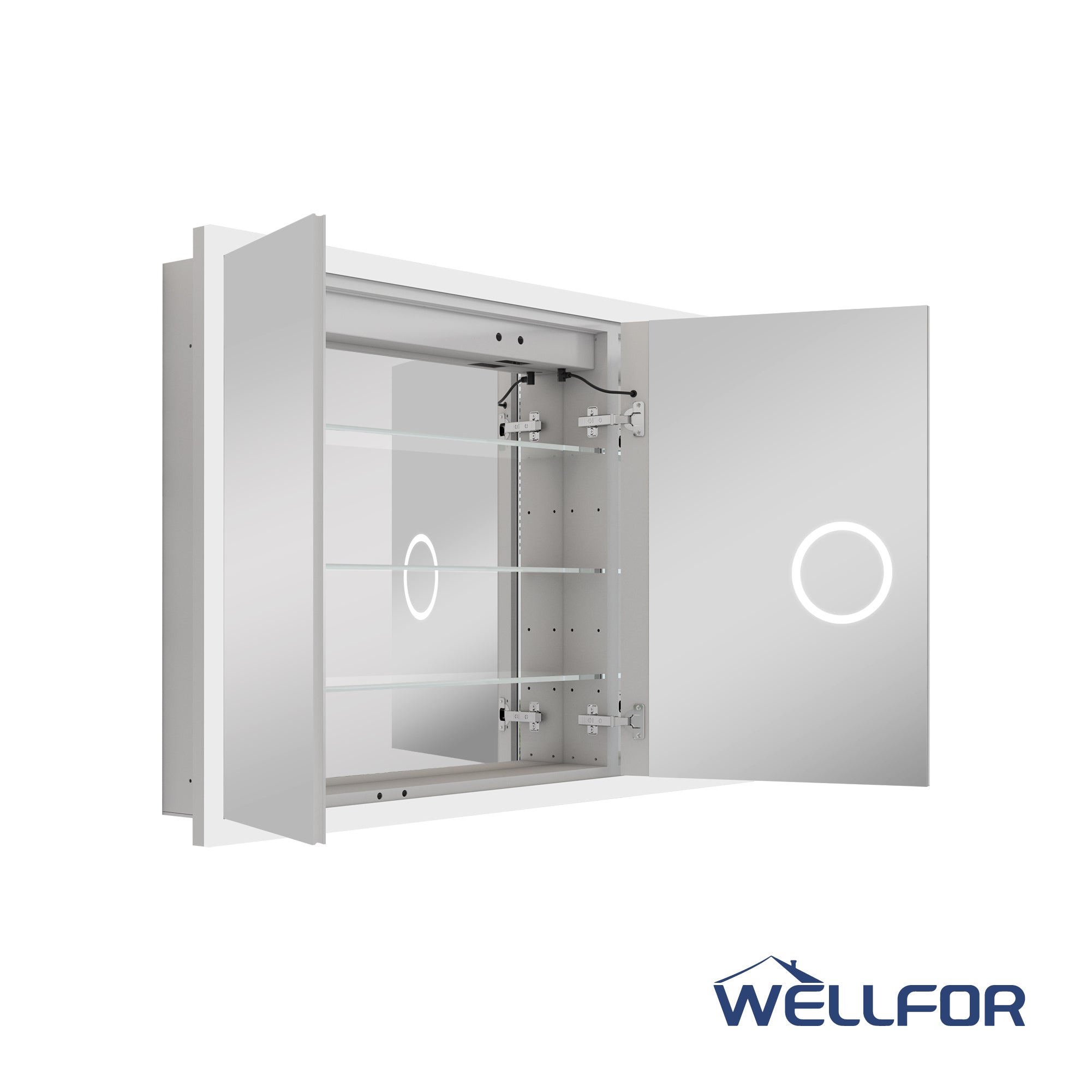
7. Additional features: Hidden side lights, cushioned hinges, adjustable shelves
To further adapt to the needs of small spaces, more and more mirror cabinets have added humanized details, such as:
Hidden side lights: The light source is embedded in the frame, without taking up additional space
Buffer hinge: reduces the angle range required to open the door
Adjustable shelves: allowing 10-12 inch height differences to be fully utilized
Anti-fog system: reduces the frequency of mirror cleaning
Lightweight aluminum alloy cabinet: reducing wall burden
Although these details do not directly reduce the product's size, they significantly affect the daily use experience in small spaces.
8. Industry trend: Small bathrooms are driving mirror cabinets towards lighter, thinner, and more innovative designs
From the bathroom industry report, it can be seen that the future development trend of mirror cabinets presents the following directions:
Thinner thickness
The manufacturer is optimizing the mirror thickness and reducing the back panel structure to make the mirror cabinet suitable for narrower bathrooms.
Expand intelligent functions
Features such as automatic defogging, touch switches, and intelligent zoning lighting have quickly become popular across the mid- to high-end and entry-level markets.
Modular size increases
To accommodate different small bathrooms, the selection of sizes such as 20 × 24, 24 × 28, 24 × 30, and 30 × 36 is becoming increasingly diverse.
More emphasis on wall compatibility
Many models support dual-mode installation of wall-mounted and recessed, making small space choices more flexible.

9. Summary: Mirrored medicine cabinet is the "king of cost-effectiveness" for small bathrooms
Overall, the reason why a mirrored medicine cabinet is an ideal configuration for small bathrooms is mainly that it can simultaneously solve three key problems:
Insufficient storage space - expand hidden storage by 4-5 inches in depth
Effectively release countertops and wash areas to make small spaces cleaner.
Strong sense of spatial pressure - magnifying the visual through mirrors to enhance lighting and openness
The mirror cabinet itself has replaced ordinary mirrors, but its functionality has been dramatically improved.
Limited installation location - adapted to narrower bathrooms through wall-mounted and embedded methods
Single-door design, thin lighting, and other structures further reduce the space burden.
For bathrooms with sizes ranging from 25 to 45 square feet, a mirrored medicine cabinet can be considered one of the most cost-effective, easy-to-install, and significantly improved upgrade options.












Leave a comment
This site is protected by hCaptcha and the hCaptcha Privacy Policy and Terms of Service apply.