
















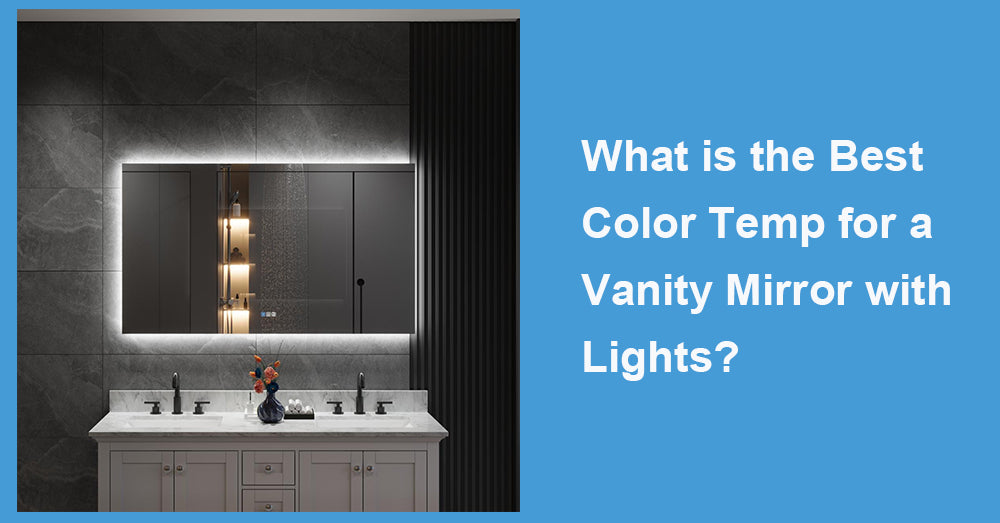
In contemporary bathrooms and dressing spaces, vanity mirror with lights have become a key element that affects daily makeup, skincare effects, and overall spatial texture.
Among all the lighting parameters, color temperature is often the most easily overlooked but prone to "tipping over".
Numerous studies on lighting and usage behavior have shown that the naturalness of makeup and the authenticity of skin tone largely depend not on the cosmetics themselves, but on whether the light in front of the mirror is close to reality, stable, and predictable.
1. What exactly does color temperature affect
Color temperature is not simply a matter of "cool or warm light", but a core variable that determines the way skin tone is presented.
Industry tests have shown significant differences in the appearance of the same face in a mirror across different color temperatures, especially in skin tone uniformity, defect visibility, and makeup thickness.
Overly warm lighting can easily "beautify" skin tone, but conceal real problems.
Cold light can magnify details and make makeup appear too heavy in front of the mirror.
That's also why many people think their makeup looks perfect in the bathroom but find the colors are out of balance when they go out.
2. Real performance differences in standard color temperature ranges
From the perspective of industry applications and lighting testing, mirror-front lighting can be roughly divided into three typical categories.
Warm light
The warm light is usually located at around 2700K–3000K.
This type of lighting is closer to traditional indoor lighting, with a soft, skin-tone appearance.
Still, it can easily make the base makeup appear too light, especially in outdoor or natural light, where the contrast is obvious.
Cold light
Cold light is often above 6000K, close to office or functional lighting.
This type of light can clearly reveal the skin's texture, but it can also make the skin appear gray and fatigued, leading to an unconscious "heavy hands" application of makeup.
Neutral light
The neutral color temperature range widely considered the most balanced is close to natural sunlight, between 4000K and 5000K.
Industry data shows that makeup completed within this range has the fewest color-difference issues across different environments and is closest to the actual daily state.
3. Why is 'neutral color temperature' most suitable for use in front of a mirror
The lighting design of professional makeup rooms and shooting spaces has long been biased toward neutral light, and this is no accident.
Related tests have shown that under neutral color temperature, the contrast between facial brightness and darkness is closer to that in the natural environment, and the error rate in makeup judgment is higher.
For a vanity mirror with lights, the advantages of neutral light are:
It will not significantly change the tone of skin color.
Stronger adaptability to different skin tones.
More stable performance in various scenarios such as daily life, office, and social interactions.
This is also why more and more lighting mirrors are adopting neutral color temperature as the default, rather than extreme warm or cold.
4. The implicit relationship between size and color temperature
Color temperature does not exist in isolation; it is closely related to mirror size and light distribution.
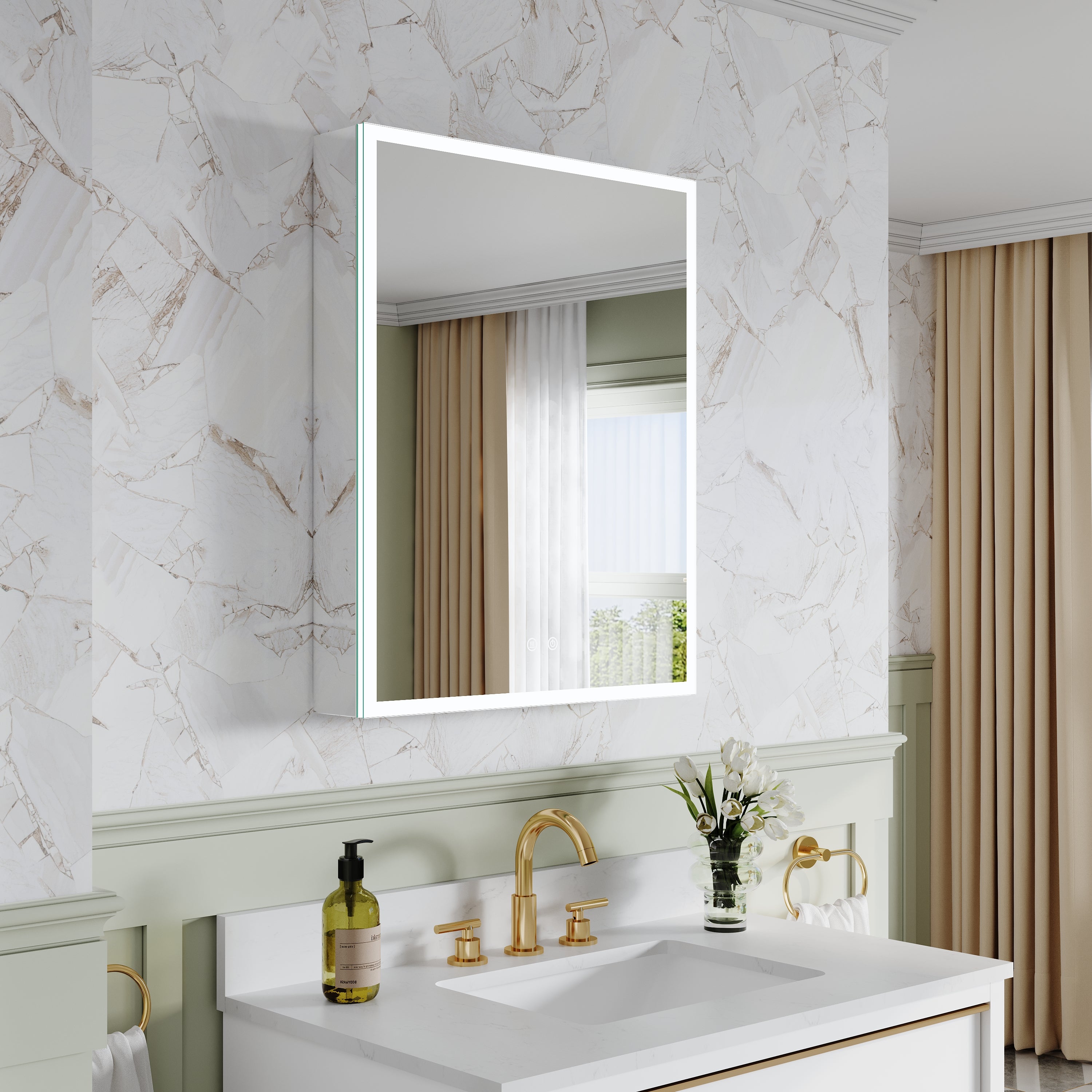
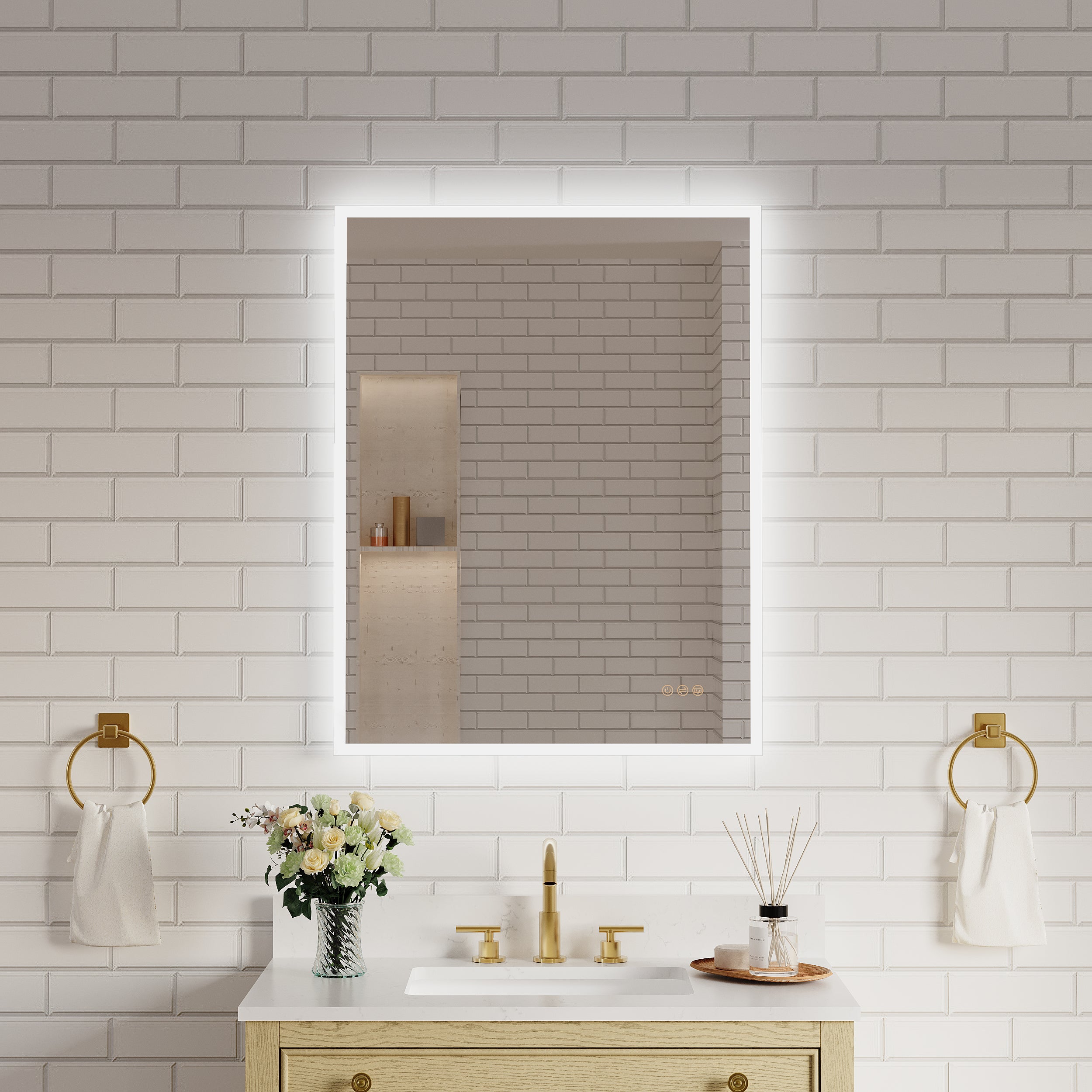
On a mirror with a width of 24–30 inches, if the light is insufficient, cold light is more likely to appear harsh.
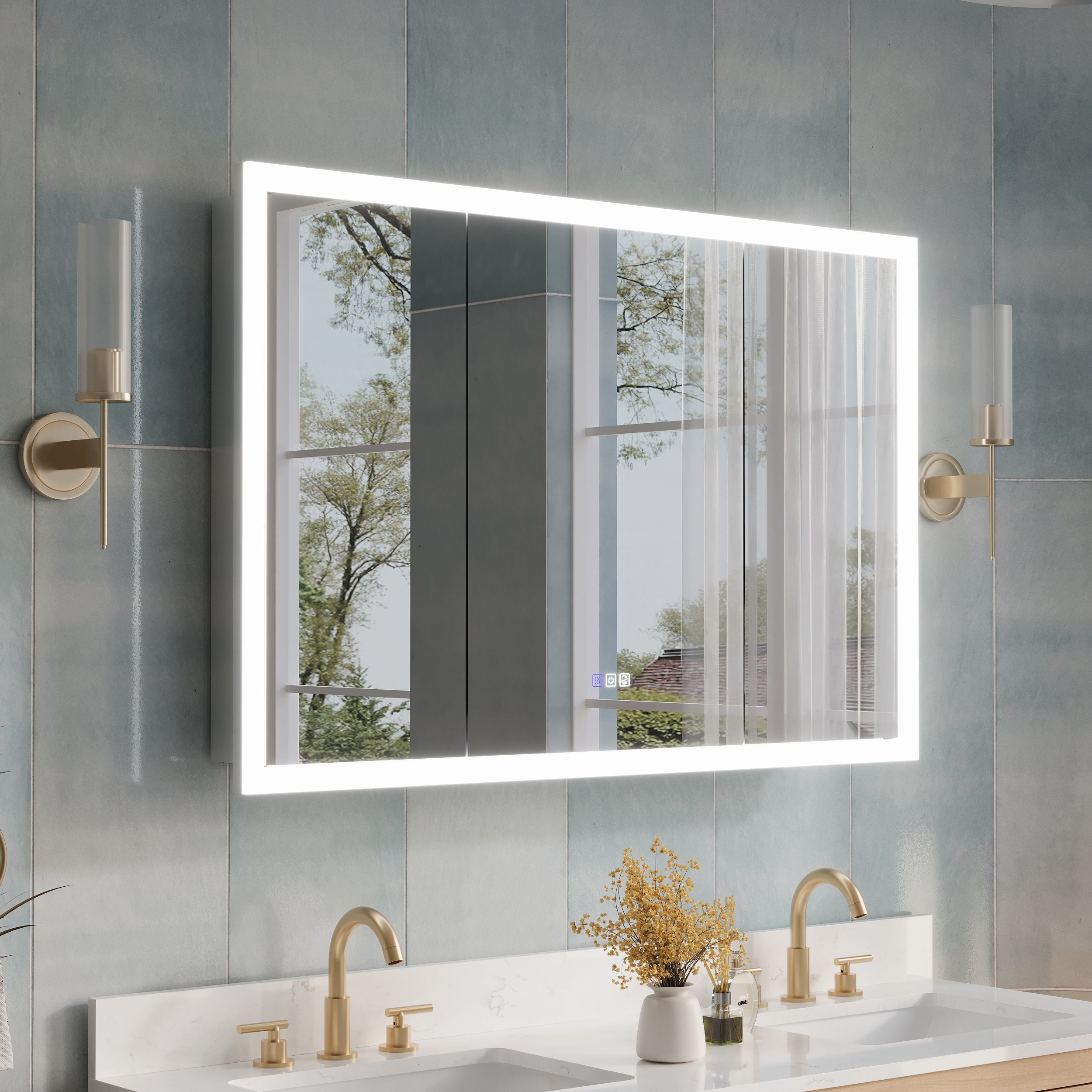
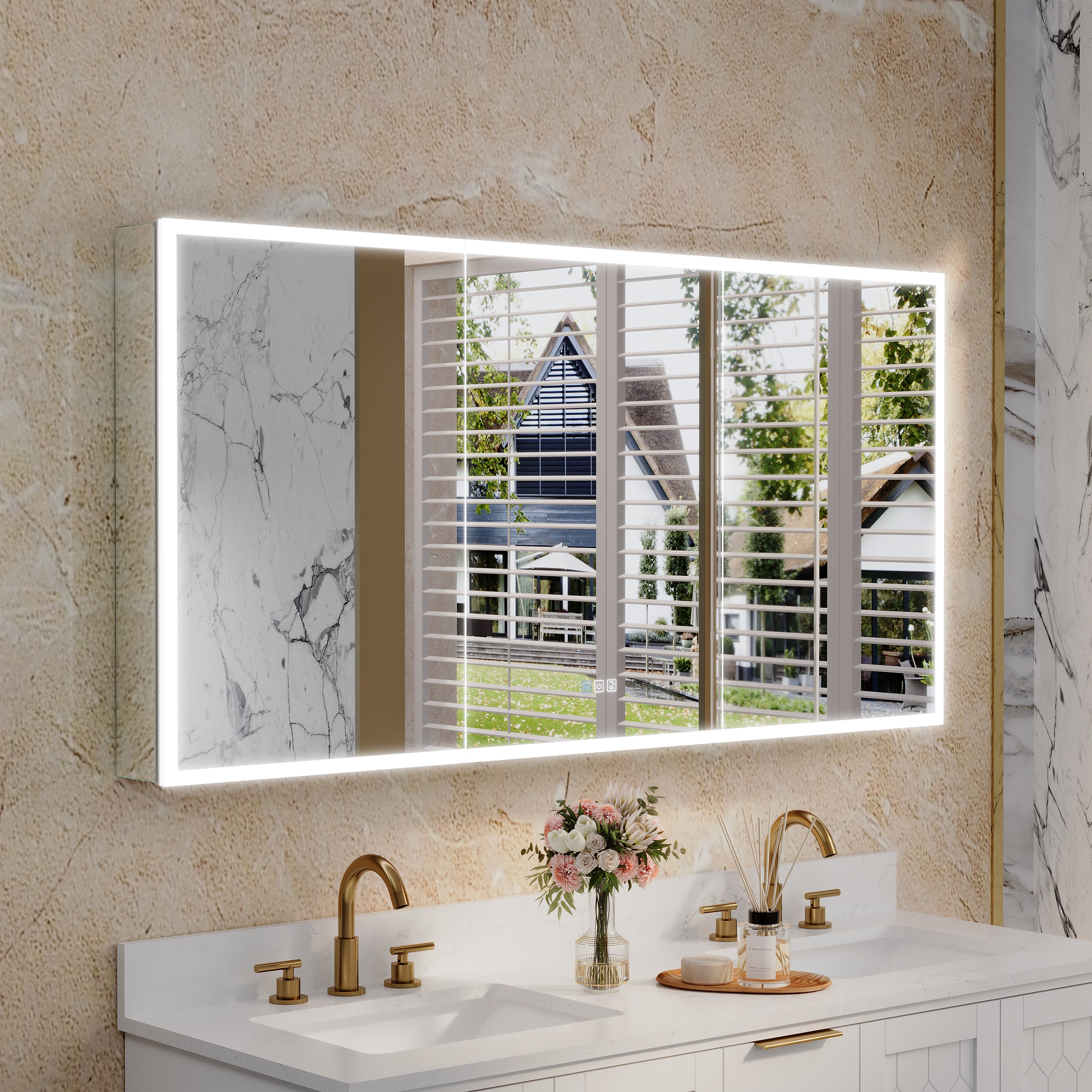
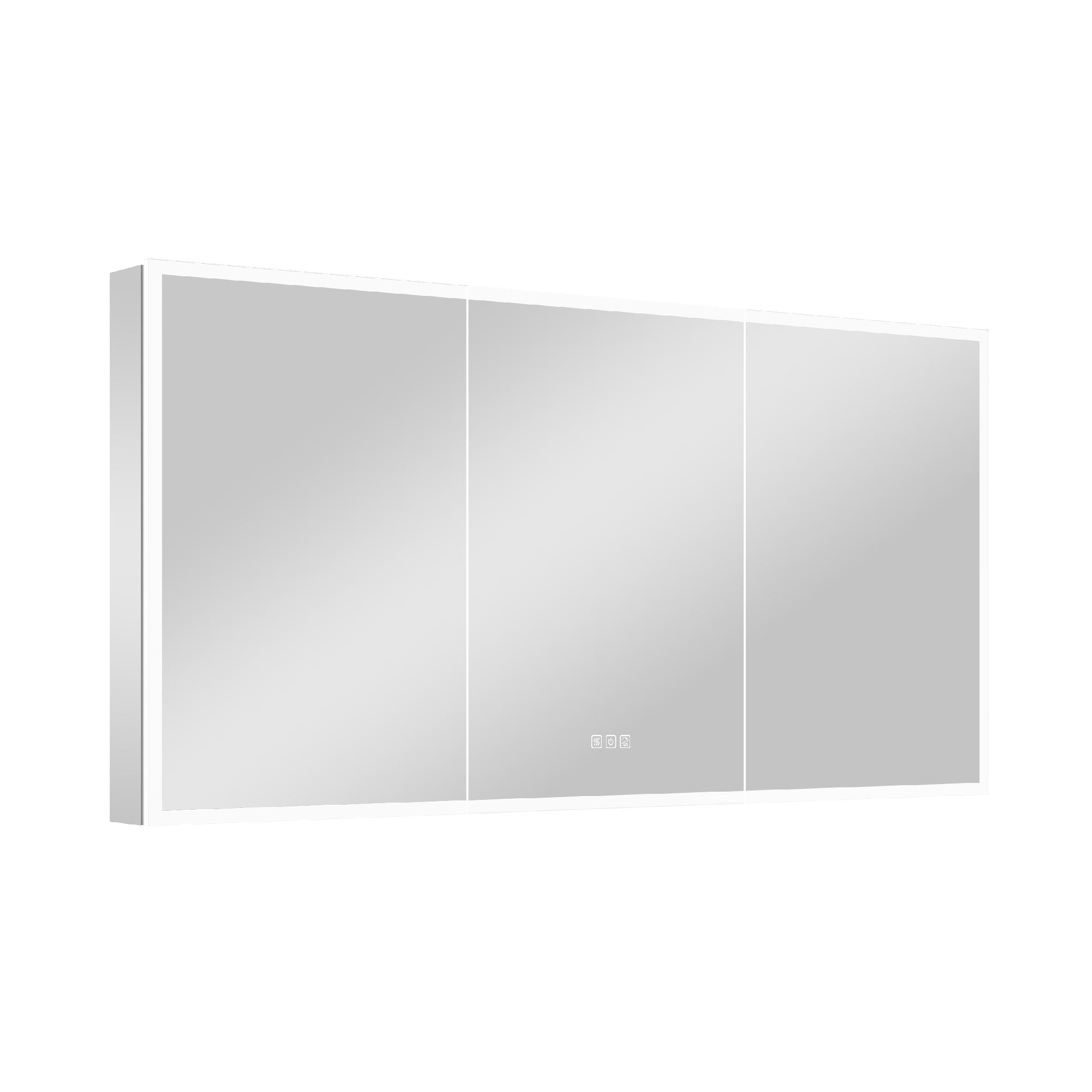
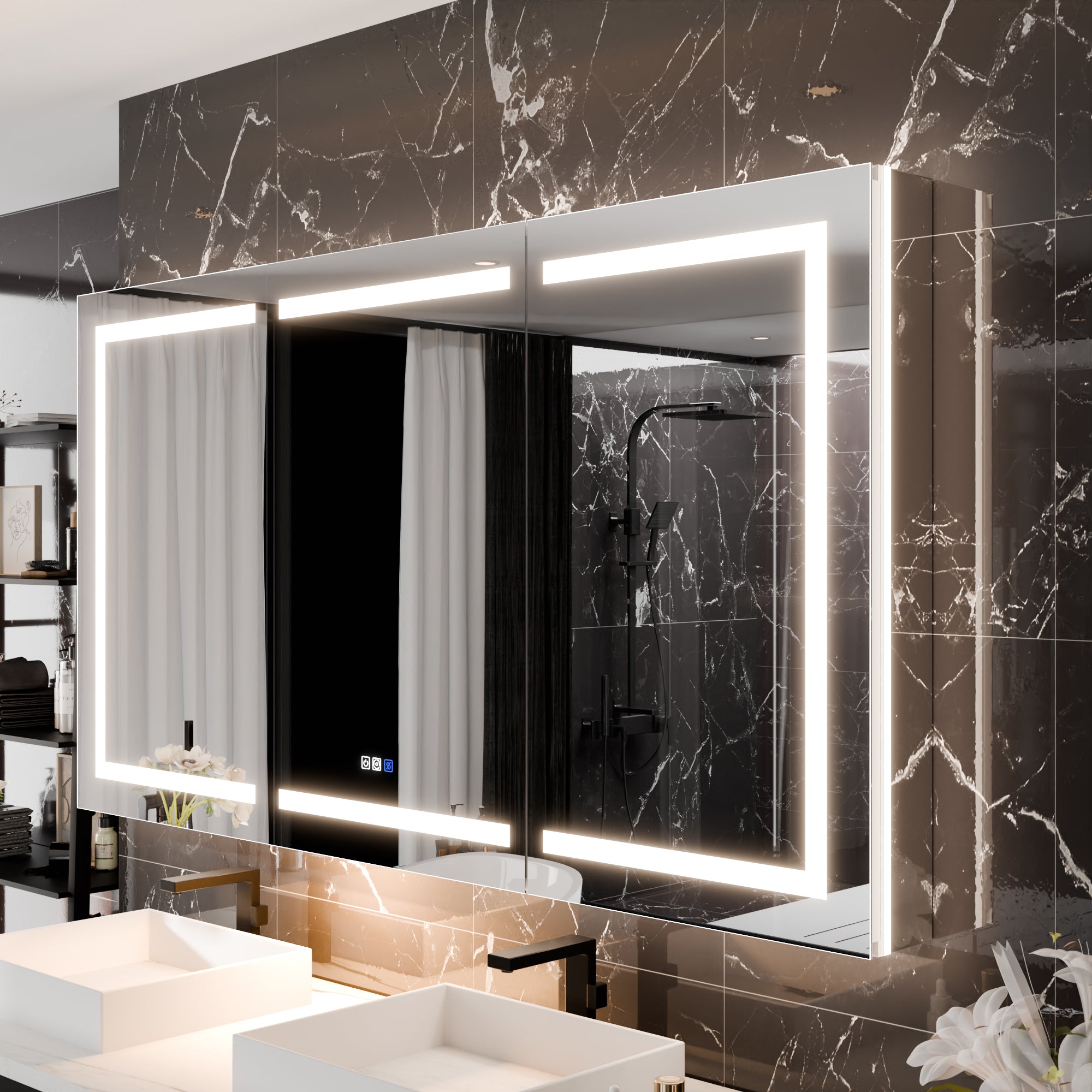
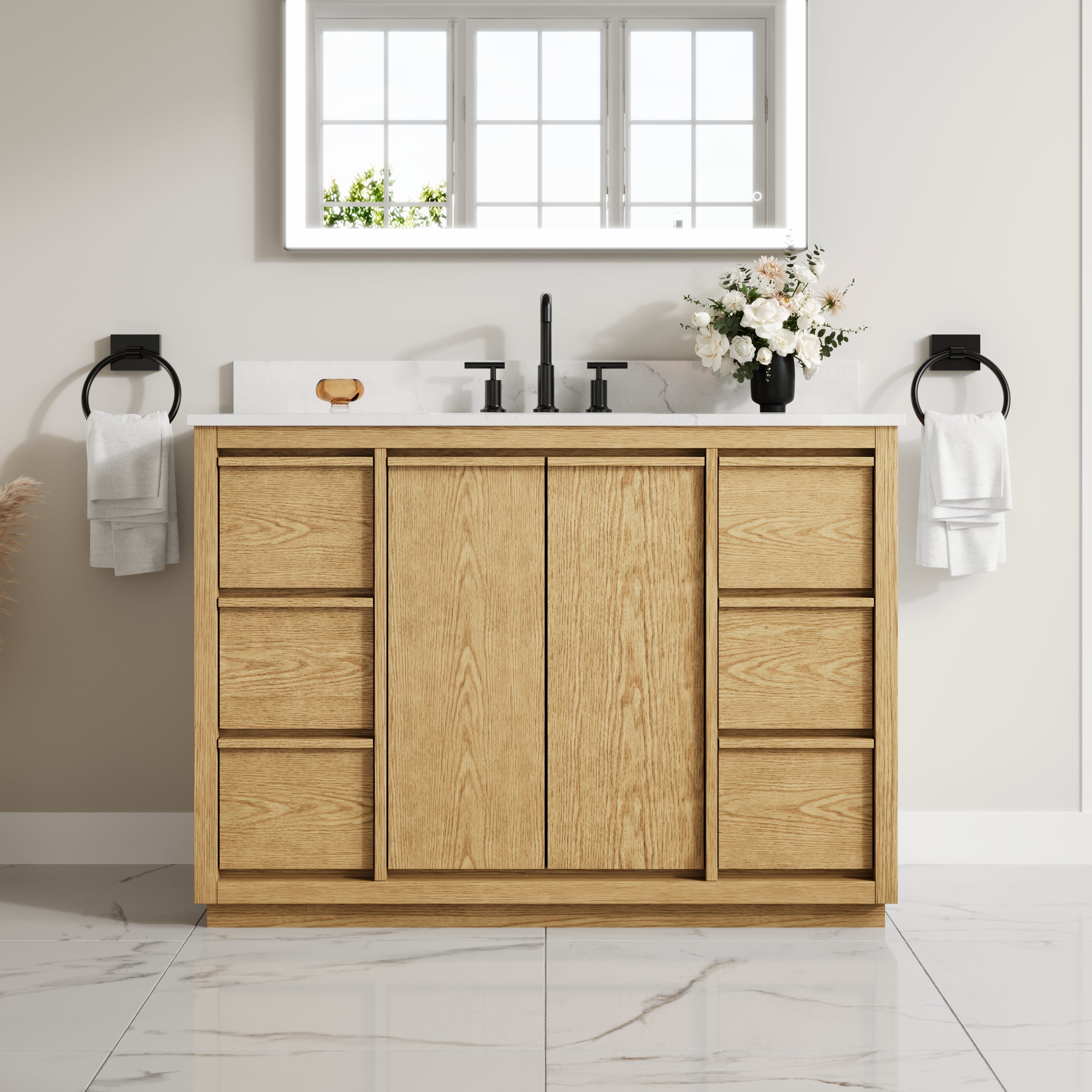
On large mirrors of 36–48 inches, uniform neutral light is more likely to create a stable facial lighting environment.
Industry feedback shows that:
The larger the mirror and the more uniform the light, the higher the tolerance for color temperature.
The smaller the mirror and the more concentrated the light, the more sensitive it is to color temperature selection.
5. Adjustable color temperature is becoming an industry consensus
Due to the difficulty of covering all usage scenarios with a single color temperature, the adjustable color temperature function is rapidly becoming popular.
Industry data shows that mirror headlights with multiple color temperature adjustments have significantly higher long-term satisfaction than fixed-color-temperature products.
In practice:
Use warm or neutral light during the skincare stage.
Switch to a mode closer to natural sunlight during the fine makeup stage.
Finally, quickly check the makeup's performance across multiple environments at different color temperatures.
This "multi-scenario verification" method can significantly reduce the probability of makeup distortion after going out.
6. Don't just look at the color temperature, but also consider the quality of the lighting
Correct color temperature does not necessarily mean good results.
Industry lighting research repeatedly emphasizes that both uniformity and flicker can affect makeup judgment.
A stable, continuous light strip is easier to present the actual skin texture than scattered light spots.
A light source without apparent flicker can reduce eye fatigue caused by prolonged exposure to a mirror.
These factors can amplify or weaken the effect of color temperature itself.
7. Common misconception: Choosing the right color temperature, but it still does not work well
In practical cases, the following issues are prevalent:
Only pursuing "natural light color temperature", but ignoring whether the brightness is sufficient.
The color temperature is correct, but the lighting is too high or too low, resulting in shadows.
Mixing different light sources creates color-temperature conflicts between the mirror and the environment.
These issues often render the correct color temperature selection meaningless.

8. Conclusion: The best color temperature is the one that is closest to real life
From an industry perspective, there is no absolute value that is universally applicable.
But if you need a long-term, stable, and not easily regrettable choice, the neutral color temperature range is undoubtedly the safest and most mature solution.
The truly ideal vanity mirror with lights is not to make you look "best" in front of a mirror, but to make you look "just right" in any environment.
When color temperature, size, and light distribution match each other, mirrors are no longer just lighting tools, but reliable references that help you make correct judgments every day.















Leave a comment
This site is protected by hCaptcha and the hCaptcha Privacy Policy and Terms of Service apply.