














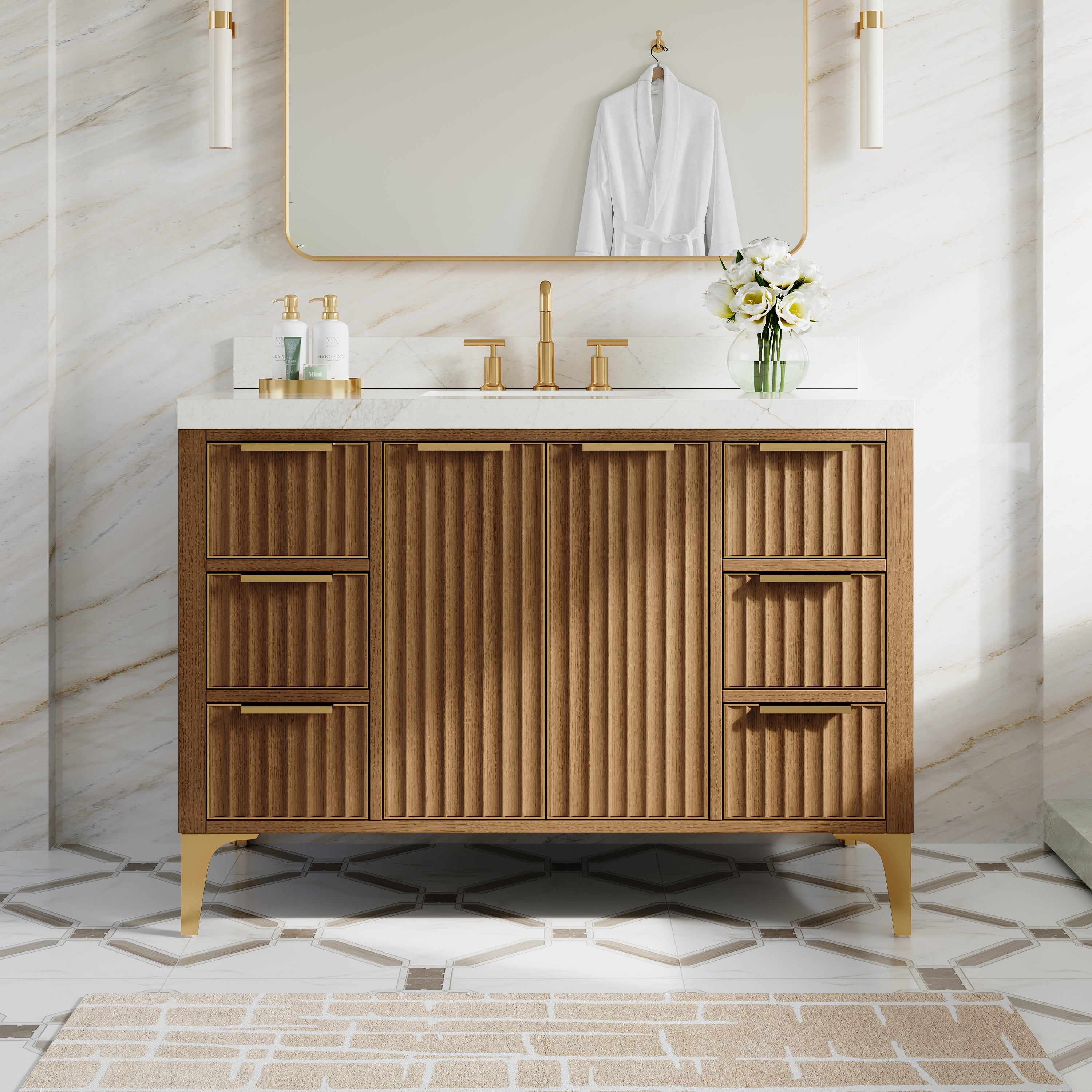
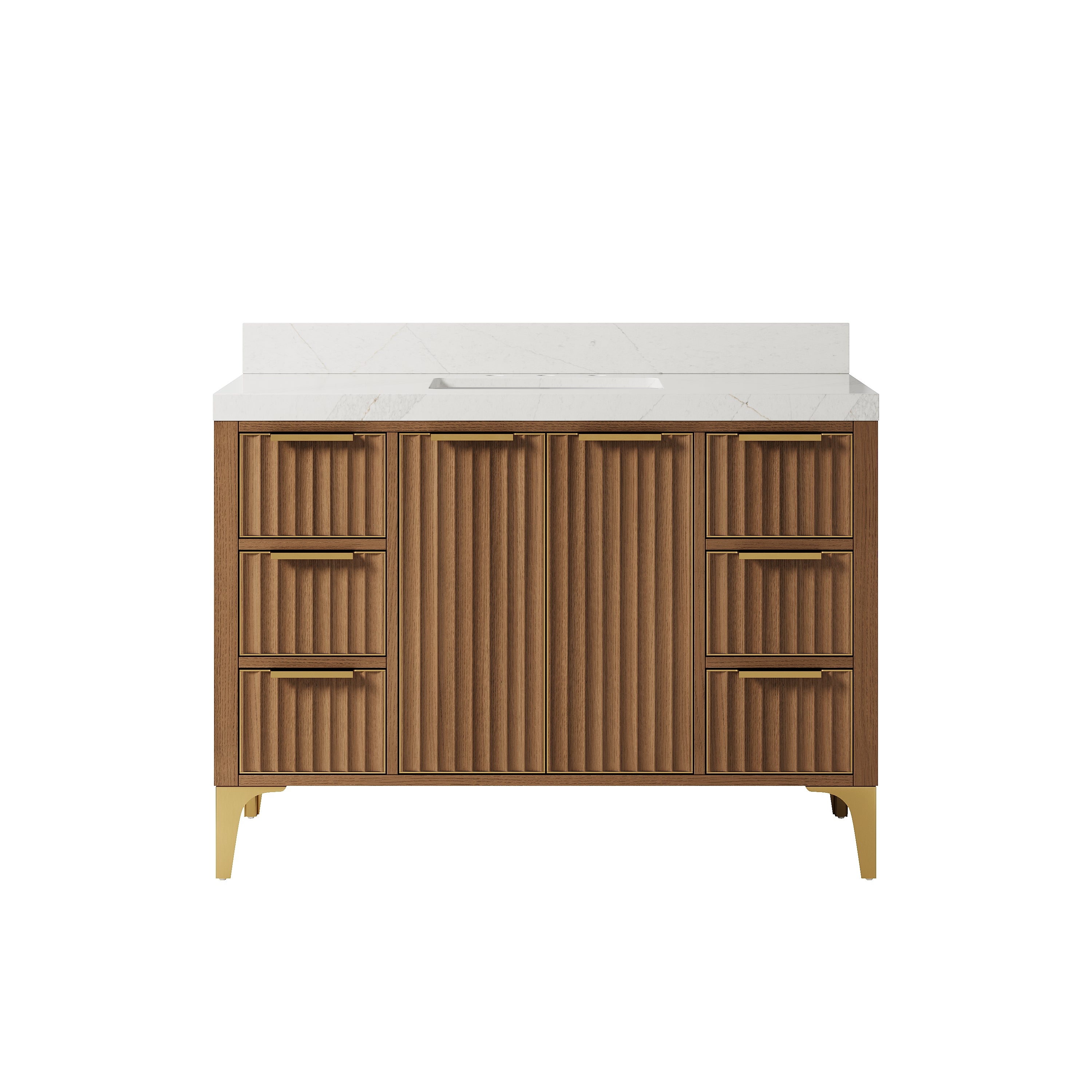


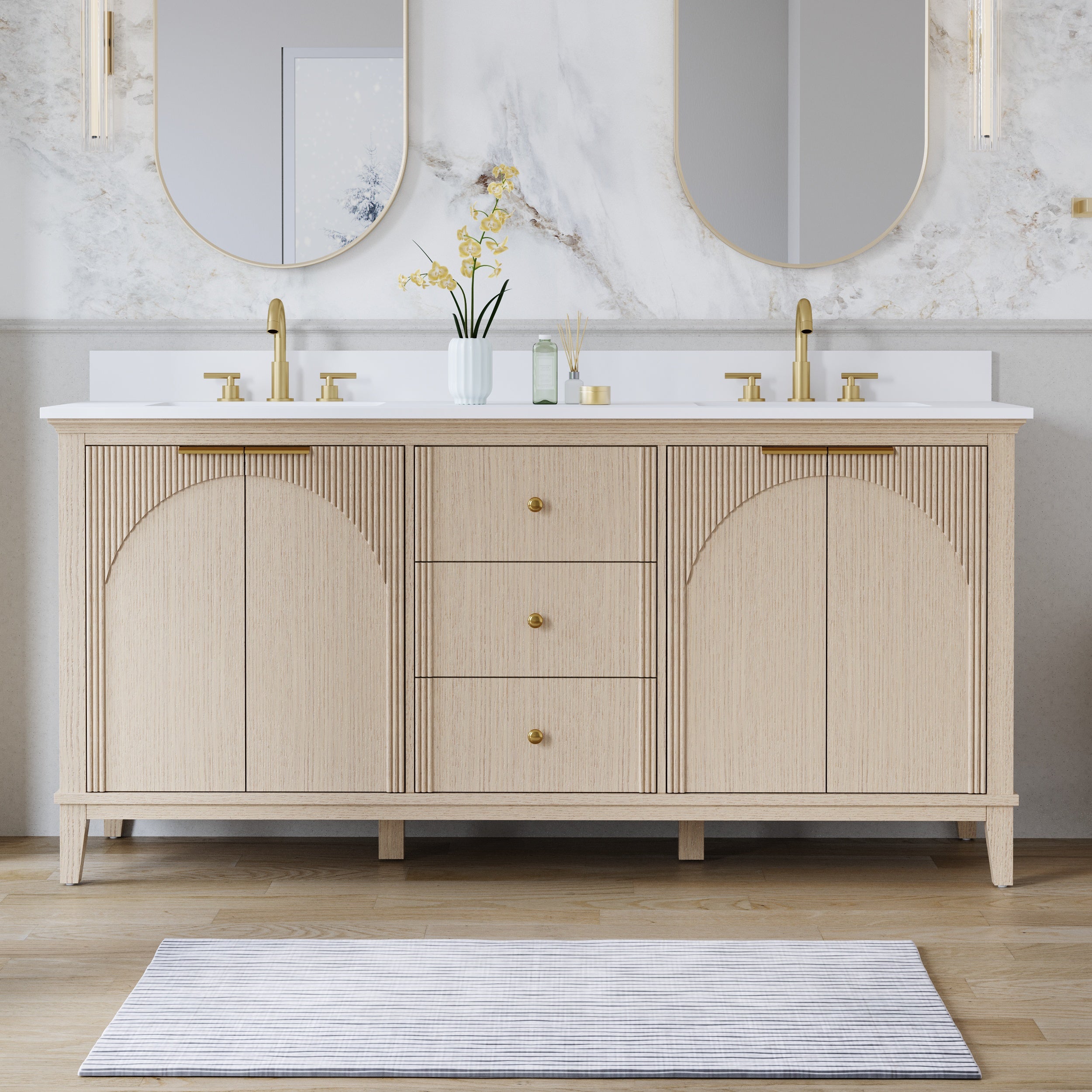
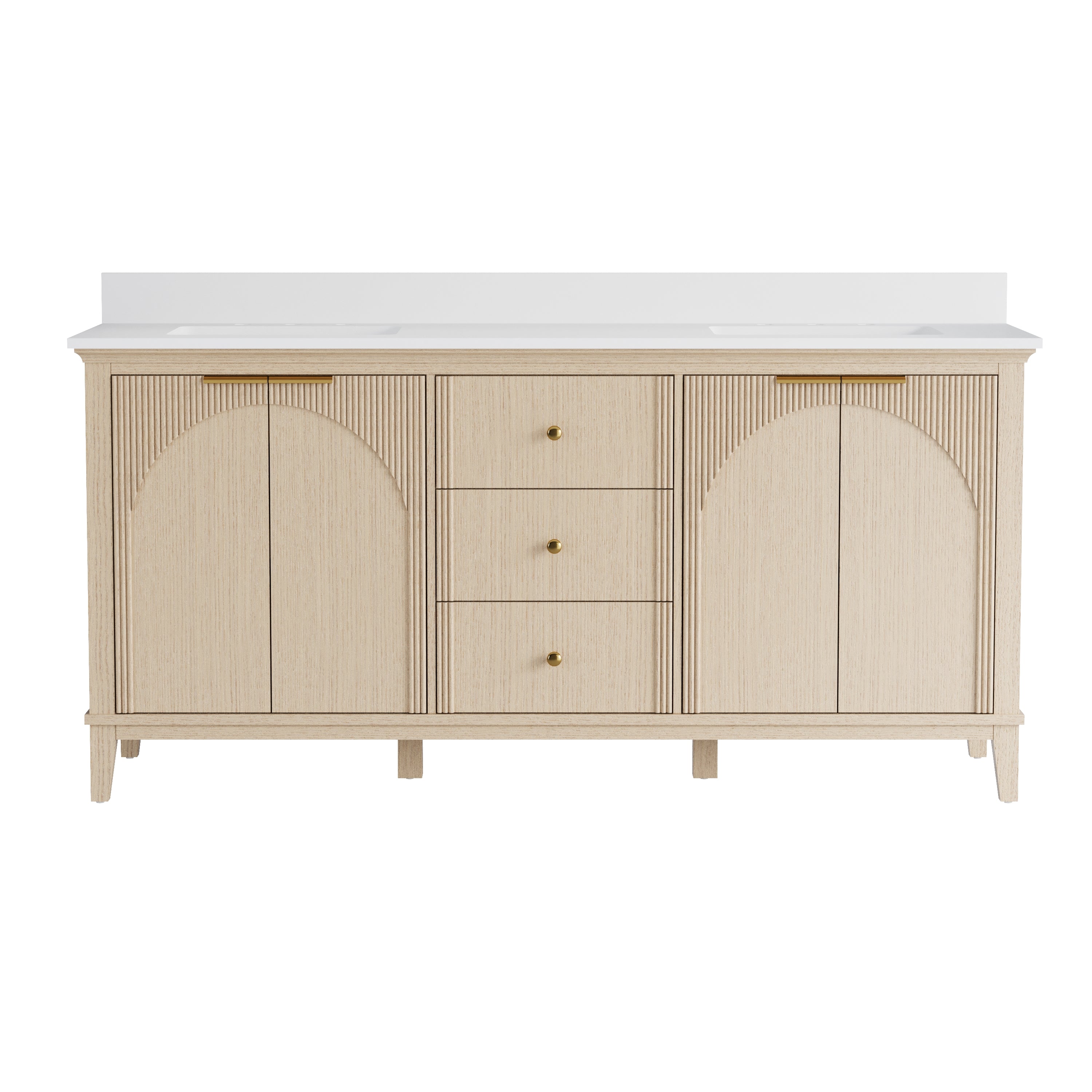
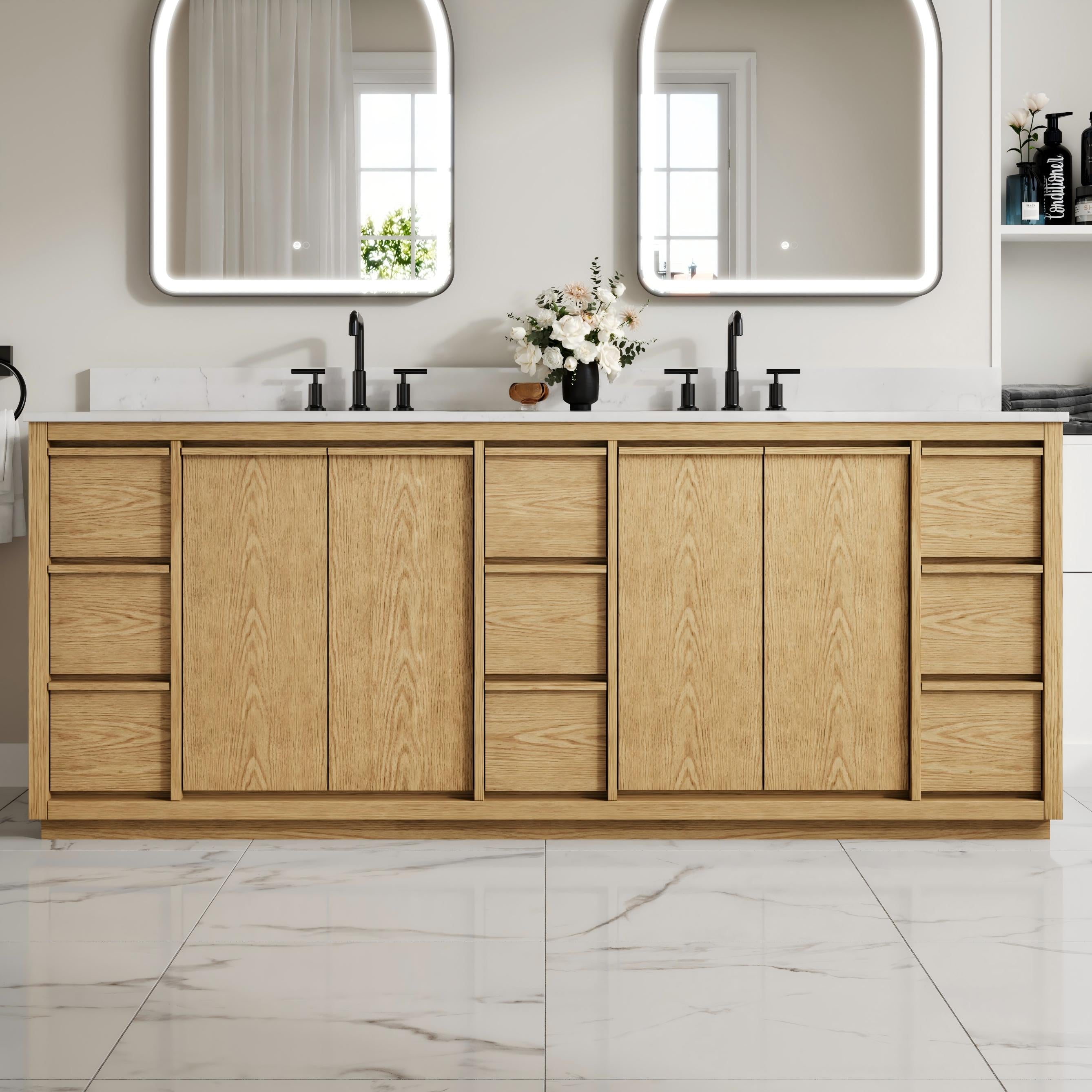
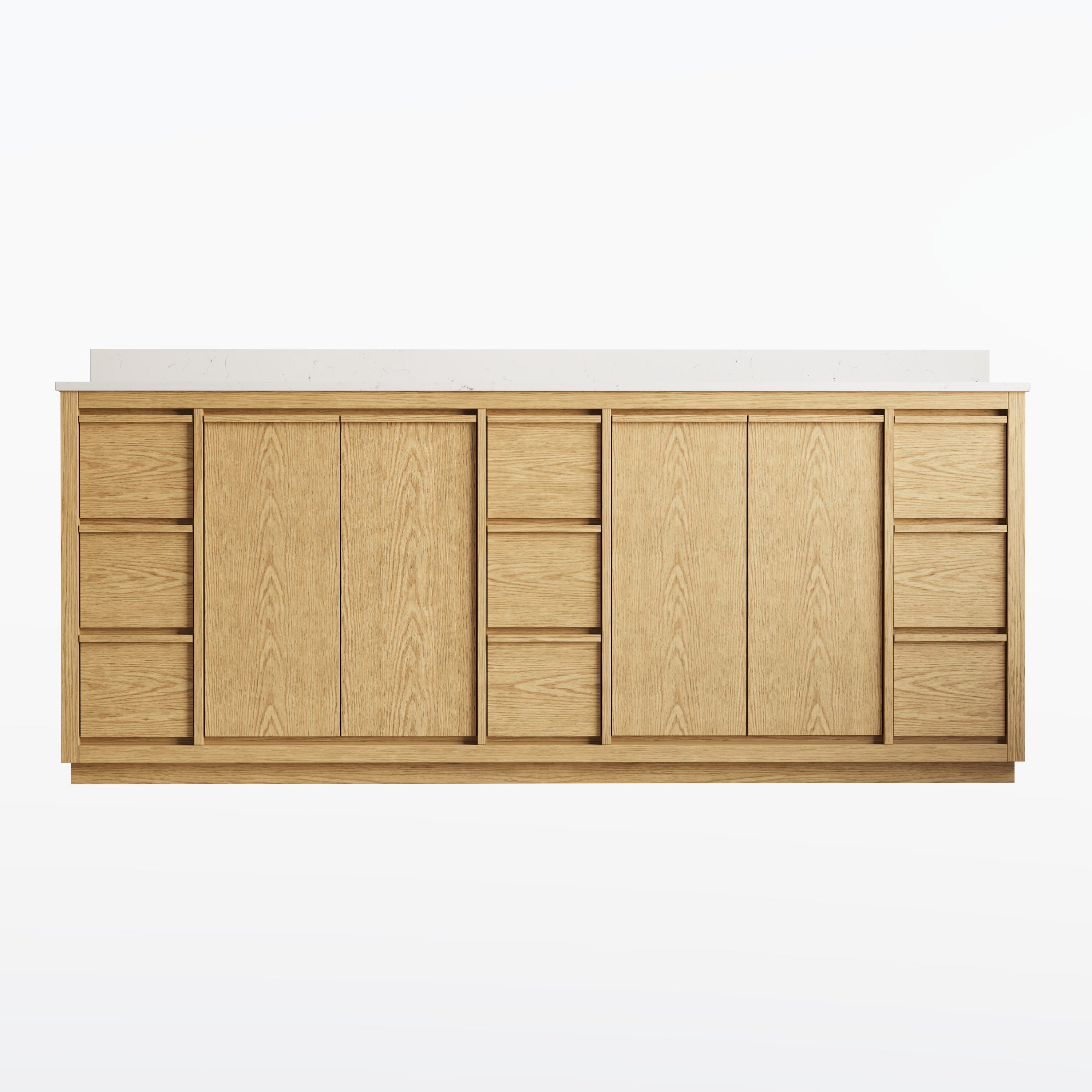
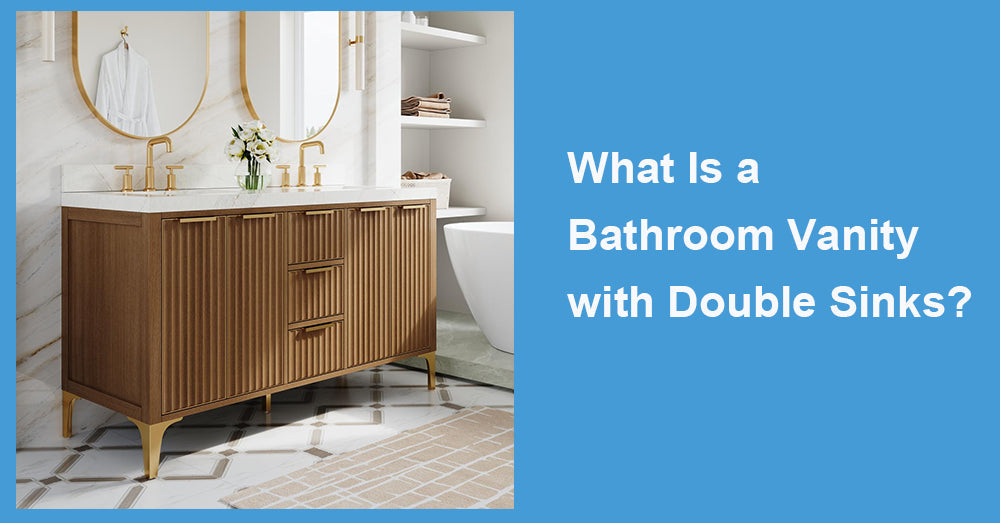
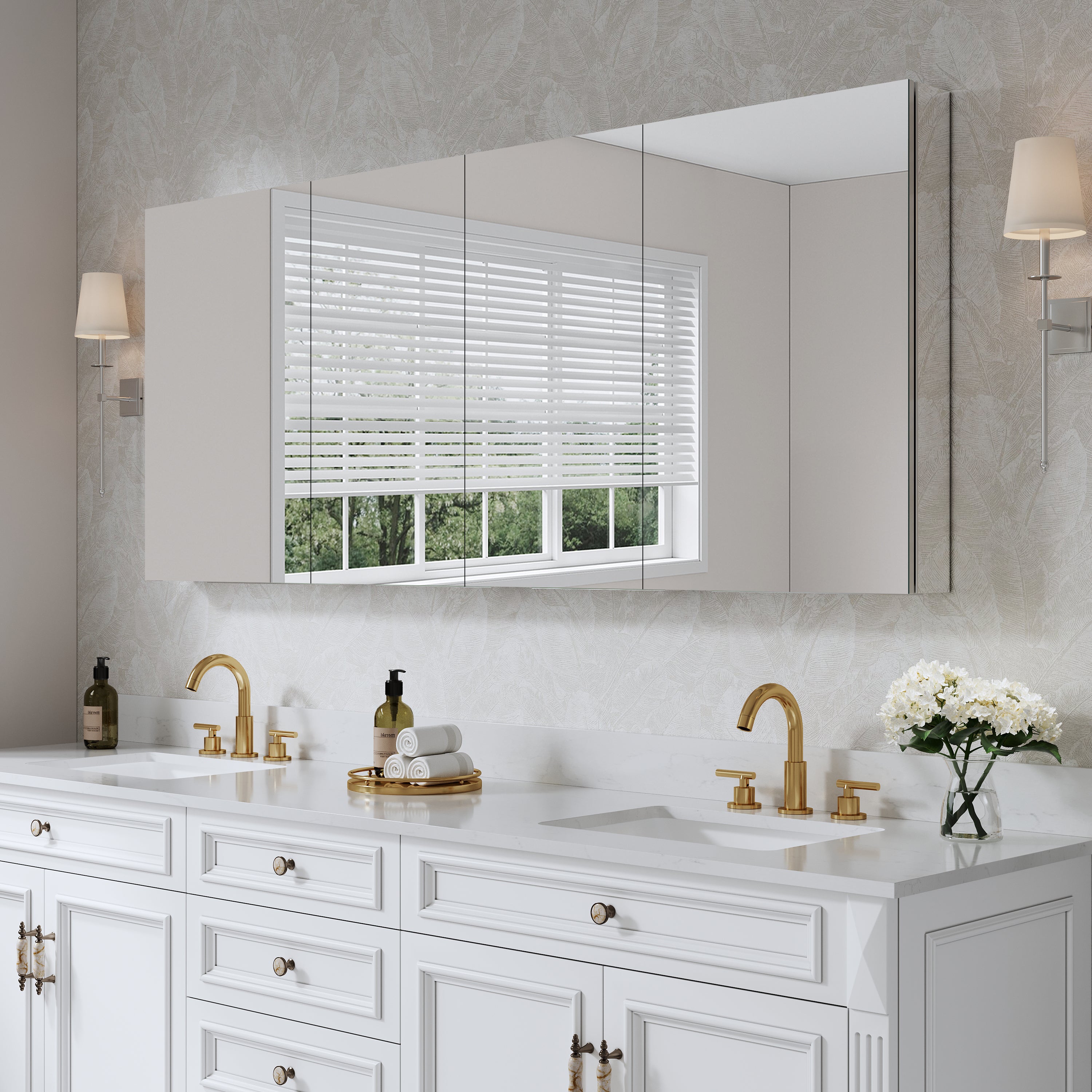
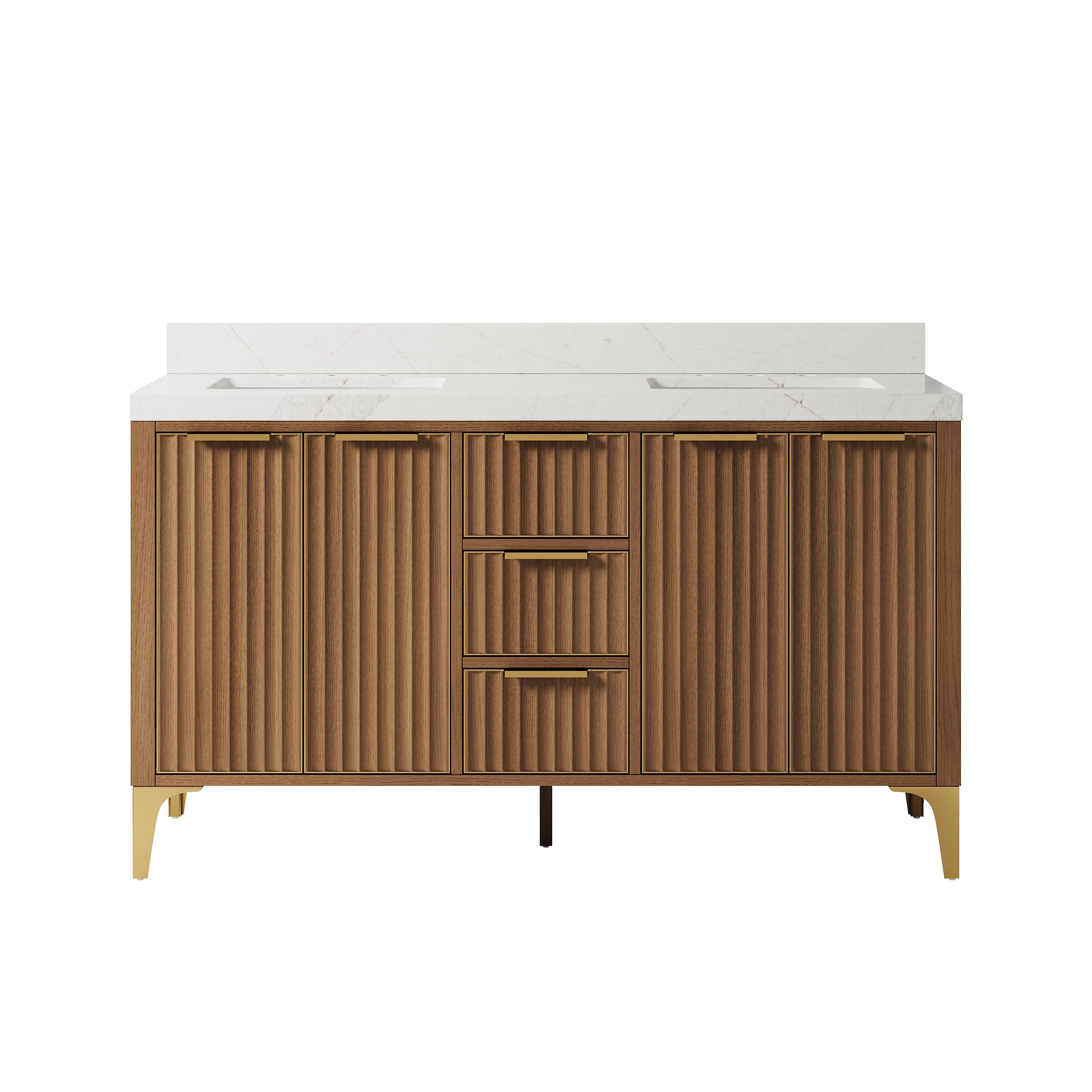
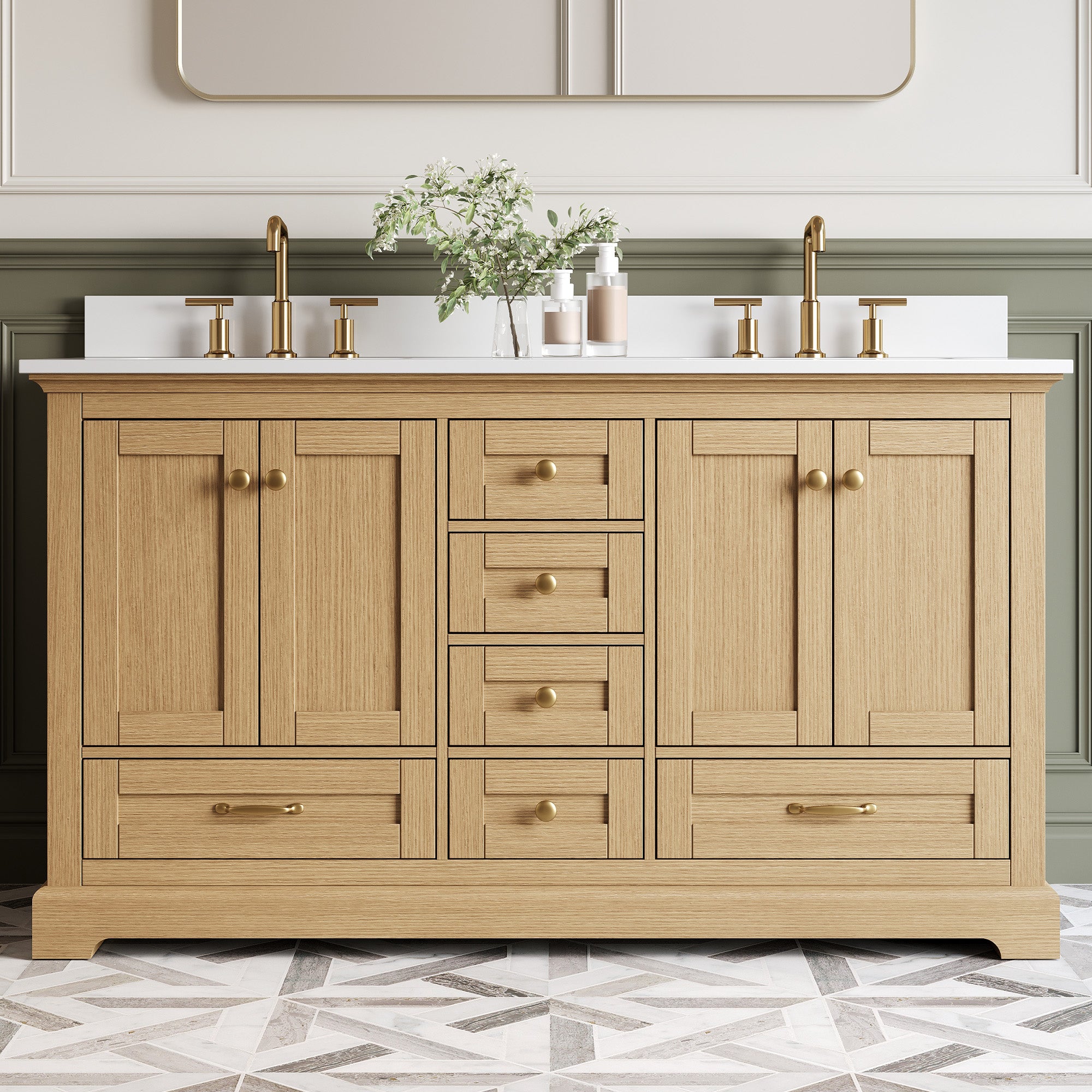
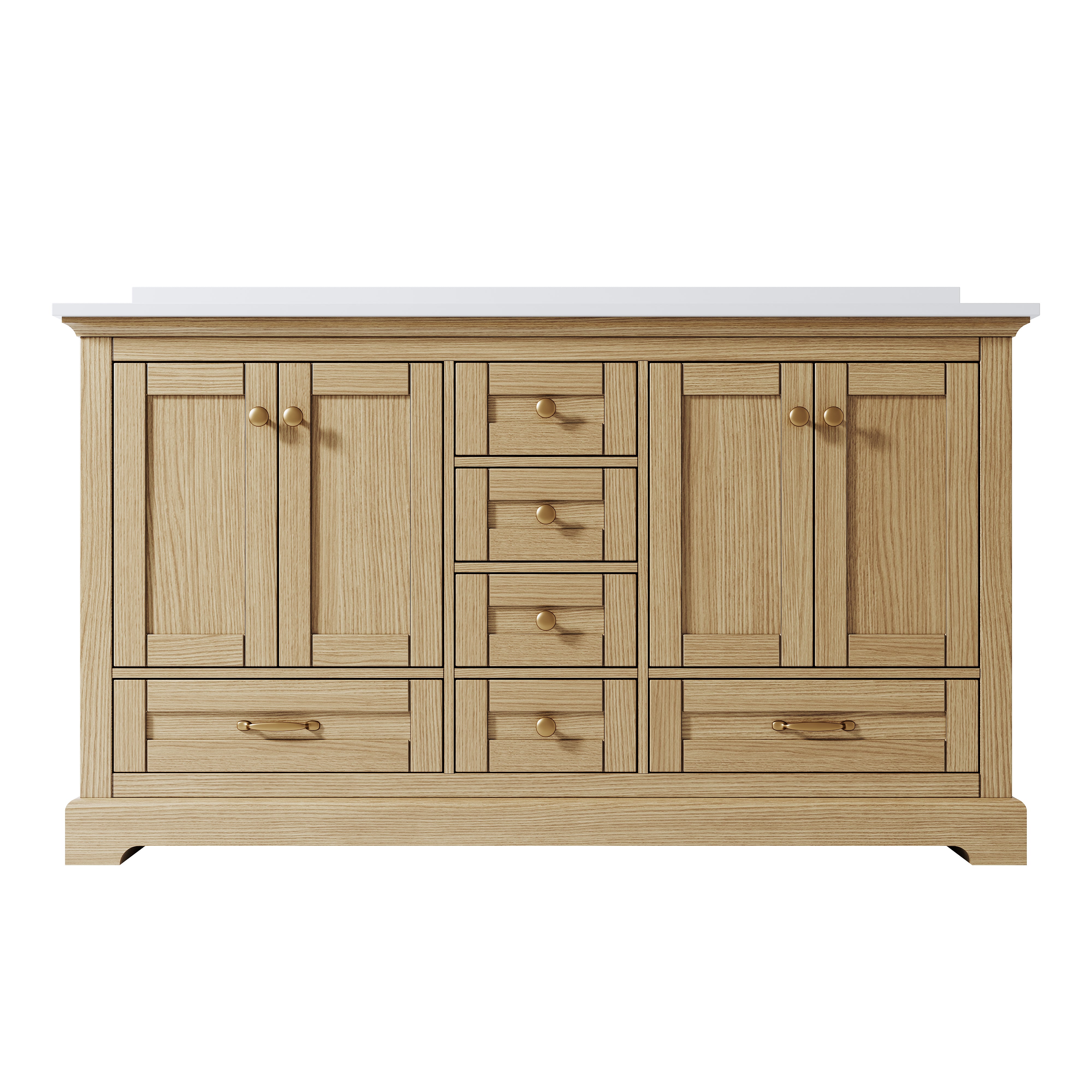
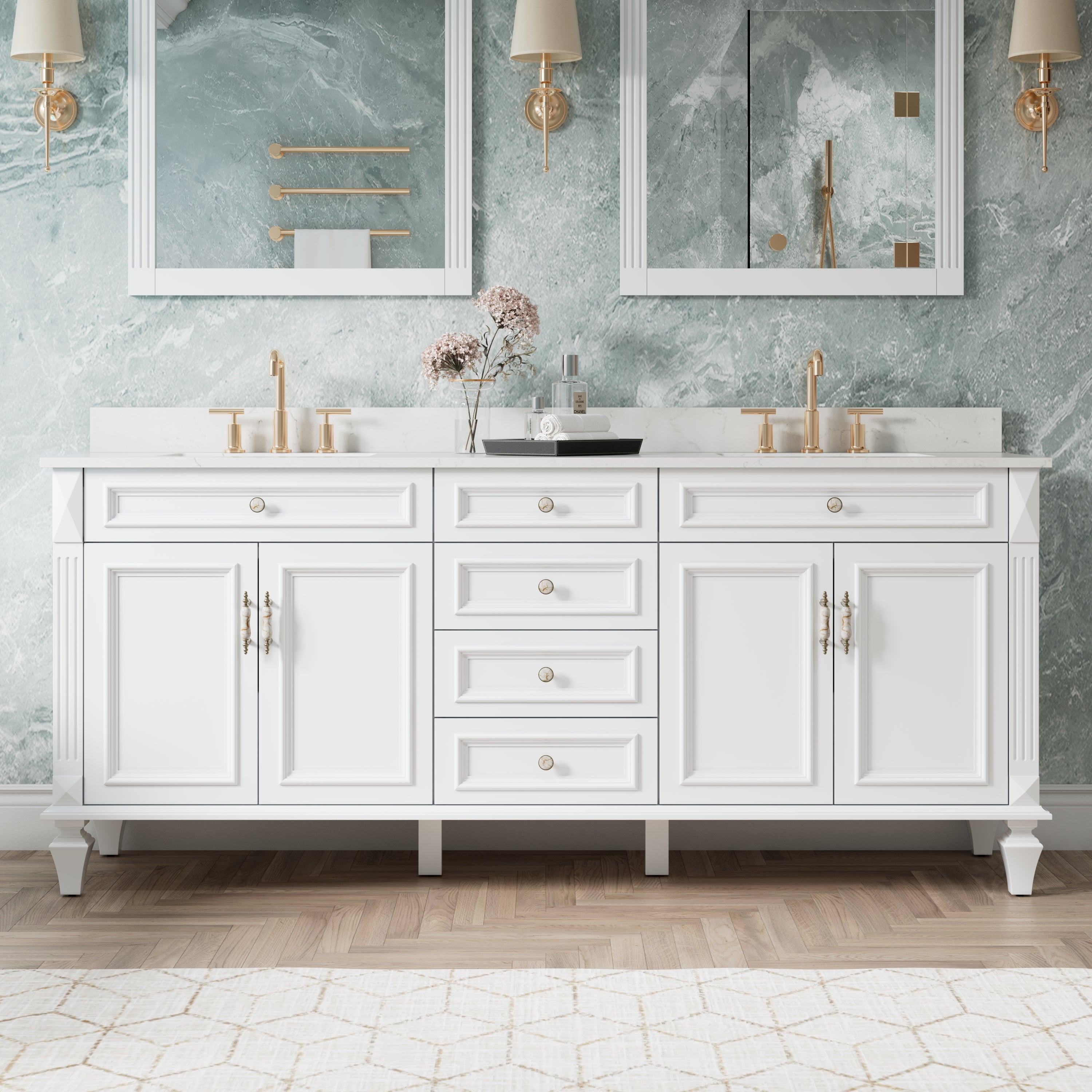
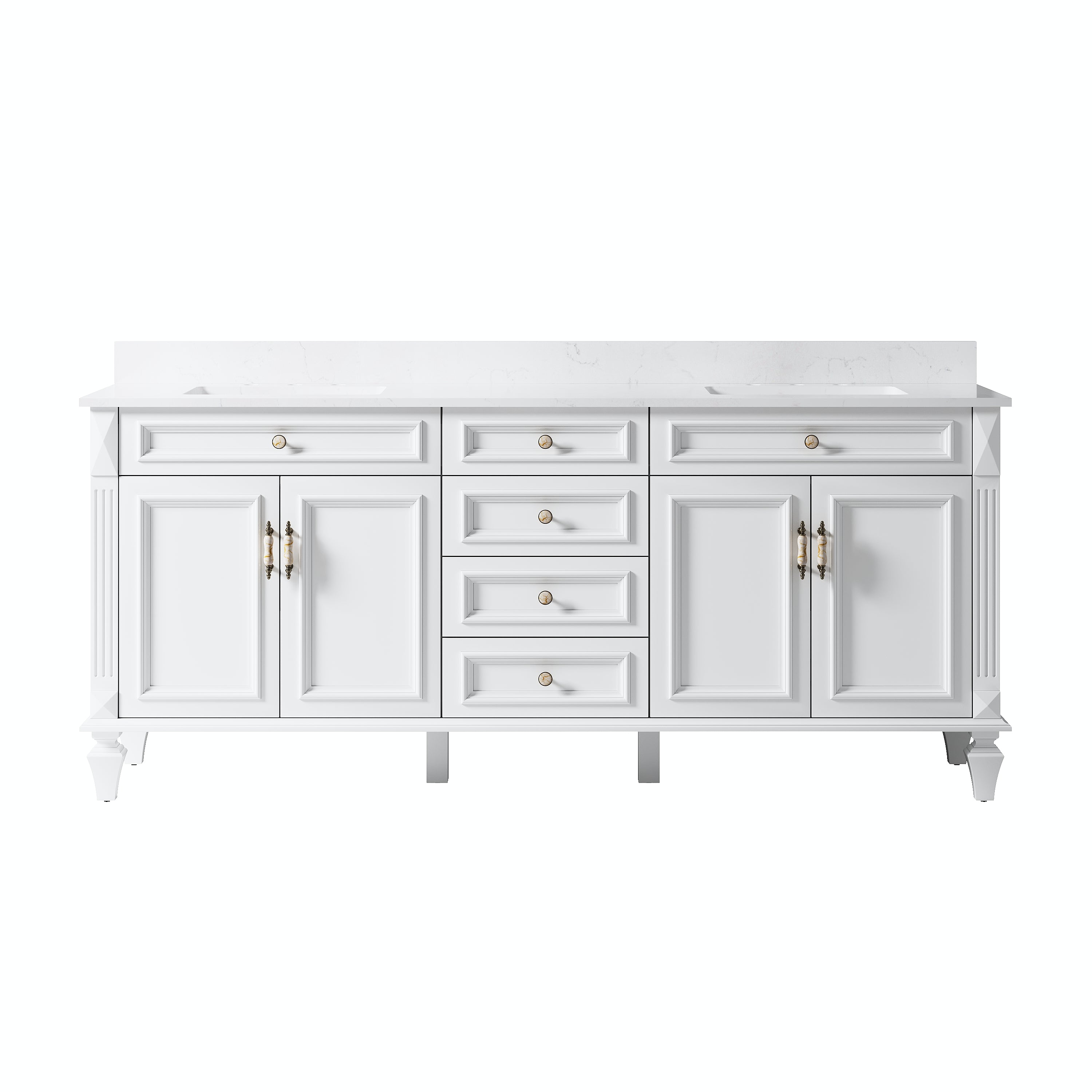
A bathroom vanity with double sinks is a wider vanity cabinet designed to support two separate basins, usually with individual faucets and shared countertop storage. After more than 20 years of working with bathroom cabinetry and renovation layouts, I have found double-sink vanities most useful in primary bathrooms where two people regularly get ready at the same time. They can improve daily routines, storage, and resale appeal, but they also require more wall space, plumbing, and thoughtful planning than a standard single-sink vanity.
1. How Does a Bathroom Vanity with Double Sinks Work?
At its simplest, a double-sink vanity combines one cabinet structure with two washing stations.
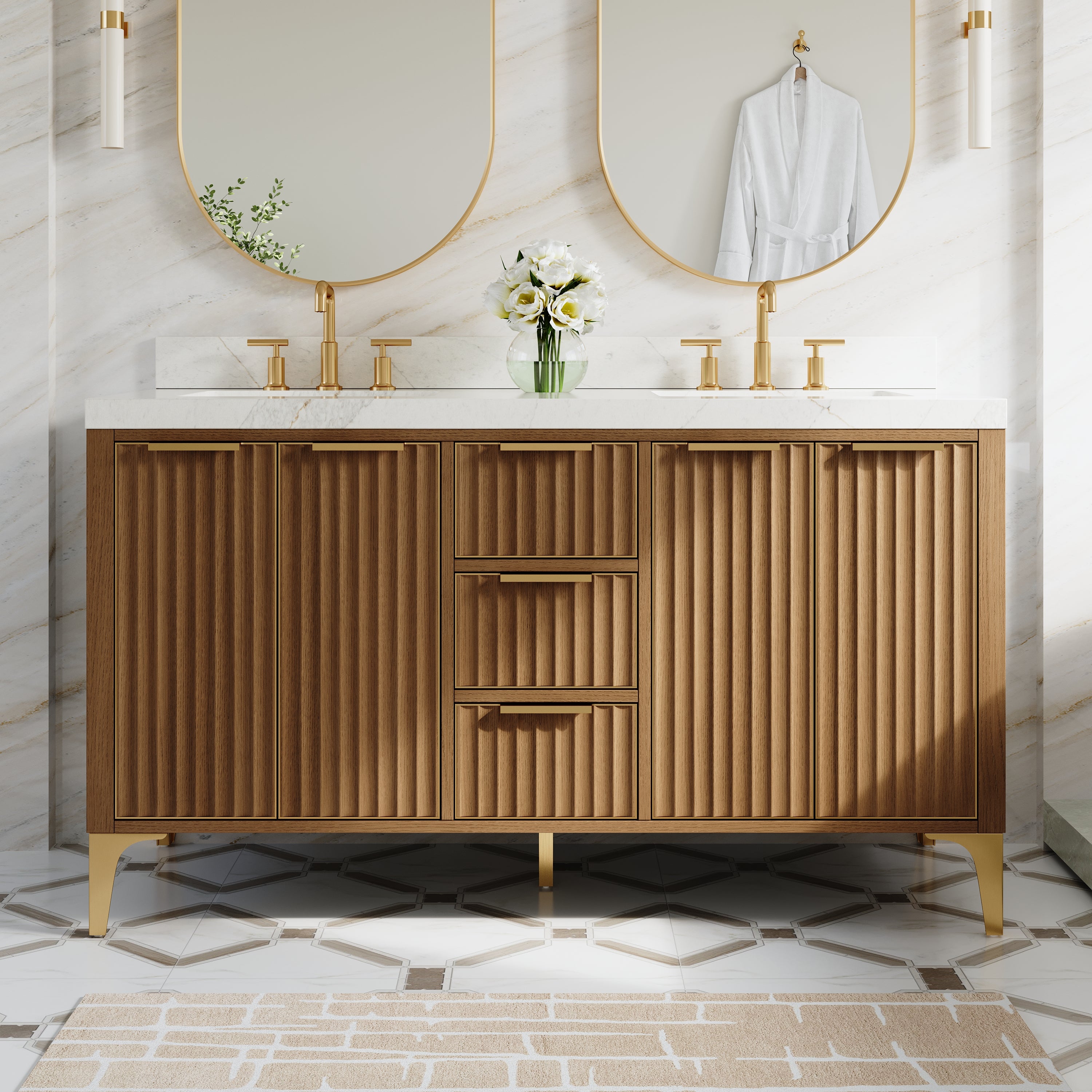
Most models include a wide countertop with two sink openings, separate faucets, and storage divided around two sets of plumbing. Common widths include 60 and 72 inches, although larger versions are available for spacious primary bathrooms.
The real benefit is personal space. Two users can brush their teeth, wash their faces, or prepare for work without waiting for the same sink.
That sounds simple, but it can make busy mornings noticeably easier.
2. A Bathroom Vanity with Double Sinks Needs Enough Room
One of the most common mistakes I see is choosing a double vanity because the wall appears wide enough.
Wall width is only the beginning.
You also need to consider cabinet depth, countertop overhang, toilet clearance, shower-door movement, and the walking path through the bathroom.
Bigger Is Not Always More Comfortable
A 72-inch vanity may provide excellent storage, but forcing one into a narrow room can make the bathroom feel crowded.
Use painter's tape to mark the proposed footprint before ordering. Open the shower door, walk between fixtures, and imagine two people standing at the sinks.
If the room becomes difficult to move through, a 60-inch model—or even a single-sink vanity—may be the better choice.
3. Sink Spacing Affects Everyday Comfort
Two sinks need enough separation to feel like independent stations.
If the basins are placed too close together, users can still bump elbows and compete for the same central countertop area. A wider vanity usually provides more comfortable separation and better personal storage zones.
I generally prefer moderately sized undermount sinks for this type of installation. They leave more usable countertop than oversized basins and are easy to clean around.
Vessel sinks can look dramatic, but two of them may consume too much visual and physical space on a medium-width cabinet.
4. Double Sinks Can Reduce Counter Space
This is one limitation that homeowners sometimes overlook.
Every basin removes part of the countertop. On a 60-inch vanity, two large sinks can leave very little room for skincare, cosmetics, grooming tools, or decorative items.
Think About Your Morning Routine
If both people genuinely need a sink at the same time, the tradeoff usually makes sense.
If one person mainly needs countertop space for hair styling or makeup, a wide single-sink vanity may actually function better.
Do not add a second basin simply because it sounds more luxurious. Good bathroom design should support real habits.
5. Storage Layout Matters More Than Vanity Width
A wide cabinet does not automatically provide excellent storage because two sets of plumbing occupy valuable interior space.
Look for drawers positioned between the sinks or along the outer sides. Deep drawers are useful for cosmetics, skincare, brushes, and smaller toiletries.
Under-sink cabinets work better for cleaning products and tall bottles.
Some well-designed vanities use U-shaped drawers that fit around plumbing. These can recover space that would otherwise be lost.
Before buying, inspect interior photographs or diagrams instead of counting drawer fronts from the exterior.
6. Plumbing Makes Installation More Complex
Replacing an existing double vanity is usually easier because the necessary drain and supply lines may already be in place.
Converting from one sink to two is different.
A plumber may need to modify supply lines, drains, or venting depending on the existing bathroom. That adds labor and can require opening the wall.
During a full remodel, coordinate plumbing with the vanity layout before cabinets are ordered. This gives you more freedom to position drawers and sinks efficiently.
For a simple renovation, I would first determine whether the existing plumbing makes a double-sink conversion financially sensible.
7. Floating and Freestanding Double Vanities Offer Different Benefits
A floating double vanity creates a clean, modern appearance and exposes more flooring. In a medium-sized bathroom, this can make a wide cabinet feel visually lighter.
It also simplifies floor cleaning.
The drawback is installation. A heavy wall-mounted vanity with two sinks and a stone countertop requires substantial structural support.
Freestanding models usually provide more storage and are easier to install in existing bathrooms. Their larger base, however, can appear bulky in a narrow space.
Choose according to the room, not just the style photograph.
8. Double Vanities Work Best in Shared Bathrooms
Primary bathrooms are the most obvious location because couples often use the room simultaneously.
They can also work well in children's shared bathrooms, especially when morning schedules overlap.
A guest bathroom rarely needs two sinks. In that setting, extra countertop space and storage are usually more useful than a second basin.
The same applies to compact bathrooms. If adding two sinks leaves almost no drawer space or walking clearance, the feature becomes more decorative than practical.
9. Installation Quality Protects a Larger Investment
Set the cabinet level before installing the countertop. With a long vanity, even a slight unevenness can become noticeable across drawer lines or backsplash joints.
Seal both sinks, faucet openings, countertop seams, and backsplash carefully.
Then test every connection.
A double vanity has more plumbing fittings than a single-sink model, which means more potential places for leaks. Check beneath both basins after installation and again after several days of use.

10. Keep the Vanity Easy to Maintain
Use a mild, non-abrasive cleaner on the cabinet and countertop. Wipe standing water around both sinks instead of allowing it to dry repeatedly.
Run the exhaust fan after showers and inspect plumbing periodically. Keep enough open space beneath each sink to see the drain and supply connections.
When comparing Wellfor options, start with wall width, sink spacing, usable counter area, storage design, and existing plumbing. A bathroom vanity with double sinks is a smart choice when two people regularly share the bathroom and the room has enough space to support it comfortably. If the second basin forces cramped circulation or eliminates needed storage, choose a wider single-sink layout instead and put those extra inches to better use.
















Leave a comment
This site is protected by hCaptcha and the hCaptcha Privacy Policy and Terms of Service apply.