














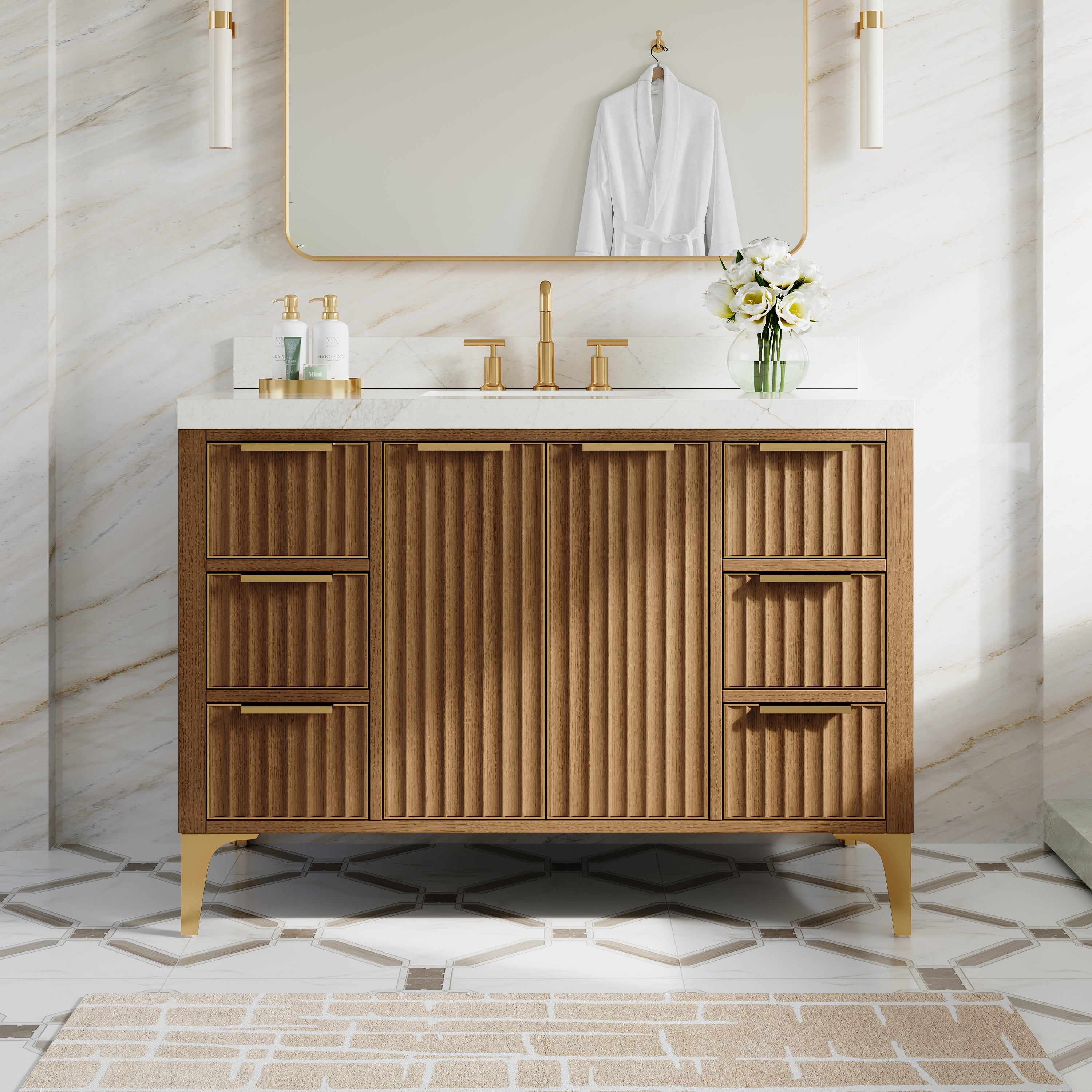
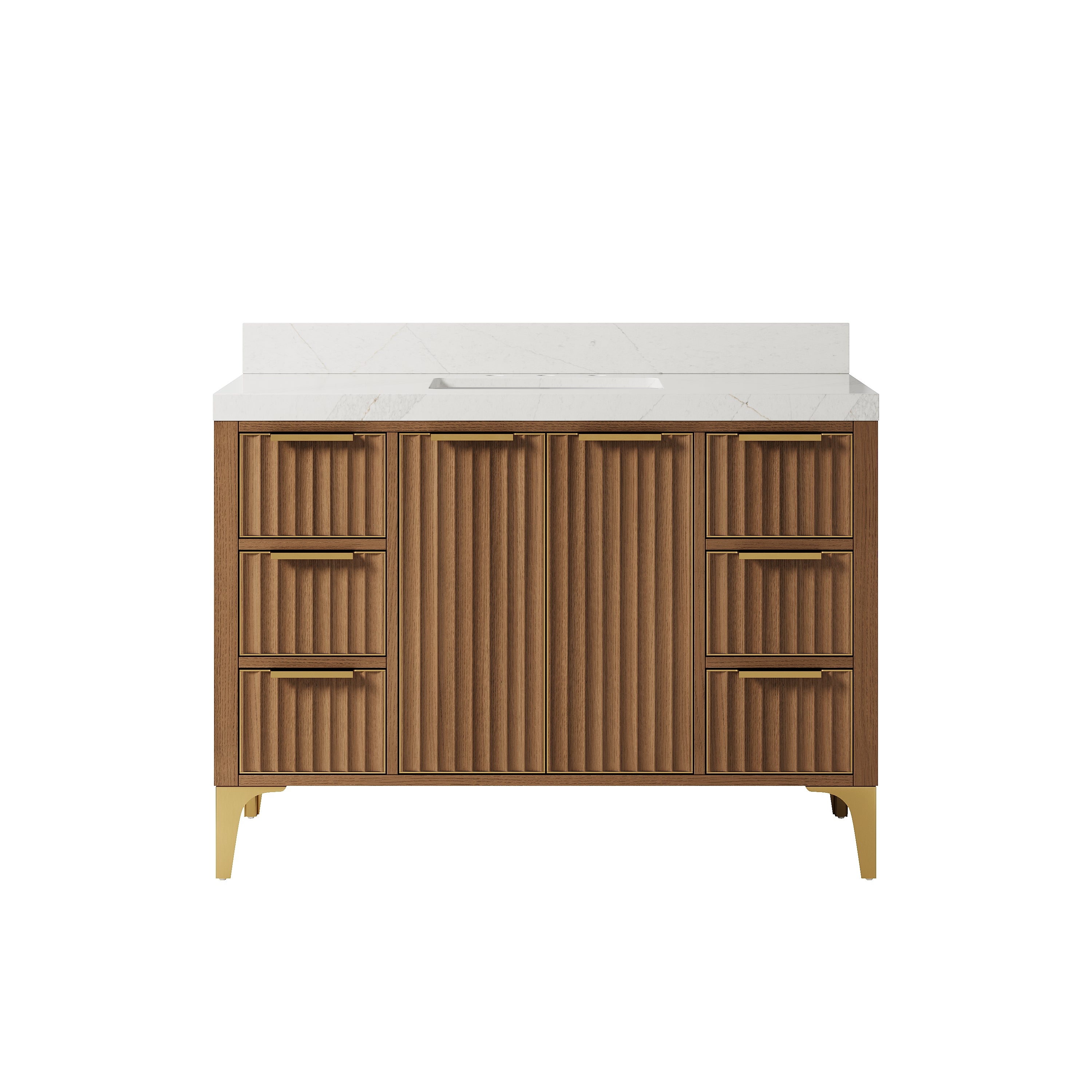


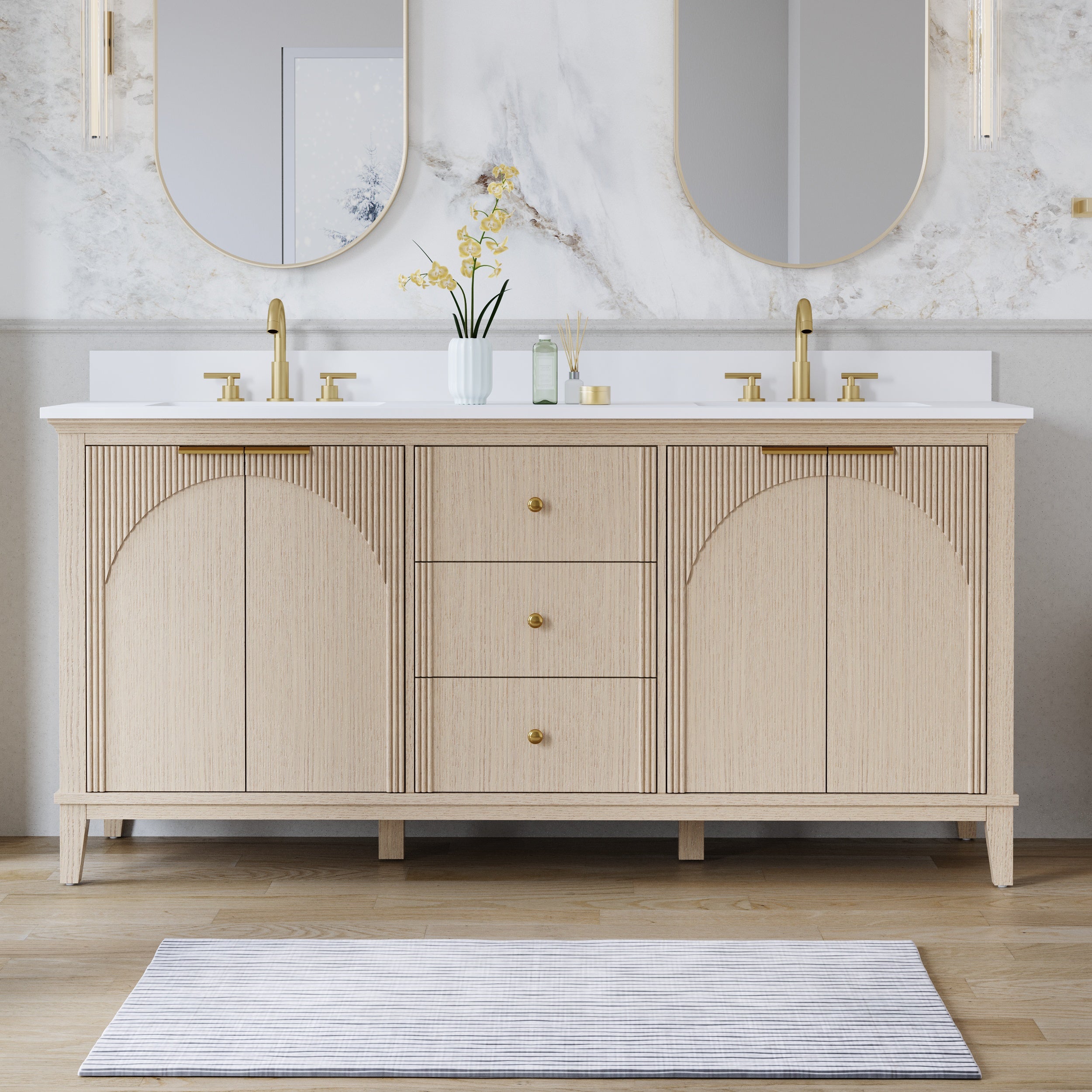
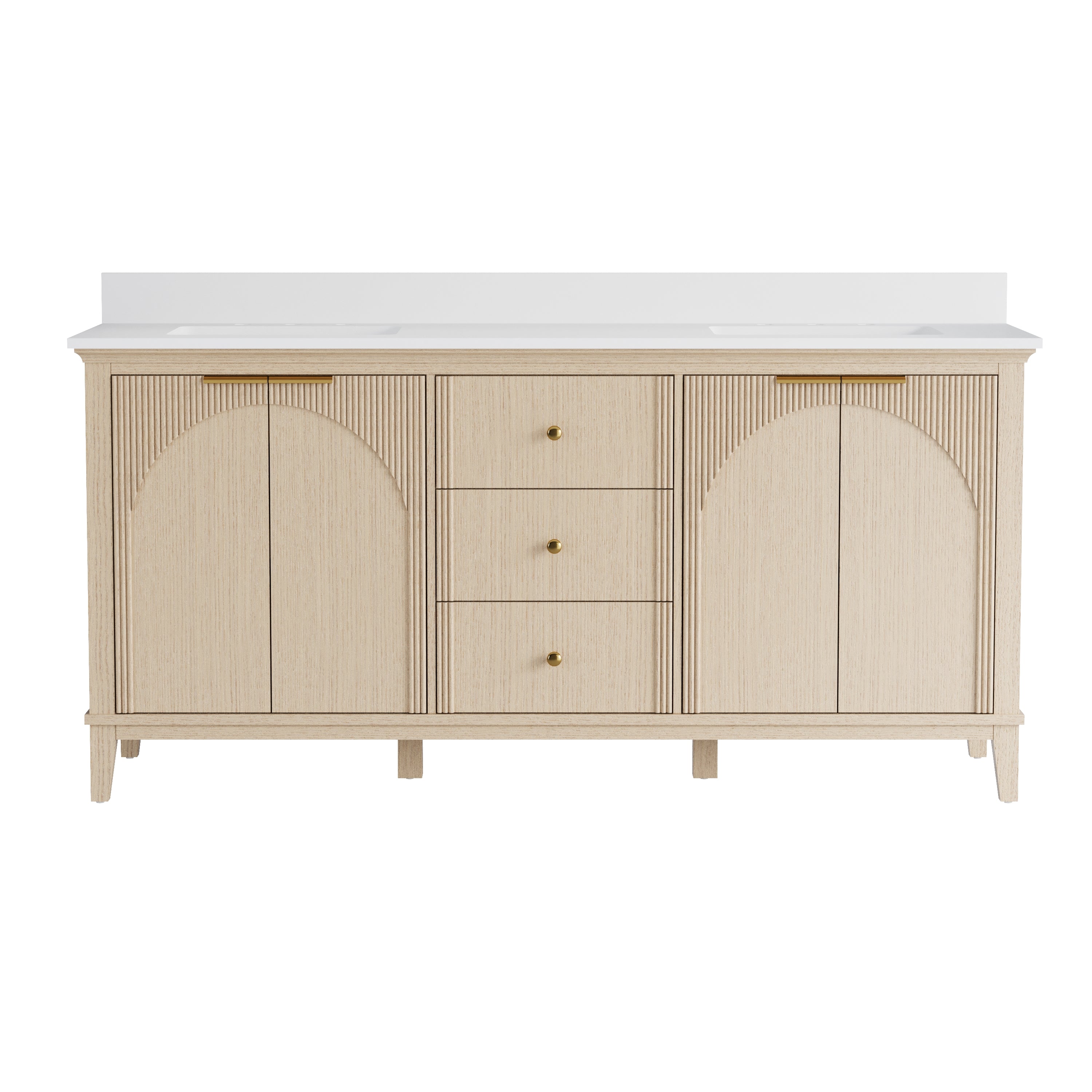
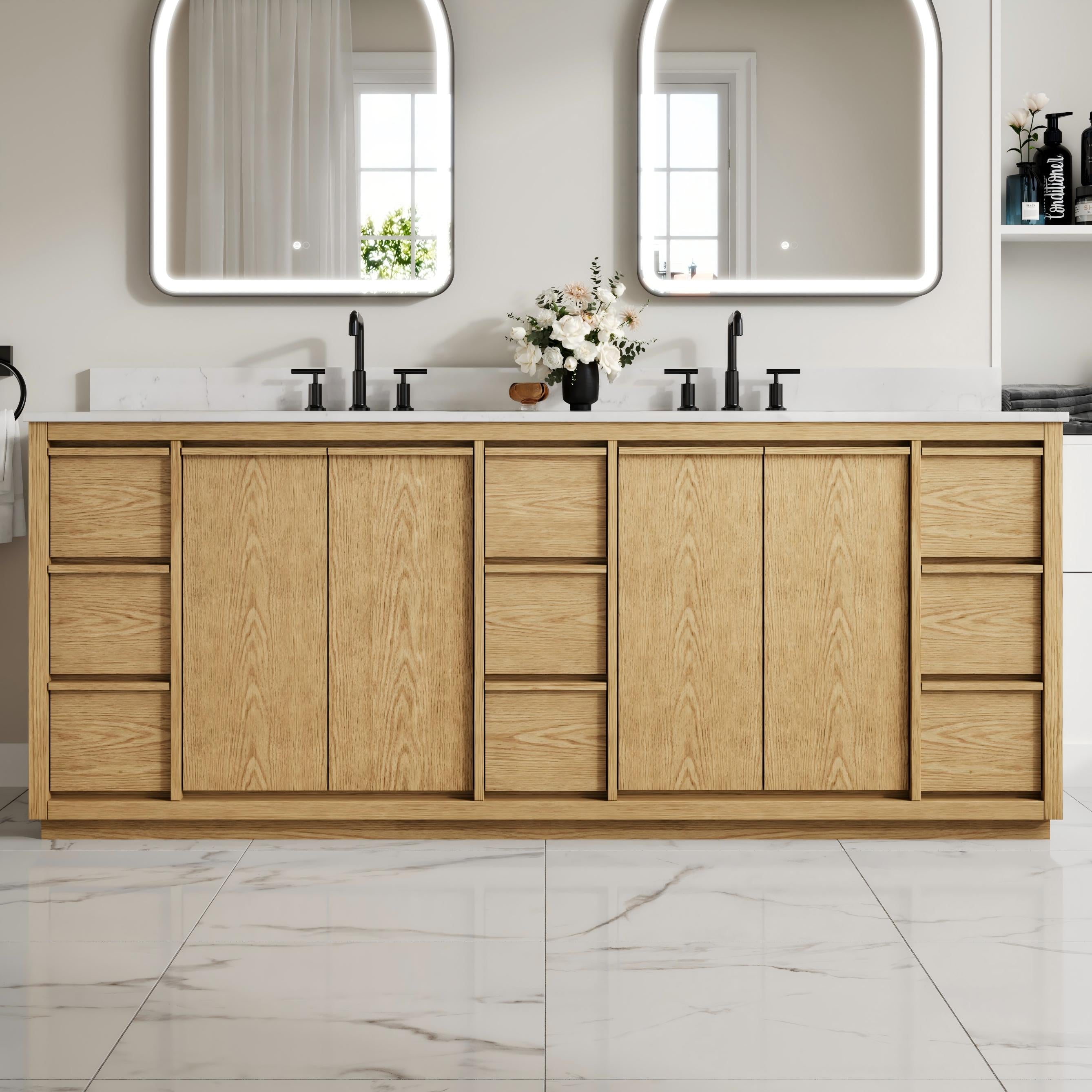
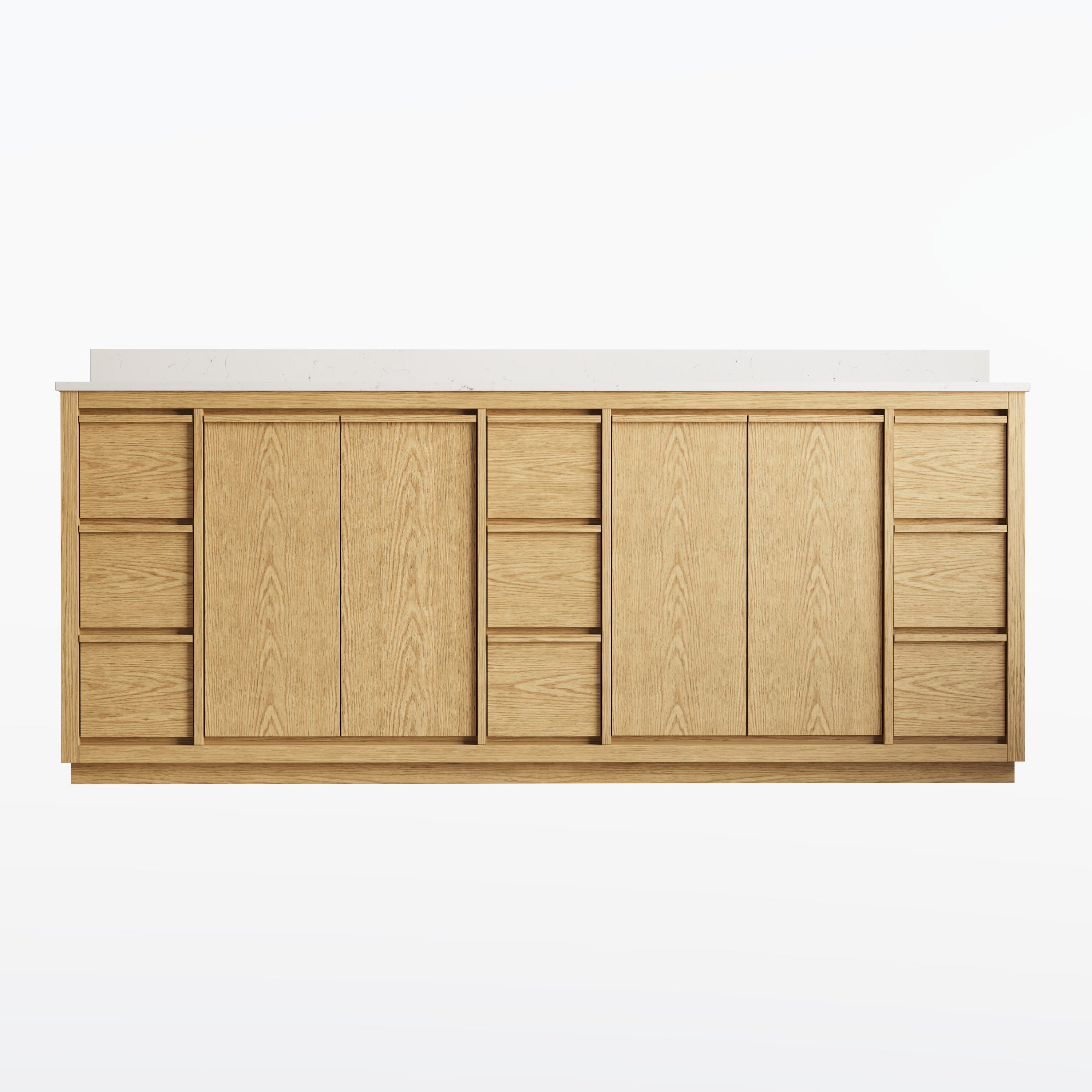
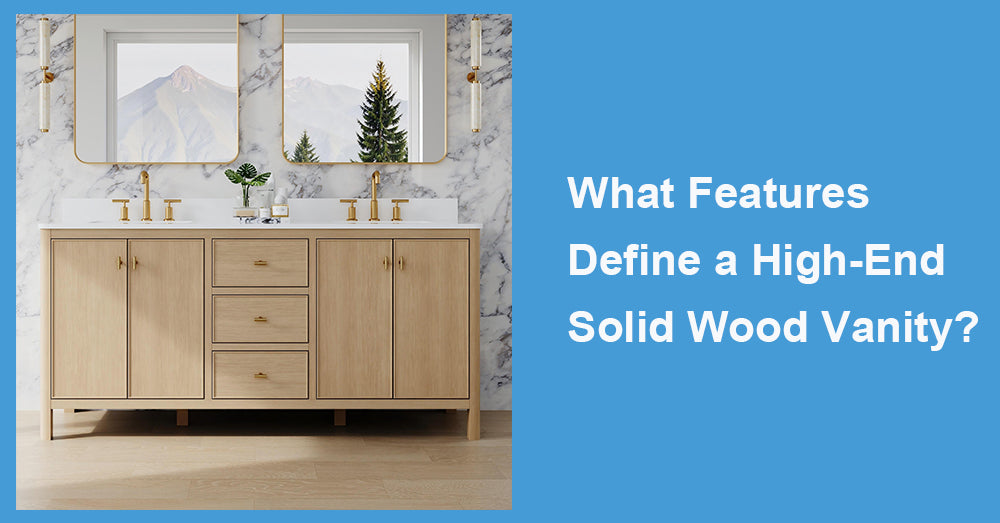
A solid wood vanity earns its premium status through details that remain convincing after years of everyday use. Wood species matters, but it is only the beginning. Joinery, grain matching, moisture protection, drawer construction, hardware, storage planning, and countertop support all influence whether the cabinet performs like lasting furniture or simply looks expensive on delivery. Houzz’s 2025 bathroom research found that 74% of renovators choosing wood vanities selected solid wood, with maple at 29% and white oak at 23%. Those figures point to a clear preference for authentic material, but material alone does not define quality.
Premium Construction Uses Materials With Purpose
· Solid wood should appear in load-bearing areas. Face frames, door rails, drawer fronts, legs, and mounting supports receive repeated stress and benefit from hardwood construction.
· Stable panel materials still have a role. High-quality plywood can be a sensible choice for wide side panels, backs, and cabinet boxes because its layered structure helps control movement.
· The specification should be transparent. A premium product should clearly state which components are solid wood, plywood, veneer, or engineered material.
Inspect the cabinet from the back and underneath. Reinforced corners, substantial mounting rails, accurate plumbing openings, and finished interior surfaces often reveal more than the stain color.
Industry judgment: High-end cabinetry is not defined by using one material everywhere. It is defined by using the right material in the right place.
Grain Matching Should Look Intentional
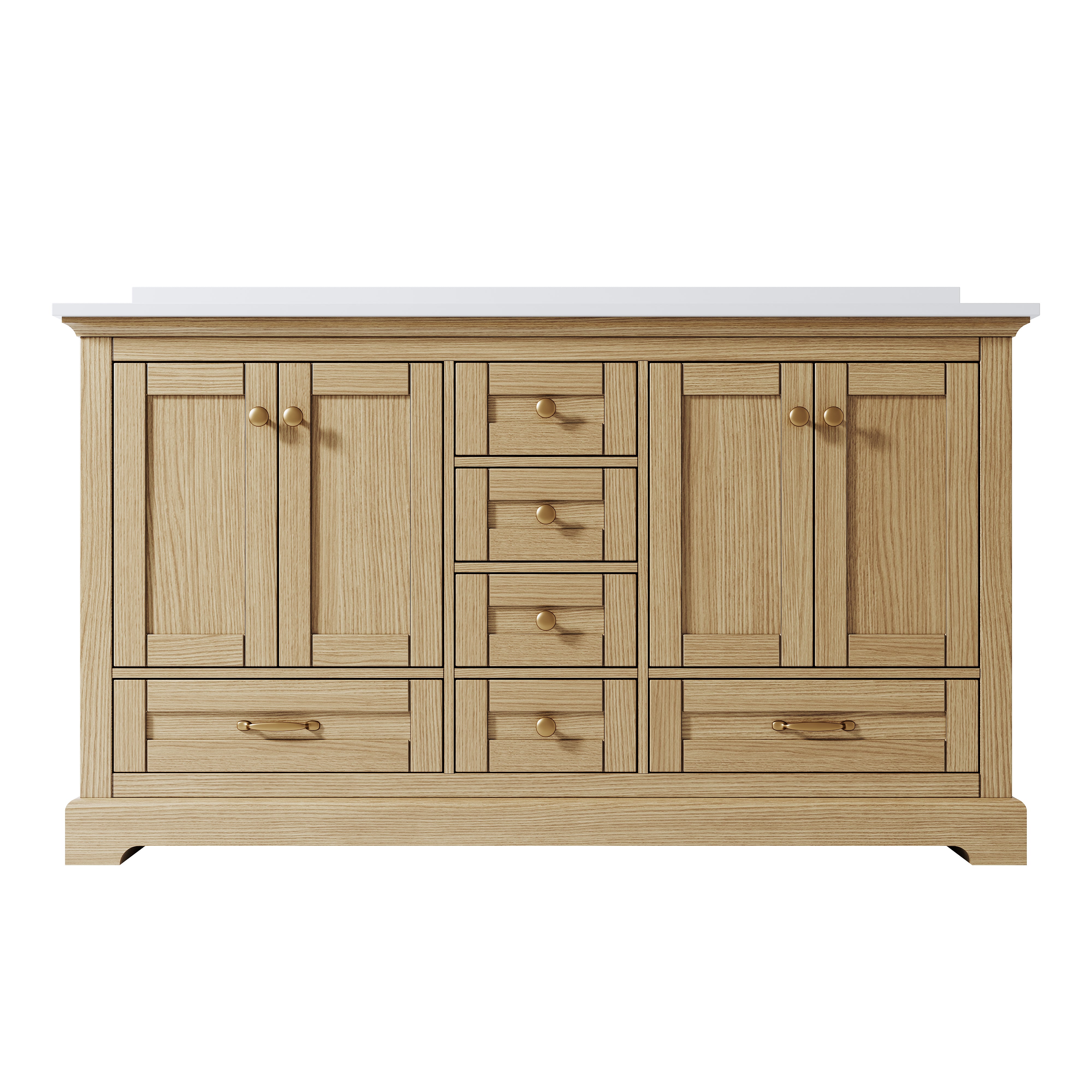
· Doors should read as a pair. Grain direction and color should feel balanced across adjacent panels.
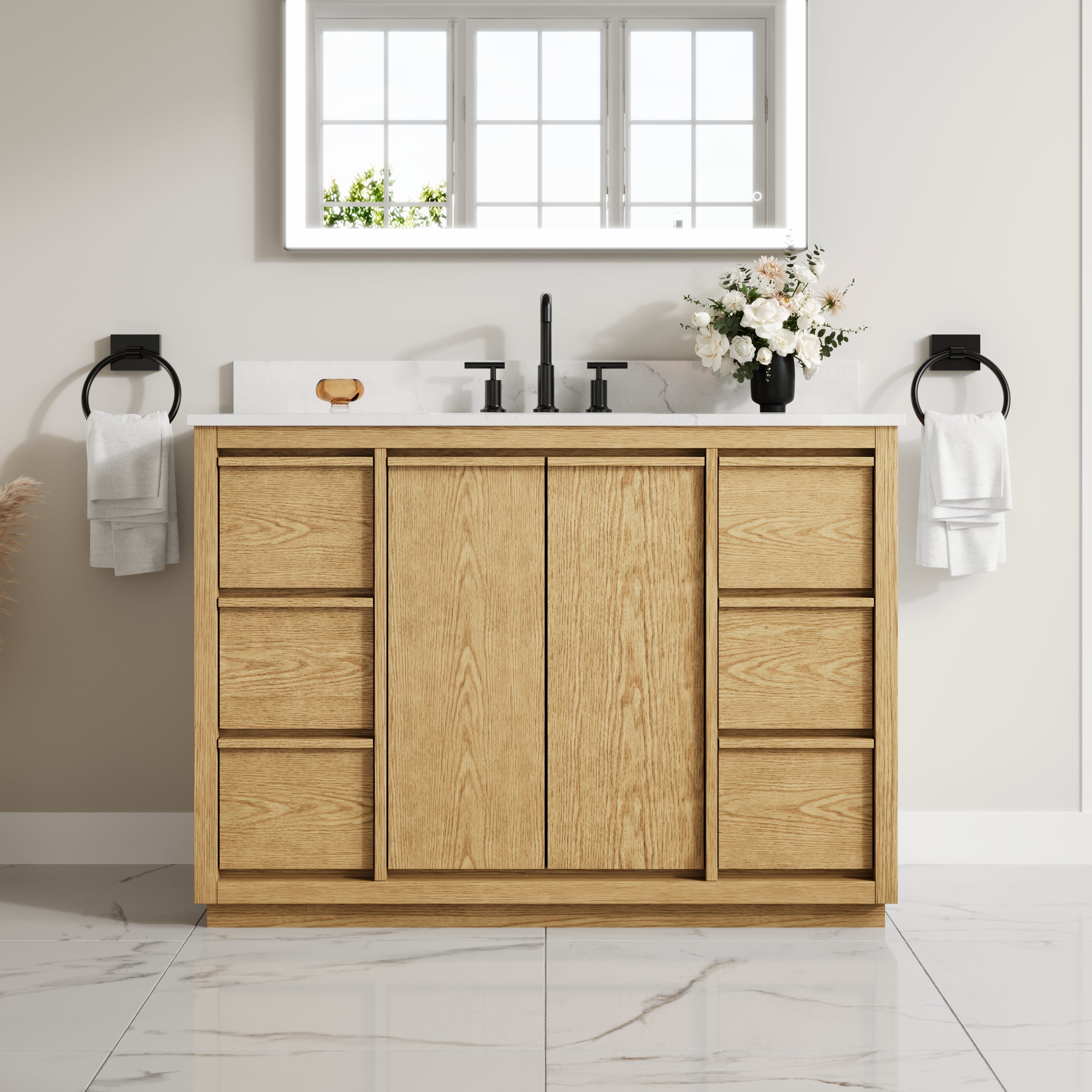
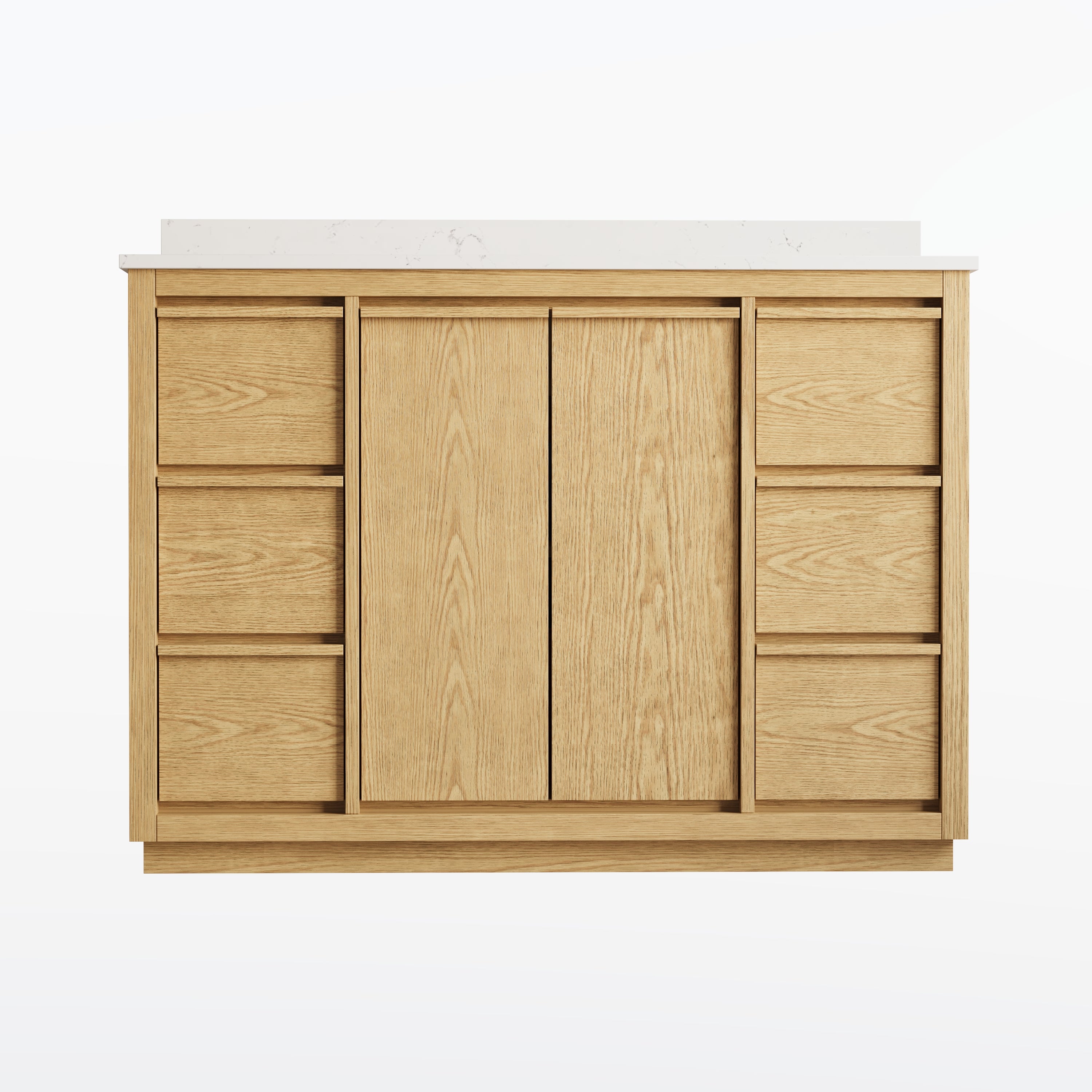
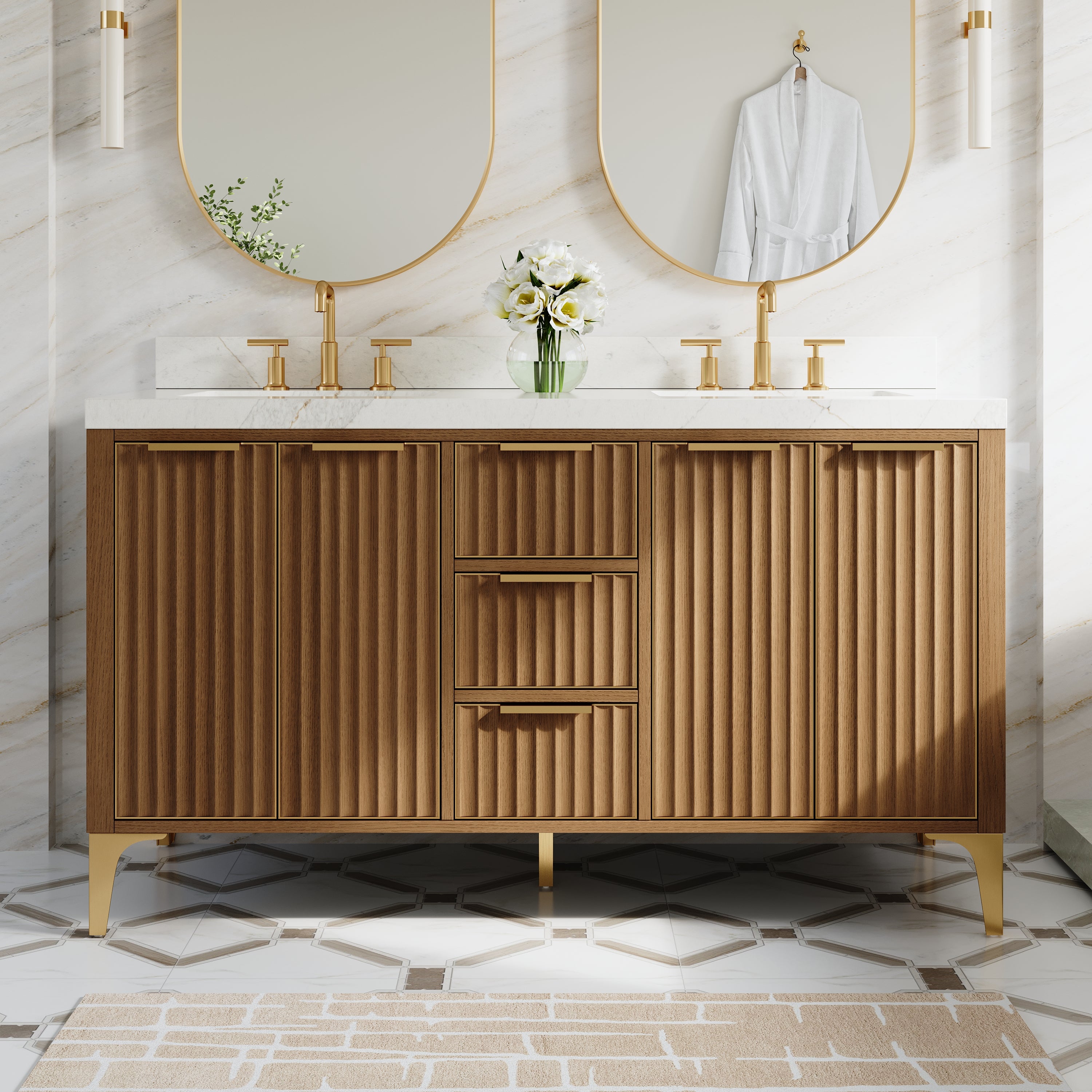
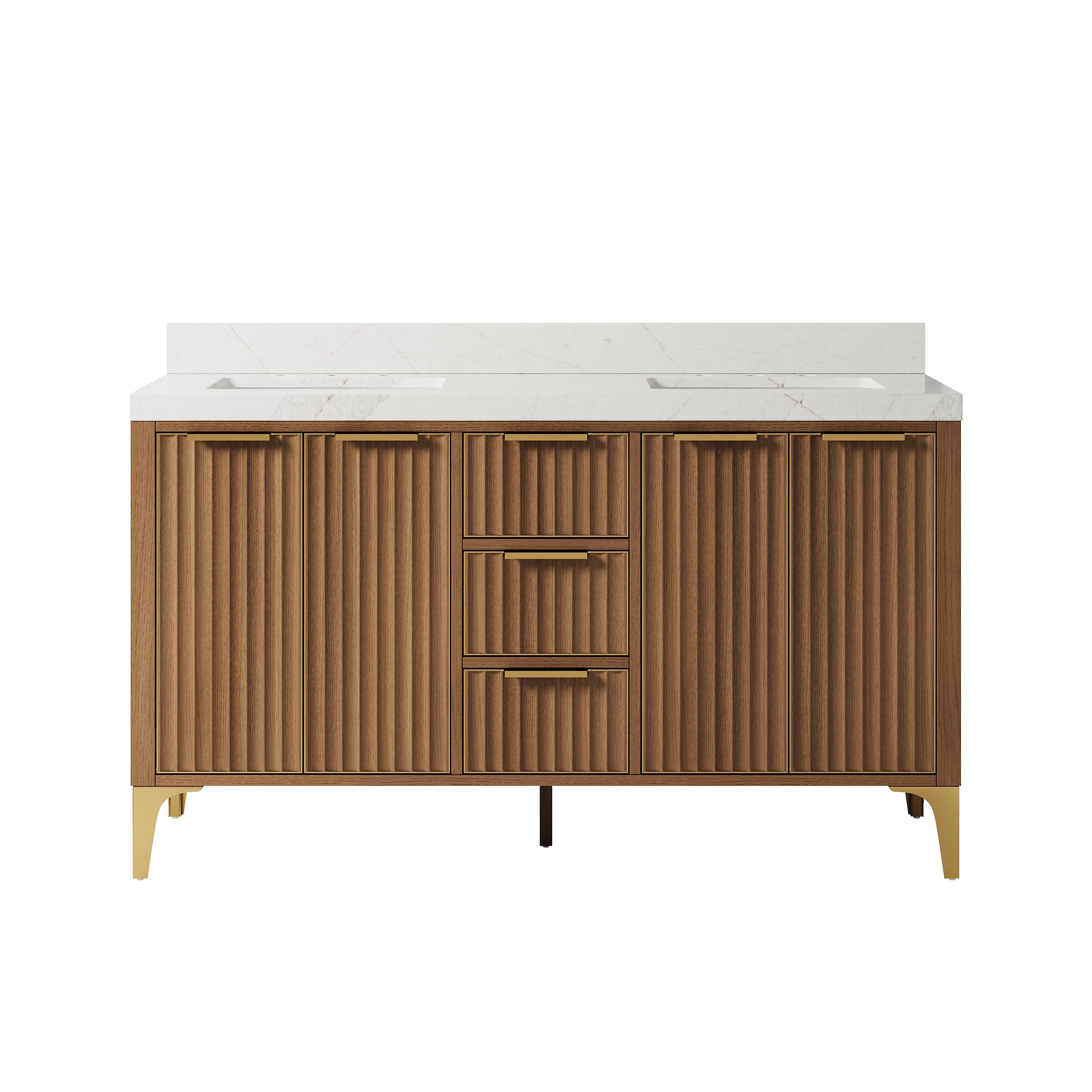
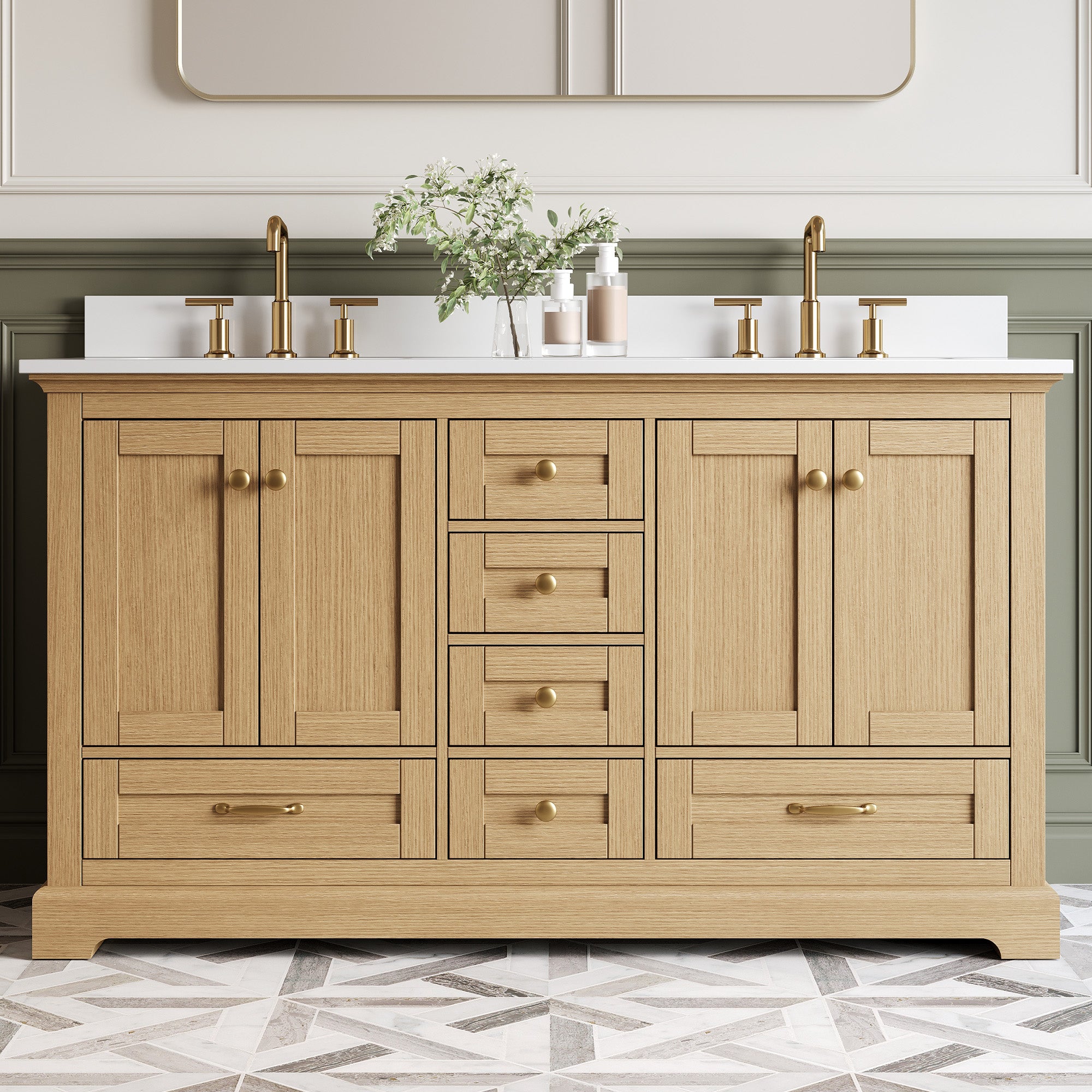
· Drawer fronts should form a visual sequence. On a 36 inch, 48 inch, or 60 inch vanity, the grain should appear connected rather than random.
· Natural variation should be controlled, not erased. Premium cabinetry keeps the individuality of real wood while avoiding distracting color jumps.
Maple offers a finer, more even appearance, while white oak brings stronger linear grain. Walnut creates deeper contrast and a furniture-like character. NKBA’s 2026 Bath Trends Report found wood-faced vanities at 62%, ahead of painted finishes at 53%, reinforcing the shift toward natural surfaces.
The Finish Must Protect Every Surface
· Visible faces need an even coating. Look for consistent sheen, smooth edges, and clean transitions around doors and drawers.
· Hidden areas matter. The underside, interior panels, sink cutout, and exposed end grain should also be sealed.
· Low-sheen finishes often age well. Matte and satin coatings tend to show fewer fingerprints and minor marks than highly polished finishes.
A premium finish should reveal the grain without leaving the wood vulnerable to water, toothpaste, cosmetics, or routine cleaning. Uneven stain, cloudy topcoats, and raw edges usually indicate rushed production.

Drawer Joinery Reveals the Quality Level
· Dovetail construction is a strong signal. It provides mechanical strength at the corners and supports a furniture-grade build.
· Drawer bottoms should resist flexing. Thin panels that bow under light pressure are unlikely to perform well under daily loads.
· The box should remain square at full extension. Side-to-side movement or uneven gaps suggest weaker construction or poor adjustment.
KCMA’s A161.1 program tests cabinets for structural strength, door operation, drawer cycling, and finish performance. Certified products must pass 14 tests; KCMA also notes drawer testing through 25,000 cycles and heavy-load structural testing. Not every luxury vanity carries this certification, but the benchmark shows what serious performance validation looks like.
Hardware Should Feel Quiet and Controlled
· Soft-close should be smooth. The mechanism should catch the drawer or door consistently without slamming or stalling.
· Full-extension slides improve access. They are especially valuable on 24 inch and 36 inch vanities, where storage is limited.
· Hinges should be adjustable. Multi-direction adjustment allows installers to correct uneven gaps after leveling.
· Handles should feel substantial. Secure mounting and consistent spacing help the vanity feel complete.
The quality difference appears in how the hardware behaves under weight and after repeated use, not in the feature label alone.
Storage Should Be Designed Around Plumbing
· The sink should not erase the upper drawer. U-shaped drawers can preserve usable space around the drain and trap.
· Offset sinks can improve storage. Moving the basin to one side may allow a complete drawer stack on the other.
· Adjustable shelves add flexibility. They make room for tall bottles, towels, and cleaning supplies.
· Internal outlets reduce clutter. Hair tools and charging devices can remain stored instead of occupying the countertop.
Houzz’s 2025 study found that 55% of upgraded vanities were custom or semicustom. It also reported internal electrical outlets in 29% of upgraded vanities, drawer organizers in 22%, and hair-tool organizers in 13%. These details reflect a practical form of luxury: storage should follow real routines.
Moisture Management Must Be Built In
· Lumber should be properly dried before manufacturing.
· Joinery should allow for normal wood movement.
· Edges and cutouts should be fully sealed.
· Adhesives and coatings should suit humid interiors.
Wood exchanges moisture with surrounding air, and changes in relative humidity can affect its dimensions and performance. The USDA Forest Products Laboratory explains that correct drying, handling, storage, and moisture control reduce the risk of dimensional change in service.
Industry judgment: Moisture resistance is not one coating claim. It is the combined result of preparation, joinery, finishing, and ventilation.
The Countertop and Cabinet Must Work Together
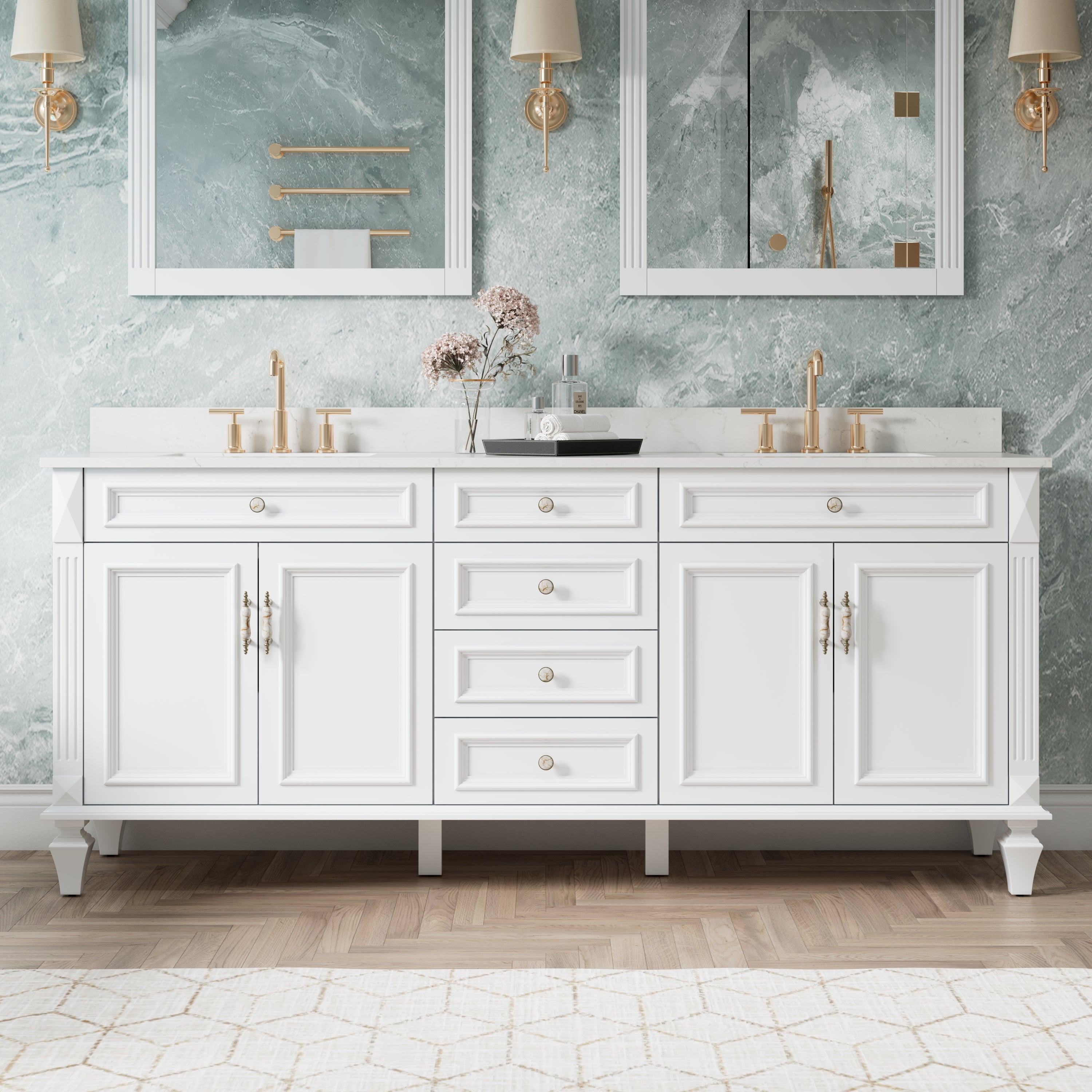
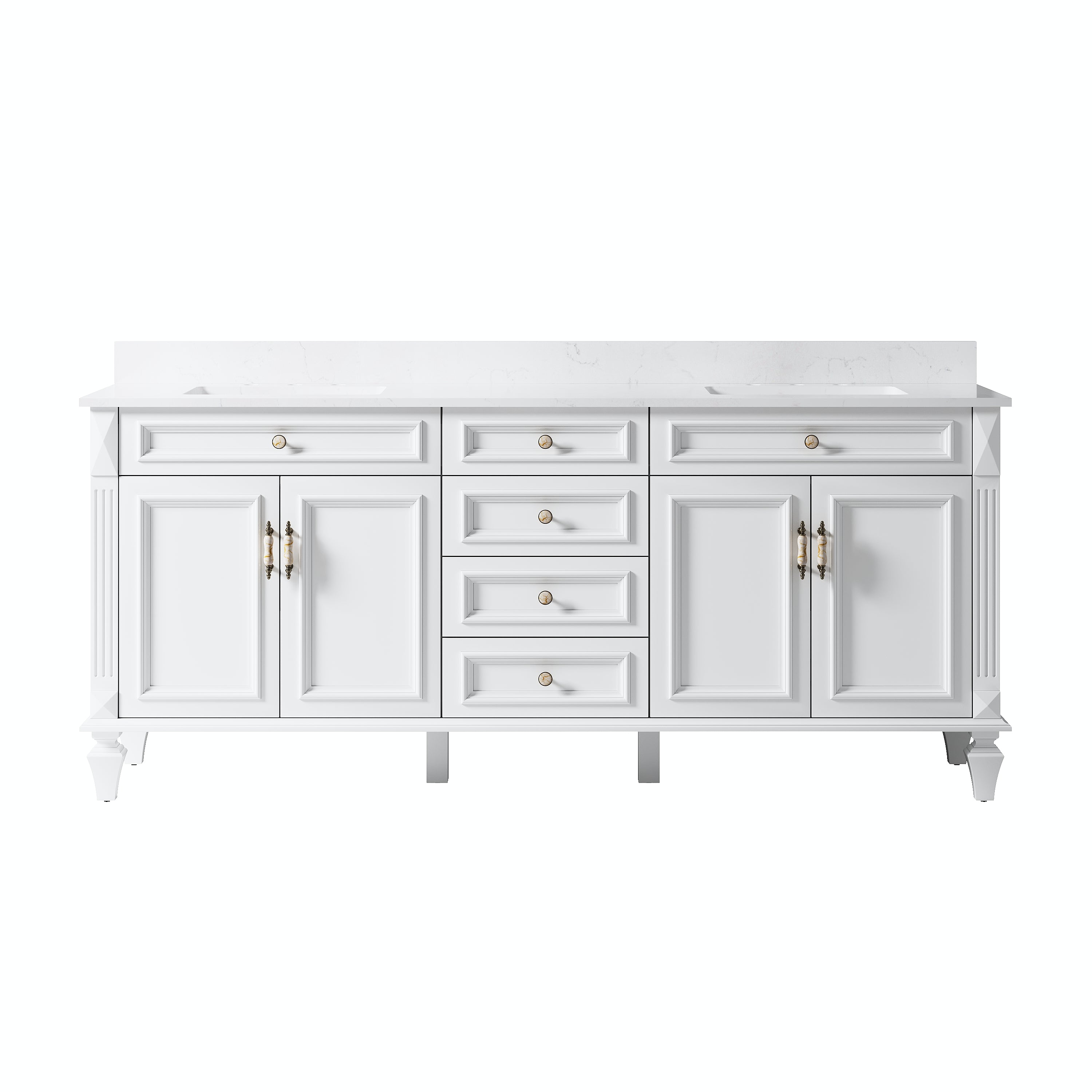
· The cabinet needs proper support. Wide 60 inch, 72 inch, and 84 inch vanities may require center supports, adjustable feet, or reinforced mounting rails.
· Sink depth affects storage. A deep basin may eliminate an upper drawer or reduce space around the plumbing.
· Faucet drilling must match the fixture. Single-hole, 4 inch centerset, and 8 inch widespread faucets require different layouts.
· Finished height should feel comfortable. Countertop thickness, cabinet height, and sink style must be considered together.
A high-end vanity should arrive with clear dimensions, mounting guidance, sink specifications, and countertop compatibility.
Premium Value Appears After Installation
The strongest solid wood vanity rarely depends on one dramatic feature. Its quality appears in small, repeatable experiences:
· Doors remain aligned.
· Drawers stay smooth under load.
· Grain patterns feel intentional.
· Water does not reach raw edges.
· Plumbing remains accessible.
· Storage still works after the sink is connected.
Before purchasing, ask which parts are solid wood, how the drawer boxes are joined, whether the underside is finished, what hardware is used, and what the warranty covers. A genuinely high-end vanity makes those answers easy to find.














Leave a comment
This site is protected by hCaptcha and the hCaptcha Privacy Policy and Terms of Service apply.