






















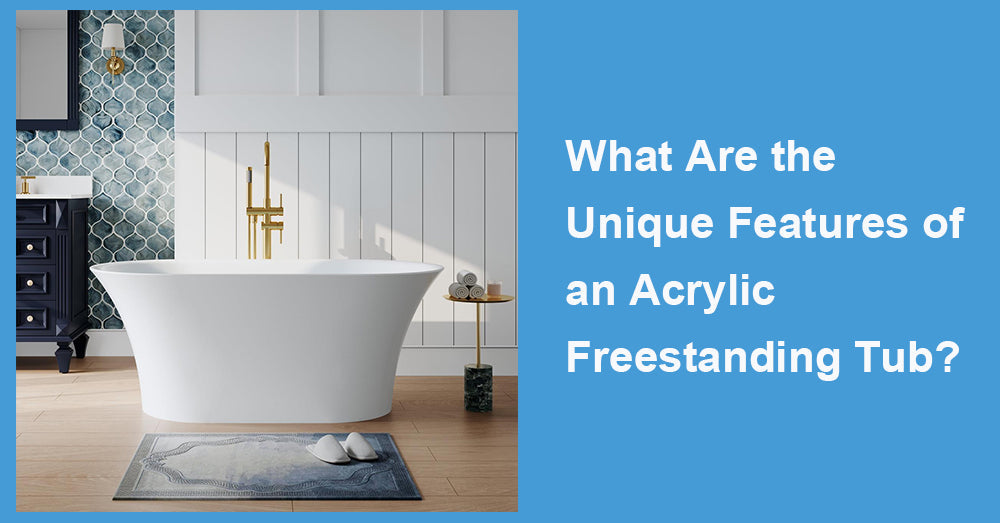
In contemporary home bathroom design trends, acrylic freestanding tub is emerging as a popular choice among global consumers. As people increasingly pursue personalized, high-quality bathing experiences, these tubs have gained significant prominence in the global bathroom market due to their unique material advantages, design flexibility, and cost-effectiveness. This article comprehensively analyzes the distinctive features and industry development of acrylic freestanding bathtubs from four perspectives: market data, material properties, design trends, and user experience.
Global Market Development and Data Analysis
According to the "2024 Global Bathroom Equipment Market Report" released by Grand View Research, the global bathtub market reached $8.9 billion in 2023 and is projected to expand at a compound annual growth rate of 4.5% by 2030. Among these, acrylic freestanding bathtubs account for nearly 38% of the market share, making them one of the fastest-growing categories.
Regionally, North America exhibits the highest demand for acrylic freestanding bathtubs, capturing approximately 32% of the global market share, followed by Europe with around 27%. Meanwhile, the Asia-Pacific region (particularly Japan and Southeast Asian countries) is emerging as a key growth driver, with market growth reaching 6.8%, significantly exceeding the global average.
Consumer behavior data reveals that over 58% of new home renovation projects opt for freestanding bathtubs, with acrylic models becoming the mainstream choice due to their "lightweight, aesthetically pleasing, easy-to-clean, and moderately priced" features. Additionally, the rise of e-commerce channels has further boosted sales of these products. Statista data shows that global online sales of bathroom products increased by 12.4% in 2024, with acrylic freestanding bathtubs achieving a notable 18% growth, making them one of the most popular products in the bathroom e-commerce sector.
Material Advantages of Acrylic Freestanding Bathtubs
1. Lightweight Material and Easy Installation
Acrylic (also known as PMMA) is a polymeric organic glass material with a density of approximately 1.18 g/cm³, weighing only 30%–35% as much as cast iron bathtubs. This makes installation more convenient, particularly suitable for high-rise residences or renovation projects without requiring floor reinforcement.
2. Superior Thermal Insulation
Acrylic bathtubs exhibit excellent heat retention with a thermal conductivity of just 0.19 W/m·K—significantly lower than steel or cast iron. This maintains water temperature longer, typically dropping only 2–3°C after 30 minutes, greatly enhancing the bathing experience.
3. Smooth Surface with Superior Stain Resistance
High-quality acrylic surfaces undergo multi-layer lamination and vacuum thermoforming, resulting in a mirror-like finish that resists bacterial and mold growth. Industry tests show acrylic surfaces retain only 0.3% of stains, achieving approximately 40% higher cleaning efficiency than enamel bathtubs.
4. Durability and Repairability
Unlike traditional ceramic or enamel bathtubs, minor scratches on freestanding acrylic bathtubs can be polished out, extending their lifespan. Industry data indicates an average lifespan exceeding 15 years with low maintenance costs.
Innovative Trends in Design and Functionality
1. Free-Form Shaping and Modern Aesthetics
Acrylic's excellent malleability enables diverse curved designs through vacuum thermoforming. Currently popular designs include oval, egg-shaped, circular, and vintage claw-foot styles. Data indicates approximately 47% of consumers prefer minimalist curved designs to complement contemporary minimalist aesthetics.
2. Multi-Layer Construction and Ergonomic Design
New-generation freestanding acrylic bathtubs commonly feature a double-layer structure. The hollow core not only enhances thermal insulation but also improves structural stability. Simultaneously, ergonomic design has become a core selling point. According to a European Sanitary Design Association (ESDA) survey, 62% of users cite “comfortable backrest angle” as a key purchasing criterion.
3. Eco-Friendly and Sustainable Manufacturing
With the rise of green production principles, the environmental performance of acrylic materials has gained attention. Some manufacturers now use recyclable PMMA materials, reducing carbon emissions by approximately 25% during production. Furthermore, low-energy production processes are gradually replacing traditional heating molding methods.
4. Smart Features and Customization Trends
Premium products now integrate smart thermostatic systems, LED ambient lighting, and Bluetooth speakers, elevating bathing experiences with immersive technology. Industry data indicates smart bathtubs account for 12% of acrylic freestanding models, projected to exceed 20% by 2027.

User Experience and Market Feedback
From a user experience perspective, the comfort and cost-effectiveness of freestanding acrylic bathtubs represent their core competitive advantages. According to the 2024 Global Home User Satisfaction Survey, freestanding acrylic bathtubs achieved an overall satisfaction score of 92 out of 100 in the bathtub product category—surpassing cast iron bathtubs (87 points) and steel bathtubs (81 points).
Users widely appreciate acrylic's warm, smooth texture. Combined with freestanding installation, these tubs can be placed centrally in the bathroom or near windows, creating a “home spa” aesthetic and experience. Particularly in mid-to-high-end residences and boutique hotels, freestanding tubs have become synonymous with “luxury bathrooms.”
Additionally, acrylic bathtubs excel in maintenance. Their smooth surfaces and effective anti-slip treatments require less frequent cleaning and offer high durability. Industry data shows consumers maintain acrylic tubs an average of just 2.1 times in the first year after purchase, compared to 4.7 times for traditional enameled bathtubs.
Industry Development Outlook
Overall, the acrylic freestanding tub market will exhibit the following future trends:
Expansion in Mid-to-High-End Markets: Driven by rising consumer incomes and growing demand for personalized home renovations, acrylic freestanding tubs will continue to gain traction in mid-to-high-end residential markets.
Green Manufacturing Dominance: Sustainable materials and energy-efficient production will become core development directions for the industry.
Smart Function Integration: Future bathtubs will evolve beyond mere bathing fixtures into smart home terminals integrating health monitoring, aromatherapy systems, and music therapy.
Intensified Brand Competition: Global bathroom giants like Kohler, WELLFOR, Duravit, and Appollo are capturing market share through material innovation and design differentiation.
According to Frost & Sullivan projections, the global acrylic freestanding bathtub market is expected to exceed $5.2 billion by 2030, maintaining an annual growth rate above 5%.
Conclusion
The uniqueness of acrylic freestanding bathtubs lies in their seamless integration of lightweight materials, aesthetic design, and practical functionality, fulfilling modern consumers' dual pursuit of quality and comfort. From energy efficiency and environmental sustainability to personalized customization, from ergonomics to intelligent experiences, acrylic freestanding tubs are leading the bathroom industry toward a more premium and sustainable development phase. It is foreseeable that in future home designs, they will transcend being mere bathroom fixtures to become symbols of a lifestyle.








































Leave a comment
This site is protected by hCaptcha and the hCaptcha Privacy Policy and Terms of Service apply.