






















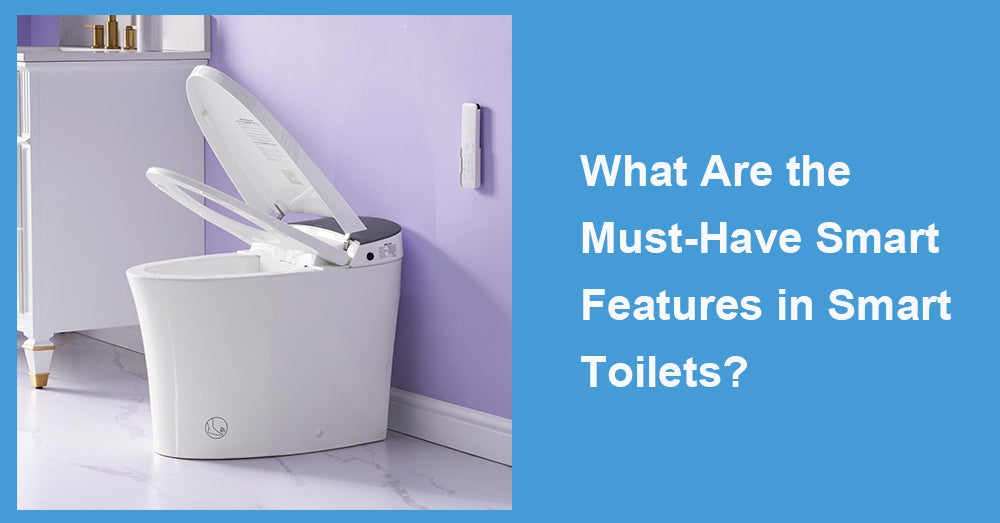
In recent years, smart toilets have become one of the fastest-growing product categories in modern bathroom spaces. It combines cleanliness, comfort, energy efficiency, and technological experience, representing the trend of bathroom transformation from a "functional space" to a "health management space". As consumers' emphasis on quality of life increases, smart toilets are moving from high-end products to mainstream choices. Among the dazzling array of products, which intelligent features are the "essential" configurations? What are additional experiences? This article outlines the core intelligent functions a smart toilet should possess from an industry perspective.
1. Automatic flushing system: the basic link of intelligent experience
The automatic flushing function is the "first intelligent module" of smart toilets, and it is also one of the functions that consumers can most intuitively feel the convenience of technology. It automatically starts the flushing program when the user leaves the seat, using an infrared or pressure sensor, ensuring cleanliness and preventing hygiene hazards from touch operation.
Some high-end models use a dual-mode flushing system that automatically adjusts water volume based on usage, thereby conserving water resources. According to data from the Bathroom Technology Research Center, this type of intelligent water-saving system can save an average of about 2000-2500 gallons of water per year (source: WaterSense. EPA.gov).
2. Cleaning function: from "cleanliness" to "personalized care"
Spray washing is one of the core technologies of smart toilets. Unlike traditional toilets, smart toilets are equipped with retractable nozzles that automatically adjust water temperature, pressure, and spray angle based on the user's preferences. The typical nozzle spray range is 2-4 inches, which is sufficient to cover the required cleaning area.
At present, mainstream smart toilets are equipped with three cleaning modes: front wash, back wash, and vibration massage. Some brands have also added women's-only cleaning, a children's mode, and a pulse water-flow regulation function, aiming to provide a milder, more efficient cleaning experience.
According to Bath Tech Review data, approximately 72% of users prioritize "cleaning water temperature stability" and "nozzle self-cleaning ability" when purchasing a smart toilet (source: BathroomTechReview.com).
3. Seat heating: a key function to enhance comfort
In daily use, the seat ring's temperature directly affects comfort. The seat heating function is maintained at a constant temperature through built-in heating elements, and the temperature can generally be adjusted within the range of 90 °F-104 °F. Some smart toilets can be heated in advance through automatic sensing or time programming functions, and automatically turn on when the user approaches and off when they leave.
Modern bright seat rings commonly adopt energy-saving designs, such as automatically lowering or shutting down the heating system when the room temperature is high or when no one is using it for a long time. According to the Home Improvement Research Institute's 2024 data, approximately 64% of savvy toilet consumers cite seat heating as a significant factor in their choice for innovative products (source: HIRI.org).
4. Automatic opening and sensing night light: intelligent details enhance the convenience of use
The induction opening and closing lid function is a key technology that embodies the "contactless experience" in smart toilets. The infrared sensor can automatically open the toilet seat when the user approaches about 10-12 inches and close it when they leave. This not only enhances user convenience but also maintains higher hygiene standards in public or home shared spaces.
Meanwhile, many smart toilets are equipped with built-in night light systems. Soft LED lights are usually located inside or at the bottom of the bathroom and automatically turn on when ambient light drops below the set level, making them convenient for night use without disrupting sleep. Research has shown that smart toilets equipped with night light function can reduce energy consumption by about 30% during nighttime use (source: LightingResearchCenter.org).
5. Deodorization and Air Purification: Creating a Healthy Sanitary Environment
Air purification and deodorization systems have been a significant direction of development for innovative toilet technology in recent years. The core principle is to adsorb odors using activated carbon filters or negative ion generators, and some models also feature fan systems to circulate and filter the air after use quickly.
In technologically advanced products, the purification system usually starts immediately after the user sits down and runs continuously for about 60 seconds to ensure fresh air.
According to market research by Plumbing & Mechanical Magazine, approximately 56% of innovative toilet products will come standard with air purification modules by 2025 (source: PMmag.com). This type of function not only enhances user comfort, but also meets the health needs of modern families for a "clean air bathroom environment".

6. Automatic sterilization and self-cleaning technology: maintaining long-term hygiene status
The self-cleaning system is a key function to ensure the durability and hygiene of smart toilets. The mainstream technologies include:
Self-cleaning nozzle: Automatically rinse the nozzle before and after each use to prevent bacterial residue.
Electrolytic water sterilization system: using electrolysis technology to generate low-concentration hypochlorous acid water for the sterilization treatment of nozzles and ceramic surfaces.
UV sterilization module: automatically starts when no one is using it, disinfecting the nozzle or internal cavity.
Experimental data show that smart toilets equipped with electrolytic water sterilization have an average reduction of about 85% in nozzle bacterial content compared to regular models after 30 days for continuous use (source: SmartSanitationLab.org).
In addition, some products use nano anti-fouling materials in the glaze layer, which can reduce the adhesion of scale and make cleaning and maintenance more time-saving.
7. Energy saving and environmental protection functions: technological evolution under sustainable trends
Water and electricity conservation have become essential development directions in the innovative bathroom industry. In addition to the dual-mode system that automatically determines the flushing volume, many smart toilets also have an "energy-saving sleep" function that automatically enters a low-power state when not in use for a long time, reducing standby energy consumption by about 20%.
The intelligent water temperature and seat ring temperature control algorithm dynamically adjusts power output based on real-time temperature detection, improving energy consumption control accuracy. For example, some models can automatically cut off the heating circuit after the water temperature reaches the preset value, thereby avoiding continuous power consumption.
According to the International Energy Agency (IEA) bathroom energy efficiency report, toilets equipped with intelligent energy-saving control technology can reduce energy consumption by approximately 15% throughout their lifecycle (source: IEA.org).
8. Personalization and Remote Control: The Direction of Future Intelligent Sanitary Ware
The latest generation of smart toilets is no longer just passive response devices, but home terminals with specific "adaptive capabilities". Users can set exclusive parameters via Bluetooth or Wi-Fi in the mobile application, such as spray water pressure, water temperature, seat ring temperature, deodorization duration, etc. Some high-end models can even recognize user identity and automatically call preset personalized configurations.
Some brands are exploring combining health-monitoring technologies, such as urine-detection modules, posture recognition, and health analysis reports, to make smart toilets the entry point for home health management. According to the Smart Home Data Review, the market share of smart toilets with health-monitoring capabilities is expected to increase from the current 3% to approximately 12% over the next five years (source: SmartHomeDATAview.com).
Conclusion
From early automatic flushing and seat heating to today's versatile devices that integrate deodorization, sterilization, air purification, and health monitoring, the technological advancements in smart toilets are taking the bathroom experience to a whole new level. It can be foreseen that in the future, smart toilets will not only be a type of bathroom equipment, but also a comprehensive intelligent node for home health, energy conservation, and comfortable living.
In the context of continuous industry iteration, intelligent functions that truly possess practicality, energy efficiency, and personalized experience will become the core standards for measuring the value of smart toilets.










































Leave a comment
This site is protected by hCaptcha and the hCaptcha Privacy Policy and Terms of Service apply.