






















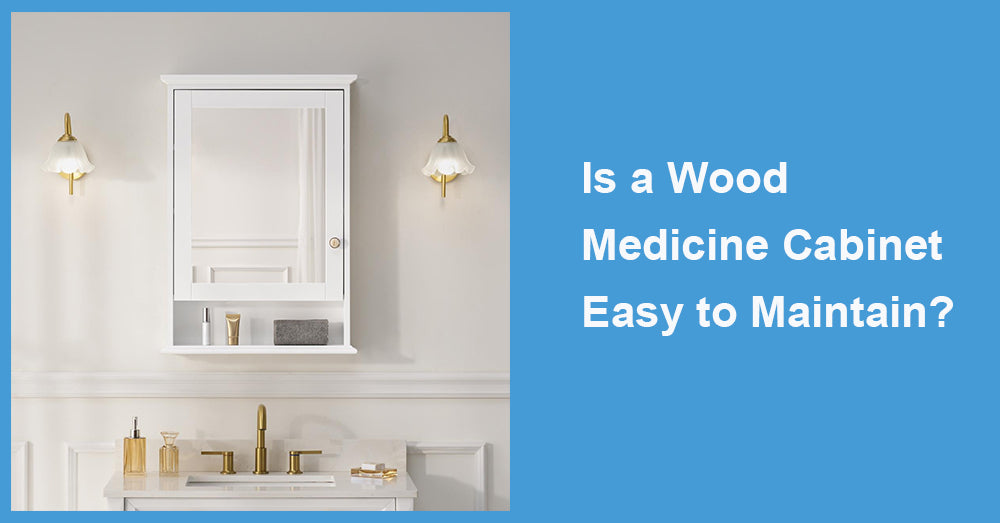
Wood is having a moment in bathrooms. After years of all-white, all-gloss finishes, buyers are leaning back toward natural materials that feel warm and personal. Retailers say medicine cabinets with oak, walnut, ash, bamboo, and teak faces are showing up in more mid-market and premium collections, often paired with soft-close hinges and integrated lighting. The big question customers still ask at the counter is simple: Is a wood medicine cabinet easy to maintain? The short answer is yes—if it’s built for bathrooms and treated with basic care.
What makes wood different in a bathroom?
Bathrooms are humid, warm, and sometimes splash-prone. Wood responds to changes in moisture: it can expand and contract, and it can lose finish protection if water sits on its surface. That reality once made many shoppers nervous. But manufacturing has moved forward. Most reputable brands now use moisture-resistant cores (often sealed plywood), stable veneers, and protective topcoats designed for wet rooms. When those elements are in place—and the room has decent ventilation—maintenance becomes straightforward and predictable.
The role of finishes: your first line of defense
Finish quality largely determines how easy a cabinet is to live with. You’ll commonly see three approaches:
· Catalyzed lacquer or UV-cured polyurethane. These complex, factory-baked layers create a durable shell that resists everyday splashes and routine cleaning. Day-to-day upkeep is usually just dusting and wiping with a slightly damp cloth, then drying.
· Water-based varnish systems. These provide a clear look with low odor and lower VOCs. They’re popular in greener lines and stand up well when homeowners avoid harsh chemicals.
· Oil or hard-wax oil finishes. These highlight grain beautifully and are repairable in small areas, but they ask for a little more attention: a light re-oil on wear spots keeps them looking rich and sealed.
In every case, finish performance improves when edges, backs, and hinge cutouts are sealed during manufacturing. That detail prevents moisture from finding a path into the substrate—a quiet but essential win for maintenance.
Daily and weekly care: simple, quick, repeatable
Most owners are surprised by how little effort it takes to maintain a wood medicine cabinet. A practical routine looks like this:
· After splashes: Wipe up water around the handle, bottom rail, and mirror edge. Dry right away.
· Weekly dusting: Use a soft microfiber cloth. No abrasives, no scouring pads.
· Gentle cleaners only: Mild soap diluted in water works. Avoid bleach, ammonia, alcohol, citrus solvents, and anything labeled “degreaser.” These can haze or soften the finish.
· Hardware check: Tighten loose screws on pulls or hinges if you notice sagging; it prevents racking and finish wear on door edges.
· Ventilation matters: Run the exhaust fan during and after showers, or open a window to let the humidity drop.
This routine is measured in seconds, not hours. The key is consistency, not intensity.
Species and construction: why some cabinets age better
The face species influences both style and durability. Teak and white oak handle moisture well thanks to their natural oils and tight grain. Walnut and maple are stable and popular for modern looks. Just as important is what you don’t see: a sealed plywood or moisture-resistant core typically outperforms raw particleboard in humid spaces. High-quality edge banding and doweled or mortise-and-tenon joinery help keep corners tight, which reduces finish cracking along seams.
Veneer over a stable core is not a shortcut—it’s an industry standard for keeping panels flat. Solid wood frames add structure, while veneer panels reduce seasonal movement. For maintenance, that combo is a plus.
Placement and installation: an underrated maintenance tool
Where you mount the cabinet can make or break upkeep. Keep it a sensible distance from a high-arc faucet to limit direct splashes. If you have the wall depth, a recessed installation protects the cabinet from bumps and channels steam upward rather than directly at the door. A tiny bead of clear sealant where the cabinet meets the tile prevents water from wicking into the wall box. Finally, check that the door is plumb and latches cleanly; a door left ajar invites moisture inside.
How wood compares with other materials
· Metal (stainless or aluminum): Lowest maintenance and highly durable, but a cooler look that some homeowners find clinical. Fingerprints can still be a chore.
· PVC or laminate/MDF: Very forgiving on cleaning, budget-friendly, and stable—but they can look flat up close and may be harder to repair convincingly if chipped.
· Wood: Slightly more attention than the options above, yet warm, repairable, and long-lasting when finished well. The ability to refresh or refinish is a significant advantage over plastics.

Repair and refresh: minor fixes keep cabinets new
Even well-cared-for cabinets pick up nicks. The good news: wood is repair-friendly. For minor scratches, a wax fill stick or color-matched touch-up pen usually does the trick. For edge wear, a light sand and spot re-coat on an oil-finished piece is simple. Lacquered or polyurethane cabinets may need a careful local touch-up because the finish is harder and also resists damage longer. Either way, you can keep a cabinet looking showroom-fresh without replacing it.
Sustainability and indoor air quality
The market has shifted toward FSC-certified lumber, low-VOC finishes, and water-borne topcoats. That’s good news for installers and families who want less odor and fewer emissions at home. Wood also wins on circularity: it can be repaired, refinished, and ultimately recycled or repurposed. Compared with composite plastics, the long service life and end-of-life flexibility reduce the need for frequent replacement—another subtle maintenance benefit.
So, is it easy? The industry consensus
With modern finishes, better cores, and basic ventilation, a wood medicine cabinet is easy to maintain. It will ask for quick wipe-downs, gentle cleaners, and the occasional touch-up—tasks that fit into everyday bathroom habits. In return, you get warmth, texture, and a premium feel that budget materials struggle to match. For retailers, that’s an honest message that resonates: wood offers emotional value plus practical longevity. For homeowners, it’s a small routine that protects a piece you see and use every day. In an era when bathrooms are becoming spa-like retreats, wood medicine cabinets offer both function and a sense of warmth. Treat them like quality furniture in a humid room—nothing more complicated—and they’ll reward you with years of easy ownership and enduring style.









































Leave a comment
This site is protected by hCaptcha and the hCaptcha Privacy Policy and Terms of Service apply.