














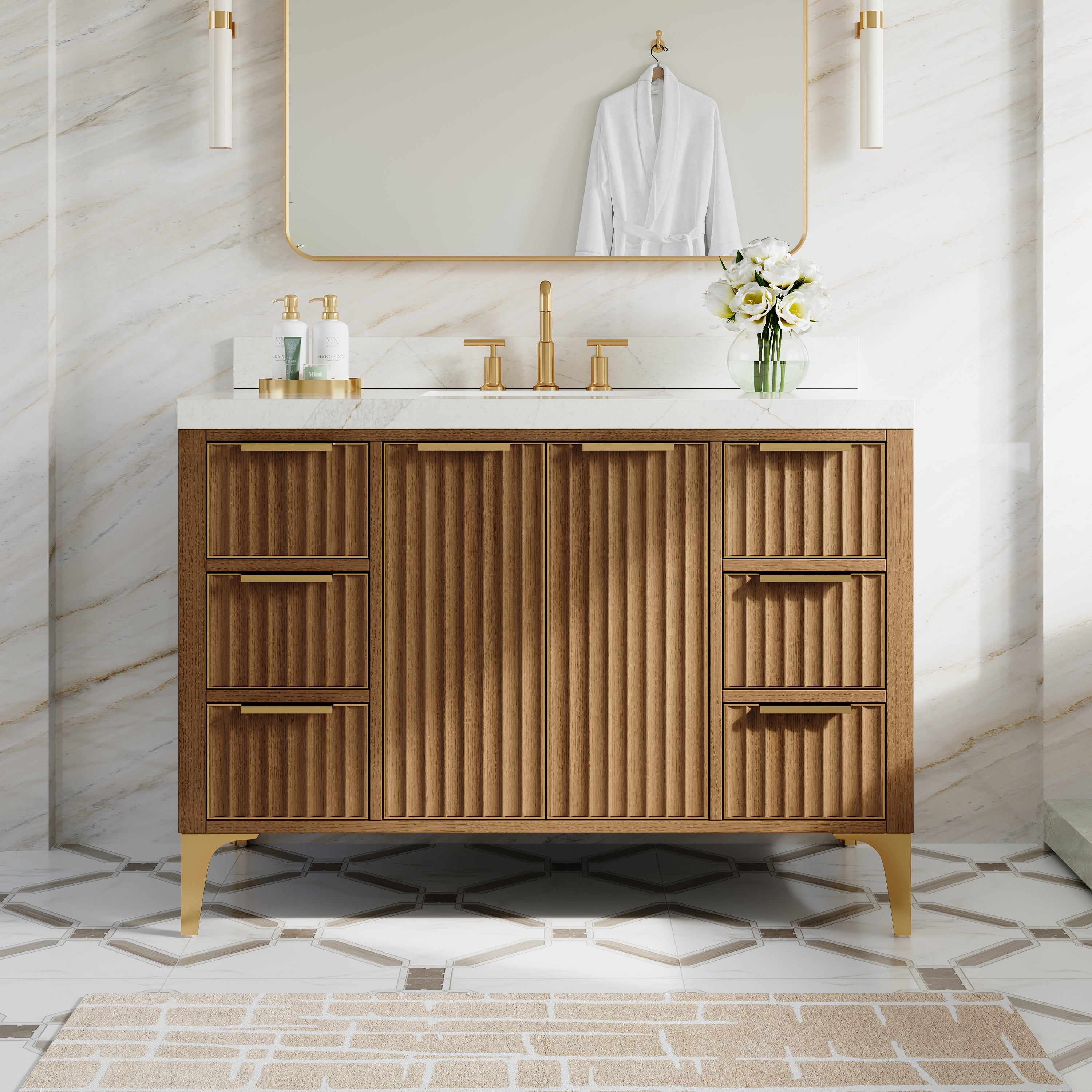
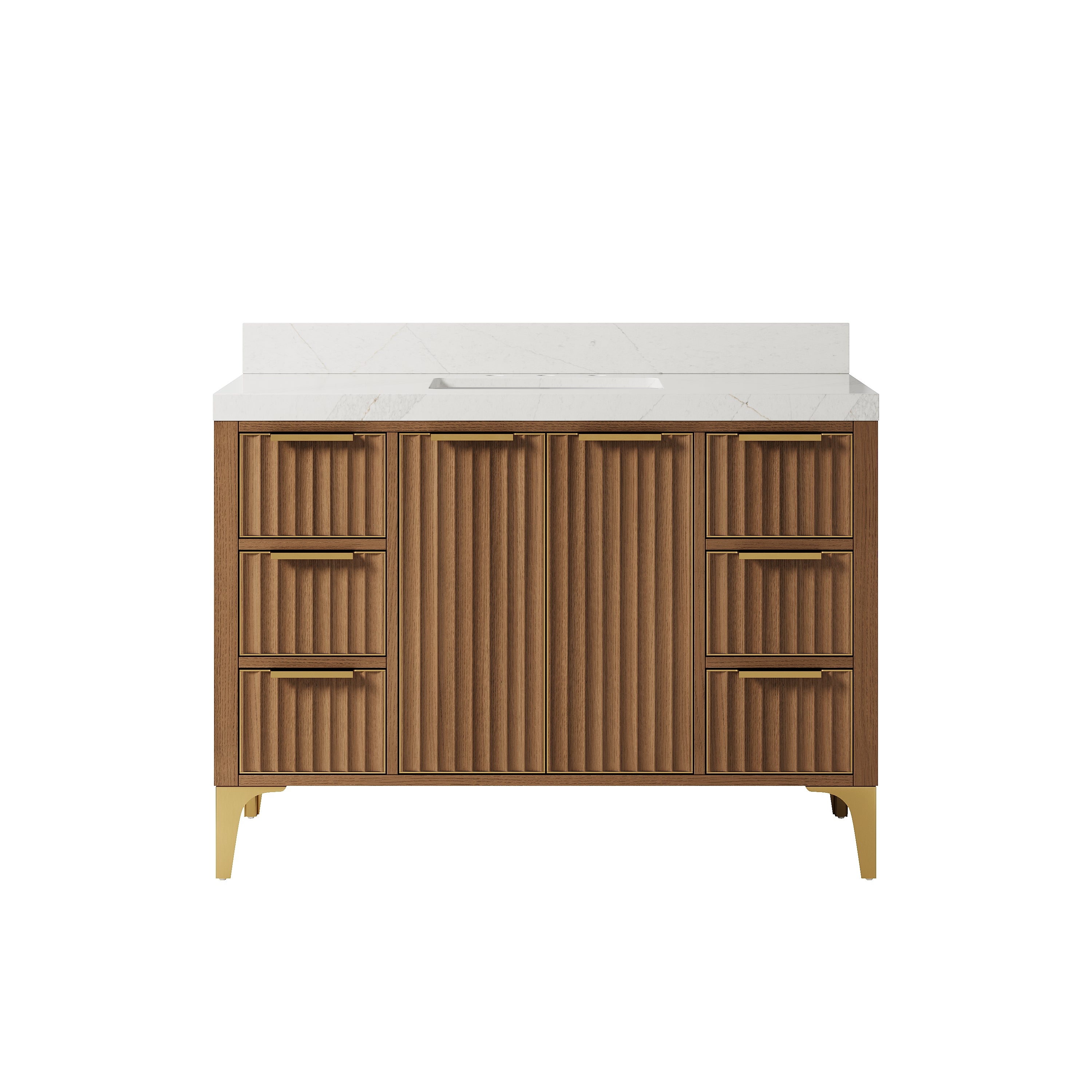


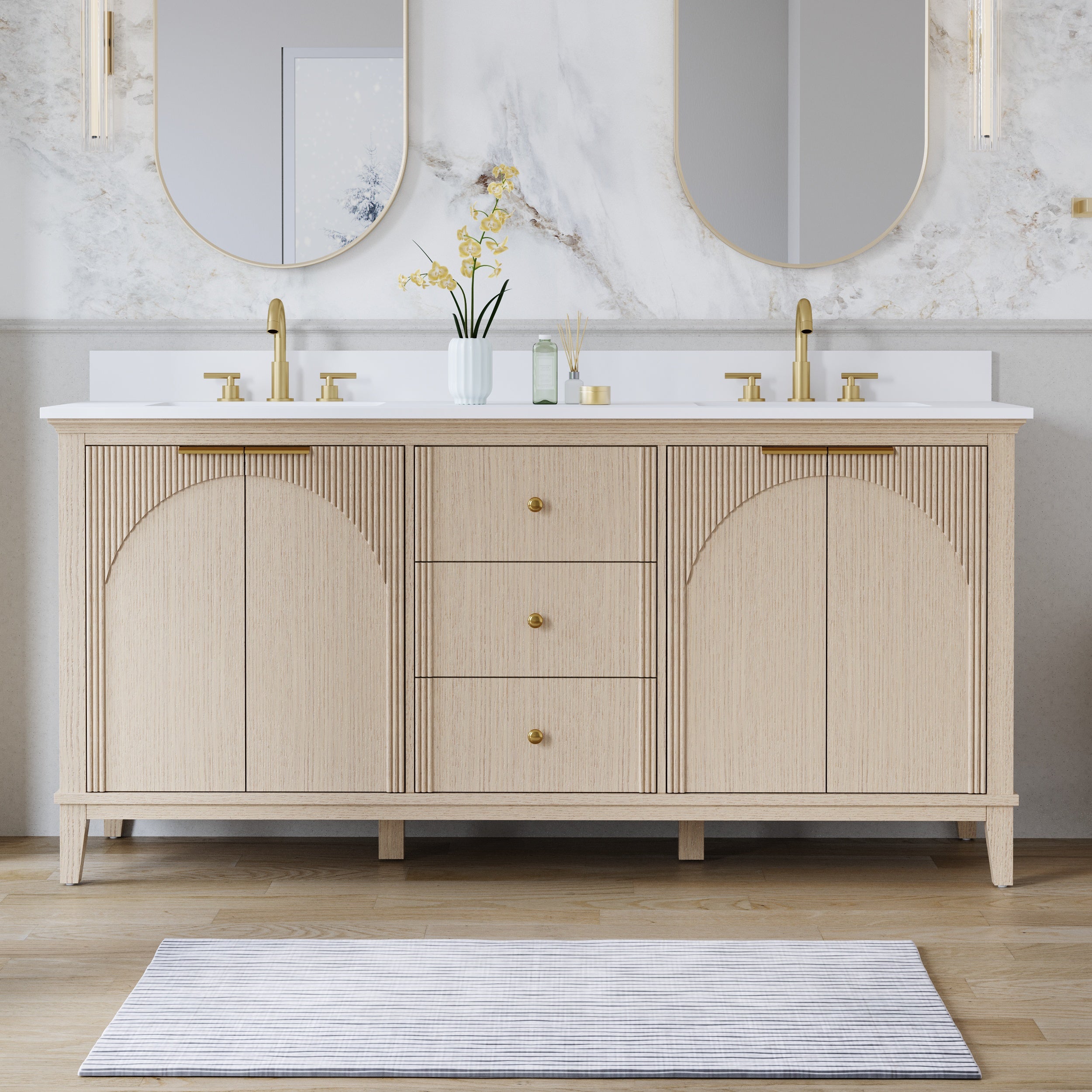
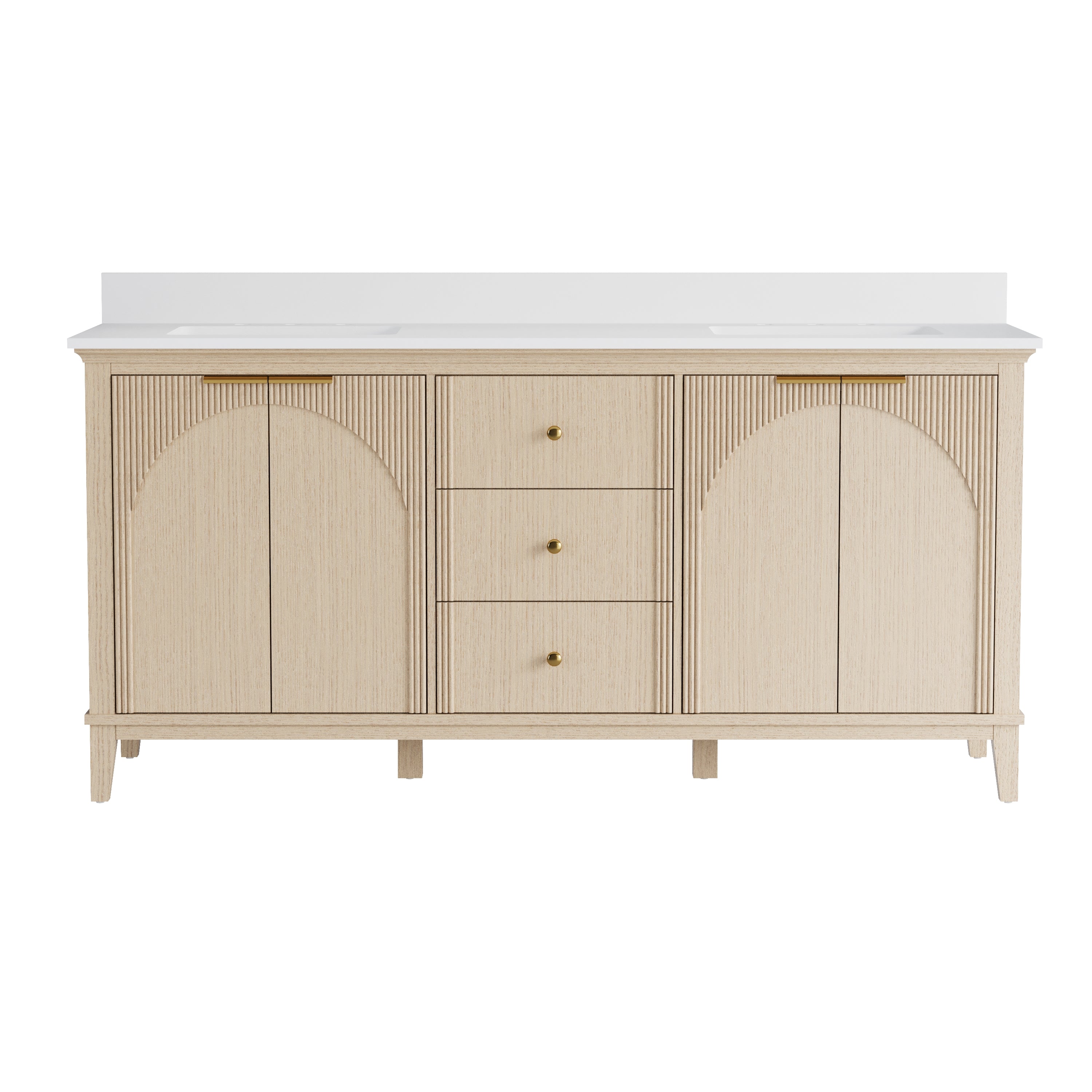
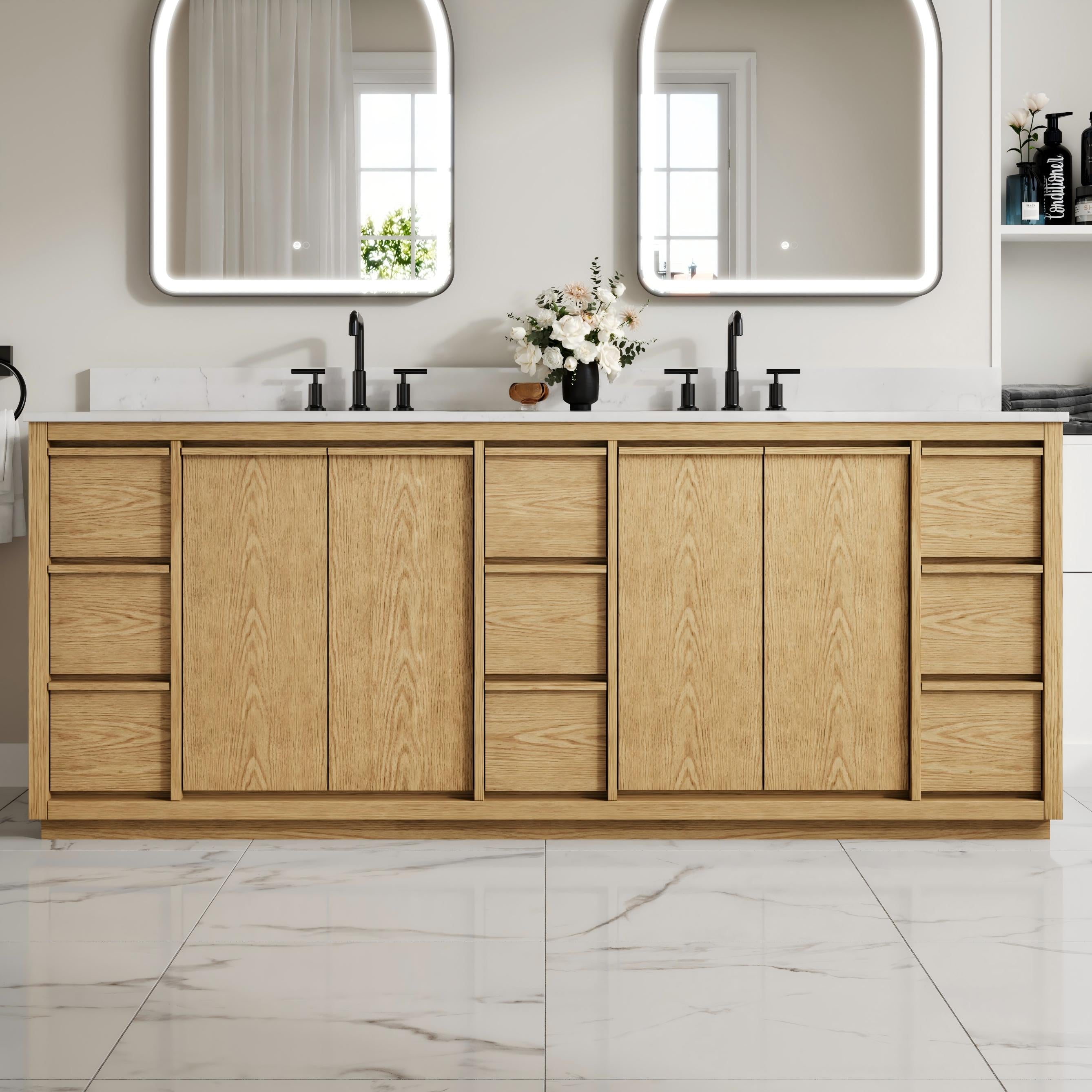
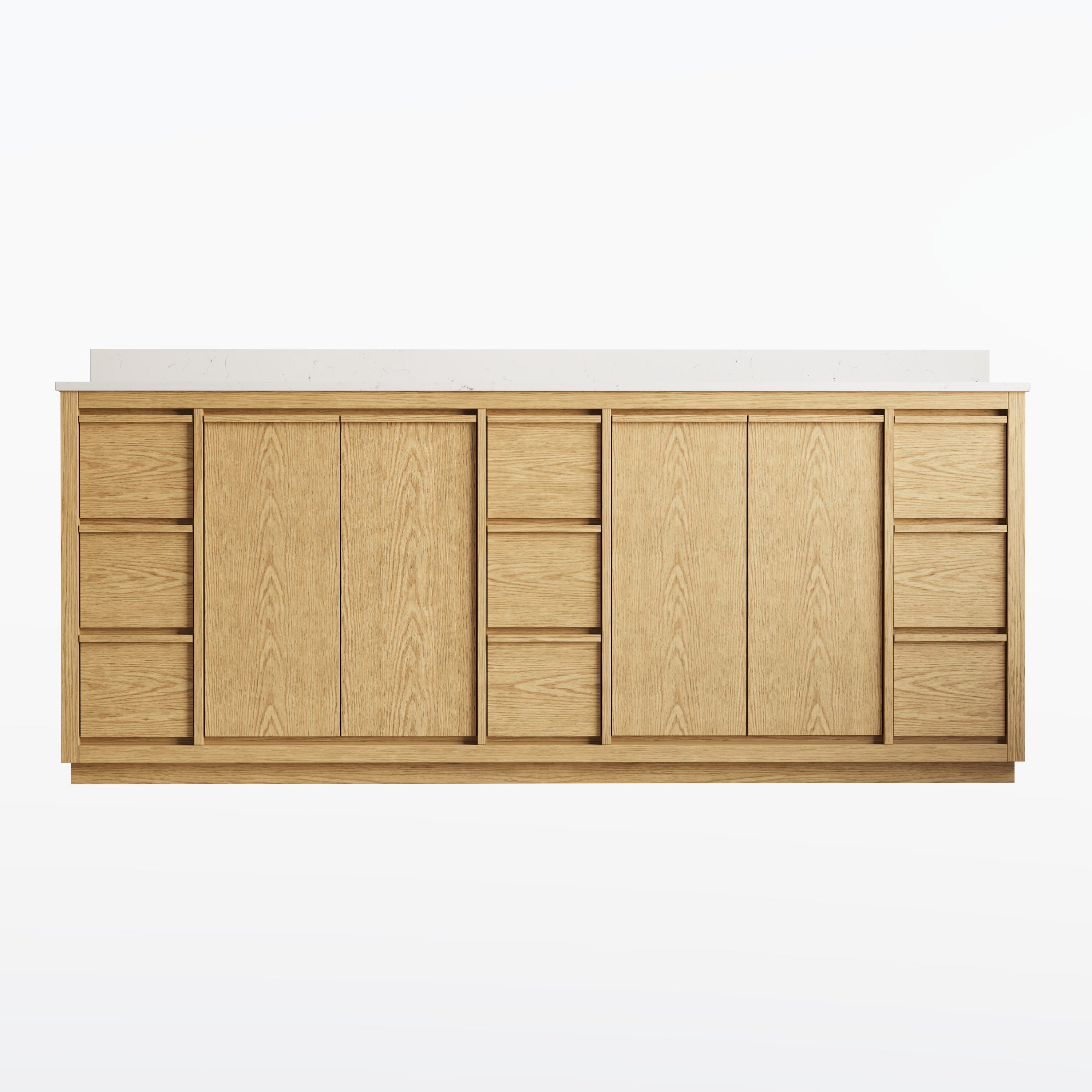
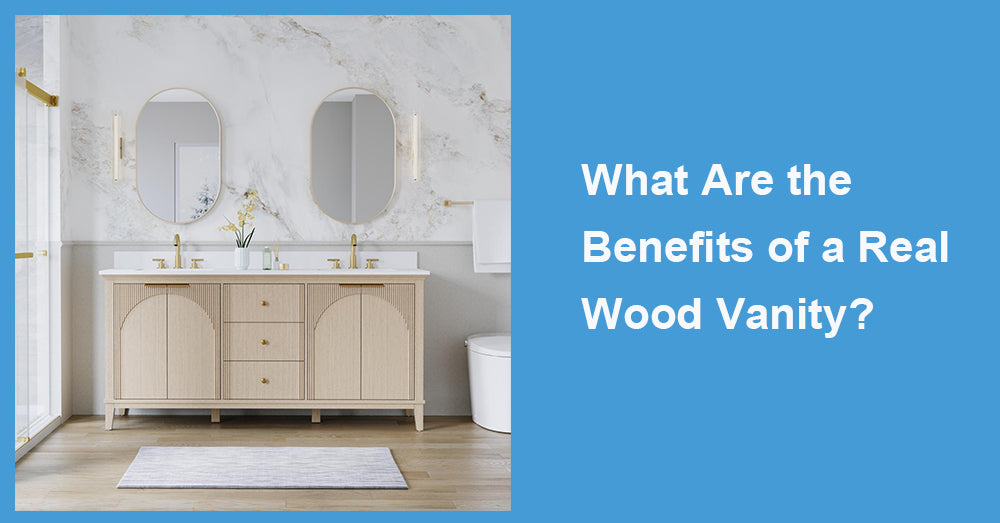
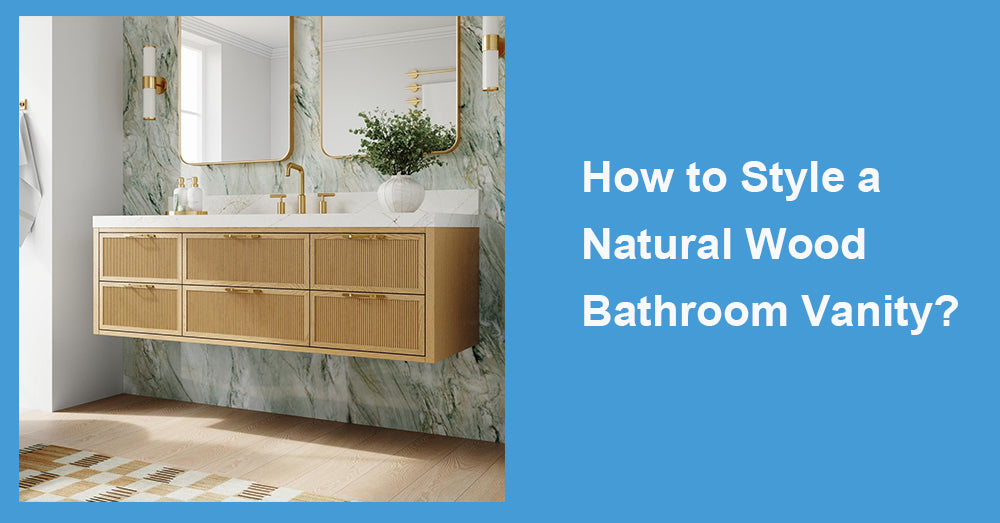
A wood vanity made with genuine wood components brings something to a bathroom that painted composite cabinetry often struggles to reproduce: natural variation, structural character, and the ability to age with the room rather than simply sit inside it. After more than 20 years of working with bathroom cabinetry, I have found that real wood appeals most to homeowners who care about material quality as much as appearance. It can be durable and repairable, but only when the cabinet is properly constructed, sealed, and maintained.
1. A Real Wood Vanity Brings Natural Character
No two pieces of natural wood are exactly alike. Grain direction, color variation, knots, and subtle tonal changes give the cabinet visual depth that printed wood-look surfaces often lack.
This matters in bathrooms because so many other materials are smooth and uniform. Tile, glass, mirrors, quartz, and metal can create a polished room, but too much uniformity may make the space feel cold.
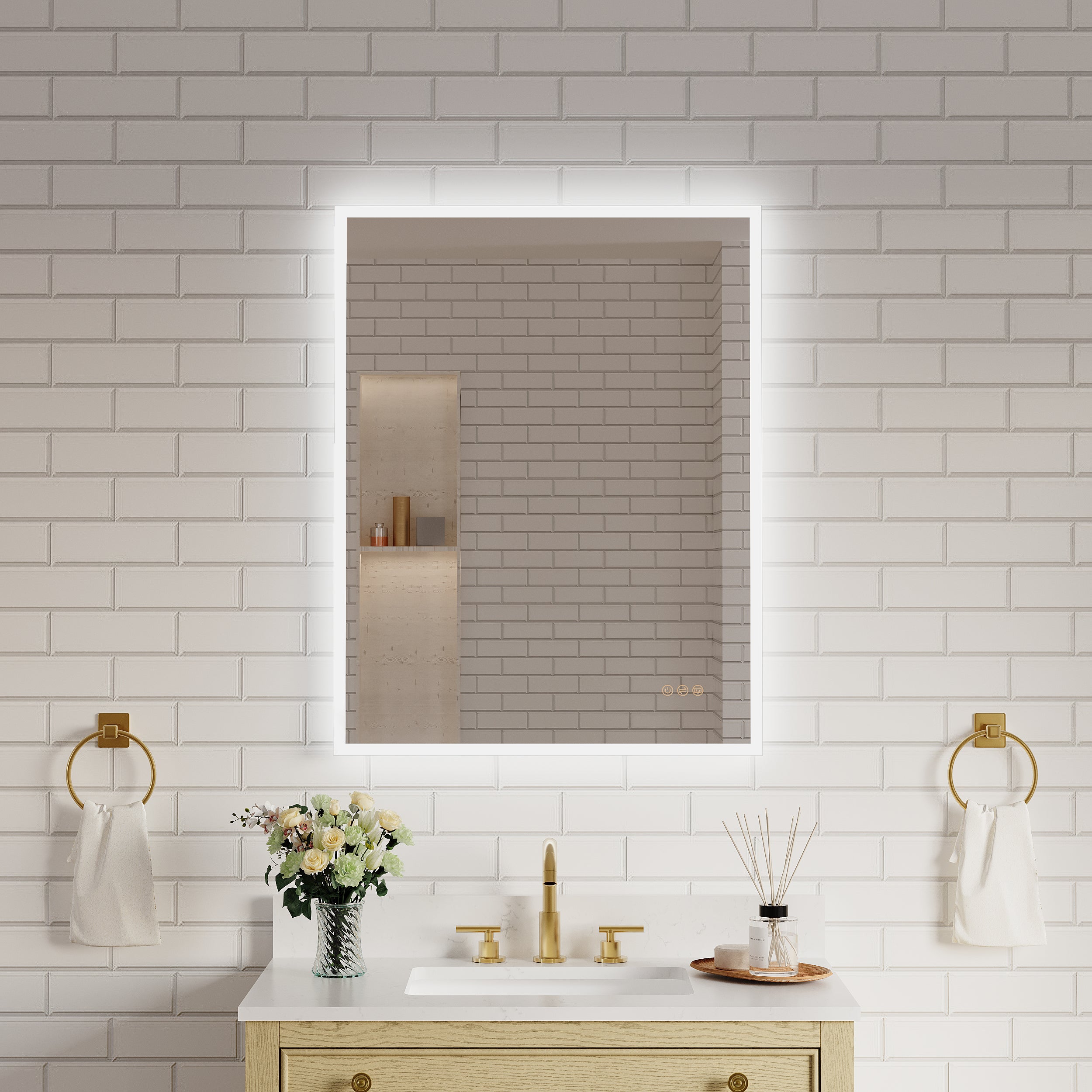
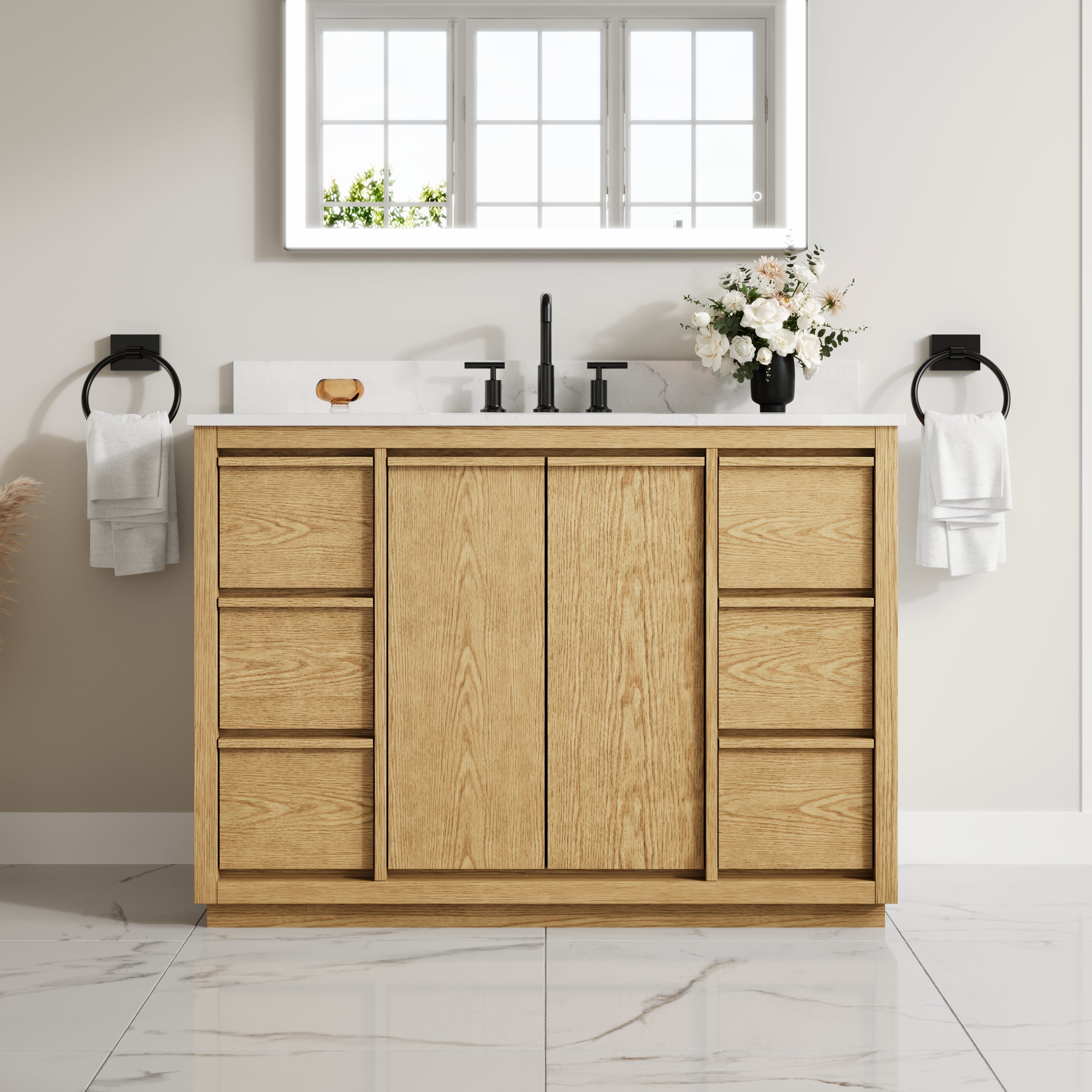
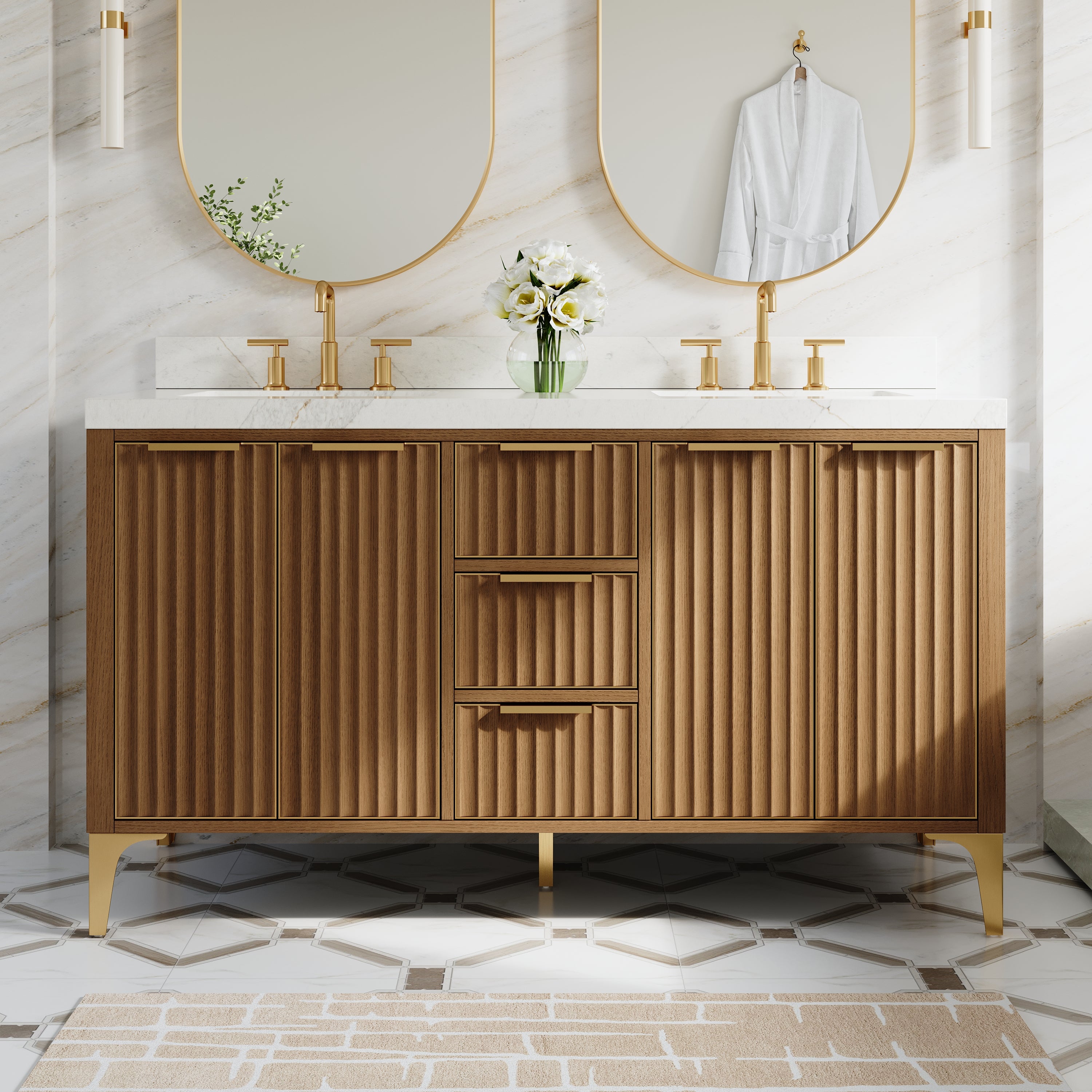
A light oak vanity can soften a bright modern bathroom. Walnut can give a larger primary suite more weight and warmth. Even a simple slab-front cabinet feels richer when the grain remains visible.
2. A Wood Vanity Can Offer Long-Term Durability
Real wood is valued partly because it handles repeated use well when it is properly finished. Doors, frames, and drawer fronts made from quality hardwood can hold hinges and fasteners securely over time.
That does not mean every part of a good vanity must be solid wood. In fact, quality plywood is often a sensible material for cabinet boxes because it remains relatively stable as humidity changes.
Solid Wood Is Not Automatically Waterproof
This is one of the most common misunderstandings I see.
Wood is durable, but bathroom moisture still needs to be controlled. Standing water, leaking plumbing, and poorly ventilated rooms can damage solid wood just as they can damage other materials.
The finish matters as much as the species. Look for sealed edges, protected end panels, and well-finished areas around plumbing openings.
3. Real Wood Is More Repairable Than Many Alternatives
One of the strongest practical benefits is repair potential.
A small scratch in a wood finish may be touched up. A worn area can sometimes be refinished. Hardware can be replaced without compromising the cabinet structure. With certain finishes, minor surface damage becomes less noticeable as the material ages.
This can be especially valuable in a family bathroom where doors and drawers are opened dozens of times each day.
By comparison, a damaged decorative film or swollen particleboard edge may be difficult to restore convincingly. Once the surface layer fails, replacement is often the more realistic option.
4. Wood Works Across Many Bathroom Styles
Real wood is not limited to rustic interiors.
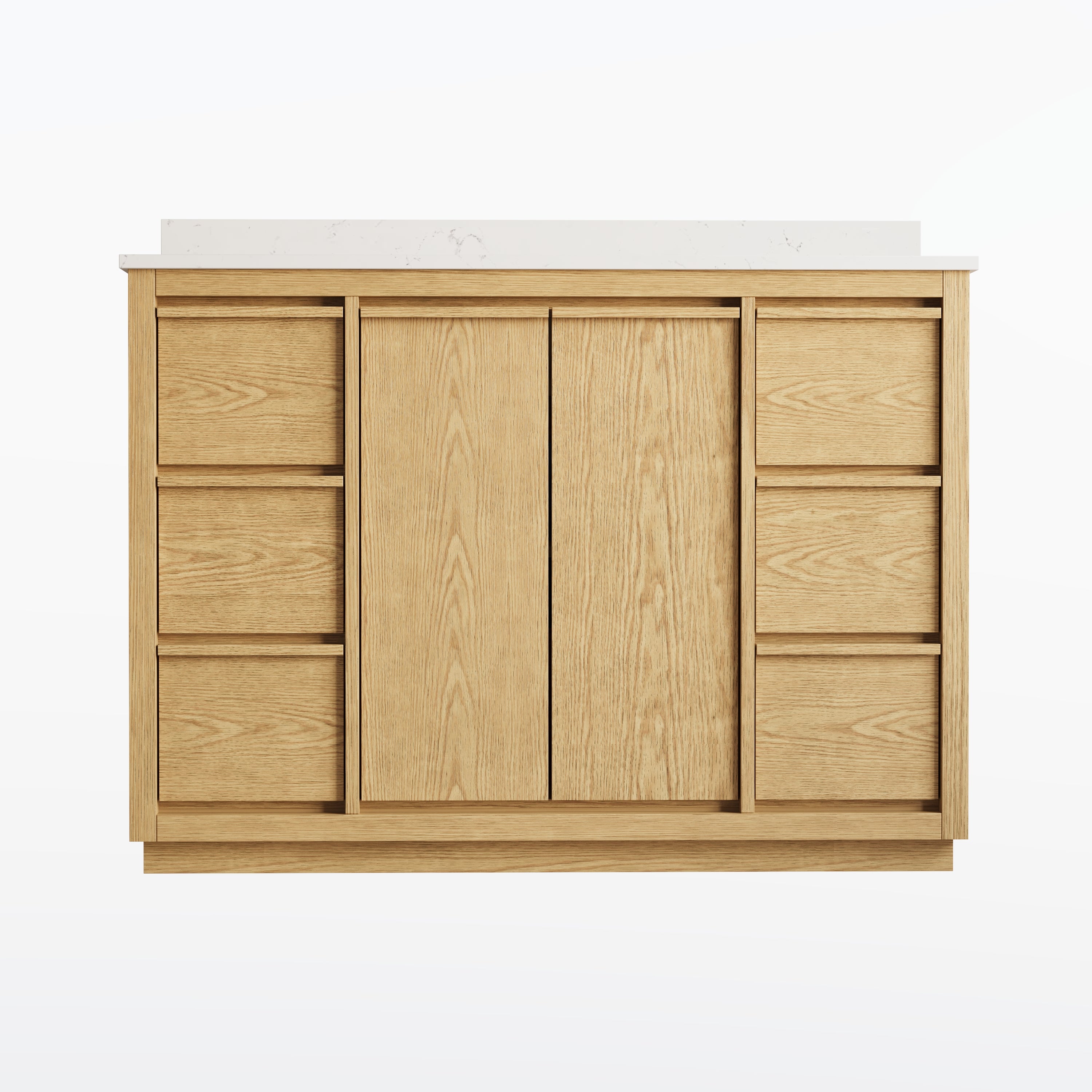
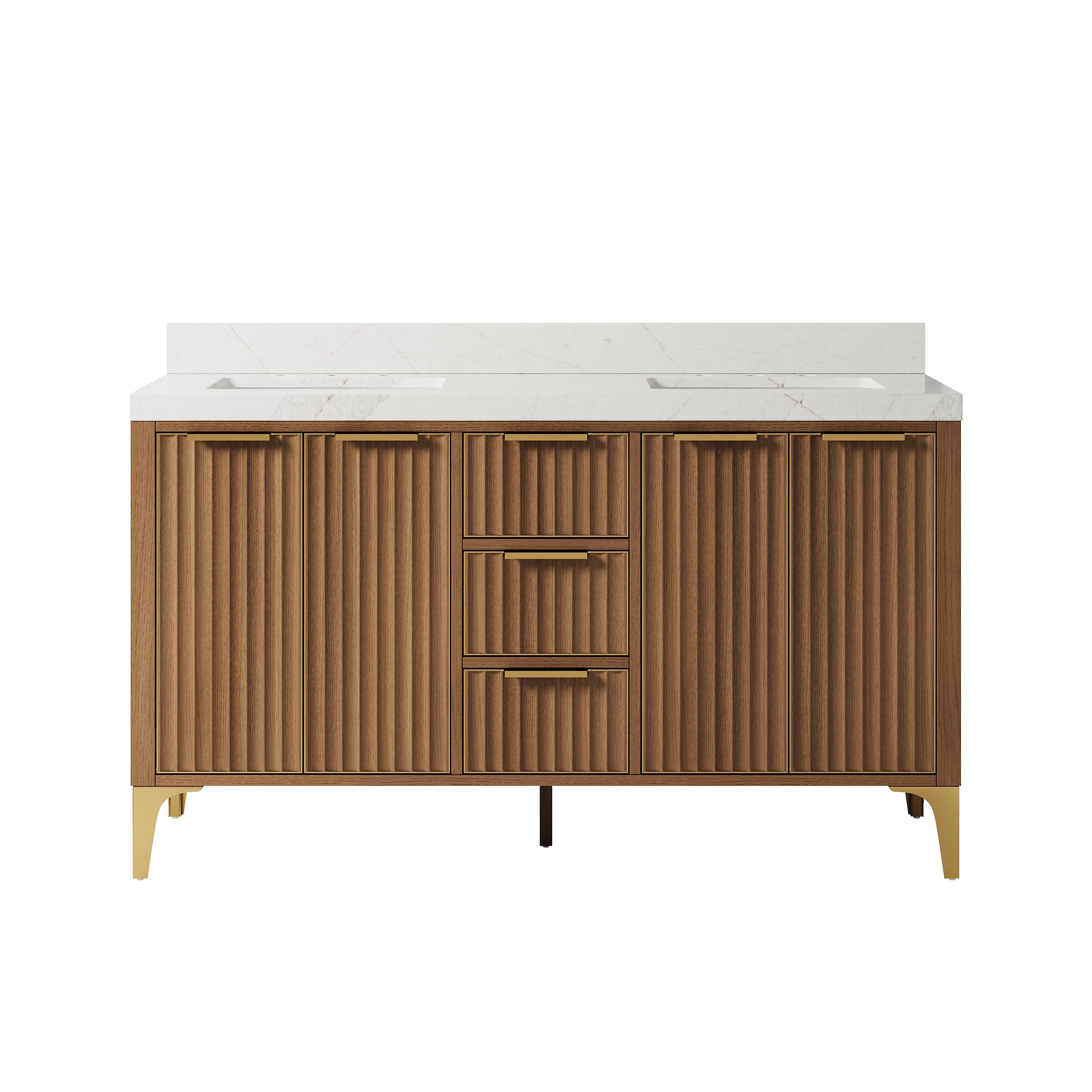
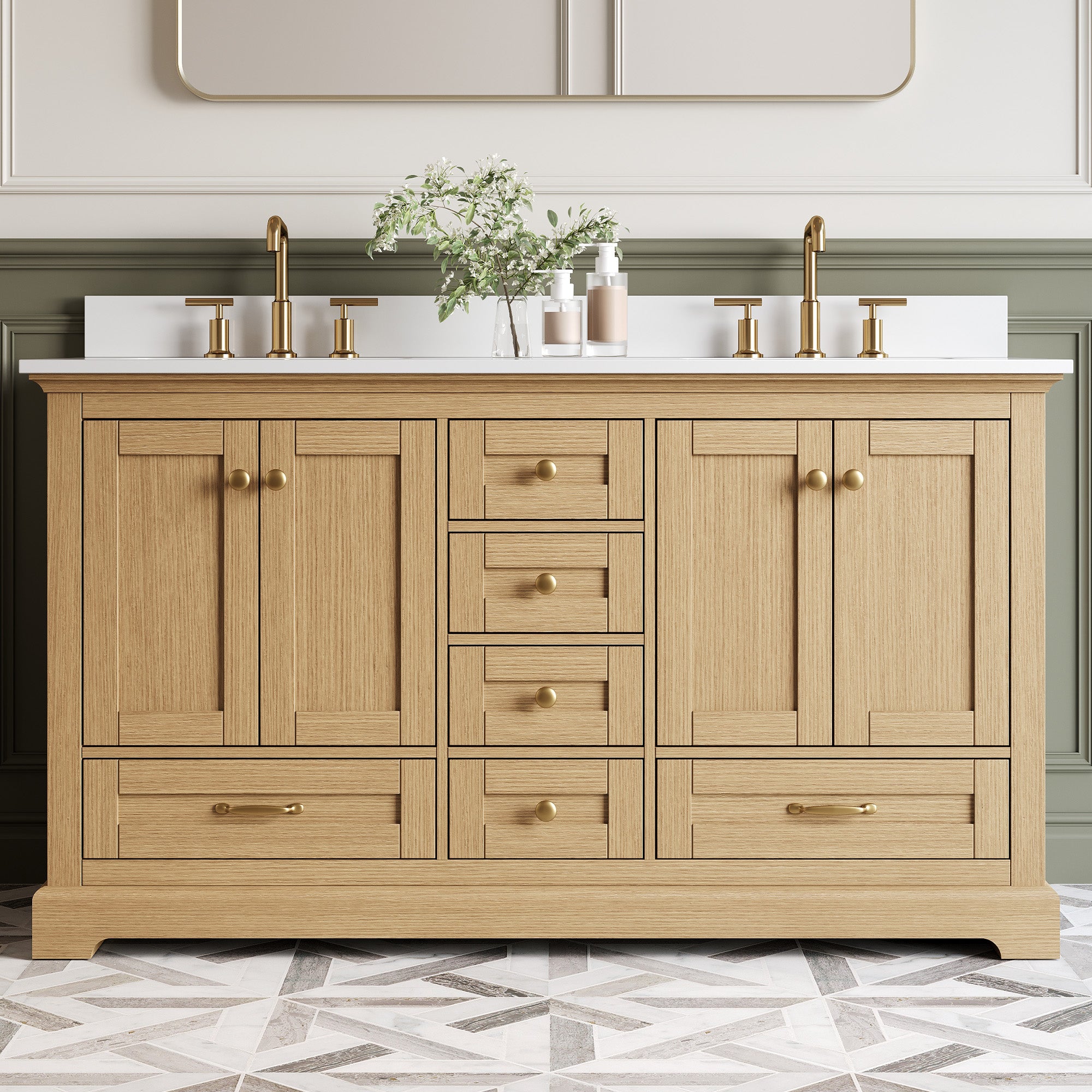
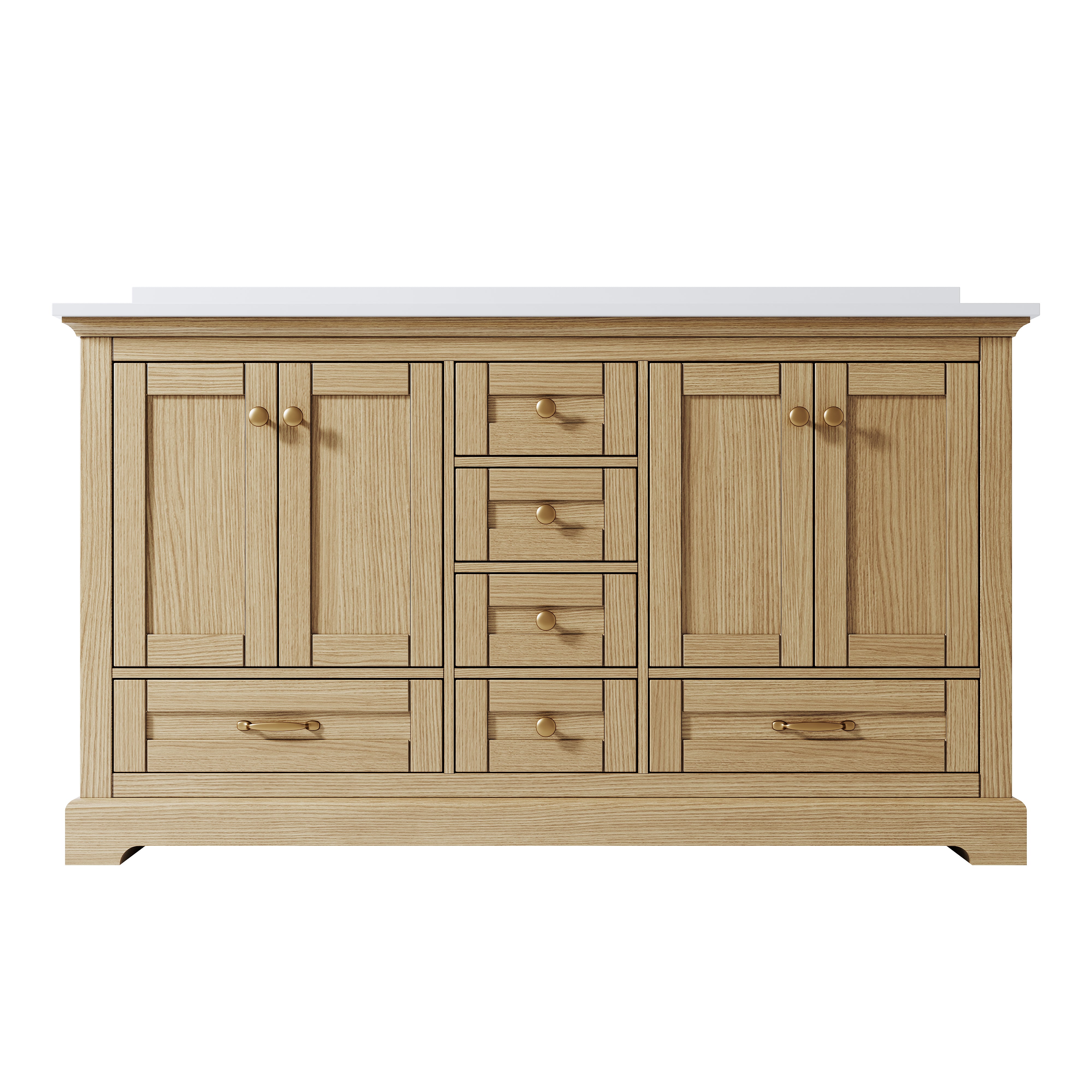
Flat-front oak cabinets work well in modern and Scandinavian bathrooms. Walnut pairs naturally with transitional spaces. Shaker doors can move the same material toward a more traditional look.
The hardware, countertop, and mounting style determine much of the final character.
Choose Grain and Tone With Restraint
Strong grain can become a focal point. That is useful in a simple bathroom, but it may compete with dramatic marble or patterned tile.
When the room already has a visually active shower wall or countertop, I usually recommend a quieter grain pattern. Light woods can keep compact rooms open, while darker stains generally suit bathrooms with more space and stronger lighting.
5. Storage Quality Still Matters More Than Material Prestige
A cabinet can be beautifully made from real wood and still be frustrating if the storage layout is poor.
Deep drawers are useful for skincare, brushes, grooming tools, and smaller toiletries. They keep items visible instead of allowing them to disappear behind plumbing.
Cabinet space beneath the sink works better for tall bottles, cleaning products, and spare paper goods.
Do not assume every visible drawer front is functional. Some upper fronts are fixed because the sink occupies the space behind them. Plumbing cutouts may also reduce storage.
For a shared bathroom, practical drawers and full-extension slides often matter more than decorative detailing.
6. Real Wood Has Honest Drawbacks
The first is cost. Quality wood components usually increase the price of the cabinet.
The second is movement. Wood can expand and contract slightly as humidity changes. Doors may occasionally need adjustment, especially in bathrooms with weak ventilation.
The third is maintenance. Although routine care is simple, wood does not respond well to standing water, harsh chemicals, or repeated soaking.
Real wood may not be the best choice for an open wet room or a bathroom where water frequently reaches the cabinet base. It is also a questionable investment when existing plumbing leaks have not been repaired.
7. Check Construction Before You Buy
Do not rely only on phrases such as “solid wood” or “real wood.”
Ask which parts are actually wood. A vanity may use solid wood doors with a plywood box, which can be an excellent construction method. Another may contain only a small amount of wood in visible areas.
Inspect drawer bottoms, joinery, hinges, and edge sealing. Check the underside and plumbing cutouts for exposed material.
A heavy cabinet is not automatically a well-built cabinet. Construction quality matters more than weight.
8. Installation Has a Direct Effect on Durability
Measure the wall width, cabinet depth, countertop overhang, doorway clearance, and plumbing position before ordering.
The cabinet should be installed level so doors and drawers remain properly aligned. Floating models need secure wall framing or an approved mounting system.
Seal the sink, faucet openings, countertop, and backsplash carefully. Test all plumbing connections before filling the cabinet. A slow leak beneath the sink can cause more damage than ordinary bathroom humidity.

9. Simple Maintenance Protects the Investment
Run the exhaust fan during showers and allow the room to dry afterward. Wipe standing water from the countertop and cabinet face rather than letting it sit.
Use a soft cloth and mild, non-abrasive cleaner. Avoid harsh chemicals unless the finish manufacturer specifically approves them.
Check beneath the sink several times a year for moisture, loose fittings, or finish damage. Small problems are much easier to correct early.
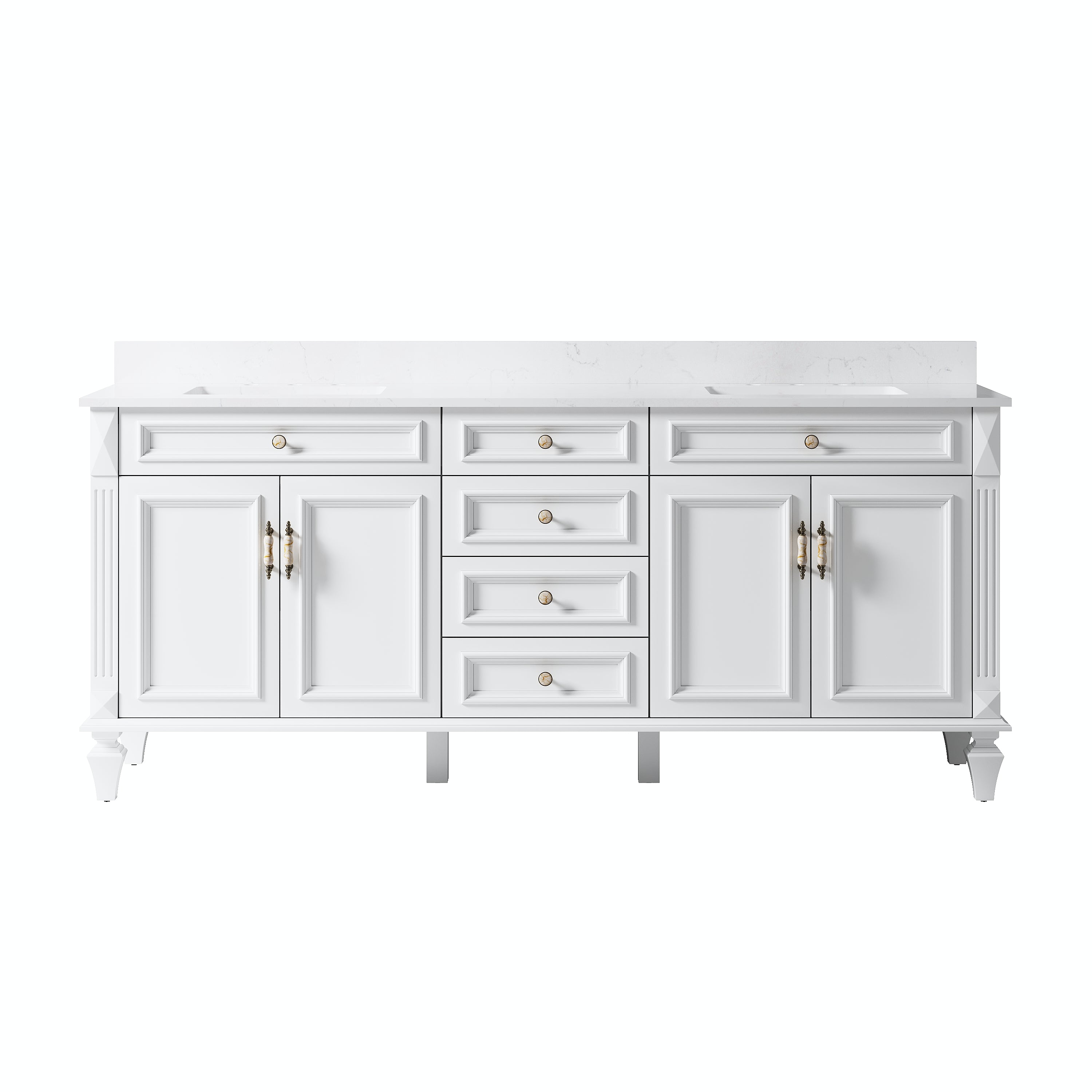
When comparing Wellfor options, look beyond the surface color and ask how the cabinet is constructed, sealed, and organized inside. Choose a wood vanity when you value natural variation, repairability, and long-term character, but make sure the bathroom has adequate ventilation and a layout that protects the cabinet from repeated water exposure. A well-built real wood vanity should feel useful first and beautiful second; when those priorities are in the right order, it tends to age gracefully.
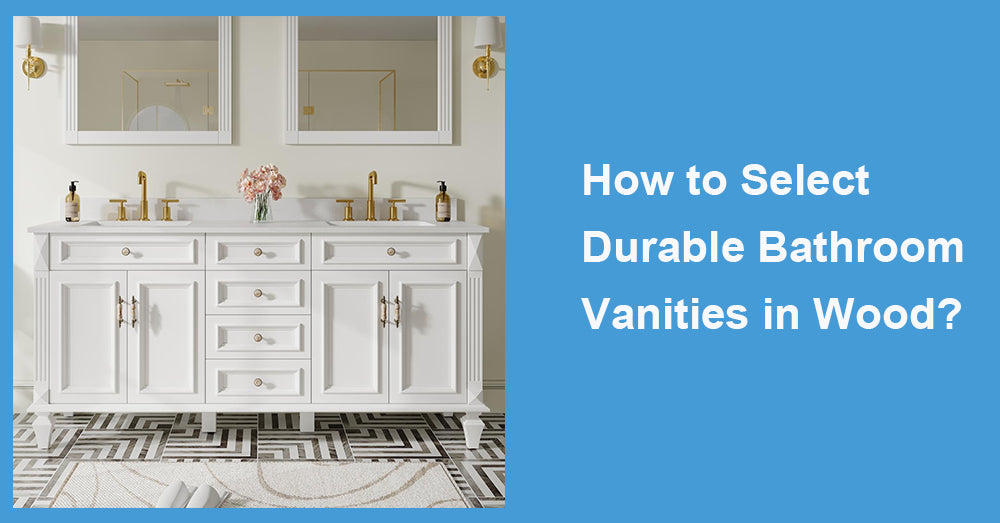
















Leave a comment
This site is protected by hCaptcha and the hCaptcha Privacy Policy and Terms of Service apply.