






















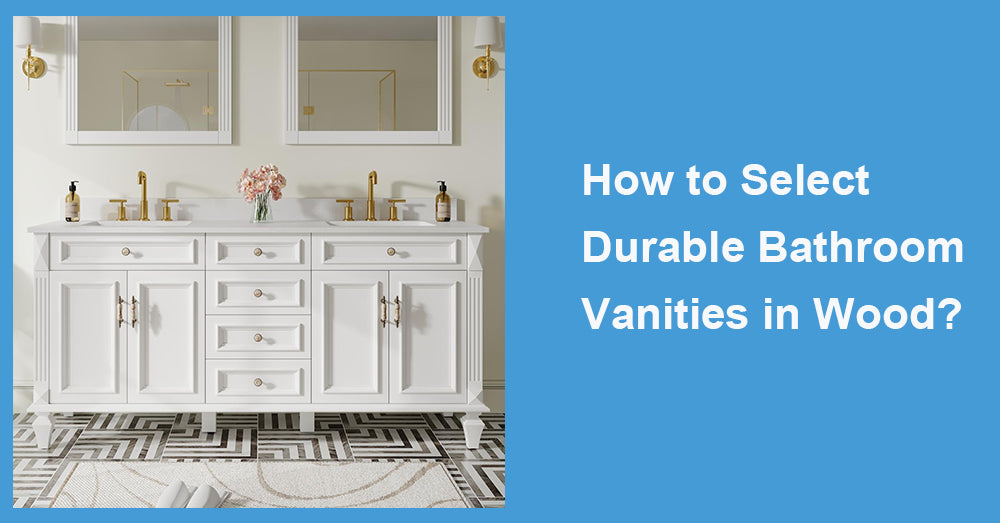
Choosing bathroom vanities in wood requires more than comparing colors and door styles. After more than 20 years of working with bathroom cabinetry, I have seen attractive vanities fail early because of weak cores, exposed edges, poor ventilation, or badly planned plumbing cutouts. A durable vanity should tolerate daily humidity, support repeated drawer and door use, and remain practical after years of cleaning. The wood species matters, but construction and finishing usually matter more.
1. Understand What the Cabinet Is Actually Made From
The phrase “wood vanity” can describe several types of construction. Some cabinets use solid wood frames and drawer fronts with plywood boxes. Others combine veneer, MDF, or particleboard beneath a decorative surface.
Solid wood offers strength, repair potential, and natural grain. Quality plywood is often an excellent choice for the cabinet box because its layered construction is relatively stable when humidity changes.
Engineered materials are not automatically poor choices. Properly sealed MDF can create smooth painted surfaces, while high-quality veneer can provide consistent grain at a more accessible price.
The concern is usually cheap particleboard with exposed or poorly sealed edges. Once water reaches the core, swelling can happen quickly.
2. Inspect the Weak Points Before Buying Bathroom Vanities in Wood
Durability problems rarely begin in the middle of a door panel. They tend to start around edges, joints, hinges, drawer bottoms, and plumbing openings.
Look beneath the cabinet and around the sink area. Exposed raw material near a cutout is a warning sign. Edges should feel smooth and properly finished.
Open the drawers several times if possible. They should extend smoothly without twisting or dropping. Drawer bottoms should feel firm enough to hold bottles, grooming tools, and cleaning supplies.
Soft-close hardware is useful, but quality matters more
Soft-close hinges and slides reduce impact, which can help protect doors and drawer fronts. Still, a soft-close label does not guarantee durable hardware.
Check whether hinges feel securely mounted and whether drawers remain aligned when fully extended. Good mechanical construction is more important than a long feature list.
3. Look Closely at the Protective Finish
Wood survives bathroom conditions when moisture is kept from penetrating the surface.
A quality finish should cover door faces, edges, corners, and exposed end panels. The bottom of the vanity deserves particular attention because occasional floor water may reach it.
Natural-looking matte finishes are popular because they preserve visible grain, but they still need a protective coating. A raw or lightly treated appearance is not the same as unfinished wood.
More coating is not always better
A thick glossy coating may resist moisture, yet it can show scratches and fingerprints. A well-applied satin or low-sheen finish often provides a better balance between protection and everyday appearance.
Ask how the surface should be cleaned before using strong household products.
4. Match the Vanity to the Bathroom Environment
A well-built wood vanity performs best in a bathroom with working ventilation and controlled moisture.
In a primary bathroom used for long, hot showers, an effective exhaust fan is essential. A lightly used guest bathroom places much less stress on cabinetry. Family bathrooms fall somewhere between the two, especially when wet towels and splashing are common.
Wood is less suitable for an open wet room where water frequently reaches the cabinet base. It is also a poor investment when the bathroom has unresolved plumbing leaks or persistent condensation.
No cabinet material can compensate for a moisture problem that should have been repaired first.
5. Storage Design Affects Long-Term Durability
Poor storage can shorten a cabinet’s useful life because homeowners overload drawers or place wet products where they do not belong.
Deep drawers are practical for skincare, grooming tools, brushes, and smaller toiletries. Cabinet space beneath the sink works better for tall bottles and cleaning supplies.
Check the actual interior rather than counting drawer fronts. Some top drawers are decorative because the sink occupies the space behind them. Large plumbing cutouts may also reduce usable capacity.
For a busy family bathroom, full-extension drawers and adjustable shelving are worth paying for. A guest bath can usually manage with a simpler layout.
6. Choose the Right Wood Tone for Practical Use
Durability is not purely structural. A finish that hides normal wear can make the vanity look good for longer.
Light oak can brighten a small bathroom and disguise minor dust. Medium wood tones are particularly forgiving because they hide fingerprints and light water marks better than very dark finishes.
Dark walnut creates a refined appearance but tends to reveal dust, dried droplets, and scratches more easily.
Strong grain can also disguise small imperfections. Very smooth, uniform finishes make damage easier to notice.
7. Measure Before Installation
A durable vanity can still become a poor purchase if it has to be heavily modified during installation.
Measure wall width, cabinet depth, countertop overhang, doorway clearance, and nearby fixtures. Compare the drain and supply-line positions with the cabinet interior before ordering.
If pipes conflict with drawers, the installer may need to cut away structural material or remove useful storage. In some cases, relocating the plumbing is the better long-term choice.
Floating vanities need secure wall support. Freestanding models are usually easier to retrofit, though the base should not sit in areas where water frequently collects.

8. Protect the Cabinet After It Is Installed
Set the vanity level so doors and drawers remain aligned. Seal the sink, faucet openings, countertop, and backsplash joints carefully, then test every plumbing connection before loading the cabinet.
Daily care should stay simple. Wipe standing water instead of letting it dry on the surface. Run the exhaust fan after showers. Avoid hanging wet towels against cabinet doors.
Use a soft cloth and mild, non-abrasive cleaner. Harsh chemicals can damage protective coatings, while abrasive pads may scratch the surface.
Inspect beneath the sink several times a year. Slow leaks often cause more cabinet damage than ordinary bathroom humidity because they can remain unnoticed for weeks.
When comparing Wellfor models, focus first on identified materials, sealed edges, drawer construction, hardware quality, storage layout, and plumbing compatibility. Then choose a finish that suits the room and hides the level of daily wear you expect. Durable bathroom vanities in wood are not defined by appearance alone; the best ones combine sound construction with realistic moisture protection and a design that can handle how the bathroom is actually used.








































Leave a comment
This site is protected by hCaptcha and the hCaptcha Privacy Policy and Terms of Service apply.