






















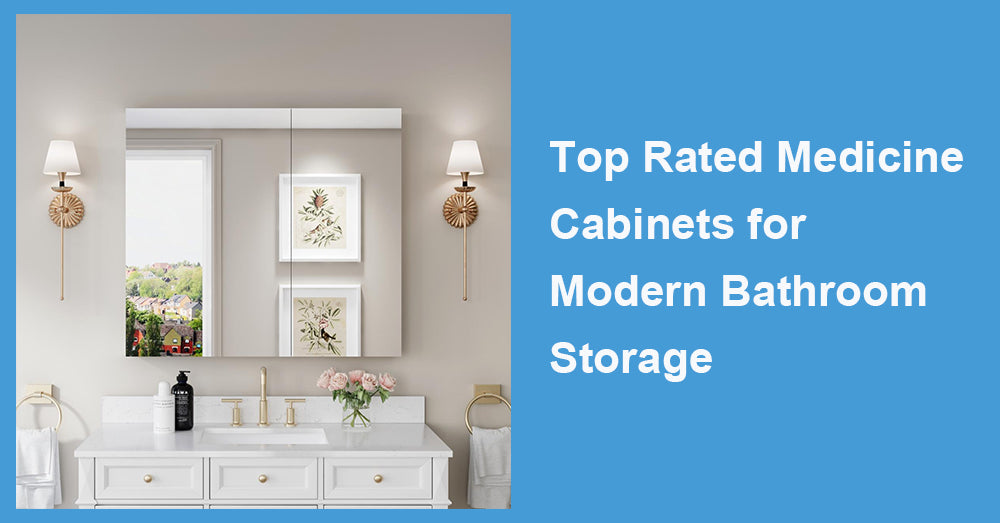
In the current trend of bathroom space optimization, medicine cabinets are not only places for storing drugs, but also important components for improving bathroom storage efficiency, visual cleanliness, and spatial organization. With the increasing emphasis on multifunctional and storage system design in home bathroom decoration, mirror cabinet style storage products have gradually become the mainstream choice due to their advantages of vertical space utilization, hidden storage, and integrated lighting. Industry data shows that in bathrooms with an area of less than 70 square feet, over 55% of renovation projects prioritize mirror cabinet systems with storage; in regular homes, over 45% of upgrade projects include mirror cabinets as one of the core storage solutions.
This article will analyze top-level mirror cabinet solutions from multiple dimensions, such as structure, function, size, and installation, helping you understand modern bathroom storage needs and efficient design ideas.
1. Basic classification and selection logic of mirror cabinets
Traditional bathroom storage often relies on countertop space or independent storage cabinets. In contrast, modern medicine cabinets advocate for "vertical storage priority" and maximize wall utilization through a combination of mirrors and storage. According to the installation method and functional differences, mirror cabinets can be roughly divided into three categories:
Surface-Mounted: Easy to install; no need for wall slotting.
Recessed: Installed inside the wall for a cleaner visual experience.
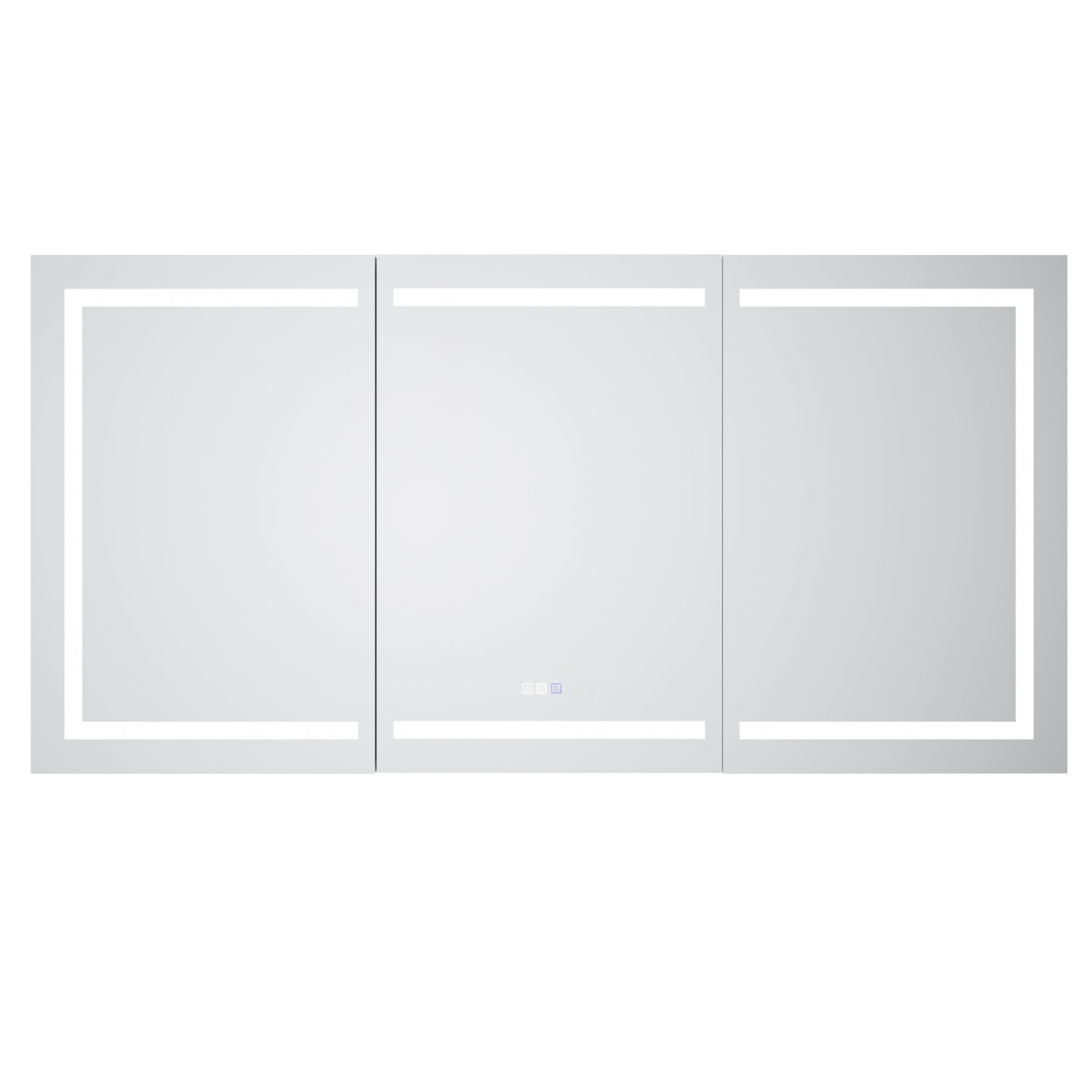
Lighted Medicine Cabinets: Integrating lighting and storage functions to enhance the dressing experience.
When choosing a mirror cabinet, the main purpose (such as pharmaceuticals, skincare products, toiletries, etc.), bathroom area, countertop width, and whether there are embedded wall conditions should be considered.
2. Size matching: Coordinate with bathroom layout
The size of the mirror cabinet should be coordinated with the width of the bathroom countertop. The industry recommends that the width of the mirror cabinet be about 80%-100% of the countertop width. The common size combinations are as follows:
24-inch countertop → 20-24-inch mirror cabinet
30-inch countertop → 24-30-inch mirror cabinet
36-inch countertop → 28-36-inch mirror cabinet
48-inch countertop → 40-48-inch double door mirror cabinet
60-inch double basin → optional large mirror cabinet with a width of 56-60 inches or double independent mirror cabinets
The height of the mirror cabinet is usually 24 to 30 inches, and the distance between the mirror base and the tabletop is kept at 5 to 10 inches to avoid visual pressure and facilitate daily use.
Data shows that in double-basin structures with a width of 60 inches or more, symmetrical double-door mirror cabinets are favored by designers because they create a sense of visual balance and are convenient for storing personal items across different zones.
3. Depth and storage capacity
The Depth of the mirror cabinet is usually between 4 and 6 inches, which can balance storage capacity and travel comfort. A mirror cabinet that is too deep (over 6 inches) will occupy the passage space, while one that is not deep enough (less than 4 inches) will find it difficult to accommodate items of higher or larger volume.
The adjustable design of the internal storage layer board is particularly important. Common adjustable layer board heights include:
4-6 inch: suitable for small bottles of lotion and spray
8-10 inches: suitable for mid to high bottle skincare products
10 inches and above: can store large shower products or electronic shavers
By reasonable partitioning, the utilization rate of internal space can be increased by about 30%.
4. Lamp Mirror Cabinet: A More Efficient Lighting Solution
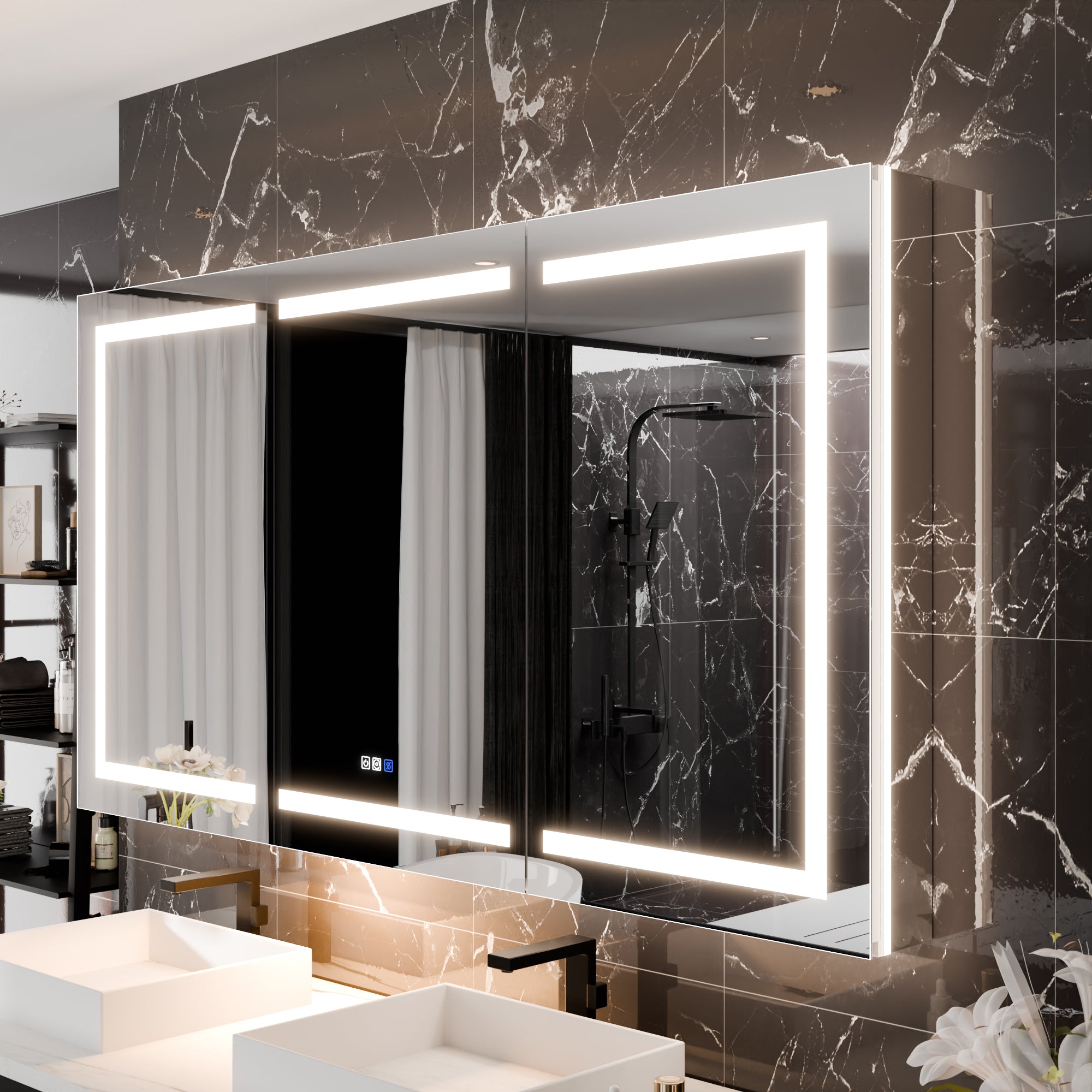
Lighted Medicine Cabinets are becoming increasingly popular in modern bathrooms. These types of mirror cabinets usually use edge or backlit LED systems to provide uniform, shadowless lighting, suitable for morning dressing and nighttime use.
For lighting parameters, it is recommended to choose products with a color rendering index (CRI) of 90 or higher and an adjustable color temperature (3000K-4500K). This type of light source is closer to everyday light and can improve skin color reproduction and detail recognition.
Data shows that compared with the traditional mirror with wall lamp scheme, the mirror cabinet with a lamp can improve the overall brightness of the space by about 20%-30% and reduce the wall space occupied by wall lamp installation.
5. Anti-fog and safety design
Fogging of mirror cabinets is a common problem in high-humidity bathroom environments. High-end medicine cabinets usually have built-in anti-fogging features that use heating elements to keep the mirror temperature close to room temperature, thereby preventing steam condensation.
At the same time, to ensure the safety of stored items, the materials inside the mirror cabinet are increasingly emphasizing moisture resistance and antibacterial properties, such as using moisture-resistant panels or antibacterial coatings. These detailed designs help reduce bacterial growth and extend the cabinet's lifespan.
6. Embedded installation: visually cleaner
The embedded mirror cabinet is installed by slotting into the wall, so that the cabinet's main body is hidden inside the wall, with only the mirror surface exposed to the outside. Compared to surface installation, it is visually simpler and enhances the overall spatial proportions.
However, embedded installation has certain requirements for wall conditions, and it is necessary to evaluate in advance whether the wall is suitable for slotting and whether there are pipelines or wires inside. Industry data shows that in overall bathroom renovation projects, about 55% of solutions will prioritize embedded structures to achieve higher visual refinement.
7. Partition storage and usage habits
A good medicine cabinet should not only have capacity but also provide classified storage. For example:
Left side panel: arranged by frequency of use
Middle main layer: Place the main products of toiletries and skincare
Right side: Storage of spare drugs or seasonal supplies
The use of transparent partition boxes can further divide the space and improve the efficiency of picking and placing. Data shows that after reasonable partitioning, the time for daily searching for supplies can be reduced by about 25%.
8. Maintenance and cleaning suggestions
The maintenance of mirror cabinets mainly focuses on internal cleaning and hardware maintenance. It is recommended to clean internal debris every 6 months and to check whether the shelves have been deformed by moisture.
The hardware hinges and sliding rails should be lubricated every 12 months to ensure smooth opening and closing. For mirror cabinets with LED and anti-fog circuits, it is recommended to regularly check the power supply and wiring for safety, following the instructions.

9. Conclusion
Modern medicine cabinets have evolved from simple "medicine storage mirrors" to multifunctional bathroom storage cores. By optimizing size matching, storage partitioning, lighting integration, and detail design, it not only improves space efficiency but also delivers a more refreshing, tidier user experience.
Whether it's a 24-inch small solution for compact bathrooms or a 60-inch large symmetrical structure for double-basin spaces, as long as you choose the right mirror cabinet based on your design requirements, you can achieve an efficient, stylish, and practical bathroom storage solution.







































Leave a comment
This site is protected by hCaptcha and the hCaptcha Privacy Policy and Terms of Service apply.