














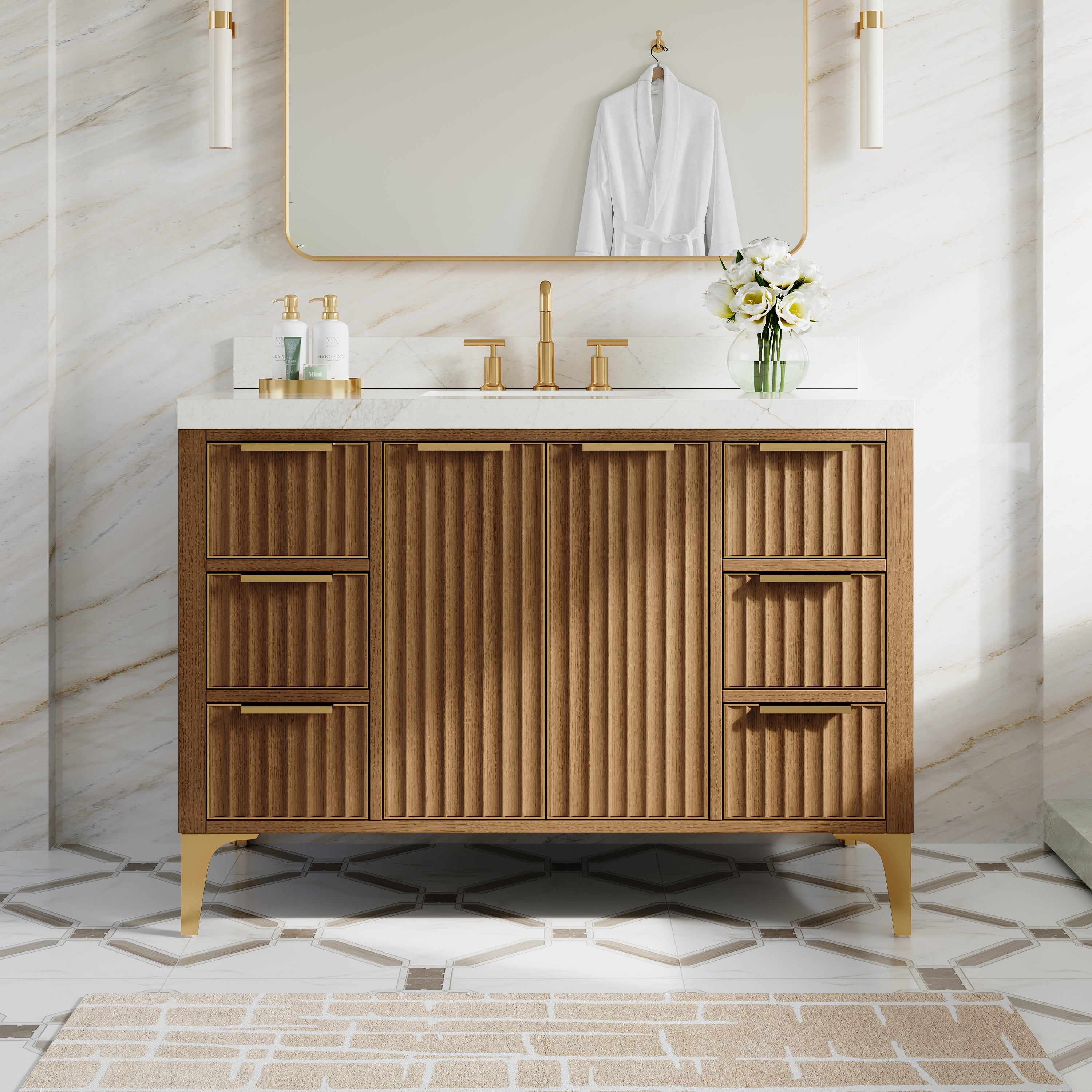
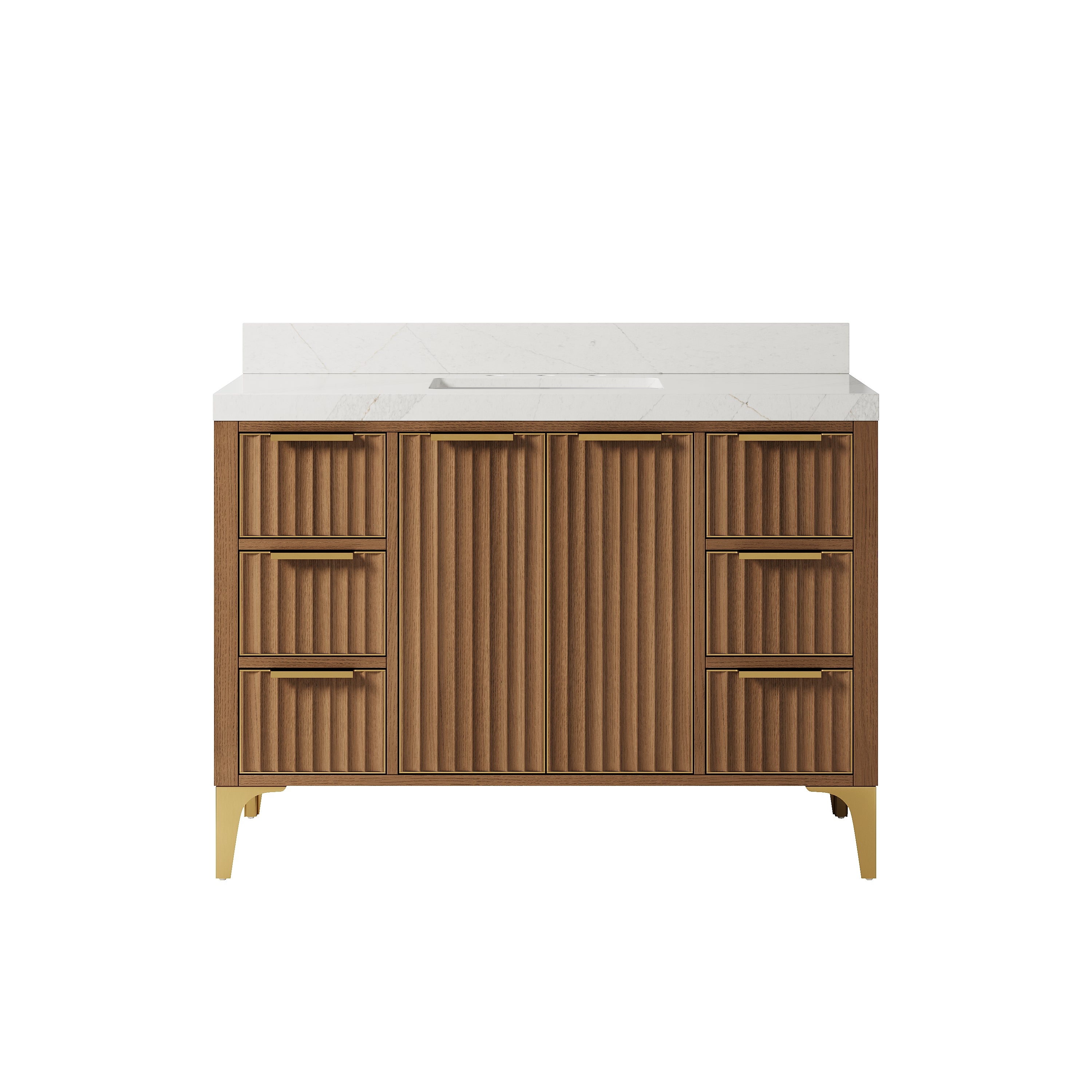


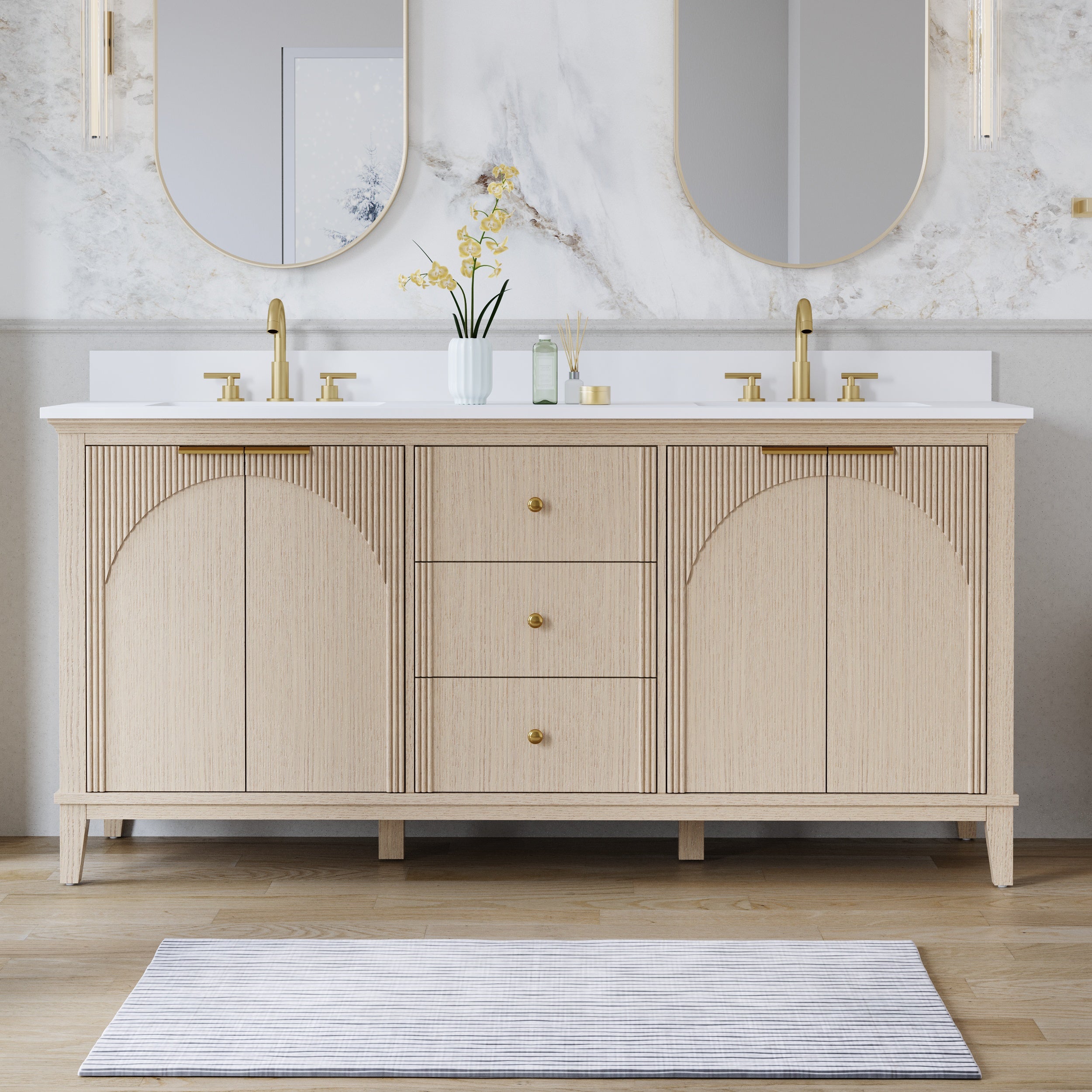
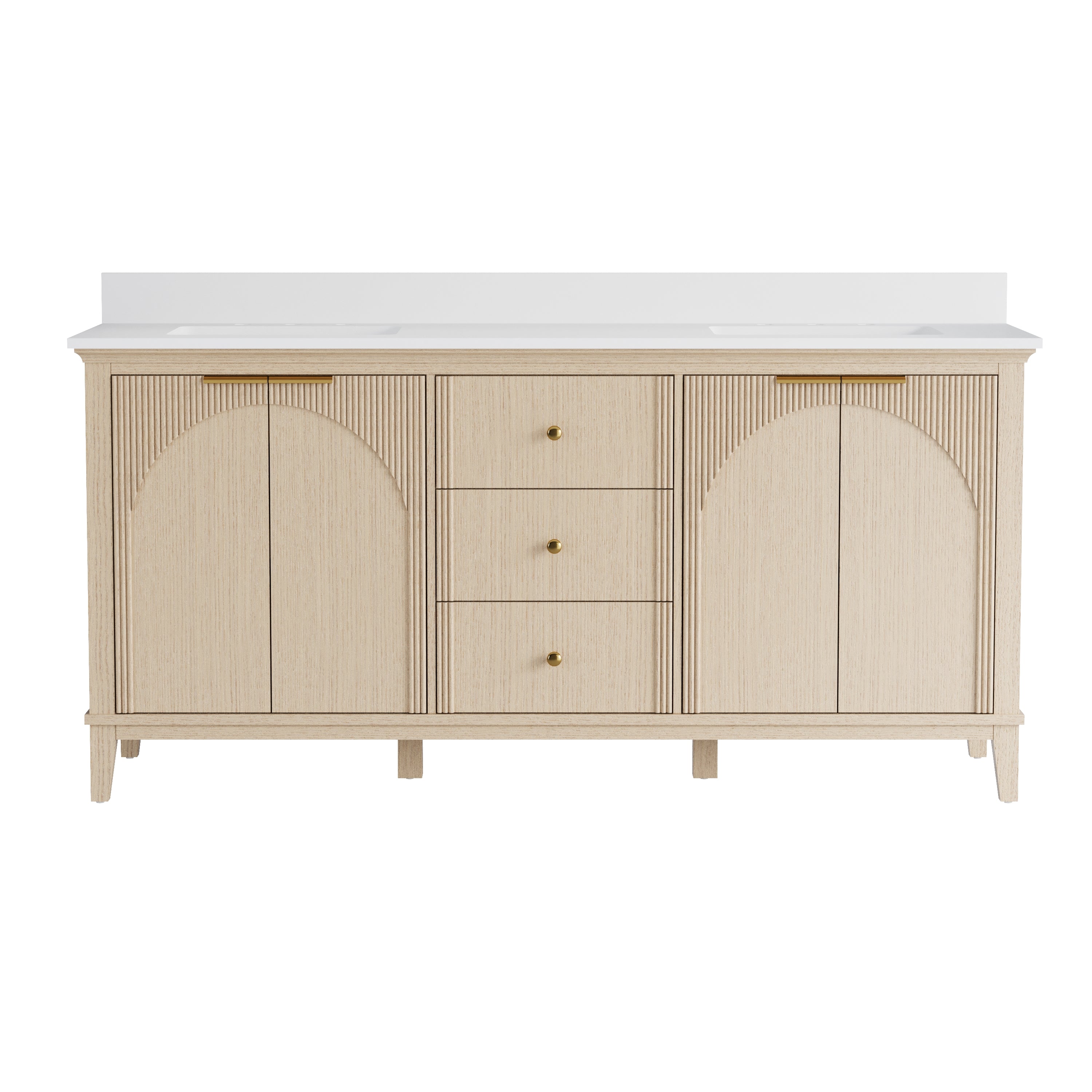
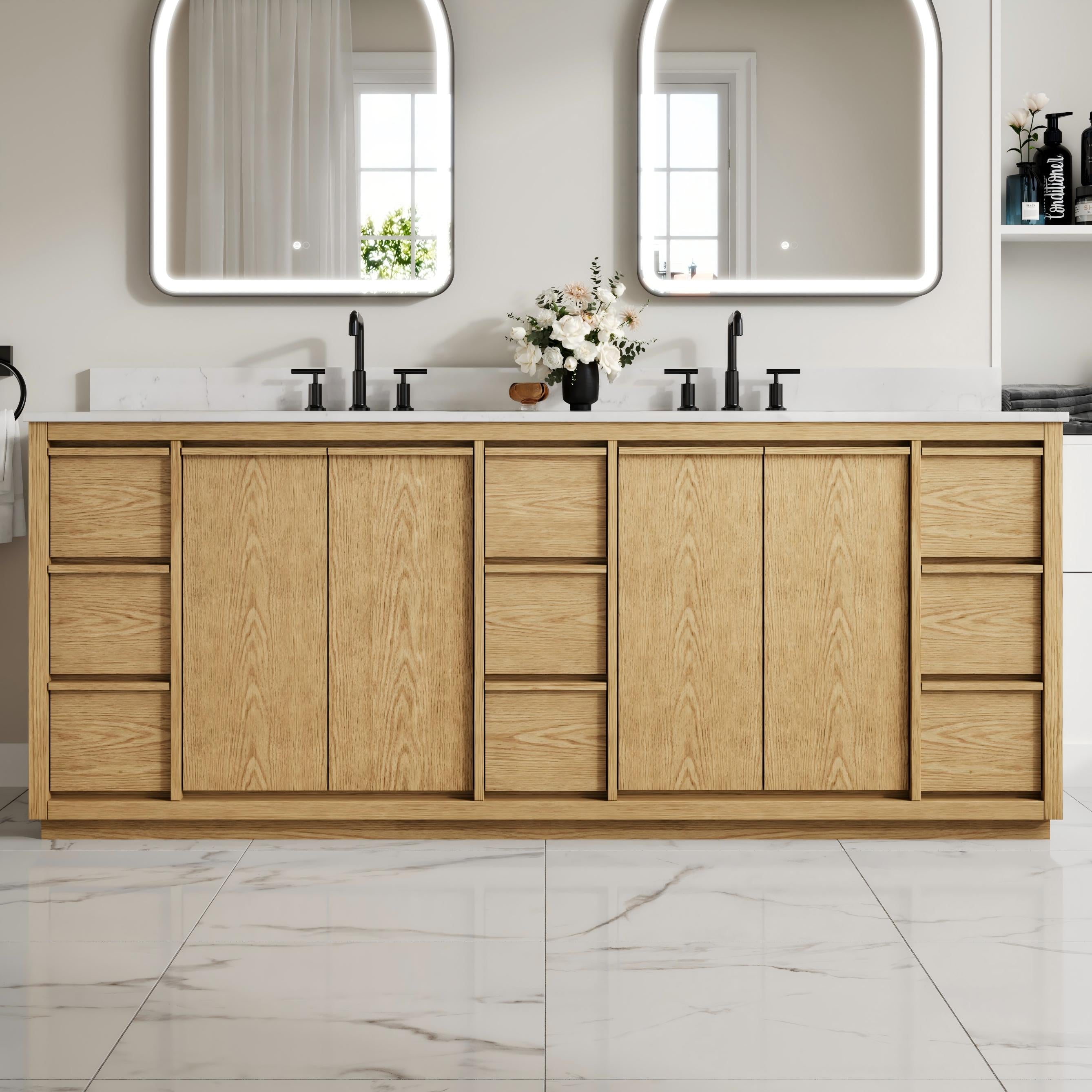
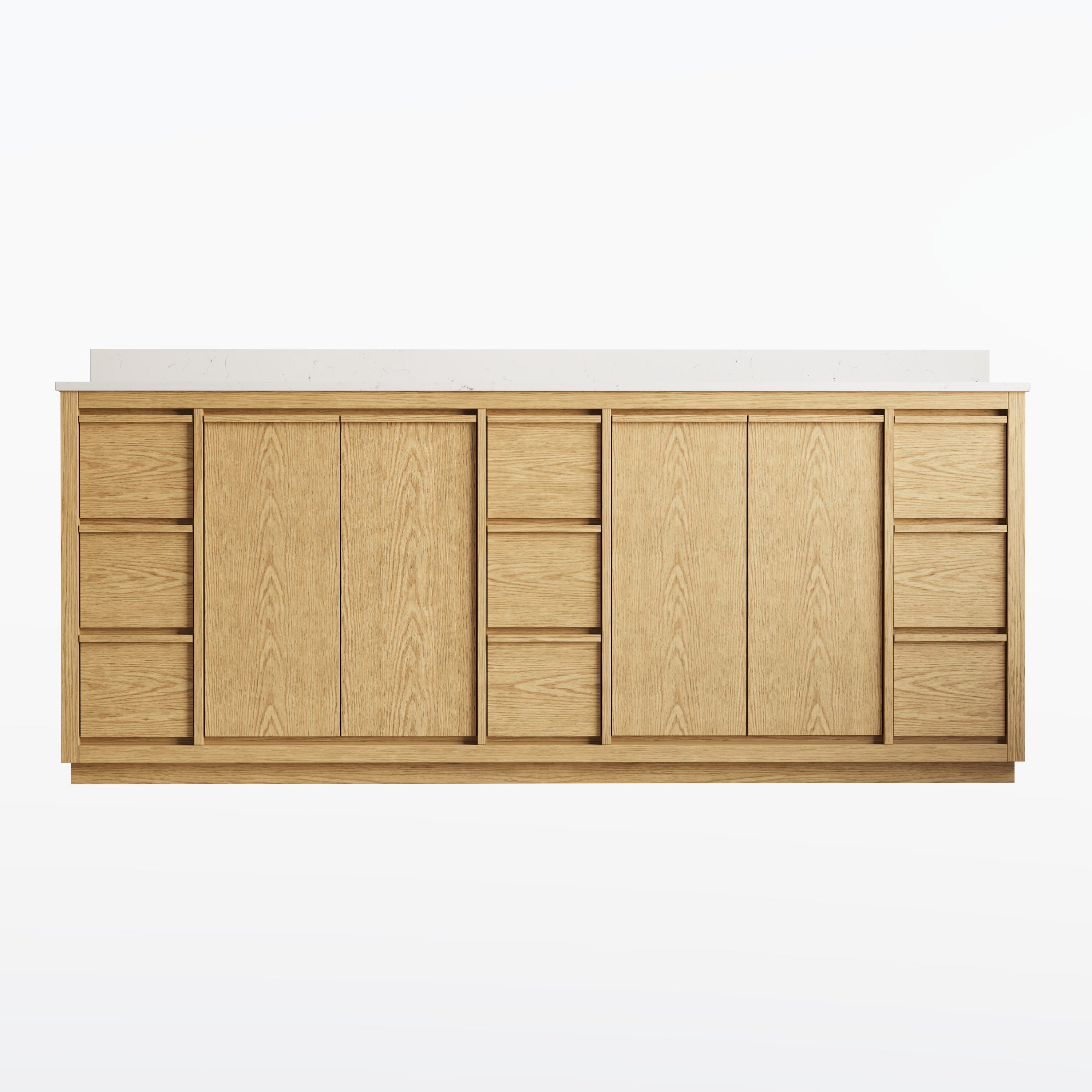
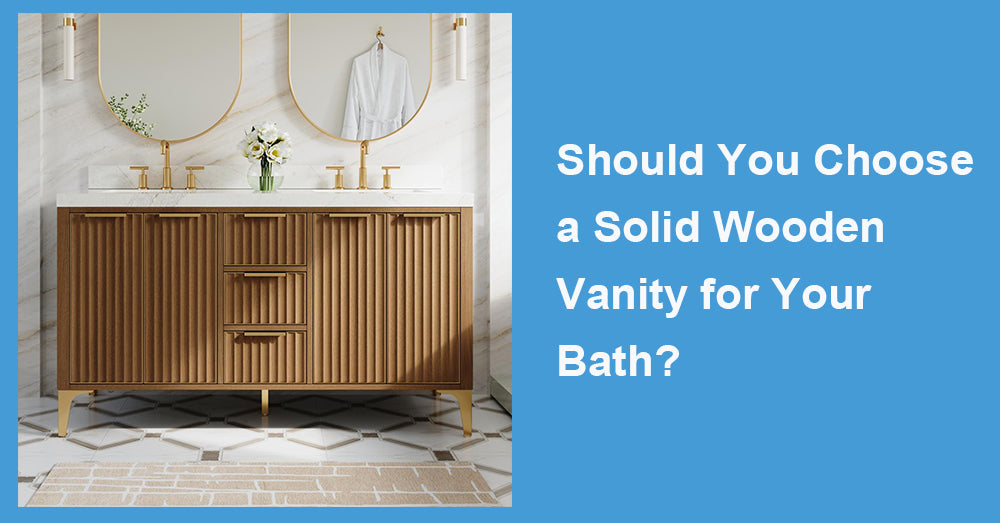
A wooden vanity can give a bathroom a sense of permanence that many highly finished composite cabinets struggle to achieve. After more than 20 years of working with bathroom products and cabinetry, I have seen solid wood perform particularly well in homes where owners value natural materials, long service life, and the ability to repair rather than replace. It is not maintenance-free, though. Moisture, construction quality, ventilation, and installation all determine whether the cabinet ages well.
1. Why a Solid Wooden Vanity Feels Different
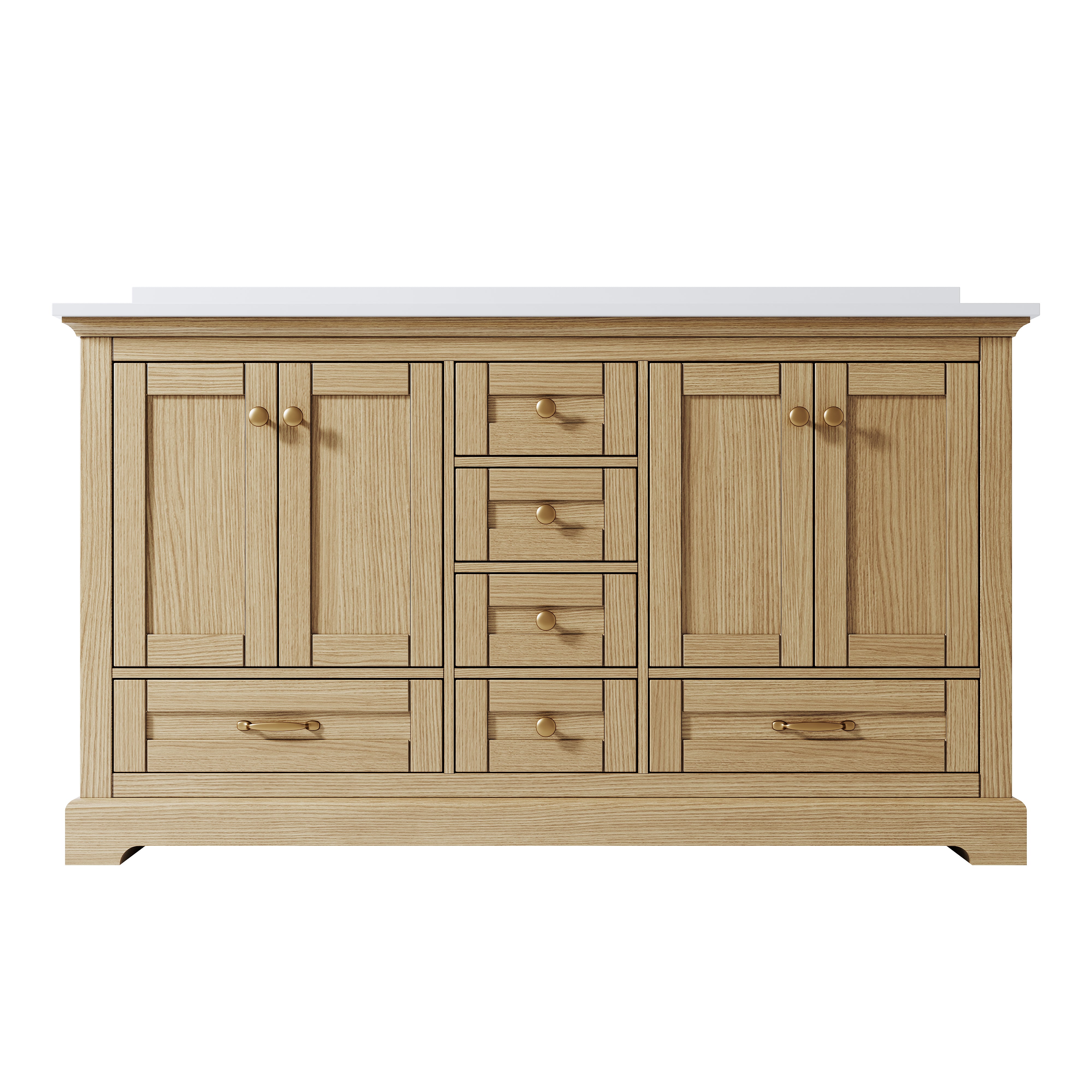
The first benefit is visual character. Real wood has grain variation, subtle changes in tone, and small natural differences from one panel to another. Those qualities become especially noticeable in a bathroom, where most surrounding surfaces—tile, glass, mirrors, and stone—are smooth and uniform.
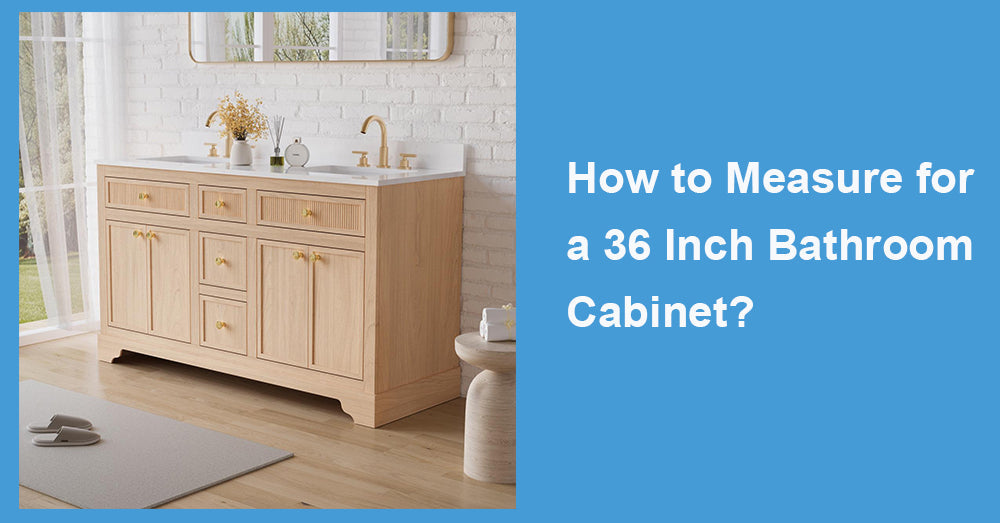
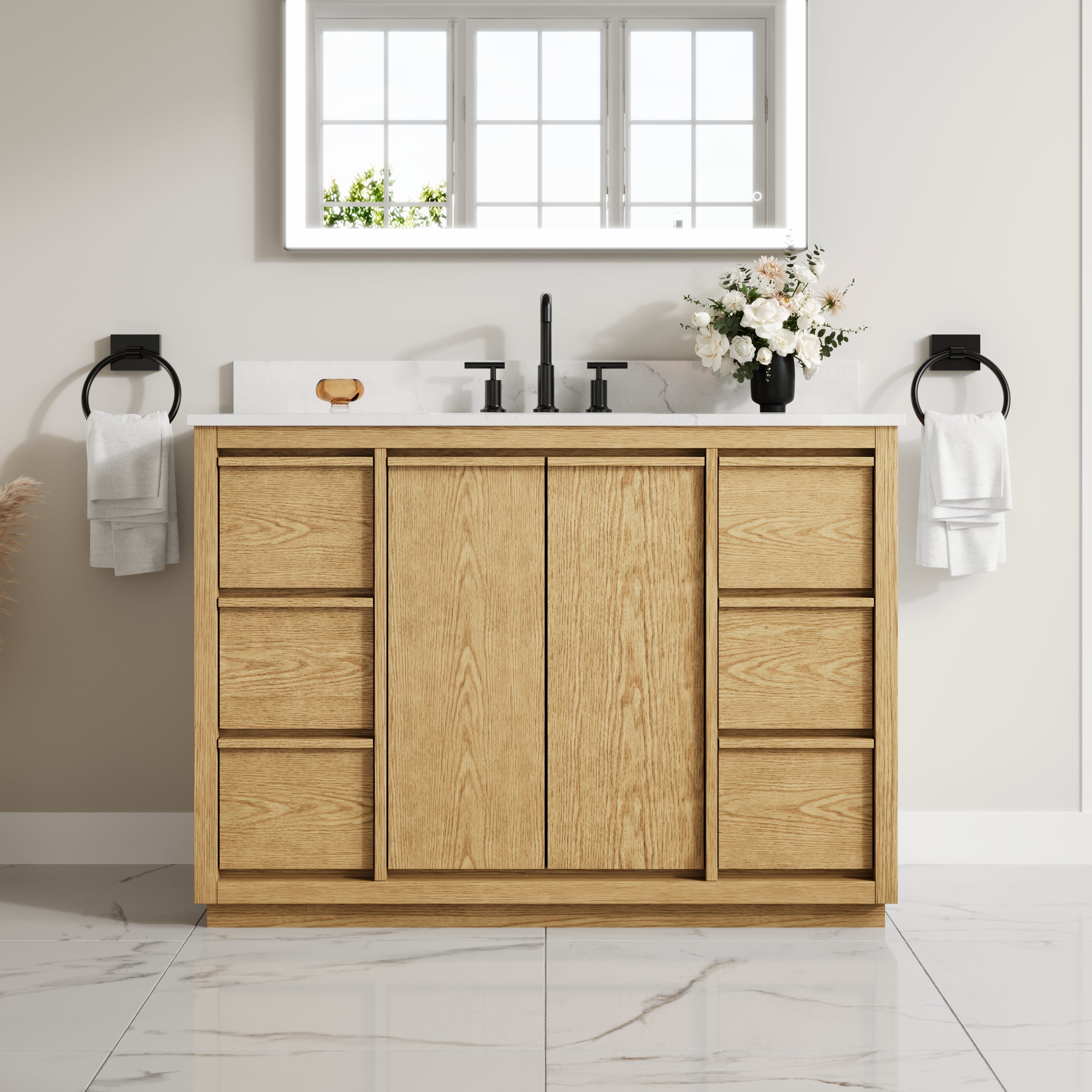
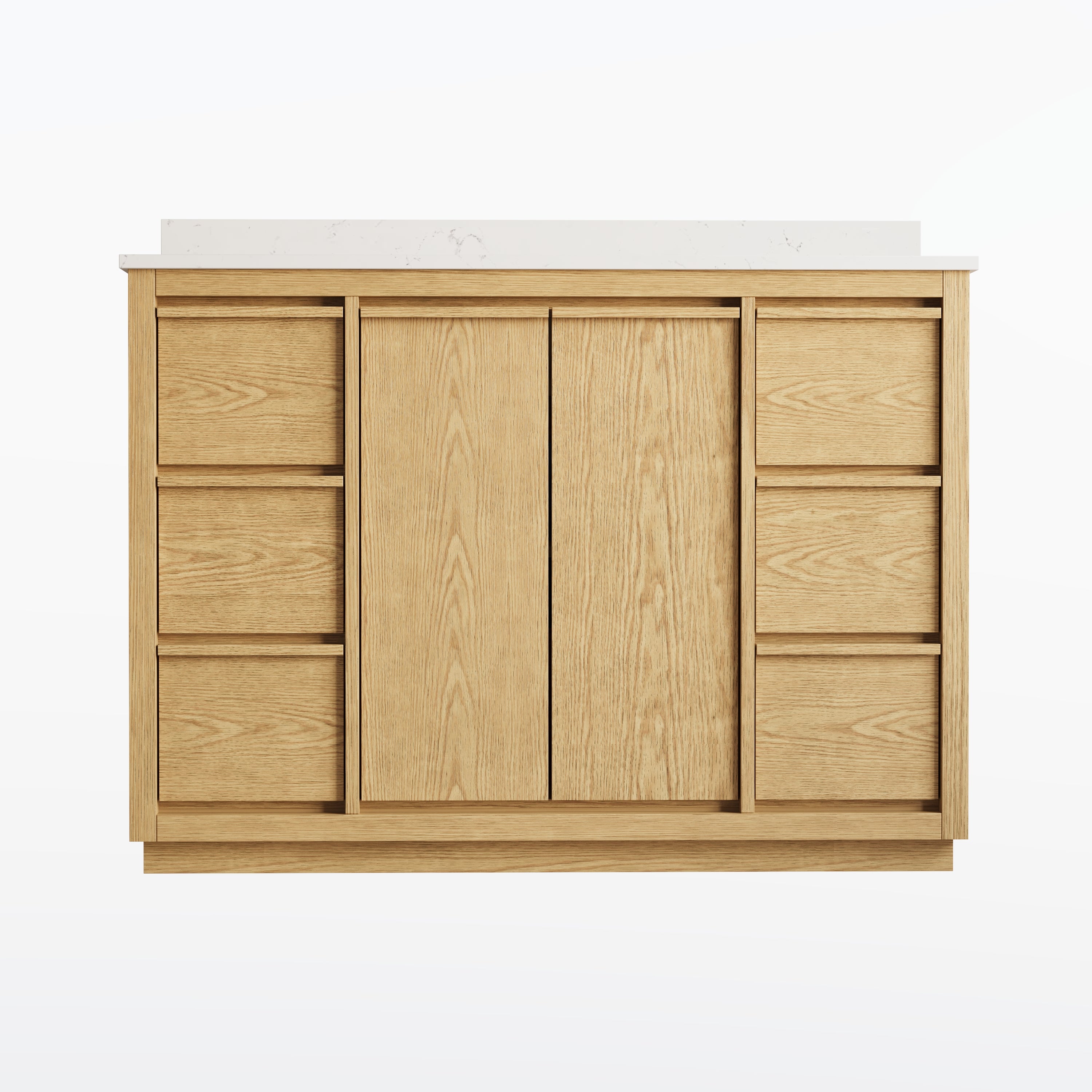
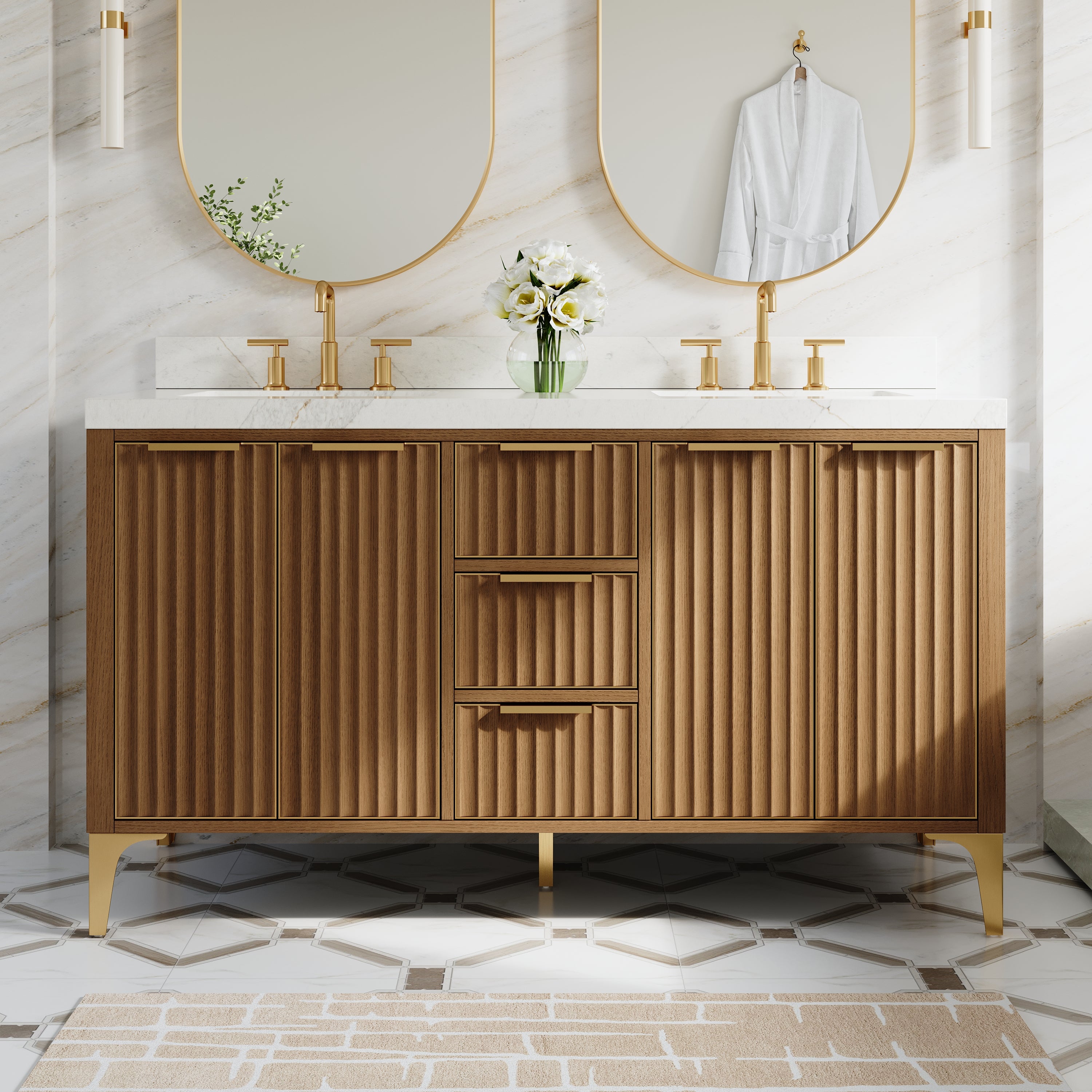
A light oak cabinet can soften an otherwise crisp white bathroom. Walnut brings depth to a larger primary bath. Medium-toned woods tend to work well in transitional interiors because they sit comfortably between traditional and contemporary styles.
Wood also feels less tied to a particular decorating cycle. Hardware and countertops may change over the years, while a restrained natural finish often remains relevant.
2. Solid Wood Can Offer Excellent Structural Strength
Well-selected hardwood components hold screws, hinges, and drawer hardware securely. That matters because bathroom cabinets are used repeatedly every day.
Doors get pulled open with wet hands. Drawers carry bottles, hair tools, towels, and personal-care products. A good cabinet should tolerate that routine without quickly loosening or sagging.
Solid wood throughout is not always necessary
One purchasing mistake is assuming that the best vanity must be made entirely from solid boards.
In practice, high-quality plywood is often a sensible material for the cabinet box. Its layered construction can remain stable as humidity changes, while solid wood may be reserved for doors, frames, and drawer fronts.
I would choose thoughtful mixed-material construction over a poorly assembled “all-solid-wood” cabinet every time. Ask which materials are used in each section rather than relying on the headline description.
3. Repairability Is a Genuine Long-Term Advantage
Solid wood has one quality I particularly value in bathrooms: many types of minor damage can be addressed.
A light scratch may be touched up. Hinges can be repositioned or replaced. Some stained finishes can be renewed after years of use. Small signs of wear may even become less distracting as the grain develops a natural patina.
That is different from a thin decorative film that has peeled away from a damaged core. Once some lower-cost surfaces fail, a convincing repair can be difficult.
Repairability does not eliminate wear, but it can extend the useful life of the cabinet.
4. Moisture Is Still the Main Weakness
A solid wooden vanity is durable, but it is not waterproof.
Standing water around the sink, persistent condensation, and unnoticed plumbing leaks can damage the finish and eventually affect the wood beneath it. Natural timber also expands and contracts slightly as humidity changes. Doors may occasionally need adjustment.
Ventilation matters more than many buyers expect
Before investing in solid wood, look at the bathroom itself.
Does the exhaust fan clear steam effectively? Does water regularly collect near the vanity base? Are there old plumbing connections beneath the sink?
A well-ventilated primary bathroom is usually a good environment for wood. An open wet room where spray frequently reaches the cabinet is much less suitable.
Fix moisture problems before installing expensive cabinetry.
5. Storage Layout Should Influence the Purchase
Material quality is only one part of the decision. A beautiful cabinet with awkward storage becomes annoying very quickly.
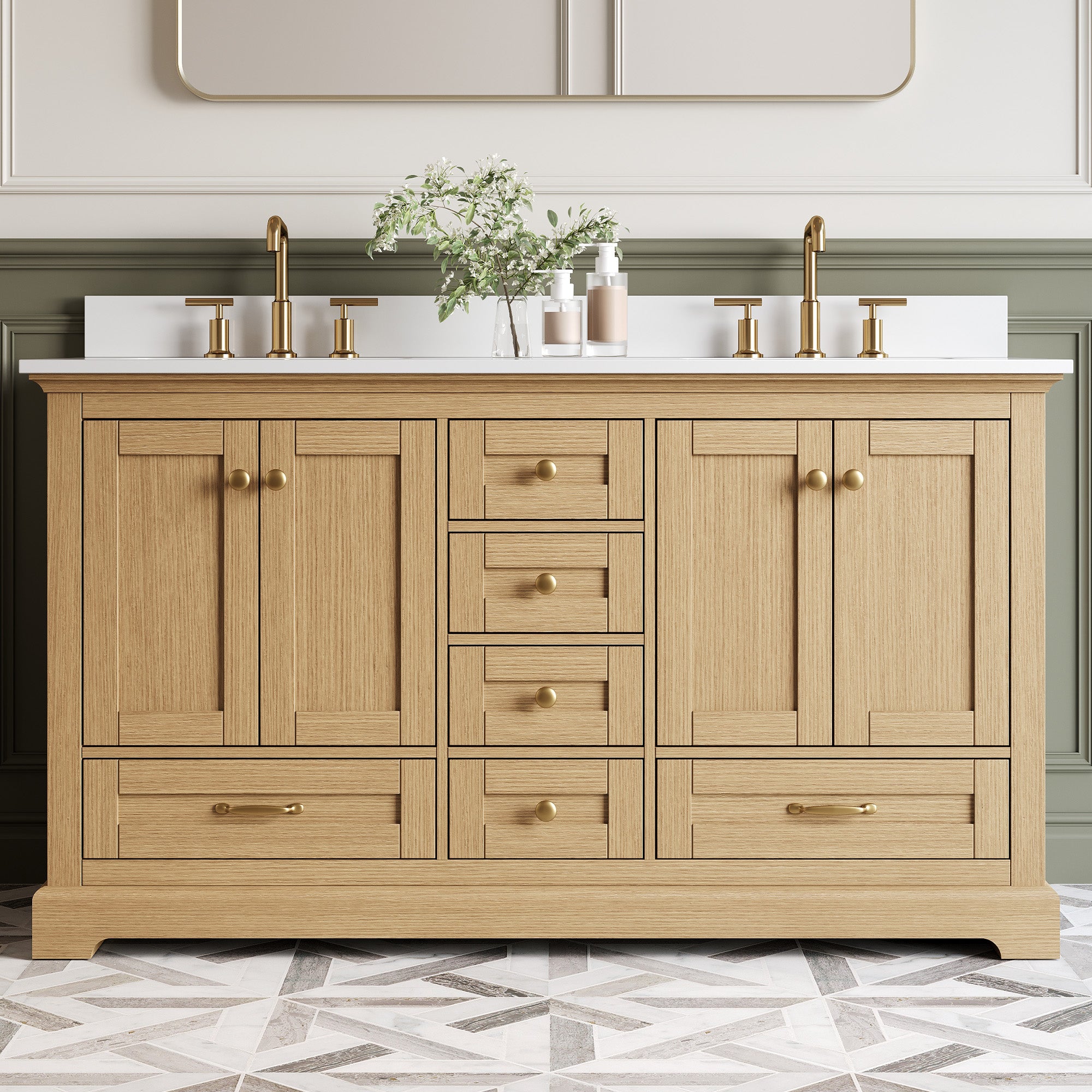
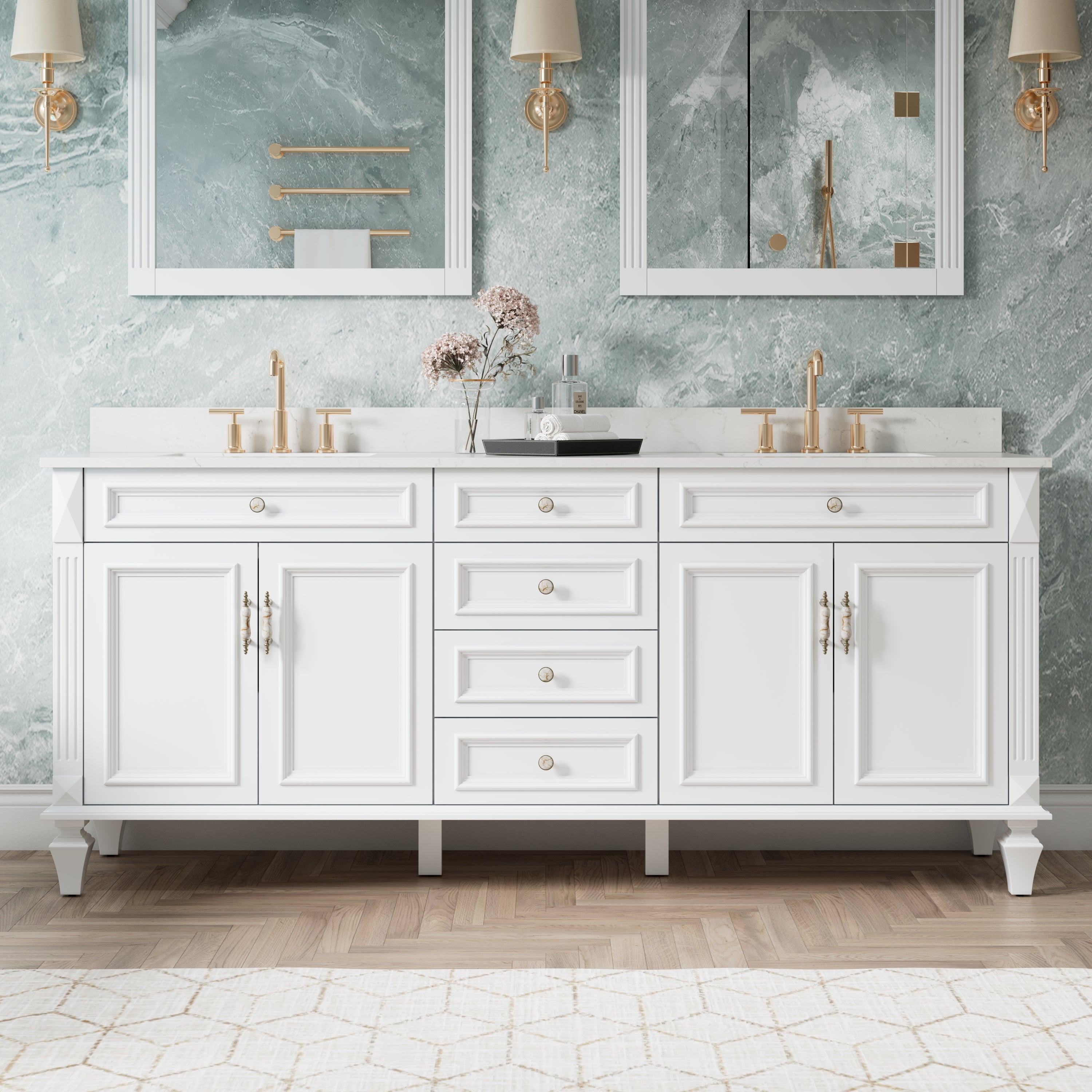
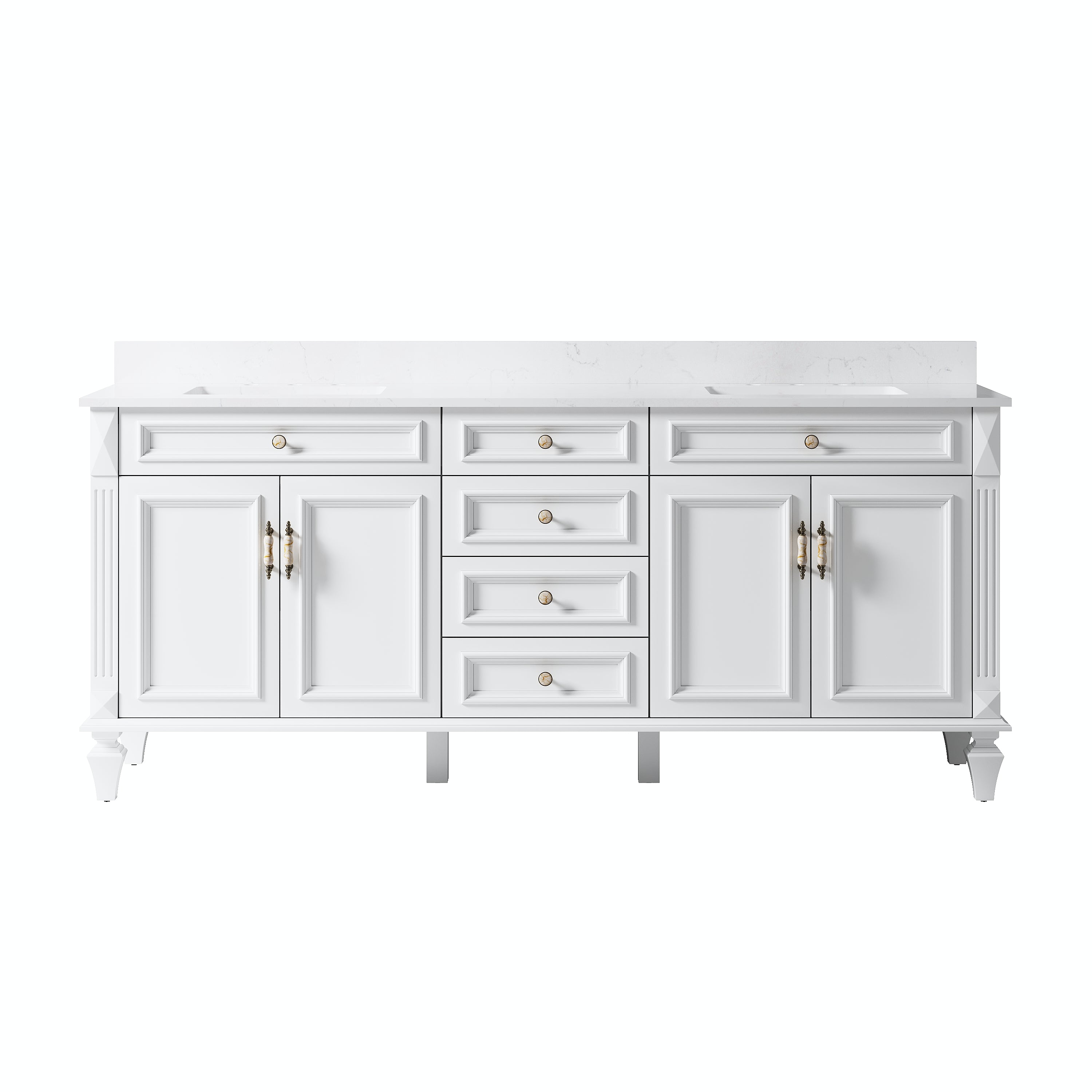
Deep drawers work well for skincare, brushes, grooming tools, and smaller toiletries because everything remains visible. Open cabinet space beneath the basin is better for tall bottles, cleaning products, and spare paper goods.
Check interior photographs carefully. Some top drawer fronts are fixed because the sink occupies the space behind them. Others use large U-shaped cutouts around plumbing, reducing usable capacity.
For a shared primary bath, separate drawer zones can make mornings easier. A guest bath usually needs much less internal organization.
6. Choose a Finish That Fits the Space
Light woods help smaller bathrooms feel open and relaxed. They pair naturally with white quartz, pale stone, and brushed metal fixtures.
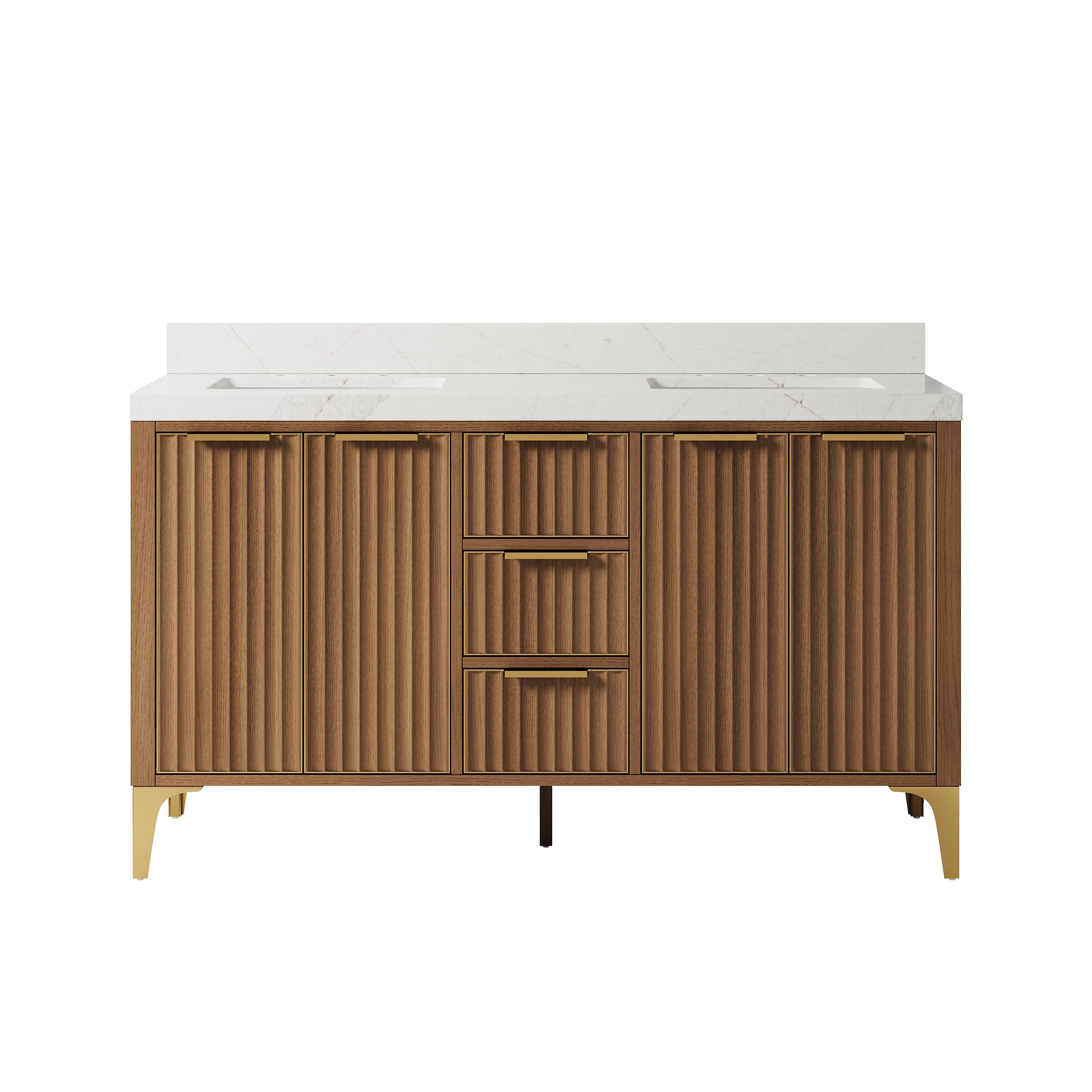
Medium wood tones are forgiving and hide everyday marks better than very dark finishes. Walnut and other deep tones can look sophisticated in a spacious bathroom but may absorb too much visual light in a narrow room.
Strong grain should also be used carefully. If the countertop already has dramatic veining or the shower uses patterned tile, a quieter wood may produce a more balanced room.
Choose the vanity in relation to the entire bathroom, not as an isolated piece of furniture.
7. Know When Solid Wood Is Not the Best Choice
Solid wood makes sense for homeowners planning a long-term renovation, especially when natural materials are part of the design and routine maintenance is acceptable.
It may be less suitable for a low-budget rental, a poorly ventilated bathroom, or a space where children regularly leave standing water around the cabinet. A more moisture-tolerant engineered surface can sometimes be the more practical choice.
Cost matters too. Solid wood components generally raise the price, so the premium should deliver better construction rather than simply a nicer label.
8. Installation Has a Direct Effect on Longevity
Measure the wall width, cabinet depth, countertop overhang, doorway clearance, and distance to the toilet or shower door before ordering.
Compare the drain and supply-line locations with the cabinet interior. Poor alignment may force an installer to cut into drawers or structural panels.
The vanity should sit level so doors remain aligned. Floating models need secure wall support. Sink edges, faucet openings, countertop joints, and backsplash seams should be properly sealed.
Test every plumbing connection before filling the cabinet.

9. Maintenance Should Stay Simple but Consistent
Use a soft cloth and mild, non-abrasive cleaner. Wipe standing water instead of letting it dry against the cabinet face or base.
Run the exhaust fan during and after showers. Do not hang wet towels over wooden doors. Check beneath the sink several times each year for slow leaks, discoloration, or loose fittings.
When comparing Wellfor options, look first at construction, sealing, storage, dimensions, and the conditions in your bathroom. Choose a wooden vanity when natural character, repairability, and long-term use matter to you, but make sure the room can support that choice. The best solid wood cabinet is not simply the most expensive one; it is the one that fits your daily routine, moisture conditions, and renovation plans without asking for more care than you are willing to give.














Leave a comment
This site is protected by hCaptcha and the hCaptcha Privacy Policy and Terms of Service apply.