






















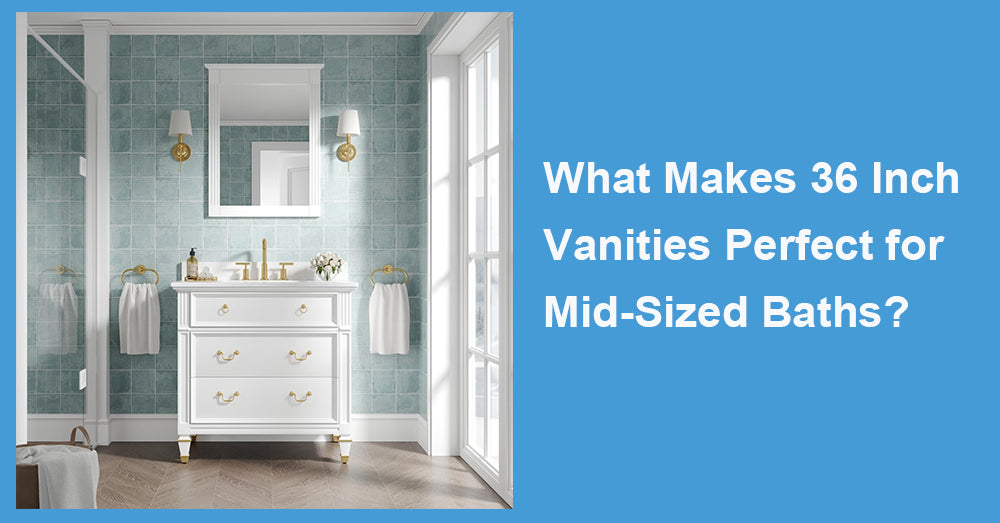
36 inch vanities are often a smart fit for mid-sized bathrooms because they provide useful storage and counter space without making the room feel dominated by cabinetry. After more than 20 years of working with bathroom layouts and vanity products, I have found this size especially practical in hall baths, guest bathrooms, condos, and smaller primary suites. It offers more flexibility than a compact vanity while preserving the open space that makes a bathroom comfortable to use.
1. Why 36 Inch Vanities Hit a Useful Middle Point
A 24- or 30-inch vanity can feel undersized in a medium bathroom, particularly when the wall above it supports a larger mirror or wider light fixture. Move up to 42 or 48 inches, though, and the cabinet may begin consuming floor space that would be better left open.
Thirty-six inches often provides the right visual balance.
There is enough width for a comfortable single sink, useful countertop space, and meaningful storage underneath. At the same time, the vanity usually remains compact enough to avoid crowding nearby fixtures.
That balance is what makes the size so versatile.
2. Counter Space Becomes More Practical
A small vanity can technically hold a sink, yet leave almost nowhere to place daily items. That becomes frustrating very quickly.
With a 36-inch top, there is usually room for soap, toothbrushes, skincare, or a small tray without covering the entire surface. In a guest bathroom, visitors have somewhere to put a toiletry bag. In a teenager's bathroom, the extra surface helps keep grooming products organized.
Sink Size Still Matters
Do not assume a wider vanity automatically means generous counter space.
An oversized basin can consume much of the top. I generally prefer a moderately sized undermount or integrated sink on a 36-inch cabinet because it leaves useful room around the edges.
Vessel sinks can work, but they add height and often reduce practical surface area. Check the finished sink height before choosing one.
3. Storage Can Support Real Daily Routines
One reason homeowners move up from a 30-inch vanity is storage.
A well-designed 36-inch cabinet can accommodate cosmetics, grooming tools, cleaning supplies, extra paper products, and several folded towels. The key phrase is well-designed.
Deep drawers keep small items visible and easy to reach. Cabinet space beneath the sink works better for tall bottles and bulkier supplies.
Count Functional Storage, Not Drawer Fronts
A vanity may appear to have four or five drawers when several fronts are decorative. The sink bowl and plumbing often occupy the upper center of the cabinet.
Look at interior photographs before ordering. Pay attention to drawer depth, plumbing cutouts, and whether shelves are adjustable.
In my experience, two deep full-extension drawers are often more useful than several shallow compartments that cannot hold everyday items properly.
4. Mid-Sized Bathrooms Benefit From Better Proportion
Vanity size affects how the entire room feels.
A small cabinet placed on a long open wall can look temporary or visually weak. A very large vanity may make the room feel like a storage area with plumbing attached.
A 36-inch model gives the sink zone enough presence to anchor the mirror, lighting, and countertop without becoming oversized.
This works especially well in bathrooms where one person uses the vanity at a time. For a guest bath or hallway bathroom, that is usually ideal.
A shared primary bathroom is different. If two adults regularly get ready together, a single 36-inch sink station may feel restrictive.
5. Depth Can Make or Break the Layout
Width gets most of the attention, but depth often determines whether the vanity feels comfortable.
A standard-depth cabinet may project around 21 to 22 inches from the wall before countertop overhang is considered. That is usually fine in a medium bath, but narrow layouts can become tight.
Use painter's tape to mark the complete footprint on the floor. Open the shower door, bathroom entrance, and nearby drawers.
Stand at the sink position. If someone cannot pass behind you comfortably, consider a shallower vanity rather than automatically choosing a narrower one.
6. Floating and Freestanding Designs Create Different Effects
A floating 36-inch vanity exposes more flooring and gives the bathroom a lighter appearance. It is especially useful when you want a modern or spa-inspired look.
Cleaning underneath is easier too.
The tradeoff is installation. Wall-mounted cabinets require secure framing or an approved mounting system, and some provide less internal storage.
Freestanding models usually offer more capacity and are easier to work around existing plumbing. They suit transitional and traditional bathrooms well, though heavier bases can add visual bulk.
Neither style is universally better. The room should decide.
7. Know Where This Size Does Not Work
A 36-inch vanity can be too large for a narrow powder room. In that situation, a shallow 24- or 30-inch cabinet may preserve circulation more effectively.
It can also be too small for a spacious primary suite. A large room may visually overwhelm the cabinet, while two users may quickly outgrow the available counter space.
Another common mistake is choosing the largest vanity that will physically fit the wall. Bathrooms need open floor area. A few extra inches of storage are rarely worth an awkward walkway.

8. Installation Planning Should Start Before Purchase
Measure the wall at several heights and confirm the countertop overhang. Record the drain and supply-line positions, then compare them with the cabinet's internal configuration.
Plumbing that runs directly behind a drawer can require expensive relocation or force the installer to remove useful storage.
Install the cabinet level so doors and drawers stay aligned. Seal the countertop, sink, faucet openings, and backsplash carefully. Test every plumbing connection before loading the vanity.
For routine maintenance, use a mild non-abrasive cleaner, wipe standing water promptly, and run the exhaust fan after showers. Check under the sink periodically for slow leaks.
When comparing Wellfor models, focus on depth, functional storage, sink proportions, plumbing compatibility, and clearance around nearby fixtures. 36 inch vanities are especially effective in mid-sized baths when they provide enough storage to support daily routines without sacrificing the open space that makes the room comfortable. Choose the cabinet that fits the way the bathroom is actually used, not simply the one that fills the available wall.







































Leave a comment
This site is protected by hCaptcha and the hCaptcha Privacy Policy and Terms of Service apply.