


















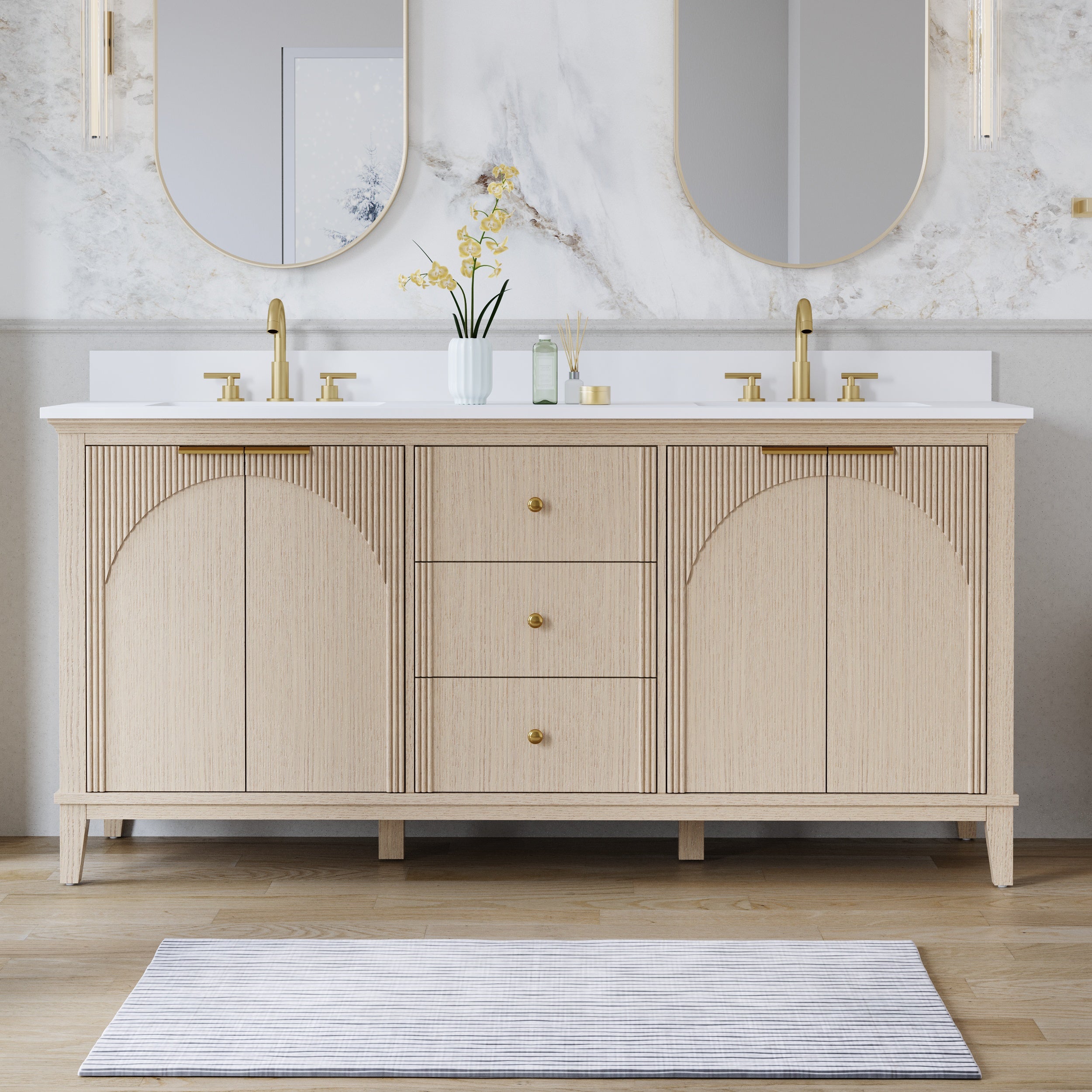
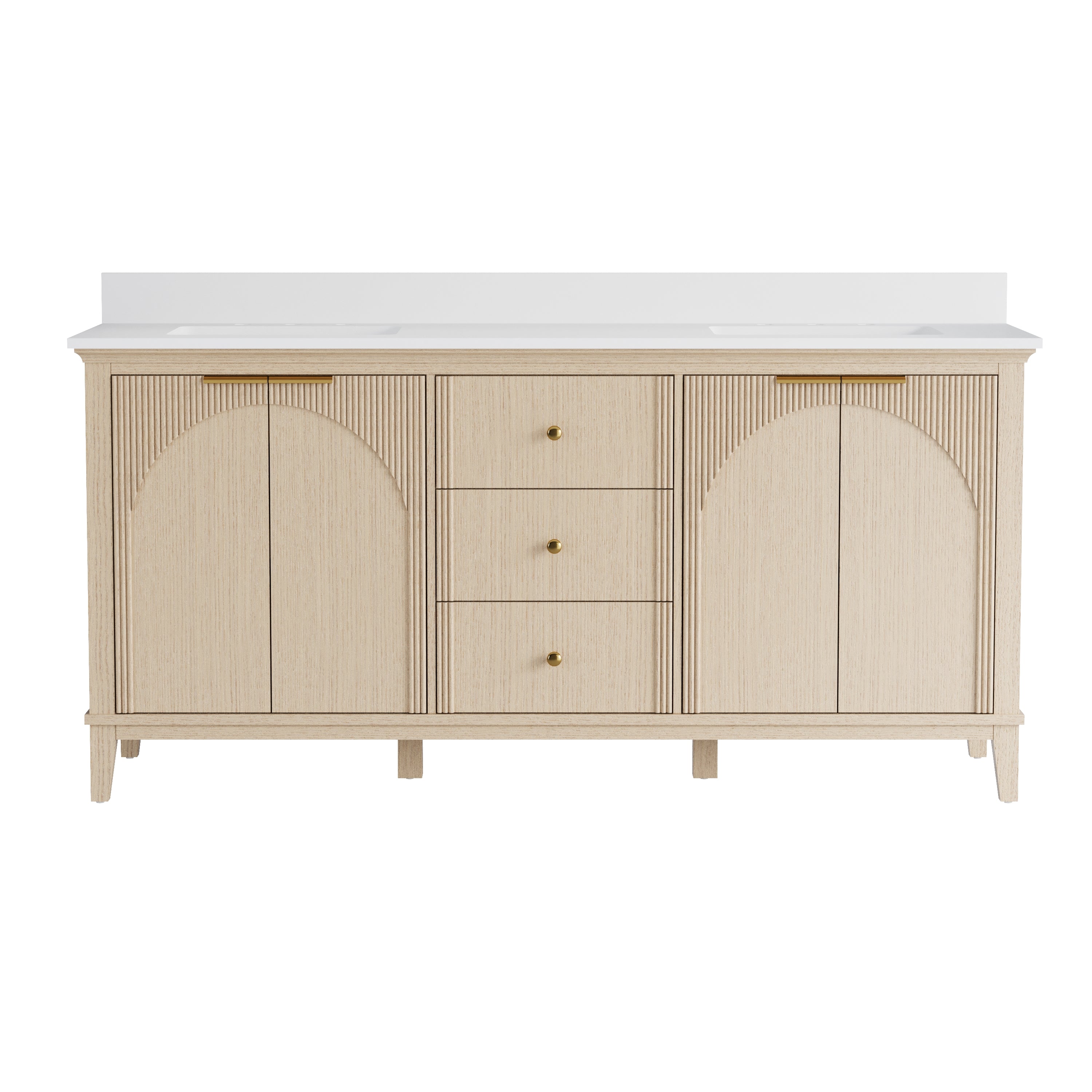



A bathroom floating vanity can be sturdy enough for years of daily use, but its strength depends far more on installation than on the cabinet having no visible legs. A properly engineered wall-hung vanity transfers the weight of the cabinet, countertop, sink, stored products, and normal use into structural framing behind the finished wall. That makes wall preparation, mounting hardware, cabinet construction, and countertop weight critical buying considerations. Floating designs currently account for 11% of upgraded vanity installations, compared with 30% for freestanding models and 58% for built-ins, according to Houzz remodeling data.
1. Wall Support Matters More Than Visible Legs
A floating vanity may look as if it is attached to drywall, but a correctly installed model should rely on structural framing or approved reinforcement behind the wall. The visible absence of legs does not mean the cabinet lacks support.
Kohler’s installation guidance for wall-hung vanities specifies securing the cabinet to wall studs or 2x6 bracing behind the finished wall. Its instructions also require lag bolts to engage that structural support rather than relying only on the wall surface.
That distinction is particularly important for remodeling projects. If the wall is already open, additional blocking can be installed before drywall or tile goes up. If the bathroom is already finished, the installer needs to confirm where the studs are located and whether the selected vanity’s mounting points align with them.
Industry judgment: the wall structure, not the floating appearance, determines whether the vanity feels solid in everyday use.
2. Quality Hardware Can Carry Significant Loads
Mounting hardware should be treated as part of the vanity system rather than a minor installation accessory. One Kohler wall-hung vanity installation guide calls for 5/16-inch lag bolts with a 500 lb load-bearing rating and 2x6 reinforcement where required. The guide also instructs installers to drill mounting points near the ends of the back rail to provide maximum support and reduce flexing.
That 500 lb figure should not be interpreted as a universal load capacity for every floating vanity. It refers to the fastener specification in that particular installation system. Cabinet construction, wall framing, vanity width, countertop material, mounting rail design, and installation method can all change the permitted load.
For buyers, the useful question is therefore not, “How much weight can floating vanities hold?” It is, “What does this specific manufacturer require for secure installation?”
Industry judgment: trustworthy load performance comes from a tested installation system, not from generic claims about wall-mounted furniture.
3. Vanity Width Changes the Installation Requirements
Floating bathroom vanities are available in compact and large formats, but increasing width also increases the importance of mounting preparation.
Houzz reports that 47% of upgraded vanities measure 48 inches or less. Another 19% are 60 inches wide, 14% measure 72 inches, and 13% are larger.
A 24- or 30-inch floating vanity may have a relatively compact cabinet and single sink. At 36 or 48 inches, there is more countertop and storage capacity. A 60- or 72-inch wall-mounted vanity may support two sinks, a heavier top, and substantially more stored material.
The mounting system must therefore be selected for the complete assembled configuration rather than cabinet width alone. Quartz, stone, solid-surface tops, sinks, faucets, and full drawers all contribute to the installed weight.
Industry judgment: larger floating vanities are not inherently less reliable, but they leave less room for shortcuts in wall reinforcement and mounting.
4. Modern Cabinet Construction Supports Daily Storage
A floating vanity still needs to work as real bathroom storage. Fortunately, wall-mounted construction does not automatically mean shallow drawers or limited capacity.
Current vanity design increasingly incorporates full-extension drawers, soft-close slides, organizers, electrical integration, and item-specific storage. NKBA’s 2026 Bath Trends research highlights configurable vanity modules and dedicated storage for hair tools, makeup, medications, charging devices, and other daily products.
A recent 36-inch wall-hung Kohler cabinet, for example, specifies a full-extension 21-inch-deep drawer, demonstrating that floating construction can still provide substantial usable storage.
The important detail is load distribution. Heavy bottles, stacks of towels, countertop appliances, and cleaning supplies should be stored according to the cabinet manufacturer’s recommendations rather than concentrated unnecessarily in one drawer.
Industry judgment: today’s stronger floating vanities are being designed as working storage furniture, not merely as decorative sink shelves.
5. Countertop Weight Should Be Considered Before Installation
The cabinet is only one part of the suspended load. The countertop and sink can add significant weight before a single item is placed inside a drawer.
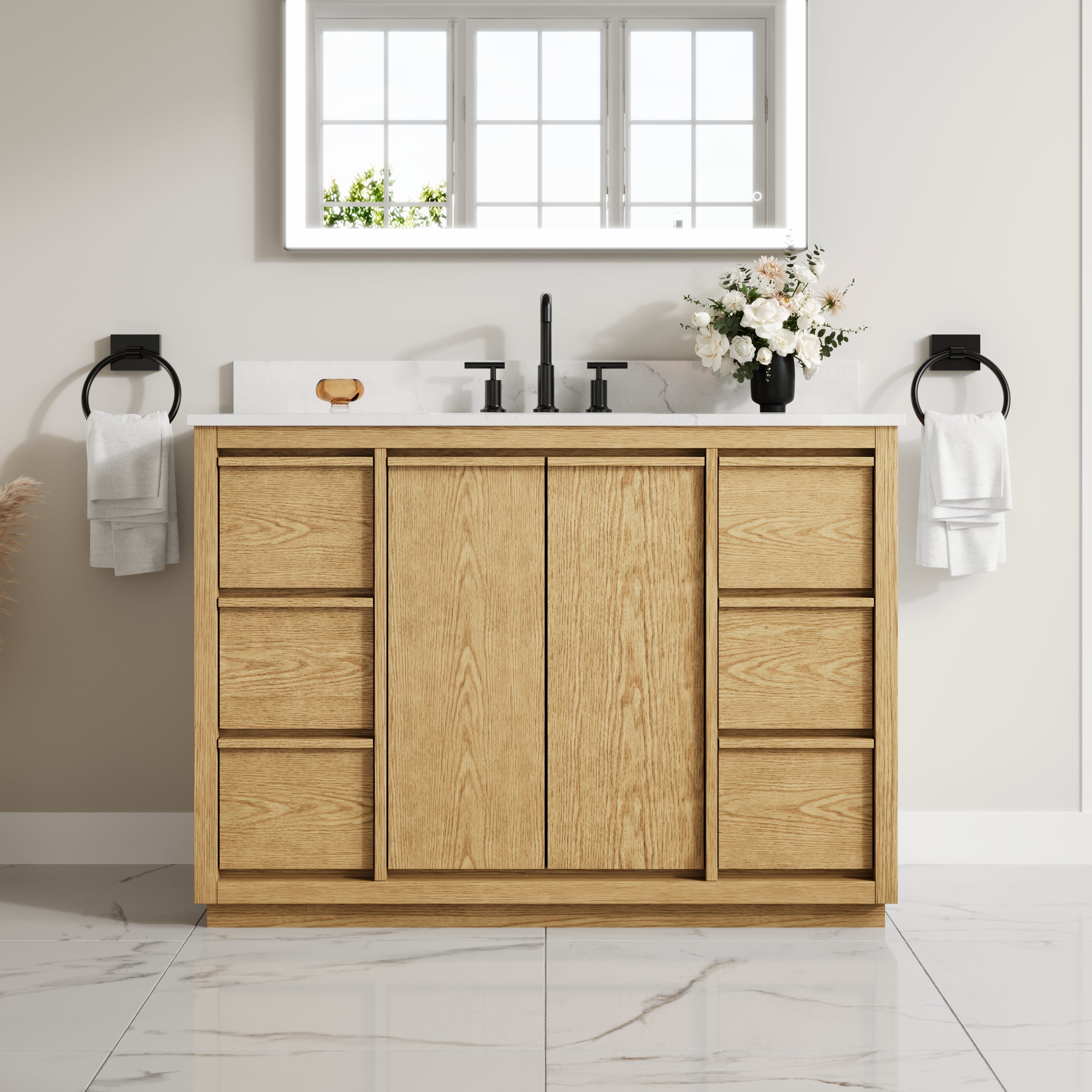
A 36-inch wall-hung vanity may use a countertop around 37 inches wide, while larger cabinets require correspondingly larger surfaces. Kohler’s current Lodern wall-hung specification, for example, pairs a 36-inch cabinet with a 37-inch quartz top and undermount sink.
This is why homeowners should avoid changing countertop materials after the mounting plan has been established without checking the manufacturer’s requirements. Replacing a lightweight top with a much heavier material changes the overall installation.
The same principle applies to vessel sinks and thick stone tops. Their appearance may work beautifully with a floating vanity, but the complete assembly has to be considered during structural planning.
Industry judgment: countertop selection is part of the structural specification of a floating vanity, not just a styling decision.

6. Floating Vanities Can Make Small Bathrooms Feel Larger
Strength is only one reason wall-mounted vanities continue to attract attention. Raising the cabinet above the floor exposes more flooring and creates a longer uninterrupted sightline across the room.
That visual openness can be especially useful with 24-, 30-, or 36-inch vanities in powder rooms and compact full bathrooms. It also makes the floor beneath the vanity easier to reach during routine cleaning.
The design direction fits broader bathroom trends toward cleaner lines and easier maintenance. NKBA reports that 91% of surveyed professionals prioritize durability and practicality when selecting flooring, while 89% expect smaller or fewer grout lines to remain important.
Floating cabinetry can complement that approach by reducing the number of furniture legs and floor-level edges around which dust and moisture collect.
Industry judgment: the strongest argument for floating vanities is the combination of usable storage and reduced visual weight, rather than appearance alone.
7. Material Quality Still Matters
Even perfect mounting cannot compensate for a weak cabinet. The back rail, side panels, drawer boxes, hardware connections, and moisture-resistant finish all contribute to long-term performance.
Solid wood remains the leading vanity material in Houzz’s latest remodeling findings, selected in 74% of upgraded installations. Wood tones also lead vanity colors at 28%.
NKBA’s 2026 research similarly shows wood-faced vanities at 62%, ahead of painted cabinetry at 53%, as natural materials continue to influence bathroom design.
However, solid wood is not the only acceptable construction. High-quality plywood and moisture-resistant engineered panels can perform well when the cabinet is properly designed and sealed.
Check the mounting rail as carefully as the door finish. A beautiful cabinet face does little for durability if the rear structure flexes under load.
Industry judgment: structural engineering deserves equal attention with wood species, color, and door style when comparing floating vanities.
8. Conclusion
A bathroom floating vanity can absolutely be sturdy enough for daily use when the cabinet, wall structure, fasteners, countertop, and installation method are designed to work together. Floating construction itself is not a weakness. Improper anchoring is.
The industry direction is clear: floating vanities are evolving from design-led statement pieces into fully functional storage fixtures. When properly engineered and installed, they can deliver the clean floor line and modern appearance buyers want without giving up the stability required for everyday bathroom routines.





























Leave a comment
This site is protected by hCaptcha and the hCaptcha Privacy Policy and Terms of Service apply.