






















A wooden bathroom vanity can give a bathroom a high-end character because natural grain, furniture-style construction, and carefully coordinated materials create depth that is difficult to reproduce with a flat painted surface. Premium appeal, however, comes from more than using real wood. Cabinet proportions, joinery, drawer movement, countertop selection, moisture protection, and hardware all influence whether a vanity feels genuinely refined. Current renovation data supports the growing preference for natural materials: Houzz reports that solid wood is selected for 74% of upgraded vanities, with maple at 29%, white oak at 23%, birch at 12%, and walnut at 9%. (Houzz)
1. Natural Grain Creates Individual Character
One of the strongest luxury qualities of wood is variation. Grain direction, tone, and texture make each cabinet face slightly different, giving the vanity a more furniture-like presence.
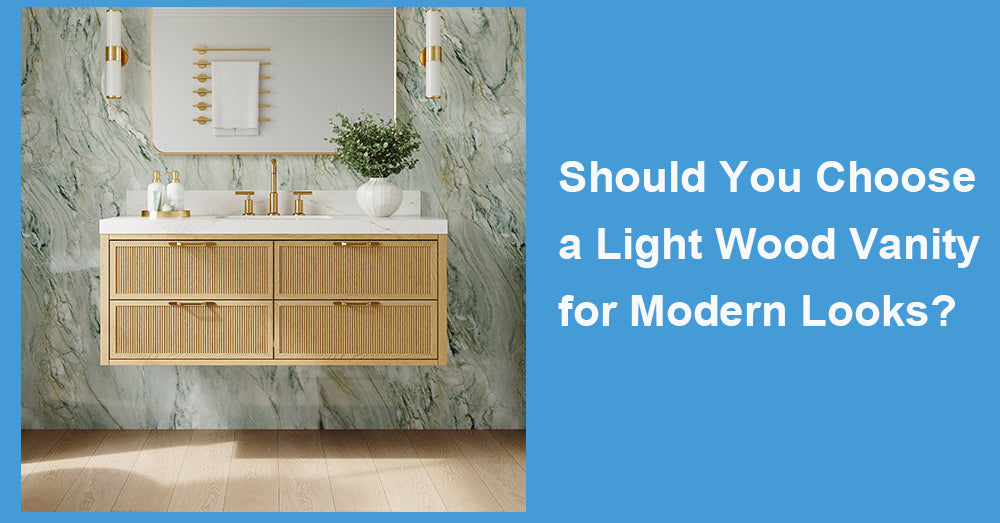
White oak has become particularly effective in contemporary and transitional bathrooms because its visible grain adds warmth without requiring heavy ornamentation. Maple creates a quieter, lighter look, while walnut produces deeper contrast and a more architectural effect.
The broader design direction supports these finishes. NKBA’s 2026 Bath Trends Report found that wood-faced vanities received 62% support among surveyed professionals, ahead of painted cabinetry at 53%. (NKBA)
Industry judgment: high-end bathroom design is increasingly moving toward authentic material character rather than relying on decorative complexity to signal luxury.
2. Cabinet Construction Matters More Than the Wood Name
A premium species does not automatically create a premium vanity. Buyers should examine how the cabinet is assembled, how the drawers operate, and how exposed edges are protected.
A well-built vanity should feel stable when drawers are fully extended, and doors should remain aligned through repeated use. Soft-close slides, adjustable hinges, sturdy drawer boxes, and properly reinforced sink areas contribute more to everyday quality than an impressive species name alone.
Wood should also be properly sealed for a humid environment. Areas around plumbing openings, sink edges, and cabinet bases are especially important because repeated exposure to moisture can damage poorly protected material.
Industry judgment: luxury cabinetry is defined by engineering that remains unnoticed during daily use because everything continues to operate smoothly.
3. Proportions Help a Vanity Look Custom
A high-end vanity should fit the bathroom rather than appear as if it was simply placed against an available wall. Standard sizing makes this easier when dimensions are selected carefully.
Single vanities are commonly offered between 24 and 48 inches wide, while larger double-sink configurations often extend to 60 or 72 inches. Standard vanity depth is generally around 21 to 22 inches, with shallower models available for tighter layouts. (Signature Hardware)
A 30- or 36-inch wooden vanity can create a strong focal point in a guest bathroom without overwhelming the room. A 48-inch model provides more drawer and countertop space, while 60- and 72-inch vanities can introduce the scale expected in a larger primary suite.
Industry judgment: high-end design comes from proportion before size. An oversized cabinet in a restricted room rarely feels luxurious.
4. The Countertop Should Complement the Wood
Natural wood usually looks strongest when the countertop provides controlled contrast. White quartz, warm off-white stone, pale quartzite, and restrained marble can highlight the grain without competing with it.
The industry is increasingly moving toward calm combinations rather than several dramatic materials in one room. When oak already provides visible movement, a quieter countertop allows the cabinet to become the primary texture. Walnut can tolerate stronger stone veining, but a lighter top often prevents the vanity area from becoming visually heavy.
On a 30- or 36-inch vanity, subtle patterns tend to feel more proportionate. Wider 60- or 72-inch tops offer enough surface area for larger veining to develop naturally.
Industry judgment: premium material selection depends on hierarchy. Expensive wood and expensive stone do not automatically look better when both demand equal attention.
5. Better Storage Has Become Part of Luxury
High-end bathroom cabinetry is increasingly expected to organize daily routines, not simply hide plumbing.
NKBA research highlights growing demand for storage solutions such as linen cabinets, configurable vanity modules, concealed outlets, charging areas, and dedicated compartments for grooming products. NKBA has also reported strong interest in linen storage cabinets and vanities with hidden electrical outlets. (NKBA)
A premium 36- or 48-inch vanity may use full-extension drawers around the drain instead of leaving one large empty cabinet. Larger 60- and 72-inch models can provide separate drawer banks for two users.
Interior dividers, removable organizers, and outlets for hair tools can improve convenience without changing the clean exterior.
Industry judgment: modern luxury is increasingly measured by what happens behind the cabinet fronts.

6. Hardware Can Raise or Lower Perceived Quality
Small hardware details can dramatically influence how expensive a wooden bathroom vanity feels. Thin brushed pulls can reinforce a contemporary oak cabinet, while restrained brass hardware can warm walnut or darker wood.
NKBA’s 2026 findings show stronger support for matte, brushed, and satin faucet finishes than polished finishes, with matte at 54%, brushed at 51%, satin at 46%, and polished at 39%. (NKBA)
The same direction works well for vanity hardware. Brushed nickel, satin brass, matte black, and bronze can complement natural grain without creating excessive shine.
Hardware placement matters as much as finish. Consistent spacing and appropriately scaled pulls make drawers feel more deliberately designed.
Industry judgment: premium hardware should reinforce the cabinet architecture instead of becoming jewelry applied after the design is finished.
7. Timeless Materials Can Strengthen Remodeling Value
A high-end vanity should remain relevant beyond the first few years of ownership. Natural wood has an advantage because finishes and surrounding accessories can change without requiring the cabinet itself to be replaced.
A white oak vanity can move from modern to transitional by changing the mirror, faucet, lighting, and hardware. Walnut can shift between contemporary and traditional interiors depending on the countertop and wall finishes.
Remodeling data also favors disciplined upgrades. JLC’s 2025 Cost vs. Value Report places the national average cost of a midrange bathroom remodel at $26,138, with an estimated $20,915 retained at resale, or about 80% of project cost. By comparison, its upscale bathroom remodel averages $81,612 and recoups about 41.7%. (Journal of Light Construction)
These figures do not guarantee a specific return from any vanity, but they highlight the importance of spending where visible quality and daily function overlap.
Industry judgment: a refined but broadly adaptable vanity can be a stronger investment than a highly customized fixture that depends on one narrow design trend.
8. Natural Wood Supports the Move Toward Calmer Interiors
Current bathroom design continues to favor natural, organic, and visually quiet spaces. NKBA’s 2026 research identifies warm neutrals, natural wood tones, and organic materials as part of the industry’s shift toward calmer, wellness-oriented interiors. (NKBA)
Wood is particularly effective because it introduces warmth without adding another color-heavy surface. A pale oak vanity beside warm white tile can make a bathroom feel relaxed and contemporary. Walnut against ivory stone creates a richer interpretation without requiring ornamental details.
Lighting can further emphasize this effect. Soft, layered illumination brings out wood grain and helps countertops, faucets, and hardware feel more dimensional.
Industry judgment: the high-end bathroom is becoming quieter, with material quality replacing decorative excess.
9. Conclusion
A wooden bathroom vanity becomes a high-end choice when natural material quality is supported by thoughtful construction, balanced proportions, practical storage, durable finishes, and carefully selected surrounding materials.
Wood species matters, but it should not be the only purchasing criterion. Buyers should examine drawer construction, moisture protection, plumbing clearance, countertop compatibility, hardware quality, and actual cabinet dimensions before ordering.
A 30- or 36-inch vanity can deliver luxury in a compact bathroom, while 48-, 60-, and 72-inch models can create a stronger furniture-style focal point in larger spaces. The goal is not simply to install more wood or spend more on materials.
The most convincing premium vanities combine visible craftsmanship with functions that become easier to appreciate over time. When natural grain, reliable construction, useful storage, and restrained detailing work together, the vanity can elevate the entire bathroom without making the room feel over designed.








































Leave a comment
This site is protected by hCaptcha and the hCaptcha Privacy Policy and Terms of Service apply.