






















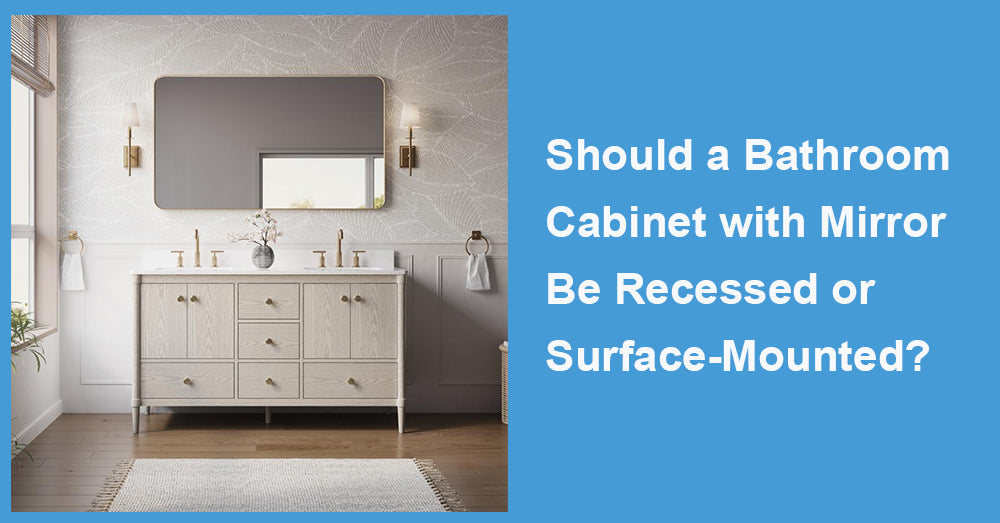
A bathroom cabinet with a mirror is one of those fixtures where installation choice has a long-term impact on both usability and bathroom layout efficiency. In modern renovations, the decision usually comes down to two options: recessed installation, where the cabinet sits inside the wall cavity, or surface-mounted installation, where it attaches directly onto the wall.
From a design and construction perspective, neither option is universally “better.” The right choice depends on wall structure, available depth, and how much importance is placed on storage versus visual minimalism.
Industry observation: more remodel projects today prioritize integrated storage solutions, especially in bathrooms under 60 sq ft, where wall space efficiency directly affects daily usability.
1. Recessed cabinets: clean look, but wall-dependent
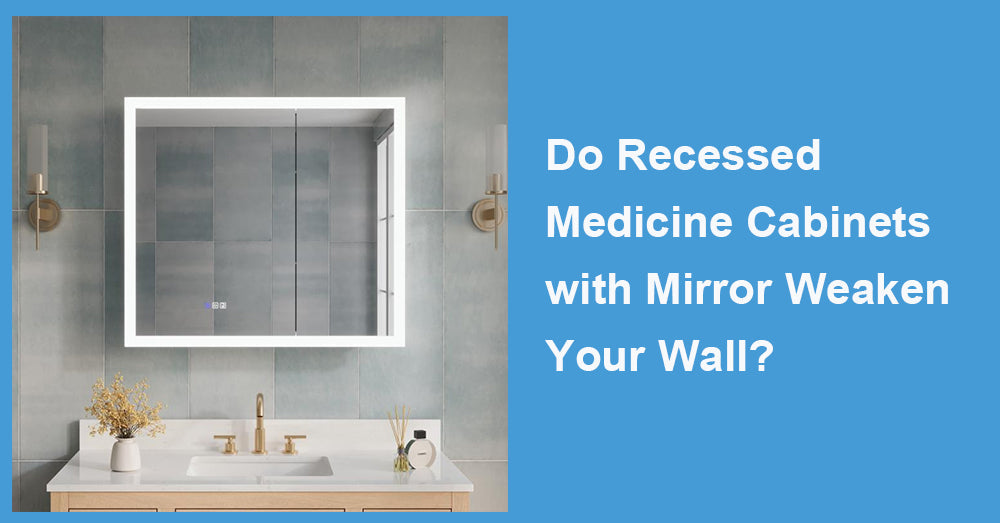
Recessed installation is often chosen for its clean, built-in appearance. The cabinet sits inside the wall, typically between studs spaced 16 in on center, which is a standard framing layout in residential construction (Source: International Residential Code).
The biggest advantage is obvious: it does not project into the room. That can recover 3 in to 5 in of usable space in front of the wall, which matters in narrow bathrooms where clearance around the vanity is limited.
However, the limitation is structural. Not every wall can accommodate a recessed cabinet without modification. Plumbing lines, electrical wiring, or HVAC ducts often run through bathroom walls, especially above vanities and behind mirrors.
Industry judgment: recessed cabinets look cleaner, but they are far less forgiving during installation.
2. Surface-mounted cabinets: easier installation, more flexibility
Surface-mounted cabinets attach directly to the wall surface, requiring no cutting into drywall or adjusting framing.
This makes them significantly easier to install, especially in retrofit projects where wall conditions are unknown. Installation time is typically shorter, and risk of encountering hidden utilities is much lower.
The trade-off is projection. Most surface-mounted cabinets extend about 4 in to 6 in from the wall, which can visually reduce space in smaller bathrooms.
Houzz renovation trend data shows that storage upgrades remain one of the most common bathroom remodel priorities, with surface-mounted units often chosen when speed and flexibility outweigh visual integration. (Source: Houzz)
3. Storage depth vs visual space perception
The key difference is not just installation—it is how the cabinet changes the perception of space.
Recessed cabinets preserve wall flatness, making the bathroom feel less crowded. This is especially important in compact layouts where visual clutter affects how large the space feels.
Surface-mounted cabinets, on the other hand, increase storage depth without structural work, but they add a visible object on the wall.
In practice:
* Recessed = better visual expansion
* Surface-mounted = better installation flexibility
Industry takeaway: recessed design improves spatial perception, but surface-mounted wins in adaptability.
4. Wall structure determines feasibility more than preference
A common misconception is that the choice is purely aesthetic. In reality, wall structure often decides the outcome.
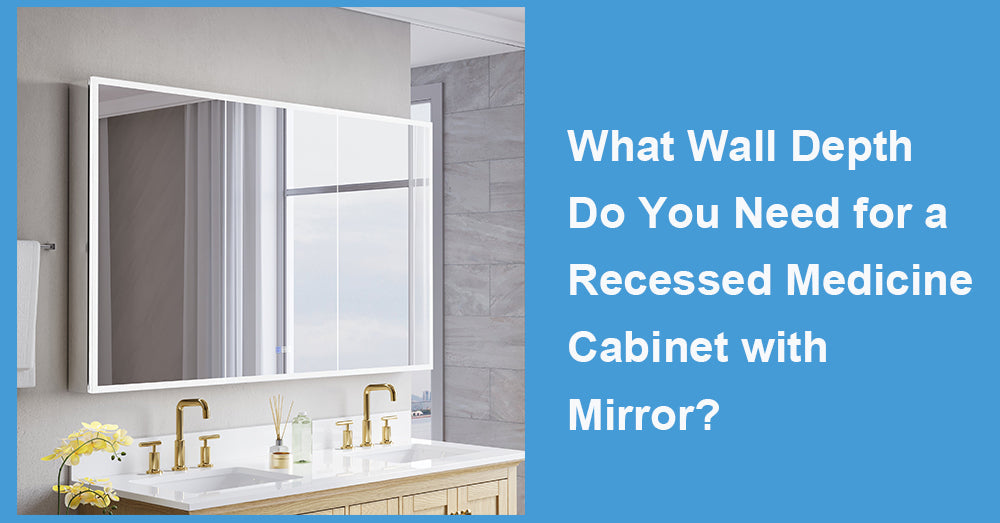
Most interior bathroom walls are built using 2x4 framing, providing about 3.5 in of cavity depth. That is usually just enough for standard recessed medicine cabinets, which often range between 3 in and 5 in deep depending on design.
However, if pipes or wiring occupy that cavity, recessing becomes either partially limited or impossible without remodeling the wall.
In older homes, this constraint is even more common due to less standardized utility routing.

5. Installation complexity and long-term maintenance
Recessed cabinets require cutting into drywall, aligning with studs, and sometimes reinforcing framing. That makes installation more complex, but the result is more integrated.
Surface-mounted cabinets are simpler to install, but they rely on wall anchors and proper load distribution.
From a maintenance standpoint, recessed units are less exposed to accidental impact, while surface-mounted units are easier to replace or upgrade without wall modification.
CPSC guidance on wall-mounted fixtures emphasizes secure anchoring and proper load handling to reduce long-term failure risk in residential environments. (Source: CPSC)
6. Moisture and bathroom environment considerations
Bathrooms introduce humidity as a constant factor. Over time, moisture exposure can affect both installation types, but in different ways.
Recessed cabinets are partially enclosed within the wall, which means poor ventilation or sealing can lead to moisture trapping inside the cavity if not properly installed.
Surface-mounted cabinets are more exposed but also easier to inspect and maintain.
DOE building envelope research highlights that moisture management in enclosed wall spaces is critical for long-term material stability in residential environments. (Source: U.S. Department of Energy)
Industry judgment: moisture risk is not about cabinet type alone, but about installation quality and ventilation.
7. When recessed makes more sense
Recessed cabinets are typically better when:
* Bathroom is small (under 60 sq ft)
* Clean, minimalist wall design is a priority.
* Wall cavity is free of plumbing or electrical conflicts.
* Long-term built-in appearance is preferred.
They work best in planned renovations or new construction where wall structure can be adjusted in advance.
8. When surface-mounted is the better choice
Surface-mounted cabinets are usually the better option when:
* It is a retrofit project.
* Wall conditions are unknown.
* Plumbing or wiring exists in the wall cavity.
* Fast installation is required.
* Flexibility for future replacement is important.
Industry observation: surface-mounted units are increasingly used in remodels where speed and reduced risk matter more than flush aesthetics.
Final takeaway
Choosing between recessed and surface-mounted bathroom cabinets with mirrors is less about which one is better and more about which constraint matters most—structure or simplicity.
Recessed cabinets deliver a cleaner, more integrated look and better visual space efficiency, but require ideal wall conditions and more complex installation. Surface-mounted cabinets offer flexibility, faster installation, and fewer structural limitations, but project further into the room.
In modern bathroom design, the trend is not moving toward one universal solution. Instead, it is moving toward context-based selection—matching installation type to wall condition, space size, and renovation scope.
Industry judgment is straightforward: recessed wins on design integration, surface-mounted wins on practicality. The right choice is the one that aligns with what the wall can actually support, not just what the design looks like on paper.









































Leave a comment
This site is protected by hCaptcha and the hCaptcha Privacy Policy and Terms of Service apply.