






















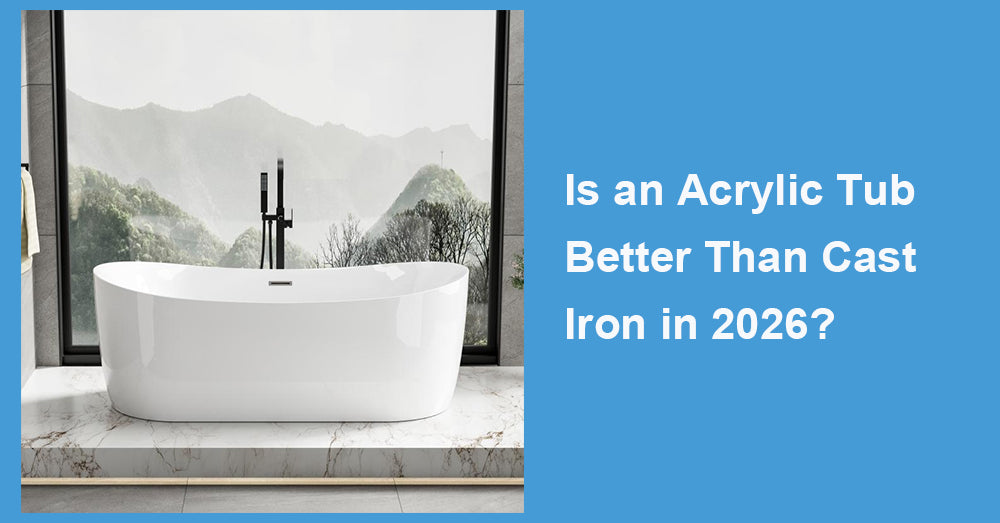
Mirror acrylic tub designs are increasingly appearing in modern bathroom concepts, especially where lightweight construction and reflective, minimalist finishes are prioritized. In 2026, the comparison between acrylic bathtubs and cast iron is less about tradition and more about performance balance, installation efficiency, and long-term usability in compact bathroom layouts.
Industry direction is shifting toward lighter materials that reduce structural load while maintaining comfort, and acrylic is currently leading that transition in mainstream residential projects.
1. Weight is still the biggest deciding factor
The most obvious difference between acrylic and cast-iron tubs is structural load.
A typical cast iron bathtub can exceed 300 lb before water is added, and once filled, the total load can surpass 800 lb, depending on size. Acrylic tubs, by contrast, are significantly lighter, often ranging between 70 lb and 120 lb depending on reinforcement layers and design.
This difference matters more in renovation projects than in new construction. Floor reinforcement, labor handling, and delivery complexity all increase with heavier materials.
From a practical installation standpoint, lighter tubs reduce risk during upper-floor remodeling, where structural load distribution is more sensitive.
Industry judgment is clear: in retrofit projects under 72 in tub length layouts, acrylic is increasingly the default selection.
2. Heat retention vs thermal stability
Cast iron has a strong reputation for heat retention because of its mass. It absorbs heat and releases it slowly, which helps maintain water temperature over long baths.
However, acrylic performs differently but more efficiently in real-world use.
Acrylic has lower thermal conductivity, meaning it does not draw heat away from water as quickly. While it may not match cast iron’s long-duration heat storage, it warms up faster and maintains a comfortable temperature for typical bathing cycles.
DOE building efficiency discussions often highlight how material thermal behavior impacts user comfort, even in non-mechanical systems like plumbing fixtures. Source: DOE
In practice, both materials perform well, but they behave differently: cast iron stabilizes heat over time, and acrylic responds faster to initial use.
3. Surface comfort and daily usability
Acrylic tubs tend to feel warmer to the touch, which matters in daily interaction before the tub is filled. This improves perceived comfort, especially in colder environments or early-morning use.
Cast iron surfaces often feel cold initially unless pre-heated by hot water.
From a user behavior standpoint, this small difference influences how frequently the tub is used for quick soaking vs full bathing sessions.
Industry observation: comfort perception increasingly influences material selection as bathrooms shift toward wellness-oriented design rather than purely functional spaces.
4. Repairability and lifecycle cost
Acrylic has a clear advantage in surface repair.
Minor scratches, scuffs, and dull areas can often be polished or buffed out without full replacement. This is particularly valuable in rental or high-turnover properties where maintenance cycles are shorter.
Cast iron, typically finished with enamel coating, is more resistant to surface scratching in the short term, but when chips occur, repair is more complex and often more visible.
Long-term cost evaluation tends to include not just durability, but also maintenance effort. Acrylic performs well in that category due to its easier restoration process.
5. Design flexibility is reshaping demand
Acrylic is far more adaptable in manufacturing geometry.
Freestanding soaking tubs, asymmetrical silhouettes, thin-edge designs, and compact alcove units are significantly easier to produce in acrylic than in cast iron. That design flexibility aligns with current bathroom layouts where visual openness and reduced bulk are preferred.
Typical modern tub sizes range from 60 in to 72 in in length, with deeper soaking profiles around 14 in to 22 in water depth. Acrylic allows these proportions without excessive weight increase.
Cast iron, while visually strong and premium in perception, is limited in shape variety due to molding constraints.

6. Installation efficiency is becoming a hidden cost driver
Installation complexity is one of the strongest arguments for acrylic adoption.
Lower weight means fewer workforce requirements, simpler positioning, and reduced risk of floor reinforcement requirements in standard framing conditions.
Houzz renovation trend reporting consistently shows that ease of installation and labor efficiency are key decision drivers in bathroom fixture selection, especially in full remodel workflows where timelines are tight. Source: Houzz
Industry judgment: Installation friction is now almost as important as product performance in material selection decisions.
7. Durability is not as one-sided as it looks
Cast iron is often considered the “forever material,” and in terms of structural longevity, that reputation is still valid. It resists denting and external impact very well.
However, acrylic has improved significantly with fiberglass reinforcement layers and improved resin systems. High-quality acrylic tubs today are far more rigid than earlier generations.
The real difference is not whether one is durable and the other is not, but how each behaves under stress: cast iron resists impact, acrylic flexes slightly but absorbs minor stress without chipping.
8. Industry direction: lighter systems are winning
Across bathroom categories, there is a consistent shift toward lighter, modular, and easier-to-install systems.
Vanities are moving toward wall-mounted structures. Showers are moving toward prefabricated panels. Even mirrors are consolidating lighting and defog systems into single units.
Acrylic tubs fit directly into this broader direction. They reduce structural constraints and simplify installation workflows without significantly compromising comfort.
Final takeaway
In 2026, acrylic tubs are not simply “cheaper alternatives” to cast iron—they are part of a broader design shift toward lighter and more installation-efficient bathrooms.
Cast iron still leads in raw mass, traditional feel, and long-term heat stability. But acrylic leads in flexibility, ease of installation, repairability, and modern layout compatibility.
Industry judgment is straightforward: when bathrooms prioritize renovation speed, design flexibility, and structural efficiency, acrylic is becoming the default choice. When permanence and traditional weight are the priority, cast iron still holds its position.
The real decision is no longer about which material is universally better, but which one better matches how the bathroom is actually being built and used.









































Leave a comment
This site is protected by hCaptcha and the hCaptcha Privacy Policy and Terms of Service apply.