




















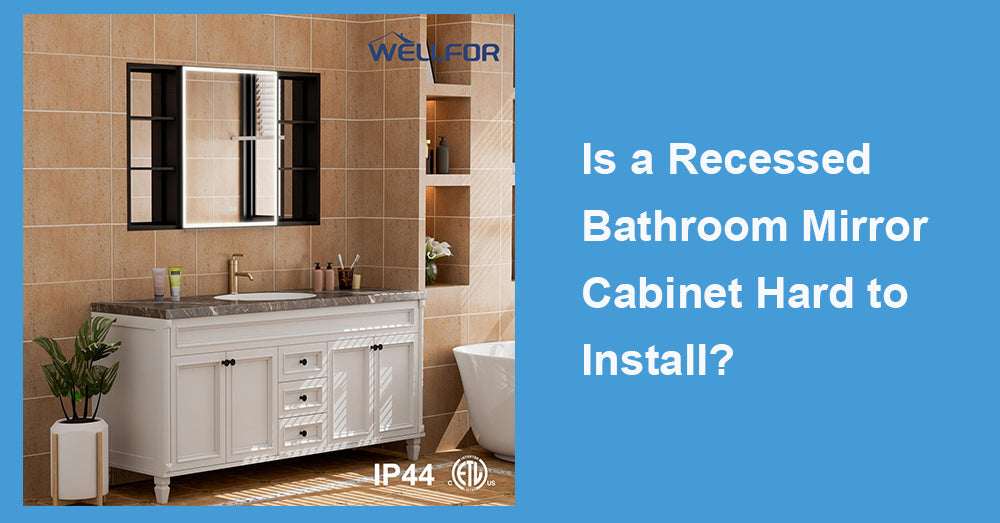
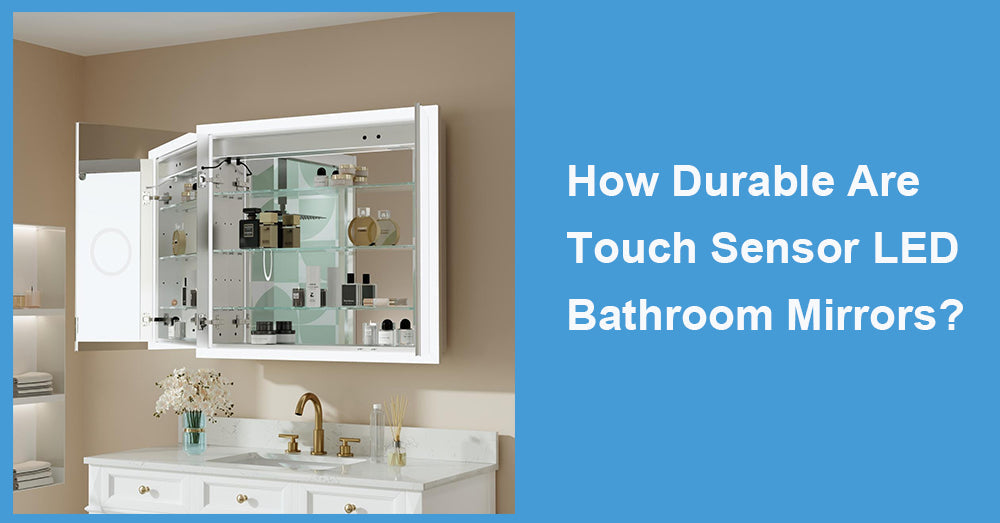
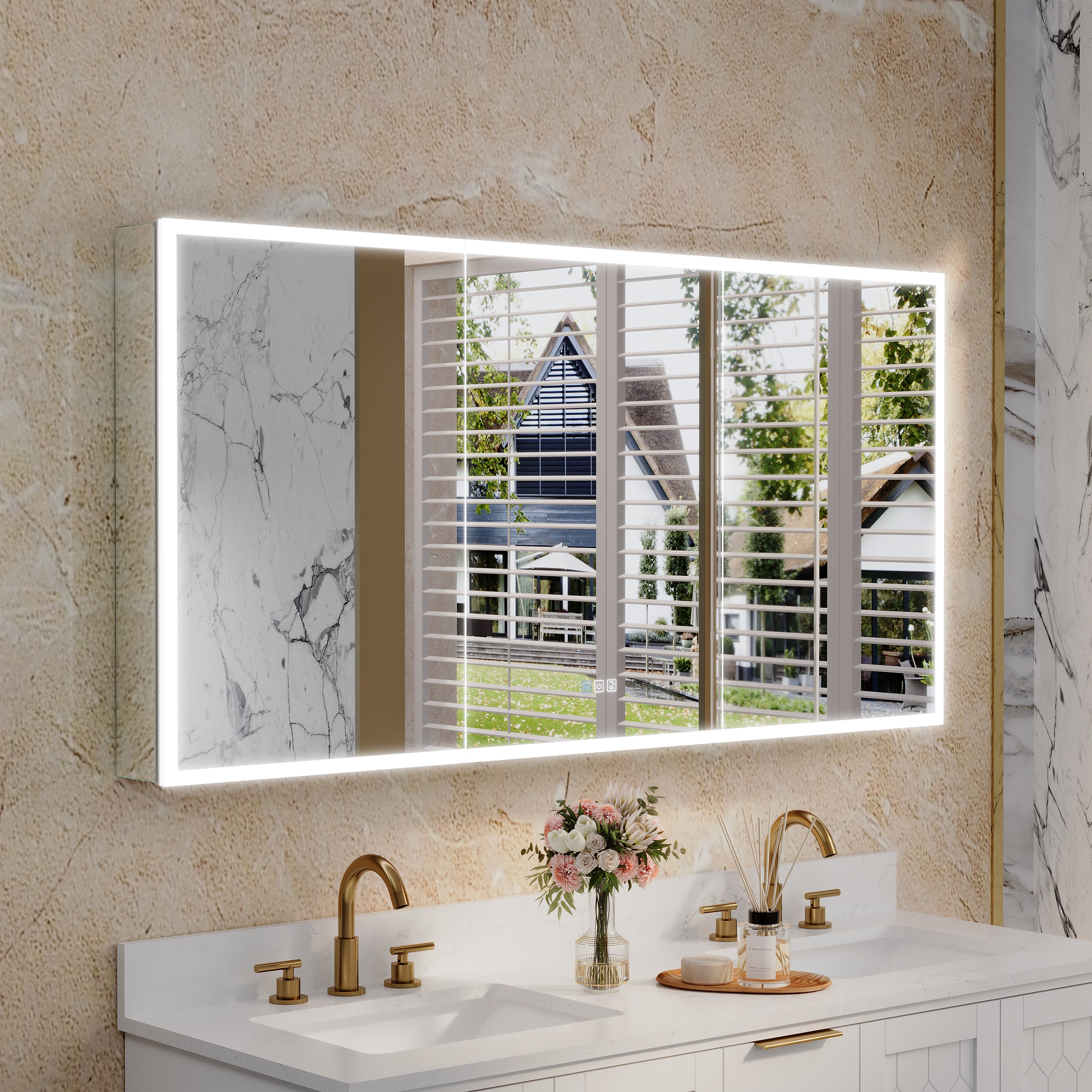
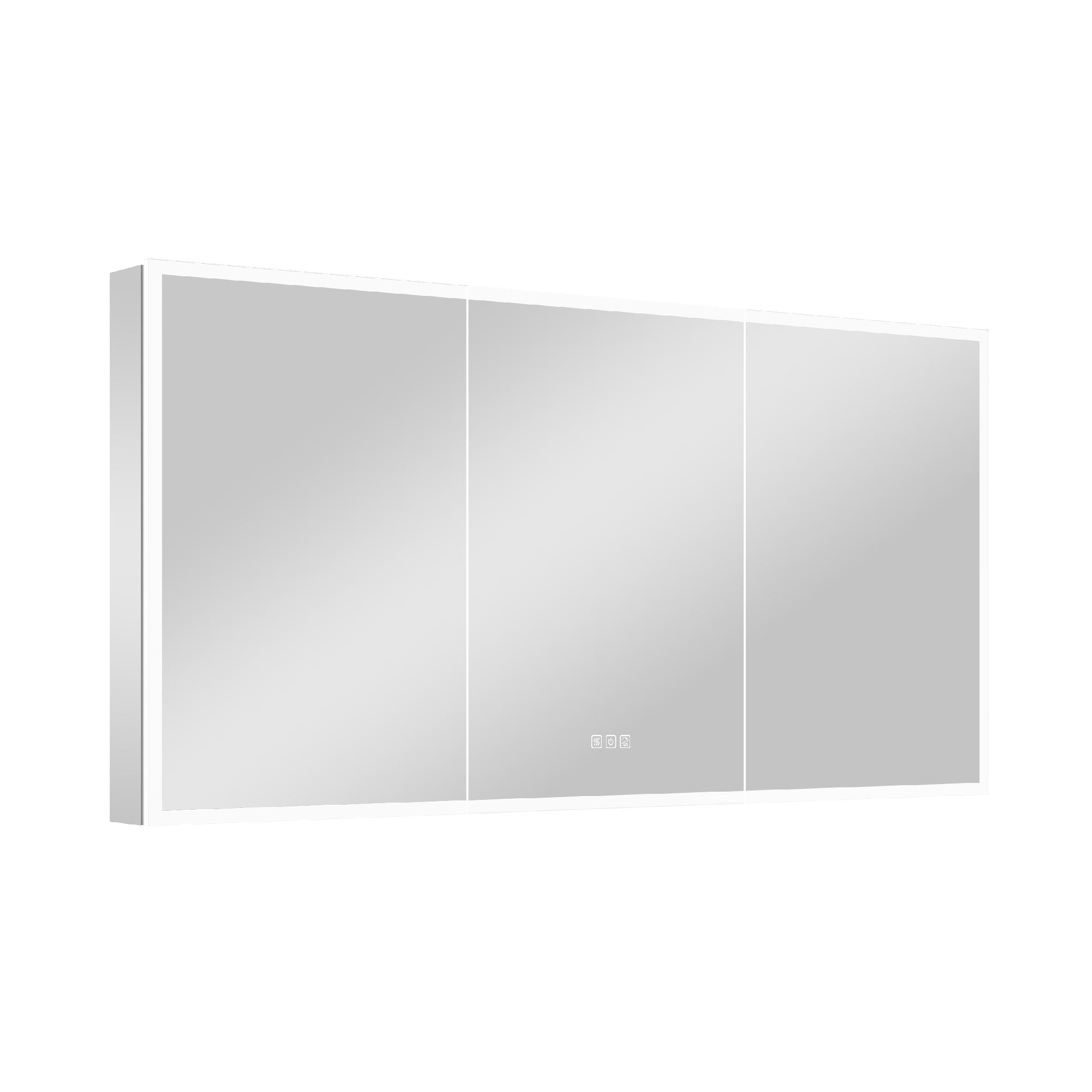
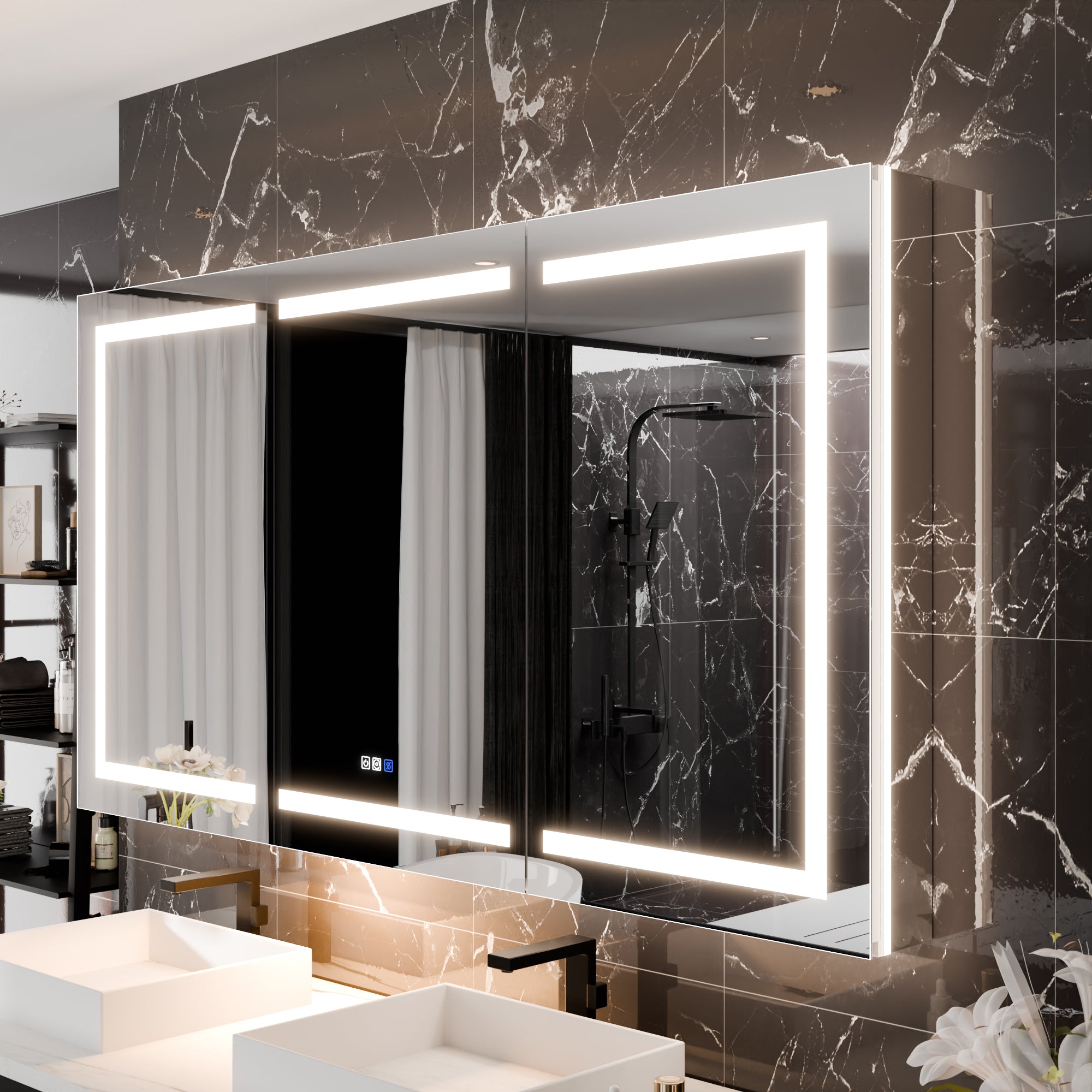
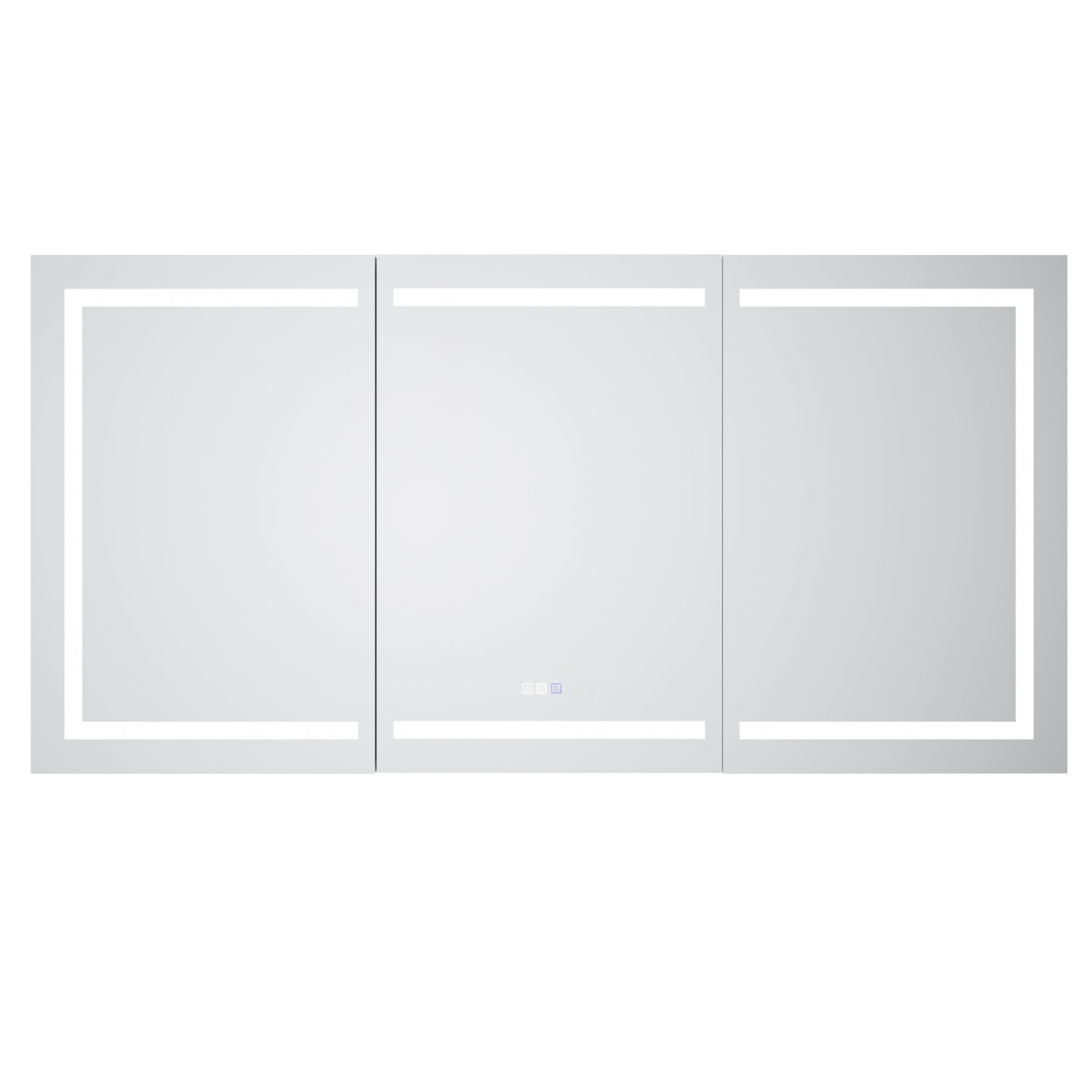
In recent years, in the trend of bathroom design, we have gradually shifted from "high-end customization options" to more popular functional configurations, such as recessed bathroom mirror cabinet with lights. Compared to traditional wall-mounted mirrors or external mirror cabinets, embedded bathroom mirror cabinets have significant advantages in visual cleanliness, space utilization, and functional integration. But at the same time, many people have a practical question before making a purchase: Is it really complicated to install this embedded mirror cabinet in the wall?
1. The cognitive transformation of installation from "seemingly complex" to "actually controllable."
For most people, the word 'received' itself carries a certain psychological threshold. Embedding the cabinet into the wall means cutting the wall, adjusting the structure, and even worrying about potential load-bearing or pipeline safety issues. However, based on recent industry practices, the installation difficulty of embedded mirror cabinets is not as uncontrollable as imagined.
In common residential structures, bathroom partition walls are often designed with standard keel spacing of 16 inches center-to-center. This size precisely matches the width and height range of mainstream embedded bathroom mirror cabinets. Common product widths are concentrated between 20-24 inches and 24-30 inches, and depths are mostly around 4-5 inches, which can fall within the standard wall cavity range.
2. The difficulty of installation depends on three practical factors.In addition, the choice between recessed and surface-mounted installation often reflects different priorities in bathroom planning.
While wall-mounted mirror cabinets emphasize flexibility and quick installation, recessed designs are usually considered earlier in the planning process, where spatial efficiency and long-term usability are given more weight. This difference in planning mindset partly explains why recessed mirror cabinets are sometimes perceived as “harder to install,” even though the actual construction process may not be significantly more complex.
Whether it is "difficult to install" depends not on the product itself but on the specific installation environment.
3. Firstly, it is the wall condition.
If the installation location is on a non-load-bearing wall and there are no complex pipelines or wires inside, the construction steps are relatively straightforward. Cutting the opening, reinforcing the frame, embedding it into the cabinet, fixing and sealing it can be completed. On the contrary, if there are drainage pipes, ventilation pipes, or multiple wires in the wall, it is necessary to adjust the position in advance or conduct local rerouting, which is the main reason for the increase in installation complexity.
4. Secondly, whether it involves lighting and power supply.
Mirror cabinets with lights usually require reserved power interfaces. The good news is that most modern embedded mirror cabinets use low-power LED systems, with power generally below 40W, and do not have high requirements for line load. In bathrooms with reserved mirror headlight circuits, the cost of retrofitting is relatively limited; without a pre-embedded power supply, additional slots or wiring are required.
5. Thirdly, it is the selection of the construction phase.
If installed in a newly built or renovated bathroom, embedded mirror cabinets will hardly increase the difficulty and are often completed synchronously with wall construction. In the renovation and installation of finished bathrooms, construction time and precision requirements will be higher.
6. Is the construction time really longer compared to wall-mounted mirror cabinets?
Based on actual construction data, it usually takes 2-4 hours to install an embedded bathroom mirror cabinet, provided the wall conditions are good and there is no need for significant wiring changes. The installation time for wall-mounted mirror cabinets is about 1-2 hours. The time difference between the two is not as exaggerated as imagined.
However, the space returned by the embedded mirror cabinet at the end of the usage cycle is long-term. The cabinet is flush with the wall, reducing the outward protrusion depth by 4-6 inches. In small and medium-sized bathrooms, this difference directly affects the comfort of passage and the overall visual scale.
7. Size and structural design are lowering the installation threshold.
It is worth noting that in recent years, the industry has clearly made concessions for installation friendliness in product structure. More and more embedded mirror cabinets are adopting prefabricated installation frames, adjustable side supports, and front-end fine-tuning structures, which enable even slight wall irregularities to be corrected during installation.
Meanwhile, the standard height range is also becoming more uniform. The height of mainstream products is concentrated chiefly between 26 and 32 inches, which not only meets the visual requirements for mirror use but also facilitates layout adjustments between the keels. This standardization of dimensions itself significantly reduces construction uncertainty.
8. Beyond the difficulty of installation, the long-term value deserves more attention
From a long-term usage perspective, the value of embedded bathroom mirror cabinets is not reflected solely in their ease of installation. The integrated design of mirror, storage, and lighting makes the daily grooming process more centralized and efficient. The cabinet is hidden inside the wall, reducing the risk of dust accumulation and collisions at exposed corners.
In bathrooms with limited space, such mirror cabinets can often provide a capacity equivalent to a small storage cabinet without increasing the footprint, which is why more and more design solutions prioritize embedded structures.

9. So, is it difficult to install'?
Overall, installing embedded bathroom mirror cabinets is not a simple "difficult or not difficult" choice. Under appropriate wall conditions, reasonable size selection, and precise construction planning, it is more like a 'controllable professional installation' rather than a high-risk project.
For those who prioritize spatial cleanliness, functional integration, and long-term user experience, the extra construction cost incurred during installation is often offset by savings in subsequent years of use.
From the perspective of industry development, as product structure matures and installation standards become more widely adopted, the bathroom mirror cabinet is gradually evolving from a "seemingly complex upgrade option" to a more practical, feasible conventional choice.





























Leave a comment
This site is protected by hCaptcha and the hCaptcha Privacy Policy and Terms of Service apply.