


















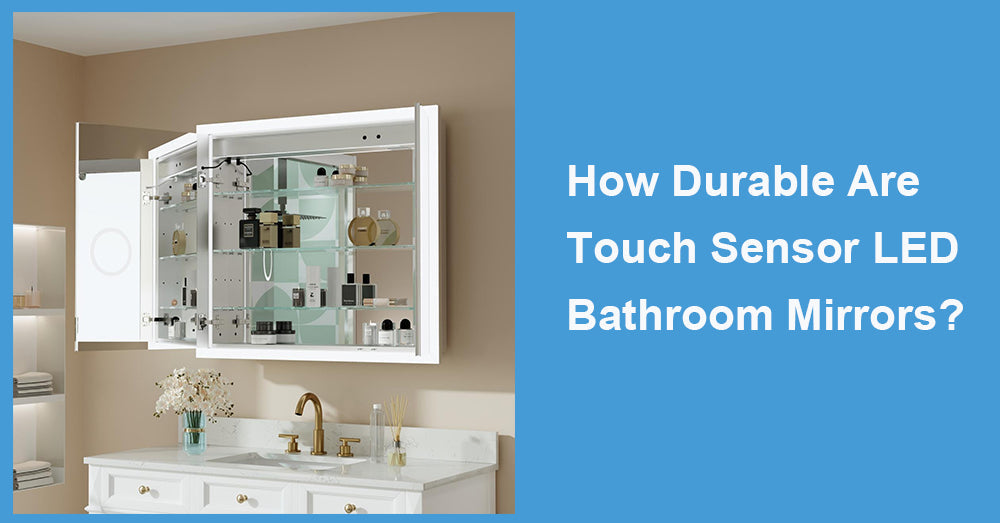
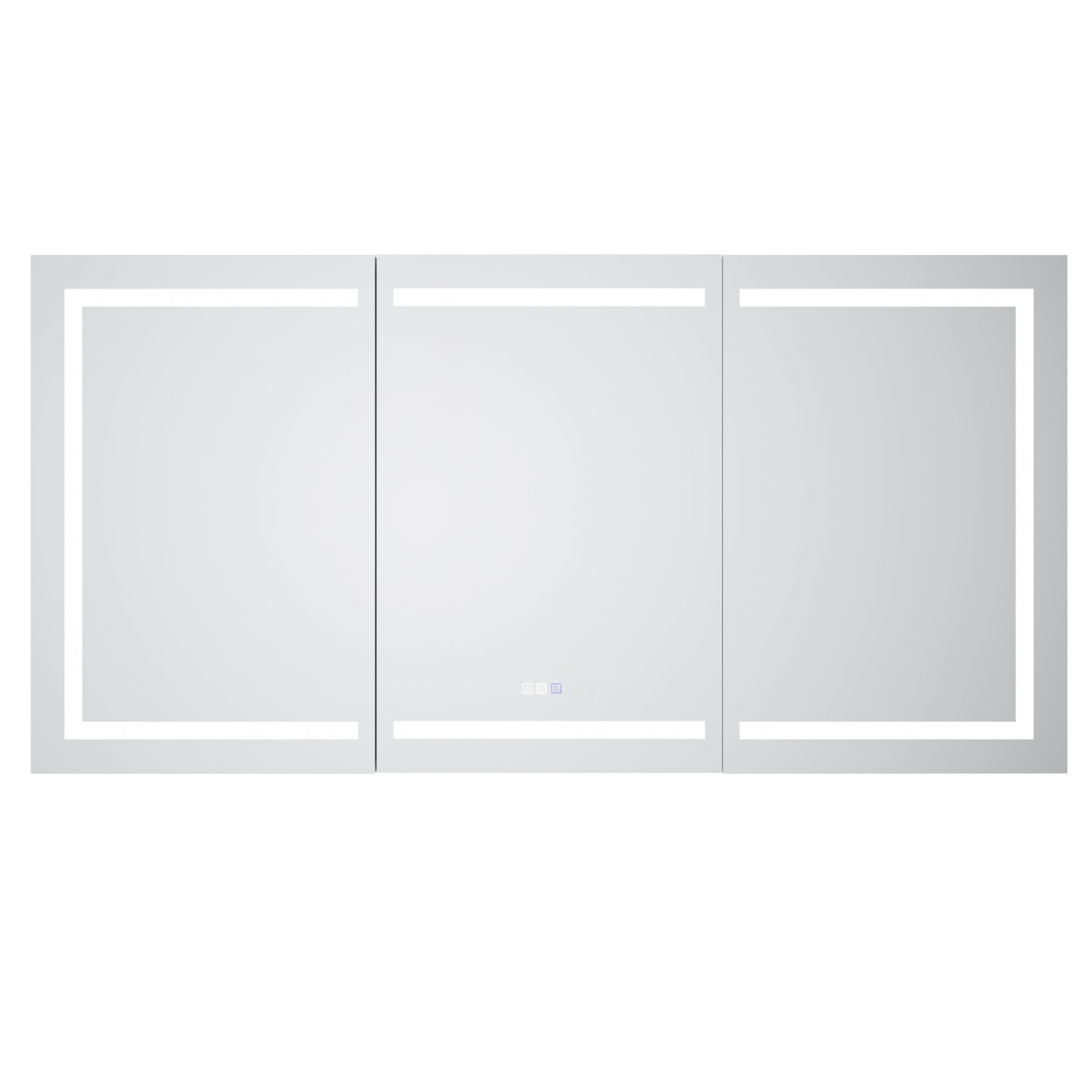
In recent years, in the trend of upgrading bathroom products, touch sensor LED bathroom mirror are gradually becoming a routine configuration for high-end bathroom spaces, rather than being an "intelligent add-on". Compared to traditional mechanical switches or external control modules, touch sensing makes the mirror look more integrated and brings a simpler user experience. But a core question that comes with it is: Is this touch system integrated on the mirror really durable enough? Can the lifespan and reliability of touch LED mirrors withstand long-term testing in high-humidity, frequently used bathroom environments?
1. Is the touch structure itself easily damaged?
Structurally, most touch LED bathroom mirrors are not "bare buttons" but use capacitive touch technology. Induction modules are usually hidden behind glass and trigger commands by sensing changes in human electrical current. This means there is no mechanical wear from traditional pressing in daily use.
Industry test data shows that the design trigger life of mainstream capacitive touch modules can exceed 100,000 cycles. Even if calculated based on triggering 10-15 times a day, its theoretical lifespan far exceeds the typical usage cycle of an ordinary household. In contrast, traditional physical buttons are more prone to failure due to internal shrapnel oxidation in high-humidity environments.
2. The real challenge of the touch control system in the bathroom environment
What truly affects durability is not the "touch" itself, but the long-term erosion of the bathroom environment. Humidity, temperature differences, and condensation of water vapor are practical conditions that all electrical bathroom products must withstand.
Industry standards typically require that electronic components in LED bathroom mirrors have basic moisture protection. High-quality products will add sealing rubber rings around the touch module or use integral film coating technology to prevent water vapor from directly entering the sensing area. Data shows that under the same usage conditions, touch modules with moisture-proof treatment have a failure rate that is more than 30% lower than ordinary modules.
It is worth noting that the touch area does not equate to a "waterproof button". Reasonable usage is still an important factor in extending lifespan, such as avoiding frequent touch when there is a large amount of water accumulation on the mirror, or simply wiping the touch points repeatedly with a wet towel.
3. The impact of glass material on durability
The sensing effect and lifespan of touch LED mirrors are closely related to the mirror glass itself. Mainstream products typically use tempered glass with a thickness of 4mm to 5mm, which ensures sufficient structural strength without compromising touch sensitivity.
Tests have shown that within the thickness range of 4mm to 5mm, the response delay of capacitive touch is usually less than 0.1 seconds and is almost imperceptible. However, if the glass thickness is too thin, although sensitivity is slightly improved, impact resistance decreases; excessive thickness may increase the false contact rate or lead to local failure.
Therefore, the durability of touch LED mirrors often depends on a balance between glass safety and electronic sensitivity.
4. Will the lifespan of LED light sources affect overall durability?
Many people equate "touch failure" with "broken mirror," but in practical use, the lifespan of LED light sources often becomes a factor affecting the experience earlier than that of touch systems.
The commonly used LED chips in the industry have a nominal lifespan of around 50,000 hours. Even if used for 3 hours a day, it means a theoretical lifespan of over 40 years. As a low-power electronic component, the aging speed of the touch module is not higher than that of LED light sources.
What truly affects overall durability comes more from the power drive part. If the driving power supply is in a high-temperature or poorly ventilated state for a long time, it may indirectly affect the stability of touch response. Therefore, reserving a reasonable amount of backspace (usually at least 1 inch) during the installation phase can improve the long-term reliability of the entire mirror system.
5. Will frequent touch cause accidental touch or delay?
As usage time increases, some users may worry that the touch area becomes "insensitive" or "prone to accidental touch". From a technical perspective, this situation is often related to environmental changes rather than damage to the touch module itself.
For example, in the case of high steam in the bathroom, the water film on the mirror surface may alter the capacitance distribution, leading to deviations in touch recognition. For this purpose, some products will compensate through software algorithms and automatically calibrate touch thresholds.
Data shows that touch systems with dynamic calibration capabilities can reduce the false touch rate by about 20%-25% in high humidity environments, which is also a critical upgrade direction for mid to high-end LED mirrors in recent years.
6. Comparison of Durability with Traditional Switch Mirrors
When the touch LED mirror is compared horizontally with the traditional external-switch mirror, the durability difference between the two is not as great as imagined. The advantage of conventional solutions lies in their simple structure, but the disadvantage is that many components are exposed, and the interface areas are more susceptible to moisture.
Although the touch control solution has high integration, its long-term stability is not inferior as long as it is well protected during the design phase. Industry installation statistics show that, under regular use and compliant installation conditions, the functional failure rate of touch LED mirrors over 5 years is comparable to that of traditional solutions.
7. The impact of the installation method on durability
Durability depends not only on the product itself, but also highly on installation quality. Whether it is a hard-wired or plug-in design, touch LED mirrors need to ensure a stable power supply and reliable grounding.
If the installation location is close to the shower area, it is usually recommended to maintain a vertical distance of at least 24 inches between the bottom of the mirror and the water source, which can significantly reduce the probability of water vapor directly impacting the touch area.
In addition, avoiding facing the touch area directly towards strong light reflection sources can also help maintain long-term recognition stability.

8. Real conclusions from a long-term usage perspective
From the perspective of comprehensive structural design, material selection, environmental adaptability, and usage habits, touch sensing is not the "weakness" of LED bathroom mirrors. On the contrary, under the premise of reasonable design and standardized use, the durability of touch LED mirrors is already sufficient to meet long-term household use needs.
The true determinant of product lifespan is often not whether it is "touch sensitive" but rather the craftsmanship details and system integration level behind it. For users who want to strike a balance between aesthetics, convenience, and long-term reliability, touch LED bathroom mirrors are no longer experimental products, but a highly mature solution.

































Leave a comment
This site is protected by hCaptcha and the hCaptcha Privacy Policy and Terms of Service apply.