






















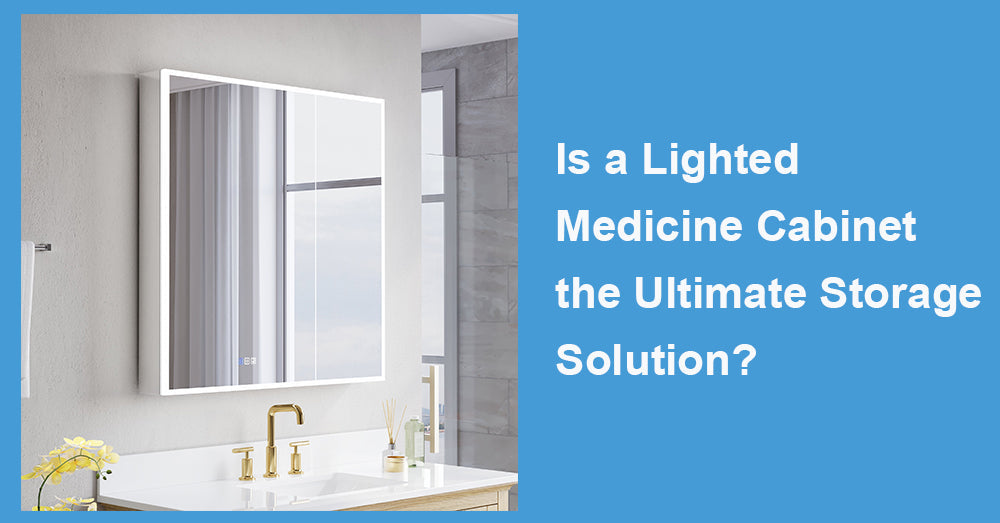
A lighted medicine cabinet is increasingly doing the work of several bathroom products at once. It provides concealed storage, a grooming mirror, task lighting, and, in some models, electrical outlets, charging ports, adjustable shelves, and defogging functions. That combination fits the way bathrooms are changing. The 2025 Houzz Bathroom Trends Study found that 32% of renovating homeowners upgraded their medicine cabinets, up 3 percentage points from the previous year. Lighting was upgraded in 82% of bathroom projects, while lighted mirrors reached 22%. Meanwhile, NKBA's 2026 Bath Trends Report found that 91% of industry professionals consider lighting quality a top bathroom design priority. Together, those trends help explain why the medicine cabinet is moving well beyond its traditional role as a shallow box for toiletries.
It Uses Wall Space That Is Often Wasted
One of the biggest advantages of a medicine cabinet is location.
The wall above a vanity already needs a mirror. Turning that same area into storage adds function without taking away floor space or countertop area.
This is particularly valuable with smaller vanities. A 24-inch or 30-inch vanity may have limited drawers, while a 36-inch vanity often has to divide its interior around the sink and plumbing.
A medicine cabinet can move frequently used items upward, including skin-care products, medicine, toothpaste, shaving supplies, and small cosmetics.
That makes the vanity below easier to organize.
For compact bathrooms, this vertical approach can be more efficient than adding another freestanding storage cabinet.
Concealed Storage Makes the Bathroom Look Cleaner
Open shelves can look attractive when carefully styled, but everyday bathroom products rarely stay that organized.
Bright packaging, prescription bottles, toothbrushes, skin-care products, and grooming tools can quickly create visual clutter.
A mirrored cabinet hides those items behind a clean reflective surface.
That is especially useful in bathrooms moving toward minimalist or spa-inspired interiors. NKBA's 2026 research found contemporary, modern, and minimalist design favored by 57% of surveyed professionals, while organic and natural styling reached 65%.
A medicine cabinet supports both approaches because storage remains available without becoming part of the visual decoration.
Integrated Lighting Improves Grooming
Lighting is one of the clearest reasons to consider an illuminated cabinet rather than a conventional medicine cabinet.
NKBA found that 92% of professionals believe task lighting should always be included in the primary bath. Another 47% expect integrated mirror lighting to be favored over the next three years.
Lighting positioned around or within the mirror can help with:
Shaving, applying makeup, skin-care routines, hair styling, and inserting contact lenses.
The advantage is placement. A ceiling fixture may create shadows beneath the eyes and chin. Light around the mirror illuminates the face more directly.
In a narrow vanity area, integrated lighting may also eliminate the need to fit sconces beside the cabinet.
Adjustable Shelves Make Small Storage More Useful
Medicine cabinets are not especially deep, so internal organization matters.
A cabinet with several adjustable shelves can be more useful than one large fixed compartment. Shorter bottles can be grouped closely together, while one shelf can be moved to accommodate taller items.
For a 24-inch cabinet, good shelf adjustment can make a significant difference. Wider 36-inch, 40-inch, or 48-inch cabinets may provide enough interior width to divide products by user or routine.
Some larger designs also use multiple mirrored doors, creating separate storage zones behind each section.
A Houzz review of popular 2025 bathroom projects highlighted one compact bathroom where three deep medicine cabinets were installed side by side to appear as one continuous mirror, while providing enough concealed space for even bulkier bathroom essentials.
Interior Electrical Outlets Can Clear the Counter
Electrical integration is becoming an important part of bathroom storage.
NKBA's latest research specifically points to charging stations and electrical connections within vanity and bathroom cabinetry as part of the movement toward personalized storage.
For a medicine cabinet, an interior outlet can allow an electric toothbrush, shaver, or rechargeable grooming device to remain plugged in while stored.
That solves two common problems.
First, fewer cords sit across the countertop. Second, charging devices no longer have to compete for space beside the sink.
Some cabinets also incorporate USB or similar charging connections, although buyers should confirm the exact electrical specification and installation requirements before purchasing.
Defogging Can Keep the Mirror Usable After a Shower
A bathroom mirror often becomes least useful exactly when someone needs it.
After a hot shower, condensation can cover the glass and delay shaving, makeup, or skin-care routines.
A lighted medicine cabinet with an integrated defogging area can reduce this problem by warming part of the mirror surface.
The feature is particularly useful when the cabinet is installed near a shower or in a bathroom with limited ventilation.
It should not, however, be treated as a substitute for moisture control.
The exhaust fan still needs to remove humid air from the room. Defogging improves mirror usability, while ventilation protects cabinetry, paint, drywall, and other bathroom materials.

Recessed Installation Creates the Cleanest Look
Lighted medicine cabinets generally come in recessed or surface-mounted configurations, and some products support both.
A recessed cabinet is installed partly inside the wall. This reduces how far the cabinet projects into the bathroom and can make the mirror appear almost flush with the wall.
That is particularly attractive above a 30-inch or 36-inch vanity where visual depth is limited.
Surface mounting is often easier when opening the wall is impractical, but the cabinet will project farther forward.
Before choosing recessed installation, the wall should be checked for:
· Studs
· Electrical wiring
· Plumbing
· Vent pipes
· Available cavity depth
A sleek cabinet cannot compensate for poor installation planning.
Interior Mirrors Can Make Grooming More Convenient
Some newer medicine cabinets include mirrored surfaces inside the doors or along the rear interior panel.
This may sound decorative, but it has a practical use.
With the door open, the user may still have access to a mirror while reaching for products inside. Multiple mirrored surfaces can also provide additional viewing angles for hair styling or grooming.
Tri-view designs go further by using several door panels or interior mirrors.
For households where the bathroom vanity doubles as the main grooming area, this can be more useful than adding a separate tabletop mirror that takes up counter space.
Larger Cabinets Can Replace Multiple Bathroom Accessories
A wider lighted medicine cabinet can consolidate several objects that would otherwise occupy the vanity wall.
A 36-inch or 48-inch model may replace:
· A standard wall mirror
· Separate task lights
· Open wall shelves
· Small countertop organizers
· A separate charging area
This consolidation is part of a broader movement toward bathrooms designed around daily routines. Houzz's 2025 research found that 24% of respondents use the primary bathroom for beauty and pampering routines, while NKBA reports increasing interest in customized storage and technology that supports personal habits.
The wall above the sink is therefore becoming functional real estate rather than simply a place to hang a mirror.










































Leave a comment
This site is protected by hCaptcha and the hCaptcha Privacy Policy and Terms of Service apply.