






















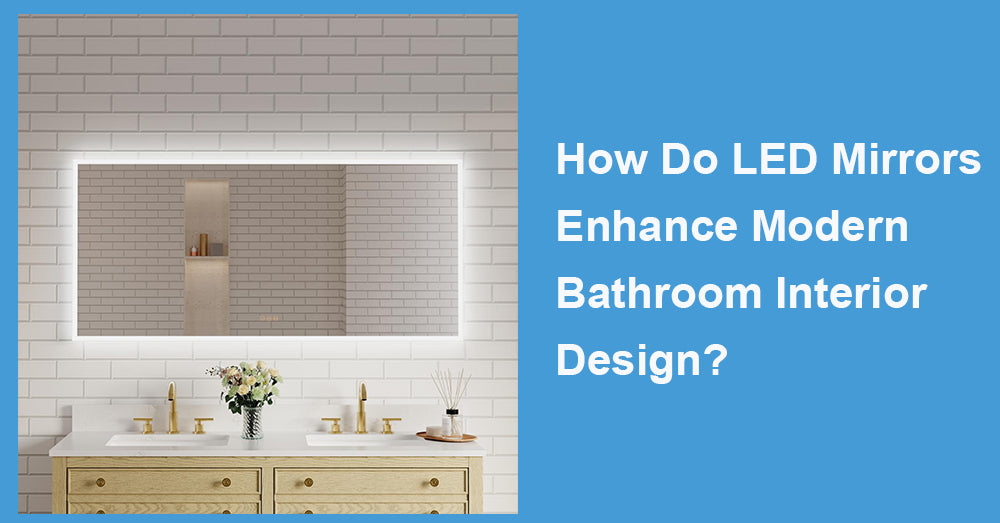
LED mirrors have moved well beyond being a decorative upgrade. In many current bathroom projects, they are becoming part of the lighting plan, the grooming area, and the overall visual structure of the room. The 2025 Houzz Bathroom Trends Study found that 82% of bathroom renovations included lighting upgrades, while lighted mirrors appeared in 22% of projects. NKBA's 2026 Bath Trends Report also found that 91% of surveyed design professionals consider lighting quality a major bathroom priority. The appeal is easy to understand: an illuminated mirror can make a vanity wall look cleaner while providing useful light exactly where daily routines take place.
1. LED Mirrors Make the Vanity Wall Look Less Busy
Modern bathrooms are moving toward simpler compositions.
Instead of combining a mirror with bulky sconces, decorative frames, and several wall accessories, an LED mirror can consolidate the wall into one clean element.
This works particularly well above:
· 30-inch guest-bath vanities
· 36-inch single vanities
· 48-inch floating vanities
· 60-inch double vanities
· Wall-mounted cabinets with flat fronts
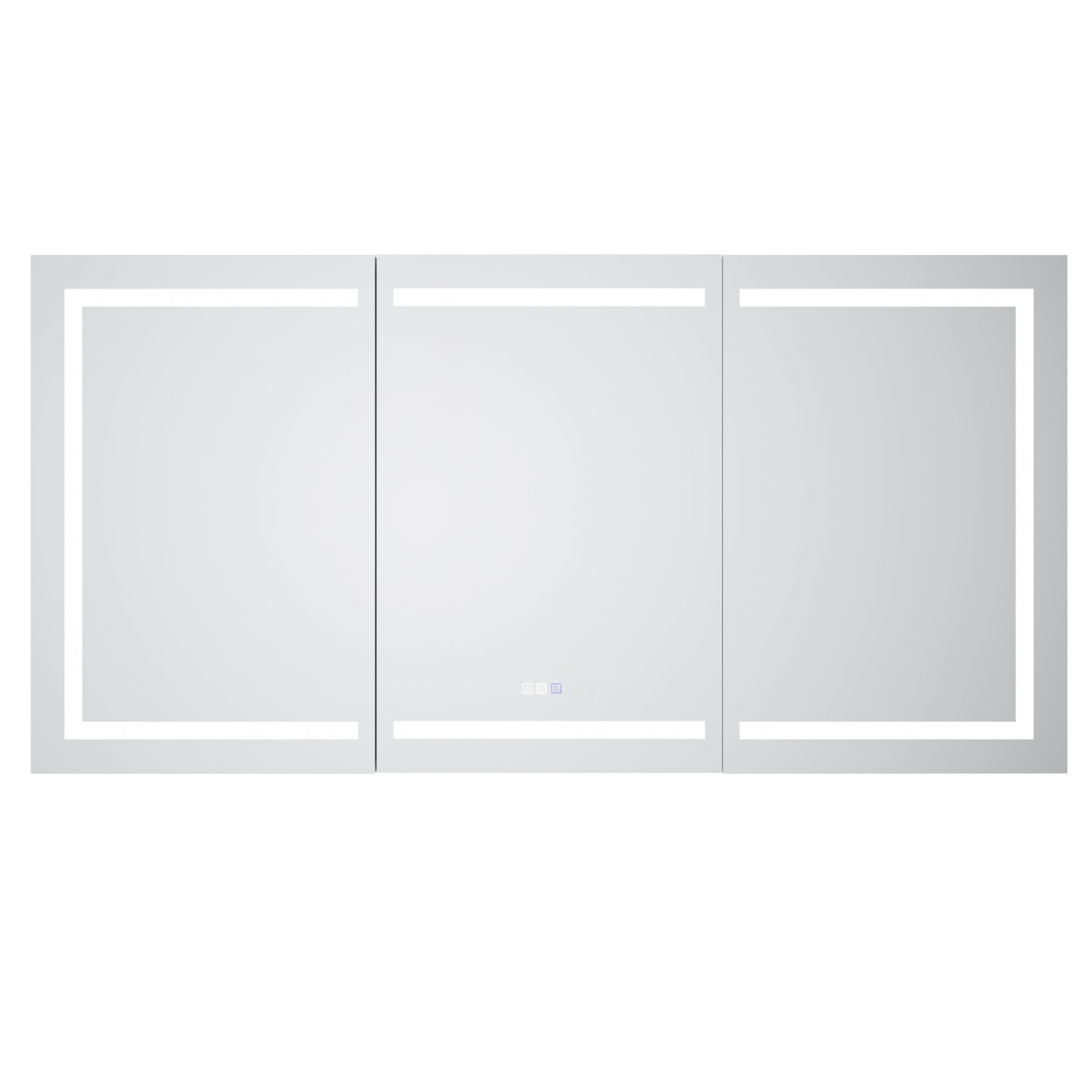
A frameless mirror can almost disappear into the wall while the illuminated edge defines the vanity area.
The result feels more architectural and less decorated.
2. Good Face Lighting Changes How the Bathroom Functions
The biggest advantage is not visual. It is functional.
Ceiling lights often create shadows around the eyes, nose, and chin. A mirror with front-facing illumination brings light closer to the user's face, making detailed grooming easier.
That matters for:
· Shaving
· Makeup
· Skin care
· Hair styling
· Contact lenses
NKBA's 2026 research found that 92% of respondents believe task lighting should be included in the primary bath.
That figure explains why illuminated mirrors are becoming more relevant. They place task lighting in one of the places where it is actually needed most.
3. Color Temperature Can Change the Entire Mood
Not every bathroom activity benefits from the same light.
A warmer setting around 3000K can make the room feel calmer at night. Neutral light around 4000K is useful for everyday grooming. Cooler settings around 5000K to 6000K produce a crisper appearance.
The design impact can be significant.
Warm lighting tends to work well with:
· Light oak
· Beige stone
· Cream tile
· Brushed gold
Neutral lighting suits:
· White quartz
· Brushed nickel
· Gray tile
· Natural wood
A mirror with adjustable color temperature allows the same bathroom to feel softer in the evening and brighter in the morning.
4. Dimming Is More Useful Than Extreme Brightness
More light does not automatically mean better light.
A bathroom used at 6 a.m. needs something very different from a bathroom used late at night. Dimming allows one mirror to support several routines.
NKBA's 2026 Bath Trends Report found that 80% of surveyed professionals are incorporating lighting intended for nighttime use.
For that reason, dimming is becoming one of the more practical LED mirror features.
A lower setting works for nighttime visits. Medium brightness is often enough for washing and skin care. Higher output can be reserved for detailed grooming.
The best mirror gives users control instead of forcing one fixed brightness level.
5. Backlighting Adds Depth Without Adding Decoration
Backlit mirrors create a narrow glow between the glass and the wall.
That can make the mirror appear to float.
The effect is especially attractive against:
· Textured porcelain tile
· Stone-look slabs
· Warm gray walls
· Beige surfaces
· Darker accent walls
A plain wall gains depth without another decorative object being added.
In a compact bathroom, that restraint is useful. Too many small accents can make the room feel crowded, while one softly illuminated mirror can provide enough visual interest.
Industry judgment: Modern bathroom design increasingly relies on light and material transitions to create interest instead of adding more decorative pieces.
6. LED Mirrors Pair Naturally With Floating Vanities
A floating vanity and an illuminated mirror solve a similar design problem.
Both reduce visual weight.
The vanity exposes flooring below. The mirror removes the need for a heavy frame or multiple wall fixtures.
For a 36-inch floating vanity, a mirror around 30 to 36 inches wide can create a balanced composition. A 48-inch vanity can support a wider rectangular mirror, while larger 60-inch or 72-inch layouts may use one broad mirror or separate mirrors above each sink.
Light wood, white, and walnut cabinetry all work with this approach.
The important detail is proportion. The mirror should feel connected to the vanity rather than oversized or isolated.

7. Lighted Mirrors Can Help Small Bathrooms Feel More Open
Mirrors naturally reflect surrounding space. Integrated lighting strengthens that effect by brightening the edges of the reflection.
This can make a compact bathroom feel less enclosed, particularly when the mirror is paired with pale materials.
A useful combination might include:
· White or light oak vanity
· White quartz top
· Frameless shower glass
· Warm neutral walls
· Large-format flooring
· LED mirror
The bathroom does not gain square footage, but the number of dark boundaries is reduced.
That can make a 30-inch or 36-inch vanity zone feel much more open.
8. Anti-Fog Technology Adds Everyday Value
A modern mirror should remain useful after a shower.
Anti-fog systems warm part of the mirror surface so condensation is less likely to settle there.
This is especially useful in:
· En-suites
· Smaller bathrooms
· Windowless bathrooms
· Shared family bathrooms
The benefit is convenience rather than decoration.
Someone can shower and immediately use the mirror for shaving or grooming instead of waiting several minutes for the glass to clear.
The exhaust fan is still necessary. Anti-fogging keeps the mirror usable, while ventilation manages moisture throughout the room.
9. Memory Settings Make the Technology Less Noticeable
Good technology should not require constant adjustment.
Many newer LED mirrors can remember the previous brightness or color-temperature setting.
That sounds like a minor feature, but it makes daily use much simpler.
Instead of choosing 4000K and 70% brightness every morning, the mirror returns to the preferred setting automatically.
This supports a broader trend in bathroom design: technology is becoming more useful when it quietly fits into routines rather than demanding attention.
10. LED Mirrors Work Best as Part of Layered Lighting
An illuminated mirror should not necessarily be the only light source in the bathroom.
The 2025 Houzz Bathroom Trends Study found recessed lighting in 40% of renovated bathrooms, while lighted mirrors reached 22%.
That suggests most successful bathrooms still rely on several lighting layers.
A complete plan may include:
· LED mirror for facial lighting
· Recessed ceiling lights for general illumination
· Shower lighting
· Under-vanity lighting
· Natural daylight
Each source solves a different problem.
The mirror should provide clear grooming light, while ceiling and shower fixtures handle the rest of the room.
11. The Best LED Mirror Feels Integrated, Not Added On
The strongest LED mirrors do not look like technology placed into an otherwise finished bathroom.
They feel like part of the design from the beginning.
Size should relate to the vanity. Light temperature should complement the materials. Brightness should be adjustable. Anti-fogging should support real routines, and controls should be easy to use.
Current renovation data supports this direction. Houzz reports lighting upgrades in 82% of bathroom projects, while NKBA finds that 91% of professionals consider lighting quality a major priority.
That is why LED mirrors continue to gain attention. They do not simply make a bathroom look more modern. They help reduce wall clutter, improve grooming, add depth, and give users more control over how the room feels throughout the day.
In a well-designed bathroom, the mirror is no longer just something hung above the sink. It becomes part of the lighting system and part of the architecture.







































Leave a comment
This site is protected by hCaptcha and the hCaptcha Privacy Policy and Terms of Service apply.